Livre Rare Book
52 résultats
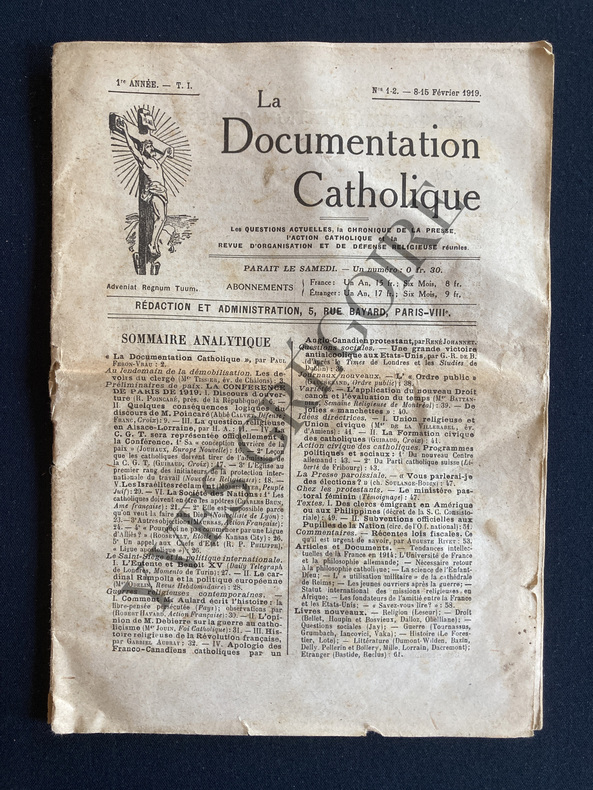
1919ABE-1119542831364 PAGES FORMAT 18 CM X 25,5 CM-LA TRANSFORMATION SOCIALE ET LES DEVOIRS DU CLERGE AU LENDEMAIN DE LA DEMOBILISATION-PRELIMINAIRES DE PAIX LA CONFERENCE DE PARIS DE 1919,DISCOURS D'OUVERTURE PAR M.POINCARE-LA QUESTION RELIGIEUSE EN ALSACE-LORRAINE DEPUIS L'ARMISTICE DU 11 NOVEMBRE 1918-LA CGT SERA REPRESENTEE OFFICIELLEMENT A LA CONFERENCE DE PARIS-LES ISRAELITES RECLAMENT LA "RESTITUTION" DE LA PALESTINE-QUELQUES EXPOSES DIVERGENTS SUR LA SOCIETE DES NATIONS-LA PAPAUTE ET LA POLITIQUE INTERNATIONALE,BENOIT XV-GUERRES RELIGIEUSES CONTEMPORAINES,AULARD-UNE GRANDE VICTOIRE ANTIALCOOLIQUE,PROHIBITION POUR TOUS LES ETATS-UNIS D'AMERIQUE-UNION RELIGIEUSE ET UNION CIVIQUE
192423615New York: League for Public Discussion 1924. First edition. 74 pages followed by 4 pages advertisements or notices 1 plate with a portrait of each of the contenders. 1 vols. 8vo. Original green stiff wrappers notice about the League on inside back cover. Some light wear and discoloration front cover detached. First edition. 74 pages followed by 4 pages advertisements or notices 1 plate with a portrait of each of the contenders. 1 vols. 8vo. League for Public Discussion unknown
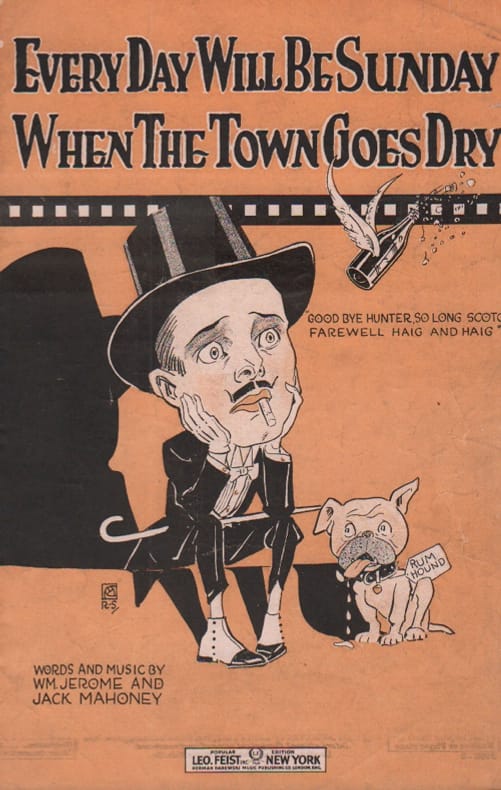
1919111600Partitions sur l'Alcool Leo Feist inc. 1919
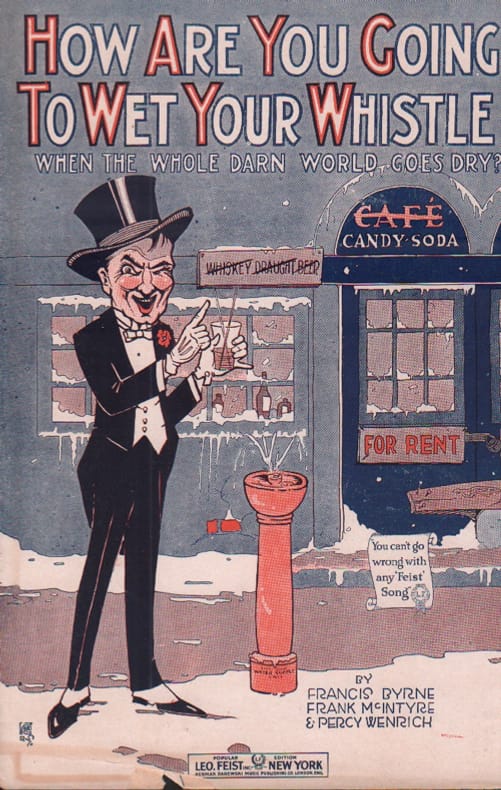
1918111555Partitions sur l'Alcool Leo Feist inc. 1918
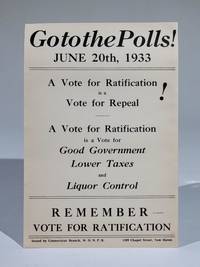
19331172New Haven: Connecticut Branch W. O. N. P. R. 1933. Broadside. 7" x 10 1/4. Single sheet printed on one side. Slight age toning. Fine condition. This is an original handbill from a major women's group soliciting votes to repeal Prohibition in 1933.<br /> <br /> Women's organizations--particularly the Women's Christian Temperance Union--are strongly associated with passage of the 18th Amendment to the U. S. Constitution and the national ban on alcoholic beverages it brought in 1919. The major role women played in getting Prohibition repealed is not as widely recognized however.<br /> <br /> This handbill was issued by the Connecticut Branch of the Women's Organization for National Prohibition Reform W.O.N.P.R. The W.O.N.P.R. was organized in 1929 by women who could no longer ignore the destructive if unintended consequences of Prohibition. <br /> <br /> Here voters are asked to vote for ratification of the 21st Amendment reminding them that "A Vote for Ratification is a Vote for Repeal!" and "A Vote for Ratification is a Vote for Good Government Lower Taxes and Liquor Control." <br /> <br /> The efforts of the W.O.N.P.R. and other repeal groups were successful and Prohibition was repealed with the ratification of the 21st Amendment in December of 1933.<br /> <br /> A tangible piece of Prohibition and women's history. Connecticut Branch, W. O. N. P. R. unknown
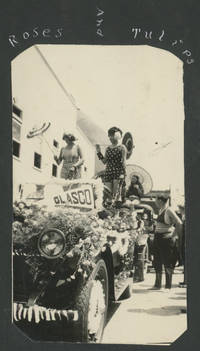
1920List1317Southern California 1920. Limp leatherette album oblong 4to measuring 10 x 7 inches with seventy photographs most measuring 4 x 2 ½ inches. Wear to binding photographs with excellent contrast very good to near fine overall. Near Fine. An energetic album of photographs belonging to one Eddie Jones a fun-loving banjo player from Santa Ana mostly composed of photographs of musicians performing at small parties and functions during the prohibition era. Jones was apparently quite active on the local scene and the album is mostly made up of candid photographs of musicians all captioned some humorously. Many of the photographs show small bands playing guitars many of them playing with slides likely due to the popularity of Hawaiian music at the time. Also included are many photographs of parades in and around Los Angeles as well as photographs of the 1925 Santa Barbara Earthquake showing damaged buildings. Two photographs feature a glass of rye others show agricultural scenes. Newspaper clippings in the back center on the Santa Ana and it’s possible that Jones - who was the common name mentioned in these clippings - was also a farmer from the Santa Ana area when he wasn’t playing music. One photograph shows San Diego a couple show a bullfight in Tijuana. Overall an evocative and well preserved piece of California Prohibition-era history. unknown
193064180Boston MA: Little Brown and Co. 1930. 8vo. xii 173 1 pp. Frontisp. numerous plates. Illustrated mustard-coloured publisher’s cloth wine glass illustration front cover w/ d.j. Art Deco cover art by Herold of drunken revelers minor shelfwear darkening to spine still NF/NF copy from the library of Eleanore Weinstock. First edition of this nicely illustrated and fascinating satirical examination of Prohibition Speakeasies Alcohol and the possible futures at the end of the Roaring 20’s as Americans invented a myriad of ways to keep drinking and socialize. Seldes has managed to inventively interweave a myriad of cocktail recipes into his observations along with a legion of cautionary and humorous tales. Little, Brown, and Co., hardcover
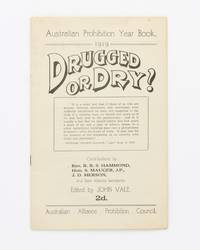
1919102605Melbourne: Australian Alliance Prohibition Council 1919. Very Good. Melbourne Australian Alliance Prohibition Council 1919. Octavo 32 pages including title-wrappers. Saddle-stapled; minimal signs of use and age; an excellent copy. The third year book issued by the Council. Australian Alliance Prohibition Council unknown
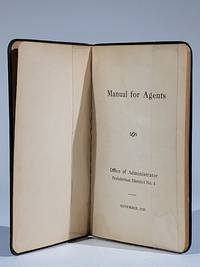
1925965Pittsburgh: Office of Administrator Prohibition District No. 4 1925. Cloth over flexible boards. Sixteenmo. ii 53 pages. Near fine. Bound in black cloth over flexible boards with no exterior titles. A few faint spots to lower board. Binding sound. A rare manual issued by Prohibition District No. 4 Pittsburgh as a pocket guide to help its Revenue and Prohibition agents build strong cases as they enforced the Volstead Act in the field. The contents are distilled ha from Treasury Department Regulations 12 and 60 and aimed at avoiding procedural mistakes during investigations sting operations and arrests. Think Eliot Ness making sure his "i"s are dotted and "t"s are crossed so the bootleggers don't walk on a technicality. Office of Administrator, Prohibition District No. 4 unknown
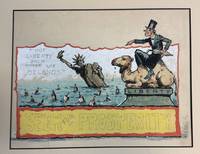
193341184n.p. 1933. 8" x 12". Original color painting on Abacco illustration board matted and framed behind glass. Vibrant colors with some pencil sketch lines showing through. Unsigned and uninitialed. Corners chipped a closed crack in lower left corner. On verso of board is the name of the type of board and available dimensions "Paints Brush and Color Corporation" with distributors listed as E.H. & A.C. Friedrichs Co. of New York The Hirshberg Company of Baltimore and Henry M. Taws of Philadelphia. Very Good. <br /> <br /> Ours is the only copy located after diligent investigation. The camel which Thomas Nast chose as the symbol of the Prohibition Party has replaced the Statue of Liberty on the pedestal. Camels don't drink very often; when they do they only drink water. <br /> This item was likely painted between 1931 and 1933. The official Beer for Prosperity Campaign was organized May 1931 in New York City. Edward H. Schulze was director of the organization and announced that he would support all political candidates in favor of legalizing beer. The slogan spread over the next year and a half. Posters for this campaign in 1932 advertised that legalizing beer would bring two trillion dollars in new revenue in four years because "millions of dollars made from bootleg Beer now finances all kinds of crimes kidnappings etc." Another campaign poster advertised purchases of "Beer for Prosperity" Stamps to "Help Elect to Congress Men Who Will Vote 'Yes.'" Beer for Prosperity Campaign. n.d. In John J. Raskob papers. Manuscripts and Archives Hagley Museum and Library #m473_20100624_005; "Beer For Prosperity Campaign Inc. Will Back Pierce's Congressional Candidacy" The Rutland Daily Herald 23 August 1932 p.7. <br /> We do not know who painted this imaginative item. E.H. & A.C. Friedrichs Company was founded in 1868 and is still in business today under the modern name of Fredrix. The Hirshberg Company originated in 1845 as Hirshberg Hollander & Company and remained in business under a few different Hirshberg names until approximately the early 1960s. Henry B. Taws opened in Philadelphia around 1897 and remained in business until at least 1931. unknown
1933157897Cincinnati: Romach and Groene 1933. Vintage photograph of the first legal whiskey produced in Ohio during prohibition at the Carthage Distilling Company in Cincinnati with contemporary annotations of location dates and personnel and a "Rombach and Groene Commercial Photographers Cincinnati Ohio" stamp on the verso. <br /> <br /> A fascinating prohibition artifact depicting fifteen men and one woman standing in a warehouse before a stack of three whiskey barrels the topmost barrel prominently marked "1" less than two months before the passage of the 21st Amendment December 5 1933 repealing prohibition. On the verso in a contemporary hand is written: "First Barrel Whiskey produced in the State of Ohio since the 18th amendment became effective / manufactured and produced at the Carthage Distilling Corpn. plant Cincinnati Ohio / mashed under date Oct. 20th 1933 / drawn and entered under date Oct. 23rd 1933."<br /> <br /> Cincinnati Ohio second only to Louisville Kentucky in the production of bourbon prior to the end of prohibition was best known during prohibition as the headquarters for the "King of Bootleggers" George Remus. Cincinnati was located within a 300 mile radius of 80 percent of all of America's bonded whiskeys making it an ideal location for a massive bootlegging enterprise as well as for the headquarters to the Schenley Distillery one of only six distilleries nationwide with a license to sell medicinal spirits during prohibition. An October 26 1933 article from the Cincinnati Enquirer entitled "Big Blending Plant Planned For Reading; First Legal Whisky In Ohio Is Produced" confirms the annotations on the photograph "Simultaneously with the actual production of medicinal whisky at its plant in Carthage-said to be the first legal whisky turned out in Ohio since prohibition-it became known yesterday that the National Distillers Products Corporation New York largest distiller in the country will locate one of its major blending and bottling plants in the immediate vicinity of Cincinnati." The article continues "The Carthage Distillery on Anthony Wayne Avenue Carthage is the only distillery now operating in the state of Ohio." In 1933 the Carthage Distilling Company was acquired by the National Distillers Products Corporation and in 1987 was bought by Jim Beam.<br /> <br /> Established in 1883 Cincinnati photographers Rombach and Groene specialized in commercial and landscape photography. In 2001 the Cincinnati Museum Center acquired the Rombach and Groene Collection a collection of over 6500 glass and film negatives and a hundred prints dating from 1870 to 1970. The company closed in 1973.<br /> <br /> 10 x 8 inches. Very Good with some modest creasing four small bruises and a small repair to the surface of the image to the center right. Romach and Groene unknown
1920LIST120American 1920. Gelatin silver photograph 5 ½ x 3 ½ inches on Cyko stock photo paper. Very Good. A scarce photograph of a bootlegging operation c. early 1920s. The photograph is printed on Cyko stock which was used through the early 1920s. Few images of bootleggers have survived. The six men in the picture look quite serious in their work and it’s difficult to imagine why they allowed a picture to be taken. A very good example with good contrast well preserved. unknown
191056456Westerville OH: The Anti-Saloon League of America 1910. 8vo. 256 pp. Numerous maps tables charts. Green ribbed publisher’s cloth gilt lettering stamped on front cover & spine very slight bumping to couple corners still a VG tight bright copy w/ long ALS on ffep. from Frank Richard Margetts fl. 1880-1910 a Spokane WA attorney and stalwart supporter of Prohibition and was the Washington District Superintendent who spearheaded the 1909 legislation to allow local Washington jurisdictions to enact their own temperance legislation. First edition of this polemic and fact book issued by the leading organization pushing Prohibision in the Progressive Era drawing heavy support from Protestant congrations throughout the country and by 1905 largely overshadowed the Woman’s Christian Temperance Union. Margetts writes in the presentation letter on the ffep. that “When a thousand years hence this book and its accompanying literature is brought forth . . . it treats of a gigantic curse which has long since been completely obliterated by an enlightened humanity through progress. . . .†After 1928 with the failures of Prohibition exposed through bootlegging and organized crime severely curtailed government tax revenue and failure to disassociate from the Ku Klux Klan the League would lose their power after the election of President Roosevelt. The Anti-Saloon League of America, hardcover
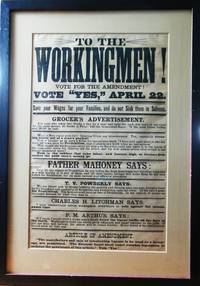
1918723Westerville OH: The American Issue Publishing Co. 1918. Very good. Vintage broadside. Image:12.75 x 20 in.; framed: 19 x 26 in. Custom dark brown wood frame matted under UV museum glass. Not examined outside of frame. Very good or better. <br /> <br /> Westerville Ohio was known as the "Dry Capital of the World" and home of the Anti-Saloon League -- the driving force behind the Prohibition movement in the United States. Some historians consider the league - founded in Oberlin Ohio in 1893 but based in Westerville from 1909 to 1973 - to be the first successful single-issue advocacy group a type of lobbying group common in the modern political landscape. This particular broadside from the prolific group admonishes men to "Save your wages for your families and do not sink them in saloons." There are quotes from Father Mahoney who testifies "Only let the claims of Prohibition be put before the Irish Americans and other Catholics in a way worthy of it and of them and all their tender feelings will make them be not only voters for Prohibition but its most earnest and effective guardians." There are further testimonies from anti-saloon advocates from the Knights of Labor and an author who wrote several books regarding the evils of drink. The American Issue Publishing Co. unknown
198212420CBBasel, Sphinx-Verlag, 1982. gr.8°, 380 S. mit zahlreichen s/w-Abbildungen, farbig illustr. original Kartonage (Paperback), Erstausgabe zwei zarte Längsfalten auf Buchrücken, sonst schönes, sauberes Exemplar für den anspruchsvollen Sammler (vo2gla)
1907KULT0524Hambg., Vlg. v. Deutschlands Großloge 1907. gr.-8°, XV, 458 S., marmorierter HLn. d. Zt., schwach berieben, Rü. leicht geblichen, Vortit. etwas aus Faltung gerissen u. m. Buchhändlerstempel, die ersten Seiten schwach fingerfl. 2 Beigaben: Weisbart, Josef. Der Wunderquell und Rotnäschen. Zwei Märchen über den "Freund Alkohol". 2. Aufl. Berlin, Deutscher Arbeiter-Abstinenten-Bund 1925. 23(1) S., mit 3 Abb., ill. OKart, klammergeh./Die alkoholfreie Jugenderziehung. Heft 2. Mai 1938. S. 17-31, 2 Abb., OBrosch., klammergeh., Lichtspuren, schwache Knickspuren.
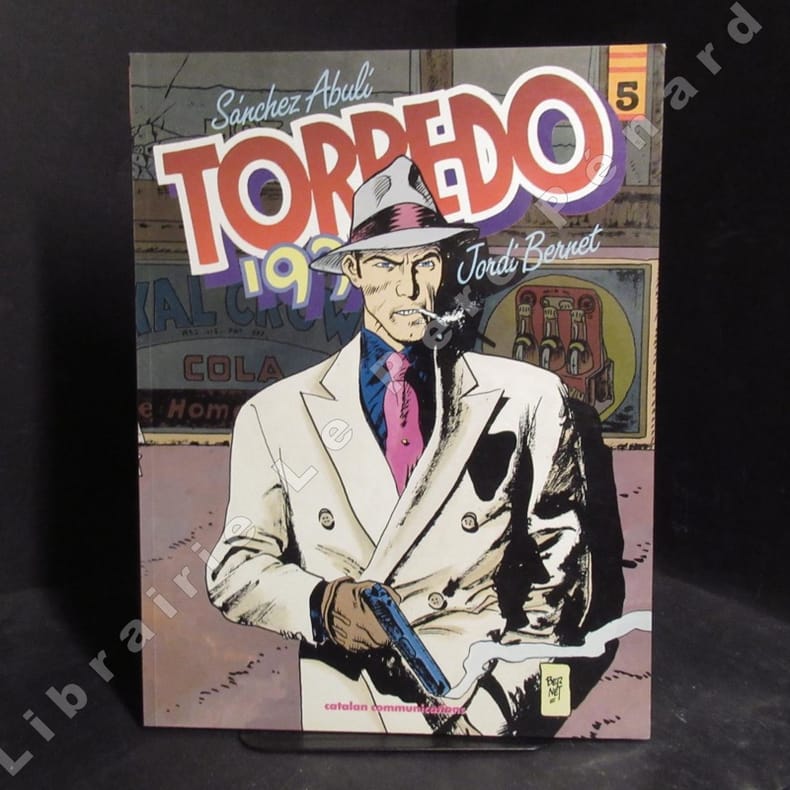
19861164571986 Editions Catalan Communication - 1986 - In-4, broché, couverture illustrée - 56 planches en N&B + 22 p. - Ouvrage en anglais
19881164551988 Editions Catalan Communication - 1988 - In-4, broché, couverture illustrée - 48 planches en couleurs - Ouvrage en anglais
19901164541990 Editions Catalan Communication - 1990 - In-4, broché, couverture illustrée - 64 planches en couleurs - Ouvrage en anglais
19911164531991 Editions Catalan Communication - 1991 - In-4, broché, couverture illustrée - 48 planches en couleurs - Ouvrage en anglais
1932R0840-01Bln.,Universitas (1932). 230,(2) S. Vlgsanz. Mit 8 phot. Abb. auf Taf. Ohln., leicht schiefgelesen, Schnitt min. angestaubt u. fleckig, innen ganz vereinzelt min. fingerfleckig, gutes Expl.
198011555Presses de la Cité 1980 191 pages in8. 1980. Broché. 191 pages. Les Pirates du Texas relate la poursuite d'un policier Ted Brown aux trousses de trafiquants d'alcool pendant la prohibition. L'histoire suit Brown jusqu'à Paris à la recherche de Bob Cummins le roi des bootleggers puis lors d'un déchargement d'alcool sur les côtes du Texas où il est blessé et soigné dans un ranch
1976Ge1095New York, Norton, 1976. Broschur. Ebd. leicht nachgedunkelt & etw. berieben. 8° Buch Softcover
1986152221986 Editions Tallandier - 1986 - In-8, broché couverture illustrée - 271 pages
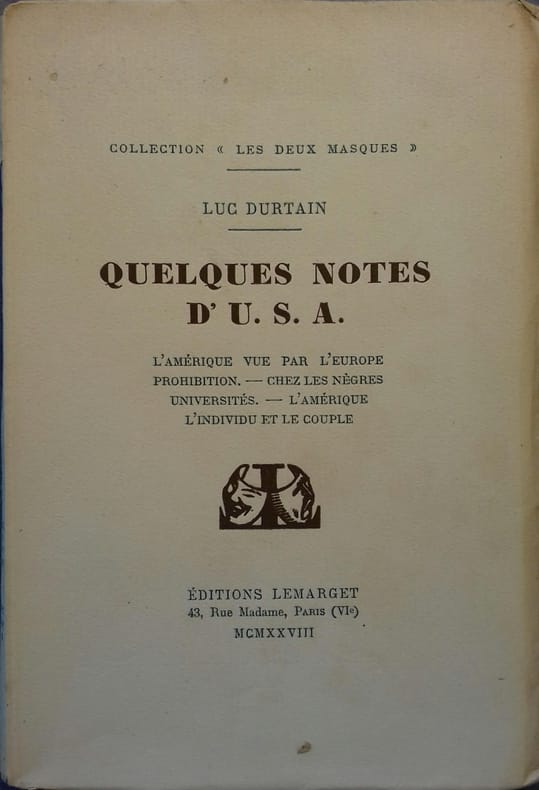
192826283Couverture souple. Broché. 109 pages.