482 résultats
1991064082Book Club Associates 1991. Book. Very Good. Hardcover. 3rd Edition. Vertical scratch on dust jacket which is now in protective mylar. BCA Edition. 184pp. Book Club Associates Hardcover
1991064278Robert Hale Ltd 1991. Book. Near Fine. Hardcover. 3rd Edition. 184pp. Tight copy in mylar-protected dust jacket. Robert Hale Ltd Hardcover
1973062094London: Arthur Barker Limited 1973. Book. Very Good. Hardcover. 1st Edition. Publisher info blacked on copyright page price sticker remnant on fly otherwise clean copy in mylar-protected dust jacket with small corner tear to rear panel. 149pp. Arthur Barker Limited Hardcover
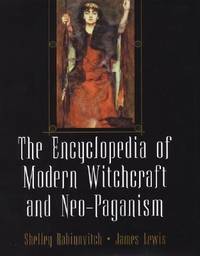
1999037623U.S.A.: Oxford University Press 1999. Book. Near Fine. Hardcover. 1st Edition. 486pp. Attractive copy in mylar-protected dust jacket. Oxford University Press Hardcover

1991059668Llewellyn Worldwide Ltd 1991. Book. Very Good. Soft cover. 1st Edition. 190pp. Mild edgewear and spine sunning to cover. Llewellyn Worldwide Ltd Paperback
2007063968Llewellyn Publications 2007. Book. Fine. Paperback. Two volume set in slipcase contains the titles: Nocturnal Witchcraft / Gothic Grimoire. Books and slipcase in excellent condition. . Llewellyn Publications Paperback
2008058803Hambledon Pr 2008. Book. Good. Hardcover. 1st Edition. No dust jacket. Subject of book penned to lower exterior page edges. 230pp. Hambledon Pr Hardcover
2002058321Citadel 2002. Book. Near Fine. Hardcover. 1st Edition. 336pp. Tight copy in mylar-protected dust jacket. Citadel Hardcover
2002058326Citadel Press 2002. Book. Near Fine. Hardcover. 1st Edition. Tight copy in mylar-protected dust jacket. 336pp. Citadel Press Hardcover
1988049355London: Robert Hale 1988. Book. Very Good. Hardcover. Closed tear in dust jacket at spine now in protective mylar. 204pp. Robert Hale Hardcover
1987058757Blandford Pr 1987. Book. Very Good. Hardcover. Uniform age toning to pages owner blindseal to acknowledgement page. Tight copy in mylar-protected dust jacket. 210pp. Blandford Pr Hardcover
1965057595Castle Books 1965. Book. Very Good. Hardcover. Reprint. 156pp. Dust jacket rubbed and with small corner tears now in protective mylar. Castle Books Hardcover
2013061737Left Hand Press 2013. Book. Very Good. Paperback. Inscribed by Authors. 1st Edition. 4to - over 9¾ - 12" tall. Inscribed by author to previous owner. 59pp. Left Hand Press Paperback
197630681E. J. Brill. 1976. Softcover. Very Good. Foxing to wraps. Minor rubbing.; Iconography of Religions XVII 3; 10.0 X 7.1 X 0.3 inches; 39 pages . 9004044868 . E. J. Brill paperback
199714733Hermes. 1997. Softcover. Very Good. Light scratches to rear panel with minor edgewear to wraps. Light soiling to ffep.; Text is Greek with short abstracts in English.; 200 pages . 9603200549 . Hermes paperback
20002110The Johns Hopkins University Press. 2000. Hardcover. Near Fine in Near Fine dust jacket. Dustjacket has minor shelfwear and rubbing. Light Bumping to bottom of spine.; Ancient Society and History; 1.68 x 8.76 x 8.78 Inches; 632 pages; Historians who viewed imperial Rome in terms of a conflict between pagans and Christians have often regarded the emperor Constantine's conversion as the triumph of Christianity over paganism. But in Constantine and the Bishops historian H. A. Drake offers a fresh and more nuanced understanding of Constantine's rule and especially of his relations with Christians. Constantine Drake suggests was looking not only for a god in whom to believe but also a policy he could adopt. Uncovering the political motivations behind Constantine's policies Drake shows how those policies were constructed to ensure the stability of the empire and fulfill Constantine's imperial duty in securing the favor of heaven. Despite the emperor's conversion to Christianity Drake concludes Rome remained a world filled with gods and with men seeking to depose rivals from power. A book for students and scholars of ancient history and religion Constantine and the Bishops shows how Christian belief motivated and gave shape to imperial rule. . 0801862183 . The Johns Hopkins University Press hardcover
197935286Francke Verlag Bern. 1979. Hardcover. Very Good in No Dust Jacket dust jacket. Minor yellowing to boards. Scholar's name to inner cover Cedric Boulter.; 125 pages . 3909064116 . Francke Verlag Bern hardcover
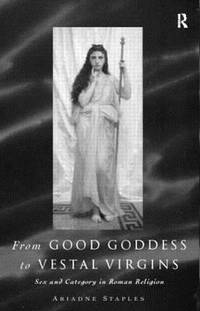
199836659Routledge. 1998. Hardcover. Very Good in Very Good dust jacket. Very minor shelfwear to book and DJ. Scholar's name to ffep Bonnie Maclachlan née Ward.; 0.79 x 8.43 x 5.67 Inches; 207 pages; The role of women in Roman culture and society was a paradoxical one. They enjoyed social material and financial independence yet they were denied basic constitutional rights. Although Roman history is not short of powerful female figures such as Agrippina and Livia their power stemmed from their associations with great men and was not officially recognized. Ariadne Staples' book examines how women in Rome were perceived both by themselves and by men through women's participation in Roman religion as Roman religious ritual provided the single public arena where women played a significant formal role. From Good Goddess to Vestal Virgins argues that the ritual roles played out by women were vital in defining them sexually and that these sexually defined categories spilled over into other aspects of Roman culture including political activity. Staples provides an arresting and original analysis of the role of women in Roman society which challenges traditionally held views and provokes further questions. . 0415132339 . Routledge hardcover
199811465Routledge. 1998. Hardcover. Near Fine in Very Good dust jacket. Scholar's name to ffep R. E. Fantham. Else book is fine. 1 small closed tear to DJ 1 cm. Else Very light shelfwear to DJ.; 0.79 x 8.43 x 5.67 Inches; 207 pages; The role of women in Roman culture and society was a paradoxical one. They enjoyed social material and financial independence yet they were denied basic constitutional rights. Although Roman history is not short of powerful female figures such as Agrippina and Livia their power stemmed from their associations with great men and was not officially recognized. Ariadne Staples' book examines how women in Rome were perceived both by themselves and by men through women's participation in Roman religion as Roman religious ritual provided the single public arena where women played a significant formal role. From Good Goddess to Vestal Virgins argues that the ritual roles played out by women were vital in defining them sexually and that these sexually defined categories spilled over into other aspects of Roman culture including political activity. Staples provides an arresting and original analysis of the role of women in Roman society which challenges traditionally held views and provokes further questions. . 0415132339 . Routledge hardcover
19982949Routledge. 1998. Hardcover. Fine in Near Fine dust jacket. Very minor edgewear to top corners of DJ else Fine.; 0.79 x 8.43 x 5.67 Inches; 207 pages; The role of women in Roman culture and society was a paradoxical one. They enjoyed social material and financial independence yet they were denied basic constitutional rights. Although Roman history is not short of powerful female figures such as Agrippina and Livia their power stemmed from their associations with great men and was not officially recognized. Ariadne Staples' book examines how women in Rome were perceived both by themselves and by men through women's participation in Roman religion as Roman religious ritual provided the single public arena where women played a significant formal role. From Good Goddess to Vestal Virgins argues that the ritual roles played out by women were vital in defining them sexually and that these sexually defined categories spilled over into other aspects of Roman culture including political activity. Staples provides an arresting and original analysis of the role of women in Roman society which challenges traditionally held views and provokes further questions. . 0415132339 . Routledge hardcover
1980629Ares Publishers Inc. . 1980. Hardcover. Fine in No Dust Jacket dust jacket. Exact Reprint of the Tetypeset original 1809 Chicago 1930 ARES PUBLISHERS INC. In his school edict Julian prohibits Christian teachers from using pagan scripts e. G. The Illias that formed the core of Roman education. This was an attempt to remove some of the power of Christian schools by alienating their students from Roman society not to mention a satirical attack at what Julian may have viewed as a hypocrisy: Christian schools teaching the Bible as the sole source of knowledge while simultaneously teaching classical pagan texts as well knowledge of which was needed for success in Roman society. In his tolerance edict of 362 Julian decreed the reopening of pagan temples the restitution of alienated temple properties and called back Christian bishops that were exiled by church edicts. The latter was an instance of tolerance of different religious views but may also have been an attempt by Julian to widen a schism between different Christian sects further weakening the Christian movement as a whole.; 8.25 x 0.5 x 5.5 Inches; 119 pages . 0890053014 . Ares Publishers, Inc. hardcover
201114199CNR-Publisud. 2011. Paperback. Near Fine in No Dust Jacket dust jacket. Very light edgewear else fine.; De Rome à La Troisième Rome. Documents Et Études 1; 196 pages . 2866006151 . CNR-Publisud paperback
201016597Cambridge University Press. 2010. Hardcover. Fine in Near Fine dust jacket. Very light shelfwear to DJ else Fine.; 270 pages; This book examines the connection between political and religious power in the pagan Roman Empire through a study of senatorial religion. Presenting a new collection of historical epigraphic prosopographic and material evidence it argues that as Augustus turned to religion to legitimize his powers senators in turn also came to negotiate their own power as well as that of the emperor partly in religious terms. In Rome the body of the senate and priesthoods helped to maintain the religious power of the senate; across the Empire senators defined their magisterial powers by following the model of emperors and by relying on the piety of sacrifice and benefactions. The ongoing participation and innovations of senators confirm the deep ability of imperial religion to engage the normative symbolic and imaginative aspects of religious life among senators. . 0521897246 . Cambridge University Press hardcover
20108004Cambridge University Press. 2010. Hardcover. Fine in Near Fine dust jacket. Very light shelfwear to DJ else Fine.; 270 pages; This book examines the connection between political and religious power in the pagan Roman Empire through a study of senatorial religion. Presenting a new collection of historical epigraphic prosopographic and material evidence it argues that as Augustus turned to religion to legitimize his powers senators in turn also came to negotiate their own power as well as that of the emperor partly in religious terms. In Rome the body of the senate and priesthoods helped to maintain the religious power of the senate; across the Empire senators defined their magisterial powers by following the model of emperors and by relying on the piety of sacrifice and benefactions. The ongoing participation and innovations of senators confirm the deep ability of imperial religion to engage the normative symbolic and imaginative aspects of religious life among senators. . 0521897246 . Cambridge University Press hardcover
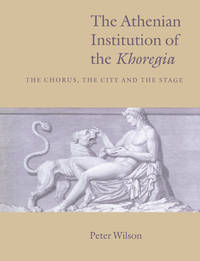
200342677Cambridge University Press. 2003. Paperback. Very Good. Tiny corner crease to a few pages. Underlining in pencil to some pages.; This book is the first major study of the means by which the classical Athenians organised and funded their many festival choruses. It explores the mechanics of the institution by which a minority of rich citizens were required to arrange and pay for a festival chorus including choruses for tragic and comic drama and situates this duty within the range of occasions for elite leadership in Athens' elaborate festival calendar. Peter Wilson goes on to show the importance of the khoregia to our understanding of the workings of Athenian democracy itself and to demonstrate the degree to which the institution was itself a highly performative occasion an opportunity for elite display in the democratic environment. The post-classical history of the khoregia and its appearance in a wide range of other Greek communities are also examined.; 452 pages . 0521542138 . Cambridge University Press paperback