773 résultats
Scholar's name to ffep (Jenifer Neils). DJ is price-clipped. DJ has a few small tears. ; Presents a comprehensive picture of religions that flourished in Rome from 100 to 300 AD. It describes the many new cults that sprang up during this period and show how they conflicted and sometimes fused with the traditional religions of Greece, Rome and the northern countries and with Judaism and its offshoot Christianity. Discusses philosophical religions, to mystery religions to emperor worship, to belief in a goddess of Chance, as well as attitudes toward death, and roles played by shamans and confidence-tricksters. ; Aspects of Greek & Roman Life; 8vo 8" - 9" tall; 296 pages
Fine English Paperback. Demy 8vo. (22 x 14 cm). In English. 69 p. Elements of Brahmanism in the transcendentalism of Emerson.
Very light shelfwear. ; In Dutch. ; 140 pages
Bookplate on inner cover. 2 line note in ink on titlepage referencing additional work. No other markings in text. ; Reise Und Studium. ; 223 pages
Scholar's small bookplate to ffep (R. E. Fantham). Dustjacket has minor shelfwear and rubbing with 1 small chip. ; 8vo; 400 pages
Upper corners and base of spine bumped. Dustjacket has minor shelfwear with 1 small tear to base of spine ; 8vo; 400 pages
ABOUT THE BOOK:- From the earliest times Eastern races, in common with the rest of mankind, have always held a firm belief in the existence of evil spirits, ghosts, and all kindred powers. The phenomena of death, the mysteries of disease and sickness, and all the other events of common occurrence in daily life gave rise to speculations about the unseen world, which gradually led to a distinction, although slight at all times, between good evil spirits. The early Semitic people of Babylonia, who ever they may have been or wherever they may have migrated from, found a theology ready to their hands in their adopted country, which they took over from its primitive inhabitants the Sumerians doubtless grafting to it many of the beliefs of their forefathers. The primitive Sumerian recognised three distinct classes of evil spirit, namely, first came the disembodied human soul which could find no rest and so wandered up and down the face of the earth, secondly, the gruesome spirits which were half human and half demon, and thirdly, the friends and devils who were of the same nature as the gods. Who rode on the noxious winds, or brought storms and pestilence. ABOUT THE AUTHOR:- R. Campbell Thompson, (1876-1941) was a British archaeologist, assyriologist, and cuneiformist. He excavated at Nineveh, Ur, Nebo, and Charchemish among many other sites. He was born in Kensington, and educated at colet Court, St. Paul school and Caius College, Cambridge, where he read oriental (Hebrew and Aramic) Languages. In 1918 Mesopotamia fell into British hands, and the trustees of the British Museum applied to have an archaeologist attached to the army in the field to protect antiquities from injury. As a captain in the Intelligence Service serving in the region and a former assistant in the British Museum R.C. Thompson was commissioned to start the work. After a short investigation of Ur, he dug at Shahrain and the mounds at Tell- al- Laham. After the First World War he held a fellowship at Merton College, Oxford. He died in 1941 aged 64 while serving in the Home Guard River Patrol on the River Thames. The Title 'The Devils and Evil Spirits of Babylonia written/authored/edited by R. Campbell Thompson', published in the year 2017. The ISBN 9789351286110 is assigned to the Hardcover version of this title. This book has total of pp. 512 (Pages). The publisher of this title is Kalpaz Publications. This Book is in English. The subject of this book is Religion & Spirituality / Witchcraft & Paganism. Size of the book is 14.34 x 22.59 cms Vol:- 2 Vols. Set
5191Union Latine d'Edition, s.l., s.d. Un volume in-8 broché, 37 pages et nombreuses illustrations et carte dépliantes hors-texte. Bel exemplaire.
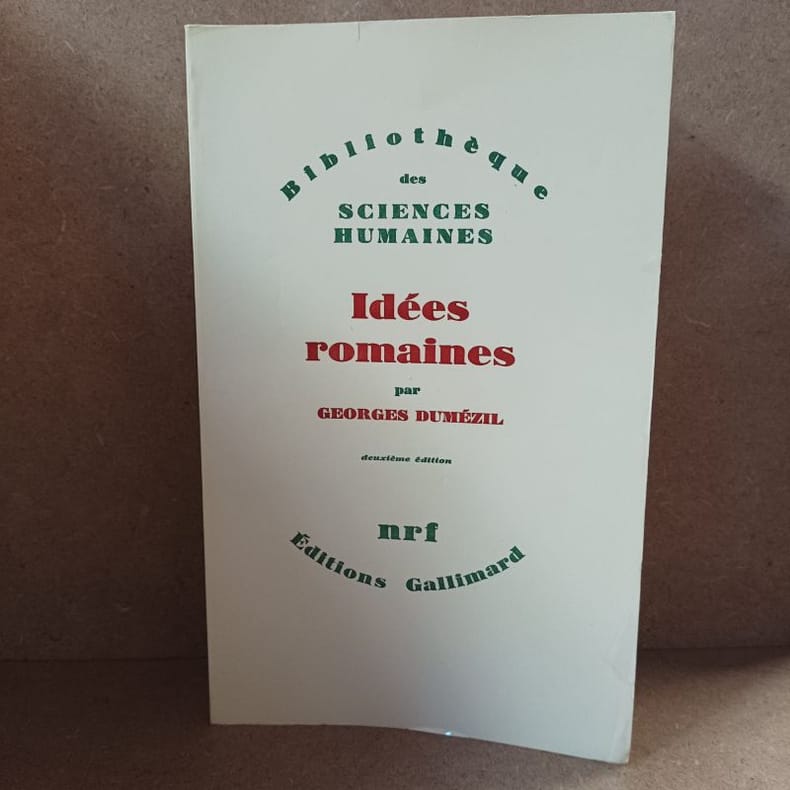
19797421979 - broché - Editions Gallimard NRF - Collection "Bibliothèque des sciences humaines" - 1979 - In-8 (22,5 x 14 cm) broché - 306 pages
Scholars' bookplate to ffep. Very light edgewear. Pages slightly toned. ; Albae Vigiliae Neue Folge, Heft VII; 120 pages
New Italian Paperback. Pbo. 4to. In Turkish and Italian. 108 p., ills. Smirne (Izmir) in eta Ellenistica e Romana. Scavi e ricerche.= Hellenistik ve Roma döneminde Smyrna (Izmir). Kazi ve arastirmalar. A partire dal 2011, nel quadro delle relazioni accademiche tra il Dipartimento di Archeologia dell¿Università di Catania, la Scuola di Specializzazione in Beni Archeologici e la Direzione degli Scavi dell¿antica Smirne, sono stati effettuati scambi ulturali per docenti e studenti, che hanno dato un contributo significativo alla ricerca dell¿antica Smirne. Nello stesso tempo, l¿accordo Erasmus, attivato tra l¿Università ¿Dokuz Eylul¿ e l¿ Università di Catania, ha potenziato ulteriormente i rapporti accademici. Contents: Sunus / Presentazione (Akin Ersoy) Sunus / Presentazione (Massimo Frasca) ERSOY, Akin / Smyrna/Izmir Arkeolojik Kazilari ve Smyrna Agorasi (2007-2014) / Gli Scavi Archeologici A Smyrna (Izmir) Tra iI 2007 ed il 2014 GURLER, Binnur / Smyrna Agorasi¿ndan Cam Buluntular / I Ritrovamenti in Vetro dall¿agorà di Smyrna TANRIVER, Cumhur / Smyrna Agorasi¿ndaki Duvar Yazilari (Graffitolar) / I Graffiti Murali Nell¿agora di Smyrna AKAR TANRIVER, Duygu / Antik Smyrna Kazilarinda Ele Gecen Metal Buluntular / I Reperti Metallici Rinvenuti Durante gli Scavi di Smyrna Antica GRANATA, Alessandra / Kadifekale Hellenistik Donem Seramigi / Ceramiche Ellenistiche da Kadifekale (2009-2010).
17681213651768 A Paris, Chez la Veuve Savoye, libraire - M. DCC. LXVIII. (1768) - In-12 (environ 17 x 10,5 cm), plein veau brun de l'époque; dos à 5 nerfs avec pièce de titre, caissons et fleurons dorés; toutes tranches rouges - 516 pp.
55705N° 10 - Mai 1958 - En dépôt à la Société d'Edition "Les Belles Lettres" - in-8 broché - 252 pages
1882GITj644Gap Imprimerie Jouglard Père et Fils 1882. In-8 broché 14pp. Couverture poussiéreuse, intérieur en très bon état. Tiré à part du Bulletin de la Société des Etudes des Hautes Alpes. Etude résultant de la découverte d'un bas relief à la Bâtie Mont Saléon (le Mons Seleucus antique, arrondissement de Gap), au cours de fouilles exécutées en 1804. (4989)
Spine has been reinforced. Chipping to spine ends. Pencil underlining and a few notes. Light foxing. ; Aus Natur Und Geisteswelt 638; 211 pages
Minor shelfwear. Scholar's name to inner cover (Jenifer Neils). ; 284 pages; For the Greeks, the sharing of cooked meats was the fundamental communal act, so that to become vegetarian was a way of refusing society. It follows that the roasting or cooking of meat was a political act, as the division of portions asserted a social order. And the only proper manner of preparing meat for consumption, according to the Greeks, was blood sacrifice. The fundamental myth is that of Prometheus, who introduced sacrifice and, in the process, both joined us to and separated us from the gods—and ambiguous relation that recurs in marriage and in the growing of grain. Thus we can understand why the ascetic man refuses both women and meat, and why Greek women celebrated the festival of grain-giving Demeter with instruments of butchery. The ambiguity coded in the consumption of meat generated a mythology of the "other"—werewolves, Scythians, Ethiopians, and other "monsters." The study of the sacrificial consumption of meat thus leads into exotic territory and to unexpected findings. In The Cuisine of Sacrifice, the contributors—all scholars affiliated with the Center for Comparative Studies of Ancient Societies in Paris—apply methods from structural anthropology, comparative religion, and philology to a diversity of topics: the relation of political power to sacrificial practice; the Promethean myth as the foundation story of sacrificial practice; representations of sacrifice found on Greek vases; the technique and anatomy of sacrifice; the interaction of image, language, and ritual; the position of women in sacrificial custom and the female ritual of the Thesmophoria; the mythical status of wolves in Greece and their relation to the sacrifice of domesticated animals; the role and significance of food-related ritual in Homer and Hesiod; ancient Greek perceptions of Scythian sacrificial rites; and remnants of sacrificial ritual in modern Greek practices.
Very Good Turkish Paperback. Cr. 8vo. (20 x 14 cm). In Turkish. [xvi], 396 p., ills. Kürtçe grameri. Kurdish grammar.
Scholar's bookplate to inner cover (Robert Brown). Very light shelfwear to book and DJ. ; 100 pages
Scholar's bookplate to inner cover (G. P. Goold). Light shelfwear to book and DJ. DJ is price-clipped. ; 100 pages
Very light shelfwear else fine. ; 93 pages
Light foxing to endpapers. Minor shelfwear. ; Unchanged Reprint of 1914 edition. ; Select Biobiographies Reprint Series; 167 pages
There is separation along the inner hinge exposing the webbing but the book is still intact. Former owner has blacked out the publisher on the title page with felt marker but no other markings in the text. ; 458 pages
Spotty discoloration to front and back cover. Former owner Helen M. Lamb signature on front title page in pencil. Light foxing to back prelim. ; Religions Ancient and Modern; 66 pages
1 tiny stain to textblock. Else fine. ; This is the first survey of religious beliefs in the British Isles from the Old Stone Age to the coming of Christianity, one of the least familiar periods in Britain's history. Ronald Hutton draws upon a wealth of new data, much of it archaeological, that has transformed interpretation over the past decade. Giving more or less equal weight to all periods, from the Neolithic to the Middle Ages, he examines a fascinating range of evidence for Celtic and Romano-British paganism, from burial sites, cairns, megaliths and causeways, to carvings, figurines, jewellery, weapons, votive objects, literary texts and folklore. ; 9.0 X 6.0 X 1.0 inches; 422 pages
Wraps sun-faded to spine and top edges of wraps. Hard bump to lower corner with creasing through pages. ; Viii, 116pp. ; 116 pages