Hughes, Dennis D.MareMagnum
Jacq ChristianLivre Rare Book
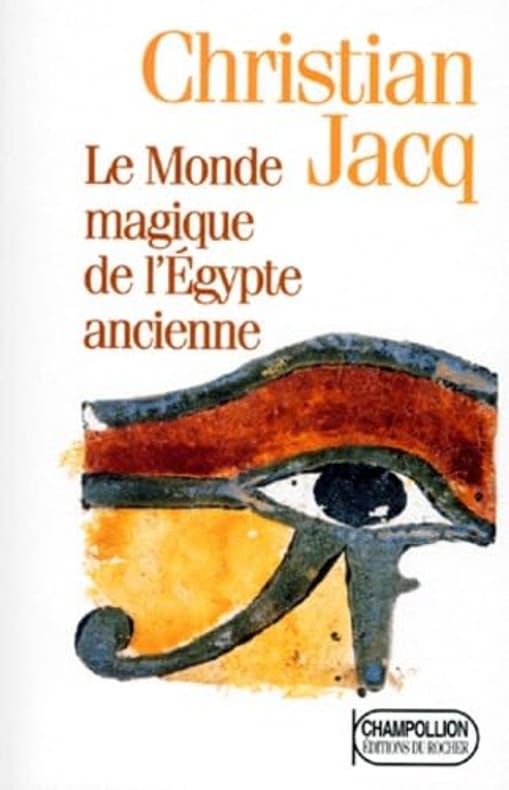
Le Monde Magique De L'Egypte Ancienne
1998500151944Editions du Rocher 1998 13 2x1 6x20cm. 1998. Broché.
Démons et Merveilles · Joinville, France4,00 €
774 résultats
Faint foxing to top of textblock. Scholar's bookplate to inner cover (G. P. Goold). Very light shelfwear to DJ. ; Numerous ancient texts describe human sacrifices and other forms of ritual killing: in 480 BC Themistocles sacrifices three Persian captives to Dionysus; human scapegoats called pharmakoi are expelled yearly from Greek cities, and according to some authors they are killed; Locrin girls are hunted down and slain by the Trojans; on Mt Lykaion children are sacrificed and consumed by the worshippers; and many other texts report human sacrifices performed regularly in the cult of the gods or during emergencies such as war and plague. Archaeologists have frequently proposed human sacrifice as an explanation for their discoveries: from Minoan Crete children's bones with knife-cut marks, the skeleton of a youth lying on a platform with a bronze blade resting on his chest, skeletons, sometimes bound, in the dromoi of Mycenaean and Cypriot chamber tombs; and dual man-woman burials, where it is suggested that the woman was slain or took her own life at the man's funeral. If the archaeologists' interpretations and the claims in the ancient sources are accepted, they present a bloody and violent picture of the religious life of the ancient Greeks, from the Bronze Age well into historical times. But the author expresses caution. In many cases alternative, if less sensational, explanations of the archaeological are possible; and it can often be shown that human sacrifices in the literary texts are mythical or that late authors confused mythical details with actual practices. Whether the evidence is accepted or not, this study offers a fascinating glimpse into the religious thought of the ancient Greeks and into changing modern conceptions of their religious behaviour.; 8.8 X 5.7 X 1.3 inches; 316 pages
1 tiny stain to textblock. Else fine. ; This is the first survey of religious beliefs in the British Isles from the Old Stone Age to the coming of Christianity, one of the least familiar periods in Britain's history. Ronald Hutton draws upon a wealth of new data, much of it archaeological, that has transformed interpretation over the past decade. Giving more or less equal weight to all periods, from the Neolithic to the Middle Ages, he examines a fascinating range of evidence for Celtic and Romano-British paganism, from burial sites, cairns, megaliths and causeways, to carvings, figurines, jewellery, weapons, votive objects, literary texts and folklore. ; 9.0 X 6.0 X 1.0 inches; 422 pages
Minor creasing to spine. Light shelfwear. ; Skrifter Utgivna Av Svenska Institutet I Athen / Acta Instituti Atheniensis Regni Sueciae, Series in 4°, XXXVIII; 303 pages; The purpose of the Fifth International Symposium at the Swedish Institute at Athens, the papers and discussions of which are contained in this volume, was to initiate a discussion of the various phenomena characteristic of Greek cult practice of the pre-Hellenistic periods, ranging from sacrifice and libations to the handling of cult images and the placing of votive gifts in a sanctuary. It was planned as a cross-discipline symposium so as to allow the problems to be addressed by scholars from diverging points of view, by diverse methods and on the basis of the available evidence, be it archaeological, architectural, iconographical, literary or epigraphical. We also invited an anthropologist, Professor W. Arens, of the State University of New York at Stony Brook, in order to put Greek cult practice in the more general perspective of cultural anthropology. These efforts notwithstanding, it proved impossible to even touch upon all relevant aspects of the topic within the limited time of three days of sessions (and a one day field-trip). The result was a concentration of papers and discussions on a few central phenomena, such as animal sacrifice, votive offerings and ritual meals, and a number of single contributions dealing with a wide range of other aspects. It is our hope that the proceedings will inspire further research in this fascinating field. Robin Hägg
Minor shelfwear. Scholars' bookplate to inner cover (Slater & Dunbabin). Light creasing to spine and a couple of corners of wraps. ; 9.2 X 6.3 X 0.9 inches; 245 pages
Initial in ink to front inner cover 'N' (Jenifer Neils). Else very minor shelfwear. ; Contributors: Lila Marangou; Anton Bammer; Robin Hägg; Birgitta Bergquist; Catherine Morgan; Elizabeth R. Gebhard; gunnel Ekroth; Judith Binder; Sandrine Huber; Petros G. Themelis; Uta Kron; Brita Alroth; nancy Bookidis. ; Skrifter Utgivna Av Svenska Institutet I Athen / Acta Instituti Atheniensis Regni Sueciae, Series in 8°, XV; 249 pages
Initial in ink to front inner cover 'N' (Jenifer Neils). Else very minor shelfwear. ; Contributors: Irad Malkin; Walter Burkert; François de Polignac; Sanne Houby-Nielsen; Fritz Graf; Allaire Brumfield; Patricia A. Butz; Jan N. Bremmer; kevin Clinton; H. A. Shapiro; Nanno Marinatos; Marcel Piérart. ; Skrifter Utgivna Av Svenska Institutet I Athen / Acta Instituti Atheniensis Regni Sueciae, Series in 8°, XIV; 176 pages
Light foxing along edges of front wrap. Else fine. ; Classical and Byzantine Monographs Vol. XXV; 421 pages
Faint creasing to wraps at corners. ; Isbn: 9090236791 Text in English; summary in Dutch. ; Proefschrift (Diss. ) ; 339 pages; Elagabalus (218-222 AB) is one of the most peculiar emperors to have occupied the Roman throne. During his short reign, this remarkable ruler carried through some unprecedented reforms in Roman state religion. He put Elagabal, the sun god of the Syrian town of Emesa, at the head of the Roman pantheon and presented himself as the god's high priest on coins and in inscriptions. In March 222 AD, Elagabalus was killed by praetorians, His memory was condemned by the senate, his images destroyed...Images of Elagabalus attempts to reconstruct and explain the events of the period, in partuclar the elevation of Elagabal to supreme Roman deity. Consequently, it looks at the different images of the priest-emperor which have been generated throughout the ages; first by the imperial administration itself, then by ancient and Byzantine authors, and finally by scholars, literary authors and artists from the Renaissance up to the present.
Former owner's name stamped to ffep and titlepage (James Fitton). Minor shelfwear. Pencil notes to about 10 pages of text. ; Greek Text with Latin introduction. Xlvi, 202 Joannes Laurentius Lydus was an early Byzantine administrator and writer on antiquarian subjects. During his retirement he occupied himself in the compilation of works on the antiquities of Rome, three of which have been preserved. ; Bibliotheca Scriptorum Graecorum Et Romanorum Teubneriana TEUBNER; 183 pages
Very Good English Paperback. Pbo. Cr. 8vo. (20 x 14 cm). In Turkish. 330, [6] p. Tanri yaratan toprak Anadolu.
Gift inscription to titlepage from T. Ivanov to John Drinkwater on titlepage in pen. Light rubbing to boards. DJ has light edgewear with a few small tears and chipping. ; Contents: Der Fortuna Tempel in der Colonia Ulpia Oescensium in Moesia inferior (heute VR Bulgarien / Teofil Ivanov --Serdica au Ier-IVe s. De n. ÈRe àLa lumière des dernièRes recherches archéologiques / Magdalina StancEva --Fouilles d'un ensemble architectural à Kostinbrod / Violeta BozIlova --Certains aspects de l'urbanisation de Pautalia / Ljudmila Ruseva-Slokoska --L'ensemble du forum de Augusta Traiana-Beroe / Dimitar Nikolov --Importierte Terra sigillata aus Novae / Alexandra Dimitrova-MilcEva --Pottery lamps from Novae (Lower Moesia) / Maria Cicikova --Un atelier de Plastes imaginarius à Moetana / Ljuba Ognenova-Marinova --Bronzene Matrizen aus MöSien und Thrakien / Vasil P. Vasilev --Inschriften auf den Bronzenmatrizen aus Moesien und Thrakien / Vasilka Gerasimova-Tomova --Studies on the cult of Mithra in Lower Moesia and Thrace / VaRbinska Najdenova. ; Academie Bulgare Des Sciences. Bulletin Del'institut D'Archeologie XXXVII; 200 pages; 200 p. , [52] p. Of plates; Signed by Editor
1998500151944Editions du Rocher 1998 13 2x1 6x20cm. 1998. Broché.
Very light shelfwear. A bit of creasing to spine. ; Contributions in French, Modern Greek, Italian and English. ; Bulletin De La Correspondance Hellénique - Supplément 36; Large 8vo; 455 pages
New Persian Paperback. Roy. 8vo. (24 x 17 cm). In Persian, with a bilingual title in English and Persian on cover. [xi], 291 p., ills., maps. Short history of ancient and primitive religions.= Târîkh-i adyân-i ibtidâ'î va qadîm.
1998GITe206Paris Picard 1998. In-8 broché couverture illustrée 207pp. Nombreuses illustrations dans le texte et 18 hors texte en couleurs. Bel exemplaire frais et bien complet.
1991144162Payot 1991 In-8 broché 22,5 cm sur 14. 509 pages. Dos avec pliures sinon bon état d’occasion.
1719Mâcon, Protat Frères, 1920-1923 ; quatre tomes in-8, broché . Tome 1 : Le peuple, le costume, l'habitation : (2) ff., 106 pp., VIII planches hors-texte, (1) f. de table, couverture gris foncé. Tome 2 : Pèlerinages et légendes sacrées : 104 pp., VII planches hors-texte, couverture gris clair. Tome 3 : Fêtes du terroir et coutumes du foyer : 104 pp., VI planches hors-texte et couverture gris-vert. Tome 4 : Naissances, mariages, sépultures : 100 pp., VI planches hors-texte, couverture crème.
Fine English Paperback. Pbo. Roy. 8vo. (24 x 16 cm). In Turkish. 311, [1] p. Turkish Edition of Roux's 'La religion des Turcs et des Mongols'. Türklerin ve Mogollarin eski dini. [= La religion des Turcs et des Mongols]. Translated by Aykut Kazancigil.
Scholars' name to ffep (Mark Golden). Initials in pen to titlepage. Browning to covers and pages. Some pages unopened. ; Bibliothèque Historique; 510 pages
Endpapers lightly browned. Light water (coffee? ) Staining to corners of textblock. Minor shelfwear to boards. ; Greek Text with Latin introduction. Xcvi, 202 Joannes Laurentius Lydus was an early Byzantine administrator and writer on antiquarian subjects. During his retirement he occupied himself in the compilation of works on the antiquities of Rome, three of which have been preserved. De Mensibus, a history of the different festivals of the year. ; Bibliotheca Scriptorum Graecorum Et Romanorum Teubneriana TEUBNER; 202 pages
Spine crudely repaired with cellotape leaving stains. Endpapers lightly browned. Light chipping along foreedges of wraps and pages. Scarce. ; Greek Text with Latin introduction. Xlvi, 202 Joannes Laurentius Lydus was an early Byzantine administrator and writer on antiquarian subjects. During his retirement he occupied himself in the compilation of works on the antiquities of Rome, three of which have been preserved. ; Bibliotheca Scriptorum Graecorum Et Romanorum Teubneriana TEUBNER; 183 pages
Pages unopened. Very light shelfwear. Else fine. ; Collection Latomus Volume 61; 91 pages
Front board is bowed. Solid condtion. ; Contents: The Diffusion of the City: Work of Kings, Hellenization, roman Republic, Principate, Byzantine age; Relations with the Suzerain; Internal Politics; Civc Services: education, religion and games, public works and records, finance, byzantine age; Achievement of the Cities: Economic, Political and Administrative, Cultural. ; 393 pages
Inner hinges are slightly cracked but still holding. Mild foxing to textblock. Former owner's name on ffep. ; Contents: The Diffusion of the City: Work of Kings, Hellenization, roman Republic, Principate, Byzantine age; Relations with the Suzerain; Internal Politics; Civc Services: education, religion and games, public works and records, finance, byzantine age; Achievement of the Cities: Economic, Political and Administrative, Cultural. ; 393 pages