Staples, AriadneMareMagnum
LAPERRUQUE, M.Livre Rare Book
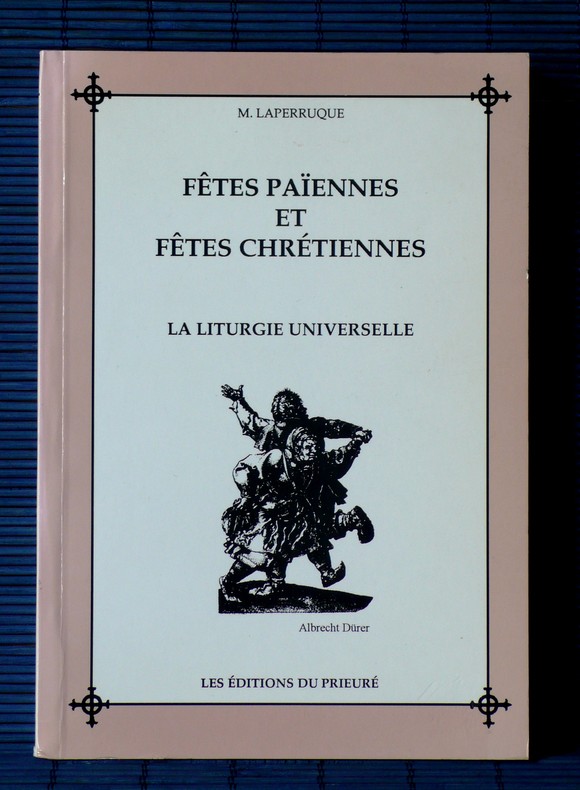
FÊTES PAÏENNES ET FÊTES CHRÉTIENNES
199602903S. l. : éd. du prieuré, 1996. In-8 (20 cm), couverture souple illustrée, 306 pages, 365 gr.
Bedot Bouquiniste · Le Mans, France20,00 €
774 résultats
Scholar's name to ffep (R. E. Fantham). Else book is fine. 1 small closed tear to DJ (1 cm). Else Very light shelfwear to DJ. ; 0.79 x 8.43 x 5.67 Inches; 207 pages; The role of women in Roman culture and society was a paradoxical one. They enjoyed social, material and financial independence yet they were denied basic constitutional rights. Although Roman history is not short of powerful female figures, such as Agrippina and Livia, their power stemmed from their associations with great men and was not officially recognized. Ariadne Staples' book examines how women in Rome were perceived both by themselves and by men through women's participation in Roman religion, as Roman religious ritual provided the single public arena where women played a significant formal role. From Good Goddess to Vestal Virgins argues that the ritual roles played out by women were vital in defining them sexually and that these sexually defined categories spilled over into other aspects of Roman culture, including political activity. Staples provides an arresting and original analysis of the role of women in Roman society, which challenges traditionally held views and provokes further questions.
Very minor edgewear to top corners of DJ else Fine. ; 0.79 x 8.43 x 5.67 Inches; 207 pages; The role of women in Roman culture and society was a paradoxical one. They enjoyed social, material and financial independence yet they were denied basic constitutional rights. Although Roman history is not short of powerful female figures, such as Agrippina and Livia, their power stemmed from their associations with great men and was not officially recognized. Ariadne Staples' book examines how women in Rome were perceived both by themselves and by men through women's participation in Roman religion, as Roman religious ritual provided the single public arena where women played a significant formal role. From Good Goddess to Vestal Virgins argues that the ritual roles played out by women were vital in defining them sexually and that these sexually defined categories spilled over into other aspects of Roman culture, including political activity. Staples provides an arresting and original analysis of the role of women in Roman society, which challenges traditionally held views and provokes further questions.
199602903S. l. : éd. du prieuré, 1996. In-8 (20 cm), couverture souple illustrée, 306 pages, 365 gr.
Very light shelfwear else Fine. ; BAR International Series 1220; 153 pages; The Greek and Roman year were divided into festivals and games even more than our year is today. Politics and competition went together and the spectacle and even danger of games and sports spiced up the lives of Greek and Roman citizens. This volume presents fourteen papers, half of which originated at a conference held in Edinburgh in 2000, which examine the archaeological, material and documentary evidence for ancient sports and festivals, making comparison between Greek and Roman habits and placing the events in their political and religious setting. Subjects include: Minoan bull sports; the evidence of dance imagery; Pindar; chariot racing and politics in 5th-century Athens and Sophocles' Electra; competitive Greek games; Dionysiac festivals in Aristophanes' Acharnians; cock fighting and dicing in classical Athens; the festival of Artemis Leukophyrene; Roman games and Greek origins in Dionysius of Halicarnassus; epic and real games in Statius and Virgil; Roman naumachiae or naval battles in artifical basins; Dionysiac scenes on Oinophoroi vessels from Sagalassos; Christianising the celebrations of death in Late Antiquity; the portraits of champions in Palazzo Te.
1.25 x 10 x 6.75 Inches; 288 pages; In recent years, the topic of ancient Greek hero cult has been the focus of considerable discussion among classicists. Little attention, however, has been paid to female heroized figures. Here Deborah Lyons argues for the heroine as a distinct category in ancient Greek religious ideology and daily practice. The heroine, she believes, must be located within a network of relations between male and female, mortal and immortal. Using evidence ranging from Homeric epic to Attic vase painting to ancient travel writing, she attempts to re-integrate the feminine into our picture of Greek notions of the hero. According to Lyons, heroines differ from male heroes in several crucial ways, among which is the ability to cross the boundaries between mortal and immortal. She further shows that attention to heroines clarifies fundamental Greek ideas of mortal/immortal relationships. The book first discusses heroines both in relation to heroes and as a separate religious and mythic phenomenon. It examines the cultural meanings of heroines in ritual and representation, their use as examples for mortals, and their typical "biographies." The model of "ritual antagonism," in which two mythic figures represented as hostile share a cult, is ultimately modified through an exploration of the mythic correspondences between the god Dionysos and the heroines surrounding him, and through a rethinking of the relationship between Iphigeneia and Artemis. An appendix, which identifies more than five hundred heroines, rounds out this lively work.
Book in plastic sleeve. Light Foxing/dustsoiling to book and DJ. Else very minor shelfwear. ; 1.25 x 10 x 6.75 Inches; 288 pages; In recent years, the topic of ancient Greek hero cult has been the focus of considerable discussion among classicists. Little attention, however, has been paid to female heroized figures. Here Deborah Lyons argues for the heroine as a distinct category in ancient Greek religious ideology and daily practice. The heroine, she believes, must be located within a network of relations between male and female, mortal and immortal. Using evidence ranging from Homeric epic to Attic vase painting to ancient travel writing, she attempts to re-integrate the feminine into our picture of Greek notions of the hero. According to Lyons, heroines differ from male heroes in several crucial ways, among which is the ability to cross the boundaries between mortal and immortal. She further shows that attention to heroines clarifies fundamental Greek ideas of mortal/immortal relationships. The book first discusses heroines both in relation to heroes and as a separate religious and mythic phenomenon. It examines the cultural meanings of heroines in ritual and representation, their use as examples for mortals, and their typical "biographies." The model of "ritual antagonism," in which two mythic figures represented as hostile share a cult, is ultimately modified through an exploration of the mythic correspondences between the god Dionysos and the heroines surrounding him, and through a rethinking of the relationship between Iphigeneia and Artemis. An appendix, which identifies more than five hundred heroines, rounds out this lively work.
V1: small chip to fore-edge of front wrap. Very minor shelfwear else fine. Pages unopened. V2: portfolio of maps. Portfolio cover has some edgewear but maps are fine. ; V1: TEXTE: A-Q pages of plates/planches at rear. V2: ATLAS: maps are present and complete. ; Collection Latomus Volume 129. 2 Volume Set COMPLETE; 363 pages
Upper Corners lightly bumped. Lower corners a bit edgeworn. Scholar's bookplate to inner cover (G. P. Goold). Pages tanned. Front hinge cracked; Handbuch Der Altertumswissenschaft V.2.2; Vol. 2; 714 pages; Heavy book.
Faint shelfwear and minor pencilling to book. DJ has light creasing along upper edge. ; 9.4 X 6.1 X 1.2 inches; 448 pages
Tear to cloth at base of spine (~2cm) . Bottom corners are bumped. DJ has tears and chipping but intact. ; Nuovi Saggi, 21; 409 pages
Dustjacket is protected in mylar. ; Glorious Treasures Series; 93 pages
Light scratches to rear panel with minor edgewear to wraps. Light soiling to ffep. ; Text is Greek with short abstracts in English. ; 200 pages
Some pencil underlining and marginalia, else Very Good. ; 159 pages
Faint rubbing to titlepage. DJ has light creasing along upper edge. ; While the Olympics, because of their modern revival, enjoy the greatest fame today, in ancient Greece other religious festivals were equally elaborate and impressive spectacles. The lavishly illustrated Goddess and Polis is the first work devoted to the Panathenaia, the most significant of these festivals to be held in ancient Athens. Founded in 566 B. C. , this complex ritual performed for the goddess Athena vied with other Greek festivals in grandeur and importance and was particularly distinguished by the works of art commissioned in its service. Among these were the painted vases known as Panathenaic amphoras, each of which contained forty liters of olive oil, awarded to athletic and equestrian victors. The contests depicted on these vases are the best extant illustrations of Greek sport. Although women were excluded from the competitions, they had an important role to play in the weaving of the peplos, an elaborate textile that took nine months to produce. The culmination of the festival was a long procession bearing this new robe to the cult statue of the goddess; the procession in turn was the subject of another great work of art, the Parthenon frieze. Combining art, spectacle, and civic consciousness, the Panathenaia contributed to the development of the high classical style of Periklean Athens. This book deals with every aspect of the festival and produces a vivid portrait of the worship of the patron goddess of the city. Essays by eminent classical scholars examine in depth the musical and poetic competitions, the athletic and equestrian contests, the peplos, and the evolving image of Athena as documented in sculpture from the Acropolis. Jenifer Neils, the curator of the exhibition Goddess and Polis, held at the Hood Museum of Art at Dartmouth College, has contributed an introduction to the Panathenaia, an essay on the prize amphoras, and detailed entries for the seventy objects exhibited.; 4to 11" - 13" tall; 232 pages
A few pen and pencil markings to a few pages. From the library of Jenifer Neils. Lower part of spine cover torn and missing (6 cm). Tears to head of spine cover. Creasing to spine cover and wraps. ; While the Olympics, because of their modern revival, enjoy the greatest fame today, in ancient Greece other religious festivals were equally elaborate and impressive spectacles. The lavishly illustrated Goddess and Polis is the first work devoted to the Panathenaia, the most significant of these festivals to be held in ancient Athens. Founded in 566 B. C. , this complex ritual performed for the goddess Athena vied with other Greek festivals in grandeur and importance and was particularly distinguished by the works of art commissioned in its service. Among these were the painted vases known as Panathenaic amphoras, each of which contained forty liters of olive oil, awarded to athletic and equestrian victors. The contests depicted on these vases are the best extant illustrations of Greek sport. Although women were excluded from the competitions, they had an important role to play in the weaving of the peplos, an elaborate textile that took nine months to produce. The culmination of the festival was a long procession bearing this new robe to the cult statue of the goddess; the procession in turn was the subject of another great work of art, the Parthenon frieze. Combining art, spectacle, and civic consciousness, the Panathenaia contributed to the development of the high classical style of Periklean Athens. This book deals with every aspect of the festival and produces a vivid portrait of the worship of the patron goddess of the city. Essays by eminent classical scholars examine in depth the musical and poetic competitions, the athletic and equestrian contests, the peplos, and the evolving image of Athena as documented in sculpture from the Acropolis. Jenifer Neils, the curator of the exhibition Goddess and Polis, held at the Hood Museum of Art at Dartmouth College, has contributed an introduction to the Panathenaia, an essay on the prize amphoras, and detailed entries for the seventy objects exhibited.; 4to 11" - 13" tall; 232 pages
78pp, nicely illustrated. The deities and heroes of the ancient Romans were popular subject matter for the frescoes that decorated the elaborate villas of Pompeii's wealthy citizens. This richly illustrated volume highlights various depictions of the heavenly and heroic pantheon of ancient Rome, while the text explores both the general characteristics of Pompeiian painting and their specific treatment of gods and heroes. ; 8vo - over 7¾" - 9¾" tall; 78 pages
Faint shelfwear. ; Excavations of the Athenian Agora Picture Book No. 19; 8.2 X 5.1 X 0.1 inches; 32 pages
Wraps have light rubbing with faint crease to 1 corner. ; Drawings; 0.81 x 9.25 x 5.95 Inches; 311 pages
Wraps have heavy rubbing with creasing. Colour loss along spine. Wraps are a bit worn. Scholar's name to ffep (Jenifer Neils). Some underlining in ink to a few pages. ; Drawings; 0.81 x 9.25 x 5.95 Inches; 311 pages
35313ABMünchen, C.H. Beck, 2016. 8° (22,5 x 14,5) cm. 900 S., mit 15 Illustrationen und Lesebändchen. Original-Ganzleinenband mit farbig illustriertem Schutzumschlag.
Very light shelfwear else Fine. ; Potsdamer Altertumswissenschaftliche Beitrage (Pawb) Band 34; 532 pages; English summary: The ability to translate the inner world of ideas into image displays is one of the original human characteristics. The figments of imagination translated into the communicative sphere as images represent not only external forms, but also memories, conveyed fears, hopes, or other emotions. This is especially true as it pertains to religion. But what image of God did the majority of Greeks of the ancient world hold, and what were their godly images? The book by Peter Eich focuses on the prevailing ideas that religious image production held in Greece, as well as on the community-building function of religious images over the course of time. Contemporary testimonies are fully investigated and reinterpreted in their idiom and their contexts of meaning. German text. German description: Die Fahigkeit, die innere Vorstellungswelt in Bilddarstellungen umzusetzen, gehort zu den ursprunglichen menschlichen Eigenschaften. Die aus der Vorstellung in die kommunikative Sphare ubersetzten Bilder reproduzieren nicht nur aussere Formen, sondern verankern auch Erinnerungen oder transportieren Angste, Hoffnungen oder andere Emotionen. Dies gilt besonders auf dem Gebiet der Religion. Doch welches Gottesbild hatte die Mehrheit der Griechen der Antike, und was waren Gotterbilder fur sie?Das Buch von Peter Eich konzentriert sich auf die in Hellas vorherrschenden Vorstellungen, die die religiose Bildproduktion bedingten, und die gemeinschaftsstiftende Funktion sakraler Bilder im Wandel der Zeit. Dazu werden die Aussagen der Zeitgenossen in ihrem Idiom und in ihren Sinnzusammenhangen umfassend untersucht und mit Hilfe eines verbreiterten Methodenkanons neu gedeutet.
Gift inscription to Slater/Dunbabin from author on half-title. Scholars' bookplate to inner cover (Slater & Dunbabin). Faint creasing to wraps. ; The historic American Journal of Ancient History. This volume contains a study by John Bodel on the legal and linguistic aspects of the so-called lex Lucerina inscription. Bodel argues that the ordinance - prohibiting dumping dung/refuse, abandoning corpses, and performing sacrifices in honor of the dead - pertains to civil rather than sacred law. ; American Journal of Ancient History Vol. 11 1986 [1994]; 133 pages; Signed by Author
Dustjacket is protected in mylar. DJ is missing a small piece at spine. Bookplates of former owner; According to Riffert, the Great Pyramid was built by the biblical king Enoch, as 'God's Bible in stone'. As such, its measurements and construction are supposed to represent various messages about the nature of god and to prophesy key occurrences in the history of the world. I present a few of the events supposedly foretold (by an arcane and contrived method of taking dates from measurements of the turnings in the internal passageways of the pyramid) : * 4000 BC. The year of man's creation. Any evidence of man before this date must obviously be wrong, as unbiblical. * 2344 BC. The Great Flood. * Saturday October 6, 4 BC. Birth of Christ. * Friday April 7, AD 30. Death of Christ. * AD 1558. Start of the reign of Queen Elizabeth I. * 25 January, 1844. Amongst other items, the passing of the Bank Charter Act. * August 2, 1909. Czar of Russia met King Edward and inspected the Great Fleet at Clowes. * December 2, 1924. 'On this date the new English Parliament met for the first time, after the Labour Party Parliament, which resigned, had been in power only 286 days'. You would be entitled to think it a little odd that good King Enoch went to all that trouble to forecast a relatively minor date in British political history, but in Riffert's loopy worldview this is perfectly natural. For Riffert was one of the British-Israelites, who believed that the British were in fact the ten lost tribes of Israel, and hence God's Chosen People. Contents include: Great Pyramid and Modern Thought; World's Greatest Wonder; God's Bible in Stone; Modern Science of the Great Pyramid; Christ and Salvation of the Great Pyramid; Astronomical Timing of Man's Creation; Great Pyramid Versus Evolution; Great Pyramid and the Ten Lost Tribes of Israel; What the Great Pyramid Proves etc.. ; 233 pages
Browning to spine. Small tears to base of spine. Creasing to upper corner of front wrap. Scholar's bookplate to inner cover (Jenifer Neils). Scholar's name to ffep (Jenifer Neils). ; Saint Louis University Studies Monograph Studies: Humanities, No. 1
The interpretation of animal sacrifice, now considered the most important ancient Greek and Roman religious ritual, has long been dominated by the views of Walter Burkert, the late J. -P. Vernant, and Marcel Detienne. No penetrating and general critique of their views has appeared and, in particular, no critique of the application of these views to Roman religion. Nor has any critique dealt with the use of literary and visual sources by these writers. This book, a collection of essays by leading scholars, incorporates all these subjects and provides a theoretical background for the study of animal sacrifice in an ancient context. ; 9.1 X 6.1 X 0.8 inches; 224 pages