773 résultats
in-12, 219 pp., illustrations N/B, broche, couverture illustrée à rabats. Bel exemplaire. [NAN-1]
1974cv2195Marabout Univers secrets Dos carré collé 1974 In-12 (13,7 x 19,2 cm), dos carré collé, 219 pages ; quelques marques d'usage sur les plats, bords des plats frottés, par ailleurs bon état général. Livraison a domicile (La Poste) ou en Mondial Relay sur simple demande.
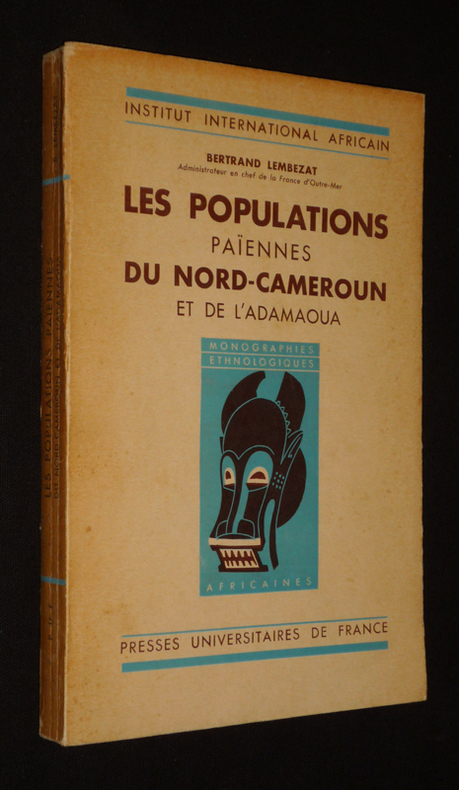
1961vh151Presses Universitaires de France Monographies ethnologiques africaines Broché 1961 In-8 (15,7 x 24 cm), broché, 252 pages ; pliure au dos, couverture brunie, quelques traces sur les tranches, assez bon état par ailleurs. Livraison a domicile (La Poste) ou en Mondial Relay sur simple demande.
1875GITe573Paris Victor Palmé 1875. In-8 II 351pp. Demi chagrin rouge, dos à 4 nerfs rehaussés d'un filet perlé, reliure de l'époque. Bel exemplaire, bien complet et bien relié.
1921104899Paris, Desclée De Brouwer & Cie, Auguste Picard 1921 In-4 25,5 x 16,5 cm. Broché, couverture bleu-ciel, titre en bleu marine sur le dos et le premier plat, VII-438 pp., 252 figures, notes en bas de page, table analytique, index. Exemplaire en bon état.
19873995Paris Presses de la Sorbonne 1987 In-8 (h. 24 cm.) 222 pp. couverture souple.
49935Paul Geuthner.1929.In-8 br.339 p.Planches.Etat moyen.Piqùres.Bas de la couv.salie.
in-12 (19 cm), xxv, 431 p , tres belle et solide reliure demi-percale à coins d'époque. Tres bel exemplaire, tres frais. [MI-19]
600513Paris, Librairie orientaliste Paul Geuthner, 1963. Petit in-4 carré broché, XVI-339 pp., 13 figures en n/b. in-t., 16 planches de reprod. photogr. sous serpente légendée, appendice, index.
1929606913Paris, Librairie orientaliste Paul Geutner, 1929. 1929 In-4 broché, XVI-339 pp., fig. en n/b. in-t., 16 planches d'ill. photogr. sous serpentes légendées, index. Ex.libris répété.
1963752681963 paris, Geuthner, 1963, grand in 8° broché, XVI-339 pages ; quelques phrases soulignées au crayon.
19293131917Paris: Paul Geuthner 1929. XVI, 339 Seiten. Gr. 8° (22,5-25 cm). Bibliotheks-Halbleinenband mit goldgeprägtem Rückenschild. [Hardcover / fest gebunden].
Ex-library copy with usual stamps, call numbers and pocket. Book has been rebound in blue buckram with white lettering to spine ; Bibliothèque Des Écoles Française D'Athènes Et De Rome Fascicule 26; 184 pages
1924134763Paris, Chacornac 1924 In-8 22,5 x 14 cm. Broché, couverture rouge auteur & titre en noir sur le dos et le premier plat de couverture orné d’une vignette, 164 pp., notes, table des matières.
159521221595 Imprimeur S. Millanges, Bourdeaus (Bordeaux), 1595. In-8, plein maroquin vert ancien, papier dominoté intérieur, tranches dorées. 18ème siècle, dos abondamment orné, roulette intérieure.(ff 12), 176, (ff 3), 776 pages. Mention de seconde édition (revue, corrigée et "de beaucoup" augmentée).
195118547Paris Gallimard 1951 In-12 92 pp " Combien notre vie changerait si on voyait que la géométrie grecque et la foi chrétienne ont jailli de la même source"
1809GITj144A Paris chez Antoine-Augustin Renouard 1809. 6 parties en 2 volumes petit in-12 (13,5cm x 8cm) X 127pp, 120pp, 96pp / 104pp, 112pp, 150pp. Demi basane bleu nuit, dos lisse orné d'un double filet doré, reliure de l'époque. Orné de 11 jolies vignettes naïves hors texte (4 dans la 1re partie, 7 dans la 3e). Exemplaire en bon état et complet même si la tomaison du 2e volume ne mentionne pas la 6e et dernière partie. (4772)
1895110873Librairie de l’Art inépendant 1895 In-8 20 x 13 cm. Broché, titre en noir sur le dos et le premier plat, 116 pp. Dos bruni, pages non coupées.
A couple of small tears to bottom corners of DJ else Fine. ; The Papers and Monographs of the American Academy in Rome; 368 pages; Recent years have seen a welcome growth of interest in the history of early Rome. Libri Annales Pontificum Maximorum: the Origins of the Annalistic Tradition contributes important information on this period by focusing on the earliest stages of Roman historical writing. The book is once again available, with a new Introduction by the author that brings the work up to date and helps place it in its current context. This book remains the starting point for study of the pre-annalistic tradition of Roman history. When first published, the volume sparked a lively debate among classicists and historians of the ancient world. Previous scholarship had often assigned the pontifical chronicle a central role not only in preserving the history of the early Republic, but also in shaping the form of the annalistic tradition. But the author showed that these assumptions rested on insecure foundations; to a large extent, they misrepresented the historiographic development of the annalistic tradition as we know it from, above all, Livy and Dionysius of Halicarnassus. Perhaps the book's most controversial contention was that the final eighty-book edition of the chronicle, which previous scholars had dated to the later second century BCE, is more probably a massive reworking of materials in the Augustan period. This finding will likely require a considerable revision in our understanding of the development of the annalistic tradition. In the course of making these innovative arguments, the author offers extensive information about the origins of the annalistic tradition and about the early history and historiography of Rome. Bruce W. Frier is Professor of Classics and Roman Law, and Henry King Ransom Professor of Law, University of Michigan. He has published numerous books and articles on classical and legal topics, and has won the Charles J. Goodwin Award of Merit from the American Philological Association.
Upper corner a bit bumped. DJ spine sunned. Else minor shelfwear. ; The Papers and Monographs of the American Academy in Rome Vol. XXVII; 368 pages; Recent years have seen a welcome growth of interest in the history of early Rome. Libri Annales Pontificum Maximorum: the Origins of the Annalistic Tradition contributes important information on this period by focusing on the earliest stages of Roman historical writing. The book is once again available, with a new Introduction by the author that brings the work up to date and helps place it in its current context. This book remains the starting point for study of the pre-annalistic tradition of Roman history. When first published, the volume sparked a lively debate among classicists and historians of the ancient world. Previous scholarship had often assigned the pontifical chronicle a central role not only in preserving the history of the early Republic, but also in shaping the form of the annalistic tradition. But the author showed that these assumptions rested on insecure foundations; to a large extent, they misrepresented the historiographic development of the annalistic tradition as we know it from, above all, Livy and Dionysius of Halicarnassus. Perhaps the book's most controversial contention was that the final eighty-book edition of the chronicle, which previous scholars had dated to the later second century BCE, is more probably a massive reworking of materials in the Augustan period. This finding will likely require a considerable revision in our understanding of the development of the annalistic tradition. In the course of making these innovative arguments, the author offers extensive information about the origins of the annalistic tradition and about the early history and historiography of Rome. Bruce W. Frier is Professor of Classics and Roman Law, and Henry King Ransom Professor of Law, University of Michigan. He has published numerous books and articles on classical and legal topics, and has won the Charles J. Goodwin Award of Merit from the American Philological Association.
Life, Death, and Entertainment gives those with a general interest in Roman antiquity a starting point, informed by the latest developments in scholarship, for understanding the extraordinary range of Roman society. Family structure, slavery, gender identity, food supply, religion, and entertainment---all crucial parts of the Roman world---are discussed here, in a single volume that offers an approachable guide for readers of all backgrounds. The collection unites a series of general introductions on each of these topics, bringing readers in touch with a broad range of evidence, as well as with a wide variety of approaches to basic questions about the Roman world. ; 353 pages
Creasing to front wrap. Underlining in pen to 1 page. ; Life, Death, and Entertainment gives those with a general interest in Roman antiquity a starting point, informed by the latest developments in scholarship, for understanding the extraordinary range of Roman society. Family structure, slavery, gender identity, food supply, religion, and entertainment---all crucial parts of the Roman world---are discussed here, in a single volume that offers an approachable guide for readers of all backgrounds. The collection unites a series of general introductions on each of these topics, bringing readers in touch with a broad range of evidence, as well as with a wide variety of approaches to basic questions about the Roman world. ; 353 pages
Gift inscription from author to ffep: "C. Bailey Balliol College from the author 1923". Includes card from author tipped in. Includes newpaper obituary of author tipped in. Former owner's name in ink to inner cover (Charles Babcock). Includes American Academy in Rome - Newletter (December 1969) tipped in (with memoriam of author). Possibly rebound in brown boards with gilt lettering to spine. Corners a bit edgeworn and spine ends. Pages tanned. ; Papers and Monographs of the American Academy in Rome Volume II; 258 pages; Signed by Author
Ex-library copy with usual stamps, call numbers. Small tears to base of spine. 'Lucretius' written in pen to spine. Call numbers written to top of front wrap. Some creasing to a few corners. ; Mnemosyne, Bibliotheca Classica Batava : Supplementum 40; 134 pages
Tears to spine ends with another tear to front wrap (2 cm) and small piece of corner of front wrap torn off. Creasing and a bit of scuffing to wraps. Scholar's bookplate to inner cover (Robert Brown). Scholar's blindstamp and name to ffep (Robert Brown). A bit of pencilling to margins of a few pages. ; Mnemosyne, Bibliotheca Classica Batava : Supplementum 40; 134 pages