100 résultats
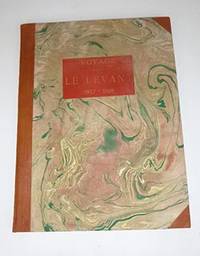
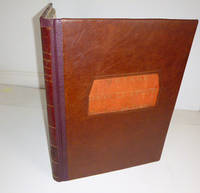
51-4752Paris: Imprimerie royale 1819. Large folio. New full calf by the artisan bookbinder Sasha Mosalov. Part of original spine and front cover title preserved Complete with 80 plates.Colas 1089; Brunet II 1337; not in OCLC.Nicolas Nicolaides: Baron Louis Nicolas Philippe Auguste de Forbin later count de Forbin la Roque-d'Anthéron 1777 – ΠαÏίσι 1841 was a French painter author and antiquarian. He was also a pupil of painter Jacques-Louis David. During the Bourbon restauration Forbin served as general director of the Louvre Museum and other museums of France.Inspired by the travels of François-René de Chateaubriand Forbin sailed out from Toulon on 22 August 1817 to tour the eastern Mediterranean. Like Chateaubriand Forbin travelled on his own initiative without an order from the French government; however since the aim of his journey was to discover Greek and Roman antiquities and to draw landscapes of the places he would visit he was able to travel on the ships of the French fleet of the Levant Flotte du Levant.In his venture Forbin was accompanied by painters Pierre Prevost and Léon Matthieu Cochereau also a pupil of David and a nephew of Prévost as well as architect Jean-Nicolas Huyot. Abbé de Forbin-Janson later bishop of Nancy was also a member of the company for the first part of the journey while Huyot had to retire when he fractured his leg on Milos island. In addition twenty-four year old Cochereau died of dysentery off the coast of Cythera and was replaced by Linant de Bellefonds who at the time was a mate on "Cleopatra" the mission's ship. De Bellefonds resigned from his position on the ship and participated in the expedition as a painter and chartographer. When the expedition ended in December of 1817 de Bellefonds decided to stay on in Egypt and explored its territory as member of several missions. From 1831 to 1869 he served the kingdom of Egypt as chief engineer of several public works including the Suez Canal.The expedition sailed to Acre Galilee and thenceforth travelled by land. While in Palestine the travellers visited the Dead Sea and Jordan river reached Cairo and sailed the Nile down to Upper Egypt. The main places they visited includde Milos island Athens Constantinople Ephesus Acre Jerusalem Gaza Damietta Cairo Luxor Thebes Rosetta and Alexandria. When the expedition returned to France in April 1818 Forbin had spent approximately 28.000 francs on the purchase and transportation of antiquities some of which ended up in the Louvre collections at the time Royal Museum of France. Prevost drew panoramic views of Jerusalem and Athens but succumbed to pneumonia in 1823 without completing his panorama of Constantinople.The descriptions of Forbin show him to be a mature observer in possession of deep humanistic culture. Forbin also travelled to Sicily in 1820 and published his travel account as he had done with his expedition of 1817.Moyen-Orient - FORBIN Claude Comte de. Voyage dans le Levant. Paris Imprimerie Royale 1819.Atlas seul in-folio 74 x 55 cm ; demi-maroquin rouge à coins dos lisse orné. 3 ff. 110 pp. 1 f. pp. 111-132 80 planches numérotées 1-78 dont 70 lithographies par Baltard Bourgeois Fragonard Lecomte Vernet… d’après Forbin Vernet Isabey et Fragonard 8 aquatintes par Debucourt et 2 plans in fine.L'atlas in-folio qui accompagne l'édition originale du Voyage dans le Levant en 1817 et 1818 de Forbin ne fut tiré qu'à 325 exemplaires.Peintre et archéologue élève de David le Comte de Forbin fut nommé par Louis XVIII directeur du Musée du Louvre. Il entreprit ce voyage en Grèce en Asie Mineure en Palestine et en Égypte en 1817 et 1818 sur une frégate de l'escadre du Levant. Sa mission était d'acheter des antiquités pour le Louvre.De la bibliothèque Paul Lagrave avec son ex-libris au contreplat et de la bibliothèque du Comte François Chandon de Briailles 1892-1953 descendant des fondateurs de la fameuse maison de Champagne avec son ex-libris sur la première garde. Paris: Imprimerie royale, 1819. unknown
51-3962Paris: Imprimerie royale 1819. Large folio. 67 x 50 cm. New half Sakora goatskin with marbled boards preserving the original label by the artisan binder Sasha Mosalov. Plate volume only with 71 of 80 plates lacking plates 3 15 17 25 40 52 55 73. Lacking the title page. Some stains in the margins. Very good.Colas 1089; Brunet II 1337; not in OCLC.Written by Nicolas Nicolaides: Baron Louis Nicolas Philippe Auguste de Forbin later count de Forbin la Roque-d'Anthéron 1777 – ΠαÏίσι 1841 was a French painter author and antiquarian. He was also a pupil of painter Jacques-Louis David. During the Bourbon restauration Forbin served as general director of the Louvre Museum and other museums of France.Inspired by the travels of François-René de Chateaubriand Forbin sailed out from Toulon on 22 August 1817 to tour the eastern Mediterranean. Like Chateaubriand Forbin travelled on his own initiative without an order from the French government; however since the aim of his journey was to discover Greek and Roman antiquities and to draw landscapes of the places he would visit he was able to travel on the ships of the French fleet of the Levant Flotte du Levant.In his venture Forbin was accompanied by painters Pierre Prevost and Léon Matthieu Cochereau also a pupil of David and a nephew of Prévost as well as architect Jean-Nicolas Huyot. Abbé de Forbin-Janson later bishop of Nancy was also a member of the company for the first part of the journey while Huyot had to retire when he fractured his leg on Milos island. In addition twenty-four year old Cochereau died of dysentery off the coast of Cythera and was replaced by Linant de Bellefonds who at the time was a mate on "Cleopatra" the mission's ship. De Bellefonds resigned from his position on the ship and participated in the expedition as a painter and chartographer. When the expedition ended in December of 1817 de Bellefonds decided to stay on in Egypt and explored its territory as member of several missions. From 1831 to 1869 he served the kingdom of Egypt as chief engineer of several public works including the Suez Canal. The expedition sailed to Acre Galilee and thenceforth travelled by land. While in Palestine the travellers visited the Dead Sea and Jordan river reached Cairo and sailed the Nile down to Upper Egypt. The main places they visited includde Milos island Athens Constantinople Ephesus Acre Jerusalem Gaza Damietta Cairo Luxor Thebes Rosetta and Alexandria. When the expedition returned to France in April 1818 Forbin had spent approximately 28.000 francs on the purchase and transportation of antiquities some of which ended up in the Louvre collections at the time Royal Museum of France. Prevost drew panoramic views of Jerusalem and Athens but succumbed to pneumonia in 1823 without completing his panorama of Constantinople.The descriptions of Forbin show him to be a mature observer in possession of deep humanistic culture. His style sometimes resembles a clumsy imitation of Chateaubriand's "Journey to the Holy Land" 1806. However as Forbin was not a professional author but a painter his descriptions are way more exact than those of Chateaubriand.Forbin also travelled to Sicily in 1820 and published his travel account as he had done with his expedition of 1817. Paris: Imprimerie royale, 1819. hardcover
180012763Paris: Charles Bance & Aumont 1800. Aquatint engraving printed in colour à la poupée on wove paper. Very good condition apart from some overall light soiling and minor foxing. Trimmed close to plate mark on all sides. A striking beautifully coloured engraving after the renowned 16th-century Venetian Mannerist Tintoretto. A representation of the Italian painter's enigmatic mistress this plate is part of a series of three aquatints Debucourt completed after paintings by Tintoretto Rubens and Raphael depicting their respective mistresses.<br/> <br/> This print is a stunning example of the single plate colour printing technique used in France beginning in the 18th century. The effect is achieved by inking a single plate with several different colours by using a rag stump a process known as à la poupée. The outcome achieved by this laborious method of inking has a wonderful painterly effect and creates a delicacy of image which is charming to behold. Although a painter by training Philibert-Louis Debucourt is primarily renowned as one of the most innovative colour printmakers of the eighteenth century. Born in 1781 he studied with Joseph Marie Vien at the French Academy. After several years of exhibiting his paintings at the Salon he turned to printmaking in 1781. During the mid 1780s he began experimenting with the complicated multiple-plate colour printing process a technique that was refined and revolutionized by Jean-François Janinet. Debucourt found success with his colour intaglio prints of Parisian high society and he quickly earned a reputation as a skilled and prolific engraver. The bulk of his prints however were based on paintings by other artists and completed after the turn of the century. Despite his intense focus on printmaking he continued to exhibit his paintings alongside his engravings at the Salon throughout his life.<br/> <br/> Cf. Benezit Dictionnaire des Peintres Sculpteurs Dessinateurs et Graveurs vol. 4 p. 323; cf. Regency to Empire: French Printmaking 1715-1814 p. 346; Fenaille L'oeuvre gravé de P.-L. Debucourt 1755-1832 pp. 257-8. Charles Bance & Aumont unknown
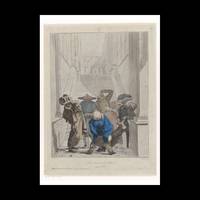
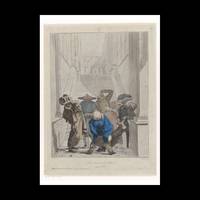
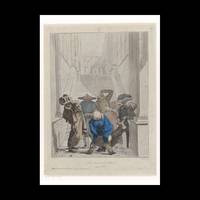
2142091Contentum Ltd. Loose sheet. New. High-quality art print based on an original work from the Rijksmuseum. Created in the 19th century 1824. Professionally printed on premium fine-art paper Photo Rag Bright White premium quality in size A2. The artwork is printed with a white border museum-style presentation. Contentum Ltd. unknown
2142090Contentum Ltd. Loose sheet. New. High-quality art print based on an original work from the Rijksmuseum. Created in the 19th century 1824. Professionally printed on premium fine-art paper Photo Matt Fibre in size A2. The artwork is printed with a white border museum-style presentation. Contentum Ltd. unknown
2142089Contentum Ltd. Loose sheet. New. High-quality art print based on an original work from the Rijksmuseum. Created in the 19th century 1824. Professionally printed on premium fine-art paper Museum Etching museum quality in size A3. The artwork is printed with a white border museum-style presentation. Contentum Ltd. unknown
2142092Contentum Ltd. Loose sheet. New. High-quality art print based on an original work from the Rijksmuseum. Created in the 19th century 1824. Professionally printed on premium fine-art paper Museum Etching museum quality in size A2. The artwork is printed with a white border museum-style presentation. Contentum Ltd. unknown
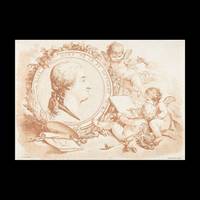
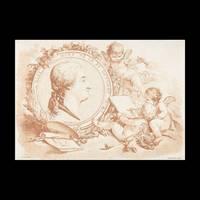
2172623Contentum Ltd. Loose sheet. New. High-quality art print based on an original work from the Rijksmuseum. Created in the 18th century 1791. Professionally printed on premium fine-art paper Photo Rag Bright White premium quality in size A2. The artwork is printed with a white border museum-style presentation. Contentum Ltd. unknown
2172622Contentum Ltd. Loose sheet. New. High-quality art print based on an original work from the Rijksmuseum. Created in the 18th century 1791. Professionally printed on premium fine-art paper Photo Matt Fibre in size A2. The artwork is printed with a white border museum-style presentation. Contentum Ltd. unknown
2172624Contentum Ltd. Loose sheet. New. High-quality art print based on an original work from the Rijksmuseum. Created in the 18th century 1791. Professionally printed on premium fine-art paper Museum Etching museum quality in size A2. The artwork is printed with a white border museum-style presentation. Contentum Ltd. unknown
2172621Contentum Ltd. Loose sheet. New. High-quality art print based on an original work from the Rijksmuseum. Created in the 18th century 1791. Professionally printed on premium fine-art paper Museum Etching museum quality in size A3. The artwork is printed with a white border museum-style presentation. Contentum Ltd. unknown
1865395Contentum Ltd. Loose sheet. New. High-quality art print based on an original work from the Rijksmuseum. Created in the 18th century 1786. Professionally printed on premium fine-art paper Museum Etching museum quality in size A3. The artwork is printed with a white border museum-style presentation. Contentum Ltd. unknown
1865396Contentum Ltd. Loose sheet. New. High-quality art print based on an original work from the Rijksmuseum. Created in the 18th century 1786. Professionally printed on premium fine-art paper Photo Matt Fibre in size A2. The artwork is printed with a white border museum-style presentation. Contentum Ltd. unknown
1865398Contentum Ltd. Loose sheet. New. High-quality art print based on an original work from the Rijksmuseum. Created in the 18th century 1786. Professionally printed on premium fine-art paper Museum Etching museum quality in size A2. The artwork is printed with a white border museum-style presentation. Contentum Ltd. unknown
1865397Contentum Ltd. Loose sheet. New. High-quality art print based on an original work from the Rijksmuseum. Created in the 18th century 1786. Professionally printed on premium fine-art paper Photo Rag Bright White premium quality in size A2. The artwork is printed with a white border museum-style presentation. Contentum Ltd. unknown
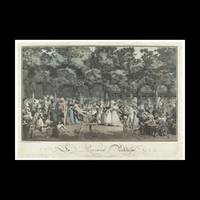
1958464Contentum Ltd. Loose sheet. New. High-quality art print based on an original work from the Rijksmuseum. Created in the 18th century 1792. Professionally printed on premium fine-art paper Museum Etching museum quality in size A2. The artwork is printed with a white border museum-style presentation. Contentum Ltd. unknown
1958462Contentum Ltd. Loose sheet. New. High-quality art print based on an original work from the Rijksmuseum. Created in the 18th century 1792. Professionally printed on premium fine-art paper Photo Matt Fibre in size A2. The artwork is printed with a white border museum-style presentation. Contentum Ltd. unknown
1958461Contentum Ltd. Loose sheet. New. High-quality art print based on an original work from the Rijksmuseum. Created in the 18th century 1792. Professionally printed on premium fine-art paper Museum Etching museum quality in size A3. The artwork is printed with a white border museum-style presentation. Contentum Ltd. unknown
1958463Contentum Ltd. Loose sheet. New. High-quality art print based on an original work from the Rijksmuseum. Created in the 18th century 1792. Professionally printed on premium fine-art paper Photo Rag Bright White premium quality in size A2. The artwork is printed with a white border museum-style presentation. Contentum Ltd. unknown
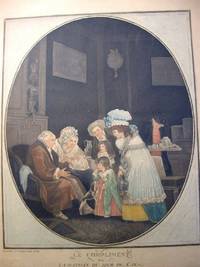
18249Very Good with no dust jacket. First Edition. Non-Book. This very rare engraving by Philibert-Louis Debucourt entitled "Le Compliment ou La Matinée du jour de l'an" The Compliment or New Year's Morning ca1787. This Etching was printed in blue red yellow carmine and black inks and 11 13/16 × 9 7/8 in 30 × 25.1 cm. It is printed on woven paper which has been framed and shows light sunning. We believe this to be an original etching as we have been unable to confirm the existence of restrikes and as such is very scarce. Most engravings by Debucourt of this subject are in museums and national galleries. The engraving is offered unframed. ; 12" x 10" . unknown
1782551Contentum Ltd. Loose sheet. New. High-quality art print based on an original work from the Rijksmuseum. Created in the 19th century 1813. Professionally printed on premium fine-art paper Museum Etching museum quality in size A3. The artwork is printed with a white border museum-style presentation. Contentum Ltd. unknown
1782552Contentum Ltd. Loose sheet. New. High-quality art print based on an original work from the Rijksmuseum. Created in the 19th century 1813. Professionally printed on premium fine-art paper Photo Matt Fibre in size A2. The artwork is printed with a white border museum-style presentation. Contentum Ltd. unknown
1782553Contentum Ltd. Loose sheet. New. High-quality art print based on an original work from the Rijksmuseum. Created in the 19th century 1813. Professionally printed on premium fine-art paper Photo Rag Bright White premium quality in size A2. The artwork is printed with a white border museum-style presentation. Contentum Ltd. unknown
1782554Contentum Ltd. Loose sheet. New. High-quality art print based on an original work from the Rijksmuseum. Created in the 19th century 1813. Professionally printed on premium fine-art paper Museum Etching museum quality in size A2. The artwork is printed with a white border museum-style presentation. Contentum Ltd. unknown
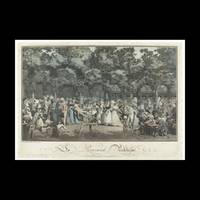
1787015962Paris: Louis-Philibert Deboucourt 1787. Early Printing . Single Sheet. Very Good . 18 1/2" x 12 3/4. Color Engraving. An Important Eighteenth Century Engraving One Of The First To Be Printed In Color By The Use Of Several Different Impressions Each Precisely Aligned. Laid Paper. Complete With Full Margins As Issued With Plate Mark 11" X 15" Overall Size 18 3/8" X 12 3/4". This State Of The Plates Has The Stone Beneath The Lamb Colored Blue With The Three Stones To The Right Colored Successively Brown Blue And Brown. Text Is "Peint Et Grave Par De Bucourt Peitre Du Roy 1727 Sic" To Left With Text At Center "Heur Et Malheur / Ou / La Cruce Cassee / A Paris Chez L'auteur Cour Du Louvre La 5Eme Porte Agauche En Entrant Par La Colonade Au 1Er." Plate Mark On All Four Sides With Adjustment Reference Marks. Philibert-Louis Debucourt 1755 - 1832 Was A French Painter And Engraver. Debucourt Was Born In Paris In 1755 And Became A Pupil Of Vien. He Executed A Few Plates In Mezzotint Such As The Heureuse Famille The Benediction De La Mariée And The Cruche Cassée After His Own Designs. Most Of His Work Was However In Aquatint. He Became The Leading Maker Of Multi-Plate Colour Prints Combining Washes Of Aquatint With Line-Engraving.2 He Used A Number Of Different Techniques But Most Involved Three Colour Plates And A Fourth Key Plate Outlining The Design In Black. Debucourt's Father-In-Law Was The Sculptor Louis-Philippe Mouchy. In The Marriage Contract Mouchy Generously Offered To Provide A Three-Room Apartment At The Louvre Where Debucourt Lived For Twelve And A Half Years. The Address Of This Apartment Is Often Given On His Prints. Some Of His Work Was Satirical Such As La Promenade Publique An Aquatint Of 1792 Showing A Crowd In The Gardens The Palais-Royal. As Well As Work From His Own Designs He Made Aquatints After Carle Vernet Including The Horse Frightened By A Lion The Horse Frightened By Lightning And The Strayed Huntsman. Debucourt Was Assisted For Some Years By His Pupil And Nephew Jean-Pierre-Marie Jazet. <br/> <br/> Louis-Philibert Deboucourt unknown