Fischer Von Erlach, Johann BernhardBiblio.com

13 résultats
1170788629.Gpaperback. Good. Access codes and supplements are not guaranteed with used items. May be an ex-library book. paperback
1385708115.Ghardcover. Good. Access codes and supplements are not guaranteed with used items. May be an ex-library book. hardcover
17254770Leipzig 1725. Copper engraving 30 x 42 cms black and white. Shows a Roman Sarcophagus. From the second edition of Fischer von Erlachs extraordinary work on comparative architecture. Print unknown
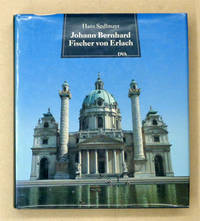
27498Stuttgart DVA 1997. 4° 448 S. 394 Abb. Kart. OU randknittrig u. am Rücken etw. aufgehellt Stempel a. Schmutztitel Buch sonst tadellos. Dt. Erstausgabe. 010 Stuttgart, DVA, 1997 unknown
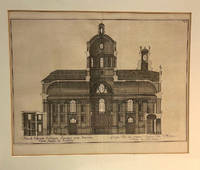
1929-25Wien 1721. Orig. Kupferstich. 34 x 43 cm. Bildausschnitt. Unter Passepartout. Gebräunt. Nebehay-Wagner 176/5 - Querschnitt der Kollegienkirche in Salzburg in der Platte signiert "J.B.F.v.E. inv. et delin." und Num. "Ta. X". [Wien, 1721]. unknown
1725016261Leipsic: Fischer von Erlach Johann Bernhard 1725. Large uncoloured print. Measures 42x29.5cm plus margin. Light surface wear. Engreaving in very good clean condition. . Very Good. Fischer von Erlach, Johann Bernhard unknown
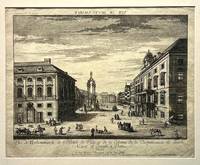
0012-26Augsburg Kaiserlich Franziskische Akademie um 1780. Orig. Kupferstich. 33 4 x 42 cm. Bildausschn. Unter Passepartout. Kräftiger Abzug gut erhalten. Kopftitel seitenverkehrt gedruckt. vgl. Nebehay-W. 139/14 - Ansicht des Hohen Marktes in Wien. Aus: "Collection des Prospects" nach dem Stich von Johann Adam Delsenbach. Augsburg, Kaiserlich Franziskische Akademie [um 1780]. unknown
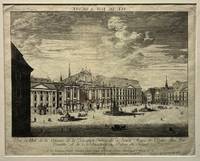
0017-26Augsburg Kaiserlich Franziskische Akademie um 1780. Orig. Kupferstich. 33 4 x 42 cm. Bildausschn. Unter Passepartout. Leich berieben Kopftitel seitenverkehrt gedruckt. Winziges Löchlein in der Dasrtellung. vgl. Nebehay-W. 139/12 - Ansicht des Platzes "Am Hof" in Wien. Aus: "Collection des Prospects" nach dem Stich von Johann Adam Delsenbach. Augsburg, Kaiserlich Franziskische Akademie [um 1780]. unknown
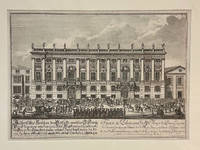
0031-26Leipzig 1742. Orig.-Kupferstich. 31 x 43 cm. Bildausschn. Unter Passepartout. Gut erhalten kräftiger Abzug. Nebehay-W. 176 Teil 4/5 - Ansicht des Winterpalais von Prinz Eugen von Savoyen in Wien. Aus: "Entwurff einer historischen Architektur .". Unten rechts in der Platte signiert: "Delsenbach fecit". [Leipzig, 1742]. unknown
172133321Wien 1721. In excellent condition. Some spots at the image. 29.4 x 423 cm 11.5 x 1675 inches. Original copper engraving uncolored. Plate XIII from the third volume of Fischer von Erlach's monumental opus "Entwurff Eine Historischen Architectur" Vienna 1721 Johann Bernhard Fischer since 1696 Fischer von Erlach born July 20 1656 in Graz April 5 1723 in Vienna was an Austrian Baroque architect and father of Joseph Emanuel Fischer von Erlach."Johann Bernhard Fischer von Erlach 1656-1723 established the leading position of the German late baroque in Europe with his buildings in Vienna and Salzburg Palais Trautson. In Salzburg he stood out primarily with church buildings such as the Holy Trinity Church and the Collegiate Church. In addition to his European importance as an architect there is the equal theorist Fischer von Erlach. With his engraving "draft of a historical architecture" published in 1721 he leads the tradition of classical architectural treatises but at the same time drafts his vision of a world architecture that culminates in his own works. He not only places his own buildings on an equal footing with the famous works of antiquity in them he draws the sum of all previous architecture and thus even surpasses antiquity. " www.barockmuseum.at unknown
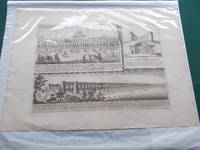
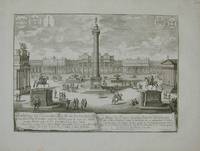
17254768Leipzig 1725. Copper engraving 29.5 x 42 cms black and white. Shows Trajans Column in a reconstruction of its original setting. From the second edition of Fischer von Erlachs extraordinary work on comparative architecture. Print unknown
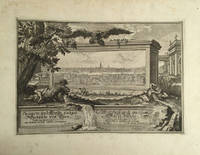
3379Aug. Vind. Augsburg : J.A. Pfeffel 1719. Oblong folio half calf and original speckled brown paper over boards recently re-backed raised bands with gilt floral ornaments in seven compartments. 29 of 30 leaves comprising 2 engraved titles and 27 plates; lacking typographic privilege leaf as is often the case. <p>An unusually handsome wide-margined copy of this marvelous collection of views of early eighteenth-century Vienna.</p> <br /> <br /> <p>The series begins with a beautifully designed allegorical plate consisting of a panoramic view of the city in the form of a relief panel on a monument surmounted by an eagle with two figures nearby leaning on overturned urns from which water flows in cataracts to the bottom of the scene. Subsequent plates depict façades squares monuments great houses gardens etc. These include "Der Schotten Platz" "Prospect des Wienerischen Neu-Marckts" "Die Furste Lichtenstainische Pallast" "Prospect eines Wienerischen Platzes der Hoff genannt" "Prospect des Hohen Marckts zu Wien" "Prospect von dem Lust-Gebäude und Garten" "Prospect des Lust-Gebäudes bey Dornbach Neu-Waldeck genannt" and others. Nearly every plate is richly detailed and teeming with figures engaged in all manner of activities: a winter parade with sleighs market scenes bears with their trainers cooks roasting meat on spits gamboling dogs performers on a stage rearing and kicking horses and so on.</p> <br /> <br /> <p>Most of the plates are after architect Joseph Emanuel Fischer von Erlach 1693-1742 and three after his more famous father Johann Bernhard Fischer von Erlach court architect to the Hapsburgs and one of the towering figures of baroque architecture. Joseph Emanuel honed his skills in his father's atelier working on several of his commissions and assisting him in the compilation of Entwurff einer Historischen Architectur 1721 published in London as A Plan of Civil and Historical Architecture 1737 an important comparative study of world architecture. A fine architect in his own right who obtained many important commissions and ultimately succeeded to his father's office of court architect Joseph has nevertheless remained in his father's shadow. Johann Adam Delsenbach 1687-1765 studied portrait engraving with Augustin Fleischmann and attended the Nuremberg Academy of Painting. In 1710 he went to Vienna in response to Johann Bernhard Fischer von Erlach's call for engravers to work on his Entwurff for which Delsenbach engraved many of the plates. He was subsequently appointed court engraver by Anton Florian Prince of Lichtenstein.</p> <br /> <br /> <p>CONDITION: Good moderate wear offsetting from leather corners to endpapers occasional light foxing and soiling. The luxurious wide margins of this copy make it especially appealing.</p> Aug. Vind. [Augsburg] : J.A. Pfeffel, [1719] unknown
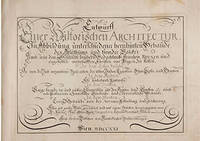
51-7134Vienna: by the author 1721. Oblong folio. 391 x 535 mm. Later calf upper cover decorated in blind and gilt with initials "SRG" and armorial crown motif gilt lettered morocco spine label.5 parts in one volume.Engraved calligraphic title and 5 engraved calligraphic section titles by J.A Delsenbach engraved calligraphic dedication page by Fischer von Erlach 85 of 86 plates 3 folding Book 3 plate 6 trimmed lacking Book IV plate 20. A few plates with tears repaired on verso.FIRST EDITION of this history of architecture "the first of its kind" Neville. The work includes plates illustrating a broad array of architectural styles including pyramids temples castles palaces and churches. Each volume highlights the architecture of a different regions and styles or decorative objects: the Near East architecture Part I Roman architecture Part II Islamic and Asian architecture Part III Fischer von Erlach's own works primarily in Vienna and Salzburg Part IV and antique and Baroque vases Part V. Berlin Kat. 2105; see Kristoffer Neville: "The Early Reception of Fischer von Erlach's Entwurff einer historischen Architectur" Journal of the Society of Architectural Historians vol 66 no 2 2007 pp 160-175.Erstes Buch. Die von der Zeit vergrabene Bau-arten der alten Jüden Egÿptier Sÿrer Perser und Griechen.Andres Buch. Alte unbekante Römische.Drittes Buch. Einige fremde in- und ausser-europäische als der Araber und Türcken etc. auch neue persianische siamitische sinesische und japonische Gebäude.Viertes Buch. Einige Gebäude von des Autoris Erfindung und Zeichnung.Fischer’s architectural oeuvre ranges from summer and city residences for the Viennese nobility to church buildings for the Archbishop of Salzburg and the major imperial monuments of baroque Vienna. By eloquently referring to antiquity while being unmistakably modern his buildings complied with the notion of noble representation with its roots in tradition and history.“Entwurff Einer Historischen Architectur†which Fischer published in 1721 was the first illustrated history of global architecture. The work ranging in content from the Wonders of the Ancient World and Greek Roman Arabic Persian and Chinese monuments to his own projects earned him acclaim across Europe. The impressive copperplates from “Historischen Architektur†and the preserved preparatory drawings form the centerpiece of the exhibition which was organized in cooperation with the Salzburg Museum. Its nine chapters span an arc from Fischer’s early days in Rome to his later masterpieces and above all the Karlskirche. A wealth of objects some previously unseen — drawings prints models paintings sculptures and books — illustrate his exceptional artistic oeuvre. By presenting Fischer’s buildings from new and sometimes unexpected perspectives the photographs taken by Werner Feiersinger trace the artistic intentions of the architect.Die Karlskirche gilt als das bedeutendste Bauwerk des Barock in Österreich und ist ein Wahrzeichen Wiens. Ihr Architekt Johann Bernhard Fischer von Erlach 1656–1723 steht im Zentrum der ersten Sonderausstellung im neueröffneten Wien Museum. Fast 70 Jahre nach der letzten großen Schau wird Fischers Werk neu betrachtet und mit der Gestaltung durch Werner Feiersinger in einen zeitgenössischen künstlerischen Kontext gestellt. Fischers Schaffen als Architekt reicht von Garten- und Stadtpalästen für den Wiener Adel über die Kirchenbauten für den Erzbischof von Salzburg bis hin zu den großen kaiserlichen Monumenten in Wien. Seine Bauten verwiesen auf die Antike und waren doch unverkennbar modern – damit kamen sie den zeitgenössischen Vorstellungen herrschaftlicher Repräsentation entgegen für die Tradition und Geschichte eine zentrale Rolle spielte.1721 veröffentlichte Fischer mit dem „Entwurff Einer Historischen Architectur“ die erste Weltgeschichte der Baukunst in Bildern. Das Werk das von den Weltwundern der Antike über griechische römische arabische persische und chinesische Monumente bis zu seinen eigenen Bauten und Projekten reicht machte Fischer in ganz Europa bekannt. Die eindrucksvollen Kupferstiche der Historischen Architektur und die dazu erhaltenen eigenhändigen Vorzeichnungen bilden das Zentrum der in Kooperation mit dem Salzburg Museum entstandenen Ausstellung. In neun Kapiteln spannt sie einen Bogen von Fischers Anfängen in Rom bis zu den späten Hauptwerken mit der Karlskirche als dem Höhepunkt. Eine Vielzahl zum Teil noch nie gezeigter Objekte – Zeichnungen Druckgrafiken Modelle Gemälde Skulpturen Bücher – macht sein außerordentliches künstlerisches Werk anschaulich. Die Fotografien von Werner Feiersinger zeigen die Bauten aus neuen mitunter ungeahnten Blickwinkeln und spüren damit den künstlerischen Absichten des Architekten nach.OCLC Number / Unique Identifier: 3700919:Yale Beinecke Rare Book and Manuscript Library Catalog Record no. 9953851383408651. Vienna: by the author, 1721 unknown