438 résultats
1970040110Thames & Hudson Ltd 1970. Hardcover. Near Fine/No Jacket. 8vo - over 7¾" - 9¾" tall/landscape. Bound in cream open weave cloth with title in red clean bright and square. Contents unmarked beginning to darken towards the page edges a very good well preserved book. <br/> <br/> Thames & Hudson Ltd hardcover
247912W Boesinger 1953. text in English French & German; oblong quarto wheat buckram-cloth boards red lettering to spine & front cover 248pp illus VG- moderate rubbing and tanning to covers moderate tanning to page edges slight foxing to eps v. small bookseller's stamp on fep slightly cocked - very sound overall in d/w scruffy moderate rubbing & soiling; edges have small tears particularly on spine extrems with 2cm open tear on bottom & jagged 5x3cm open tear on top; moderate foxing & slight water stains particularly to interior spine W Boesinger 1953 hardcover
1948012592New Haven CT: Yale University Press 1948. First American edition. Octavo. 127 pp; over 60 drawings by the author. Grey cloth with dustjacket. VG/VG a clean unmarked copy top edge a bit dusty; unclipped jacket has a quarter inch loss at head of spine extending 0.75 inch onto back panel small chip at base of spine spine & back panel lightly soiled & small tan stain near bottom edge edge of spine lightly rubbed; all in all a very respectable jacket. Hard Cover. Very Good/Very Good. Yale University Press hardcover
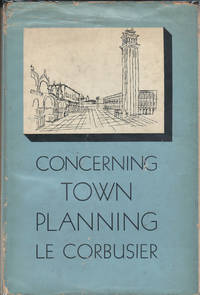
aly553New Haven: Yale University Press 1948. 8vo. pp. 127. b/w illus. cloth some spotting in upper edge of covers. dw dw rubbed at edges with several short tears & 1 small stain New Haven: Yale University Press, 1948 hardcover
1948278576New Haven: Yale University Press 1948. Hardcover. Very Good/Good. First American edition. Two small owner's names pencil signature of designer engineer and inventor Stanley Poler with a few pencil notes; and small stamp of William G. Harvey Jr. else near very good in good dustwrapper with a large chip on the front panel. Yale University Press hardcover
2700301889.Gpaperback. Good. Access codes and supplements are not guaranteed with used items. May be an ex-library book. paperback
195692461Zurich: Les Editions Girsberger. 1956. Sixth Edition. Hardcover. Fair. Paper over boards covers have moderate wear to corners edges crown and heel and discoloration. Small ink inscription on FFEP. Binding loose edges of textblock discolored moderately foxed. International shipping billed at cost. Photos upon request.; B&W; Oblong 8vo 8" to 9" tall; 214 pages . Les Editions Girsberger hardcover
20152-2910342573Editions Du Linteau 2015. Paperback. New. 1st edition. 890 pages. French language. 8.03x5.20x1.50 inches. Editions Du Linteau paperback
1962003109Paris: Mourlot 1962. Book. Fine. No Binding. 1st Edition. 12 original lithographs created by Le Corbusier in 1960 during his stay in Chandigarh. Printed by Mourlot in 1962 on wove paper. Limited edition of only 50 copies numbered in pencil. This is copy 39/50. Sheets measure 71.2 x 103.2 cm. Kept in a large cloth portfolio produced by Adine Paris 795 x 109 cm. With 5 out of 6 black & white lithographs. Missing "Trois verres d'aperitif". With all 6 color lithographs: "Je Revais" "Abraca" "1939. Chute de Barcelone" "Jeux" "Chez soi" and "Trois verres d'apéritif". 1 extra color lithograph Chez soi is printed with instructions by Le Corbusier. All lithographs monogrammed and dated in the stone. Complete with title sheet content sheet and 3 blanc sheets. Fine copy of the rare limited first edition. Mourlot hardcover
2013105267IU Press. New. 2013. Hardcover. 0253007267 . FREE UPGRADE to Courier/Priority Shipping Upon Request - IN STOCK AND IMMEDIATELY AVAILABLE FOR SHIPMENT - Flawless copy brand new pristine never opened -- 168 pages; many illustrations most in color. -- with a bonus offer-- . IU Press hardcover
52110s.d. 1979 In-4 28 cm 18pp. illustr. Nb-0163 La construction du couvent - l'Accueil - Le Corbusier à la Tourette - Plans du couvent - L'Inspiration : les monastères cisterciens - Une violence architecturale qui transpire la tendresse - Pourquoi Le Corbusier - Pour visiter le couvent etc. . . unknown
196023580New York: Frederick A. Praeger 1960. Pictorial cloth. Very Good /Near Fine. A handsome copy of the 1960 1st American edition translated from its original French by James Palmes. Tight and VG light foxing to the preliminaries small neat former owner name at the front free endpaper in a crisp price-intact Near Fine dustjacket with just a trace of light soiling to the panels. Quarto hundreds of illustrations throughout the Introduction by Maurice Jardot. Frederick A. Praeger unknown
19672410300041Praeger 1967. Hardcover. Very Good. 11x9x0. Third Printing 1967. Hardcover and dust jacket. Tears to jacket. Good binding and cover. Shelf wear. Some soiling to jacket. Clean unmarked pages. <br> "The artistic essence the creative philosophy and the range of genius of one of this century's titans of art and architecture emerge from these pages. In a masterly exposition of the creative process Le Corbusier surveys his own development from his early days as an art student to the completion of the convent at La Tourette France." <br> This is an oversized or heavy book which requires additional postage for international delivery outside the US. Praeger hardcover
DA01C-02722Frederick A. Praeger. Collectible - Acceptable. New York: Frederick A. Praeger 1960. 1st U.S. edition. 4to Hardcover. 308pp. B/W illustrations. Fair book and Poor dust jacket. Covers slightly dampstained. Hinges cracked. Dust jacket torn and lacking small portion at top of spine and bottom of front cover. art modern 20th century Inquire if you need further information. NOT AVAILABLE FOR SHIPMENT OUTSIDE OF THE UNITED STATES. Frederick A. Praeger hardcover
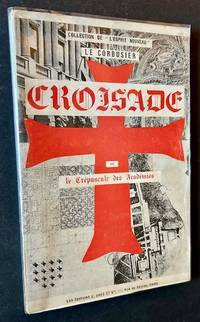
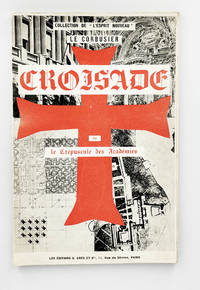
193323564Paris: Les Editions G. Cres et Cie 1933. Pictorial wrappers. Very Good . A very presentable copy of the 1933 1st edition. Clean and VG in its pictorial wrappers with a tender --but still perfectly sturdy-- front inner hinge. Lacking the publisher's glassine dustjacket. Octavo part of Les Editions G. Cres's "Collection de 'L'esprit Nouveau" series. Les Editions G. Cres et Cie unknown
193324191Paris: Led Editions G. Cres 1933. Pictorial wrappers. Very Good . A clean very presentable copy of the 1933 1st edition. Solid and VG in its original collaged wrappers. Internally very sharp with no writing or markings to speak of. Octavo part of the publisher's "L'Esprit Nouveau" series. Led Editions G. Cres unknown
1933009619Paris: Les éditions G. Crès et Cie 1933 8vo 24.5 cm 88 2 pp. Printed wrappers wrappers slightly rubbed small tear at the tail of the spine. Uncut copy of this polemical pamphlet by Le Corbusier Charles-Édouard Jeanneret 1887-1965 one of the central figures of twentieth-century modernist architecture and urbanism. Published in the Collection de "L'Esprit Nouveau" the text constitutes a vigorous defense of the modern architectural movement against attacks from academic and institutional circles. It was written as a direct response to a campaign led by the architect Gaston Umbdenstock professor at the École Polytechnique and studio chief at the École des Beaux-Arts who on 14 March 1932 delivered a widely publicized denunciation of modern architecture at the Salle Wagram before an audience convened by the Chambers of Commerce with the support of the Institut de France. Le Corbusier interprets this offensive as representing the interests of traditional building trades threatened by new construction methods such as steel framing reinforced concrete and industrialized techniques that were transforming architecture. The pamphlet opens with the declaration that it introduces no new doctrine but serves purely as a "defense" warning that the real danger to the modern movement lies less in overt academic opposition than in the infiltration of academic attitudes within modernism itself. The immediate occasion for the publication was a request from supporters in Algiers where Le Corbusier had recently delivered well-attended lectures on architecture and urbanism for a response to Umbdenstock's attack which had been widely circulated there. A vivid document of the ideological conflicts surrounding modern architecture in the early 1930s. Les éditions G. Crès et Cie paperback
81538Paris Les éditions G. Crès et Cie. 1933. Gr.8° 88 S. davon ca. 25 Taf. Brosch. Einband läd. getrennte Deckel m. Klebbd. zusammengefügt Rückenverluste etw. randknittrig u. -rissig Buchblock lose kl. Schildchen a. Vakatblatt Ecken min. gedrückt; Buchblock allg. in gutem Zustand. EA. = L’Esprit Nouveau. 010 Paris, Les éditions G. Crès et Cie., 1933 unknown
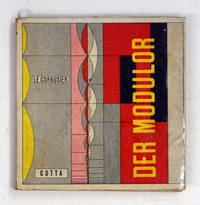
99372Stuttgart DVA/Cotta 1953. Quer-Kl.8° 241 S.; unzählige Abb. Broschur. Deckel mit Klebfolie eingefasst 1 Bl .m kleiner Klebstreifenspur etwas gebrauchssp.- gutes Exemplar. Bd. 1 in 2. Auflage. - Der Modulor frz. Moduler für dt. Proportionsschema ist ein vom Architekten und Maler Le Corbusier 1887–1965 in den Jahren 1942 bis 1955 entwickeltes Proportionssystem und stellt den bedeutendsten modernen Versuch dar der Architektur eine am Maß des Menschen orientierte mathematische Ordnung zu geben. Er steht damit in der Tradition von Vitruv.Der 1948 veröffentlichte Modulor wird zu den bedeutendsten Theorien der Architekturgeschichte beziehungsweise Architekturtheorie gezählt. In Modulor 2 erschienen 1955 erläutert Corbusier die Anwendung der Maßlehre die er seinem gesamten architektonischen Schaffen zugrunde gelegt hat. Er wollte damit der Architektur wieder ein menschliches Maß und gleichzeitig eine objektive Ordnung geben. 010 Stuttgart, DVA/Cotta, 1953 unknown
B195262-2Stuttgart J.G. Cottasche Buchhandlung Nachfolger 1953. 241 1pp. Prof. illus. Sq. 8vo. Orig wraps. D.j. Stuttgart (J.G. Cottasche Buchhandlung Nachfolger), 1953. paperback
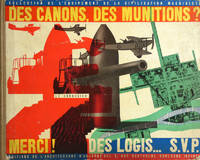
193822378Boulogne-sur-Seine: Editions de L'Architecture d'Aujourd'Hui 1938. Pictorial boards. Very Good . A sharp well-preserved copy of the 1938 1st edition. Crisp bright and VG to VG in its magnificent photocollage boards with very light soiling and scuffing along the rear panel. Oblong quarto hundreds of plates complementing the text. Le Corbusier's seminal study of the "Pavillion of New Times" at the Paris International Exhibition "Art and Technique" 1937. Editions de L'Architecture d'Aujourd'Hui unknown
2602SB012<p>Ce titre date de janvier 1937; il nest nullement une allusion à lactualité brûtale des réarmements de 1938. Monographie du «Pavillon des Temps Nouveaux» a lExposition Internationale «Art et Technique» de Paris 1937. Collection de l"Équipement de la Civilisation Machiniste. Editions de lArchitecture dAujourdhui 6 Rue Bartholdi Boulogne Seine. Le Corbusier. 1938.</p>_x000d_<p>Livro oblongo de 235x295 cm. Com 147 i págs. Cartonagem do editor com a lombada em tela ilustrada na pasta anterior com fotomontagem policroma do autor de inspiração construtivista justapondo fragmentos de artilharia e aviação com imagens de planos urbanísticos e habitação.</p>_x000d_<p>Profusamente ilustrado no texto com fotografias a preto e branco de Albin Salaün René Lévy e diversos amadores reproduções de desenhos originais de Le Corbusier fotografias de maquetes com ocasionais detalhes a cores fotografias aéreas plantas cortes e desenho técnico. Inclui ainda diagramas e fotomontagens.</p>_x000d_<p>Edição original rara desta monografia do «Pavillon des Temps Nouveaux» pavilhão efémero concebido por Le Corbusier e Pierre Jeanneret para a Exposição Internacional «Arte e Técnica» de Paris de 1937. Constitui simultaneamente o registo documental do pavilhão e um manifesto urbanístico de alcance programático. O título provocatório «Canhões munições Obrigado! Alojamentos. por favor» sintetiza a tese central: os recursos consagrados ao rearmamento deveriam ser canalizados para a resolução da crise habitacional.</p>_x000d_<p>Publicada em 1938 pelas <em>Éditions de l'Architecture d'Aujourd'hui </em>braço editorial da influente revista homónima fundada em 1930 pelo engenheiro e escultor André Bloc 18961966 a obra integra a «Collection de l'Équipement de la Civilisation Machiniste» colecção que reuniu as principais publicações teóricas de Le Corbusier entre as quais «La Ville Radieuse» 1935.</p>_x000d_<p>A obra organiza-se como uma transposição para o livro da experiência espacial do pavilhão estruturando-se em torno das secções temáticas que o compunham. Abre com uma reflexão sobre o alojamento como esperança da civilização maquinista seguida de uma apresentação da Carta de Atenas e dos trabalhos do CIAM Congressos Internacionais de Arquitectura Moderna incluindo os resultados do 4.º Congresso de Atenas 1933 e a preparação do 5.º dedicado à habitação e ao lazer. O índice regista entre outras secções: a análise crítica do estado de Paris o «Plan de Paris 37» a proposta de reorganização do Ilot Insalubre n.º 6 no bairro do Marais o projecto do arranha-céus cartesiano como centro administrativo a reforma agrária com os planos para a «Ferme Radieuse» e o «Village Coopératif» de Piacé Sarthe e ainda um curioso projecto de barco de salvamento insubmersível apresentado por Jean Badovici.</p>_x000d_<p>O pavilhão inaugurado a 17 de Julho de 1937 no sector de Saint-Cloud era uma estrutura desmontável uma vasta tenda de lona impermeável amarela suspensa de dezasseis pilares metálicos em treliça concebida como <em>Museu Itinerante de Educação Popular</em>. Tratava-se de uma peça de propaganda arquitectónica destinada a vulgarizar os princípios do urbanismo funcional junto do grande público numa época em que Le Corbusier apesar da sua notoriedade internacional enfrentava uma persistente dificuldade em concretizar projectos de envergadura em território francês.</p>_x000d_<p>A dimensão rural da obra merece destaque: as secções dedicadas à quinta e à aldeia cooperativa documentam a colaboração entre Le Corbusier e o sindicalista agrário Norbert Bézard 18961956 que desde 1933 incitou o arquitecto a aplicar à vida rural os mesmos princípios de racionalização e conforto que norteavam o seu modelo de cidade funcional a «Ville Radieuse» plano urbanístico teórico publicado em 1935 que propunha habitação em altura cobrindo apenas 12% do solo com os restantes 88% reservados a parques e espaços verdes separação rigorosa entre trânsito automóvel e peões e equipamentos colectivos integrados. As páginas dedicadas ao planeamento da<em> Village de Piacé</em> com os seus esquemas de silo cooperativa de abastecimento clube escola e corpo de habitação constituem o testemunho mais completo desta colaboração publicado em vida dos seus autores.</p>_x000d_<p>Charles-Édouard Jeanneret-Gris dito Le Corbusier La Chaux-de-Fonds 1887 Roquebrune-Cap-Martin 1965 foi arquitecto urbanista pintor e teórico figura central do movimento moderno em arquitectura. Estabelecido em Paris desde 1917 desenvolveu ao longo das décadas de 1920 e 1930 uma vasta obra teórica e projectual de «Vers une architecture» 1923 à «Ville Radieuse» 1935 que transformou radicalmente o pensamento urbanístico do século XX. O pavilhão e a presente monografia inserem-se na fase de intensa produção editorial que precedeu a sua obra construída do pós-guerra nomeadamente a Unité d'Habitation de Marselha 19471952 concretização dos princípios habitacionais aqui expostos na qual colaborou o arquitecto e pintor português Nadir Afonso 19202013.</p>_x000d_<p>EN Oblong book. 23.5 × 29.5 cm. 147 i pp. Publishers binding. Cardboard with a cloth-bound spine. the front cover features a polychrome photomontage by the author inspired by Constructivism juxtaposing fragments of artillery and aviation with images of urban planning and housing.</p>_x000d_<p>Text richly illustrated with black-and-white photographs by Albin Salaün René Lévy and various amateur photographers reproductions of original drawings by Le Corbusier photographs of models with occasional colour details aerial photographs plans sections and technical drawings. It also includes diagrams and photomontages.</p>_x000d_<p>Rare first edition of this monograph on the Pavillon des Temps Nouveaux a temporary pavilion designed by Le Corbusier and Pierre Jeanneret for the 1937 International Exhibition of Art and Technology in Paris. It serves both as a documentary record of the pavilion and as an urban planning manifesto with a programmatic scope. The provocative title Cannons ammunition Thank you! Housing please encapsulates the central thesis: resources devoted to rearmament should be channelled towards resolving the housing crisis.</p>_x000d_<p>Published in 1938 by <em>Éditions de l'Architecture d'Aujourd'hui </em>the publishing arm of the influential magazine of the same name founded in 1930 by the engineer and sculptor André Bloc 18961966 the work forms part of the Collection de l'Équipement de la Civilisation Machiniste a collection that brought together Le Corbusiers principal theoretical publications including La Ville Radieuse 1935.</p>_x000d_<p>The book is organised as a transposition of the pavilions spatial experience into written form structured around the thematic sections that comprised it. It opens with a reflection on housing as the hope of machine-age civilisation followed by a presentation of the Athens Charter and the work of the CIAM International Congresses of Modern Architecture including the outcomes of the 4th Congress in Athens 1933 and the preparations for the 5th dedicated to housing and leisure. The table of contents includes among other sections: a critical analysis of the state of Paris the Plan de Paris 37 the proposal to reorganise the Ilot Insalubre No. 6 in the Marais district the project for a Cartesian skyscraper as an administrative centre agrarian reform with plans for the Ferme Radieuse and the Village Coopératif in Piacé Sarthe and also a curious project for an unsinkable lifeboat presented by Jean Badovici.</p>_x000d_<p>The pavilion inaugurated on 17 July 1937 in the Saint-Cloud district was a demountable structurea vast yellow waterproof canvas tent suspended from sixteen metal lattice pillarsdesigned as the <em>Travelling Museum of Popular Education</em>. It was a piece of architectural propaganda intended to popularise the principles of functional urbanism amongst the general public at a time when Le Corbusier despite his international renown faced persistent difficulties in realising major projects on French soil.</p>_x000d_<p>The rural dimension of the work is particularly noteworthy: the sections devoted to the farm and the cooperative village document the collaboration between Le Corbusier and the agricultural trade unionist Norbert Bézard 18961956 who from 1933 onwards encouraged the architect to apply to rural life the same principles of rationalisation and comfort that guided his model of the functional city the Ville Radieuse a theoretical urban plan published in 1935 which proposed high-rise housing covering just 12% of the land with the remaining 88% reserved for parks and green spaces a strict separation between motor traffic and pedestrians and integrated community facilities. The pages devoted to the planning of the <em> Village de Piacé</em> with their diagrams of the silo supply cooperative club school and housing complex constitute the most comprehensive account of this collaboration published during the authors lifetimes.</p>_x000d_<p>Charles-Édouard Jeanneret-Gris known as Le Corbusier La Chaux-de-Fonds 1887 Roquebrune-Cap-Martin 1965 was an architect urban planner painter and theorist and a central figure in the modernist movement in architecture. Based in Paris from 1917 he developed a vast body of theoretical and design work throughout the 1920s and 1930s from Vers une architecture 1923 to Ville Radieuse 1935 which radically transformed 20th-century urban thinking. The pavilion and this monograph form part of the period of intense editorial output that preceded his post-war built work notably the Unité dHabitation in Marseille 19471952 the realisation of the housing principles outlined here on which the Portuguese architect and painter Nadir Afonso 19202013 collaborated.</p>_x000d_<p>Referências/References:<br />Catalogue SUDOC 193732408<br />Fondation Le Corbusier Paris ficha do pavilhão e arquivos.</p> M-12-C-83 hardcover
19374420Oblong quarto 23.7x29.5 cm. ½-cloth 148pp. Published under the auspices of the 1937 international Exposition des arts et techniques this is the monograph for the "Pavillon des temps nouveaux." with a strong photocollage cover. A sound copy with light edgewear. l'Architecture d'aujourd'hui hardcover
19311712031931. LE CORBUSIER. Salubra Colour Keyboards. Loose introductory text leaf in English 62 single-page monochrome wallpaper samples and 12 pages of "Clavier de Couleurs" each with 28 colour samples and 2 cardboard screens in the pocket. Oblong folio 285 x 220 mm. bound in original publisher's boards in a new cloth folding box. Basel: Salubra 1931. Incredibly rare first edition of Le Corbusier's legendary Farbenklaviatur. Le Corbusier first sketched the premises of a logically structured system for color design in the magazine l'Esprit nouveau in 1921. In 1931 he published the first of the two collections of colours which he designed for the Salubra wallpaper company. In his own words "These Keyboards of Colour aim at stimulating personal selection by placing the task of choosing on a sound systematic basis. In my opinion they offer a method of approach which is accurate and effective one which makes it possible to plan in the modern home colour harmonies which are definitely architectural and yet suited to the natural taste and needs of the individual." In this first collection he organized the tones on 12 sample cards in such a manner that one could use a slider to isolate or combine different sets of three to five colours. Each of these cards contained a different chromatic atmosphere intended to produce a particular spatial effect. Thus Le Corbusier not only created a useful tool but also a kind of testament to the purist theory of colour. First three wallpaper samples with some minor chipping but otherwise a remarkably well-preserved copy of what was a working tool of which almost no copies have survived. hardcover
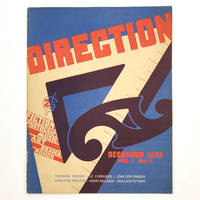
1937014873New York: Direction 1937. Soft cover. Very Good. The inaugural issue of the progressive magazine Direction. Saddle-stitched in printed card covers. Spine rubbed; unmarked; some minor signs of age. An attractive copy. 32 pages. 11 x 8.5 inches. Commentary on society literature art theatre architecture and technocracy with contributions by John Dos Passos Theodore Dreiser Le Corbusier poet Maurice English theatre critic John Gassner and others. Includes a one-page piece describing the activities of Pablo Casals and the Musicians' Committee to Aid Spanish Democracy along with pieces on photographer Consuela Kanaga and painter Henry Billings with images of their work. Direction paperback