(Imagerie Algerie)Biblio.com

42 résultats
21913Emile Guérin éditeur Paris s.d. 1900. Petit livret 12 x 9 cm couverture illustrée en couleurs contenant 8 chromolithographies reliées en accordéon texte au verso des vignettes. Excellent état. Scène exotiques promouvant la colonie et plus spécifiquement le désert : souk le caïd Goum arabe caravane la source dans le désert le couscous l'oasis marché arabe. unknown
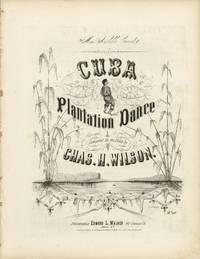
1855List3682Philadelphia: Edward L. Walker 142 Chestnut St. above 6th 1855. Folio sheet music pictorial lithographed cover approximately 13.5 × 10.5 inches. Light edge wear and minor toning; very good with a strong impression of the cover illustration. An antebellum piano dance reflecting the plantation imagery that circulated widely in mid-nineteenth-century American popular music. “Cuba Plantation Dance†was composed by Chas. H. Wilson a little-documented composer whose name appears chiefly in connection with this work and issued in Philadelphia during the early 1850s by Edward L. Walker the predecessor firm to the major publishing house Lee & Walker. A copy is recorded in the Levy Collection at Johns Hopkins which dates the publication to 1855.<br /> <br /> The cover presents a stylized plantation landscape framed by tall stalks of sugar cane with a small central vignette of a dancing Black figure. The use of Cuban plantation imagery reflects contemporary American fascination with the Caribbean sugar economy and with plantation life beyond the United States. During the 1850s Cuba was one of the largest slave societies in the Atlantic world. By the midcentury the island’s sugar plantations relied on hundreds of thousands of enslaved Africans and the enslaved population of Cuba was estimated at roughly 400000 people in the 1840s–1850s working primarily in the rapidly expanding sugar industry. Although Spain formally agreed to end the Atlantic slave trade in 1820 illegal importations of enslaved Africans into Cuba continued for decades supplying labor for the island’s plantations well into the 1850s. American publishers frequently borrowed such imagery for plantation-themed dance music marketed to the parlor trade. Pieces labeled “plantation dances†or “Ethiopian dances†formed part of the broader culture of minstrel and plantation entertainment. The title page bears a dedication to “Miss Arabelle Conrad†typical of mid-century sheet music addressed to amateur pianists. Along with the aforementioned copy in the Levy collection we find copies at Michigan and Temple. Edward L. Walker, 142 Chestnut St., above 6th unknown
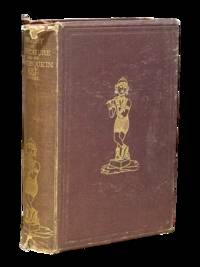
18659578London: Virtue Brothers & Co 1865. 8vo 494pp. Vignette illustrations throughout by F.W. Fairholt. Bound in publisher's brown cloth with illustration and lettering in gilt and ruled in blind beveled edges red page edges. Spine ends chipped away boards rubbed along edges. Few light stains to edges of endpapers else clean internally and very good. <br /> <br /> Profusely illustrated survey of grotesque imagery from antiquity through the early modern period. Demons beasts hell-scenes depictions of death devil imagery witches etc. are included. Scarce in the original illustrated cloth binding. Virtue Brothers & Co unknown
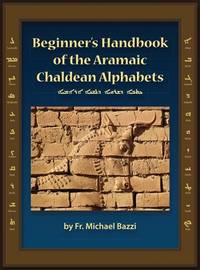
2016x-1941464270Let in the Light Publishing 2016. Hardcover. New. 134 pages. Aramaic language. 8.50x0.38x11.00 inches. Let in the Light Publishing hardcover
20021-0939837544Paradise Cay Publications 2002. Hardcover. New. illustrated edition. 916 pages. 11.00x8.50x2.00 inches. Paradise Cay Publications hardcover
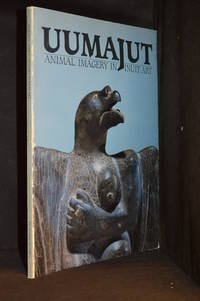
119281Winnipeg: Winnipeg Art Gallery 0-88915-122-9 1985. 4to paperback 134pp. Very good. Black and white and color photographs table notes glossary. The spine is rubbed along the edges. One chapter by George Swinton is in Inuktitut and English. Contributors include Kiawak Ashoona Thoughts from Cape Dorset Bernadette Driscoll Uumajut: Animal Imagery in Inuit Art and Spiritual Culture Robert McGhee Ancient Animals: The Dorset Collection from Brooman Point Pauta Saila Thoughts from Cape Dorset Joannsie Salomonie Thoughts from Cape Dorset George Swinton Animals: Images Forms Ideas. Locale: Cape Dorset. Art--Canada Animals Exhibition Catalog Exhibition Catalog--Canada Imagery Inuit Art. Winnipeg Art Gallery Paperback
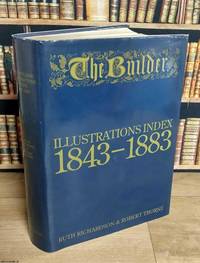
1994375791Hutton & Rostron London 1994. 1st Edition. Hardcover. Fine Condition/Very Good Condition. A monumental reference work by Ruth Richardson and Robert Thorne The Builder: Illustrations Index 1843–1883 catalogues more than 12000 engravings from the journal’s first forty years providing the definitive route into its vast pictorial record. The introductory historical essay offers an invaluable account of George Godwin’s stewardship and the magazine’s visual culture. A folio volume approx. A4 size : 14 pages 832 pages. Original cloth gilt & blind lettered top edge gilt marbled endpapers with dustwrapper. Gavin Stamp's copy with his label and a typed letter from the volume's publisher. Size: 21 x 30 cms. Category: Builder & Building News; Varied Books; New Arrivals; ISBN: 0907101062. ISBN/EAN: 9780907101062. This item may require more postage than the rates shown for delivery outside the UK. If extra postage is required we will contact you before processing your order and you will be given the details and option to decline the extra cost. 9780907101062 Hutton & Rostron hardcover
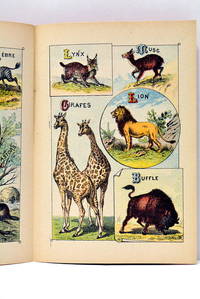
117611Paris Pellerin & Cie c.1900. 12 pages non numerotées couvertures de papier illustrées en couleurs comprises. Couvertures de papier illustrées en couleurs en excellent état. Abécédaire à létat neuf. Belles illustrations en couleurs. Paris, Pellerin & Cie, c.1900. unknown
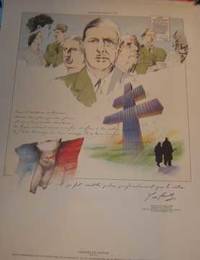
73-5006Paris: Imagerie d'Epinal 1990. 56x43 cm. Very Good. Color poster. Text in French. Paris: Imagerie d'Epinal, 1990 unknown
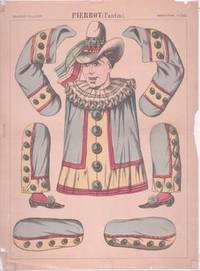
18905524Paris: Pellerin & Cie C1890. First edition. Three beautiful large format sheets making a steam train and wagon carriage together with the tender. These are sheets 159 160 and 161. Scarce individually the group of three together are rare. These prints are cardboard constructions or models on which a pattern was printed. These were then hand coloured as stated on the sheet. This pattern must be cut out and then assembled to construct various objects or scenes of daily life. The Imagerie d'Épinal published several series of models to cut out including the "Large Constructions" in 39 x 49 cm format the "Medium Constructions" and the "Small Constructions." From 1880 to 1908 prints depicting architecture costumes boats and various vehicles were produced. During this same period paper theatres or "home theatres" also enjoyed great success. These three examples are in excellent condition with just fractional creasing / bumping to them. Two of the sheets have stronger creases visible to the blank rear of the print - but these are not really visible to the front. A slight darkening to the sheets. A renowned French printing workshop established in Épinal Vosges in 1796 by Jean-Charles Pellerin celebrated for its vibrant popular images. Originating with stencilled paper substitutes for enamelled clock dials it swiftly developed into a principal source of folk art captivating audiences across Europe and beyond. In its early years the Imagerie catered to the rural populace with devotional subjects suited to the illiterate; by the Napoleonic era output embraced heroic epics patriotic broadsides and instructive tableaux executed first in woodblock and subsequently by lithography. At zenith employing upwards of 150 hands it issued millions of sheets for export spawning imitators throughout the Continent. Images meticulously coloured by stencil atop printed outlines perpetuated traditional craft into contemporary times as the sole surviving imagerie worldwide. Acquired by the municipality in early 2026 it preserves an unrivalled archive exceeding 6000 lithographic stones functioning today as a vital museum of vernacular iconography. . Première édition. Trois magnifiques feuilles grand format permettant de réaliser un train à vapeur et un wagon voiture avec son tender. Il s'agit des feuilles 159 160 et 161. Rares individuellement ces trois feuilles sont encore plus rares lorsqu'elles sont réunies. Ces gravures sont des constructions ou des modèles en carton sur lesquels un motif a été imprimé. Elles ont ensuite été coloriées à la main comme indiqué sur la feuille. Ce motif doit être découpé puis assemblé pour construire divers objets ou scènes de la vie quotidienne. L'Imagerie d'Épinal a publié plusieurs séries de modèles à découper notamment les « Grandes constructions » au format 39 x 49 cm les « Constructions moyennes » et les « Petites constructions ». De 1880 à 1908 des gravures représentant des architectures des costumes des bateaux et divers véhicules ont été produites. Au cours de cette même période les théâtres en papier ou « théâtres domestiques » ont également connu un grand succès. Ces trois exemples sont en excellent état avec seulement quelques plis et bosses mineurs. Deux des feuilles présentent des plis plus marqués visibles au dos de l'impression mais ceux-ci ne sont pas vraiment visibles au recto. Les feuilles sont légèrement noircies. Un célèbre atelier d'impression français fondé à Épinal dans les Vosges en 1796 par Jean-Charles Pellerin célèbre pour ses images populaires et vivantes. À l'origine l'atelier produisait des substituts en papier au pochoir pour les cadrans émaillés des horloges mais il est rapidement devenu une source majeure d'art populaire captivant le public à travers l'Europe et au-delà. À ses débuts l'Imagerie s'adressait à la population rurale avec des sujets religieux adaptés aux analphabètes ; à l'époque napoléonienne sa production comprenait des épopées héroïques des affiches patriotiques et des tableaux instructifs réalisés d'abord en gravure sur bois puis en lithographie. À son apogée employant plus de 150 personnes elle a produit des millions de feuilles destinées à l'exportation suscitant de nombreux imitateurs à travers le continent. Les images minutieusement colorées au pochoir sur des contours imprimés ont perpétué l'artisanat traditionnel jusqu'à l'époque contemporaine en tant que seule imagerie survivante dans le monde. Acquise par la municipalité au début de l'année 2026 elle conserve des archives inégalées comprenant plus de 6 000 pierres lithographiques et fonctionne aujourd'hui comme un musée essentiel de l'iconographie vernaculaire. Pellerin & Cie unknown
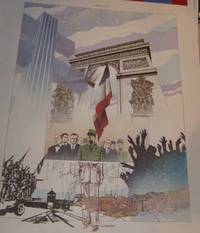
73-4976Paris: Imagerie d'Epinal 1994. 50x42 cm. Very Good. Color poster. Text in French. Paris: Imagerie d'Epinal, 1994 unknown
1986BN134317Imagerie d´Epinal 1986. 1986. Voyez ici les belles reclames de L´imagerie d´Epinal Recuel n°1 <br/><br/>Voyez ici les belles reclames de L´imagerie d´Epinal Recuel n°1 Imagerie d´Epinal Hrsg. Imagerie d´Epinal unknown
71-9872Epinal: Pellerin et Cie. after 1913. Pochoir on lithograph on Arches paper. A contemporary reprint of the original. 50 x 66 cm sheet. Very Good light specks of foxing throughout sheet mounted to light illustration board. Epinal: Pellerin et Cie., after 1913. unknown
#[38110]Folio. Original pictorial boards. Album with 24 lithographed catch-penny prints. Jean-Charles Pellerin 1756-1836 French draftsman illustrator and printer is famous for the images of Epinal. Succeeding his father he took in 1773 the direction of the "Factory of Pellerin". From 1796 he expanded his activity and created the "Imagerie Pellerin". As early as 1800 he started a small business a real imaginary industry which later became known as Imagerie d'Epinal. Contains: Aventures de deux petits moineaux Histoire de Guillaume-Tell Histoire du loup blanc Le bayard du Canada Le tout petit petit poucet La nouvelle Barbe-bleue Le cheval de bronze etc. hardcover
1900134053Epinal France: Imagerie Pellerin ; Pellerin & Cie 1900. Hardcover. Reading copy held in by strong covers in very good condition. Slipcase with binders tape unglued from bottom edge. Leaves may have once been bound but are now separated. Page edges very fragile much edge chipping and halo of toning. Performation stamps infrequently on leaves. Black library buckram slipcase over matching board covers. No title page title inferred from cover and another set. 25 leaves all illustrated on one side of the leaf. Very large oversize. Very charming cartoons for young audiences in French from around 1900. Illustrated jokes tales. Very entertaining. The illustrations and their colors are well preserved but the page edges have been age-darkened and are brittle usually chipped. Some tape repairs have been made. These publications have been issued in groups of 100 on thinner paper and also in groups of 25. Having seen both we can say this is on significantly thicker paper. Many leaves can be framed. Spine says Vol. 1 which refers only to a set the library made. Imagerie Pellerin ; Pellerin & Cie hardcover
1900134054Epinal France: Imagerie Pellerin ; Pellerin & Cie 1900. Hardcover. Reading copy held in by strong covers in very good condition. Slipcase fair separated at top. Leaves may have once been bound but are now separated. Page edges very fragile much edge chipping and halo of toning. Performation stamps infrequently on leaves. Black library buckram slipcase over matching board covers. No title page title inferred from cover and another set. 100 leaves all illustrated on one side of the leaf. Very large oversize. Very charming cartoons for young audiences in French from around 1900. Illustrated jokes tales. Very entertaining. The illustrations and their colors are well preserved but the page edges have been age-darkened and are brittle usually chipped. Some tape repairs have been made. These publications have been issued in groups of 100 on thinner paper and also in groups of 25. Many leaves can be framed. Spine says Vol. 3 which refers only to a set the library made. Imagerie Pellerin ; Pellerin & Cie hardcover
1900134050Epinal France: Imagerie Pellerin ; Pellerin & Cie 1900. Hardcover. Reading copy held in by strong covers in very good condition. Slipcase very good. Leaves appear to have once been bound now have mostly separated. Page edges very fragile much edge chipping and halo of toning. Performation stamps infrequently on leaves. Black library buckram slipcase over matching board covers. Title page title inferred from cover and other copies. 100 leaves all illustrated on one side of the leaf. Very large oversize. Very charming cartoons for young audiences in French from around 1900. Illustrated jokes tales. Very entertaining. The illustrations and their colors are well preserved but the page edges have been age-darkened and are brittle usually chipped. Some tape repairs have been made. These publications have been issued in groups of 100 on thinner paper and sometimes in groups of 25 on thicker paper. Many leaves can be framed. Spine says Vol. 2 which refers only to a set the library made. Imagerie Pellerin ; Pellerin & Cie hardcover
1900347422-MC19Imagerie Pellerin & Cie ca. 1900. Hardcover. Good. Halflinnen band folio circa 40x30cm geheel geïllustreerd met bladen ""Prentjesdruk van Epinal"" de volgende nummers zitten er achtereenvolgens in: 1 1: Sint Nicolaas; 2 10: Geschiedenis van Ali-Baba en de 40 roovers; 3 28: Azor en Mimi; 4 32: Geschiedenis van den verloren zoon; 5 33: Rup en de boer; 6 37: Roodkapje; 7 39: De kater en de jonge musschen; 8 40: Geschiedenis van Prins Dierbaar; 9 41: Zachteid is beter dan geweld; 10 42: De pleizierpartijtjes van Joseph Grippard; 11 43: De duivel in de flesch; 12 45: De nagemakte wilden; 13 46: De Lotgevallen van Paul den Kleinen Matroos; 14 47: Geschiedenis van een Koopman in Kramereijen; 15 52: Martha de gode kleine Huishoudster; 16 53: De belangrijke lotgevallen van mijnheer Veelvraat; 17 54: De werkelijke Geschiedenis van mijnheer Stamelaar; 18 55: De guitenstreken van Ernst; 19 56: De in het bosch slapende deerne; 20 63: Geschiedenis van een wolf; 21 65: Het tooverpaard; 22 69: Asschepoetster; 23 77: Baron von Munchhausen als wielrijder; 24 82: Het Kerstmis schoentje; 25 83: Opgepast!; 26 98: De twee blinden van Trebizonde; 27 103: De tamboer-majoor; 28 104: Mijnheer Goedaard; 29 105: De Japansche hond; 30 106: Hond en kat of de slechte buren; 31 107: Geschiedenis van een muisje; 32 108: De aardige grapjes; 33 109: De draagkorf van den bullebak; 34 110: De gedaanteverwisseling van Polichinel; 35 111: De gouden hagedis Tooversprookje; 36 113: Zoo'n streek!; 37 115: De voedzame fulband; 38 131: Coco de goede aap; 39 132: Een clown onder de roodhuiden; 40 ongenummerd: Ganzenbord!; Slijtage randen en hoekjes kaft. Imagerie Pellerin & Cie hardcover
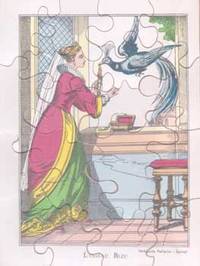
75-8000New York: Imagerie Pellerin d'Epinal Golden Griffin Gallery/Arts Inc. . ca. 1970. Picture Jigsaw Puzzle.17 x 12.5 cm sheet. Color Reproduction of Vintage French Puzzle. Very good with Age Toning Original Protective Cellophane Wrapping is Torn.In the 1950s the Golden Griffin Gallery formed a partnership with Pellerin Imagerie becoming the sole distributor for Pellerin Imagerie in North America.Provenance: From the Collection of Frederick Gale Ruffner Jr.The Founder of Gale Research Detroit [New York]: [Imagerie Pellerin d'Epinal, Golden Griffin Gallery/Arts Inc. ?]. [ca. 1970] unknown
71-9861Epinal: Pellerin et Cie. circa 1912. Pochoir on lithograph on Arches paper. 47 x 63.5 cm sheet. Good light specks of foxing throughout sheet mounted to light illustration board. Epinal: Pellerin et Cie., circa 1912. unknown
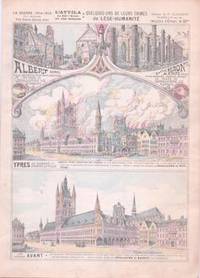
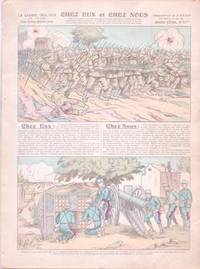
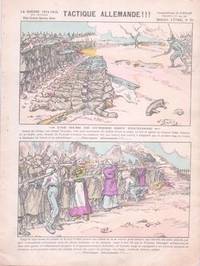
71-9860Epinal: Pellerin et Cie. circa 1917. Pochoir on lithograph. 39 x 29 cm sheet. Very Good some soiling along sheet edges. Epinal: Pellerin et Cie., circa 1917. unknown
71-9858Epinal: Pellerin et Cie. circa 1917. Pochoir on lithograph. 39 x 29 cm sheet. Very Good some soiling along sheet edges. Epinal: Pellerin et Cie., circa 1917. unknown
71-9859Epinal: Pellerin et Cie. circa 1917. Pochoir on lithograph 39 x 29 cm sheet. Very Good some soiling along sheet edges. Epinal: Pellerin et Cie., circa 1917. unknown
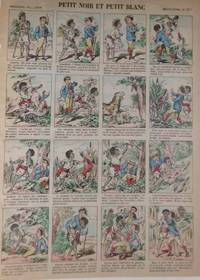
#[38108]Epinal Imagerie Pellerin ca. 1900. Lithographed catchpenny print with 16 coloured images. Ca. 38 x 28 cm. Imagerie d'Epinal no. 857. - Anatole son of a wealthy planter having been raised with European prejudices despised the people of colouer. He and a black boy set out on a journey. During numerous attacks by wild animals Anatole is rescued by the black boy and brought back home. The last line of the story is: from now on you will be my equal and my brother. Jean-Charles Pellerin 1756-1836 French draftsman illustrator and printer is famous for the images of Epinal. Succeeding his father he took in 1773 the direction of the "Factory of Pellerin". From 1796 he expanded his activity and created the "Imagerie Pellerin". As early as 1800 he started a small business a real imaginary industry which later became known as Imagerie d'Epinal. unknown
76-1396Paris: Imagerie Pellerin circa 1865. Color lithograph with pochoir. 40 x 30 cm sheet. Good tears along sheet edges with some associated losses. Paris: Imagerie Pellerin, circa 1865. unknown