532 résultats
0434991392.Ghardcover. Good. Access codes and supplements are not guaranteed with used items. May be an ex-library book. hardcover
200646973Cambridge Massachussets: Harvard University Press 2006. Hardcover. Very Good/Very Good. 2006 reprint. 3 volumes. Nice clean set. Jackets lightly sunned at the spine crease to front endpaper of volume 1 else about near fine and appears unread. Loeb Classical Library. Harvard University Press hardcover
19932090202118203460Kobunsha 1993. Soft Cover. Fine. The book is in fine condition. Kobunsha paperback
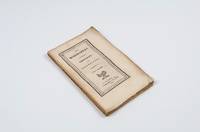
77520Amsterdam Gebroeders van Arum 1834. 8vo 22.7 x 14.0 cm. 5 pp.; one large triple-folded engraved plate 14.0 x 36.7 cm in original hand-colouring. Original printed wrappers. = A rarely seen description and illustration of a phenakistiscope an invention dating from 1833 i.e. less than a year before this publication. The author is anonymous indicated by his initials - J. A. - only. However he provides a thorough description of the apparatus and how to build one. "The phenakistiscope also known by the spellings phénakisticope or phenakistoscope was the first widespread animation device that created a fluent illusion of motion. Dubbed Fantascope and Stroboscopische Scheiben 'stroboscopic discs' by its inventors it has been known under many other names until the French product name Phénakisticope became common with alternative spellings. The phenakistiscope is regarded as one of the first forms of moving media entertainment that paved the way for the future motion picture and film industry. . When it was introduced in the French newspaper Le Figaro in June 1833 the term 'phénakisticope' was explained to be from the root Greek word feast phenakistikos or rather from feae phenakizein meaning "deceiving" or "cheating" and meaning 'eye' or 'face' so it was probably intended loosely as 'optical deception' or 'optical illusion'" Wikipedia. The Dutch name tooverschijf now: toverschijf or "magic disc" almost certainly dates from this publication. Contained in: De Mimersbron. Tijdschrift voor Jongelingen 1e Deel. 11 Stuk. First Volume 11th Part with 90 pp. Uncut. Fore edges a bit frayed otherwise very good - clean unmarked. unknown
0522Q70HB3PGood. Almost very good color picture cover paperback toned with tide marks n Browning to pages . blank white spine photographs maps illustrations throughout paperback
1940001170Los Angeles: Thayer's Studio of Magic 1940. 78pp bw ills. Or orange & black wraps with green & black illustration of magicians. Toned at spine edge holed at lower staple with no loss of text red crayon on 3 pages & occasional pencil x's. Very scarce catalogue detailing hundreds of books available through the Thayer's Studio of Magic. Invaluable reference tool. From the estate of Perc Miller noted Australian magician of the 30s through 50s. First Edition. Pictorial Wraps. Good Plus. 8vo - over 7¾" - 9¾" tall. Thayer's Studio of Magic Paperback
19203554907218371920. First Edition. Hard Cover. Signed by Author. New York: Adams Press Print 1920. First US Edition. SIGNED LIMITED DELUXE EDITION. Publisher's red leatherette pebbled softcover with flexible boards with gilt lettering to the spine and gilt vignette to the front board. Pink marbled end-papers. All edges gilt. "Serial Number 191 Higher Magic de Luxe Edition Issued to Arthur J Moose With fraternal Greetings and Best Wishes of the Author. Oscar S Teale". "191" "Arthus J Prince" and "Oscar S Teale" are in black fountain pen ink in the Author's hand. There are 2 copies of the Trade Edition only on COPAC. Oscar S Teale was an architect amateur magician and a researcher for Harry Houdini. He was alleged to have ghost-written some of Houdini's books and designed Houdini's gravesite. He also served as President of the Society of American Magicians from 1908-09. Arthur J Moose was a fellow magician who had a politically incorrect magic act with patter. A rubbed otherwise VG copy. Photographs/scans available upon request. hardcover
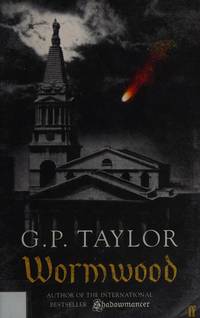
20041002012London United Kingdom: Faber and Faber 2004. SIGNED by Author on the Title Page Scarce first edition and first paperback editon of the author's phenomenal best-selling second novel and follow-up to Shadowmancer. In 1756 London Dr. Sabian Blake is in possesssion of the Nemorensis an ancient text that could hold the key to saving London from a catastrophic fate. Paperback Original. Pictorial Wrappers. As New. Faber and Faber Paperback
20031002011Faber and Faber 2003. SIGNED by Author on the Title Page PBO First edition first printing As New and Unread. SIGNED boldly by the author. Scarce paperback original editon of the author's phenomenal best-selling debut novel where superstition magic and witchcraft reign and the ultimate battle begins when a sorcerer seeks to control the universe. Paperback Original w French Flaps. Pictorial Wrappers. As New/As New. Faber and Faber Paperback
200470410London: Faber & Faber 2004. First edition first prnt. Glossy pictoral wraps. Signed by Taylor on the title page. Unread copy in Fine condition. Signed by Author. First Edition. Trade Paperback. Fine/Not Issued. Faber & Faber Paperback
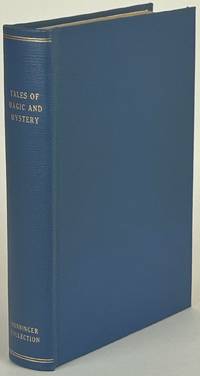
192731906Camden NJ: Personal Arts Company Publishers 1927-1928. Issues slightly trimmed for binding otherwise quite fine with little tanning to text paper mostly cream colored. At the base of the spine is stamped "Dunninger Collection." A lovely presentation. 31906. Octavo five issues pictorial wrappers bound in blue boards with gold stamping to spine. A bound volume of all five issues that were noted magician Joseph Dunningers copy with his signed name and also inscribed and signed by editor/author Walter Gibson to Joe Dunninger. Gibson wrote several books about magic for Dunninger they were lifelong friends. This is likely a presentation volume to Dunninger. Tales of Magic and Mystery was a short lived magazine which published stories and articles about magic and the occult as well as some short fiction. The March 1928 issue published the H. P. Lovecraft short story "Cool Air." Other authors of fiction include Frank Owen Miriam Allen de Ford Archie Binns Robert Leslie Bellem and others. Gibson wrote most non-fiction material under his own name and also using the pseudonyms Alfred Maurice and Bernard Perry. Personal Arts Company, Publishers unknown
19772111902160200621Kodansha 1977. Soft Cover. Fine. Volume: 1 Kodansha paperback
19572090502113709421Not Available 1957. Soft Cover. Fine. The book is in fine condition. Not Available paperback
19742090502113715496Not Available 1974. Soft Cover. Fine. The book is in fine condition. Not Available paperback
19812090502113718269Not Available 1981. Soft Cover. Fine. The book is in fine condition. Not Available paperback
6972619. THE SURPRISE MAGIC DRAWING BOOK. New York: Sam'l Gabriel Sons & Company n.d. circa 1910-1920. According to a publisher's note on the verso of the title-page this is one of thirteen magic drawing book titles to be published publisher's book no. 841. It contains forty leaves which are lightly coated with wax except for uncoated areas which comprise the lines of a hidden drawing. The drawing is "magically' revealed when a crayon or pencil is rubbed over the surface and colors the uncoated area. Many of the pages have been colored or partially colored revealing images of anthropmorphized pigs and cats flying a bi-plane fishing etc. plump toddlers playing with puppies or crying over spilt milk and young children playing games such as football and baseball. The book is side-stapled within stiff paper wrappers with a color illustration printed to the upper wrapper and a blue cloth spine. Housed in the original publisher's box with the cover illustration printed again to the lid along with the original wax crayon. The book is bright and fresh despite light creasing to upper wrapper. The box is a bit edgeworn split at a few corners and heavily soiled at one edge. unknown
1958C209616Bideford: The Supreme Magic Co. 1958. Paperback . Very Good. Small quarto. 225pp. Slight creasing to corners otherwise very good. No date c.1958. Lists hundreds of magic products. The Supreme Magic Co., paperback
19742110502150413022Lemon Publishing 1974. Soft Cover. Fine. Volume: 1 Lemon Publishing paperback
19562090502125700932Daido shubbansha 1956. Soft Cover. Fine. Number of pages: 206 pages Size: B6 size Number of books: 1 volume Daido shubbansha paperback
19682091502135419994Uozumi shoten 1968. Soft Cover. Fine. Number of books: 1 Uozumi shoten paperback
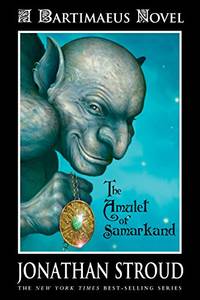
2003904138New York: Miramax Books 2003. First book in "The Bartimaeus Trilogy"; uncorrected galley proof; 464pp. Advance Uncorrected Proof. Original Wraps. Near Fine/No Jacket. Galley/Proof. Miramax Books Paperback
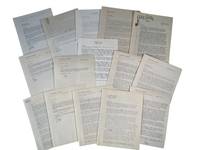
1959214711959. Gloye Eugene E. Archive of Autograph letters on Magic late 1950s to mid 1960s document the working methods technical experimentation and intellectual framework of a mid twentieth century American magician engaged in both performance and psychological analysis of illusion. Written primarily to fellow magician Don Tanner these letters provide direct evidence of how tricks were conceived refined and communicated within professional networks revealing the intersection of apparatus design sleight of hand and audience perception. Gloye's dual role as performer and psychologist situates the correspondence within broader developments in performance theory and applied psychology supporting research into the history of magic entertainment culture and the study of deception. Eugene Gloye authored 23 magic books including "For Magicians Only" "Fantastic Tricks with Plastic Cups" and "Theatrical Magic" <br /> <br /> Archive of sixteen letters spanning approximately the late 1950s through the mid 1960s containing detailed discussions of trick construction performance strategy and experimentation with materials and methods.Throughout the letters Gloye discusses numerous tricks he devised or refined often providing detailed explanations of their mechanics and performance nuances. His correspondence reveals a deep engagement with magical apparatus sleight of hand and psychological deception. One of the more detailed discussions in the letters revolves around Gloye's development of Fan-Ta-Cups which evolved from an earlier trick he had devised Fan-Ta-Bill. On September 5 1961 he describes how the trick was born: "I first got the idea for this cup trick about 14 years ago when I was experimenting with a bill trick which I eventually put on the market. The bill trick also uses a celluloid gimmick and was an adaptation of Liquid Appear. Since I thought of the cup trick at the time of my Fan-Ta-Bill I decided it was fitting to call it 'Fan-Ta-Cups.'" He further explains that while the idea had been percolating in his mind for years he hadn't developed a complete routine for it until recently. Inspired by the classic three-shell game he worked out a performance structure that he believed would make it more engaging.<br /> <br /> In a letter from July 11 1961 Gloye excitedly shares his thoughts on using hollow plastic golf balls for new magic tricks: "I am convinced that this new golf ball will open up many new trick possibilities. The fact that they come in several colors is also interesting." This suggests that Gloye was experimenting with different materials for manipulation tricks possibly related to vanishing or color-changing effects. Gloye also played with magical history concocting a hoax to see how the magic community would react. In the September 5 1961 letter he reveals his plan: "Last December I got an idea for a variation on the Tip-Over Box. It's just a slightly different way of building it. At first I was going to put it in my 'New Look' series but then as we were talking about it I commented that this trick should have been in Hoffmann. This led to the devilish idea of writing it up in Hoffmann style and publishing it in Genii as a lost page from the original book." He notes that Bill Larsen and another friend were in on the plan and they wanted to see if the trick would be accepted as a legitimate discovery.<br /> <br /> Another standout trick mentioned in the letters is Gloye's adaptation of Billy McComb's routine using a flap slate and a force deck. On January 31 1961 he explains: "My version which I tried for the first time several days ago with huge success uses one deck and a flap slate. The deck is made like a peek deck but with two cards only. All faces are the same and all concealed cards are the same. Cards which audience sees are trimmed and glued at one end to a second group of 26 duplicates." This approach ensured that the spectator would believe they had freely chosen a card when in fact the outcome was predetermined.<br /> <br /> Gloye describes modifications he made to a Head Chopper Illusion a prop widely used in stage magic in a February 23 1961 letter: "My version does not retain the Chinese theme. My blade is a simple black affair with a couple of brass stripes across it to make it look more solid. I spent a long time trying to figure out a good lock for the blades Abbott's want you to remove a couple of tacks which hold the blade and this is simply not workable. I ultimately did come up with a practical idea only to abandon it in my current routine." He explains that his routine involved swapping out the real blade for a fake setting up a comedic climax where "carrots fly in all directions" as the blade seemingly falls.<br /> <br /> This archive is a rare window into the intellectual and technical world of a magician who bridged academia and performance. Gloye's detailed notes on illusion mechanics reflections on the state of magic and collaboration with figures like Bill Larsen and Frances Marshall make this a significant collection for magic historians and collectors alike.<br /> <br /> Produced during a period of active exchange among professional magicians through correspondence and publications such as The Linking Ring these letters document how knowledge circulated within specialized communities and how innovation often emerged through incremental modification of established techniques. Gloye's attention to apparatus construction coded deception and audience management reflects broader mid century interest in performance psychology while his references to collaborators and publication strategies illustrate the role of print culture and informal networks in shaping the field. As a cohesive manuscript archive the letters preserve the technical language and creative process underlying stage magic offering a detailed record of mid twentieth century illusion practice. Light wear and handling consistent with age with legible manuscript throughout; overall condition very good. unknown
19802111902160200416Shoshi kisetsu-sha 1980. Soft Cover. Fine. Volume: 1 Shoshi kisetsu-sha paperback
2023BIBSD0024320732023. Full Leather Bound. NEW. Size: 19.68 x 24.13 cms A Unique Premium Leather-Bound book for elite readers/collectors of old rare books. An Original Leather is being used for binding this book with Golden Leaf Printing and designing on Spine front and Back of the book with edge gilding. WE HAVE MULTIPLE OPTIONS IN COLOR OF LEATHER RED GREEN BLUE MAGENTA TAN PURPLE DEEP BROWN BLACK AND WITH DIFFERENT COLOR LABELS. YOU MAY CHOOSE ANY COLOR OF YOUR CHOICE AND MAIL US. This service is chargeable. Original edition was published in 1880 and this unique edition is Reprinted in 2023 with the help of original edition. Black & white printing on high quality natural shade paper with sewing binding for longer life professionally processed without changing its contents. As these are old books we processed each page manually on computer and make them readable. We give our best to give you the best book but in some cases we have to adjust few pages which are blur or missing or black spots. If it is multi volume set then it is only single volume. We hope that you understand these issues in these old treasure. This is an important book for the readers who want to know more about our old treasure. Our dedicated team is trying to bring these rare books back to the shelves. We are also giving service of printing the hard-to-find books which are not listed in our store. Hope you will like it and give your comments and suggestions. Lang: - English Pages 194. Product Disclaimer: Please be aware that because leather is a natural material slight discoloration or change in texture may be visible. FOLIO EDITION Size 12x19 Inches IS ALSO AVAILABLE ON REQUEST. hardcover
76818Various places early 20th c. Generally fine. unknown