2 558 résultats
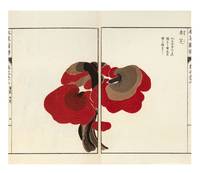
191699921916. Several thousand double-page & full-page color-printed woodcuts many with embossing. 95 vols. 8vo 256 x 174 mm. orig. tan patterned semi-stiff wrappers orig. title slips on upper covers orig. stitching occasional stitching a little loose. Tokyo: HonzÅ Zufu KankÅkai 本è‰åœ–èœåˆ‹è¡Œæœƒ 1916-22.<br /> <br> <br> <br /> <br /> The definitive and complete edition of the “the greatest illustrated botanical work of nineteenth century Japan…This monumental work the HonzÅ zufu briefly describes and splendidly illustrates in full color some 2000 plants. It is considered to be one of the two most important works on systematic botany in the Tokugawa period 1603-1867.â€â€“Richard C. Rudolph “Illustrations from Weinmann’s ‘Phytanthoza iconographia’ in Iwasaki’s ‘HonzÅ zufu’†in Huntiana Vol. 2 15 October 1965 p. 1.<br /> <br> <br> Iwasaki 1786-1842 was an important natural historian who studied with Ono Ranzan the “Linnaeus of Japan.†Iwasaki learned Western botanical theories from Yoan Udagawa one of the most celebrated rangakusha Dutch scholars of the period and from Philipp Franz von Siebold the German physician and scientist. Iwasaki also made many field trips throughout the main island of Japan collecting botanical specimens which he brought back to Edo and cultivated in a garden the government had given him.<br /> <br> <br> The publication history of the editions of HonzÅ zufu is long and complicated and there are several conflicting bibliographical accounts. We give Prof. Richard C. Rudolph’s account cited above based on Kotaro Shirai’s history of the work which appeared in Vol. 93 1921 of the modern edition of HonzÅ zufu 1916-22. We believe Prof. Rudolph’s account is the best and most accurate in English.<br /> <br> <br> “Early in 1828 Iwasaki founded a botanical society. The first meeting which was held at his own home was attended by the most prominent scholars in this field. In the autumn of the same year after a long period of collecting illustrating practical gardening and study of most of the available botanical works Iwasaki completed the compilation of a comprehensive illustrated flora…<br /> <br> <br> “Iwasaki planned to issue this large work in twenty-four series of four volumes each. It seems obvious from the preface that the illustrations were to be printed in black and white and then were to be colored by hand. Shirai in his history of this project says that in this first attempt to reproduce Iwasaki’s compilation only four volumes were printed in 1830…<br /> <br> <br> “This first attempt to print the HonzÅ zufu was a commercial failure…income was insufficient to finance the printing of so large a work…printing was abandoned but reproduction of his compilation was continued in manuscript with colors brushed in by hand. How many copies were made of each volume in this manner is not recorded but four volumes were produced yearly until his death in 1842. His family carried on with the work and completed the manuscript volumes of HonzÅ zufu in ninety-two volumes in the latter part of 1844 and they are incredibly rare…<br /> <br> <br> “It is obvious that a printed edition of such an important work would be produced sooner or later. Several attempts made in the late 19th century ended in failure. In the early years of the present century the HonzÅ Zufu Kanko Kai or Society for Publication of the HonzÅ zufu was organized and a successful printing of the work in color by woodblocks was completed after five years of labor in 1921. This edition is composed of ninety-three volumes…The first ninety-two volumes contain illustrations of about 2000 plants in color and a very brief text and the following volume is composed of an additional text by Iwasaki together with Shirai’s biography of him and history of the work. Another two volumes containing Japanese Chinese and Latin binomial indexes compiled by Shirai were published in the same format in 1922. Moreover each of the ninety-two volumes of plates has its own Chinese Japanese-binomial index…<br /> <br> <br> “In projects of this kind the publisher deserves a share of credit along with the author…it would take a man of considerable courage to undertake the printing of this great flora by woodblocks. Such a person was the Tokyo publisher Iwamoto YonetarÅ a man of little capital and poor health but rich in the courage required to produce a work of this kind…The rise in the cost of materials and labor due to World War I almost caused the project to end in failure as had others before it…To obtain the necessary funds he sold his personal library and cut down on the size of the staff…Iwamoto personally went over each printed page correcting faults in blockcutting and in coloring…<br /> <br> <br> “Either because Iwamoto published a small edition of the HonzÅ zufu or because it suffered destruction during World War II as did early Japanese books in general it is now almost impossible to locate a complete copy of this work.â€â€“Rudolph ibid. pp. 4-6.<br /> <br> <br> The plates are superbly color-printed and often exhibit subtle embossing.<br /> <br> <br> In very fine and fresh condition. Covers a bit discolored or spotted. unknown
1945006923Saki Crimea U.S.S.R.: Privately compiled 1945. Album. This singular and compelling Second World War album was painstakingly compiled decorated and annotated by Royal Air Force Group Captain Walter J. Pickard. Full of mementos documents and photographs the album chronicles the staging preparation and flights which conveyed Winston Churchill as well as other British and American delegates to the Yalta Conference in 1945 earning Pickard the accolades of his commanders the appreciation of his Prime Minister and the Order of the British Empire O.B.E. <br /> <br />Not least among the albums contents is the dated inscription of Winston S. Churchill and signed correspondence from Churchills private secretary confirming that Churchill personally received examined and inscribed this album and conveying Churchills appreciation to Pickard. <br /> <br />The album is 100 numbered pages bound in leather-covered boards with a hand-labeled title Saki affixed diagonally on the front cover. Saki refers to the Crimean airbase built by the Soviets in the 1930s that served as the landing point for the aircraft bearing Churchill Roosevelt and the rest of the British and American delegations to the Conference. <br /> <br />The boards show wear to extremities and the leather-covered spine is gone. The boards and contents nonetheless remain tenuously connected the mull and overall binding structure quite fragile but still holding. The binding has done its job of preserving the treasure trove within; the contents are generally clean only lightly toned with scattered stains and occasional creasing and appear complete as originally compiled. <br /> <br />The contents of the album include the following: <br /> <br />- A September 9 1947 typed letter signed by Winston Churchills Private Secretary addressed to Pickard acknowledging that Pickard sent the album to Churchill expressing Churchills thanks and confirming that Churchill inscribed the album which was returned with the letter. <br /> <br />- Pickards title page in elaborate multi-hued calligraphy: The Story of 150 Staging Post and the Airlift to the Yalta Conference February 1945. <br /> <br />- Personnel list of those under the command of Group Captain W. J. Pickard. <br /> <br />- 10 typed pages marked SECRET comprising Pickards detailed REPORT ON OPERATION ARGONAUT dated 26th February 1945 and signed by Pickard. <br /> <br />- Five letters of appreciation from senior military commanders including letters signed by U.S. Brigadier General James S. Stowell and General Lord Hastings Lionel "Pug" Ismay. <br /> <br />- TOP SECRET CYPHER MESSAGE of 24th JANUARY from 150 STAGING POST to TRANSPORT COMMAND that according to Pickards elaborate calligraphy annotation nearly stopped the Conference. <br /> <br />- 50 photographs from the conference 13 featuring Churchill Roosevelt or both. <br /> <br />- Seven currency notes including Soviet American and Greek five signed by a bevy of people including pilots. <br /> <br />- A TOP SECRET MOST URGENT typed 1st February 1945 letter signed by Air Commodore Whitney Straight to Group Captain Pickard conveying the Flight Plan and Passenger Lists as well as the fighter escort and other details for transport of VIPs to the Yalta Conference. <br /> <br />- The Friday February 16th 1945 farewell dinner menu signed on the blank verso by the members of Pickards command. <br /> <br />- Pickards original Yalta Conference passes both British Delegation and Soviet. <br /> <br />- A contemporary Observer clipping that specifically refers to this Pickards remarkable autograph book <br /> <br />- A 24th January 1945 typed and hand-annotated TOP SECRET CYPHER MESSAGE from Pickard regarding critical communication and transport difficulties preceding the Conference. <br /> <br />This album with all of its annotations and embellishments has the look and feel of both military precision and treasured story book the adult manifestation of a seasoned commander and pilot recording his actual experience of every lads dream to fly to dare and to overcome. <br /> <br />Please note that additional images and a considerably more comprehensive description are available upon request. <br/><br/> Privately compiled unknown
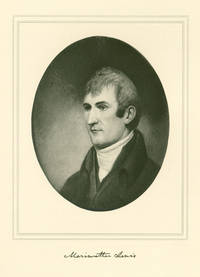
1905247478New York: Dodd Mead and Co 1905. First edition one of 200 large paper sets on Van Gelder paper. Seven volumes bound in fourteen parts plus atlas volume atlas with 56 maps & plates on 62 sheets. 15 vols. Large 8vo. Original gilt green cloth. Bookplate on front pastedowns. Spines lightly worn several lightly faded. Internally fine much of the text unopened. A very good set. First edition one of 200 large paper sets on Van Gelder paper. Seven volumes bound in fourteen parts plus atlas volume atlas with 56 maps & plates on 62 sheets. 15 vols. Large 8vo. "The most elaborate work on this expedition" - Howes. <br /> <br /> A cornerstone of modern historical research printing for the first time many major primary documents which did not appear in the Biddle edition including the Floyd and Whitehouse journals and material from the Clark-Voorihis papers along with facsimile manuscripts maps portraits and other illustrative matter. Also valuable is Victor Paltsits' bibliography of the Lewis and Clark expedition in the first volume. "This edition is notable for its thorough Introduction covering the history of the expedition and earlier exploration and a detailed account of the original journals and their various editions.In its maps and numerous illustrations the Thwaites edition is an outstanding source of visual materials relating to the expedition" - LITERATURE OF THE LEWIS AND CLARK EXPEDITION. Graff 2485; Howes L320 "b"; Wagner-Camp 13:7 note to 1842 Harpers ed.; Tweney Washington 76; Literature of the Lewis and Clark Expedition 5d.1 Dodd, Mead and Co unknown
1938312786N.p.: Privately printed for the members of the Royal Guild of Wisconsin Fisherman 1938. First edition one of a very few copies known. Illustrations from photographs. vi 25 pp. 1 vols. 8vo. White printed wrappers stapled. Very good. Some minor wear. Green quarter morocco slipcase. First edition one of a very few copies known. Illustrations from photographs. vi 25 pp. 1 vols. 8vo. Salmon fishing during four days in the first part of July 1938 by a party of six who styled themselves the Royal Guild of Wisconsin Fishermen comprising: Evan A. Evans Louis M. Hanks Roy F. Tomlinson Theodore G. Montague William S. Kies and George I. Haight to whom authorship is attributed by the Wisconsin Historical Society. The last page of text records their catch by weights. Rare. Wetzel p. 171 tentatively ascribed to William Kies. "A rare work."; Bruns K-45 not seen; Bibliotheca Salmo Salar 105. OCLC 2 copies Princeton Wisconsin Historical Society Privately printed for the members of the Royal Guild of Wisconsin Fisherman] unknown
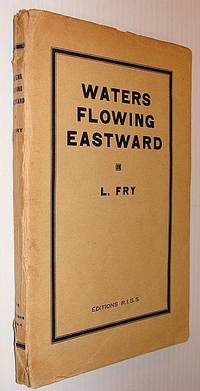
1931328c6774Paris: Editions R.I.S.S. 1931. First Edition. Paperback. Fair. 225 pages. "Beneath the great westward flow of our civilization there are undercurrents moving eastward. These are impelled by a spirit which looks back to the east to the days of tyrant and slave of luxury and misery and incidentally to the suppression of western culture. The following pages are designed to cast light on these eastern undercurrents which have undermined western states." - Preface. Black and white photographic portrait of Sergius A. Nilus who "published the first complete version of the Protocols of the Elders of Zion in Russia in 1905." - Wikipedia. In this work "the genesis of the Protocols is traced to Asher Ginzberg better known by his Hebrew pen name Ahad ha-Am who supposedly wrote the Protocols in Hebrew in 1880 while in Odessa." - Singerman 0221. Erratum list affixed inside front cover. Unmarked. Above-average wear. Age-yellowing to card covers and contents. Covers nearly detached. Binding tender.; 8vo - over 7¾" - 9¾" tall; Protocols of the Learned Elders of Zion Zionism Israel Balfour Declaration Jacob Brafmann Russia Asher Ginzberg Political Zionism Ahad ha-Am . Editions R.I.S.S. paperback
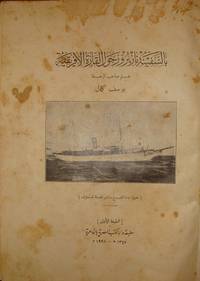
1928000493<p>Bi-l-safÄ«na "NÄz برور" ḥawla al-qÄrra al-ifrÄ«qiyya</p><p>Cairo: DÄr al-Kutub al-Miá¹£riyya 1928.<br />Book. Very Good. Hardcover. First Edition.<br />4to 9¾ × 12 in.<br />Very rare limited edition printed in only 500 copies.<br />Arabic text 424 pages richly illustrated with numerous photographic plates and in-text photographs.<br />The work is divided into three main parts:<br />Part I: Somali territories and British Kenya.<br />Part II: Belgian Congo British Tanganyika Portuguese Angola Victoria Falls the Cape Colony the Canary Islands and the Island of Malta.<br />Part III: Victoria Falls Rhodesia the Kalahari Desert the Cape Territory the Madeira Archipelago the Island of Malta and Marmarica Cyrenaica region.<br />Bound in a contemporary binding.</p><p>Prince YÅ«suf KamÄl was a member of the Egyptian royal family a distinguished patron of the arts and one of the most important collectors of Islamic art and cartography in Egypt during the late 19th and early 20th centuries. He founded the School of Fine Arts in Cairo 1908 and assembled an exceptional collection of manuscripts maps and artworks many of which later entered public institutions. In addition to his patronage he was an accomplished author and translator particularly of geographical and travel literature including accounts of African exploration and voyages.</p><p>For another work by YÅ«suf KamÄl see inventory no. 000454.</p> Dar ul Kutub al- Misriyya hardcover
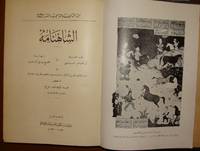
1932000474<p>Cairo: DÄr al-Kutub al-Miá¹£riyya 1932.<br />First edition. Quarto 4to contemporary hardcover binding. Arabic text. Very good condition.<br />This important scholarly Arabic edition of al-ShÄhnÄma comprises two parts bound in one volume. It opens with an extensive 108-page critical introduction by Ê¿Abd al-WahhÄb Ê¿AzzÄm Professor at the Egyptian University followed by the main text in two sections of 389 and 343 pages respectively. The volume is illustrated with several finely reproduced plates of Persian miniature paintings.</p><p>The Arabic text is based on the medieval translation by al-Fatḥ b. Ê¿AlÄ« al-BindÄrÄ« d. 643 AH / 1245 AD one of the earliest and most significant Arabic renderings of FerdowsÄ«'s Persian epic. This edition was carefully collated with the original Persian text with the translation partially completed corrected annotated and critically edited by Ê¿Abd al-WahhÄb Ê¿AzzÄm making it a landmark in modern Arabic–Persian literary scholarship.<br />Printed in a limited edition of 1200 copies only. The Persian source text used for comparison is identified in the editorial apparatus as Inventory no. 000441 a Qajar-period Persian copy printed under the name of AbÅ« al-Fatḥ ShÄh QÄjÄr.<br />A significant modern Arabic edition of one of the greatest monuments of Persian literature combining textual criticism historical scholarship and visual documentation and representing the Egyptian scholarly engagement with classical Persian epic in the early 20th century.</p> Dar ul Kutub al- Misriyya hardcover
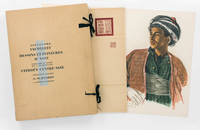
1934122326Paris: Édité sous la direction de Lucien Vogel chez Jules Meynial 1934. First Edition. Paperback. Very Good. Paris Édité sous la direction de Lucien Vogel chez Jules Meynial 1934. A printed box-form thick card portfolio with ribbon ties external dimensions 392 × 290 mm containing a thin volume of text 'Croquis de Route et Notes de Voyage' 36 pages in stab-sewn printed wrappers extensively illustrated and a suite of 50 loose colour plates each printed on a numbered and captioned bifolium. Portfolio tanned bowed and slightly marked with a short split to the foot of the upper joint; ribbon ties frayed; wrappers of the text volume a little creased; plates are generally a little offset onto the conjugate leaf and about a quarter of them have a very short split at the foot of the fold; the first plate is discoloured from contact with the binding of the text volume; these are relatively trifling blemishes that do not detract from what essentially an excellent example of a beautiful publication. Number 117 of 500 copies of the trade edition a further 200 'hors-de-commerce' copies were also printed as well as a deluxe edition of 20 copies. This suite of plates is the lavish pictorial record by the official artist of the Expedition Citroën Centre-Asie colloquially known as the Croisière jaune the Yellow Cruise. Financed by André Citroën and using all-terrain tracked caterpillar-tread vehicles from his factories this trans-Asian motorised expedition covered vast distances in 1931 and 1932. The plates from Iacovleff's striking pastels and watercolours encompass portraits and scenes from Kurdistan to Tonkin by way of Persia Afghanistan Kashmir Mongolia and western China. <p>Provenance: Mary Isobel Barr Smith with a contemporary gift inscription in ink to her 'from Mary Isobel Legoe Christmas 1937'. Mary Isobel Molly Barr Smith 1863-1941 was the wife of Tom Elder Barr Smith 1863-1941 pastoralist and financier; he was the eldest son of Robert Barr Smith 1824-1915. Both were great philanthropists; the library at the University of Adelaide is named the Barr Smith Library in their honour. Molly Legoe was a grand-daughter of Robert Barr Smith; accordingly this portfolio was a Christmas present to her aunt. Édité sous la direction de Lucien Vogel chez Jules Meynial paperback
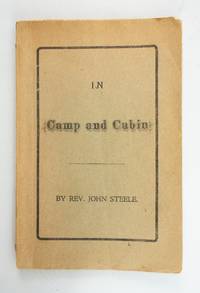
1901ST20777Lodi Wisconsin: J. Steele 1901. FIRST EDITION. 232 x 155 mm. 9 1/8 x 6". 81 pp. <br/> Original green faded to brown printed paper wrappers. Housed in a fine modern caramel-colored morocco clamshell box with gilt lettering on spine. Inside front wrapper with ink signature of M. R. Skinner; occasional pencil underlining in the text. Howes S-924; Graff 3964; Streeter 3027; Wagner-Camp 244 note. Top inch of spine chipped away a little fraying to edges first three leaves with overall browning minor corner creases but QUITE AN EXCELLENT COPY of a very fragile item clean and fresh internally with the insubstantial binding entirely intact against all odds.<br/> <br/> Based on the author's diaries written between September 1850 and July 1853 this work as the introduction tells us lays out events "just as they happened" being "ludicrous solemn serious tragic inexpressibly sad but always interesting." Kurutz calls the book a "detailed and important account of mining life" and notes that Steele "provided important information on mining techniques and laws while laboring in the Coloma District and on the Yuba and Feather rivers." This account includes some fascinating stories about the many hardships and dangers experienced by the author and his associates including nearly constant fatigue and hunger dreadful weather conditions and dicey encounters with desperados dishonest miners and disgruntled frontier men of commerce. John Steele 1832-1905 was only 18 years old when he left his home in Wisconsin for the gold fields of California. After three and a half years of adventuring he returned to the Midwest where he pursued a career in teaching. Steele also volunteered for the Union army during the Civil War and spent the last 30 years of his life as a minister in the Methodist Episcopal Church. The present work was privately printed by the author in a small number of copies and is as expected quite rare on the market now. Besides the present one RBH lists just two other copies sold since 1981 and as of this writing no other dealer seems to be offering one. Furthermore our copy is a remarkably well-preserved survival with its delicate wrappers and text in condition as attractive as one could hope to find. J. Steele unknown
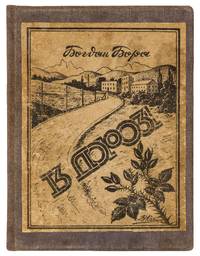
1946423496Rimini Italy: Zyttia w tabori 1946. Hardcover. Very Good. Limited edition one of 280 copies. Mimeographed. Octavo. pp. 1-4 i-iv v-vi 1-104. Illustrated with a portrait of Bogdan and four other full-page illustrations. Bound in original army linen over boards with mimeographed illustration mounted on the front cover. Small contemporary name in ink on front free endpaper slight staining and rubbing to the boards small marginal tears to endpapers very good.<br /> <br /> A very scarce book of poetry by the Ukrainian poet Bogdan Bora 1920-97 written and published at a prison camp in Rimini Italy about one year after World War II. Bora had been captured by British forces and sent to the prison camp in Rimini where he spent the following two years and published three books of poetry including this collection the title of which translated as “On the Road.†Bora’s poems written in Ukrainian are moving works evocative of the turbulent era. The cover design and a full-page portrait of Bogdan Bora were made by fellow inmate Volodimir Kaplun. In 1947 Bora was moved to Britain where he was given his freedom and lived out the rest of his days. Very scarce. OCLC locates only six copies in institutional holdings worldwide. Zyttia w tabori hardcover
1940ST13395Tokyo:: Scientific Papers of the Institute of Physical and Chemical Research 1940. 1940. 8 offprints 1 extract. Original wrappers. From the collection of Abraham Pais. Very good. INVENTORY: 1. TOMONAGA Sin-itiro. Uber den Zusammenstoß des Mesotrons mit Elektronen. Offprint from: Scientific Papers of the Institute of Physical and Chemical Research no. 976 vol. 37 pp. 399-413 June 1940. Original yellow printed wrappers. Signed by Pais. "In 1940 Dr. Tomonaga directed his attention to the meson theory and developed the intermediate coupling theory in order to clarify the structure of the meson cloud around the nucleon." :: Nobel Lectures 1972. 2. TOMONAGA Sin-itiro. Zur Theorie des Mesotrons. I. Offprint from: Scientific Papers of the Institute of Physical and Chemical Research no. 1071 vol. 39 pp. 247-266 Dezember 1941. Original yellow printed wrappers. Signed by Pais. 3. TOMONAGA Sin-itiro. Bemerkung uber die Streuung der Mesotronen am Kernteilchen. Offprint from: Scientific Papers of the Institute of Physical and Chemical Research no. 1105 vol. 40 pp. 73-86 September 1942. Original yellow printed wrappers. Signed by Pais. 4. TOMONAGA Sin-itiro; Miyazima Tatuoki. Zur Theorie des Mesotrons. II. Offprint from: Scientific Papers of the Institute of Physical and Chemical Research no. 1103 vol. 40 pp. 21-67 August 1942. Original yellow printed wrappers. Signed by Pais. 5. TOMONAGA Sin-itiro; Miyazima Tatuoki. On the Mesotron Theory of the Nuclear Forces. Offprint from: Scientific Papers of the Institute of Physical and Chemical Research no. 1124 vol. 40 pp. 274-310 March 1943. Original yellow printed wrappers. Signed by Pais. 6. TOMONAGA Sin-itiro. Remarks on Bloch's Method of Sound Waves applied to Many-Fermion Problems. Offprint from: Progress of Theoretical Physics vol. 5 no. 4 pp.544-569 July-August 1950. Signed by Pais. 7. TOMONAGA Shin-ichiro. Elementary Theory of Quantum-Mechanical Collective Motion of Particles I. Offprint from: Progress of Theoretical Physics vol. 13 no. 5 pp.467-481 May 1955. 8. TOMONAGA Shin-ichiro. Elementary Theory of Quantum-Mechanical Collective Motion of Particles II. Offprint from: Progress of Theoretical Physics vol. 13 no. 5 pp. 482-496 May 1955. 9. TOMONAGA Sin-itiro. Development of Quantum Electrodynamics. Extracted from: Physics Today vol. 19 no. 9 pp. 25-32 September 1966. Signed by Pais. . / BIOGRAPHY: Tomonaga was a prominent Japanese physicist influential in the development of quantum electrodynamics work for which he was jointly awarded the 1965 Nobel Prize in Physics :: along with Richard Feynman and Julian Schwinger :: for the study of QED specifically for the discovery of the renormalization method. Nobel biography: Tomonaga completed work for Rigakushi bachelor's degree in physics at Kyoto Imperial University in 1929 with one of his intimate friends. Dr. Hideki Yukawa Nobel laureate. He was engaged in graduate work for three years at the same university and was then appointed a research associate by Dr. Yoshio Nishina at the Institute of Physical and Chemical Research Tokyo where he started to work in a newly developed frontier of theoretical physics quantum electrodynamics - under the guidance of Dr. Nishina. His paper on the photoelectric pair creation is well-known. Tomonaga stayed in Leipzig Germany from 1937 to 1939 to study nuclear physics and the quantum field theory in collaboration with the theoretical group of Dr. W. Heisenberg where he published a paper "Innere Reibung und Warmeleitfahigkeit der Kernmaterie" which was chosen as the thesis for Rigakuhakushi Doctor of Science at Tokyo Imperial University in December1939. In 1940 Dr. Tomonaga directed his attention to the meson theory and developed the intermediate coupling theory in order to clarify the structure of the meson cloud around the nucleon. He joined the faculty of Tokyo Bunrika University which was absorbed into the Tokyo University of Education in 1949 as Professor of Physics in 1941. It was in 1942 when he first proposed the covariant formulation of the quantum field theory in which the concept of the quantum state was generalized so as to be relativistically covariant. During the Second World War Dr. Tomonaga was interested in developing a theory of microwave systems. He solved the motion of electrons in the magnetron and also developed a unified theory of the systems consisting of wave guides and cavity resonators. As soon as the War was over Tomonaga came back to academic research again with a programme in which he was first to summarize and extend the intermediate coupling theory and secondly to apply the covariant field theory to actual physical systems. His aim was to investigate the nature of field reaction in the meson theory as well as in quantum electrodynamics. He was confident prior to the Lamb-Retherford experiment by means of a model calculation that divergence difficulty in quantumelectrodynamics could be overcome simply by handling the infinite mass and charge due to field reactions in some way or another. It was only a step further for him to develop the renormalization theory with covariant formalism in his right hand and experimental support in his left. Dr. Tomonaga was invited to the Institute for Advanced Study Princeton in 1949 where he was engaged in the investigation of a one-dimensional fermion system. Thus he first succeeded in clarifying the nature of collective oscillations of a quantum-mechanical many-body system and opened a new frontier of theoretical physics modern many-body problem. In 1955 he published an elementary theory of quantum mechanical collective motions. Dr. Tomonaga took the leadership in establishing the Institute for Nuclear Study University of Tokyo in 1955. From 1956 to 1962 he was appointed President of the Tokyo University of Education and since 1963 he has been President of the Science Council of Japan and Director of the Institute for Optical Research Tokyo University of Education. He occupies an important position in various governmental committees for scientific research and policymaking. Tomonaga's honours and awards include the Japan Academy Prize 1948; the Order of Culture 1952; the Lomonosov Medal U.S.S.R. 1964. Dr. Tomonaga is a member of the Japan Academy the Deutsche Akademie der Naturforscher "Leopoldina" and a foreign member of the Royal Swedish Academy of Science. He is a corresponding member of the Bayerische Akademie der Wissenschaften and a foreign associate of the National Academy of Science of U.S.A. Tomonaga has published widely in scientific journals on such subjects as quantum electrodynamics the meson theory nuclear physics cosmic rays and the many-body problem. His book "Quantum Mechanics" was published in 1949 and translated into English in 1963. Scientific Papers of the Institute of Physical and Chemical Research, 1940. unknown
19040009174ABERDEEN WASHINGTON WA. Good. 1904. On offer are three 3 original field books most probably written in 1904 and detailing the rebuilding of the city of Aberdeen Washington after a raging fire destroyed the town. On October 16 1903 a raging fire destroyed 140 buildings in the center of Aberdeen Washington. A city constructed primarily of wood including sidewalks Aberdeen had little chance of stopping the fire once it began to spread. Obviously the city needed to rebuild its streets after the fire. Two people one by the name of Weatherwax and the other by the name of Benn seem to have been hired to do the task. Weatherwax is most probably J.M. Weatherwax or George Weatherwax two men who owned a large lumber company in Aberdeen and Benn is most probably Samuel Benn. The three books are labelled P-138 book 44 P-214 book 105 and P-215 book 106. Each book contains an index at the beginning which lays out what streets in the city are written about. For example book P-215 deals with information on old planks new elevations storm sewers street levels and more on the 20 different street including Michigan Ave Jefferson St. Washington St. and more. The books are excellent artifacts of city construction from the early 20th century containing dozens of pages of detailed schematics drawings charts and figures for the city of Aberdeen in the wake of its destruction. There are approximately 450 handwritten pages over the three books. The books each measure 7 ¼ by 4 ¼ inches. All three show sustained use and strong wear. For the most part the structural integrity is still there however the last book P-215 shows the most wear with parts of the book disconnected from the binding. Two of the books shows evidence of taping to the spine and boards. These books are a fascinating look at the intricacies and details of rebuilding a city after its destruction and an intimate part at the history of Aberdeen Washington a place that Kurt Cobain would eventually call home. Background: On October 16 1903 a fire destroys 140 buildings in the center of Aberdeen. Fed by wood-frame structures wooden sidewalks and sawdust fill the fire rages unchecked until some 20 acres have burned. The fire will spur the city leaders to enact a more stringent fire code. On the morning of October 16 1903 a resident of the Arctic Hotel began making breakfast in his room. An accidental fire started and the room was quickly engulfed in flames killing the lone occupant. Within minutes the three-story frame structure was ablaze and the fire spread to adjoining buildings including the fire station and jail.; Manuscript; 8vo - over 7¾" - 9¾" tall; KEYWORDS: HISTORY OF ABERDEEN WASHINGTON FIELD BOOKS TURN OF THE 20TH CENTURY 1903 ABERDEEN FIRE MILL TOWNS J.M. WEATHERWAX GEORGE WEATHERWAX SAMUEL BENN FIELD BOOKS TOWN REBUILDING FIELD BOOKS SURVEY NOTEBOOKS HAND DRAWN AMERICANA HANDWRITTEN MANUSCRIPT DOCUMENT LETTER AUTOGRAPH WRITER HAND WRITTEN DOCUMENTS SIGNED LETTERS MANUSCRIPTS HISTORICAL HOLOGRAPH KEEPSAKE WRITERS AUTOGRAPHS PERSONAL MEMOIR MEMORIAL ARCHIVE DIARY DIARIES JOURNAL LOG ANTIQUITÉ CONTRAT VÉLIN DOCUMENT MANUSCRIT PAPIER ANTIKE BRIEF PERGAMENT DOKUMENT MANUSKRIPT PAPIER OGGETTO DANTIQUARIATO ATTO VELINA DOCUMENTO MANUSCRITTO CARTA ANTIGÜEDAD HECHO VITELA DOCUMENTO MANUSCRITO PAPEL . hardcover
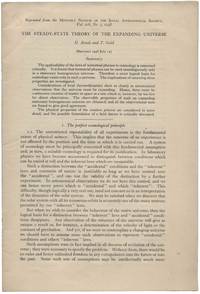
19484162London: Monthly Notices of the Royal Astronomical Society 1948. First edition. First edition the extremely rare offprint of the first published paper to propound the 'steady-state' model of the universe according to which the universe is expanding but unchanging with no beginning or end and in which matter is continually being created throughout space so that its average density remains constant. Hardcover. THE STEADY-STATE MODEL OF THE UNIVERSE. First edition the extremely rare offprint of the first published paper to propound the 'steady-state' model of the universe according to which the universe is expanding but unchanging with no beginning or end and in which matter is continually being created throughout space so that its average density remains constant. Bondi and Gold's Cambridge colleague Fred Hoyle published his own formulation of steady-state theory four months later in the same journal 'A New Model for the Expanding Universe' MNRAS Vol. 108 No. 5 pp. 372-382. Bondi Gold and Hoyle were led to steady state theory because of well-known problems associated with the then current evolving models of the expanding universe: such models predicted a cosmic age that was problematic less than the known age of some stars and they disliked Lemaȋtre's idea of a universe with an explosive beginning. Although the steady-state theory was eventually disproved by the discovery of the cosmic microwave background in the 1960s "Steady state was of enormous importance in the history of astronomy because it turned cosmology into a serious observational part of science by making predictions different from those of an evolutionary universe for which Hoyle coined the name big bang. The predictions included numbers sizes colors and brightnesses of galaxies at large distances compared to those near us" DSB under Gold. In 2014 an unpublished manuscript was discovered probably dating from early 1931 in which Einstein himself considered the possibility of a universe that expands but remains essentially unchanged his 'cosmological constant' being responsible for the continuous creation of matter from empty space O'Raifeartaigh et al. We have located only one other copy of this offprint at the Royal Society in London no copy on OCLC. No copies in auction records.</p> <br /> <p>"To the extent that there existed a standard cosmology in the late 1940s it was the evolutionary universe based on Einstein's field equations of 1917 either in the big bang version or the ever-expanding but no-bang Lemaître-Eddington version. In their discussions of 1946 and 1947 Hoyle Gold and Bondi agreed that an evolutionary universe governed by general relativity was unsatisfactory in whatever version. They concluded that an unchanging yet expanding universe was preferable and for this reason they postulated continual creation of matter to occur throughout space at such a rate that it compensated for the expansion and left the average density of matter constant the idea came from Gold. In early 1948 Gold and Bondi and independently Hoyle worked out their two formulations of the steady state universe.</p> <br /> <p>The theory presented in the 1948 Bondi-Gold paper was deductively founded on what they called the perfect cosmological principle the postulate that the universe is uniform not only spatially but temporally as well: it has always looked the same. This principle they claimed was a fundamental axiom from which physical results should be deduced; if theoretical extrapolations from experiments conflicted with the principle such as did the law of energy conservation they had to be rejected. Bondi and Gold consequently denied that the universe could be described by the energy-conserving theory of general relativity. Moreover they objected that relativistic cosmology was "utterly unsatisfactory" because it covered so many models and was based on so many free parameters that as a whole it could not be falsified observationally. In spite of the qualitative and philosophical flavor of their paper Bondi and Gold could prove that their theory led to a number of definite predictions including a specific rate of matter creation of about 10-43 g/s/cm3. It also followed from their theory that the metric of the steady state universe had to be of the De Sitter type a flat space expanding exponentially" DSB under Bondi.</p> <br /> <p>"There is a charming story not taken seriously by all historians about how steady state theory began. The idea came in 1947 Hoyle claimed when he and his fellow scientists Hermann Bondi and Tommy Gold went to a movie. The three knew each other from shared research on radar during World War II. Hoyle was versatile undisciplined and intuitive; Bondi had a sharp and orderly mathematical mind; Gold's daring physical imagination opened new perspectives. The movie was a ghost story that ended the same way it started. This got the three scientists thinking about a universe that was unchanging yet dynamic. According to Hoyle "One tends to think of unchanging situations as being necessarily static. What the ghost-story film did sharply for all three of us was to remove this wrong notion. One can have unchanging situations that are dynamic as for instance a smoothly flowing river." But how could the universe always look the same if it was always expanding It did not take them long to see a possible answer-matter was continuously being created. Thus new stars and galaxies could form to fill the space left behind as the old ones moved apart.</p> <br /> <p>"To many philosophical minds the steady-state universe proposed by Hoyle Bondi and Gold had a major advantage over the big-bang expanding universe. In their universe the overall density was kept always the same by the continuous creation of matter. In the big-bang universe with its radically changing density various physical laws might not apply the same way at all times. It would be impossible to extrapolate with confidence from the present back to the super-dense origin of the universe.</p> <br /> <p>"Steady-state theory also had an observational advantage over big-bang theory in 1948. The rate of expansion then observed when calculated backward to an initial big bang gave an age for the universe of only a few billion years-well below the known age of the solar system! That was certainly an embarrassment for the big bang theory.</p> <br /> <p>For some time cosmologists had measured ideas against a "cosmological principle" which asserted that the large-scale properties of the universe are independent of the location of the observer. In other words any theory that put we humans at some special place like the center of the universe could be rejected out of hand. Bondi and Gold insisted that the universe is not only homogenous in space but also in time-it looks the same at any place and at any time. They grandly called this the "perfect cosmological principle" and insisted that theory should be deduced from the axiom that we are not at any special place in either space or time.</p> <br /> <p>"Hoyle was less insistent that the perfect cosmological principle was a fundamental axiom. He preferred to have theory follow from a modification he proposed to Einstein's relativistic universe adding the creation of matter. The two different steady-state theories had enough in common however to be considered one for most purposes.</p> <br /> <p>"Much of the later development of steady-state theory came in response to criticism. In Great Britain especially scientists gave considerable attention to elaborating the theory. Their arguments were largely of a philosophical nature with little appeal to observation.</p> <br /> <p>"The cosmological debate acquired religious and political aspects. Pope Pious XII announced in 1952 that big-bang cosmology affirmed the notion of a transcendental creator and was in harmony with Christian dogma. Steady-state theory denying any beginning or end to time was in some minds loosely associated with atheism. Gamow even suggested steady-state theory was attached to the Communist Party line although in fact Soviet astronomers rejected both steady-state and big-bang cosmologies as "idealistic" and unsound. Hoyle himself associated steady state theory with personal freedom and anti-communism.</p> <br /> <p>"Astronomers in the United States found the steady-state theory attractive but they took a pragmatic approach. The rival claims of big-bang and steady-state theory must be settled by observational tests. One test involved the ages of galaxies. In a steady state with continuous creation of matter there would be a mixture of young and old galaxies throughout the universe. In a big bang with only an initial creation galaxies would age with time. And astronomers could look back in time by looking at more distant galaxies for observing a galaxy a billion light-years away meant seeing it in light that had left it a billion years ago. Observations reported in 1948 purported to find that more distant galaxies were indeed older. Score one for the big bang. Bondi and Gold reviewed the data carefully and in 1954 they showed that the reported effect was spurious. Score one for steady state. The age test might be able to distinguish between the rival theories in principle but in practice it could not.</p> <br /> <p>"Another possible test involved the rate of expansion of the universe. In a big bang the expansion rate would slow; in a steady state universe it would remain constant. Data from the Mount Wilson Observatory seemed to favor the big bang but not certainly enough to constitute a crucial test.</p> <br /> <p>"Meanwhile there was a solution to the embarrassing calculation that put the age of a big-bang universe less than the age of the solar system. Walter Baade showed that estimates of the distances to galaxies had mixed together two different types of stars. As a result the size of the universe had been underestimated by about a factor of two. If galaxies were twice as distant as previously thought then calculation with the observed rate of expansion gave an age of the universe twice as great as previously calculated - safely greater than the age of the solar system.</p> <br /> <p>"The most serious challenge to steady-state theory came from the new science of radio astronomy. Fundamental knowledge in the techniques of detecting faint radio astronomy signals advanced greatly during World War II especially with research on radar and especially in England. After the war research programs at Cambridge at Manchester and at Sydney Australia built radio telescopes to detect signals from outer space. They dominated radio astronomy for the next decade.</p> <br /> <p>"The program at Cambridge was led by Martin Ryle who in 1974 would receive the Nobel Prize in physics for his overall contributions to radio astronomy. In 1951 Ryle believed that radio sources were located within our galaxy and hence were of no cosmological interest. But over the next few years he became convinced that most of the radio sources he was detecting were extragalactic. His observations then could be used to test cosmological models. Ryle argued that his survey of almost 2000 radio sources completed in 1955 contradicted steady-state theory because more distant/older sources seemed to be distributed differently from nearby ones. But he overstated the significance of his initial data. Only after more years of work would radio observations argue strongly against steady-state theory" American Institute of Physics ;/a>.</p> <br /> <p>Both Bondi 1919-2005 and Gold 1920-2004 were born into Jewish families in Vienna but left Austria shortly before the Anschluss. Bondi was admitted as a foreign student at Trinity College Cambridge where he arrived in the fall of 1937; Gold became an undergraduate student at Trinity in the following year. In 1940 the British government concerned about possible fifth columnists interned many Austrian and German émigrés as enemy aliens. Thus it was that Bondi and Gold who did not previously know each other met as internees in a camp in Quebec Canada where they soon became close friends. The slightly more senior camp resident Max Perutz organized an informal "school" at which the young students could teach each other. Bondi's extraordinary mathematical skills and Gold's outstanding physical insights soon became obvious and complementary. Bondi and Gold did not return to England until 1942.</p> <br /> <p>Hoyle 1915-2001 entered Emmanuel College Cambridge in 1933 and went on to do graduate work in theoretical physics under Rudolf Peierls and Paul Dirac. In 1939 he secured a fellowship at St. John's College Cambridge. In 1940 the Admiralty the British government department responsible for the Royal Navy recruited Hoyle for theoretical research on radar. As director of the theory division at the radar establishment Hoyle recruited Bondi in June 1942 and on Bondi's advice in October 1942 Hoyle brought in Thomas Gold. Bondi Gold and Hoyle shared a small rented house close to their place of work spending their evenings and weekends debating problems in astrophysics. All three returned to Cambridge in 1945 and from 1947 they started to work together on cosmology.</p> <br /> <p>O'Raifeartaigh et al 'Einstein's steady-state theory: an abandoned model of the cosmos' European Physical Journal 39 353-367. For a very detailed account of the Bondi & Gold and Hoyle papers see Kragh Cosmology and Controversy 1996 pp. 162-201. The Einstein manuscript on a steady-state universe is 'Zum kosmologischen Problem' Albert Einstein Archive Online Archive No. 2-112 <br/> <br/> Offprint from: Monthly Notices of the Royal Astronomical Society Vol. 108 No. 3 1948. 8vo pp. 252-270. Stapled as issued in self-wrappers. / Hardcover. Monthly Notices of the Royal Astronomical Society unknown
192232975-509Moscow and Berlin Gelikon January 1922. Illustrated with 16 photogravures on plates and line illustrations by F. Léger and others. 140 2 publisher's adv. 2 blank pp. 8vo. Orig. illus. wrappers with a Cubist drawing by F. Léger 220 x 160 mm. Moscow and Berlin Gelikon January 1922. First edition of an important work with a strong visual preseentation of Erenburg's text. One of 100 copies of an edition limited to 500 copies. The typography is Futurist amd is stikingly juxtaposed with Leger's illustrations. This rare treatise on contemporary avant-garde art by Erenburg 1891-1967 is not only noteworthy for its typographical experimentation but it defends Contructivism in early art "Oblozhka raboty Fernanda Lezhe" and includes also a penetrating analysis of the "new architecture" which Vladimir E. Tatlin and his work are seen to have generated. Among the artists the Russian critic considers are Léger Lipchitz Lissitzky Picasso Rodchenko Van Doesburg and even from a Charlie Chaplin film. - A very good uncut copy in the original wrappers designed by Léger. - Senkevitch Soviet Architecture 1917-1962 no. 1120; cf. Compton Russian Avent-Garde Books 1917-34 p. 52 & p. 153 no. 64; MoMA no. 401. LITERATURE: RUSSIAN ; ART - GENERAL & APPLIED ; ARCHITECTURE ; Moscow and Berlin, Gelikon unknown
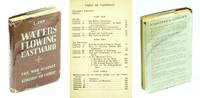
1953237j0879London: Britons Publishing Society. Good in Good dust jacket. 1953. Fourth Edition - Revised and Enlarged. Hardcover. "On the surface it would seem madness for millionaires to strive for Communism but there is irrefutable evidence that they do so strive and in Russia have in fact created a dictatorship which masquerades under the name of Communism while its only real achievement has been the liquidation of the gentile aristocracy and every Christian institution. The facts revealed in this book including the detailed plan for world revolution and world government discovered long before the first world war are so damning that no newspaper would dare to offend British readers by denying the truth. Hence the discreet silence in the Press and the slowness with which vital knowledge is spread. Their aim is a World State and a Slave State in which the masters will be of one tribe and one religious persuasion. There may be only a short time in which to learn the truth and act upon it." - dust jacket. 8-267 p. Index. Rubber stamp upon back free endpaper otherwise tanned contents clean and unmarked. Binding intact. Average wear to dust jacket now preserved in archival-grade Brodart. A sound copy. Singerman 882. ; 12mo - over 6¾" - 7¾" tall; Waters Flowing Eastward: The War Against the Kingship of Christ Unemployment World Wars Revolution Slumps Depression Antichrist . Britons Publishing Society hardcover
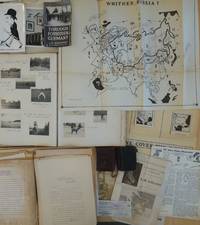
1950List2425Europe and California 1950. Includes two small diaries from 1901 and 1917 with sporadic entries a large photo album measuring 14 x 11 with appx. 400 small photographs from 1906-1909 attached to album pages most measuring 3 x 2 as well as a few larger format images laid in. With 100 plus pages of typed pages including retained correspondence story ideas and various other manuscripts. With eleven maps produced for his “Of Men and Maps†series including five copies of a large map entitled “Whither Russia†in varied states and in large sizes up to 30 by 36 inches and a handful of small ephemeral pieces. Generally near fine condition with the exception of the album which is missing its rear board and has some pages loose and torn. Very Good. J.M. de Beaufort a war correspondent for the London Daily Telegraph and New York American during World War I recounted his wartime adventures in the 1917 book "Behind the German Veil: A Record of a Journalistic War Pilgrimage." Originally arriving in Chicago in 1909 he married a steel magnate's daughter and pursued a career in show business. However by 1912 he had gone through a divorce and transitioned to newspaper work earning the moniker of the "Dude Reporter." Originally born in the Netherlands as Jacques Albert Uilenbroek he was thought to be a deserter. He spent the latter part of his life in the United States apparently jailed in San Francisco for a stint in the 1920s and eventually settled in Los Angeles. <br /> Offered here is an interesting smattering of material from the life of the mysterious De Beaufort which bookends his most unusual career and life with a large visual photographic record of his life in Europe as a young man and over a hundred pages of manuscript material from late in his life with a highlight being several maps in draft form for an apparently unpublished project called “Of Men and Maps.†As a group the material shows the work of an ex-con artist and war correspondent trying to regain his form while living in Los Angeles. He was still writing as a “Special Correspondent†at this point though the title seems to have been fully honorary. Also included are two small pocket journals with sporadic notations from his life in Europe in 1900 and in 1917. In its entirety the group gives an interesting visual and manuscript record of a literary fraudulent and imaginative transatlantic life and intellect. <br /> The cartographic highlight of the group is several iterations of a large map called “Whither Russia†in varied forms which show an interesting interpretation of the sphere of influence of the USSR and its growth from 1939 to 1946. Also included are two drafts of a map of Operation Market-Garden in the Netherlands in 1944 an unidentifed tactical map of a military battlefield a map called “Middle East Jackpot†showing the division of territory between the Allied and Axis powers a map called “Dawn’s Early Light some reproduced small format maps from the De Beaufort’s and a small map called “Gifts from Yalta.†De Beaufort was working on these maps for a column called “Of Men Maps and Memories†that was published in the East Los Angeles Tribune. He also sent the columns out in newsletter form from his address at 1635 N. Ogden Drive in Los Angeles. <br /> The collection of manuscripts drafts and retained correspondence tackle a range of subjects perhaps most interestingly those detailing De Beaufort’s creative process - drafts of stories lists of ideas for stories and letters. His over the top style is on display in a lot of the writings some of which are of unknown origin and purpose. The documents contain correspondence between De Beaufort and Edwin Pauley the oil man and presidential advisor. In one untitled essay he asks himself the question “What has been your most thrilling experience†and his reply is “ Silly questions. Who or at least what newspaperman of some 25 turbulent years standing - and falling - could answer such a question. A reporter’s life has a thousand thrills. There was that rainy day in Marcy 1915 in the fortress of Loetzen when I stood face to face with Hindenburg. Hm yes that was quite a thrill…†De Beaufort was entrenched in the Los Angeles journalistic scene at this point and the documents show the degree to which he relied on his former glories to attempt various career revitalizations endeavors. <br /> The album of photographs from 1906-1909 over 400 in total give a visual record of the young Uilenbroek’s life in Europe. The star of the collection is his bulldog Bob who travels throughout Europe with him and eventually comes to America by 1907. Mary who we presume to be his future wife is featured heavily in the images. It is unclear whether he was working at this point the images show affluent young people and their dog in varied cities and are purely of a personal nature. Other photographs laid in are relics from his war correspondent period. The loose photographs and ephemera are a mix of portraits from different periods from his life including two pictures of Sydney Turing Barlow Lawson one signed by his widow. The journals are sporadically filled and hard to decipher though one legible passage says “drinking all day.â€<br /> Overall the group gives evidence of this intriguing life and is the only extant group of material relating to Beaufort to our knowledge with the exception of a single journal from his time in Belgium during WWI that was sold at Bonhams and is still available in the trade as of this writing. unknown