69 résultats
18941399253D Cong. 2d Sess.: SED27. 1894. 101pp Disbound some pages loosened else Very Good. SED27. unknown books
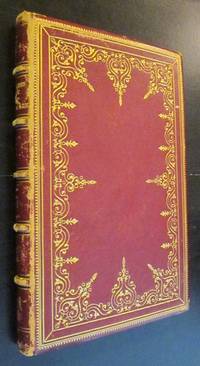
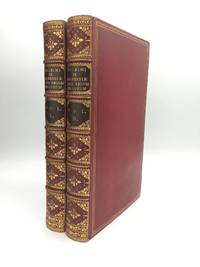
184071584London: Sumptibus Societatis 1840. First Edition. Hardcover. Very good. William of Malmesbury's Deeds of the English Kings is one of the great histories of England and one of the most important historical works of the European Middle Ages. Although its focus is national its scope encompasses most of Western Europe and beyond providing a full-scale account of the First Crusade. Apart from its formidable learning it is characterized by narrative skill and entertainment value with topics including unpowered flight and Henry I's zoo. This edition is edited by English archivist and antiquary Thomas Duffus Hardy 1804-78 from the early 12th century manuscript. The text is in Latin with Hardy's preface footnates shoulder notes and an index in English. From the library of John Patrick Crichton-Stuart 3rd Marquess of Bute 1847-1900 the industrial magnate antiquarian and philanthropist whose vast inheritance reportedly made him the richest man in the world with his armorial bookplate to each front pastedown. Tall octavo two volumes. Sumptuously bound in full red morocco with decorative gilt stamping five raised bands black leather onlays ornamental dentelles and marbled endpapers. The spines are darkened just a touch with some light rubbing to the corners and tips. A striking set. Sumptibus Societatis hardcover books
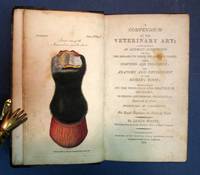
180229918Canterbury: Printed by W. Bristow for J. Badcock 1802. 1st edition Canterbury issue. Period brown half-sheep binding with marbled paper boards. Some rubs & general wear to binding. Period pos to ffep. A VG copy. vi 7 - 20 232 pp. Illustrated with 15 copperplate engravings 4 color and the 6th Fig 1 serving as frontis. 12mo signed in 6s. 6-3/4' x 3-7/8" <br/><br/> Printed by W. Bristow, for J. Badcock hardcover books
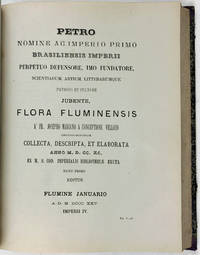
188145183Flumine Januario / Rio de Janeiro: Typ. Economica 1881. First complete edition. Half black morocco over marbled boards gilt spine title. A very good copy boards rubbed repaired tear and closed tear on Volume V half title and title page. xii vii 467 1 pp. 4to. Published in and taking up the entire volume of Archivos do Museu Nacional do Rio De Janeiro. Volume V. 1880 1881. Added title page: Petro nomine ac imperio primo Brasiliensis imperii perpetuo defensore . jubente Flora fluminensis a' fr. Josepho Mariano a Conceptione Vellozo Ordinis monorum collecta descripta et elaborata anno M.D. CC. XC. Ex M.S. cod. Imperialis bibliothecæ eruta nunc primo etitur. Flumine Januario A.D.M. DCCC. XXV imperii IV. José Xavier Veloso 1742-1811 born in what is now Minas Gerais Brazil was ordained in 1766 in the convent of St. Anthony in Rio de Janeiro where he studied philosophy and theology later geometry in San Paulo and finally natural history. He collected plants animals and minerals in the Rio de Janeiro area from 1783 to 1790 at which time he moved to Lisbon where he worked at the Royal Academy of Sciences while preparing Florae Fluminensis his greatest work for publication. Using the Linnaeus' system of sexual classification of plants he prepared very highly detailed texts and 1700 prints many of them of new species. But the publication of the work was beset by problems. First sent to Venice the plates were never completed. Later the French invasion of the Iberian peninsular sent the Portuguese government then Veloso and his manuscripts into exile in Brazil where he died in 1811. In 1825 an abbreviated version of the text was published followed by the eleven volumes of the Icones in 1827 of which few copies survive. The complete text was not published until this edition in 1881. Bound with and proceeded by Archivos do Museu Nacional do Rio De Janeiro. Volume IV. 1879. Rio 1881. viii 151 1 pp vii plates. Folded color plate split at fold. Volume subtitle: Insectologia. Includes Müller Fritz: A metamorphose de um insecto diptero among other works. Rodrigues 2473. Sabin 98833n. For the shorter version of 1825 see: Barba de Moraes II p. 343. Pritzel 468. Jackson 377. Innocencio V.5 4258; V.13 p.122. Also see Nissen BBI 2046. Typ. Economica hardcover books
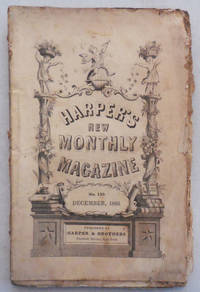
186624824New York: Harper & Brothers 1866. First edition. Paperback. Fair. Single bound issue of Harper's New Monthly Magazine No. 199 December 1866. Notable for the inclusion of "Forty Three Days In An Open Boat" pp 104-113 now recognized as the first appearance of Mark Twain in a national magazine. Noted apparently as Mark Swain in the list of contributors. This copy in relatively poor condition with some substantial soiling chipping to edges and other general wear. However still bound with most of the spine intact. Not often found as a separate issue it is much more common for this to be found as part of a bound set of twelve issues. Harper & Brothers paperback books
1832010488Boston: Published by Crocker & Brewster 1832. Hardcover. VG. 12mo publisher's brown textureed cloth engraved frontispiece of family scene vii 192p. Some loss to cloth at spine ends. Solid unophisticated copy in original binding typical of New England-printed Christian tracts of the period. Published by Crocker & Brewster hardcover books
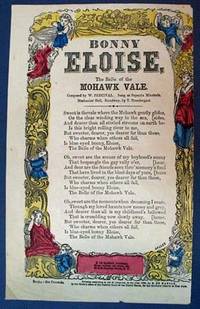
186034567New York: H. De Marsan Publisher. 38 & 60 Chatam Street 1860. Ca 1860. Not in Wolf nor recorded on OCLC. VG light wear & age toning. Single sheet printed recto only. 3 verses each of 8 lines. No music. Hand-colored wood-engraved "The Fountain" decorative border. Just inside lower right border signed "Sparks". 10" x 6-1/8" <br/><br/> H. De Marsan, Publisher. 38 & 60 Chatam Street unknown books
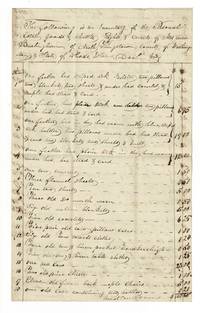
183357649V.p. 1833. A dozen or so items over half of which seem inconsequental. Ezbon or Esbon Sanford 1765-1846 was born in Newport worked in Washington County. He was a storekeeper innkeeper and cabinetmaker and is cited in various articles about Rhode Island furniture making. One receipt is from the "estate of Abigail Congdon" his mother-in-law which details payment for molasses and gin as well as a coffin for herself at $6.00. A detailed inventory May 15 1833 is included of the estate of Anna Buckingham of North Kingstown Washington County. All her belongings are listed including furniture: "eleven old fiddleback maple chairs" at $5. This type of chair is described in an article by Kathleen E. Johnson in Art & Antiques Magazine Sept/Oct 1981 as "an intentional translation of the elements of the carved mahoghany or walnut cabriole legged Queen Anne- style chair into the vocabulary of the turned chair tradition." A large floor plan for a house with its footprint neatly laid out is one of the more interesting documents with a detailed list of supplies joists ranging timber furing laths doors & frames roof boards shingles and nails each with prices. Ezbon Sanford held a local court office as Judge of the Court of Common Pleas and nother interesting document is dated 1830 from the state to the sheriff concerning the warrant for the arrest of George Young charging him as the father of Margaret Mitchel's "bastard child." The paper was signed by John H. Green Deputy Sheriff. Other names mentioned in his storekeeper receipts are Robert Hosford Robert Northrup Charles Douglas Weighty Underwood and Paul Austin. <br/><br/> hardcover books
185148314San Francisco / New York: "Gregory's United States & California Express" 280 Montgomery Street / Thompson & Hitchcock 149 Pearl Street 1851. Shiny dark blue paper covers with gilt stamped lettering stapled. Buff paper mailing envelope. Wrapper insides: front instructions for use; rear 2 estimonials dated 1851 from the Panama Star newspaper. Unused Nr Fine with an envelope in similar condition. Unpaginated blank pages. 4-3/4" x 2-7/8" <br/><br/>From the inside of the front cover: "Gregory's California Express. This line one of the oldest established in the business dispatch messengers BY EVERY STEAMER leaving New-York and San Francisco in charge of Letters Parcels Packages Gold Dust and valuables for distribution throughout the United States and California. If possible letters should be directed to the care of mercantile houses or well-known residents in San Francisco or other parts of California by which means their earlier delivery may be insured. Letters directed simply to 'California' or 'at the mines' will not be forwarded as little probability exists of their reacing the persons so vaguely addressed." From the rear cover: "The Central Office of this Express is located in the throughly fire-proof building corner of Montgomery and Merchant Streets San Francisco from which the proprietor Daily dispatches Expresses by steamboat to all parts of the Mines and to Portland Oregon and Honolulu Sandwich Islands on the arrival of ecah steamer with packages from the States." A rare Gold Rush survivor documenting the 'letter & dispatch' business of the era. "Gregory's United States & California Express," 280 Montgomery Street / Thompson & Hitchcock, 149 Pearl St unknown books
189872382London: Luzac & Co 1898. First Edition. Hardcover. Good. The first edition in English. Unlike its predecessors which were based on archaic Persian spoken in India Rosen's Grammar drew on the colloquial language of what was then modern Persia. 400 p. with the publisher's 1893 ads at the rear. Octavo. Original brown cloth binding with black stamping. Though the hinges are cracked the binding is still quite sound. The top edge is dust stained. Some general shelfwear to the boards which are darkened along the spine. Luzac & Co hardcover books
1896010003NY: Wholesale Dry Goods Republican Club of New York 1896. Hardcover. Very Good. An address delivered by John Rhoades Presidnet of the Greenwich Savings Bank of New York befoer the Wholesale Dry Goods Republican Club of New York. Stiff paper printed covers 17 pages. A businessman's ringing endorsement of McKinley during oen of the most hostoric presidentail elections in US history: "Populism will not bring about progress. Communism will not produce it. Socialism will not creat eit. Anarchy will destory it.Vote for McKinley Wholesale Dry Goods Republican Club of New York hardcover books
1866286043New York 1866. unbound. very good. located in the Nevada District of the Colorado Territory with beautifully engraved vignettes of a miner working by torchlight and a group of miners sending ore from the mine shaft to the surface by way of an bucket-brigade. Signed by the Secretary and President of the Corporation whose main office was located in New York City. This certificate bears two uncancelled 25 cent Internal Revenue Certificate stamps applied to the certificate in their designated spaces. The stock certificate appears not to have been redeemed. Scarce. Very good<br/><br/> Folds are very light and the steel engravings are clearly printed. There is a small chip to the top margin above the printed border.<br/><br/> unknown books
185425890Boston / Cleveland: John P. Jewett / Jewett Proctor and Worthington 1854. Paper wrappers. A clean copy without the blue wrappers. 42 pp. Pamphlet. Attributed to Samuel R. Phillips by Halkett & Laing. Attributed to George W. Bungay in Brown University Dict. Cat. of the Harris Coll. Vol. 2. LCP Afro-Americana 1795. Halkett & Laing v. 9 p. 221. John P. Jewett / Jewett, Proctor, and Worthington unknown books
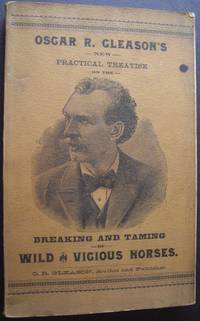
18898588Baltimore: Self-published 1889. 1st. Original Wraps. Collectible; Very Good. Wonderful --and uncommon-- 1889 treatise on the "breaking and taming of wild and vicious horses" with over 200 illustrations complementing the text. Written by Oscar Gleason the inventor of "The Gleason Bridle" and "The Gleason New Break Harness". Solid and well-preserved and VG in its brown pictorial wrappers with one small spot at the front panel. Octavo 300 pgs. <br/><br/> Self-published paperback books
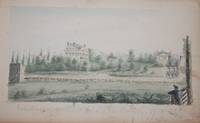
1828006534New York City 1828. Hardcover. Cloth spine. Marbled pastedown on boards. Leather centerpiece label on front board. Good. Original watercolors of rural Manhattan as it appeared in 1828. Among these and captioned are a farmhouse on Broadway and 8th Street; Kips Bay showing a boy sailing a small craft with a farmhouse in the background; a house in Bloomingdale the location of an early village now the Upper West Side along the river between 96th and 106th Streets; and a stately mansion surrounded by fields and less important buildings we would conjecture in or around Bloomingdale but captioned surely incorrectly the Battery. Most of the paintings are uncaptioned. Of these some are surely the Upper Hudson area or are scenes that we can't tell whether they are upstate or in the present day city. The artist also ventured away from the New York areas. Among the non-New York paintings are a depiction of the Cape Pogue Lighthouse on Martha's Vineyard which still stands; Fowey Harbour which is in Cornwall; and a few scenes which look very much like Scotland. Oblong 14 by 19.5 cm. 55 watercolors generally fully finished. Although the sketchbook has a label on its front board bearing the name of Walter Oddie who was a listed artist we believe a good amount of the artwork contained in this sketchbook is of his father-in-law Henry Meigs. Meigs had been a U.S. Congressman from New York and also held a number of other political positions in the city over the course of his career. More pertinently Meigs was known to be an amateur painter and as such an inspiration to Oddie. Given Oddies youth at the time -- he was 20 or 21 years old and from his diary for the years 1828 and 1829 now housed in the Winterthur Library we know he was just starting to paint we find it inconceivable that he would have had the skill yet to produce the sensitive and fine renderings of nature and buildings that typify this sketchbook. Further underlying our thinking about attribution is that some of captioning only makes sense if Meigs were the primary artist. We do consider it quite likely that Oddie may have done some of the sketchier work contained herein as well as contributing in bits and pieces to his father-in-laws work as well as perhaps copying some of it in this sketchbook. To us it isnt really so important who was responsible for particular paintings in the sketchbook. Rather the significance lies in the recording of New York City and its surroundings at the time we suspect that there may be no recording anywhere of some of the buildings and locations at this time. And of course not to be minimized is the beauty of the better paintings contained in the sketchbook.Whatever the degree of Oddies contribution the sketchbook does have something to say about his career and visa versa given that it contains the type of artwork for which he became known later. Oddie was born in Maryland Washington D.C. or possibly New Orleans but spent almost his entire life in New York and more specifically New York City Brooklyn or Long Island. In 1828 the year most of the watercolors in the catalogue were executed Oddie was spending much of his time in the city.Once Oddies interest in painting was sparked he was believed to have been largely self-taught but he did come to study art with Hudson River School painter Robert Walter Weir and Anthony Lewis De Rose a portrait and historical painter. From the diary we know that Oddie did work with De Rose in 1829; we believe that his tutelage with Weir came later. From the diary we know that Oddie was regularly going to art exhibits and critiquing what he saw. The diary also discloses or corroborates our prior sense that Oddie sometimes would work off of engraved prints. To what degree he was merely copying the prints as opposed to using the prints as a spur to his own imagination we can not determine with certitude. We tend to think the views of Scottish and Welsh castles contained in the Sketchbook were done by Meigs not Oddie and so they might well have been done from life.From the diary we know that Oddie had some day job that occupied him during the week and so he did most of his painting at that time on the weekends when he would often go for long hikes along the Hudson. Oddie also refers in the diary to having been in Hudson then and now the county seat of Columbia County and so it is very plausible that some of the upstate scenery is from around there. Again we think some of these paintings may have been done by Meigs.Oddie would become an associate member of the National Academy of Design where he frequently exhibited his artwork.One further note we spoke of questioning one caption referring to the Battery. In 1828 the urbanized part of the city didnt even reach 14th Street but the Battery as the oldest part of the city was thoroughly urbanized. Thus the painting could not be of the Battery. But the landscape is very consistent with the topography of Upper Manhattan. <br /> hardcover books
186364926Austin TX 1863. 4to. One page approximately 125 words in part: "Gents I am as a military board constituted by the authority of the state submitted to me for sale . thirty four United States Bonds Texas Indemnity with coupons attached . and I sold the same about the 10th of January 1863 to James Thorpe of the state of Louisiana for 85 cents on the dollar in Confederate notes . handed over to you with this report." Murrah a native of Alabama eventually read law and settled in Texas in the late 1840s opening an office in Marshall for his practice. He served in the Texas house before the war then in administrative offices before succeeding Lubbock as Governor in November 1863. Fleeing Texas at the end of the war he died in Mexico in August 1865. Very good. Folded for mailing. 11144. <br/><br/> unknown books
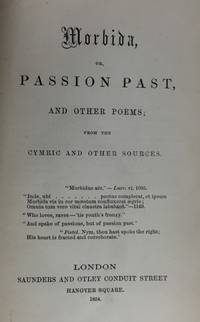
18542657London: Saunders and Otley 1854. First edition. First edition. Octavo. Original blue embossed cloth with gilt design on cover. A very scarce book cited in Quarterly Review: "The book called 'Morbiida'- and which needs no second title- is the production of one who has evidently received his inspiration at second hand. Unable to elaborate it for himself he freely dilutes some of the finest of English poetry." And then in the Eclectic Review "It is sickly and feeble. The author has evidently mistaken his vocation. He might make as times go a creditable man in various professions but Nature in endowing him with a polished mediocrity evidently intended him for anything rather than a poet.". 168 pages. <br/><br/> Saunders and Otley hardcover books
18756056031875. "Faithfully yr friend Joaquin Miller Nov. 2 1875" in black ink on small leaf 4 7/8" x 2 1/2". Very good old tape in top margin from previous mounting. Together with a vintage sepia photograph. 3 3/4" x 5 1/4". Signed by Authors. No Binding. Very Good. unknown books
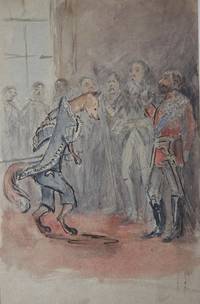
18800064001880-1917. Full Morocco. Very Good. Oblong 21 by 30 cm. 92 numbered leaves with content with log entries more or less statistical on all the versos and pictures and/or original drawings mostly mounted on 58 rectos with some additional loose material. 129 numbered leaves in all. Several of the log pages have mounted photos obscuring the log as it is clear that this game book was at some point re-purposed to be a more general album with some emphasis on sports including also fishing foxhunting and sailing but also there are two pages of photos from South Africa with photos of native tribesmen ostriches a hut Cecil Rhodes house etc. 13 original works of art -- watercolored pencil pen and ink -- in addition to numerous painted fish hook and fly vignettes these sometimes done directly onto the page. Most charming are the comical illustrations of anthropomorphic foxes. Sepia photos are of the country estates their stately homes and rural settings of the hunts as well as the people involved -- the hosts and guests during these country weekends. Many but by no means all of the photos have captions helpfully identifying the participants or the locations. And the log proper provides the names of those participating in the shooting and often what would now be regarded as obscenely large kills. Among the many aristocrats and wealthy in the photographs and/or logs are Lady Randolph Churchill Jennie Churchill Arthur Balfour Lady Minto Mary the famous 4th Countess Henry Lascelles the 5th Earl of Harewood the 5th Earl of Carnavon of King Tut fame as well as the owner of the castle used in Downton Abbey Baron Rothschild Lord de Grey Lord Ashburton Prince Murat the Duke of Buccleuch Prince Duleep de Singh Lord Rosebery and on and on. Country homes include Longleat Greystoke Castle the Hirsel Highcliffe Castle etc. Alexander McDonnell was a son of the 5th Earl of Antrim and a clerk in the House of Lords. Obviously he was very well connected and surely very popular among the upper echelons of English society back then. And we would note that many of the most illustriously titled have frequent entries here; what we have here is a window into a cohesive social network it is our sense. Condition: morocco binding has moderate to heavy wear along edges some scuffs on the boards and spine. The leaves can have a waviness the result of the interaction of the mounted material upon the leaves. A few photos are loose. There is a little bit of a scrappy quality to the book as befitting a log book that was partially turned into something much more and this quality is part of its charm as well. <br /><br /> books
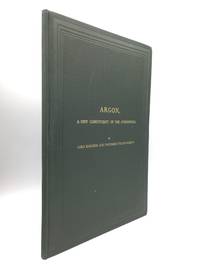
189673529Washington D.C.: Smithsonian Institution 1896. First Edition. Hardcover. Near fine. The first American edition of this important scientific memoir describing the manner in which the authors succeeded in extracting the previously unknown element argon in pure form and in analyzing its properties. For this discovery Lord Rayleigh 1842-1919 was awarded the 1904 Nobel Prize in Physics. Smithsonian Contributions to Knowledge Volume XXIX Number 1033. Quarto: 2ff 43 1 p. Original green cloth binding with gilt titles. Near fine. Smithsonian Institution hardcover books
1828D2439Paris: Firmin Didot pour Lami Denozan 1828. First Edition. Hardcover. Very Good. 8vo 210 x 132mm. viii cxlvi 48pp. notes and glossary. Illustrated with hand-colored engraved title with marginal vignettes of female personifications and muses by Richard Parkes Bonington. Illustrated throughout with 10 half-page lithographs printed on chine-collé carefully hand-colored heightened in gilt and mounted; six are by Richard Parkes Bonington and four are by Henry Monnier and 15 decorative initials highlighted with colors inspired by ornaments found on the Books of Hours printed in the fifteenth and sixteenth centuries. 19th-century full red morocco decoratively tooled in gilt five raised bands gilt doublures marbled endpapers all edges gilt; lightly foxed throughout miniatures remain bright and fresh; spine slightly scuffed. Armorial bookplate of J. Austin Stevens Junior to front pastedown. First Edition of this rare and unusual book OCLC locates only four copies all in German libraries. Férdinand Langlé littérateur dramatist and occasional necromancer focused his literary interests on the nostalgic and the romantic. In 1828 he edited Les Contes du Gay-Sçavoir a witty collection of medieval ballads and fables. The text is printed in Gothic characters and illustrated to imitate the style of medieval manuscript illumination; it is followed by endnotes and a glossary printed in Roman type. The major illustrator of the work Richard Parkes Bonington was an English Romantic landscape painter who also worked in lithography. He was a close and admired friend of painters Eugene Delacroix and Antoine-Jean Gros. Gordon Ray speaking of Bonington says his importance in the development of lithography can hardly be overstated.His designs for Vues pittoresques de lEcosse and Contes des Gay-Sçavoir are by no means negligible. Boningtons career as a lithographer was short but splendid. - Art of the French illus. book pp. 173 & 176. Fine fresh and bright rare colored copy of this nostalgic work on the medieval period. Brunet III 819; Carteret III p. 172 livre tres rare; Curtis 54-60; Ray 114 <br/><br/> Firmin Didot pour Lami Denozan hardcover books
187828959Boston: Frank Wood Printer 1878. 34pp plus portrait frontis and original tissue guard of John Everitt who "sailed for Valparaiso from New York.to be associated with the General Superintendent at the Mines"; and large Bird's-Eye View 32" x 16" and Topographical Plan of the mines. Original printed wrappers stitched. Wrappers chipped at edges and reinforced at the spine with tape. Some chipping to several blank margins. Good.<br/><br/> The Company based in New York issued this Prospectus which includes a detailed report from its Mining Engineer W.A. Holcomb. Flagler its President was a major capitalist during the last half of the 19th century; he formed the National Tube Company and owned one of the predecessors to U.S. Steel. <br/>OCLC 1013744777 1- U IL as of November 2020. Frank Wood, Printer unknown books
185772639New York: D. & J. Sadlier & Co 1857. First Edition. Hardcover. Good. Traces the history of Christianity in China from its earliest documented appearance with St. Thomas and the missionary rush sparked by the discovery of the Cape of Good Hope in 1488 to the Manchu-Tartar Dynasty in the sixteenth century. Abbe Huc a French Catholic priest Lazarite missionary and traveler became famous for his accounts of Qing-era China Mongolia and Tibet which was largely unknown at the time. He and his companion Joseph Gabet were the first Europeans to reach Lhasa since Thomas Manning in 1812. 358 p. and 348 p. with publisher's ads. Octavo two volumes. Ex-19th century library Nevada City Free Public Library with a bookplate to each rear pastedown two small ink date stamps and a small label to each front endpaper and a gilt-stamped accession number and label shadow to each spine. It appears a pocket was neatly removed from each pastedown. Both bindings are quite sound. The spines are sun faded with some minor bumping to the corners and tips. Scarce. D. & J. Sadlier & Co hardcover books
1814D1409Paris: Gide Fils 1814. Hardcover. Very Good. Red paper over boards ruled and lettered in gilt on spine; 4 volumes 8vo 5 x 8.25 inches; pp. lxxx 432; 4 494; 4 434; xv 1 139 104 tables; all volumes with half-title page and title-page. Spine tips and corners lighly chipped; boards faintly rubbed; a little faint foxing but overall nice and clean. An excellent working set. <br/><br/> Gide Fils hardcover books
1897WRCAM43100Circle City Alaska and on a steamer between Juneau and Seattle 1897. 12pp. typed on folio sheets of onion-skin paper plus three hand-drawn maps. A total of some 6750 words. Stapled at upper edge. Three horizontal folds. Near fine. A very interesting pair of typed letters from a young man in Alaska during the Klondike Gold Rush. The anonymous author wrote these two letters to his parents describing his journey overland and by water to the Birch Creek mining district his experiences mining for gold and his decision to go into business as a merchant. The letters are written in a detailed style that indicates an educated author. They include three manuscript sketches showing the routes traversed in Alaska and provide a great deal of information about the writer's experiences in the Klondike. These letters are typed but they were likely originally handwritten by the author who later typed them and included his manuscripts maps and sketch in order to send them to his family when he arrived in Seattle or San Francisco. <br> <br> The letter dated Nov. 10 begins with a description of the writer's boat journey from Juneau to Dyea which was a popular disembarkation point for the Chilkoot Trail to Dawson City a center of the gold rush. He arrived at Dyea on April 23 and notes that "dinner at the Dyea post was the last square meal I have had up to the present date November 10." After dinner he loaded his equipment on horses for the journey inland: <br> <br> "My outfit consisted of about 1000 lbs. of provisions guns amunition sic tools for boat building a whip-saw jack-plane cross- cut saw hand saw rip saw hatchet hammer draw knife brace and bits square etc. and clothing blankets tent sheet-iron stone and in fact I think I had about every thing that ever went down the Yukon. Altogether my outfit weighed about 1302 pounds which is much more than is usually taken into the interior." <br> <br> The author spent the next several days transporting his provisions between Dyea and Lake Linderman and he includes in his letter a sketch of the route from Dyea through the valley to the lake noting several camps along the way as well as a sketch of his sled. <br> <br> The second letter dated Feb. 17 1897 was written on board the steamer Al Ki between Juneau and Seattle. He continues the narrative of his trip inland explaining that he arrived at Lake Linderman on May 14. A month later on June 14 the author and a partner their canoe loaded with provisions departed for Circle City which they reached on June 29. There they stored most of their provisions and headed for the mines in the Birch Creek region. Mining was at its height in the middle of the summer but rather than seek out a claim on their own the author and his companion Jim Wishard decided to work for other miners earning some $10 a day. He describes working at mining from 7 p.m. until 6 a.m. the long days making the task of working at night possible. In August the author bought a claim in the Harrison Creek region but decided to forego mining in favor of establishing himself as a merchant: <br> <br> "From what I could see the miners are poorly supplied with food by the two companies and there is always a great demand for luxuries; that is something out of the ordinary and even the necessaries of life. I made up my mind last summer that I could do as well bringing in some food - in other words being something of a merchant - as in any other way to start and having a good knowledge of the country and keeping my eyes open I would undoubtedly have many good chances for speculation. It is a conceded fact that one cannot lose money taking in such an outfit. Everything brings in an average profit of 400 per cent. over the original cost and whatever any one has to sell in the 'grub' line is in demand." <br> <br> The author then describes his construction of a small cabin in Circle City and his decision soon afterward to leave Alaska for the winter. He describes the trip to Dyea undertaken in January and the hardships of winter overland travel in Alaska. Included are some very practical tips: <br> <br> "In crossing water when it is thirty or forty degrees below zero one should dip his moccasins into the water very quickly taking them out before the moccasin is wet through. They will then freeze in a mass on your feet and will serve the same purpose as rubber boots. You can then walk right through water though I would not advise any one to tempt Providence too much." <br> <br> The letter concludes with a description of a recently discovered gold strike called "Bonanza" not far from the Forty Mile camp. The author describes the high hopes around the strike and includes a manuscript map of the region indicating the location of a claim in which he himself has invested. He hopes that his mine will bring him some wealth but reiterates his belief that the way to wealth in the Yukon Gold Rush is by supplying miners with goods and that he is on his way to Seattle and San Francisco to buy provisions to resell. hardcover books