37 résultats
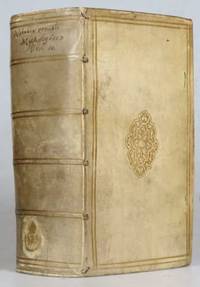
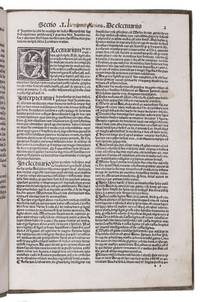
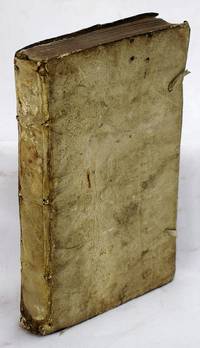
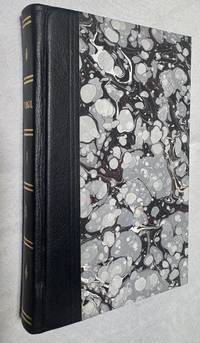
1566B6630Bononiae /Bologna: Alexandri or Alexander or Alessandro Benatii or Benatius or Benacci publisher c. 1566. . Edition: First Commandino edition. Binding: 17th century mottled calf; spine raised with six 6 bands compartments gilt gilt lettered title on two; all edges speckled red. Notes: First edition by Commandino. David Clement judges this edition of the first four books bound with the two books of Sereni on cones and cylinders to be extremely rare. Also footnote 32 states: in Bibliotheca Uilenbroukiana P.I. p. 55. Catal. duarum Bibliothecaruin Dom. N. B. & D. L. Hagae - Com. ap. Beauregard 1747. in 8vo. p. 9 Vogt Libror. rarior. p. 40. describes this Commandin edition surpassing that of Jean-Baptiste Memmius which was printed in Venice in 1537. It quotes Fabricius’ statement in the Bibliotheca Graeca about Memmius or Memus not having understood the subject at hand translated from a basically wanting manuscript with manifold thereby rendering his version weak. It also mentions that this didn’t mean Commandin’s was fault-free remaring the Greek manuscript he had drawn on was filled with failts. <br>Concerning Apollonius’s work Koudela states†Interest in ancient Greek knowledge increased gradually in the fifteenth and sixteenth centuries especially in Italy the leading country of Europe's culture and science of the time. Latin translations of Greek works on conic sections and other curves - Apollonius and Pappus in particular - appeared in several editions. Although some original works were also published in the sixteenth century no significant progress in the study of conic sections had been made until the work of Kepler. His contribution influenced the further development of projective geometry and can be regarded as the transition from ancient to modern geometry. The spread of Greek knowledge in the Renaissance The invention of conic sections is attributed to Menaechmus 4th cent. BC a member of Plato's Academy at Athens. Various species of conic sections were obtained by truncating an acute-angled right-angled and obtuse-angled cone by a plane perpendicular to the generator of the cone. Conic sections were also investigated by Aristaeus the Elder 4th cent. BC and by Euclid c. 325 - c. 265 BC. Their works on this subject are now lost. The works of Archimedes 287 - 212 BC contain some important results concerning the properties of conic sections especially parabolas. The greatest ancient writer on conic sections was Apollonius of Perga c. 262 - c. 190 BC. His famous work Conics consisted of eight books and contained 487 propositions. Apollonius introduced the terms ellipse parabola and hyperbola and showed that various sections of the cone can be obtained by varying the inclination of the intersecting plane. Among other ancient authors dealing with conic sections we should mention Pappus of Alexandria c. 290 - c. 350 AD the last of great Greek geometers. His main work known as Collection is valuable - among other things - because it provides an account and comments on the results obtained by his predecessors. Pappus introduced the notion of the focus and the directrix of a hyperbola Kline 1990 p. 128 .<br> <br>Apollonius’ work influenced the greatest scholars of the modern era such as Descartes and Newton. The Latin translation of the first four books of Apollonius by Gianbattista Memo appeared in Venice in 1537. The present edition of Apollonius’ Conics of the sixteenth century is based on the translation and important new edits by Federico Commandino 1506-1575 who published “classical Greek mathematical texts under the auspices of the Duke of Urbino.†Horblit: “The most influential early edition of this highly important text entirely superceding Memmo’s version of 1537â€. <br>Other sources state that in total the Conics consist of 387 not 487 propositions published in seven books with the eighth book remaining unconfirmed. <br> <br>References: Adams A-1310; Brunet I 347; David Clement Bibliothèque curieuse historique et critique: A-Aqvino 1750 p.415/6; Dibner 101; Honeyman 118; Horblit 4; Koudela L.: Curves in the History of Mathematics: The Late Renaissance 2005; Norman 57; Riccardi I/1 361 51; Commandino; Sotheran I 124.<br>Work II: Conicorum lib. V VI VII with Archimedis Assumptorum liber.<br> Pergaeus Apollonius c. 262-c. 190 B.C. author; Archimedes c. 287-c. 212 B.C author; Abu'l Fath of Isphahan or Bundari al-Fath ibn Ali c. 1190 - c. 1245 author; Borelli Giovanni Alfonso c. 1608-1679 editor; Abraham Ecchellensis 1605-1664 translator: <br>APOLLONII PERGAEI// CONICORVM LIB. V.VI.VII. // PARAPHRASTE // ABALPHATO ASPHAHANENSI // Nunc primum editi. // ADDITVS IN CALCE. // ARCHIMEDIS ASSVMPTORVM LIBER // EX CODICIBVS ARABICIS M.SS. // SERENISIMI // MAGNI DVCIS ETRVRIAE //ABRAHAMVS ECCHELLENSIS MARONITA // In Alma Vrbe Linguar. Orient. Professor Latinos reddidit. // IO: ALFONSVS BORELLVS // In Pisana Academia Matheseos Professor curam in Geometricis versioni // contulit & notas vberiores in vniversum opus adiecit. // AD SERENISSIMVM // COSMVM III. // ETRVRIAE PRINCIPEM. // FLORENTIAE // Ex Typographia Iosephi Cocchini ad insigne Stellae MDCLXI. // SVPERIORVM PERMISSV. <br> <br>Two parts in one.Text in Latin.<br>First edition. / Editio princeps <br>Florentiae / Florence: ex Typographia Iosephi Cocchini publisher; c. 1661. Folio 294x199mm.<br> <br>Illustrated with a red and black ink title decorative head- tail pieces and woodcut initials of varying sizes at openings a large number of mathematical in-text woodcut illustrations mainly diagrams throughout again of varying sizes; wide margined paper.<br> <br>Pagination: 36 415 bl. Collation: Ll: bl. half title red and black ink title 3-6 1-4 with index A1-Z4 Aa1-Zz4 Aaa1-Fff4 with errata bl. <br> <br>Very beautiful and rare work edited by Alfonso Borelli is the first edition of books<br>V VI and VII of the Conicorum of Apollonius. Concerning Apollonius Koudela states†Interest in ancient Greek knowledge increased gradually in the fifteenth and sixteenth centuries especially in Italy the leading country of Europe's culture and science of the time. Latin translations of Greek works on conic sections and other curves - Apollonius and Pappus in particular - appeared in several editions. Although some original works were also published in the sixteenth century no significant progress in the study of conic sections had been made until the work of Kepler. His contribution influenced the further development of projective geometry and can be regarded as the transition from ancient to modern geometry. The spread of Greek knowledge in the Renaissance The invention of conic sections is attributed to Menaechmus 4th cent. BC a member of Plato's Academy at Athens. Various species of conic sections were obtained by truncating an acute-angled right-angled and obtuse-angled cone by a plane perpendicular to the generator of the cone. Conic sections were also investigated by Aristaeus the Elder 4th cent. BC and by Euclid c. 325 - c. 265 BC. Their works on this subject are now lost. The works of Archimedes 287 - 212 BC contain some important results concerning the properties of conic sections especially parabolas. The greatest ancient writer on conic sections was Apollonius of Perga c. 262 - c. 190 BC. His famous work Conics consisted of eight books and contained 487 propositions. Apollonius introduced the terms ellipse parabola and hyperbola and showed that various sections of the cone can be obtained by varying the inclination of the intersecting plane. Among other ancient authors dealing with conic sections we should mention Pappus of Alexandria c. 290 - c. 350 AD the last of great Greek geometers. His main work known as Collection is valuable - among other things - because it provides an account and comments on the results obtained by his predecessors. Pappus introduced the notion of the focus and the directrix of a hyperbola Kline 1990 p. 128.<br> <br>While Koudela mentions 487 propositions in total for eight books comprising the Conics other sources mention 387 published in seven books only with an eighth book announced but its publication unconfirmed/ elusive. Apollonius’ work influenced the work of great scholars such as Descartes and Newton. A Latin translation of Conicorum’s first four books appeared in Venice in 1537 and it was not until 1661 for the present work - Conicorum’s books V to VII - to be published; the present work constitutes the most innovative or original part of the work of Apollonius. Translated from the Arabic manuscript of Abu'l Fath of Isphahan c. 1190 - c. 1245 purchased by the Medici’s during the first half of the 17th century the text of had survived only in the Arabic language. Norman states: “This was a valuable addition to the mathematical knowledge of the time for whereas Books I-IV of the Conics dealt with information already known to Apollonius’s predecessors Books V-VII were largely original. Book V discusses normals to conics and contains Apollonius’s proof for the construction of the evolute curve; Book VI treats congruent and similar conics and segments of conics; Book VII is concerned with propositions about inequalities between various functions of conjugate diametersâ€. Cajori states: “The fifth book reveals better than any other the giant intellect of its author. Difficult questions of maxima and minima of which few examples are found in earlier works are here treated most exhaustively. The subject investigated is to find the longest and shortest lines that can be drawn from a given point to a conic. Here are also found the germs of the subject of evolutes and centres of osculation.†<br>Cajori A history of mathematics 40; Brunet I: 347; D.B.I. XII 546; De Vitry 29; DSB I 191re: Apollonius & II 308 re Borelli ; III 364. Honeyman 119; Koudela L.: Curves in the History of Mathematics: The Late Renaissance 2005; Norman 58; Riccardi I /1 158 Borelli.<br><br> Size: Folio 294x199mm. Illustration: Text in Latin.<br>Illustrated with numerous decorative historiated woodcut initials of varying sizes at openings; hundreds of in-text illustrations mainly diagrams of varying sizes. Volume: Two parts in one. Pages: Pagination: Bl. 4 114 2 36 bl. Collation: Ll:1-6 1 -4 with index A1-Z4 a1-f2; 2 a1-i4. Category: Book Europe Italy; Book Science & Technology; Alexandri or Alexander or Alessandro Benatii or Benatius or Benacci, publisher unknown
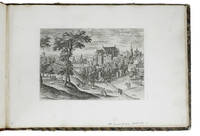
1575ABC_46067Antwerp: Hans van Luyck 1575. Modern red half cloth marbled sides. Oblong folio album 24.5 x 35.5 cm. Series of 24 engravings plate size ca. 20 x 14 cm with views of landscapes around Brussels by Hans I Collaert possibly after Hans Bol or Jacob Grimmer each with a caption in the plate plates 8 and 20 also with Van Luyck and Collaert's monograms "H.V.L.EXcudit" and "H.C.Fecit". Trimmed down to the plate edge and mounted on album leaves numbered in pencil on the album leaves next to the engravings. Album with the complete series of Collaert's views around Brussels here in its first unnumbered state published by Hans van Luyck in Antwerp. Hans I Collaert ca. 1525/30 - 1585 was a painter-draughtsman who founded the influential Collaert dynasty of engravers and print publishers. The views show villages castles and abbeys in the vicinity of Brussels engraved in a very naturalistic way. The series includes a view of the cloister of Zevenborren south of Sint-Genesius-Rode views of Schaarbeek Elsene Etterbeek Stal Eggevoort and Bosvoorde and views of the some castles including those of Brussels Coensborg south of Laken and Carloo. Some references attribute the drawing of the views to Hans Bol because of an inscription added to the first plate of the later Visscher edition but the "related drawings are not consistent with Bol's style" New Hollstein. Others name Jacob Grimmer as an alternative candidate for the artist who drew the views.With a 20th-century manuscript inscription on the first free endleaf mistakenly identifying the series as the second state published by Visscher which is however numbered in the plates in contrast to the present series in an unnumbered first state. Binding slightly worn around the edges some slight marginal foxing stains browning and soiling but overall a beautiful album complete and therefore rare with all the plates of Collaert's views around Brussels here in its first state.l Hollstein IV 149-172; New Hollstein The Collaert dynasty V 1229-1252; cf. New Hollstein The Collaert dynasty I pp. xlix-liii. Hans van Luyck, hardcover
1579B6621A Lyon: Par Barthelemy Vincent M.D. LXXIX. 1579. . A near fine example reinforcement on margin of leaf B4. Plates are clean and crisp. Binding: Full embossed cotemporary pigskin with central medallion; spine expertly rebacked saving the original with six 6 raised bands gilt lettered title on Morocco label on two; all edges sprinkled red. Notes: Text in Middle French. <br>Second French edition after its first of 1578; first Lyon French edition with commentaries to illustrations by Beroald de Verville. <br>"In 1578 after the death of Besson c. 1572 the Theater of Mathematical and Mechanical Instruments was published in Geneva a work in which we note an evolution in turning techniques with the appearance of the first mandrels and first fixed glasses. Other Geneva editions will follow in French Latin Italian German and finally Spanish until 1602. in rue de la Harpe opposite Saint-Cosme presented twenty-one models of machines eleven of which were executed from the plates of Jacques Besson. … The work belongs to … a genre consisting of presenting series of engravings of instruments and machines often newly invented. These printed writings are used by the inventors in order to protect their invention and to guarantee their right in an irrefutable way. These printed ‘machine’ books appeared in France at the end of the 16th century when the formation of the intermediate class of technicians crystallized grouped together today under the name of engineers. These engineers first appeared in Italy in the 15th century then in Germany and finally in France. … Besson's book which is unanimously considered to be the first true "machine theatre" marks a break with its passage to print. There are sixty figures in all each occupying a full page. Each engraving is accompanied by a legend indicating the manner of construction and its function. … Besson presents four major series of machines: machines for raising water mills cranes and winches. He often suggests ways to multiply the force in order to be able to replace two or three workers with one." <br>“When King Charles IX of France made a royal visit to Orléans in 1569 Besson presented to the King a draft of his new treatise what was to become the Theatrum Instrumentorum. and returned with him to Paris as "master of the King's Engines". Charles gave Besson exclusive rights to his designs in that same year. While employed by the court Besson also created an ingenious screw-cutting lathe that was semi-automatic in that the operator only needed to pull and release a cord. … Besson's Theatrum Instrumentorum Theater of Machines was completed and published in 1571 or 1572. It was a unique work; previously works on engineering and technology such as Valturio's De re militari 1472 Biringuccio's Pirotechnia 1540 and Agricola's De re metallica 1556 had had only limited descriptions of new inventions or recounted inventions of the past without much detail. In contrast Besson's work was a collection of his own new inventions with detailed illustrations of each engraved by Jacques Androuet du Cerceau to his specifications. Some of his designs suggested important improvements to lathes and the waterwheel. The Latin captions to the highly detailed drawings were sparse however which would seem to indicate that the text was probably produced in a hurry. Even the title page does not give the name of the printer or the date of publication. The rush in publishing the book may have been due to the crackdown on French Protestants that culminated in the St. Bartholomew's Day Massacre of 1572. … Although Besson was favoured by King Charles IX he feared the increasing anti-Protestant sentiment in France and emigrated to England shortly after the St. Bartholomew's Day Massacre of 1572 where he died in 1573. … The Theatrum Instrumentorum had proved so popular that a second edition appeared in 1578 with more detailed descriptions of the instruments and machines by François Béroalde de Verville. The copper plates from the original edition were reused except for four which were replaced by new engravings produced by René Boyvin.â€<br><br> Size: Folio 342x238mm. Illustration: Illustrated allegorical wood engraved title; large ornamental and floral woodcut initials head- and tailpieces; moreover sixty 60 insert wood engraved plates depicting mathematical and mechanical instruments and inventions. Provenance: Upper pasted endpaper with a bookplate black ink manuscript ownership note dated 1588. Pages: Ll: bl. 20 60 ill bl.; collation: bl. illustrated title A2-E4 engraved plates numbered 1-60; bl. Category: Book Early Printed 1500; Book Plate Books General; Book Science & Technology; Par Barthelemy Vincent, M.D. LXXIX. hardcover
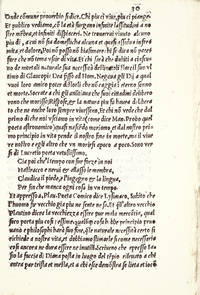
154388<p>8° mm 151x104; cc. 32. Marca tipografica al frontespizio. Margine superiore un poco rifilato. Pergamena posteriore.</p><p>Seconda edizione del dialogo albertiano - meglio conosciuto sotto il titolo di <em>Theogenius</em> - dopo quella che priva di dati tipografici ISTC cataloga come: "Florence 1500" cfr. L.B. Alberti <em>Opere volgari</em> II <em>Rime e trattati morali</em> a cura di C. Grayson Bari 1966 p. 409.</p><p>Il <em>Theogenius</em> rappresenta un capitolo poco noto della fortuna e dell'influsso dell'epicureismo nel Quattrocento. In questo dialogo infatti l'Alberti illustra diversi temi dell'etica epicurea e <strong>traduce alcuni versi del <em>De rerum natura</em> di Lucrezio </strong>S. Gambino <em>Alberti lettore di Lucrezio: motivi lucreziani nel "Theogenius"</em> "Albertiana" IV 2001 pp. 69-84.</p><p>Leon Battista Alberti's <em>Theogenius</em> revived and revised the ancient view developed in the Hellenistic age according to which philosophy aims to form rather than inform people showing them how to cultivate a specific attitude towards existence through a rational comprehension of the nature of humanity and its place in the cosmos. This view of philosophy as a way of life was challenged by the development of scholastic philosophy seen as a body of speculative doctrines and professional skills ancillary to the superior wisdom of theology. Nevertheless it survived thanks to Renaissance humanists like Petrarch Alberti Erasmus and Montaigne. <strong>On the influence of Lucretius on Italian Humanism after Poggio Bracciolini's discovery of the only surviving manuscript of <em>De rerum natura</em> 1417</strong> cf. A. Brown <em>The Return of Lucretius to Renaissance Florence</em> Harvard University Press 2010 and S. Greenblatt <em>The Swerve: How the Renaissance Began</em> London 2011.</p> Appresso Paulo Girardo, [colophon:] per Venturino Rosinello
155133109-74Augsburg Philip Ulhard October 1551. Diagrams showing eclipses and celestial positions in the format of astrological squares. 346 leaves author's name crossed out on title. 4to. Contemporary vellum. Augsburg Philip Ulhard October 1551. First edition of a little known work by Cyprian Leowitz 1524-1574. The celebrated Bohemian astronomer was professor of astronomy and appointed mathematician to Elector Palatine Otho Henry German: Ottheinrich 1502-1559 and acquired a high reputation at the time of the reception of the Copernican theory. It is well known that the cosmological elements of the Copernican theory i.e. the "centrality" of the Sun and the Earth's revolution about it were not widely accepted for nearly a century after the publication of the "De Revolutionibus". Leowitz played a central role in facilitating conjunctionist theory and the actual contents of the "Tabulae" are in line with those by Stöffler. From the end of the 15th century onwards many editions of the tables of Regiomontanus were produced with commentaries and additions i.e. by Erasmsus Reinhold Luca Gaurico Leowitz with participation of Melanchthon etc. The present huge work by Leowitz appeared without introduction and without explanation. It contains so-called position plates for the places from the 33rd to the 60th latitude the pole height of the places gradus latitudinis. A final short "secundes pars" with plates up to the 66th latitude appeared in November 1551 and is not present here as in a microfiche copy stored in the Herzogin Anna Amanlia Bibliothek Weimar. . "Position" is not be taken here in the sense of modern astronomy. It is well known that the cosmological elements of the Copernican theory was not widely accepted for a long time after the publication of the "De Revolutionibus" see Burmeister Magister Rhecicus 2015. A current subject of investigation is the variety in response to the theory in the various countries of Europe. Tycho Brahe 1546-1601 visited Cyprian Leowitz in 1569. According to Tycho Leowitz told him that in his opinion the predictions of Copernicus agreed better with observations of the superior planets and solar eclipses while Ptolemy's predictions were more accurate for lunar eclipses and the positions of the inferior planets. Leowitz was correct about the relative superiority of the two theories in predicting the longitudes of the planets.- Good copy. _ _ - Adams L-520; Zinner 2018; NBG 30 814; not in Houzeau & Lancaster; cf. VD 16 L 1276. SCIENCE:ASTRONOMY & ASTROLOGY ; Augsburg, Philip Ulhard hardcover
15416509Luguduni sic: Lyon: Seb. Gryphium Sebastian Gryphius 1541. Early reprint. Leatherbound. Good. 12mo. Pp. 314 13. Early 18th-C. tree calf five raised bands with gilt tooled decorations and lettering piece edges trimmed and dyed red. Decorative initial caps italic text with roman titles table of Latin and Greek chapter titles marginal notes index following text followed by a tail-piece that of a gryffin in reference to printer Gryphius. Includes Appendicula de condituris varijs ex Ioanne Damasceno a section of fourteen recipes for “condimenta†and “condituræ†between De Re Culinaria and Facultatibus alimentorum. Spine ends chipped edges rubbed endpapers stained marginal annotations in ink tight binding. Presents four culinary and health texts as called for appearing together with Torinus' introduction the same year as a nearly identical Basel edition but in smaller format for a different market. <p>The collection of Roman recipes De Re Culinaria attributed to Apicius first appeared in this form in the fifth century AD. Torinus' sources were "codexes" found in Maguelone and Transylvania. Bartolomeo Sacchi Platina's De Honesta Voluptate given an alternate title by Torinus was the first movable-type cookbook based on Maestro Martino da Como's recipes. Paul of Aegina was a Byzantine Greek physician.</p> <p>Gryphius learned printing from his father in Germany then in Venice moving to Lyon around 1520. By the 1540s he had the city's largest printing establishment and reputation for a high standard of editing and impression specializing in Humanist works in small format modeled on Aldus Manutius. DURLING Sixteenth Century Printed Books in the National Library of Medicine 232.</p> . Seb. Gryphium [Sebastian Gryphius] unknown
1599111111113633Gualtherus 1599. Vellum. Very Good. Gualtherus; Colonia 1599. Hardcover. A mirror of the concubines of priests nuns and clerics and Letter from the Bishop of the Church of Roermond to Maurice Count of Nassau. Bound with two titles: Speculum concubiniariorum sacerdotum monachorum ac clericorum 148pp and Henrici Cuickij Ruraemudensis ecclesiæ episcopi Ad Mauritium comitem Nassauium paraenetica epistola 48pp. Very uncommon book. Hendrik van Cuyk or Henricus Cuyckius was the second bishop of Roermond from 1596 until his death in 1609. Text in Latin. A Very Good full period vellum binding some age-appropriate discoloration and handling marks to vellum binding sturdy still sturdy and intact previous owner bookplate affirmed to front and rear pastedown ink notation front free endpaper and rear pastedown age toned text block with some age spotting/foxing throughout some warping to vellum binding and bowed boards without Dust wrapper. A nice overall clean and uncommon copy. 18mooctodecimo or approx. 4 x 6.5 inches. We pack securely and ship daily with delivery confirmation on every book. The picture on the listing page is of the actual book for sale. Additional Scans are available for any item please inquire. Gualtherus hardcover
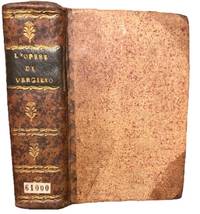
1586250509002Venice Venezia: Appresso Giacomo Cornetti 1586. Hardcover. Good. The works of Vergil namely the Bucolic Georgic & Aeneid again translated into blank verse by various most excellent authors.<br /> <br /> Uncommon copy. Missing the final leaf of the Aneid otherwise complete. <br /> <br /> RECENT PROVENANCE<br /> <br /> From the Virgil Collection of Craig Kallendorf 1954 - 2023 who owned the largest private collection of Virgil works 1150 editions not including Incunable books in the world. Only a handful of prominent institutions like the British Library had larger collections. Eighty-nine of the books in his collection were the only known surviving copies 71 only had one other known copy. He worked closely with Princeton University in helping to assemble supplement and catalog its Junius Spencer Morgan Virgil collection. Craig Kallendorf was Professor of English and Classics at Texas A&M University. He was the author or editor of 27 books and more than 170 articles book chapters and reference work entries. <br /> <br /> HISTORIC PROVENANCE<br /> <br /> Federico Caproni Born in Massone Italy a hamlet of the Trentino municipality of Arco and died in Vizzola Ticino a municipality in the Varese area. Founder together with his younger brother Giovanni Battista of the Caproni Aeronautical Industries. He was a scholar of agricultural sciences. In the 1930s he purchased a large estate near Vizzola Ticino undertaking an intense reclamation project that changed the uncultivated nature of the territory and allowed the construction of a modern agricultural company. His private library consisted of approximately 85000 works divided by subject. Caproni Aeronautical Industries 1908 - 1950 was a pioneering Italian aircraft manufacturer. Caproni was responsible for completing the first aircraft of Italian construction in 1911. During 1927 the Caproni Museum was established in Taliedo by Giovanni Caproni and his wife Timina Caproni. It is the oldest aviation museum in Italy. <br /> <br /> ABOUT THE BOOK<br /> <br /> Published in 1586 by Appresso Giacomo Cornetti in Venice. Text in Italian and in italic type. The Eclogues Bucolics are translated by Andrea Lori; the Georgics by Bernardino Daniello; each of the twelve books of the Aeneid has a different translator: Alessandro Sansedoni Cardinale Hippolito de' Medici Bernardino Borghesi Lodovico Martelli Thomaso Porcacchi Alessandro Piccolomini Giuseppe Betussi Leonardo Ghini Bernardetto Minerbetti Lodovico Domenichi Bernardino Daniello and Paolo Mini. Bound in 19th century 1/4 mottled calf over mottled paper covered boards. Five compartment spine with smooth gilt bands with a gilt lettered black morocco spine label in compartment two and tooled gilt fleurons in the other compartments. All edges stained red. Octavo 5.5" x 4" foliated 8 28; 67 1; 279 leaves. 25 half-page woodcuts some repeats. Cornetti's rose device on title page within scrolled cartouche encircled with motto "Dabo omnibus gratum odorem"; ornamental initials; head- and tail-pieces.<br /> <br /> CONDITION REPORT<br /> <br /> Missing the final leaf of the Aeneid otherwise textually complete. Renewed endpapers. Multiple leaves numbered incorrectly and a few leaves sans number by the printer as it is with other copies. <br /> <br /> Margins trimmed. Spine is square firm hinges and joints. Offsetting and darkened areas on board paper. Some minor rubbing and a nick along joints. Dusty top edge. Rubbed boards and edges. Corners gently bumped. An old cataloguing sticker at heel of spine. A few pages with professional paper restoration to a corner. Quite a bit of water dampening throughout with staining. Heavily darkened title page. Only a few pages with antiquarian marginalia. Signs of handling- a few pages with margin tears some smudges some creasing and a few bent corners. Front pastedown with the bookplate of Federico Caproni. FFEP affixed with the ex libris sticker "from the Virgil collection of Craig W. Kallendorf." Some pencil writing on the front endpapers. Appresso Giacomo Cornetti hardcover
15556824Padova: Gratioso Perchacino 1555. Original edition. Very Good. Quarto 20 cm; 12 leaves signed a-c4 last leaf blank. Printer's device a crowned salamander ensconced in flames on title page. Woodcut initial at start of text. Bound in recent half morocco over marbled boards. Trimmed close to top edge. Gutters guarded. Some spotting on title page but generally clean. <br /> <br />Reference: EDIT 16 CNCE 57958; For attribution to Lando see Silvana Seidel Menchi Chi fu Ortensio Lando "Rivista storica italiana" #106 1994 501-564. Not in Grendler. <br /><br />This is an essay about death. In particular it is a eulogy on the death of young Elizabetta Dotta who it is stated in the text died recently married at the age of 16 years 8 months 24 days and 12 hours. The cause of her death is not given. It does not indulge in a moment's sorrow over the young woman's early demise. Instead it is an extended encomium of death itself praising death as liberation from the essential misery of life in this corrupt and depraved world. As such it is an eloquent statement of philosophical pessimism the tradition which views life as the soul's exile as suffering and sees death as a preferable alternative. While the text is not signed the author is presumed to be Ortensio Lando the uncomfortable peripatetic humanist who never stayed in one place for very long either physically or philosophically. "What is life" Lando asks. "Smoke a dream a running shadow a ship that leaves no trace an arrow shot to its destination. Gratioso Perchacino hardcover
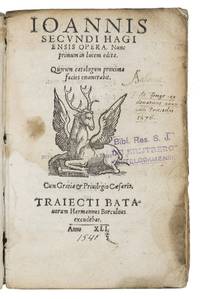
1541M23NGJ7IKRQ5Utrecht: Herman van Borculo 1541. Contemporary vellum wrapper straight-sewn on 3 tanned calf straps laced through the wrapper with the authors name in large textura lettering reading up the spine. Small 8vo 16 x 10.5 cm. With Van Borculos winged stag couchant regardant and book device on the title page and another salient regardant with 2 books on the verso of the otherwise blank last leaf; and 3 vine-leaf ornaments Vervilet 7 8 & 43. Set in an Aldine-style italic type with upright capitals; 92 mm/20 lines with roman capitals for occasional words phrases and 2-line initials. Rare first edition in the original Latin of the collected poetic works of the humanist and neo-Latin poet Janus or Joannes Secundus Jan Everaerts 1511-1536 who "ranks among the foremost poets of the world" as "the only famous 16th-century Dutch poet" Guépin p. 231: "one of the most significant and enduring poets of the Renaissance" and "the outstanding Latin love poet of the northern Renaissance" Price p. 1. Although not quite twenty-five when he died he published numerous poetic works from 1532 to 1536 but left most of his work unpublished at his premature death. Much of his poetry appeared for the first time in the present posthumous edition. Janus is most famous for his "Basia" kisses: 19 lyric love poems influenced by Catullus. Janus's three books of elegies especially the first book comprising 11 love poems to his possibly fictional first love Julia are also masterpieces of neo-Latin poetry.Although revered internationally in his own century and influential throughout the 17th and 18th centuries among his avid readers were Ronsard Fleming Huygens Milton and Goethe Janus's name has been eclipsed in the Netherlands by those of Cats and Vondel in part because they wrote in Dutch.Janus Secundus was born in The Hague. His father was a lawyer at the leading courts of the Low Countries and the family moved to Maastricht when Janus was sixteen. He studied law there and later studied at Bourges and at the University in Louvain. Though a native Dutch speaker and fluent in French Janus had learned Latin with his older brothers at an early age and corresponded with them in Latin.With 3 French verses in a near contemporary hand on the endleavesFurther with a near contemporary donation inscription on the title-page; a 19th-century bookplate on the inside front wrapper and blue ink stamp on the title-page. With the title-page somewhat worn and with stains in its margins plus a water stain in the first 10 leaves and a fainter marginal one some of the last few leaves but otherwise in good condition. The sewing supports have broken at the front hinge and the velum wrapper is somewhat soiled with a small corner of the back wrapper lost. Rare first edition of a seminal work of neo-Latin poetry by the first great Dutch poet Janus Secundus.l Adams S837 1 copy; BMC STC Dutch p. 185; G. Joos Uitgaven van Janus Secundus 10; Netherlandish books 27713 10 copies; USTC 421142 same 10 copies; Valkema Blouw Typ. Batava 2673 13 copies; not in Oberlé Poètes néo-Latins; for Secundus: J.P. Guépin "Tres fratres Belgae: brothers poets and civil servants in the sixteenth century" in: The Low Countries 8 2000 pp. 231-238; David Price Janus Secundus 1996. Herman van Borculo, hardcover
159650569Francofurti Frankfurt: Apud Andreæ Wecheli heredes heirs of Andreas Wechelus Claudium Marnium & Ioan. Aubrium 1596. 8vo. 16 1137 54 1138-1193 1 pp. Early full vellum with yapp edges lacking ties spine with gilt ruled bands contemporary hand written title to upper panel a gilt device with the motto "Rinasce piu Gloriosa" to the foot of the spine decorative gilt centrepieces and double gilt ruled borders to the boards 18th century armorial bookplate "Sinclair" - "Fide Sed Pugna" to the front pastedown an earlier inscription to the head of the front free endpaper. Leaf O4 pp. 215-6 with some marginal loss mostly mild dampstaining at intervals some soiling and light wear to the vellum but a decent copy overall. First published in Venice in 1567 the work came to be known as one of the standard Renaissance works on the study of classical mythology. It went through a number of editions in the late 16th and early 17th centuries with additions to the original text being incorporated in the 1580s. Francofurti [Frankfurt]: Apud Andreæ Wecheli heredes [heirs of Andreas Wechelus], Claudium Marnium & Ioan. Aubrium unknown
159866701598. 22 leaves including some blanks or pages ruled in ink for entries. Agenda format 315 x 100 mm. stitched as issued uncut. Nuremberg: 1598.<br/> <br/> A fascinating document of a type that rarely survives: the manuscript account book for the spring 1598 Leipzig fair of Hans Straub I or the Elder 1541-1610 the prominent Nuremberg gold- and silversmith alderman and son-in-law of Wenzel Jamnitzer the best-known German goldsmith of his time. The first leaf bears Straub’s hallmark interwined initials “HS†over an arrow pointing upward within a plain shield & also containing the inscription “No. 72â€. Our manuscript sheds important light on the business relations in the late 16th century between the Nuremberg goldsmiths and their trade at the Leipzig fairs.<br/> <br/> Our account book is a list of sales orders and expenditures of Nuremberg goldsmith Hans Straub the Elder during the Leipzig Easter fair held in May 1598. While Straub is not expressly named he can be identified by his hallmark on the first leaf. At the fair trade was done in goblets rings knife-sheaths cutlery jewelry gemstones etc. Several business partners are named including the Nuremberg goldsmiths Heinrich Hahn Haan David Lauer and Paulus Koch. As an example of a transaction we see that the council of Halle paid over 33 florins for a goblet.<br/> <br/> In 1596 Straub was elected Alderman of the Artisans the most elevated and honorable office to which a Nuremberg artisan could aspire. Straub retained this position until his death in 1610. In 1569 he married Anna daughter of the famous goldsmith Wenzel Jamnitzer. On his father-in-law’s death in 1585 Straub inherited his casting molds and used them extensively in his own creations. Despite his long period of activity relatively few pieces made by Hans Straub have survived see Nürnberger Goldschmiedekunst 1541-1868 2007 ed. by Karin Tebbe et al. Vol. I p. 409.<br/> <br/> In fine condition.<br/> <br/> â§ The mark is similar to Marc Rosenberg Der Goldschmiede Merkzeichen Frankfurt 1925 Vol. III no. 3969. unknown
1513L85CQLCOIXI5Colophon: Venice: Gregorio de Gregori 1513. Early 20th-century vellum possibly incorporating older materials sewn on 3 recessed supports red spine label. Folio 30.5 x 21 cm. With 13 woodcut decorated initials 6 series plus 8 repeats 4-line typographic Lombarbic initials. Set in rotunda gothic types in 2 columns with a preliminary note in roman type. With contemporary pen decorations in brown ink added to about half of the initials and occasional similar pen decorations in the margins an occasional manuscript paragraph mark some rubrications in brown ink and some initials coloured with a transparent ochre wash. Seventh known copy of an early edition of an important treatise on pharmacology and medical botany by Giovanni Giacomo Manlio di Bosco fl. 1490-post 1500. It is a commentary on ancient Arabic and Greek pharmacological works especially the Arabic treatises of Yuhanna Ibn Masawayh ca. 777-857 a Nestorian Christian physician from Assyria who taught at the academy in Gundeshapur Iran and was personal physician to four caliphs. It gives instructions for preparing numerous medicines indicating the quantities of the ingredients simples each derived from a single plant and describing each ingredient. The present edition includes Manlio's preliminary note addressed to Bernardinus Niger.The title-page indicates that the book also contains Lumen apothecariorum a work by Quirico de Augustis de Tortona of Milan fl. 1486-1497. But it is not present here or in any of the other seven copies we have traced. With contemporary and later marginal manuscript notes. With the text area of B2.7 somewhat browned an occasional small and unobtrusive stain and a few small worm holes in the last few leaves but generally in very good condition. Some of the manuscript notes have been shaved. The binding is slightly dirty and the boards slightly bowed but the binding is still good.l Durling 2938; ICCU 29621 same copy; KVK & WorldCat 5 copies; Emiliano Sordano Il Luminare maius di Manlio del Bosco thesis University of Torino 2010 p. 41; USTC 840112 2 copies; cf. Schelenz Geschichte der Pharmazie p. 414; Wellcome 4017. Gregorio de Gregori, hardcover
153872632Basileae: Roberto Cheimerino = Winter 1538. Second edition folio pp. 8 1900 columns pp. 1; 210 index; printer's woodcut device on verso of final leaf; lightly ruled in red throughout woodcut initials and ornaments; scruffy old calf gilt spine considerably rubbed and worn joints cracked cords holding; internally clean with perhaps 100 early and informed annotations in the margins. Armorial bookplate of Sir Edward W. Watkin Rose Hill Northenden the MP and railway entrepreneur. This copy includes the very extensive index which is not in all copies. Guarino ca. 1450-1537 an Italian Benedictine monk was one of the most significant 16th-century lexicographers. He was appointed bishop of Nocera in 1514 and is best known for producing the first Thesaurus Linguae Graecae. "In 1523 appeared his Etymologicum magnum sive thesaurus universae linguae Graecae ex multis variisque autoribus collectus a compilation which has been frequently reprinted and which has laid subsequent scholars under great though not always acknowledged obligations" EB. Adams P-984. [Roberto Cheimerino = Winter] unknown
1586250702001Mantoua Italy: Francesco Osano 1586. Soft cover Ars Rustica. Very Good. Two works published separately in 1586 bound together: <br /> 1. La Bucolica et la Georgica di Vergilio<br /> <br /> The Bucolics and the Georgics of Virgil translated into blank verse. One by M. Andrea Lori: the other by M. Bernardino Danielli with the arguments. Newly corrected and reprinted. <br /> <br /> 2. L'Eneide di Virgilio del Commendatore Annibal Caro Virgil's Aeneid translated by and with commentary from Annibal Caro.<br /> <br /> A 435-year-old edition of Virgil's complete works in 17th to 18th century carta rustica thick paper binding. Collated and complete including most of the original blank flyleaves. Italian text. In VERY GOOD 16th century antiquarian condition. <br /> <br /> PROVENANCE <br /> <br /> From the Virgil Collection of Craig Kallendorf 1954 - 2023 who owned the largest private collection of antiquarian Virgil works 1150 editions not including Incunable books in the world. Only a handful of prominent institutions like the British Library had larger collections. Eighth-nine of the books in his collection were the only known surviving copies 71 only had one other known copy. He worked closely with Princeton University in helping to assemble supplement and catalog its Junius Spencer Morgan Virgil collection. Craig Kallendorf was Professor of English and Classics at Texas A&M University. He was the author or editor of 27 books and more than 170 articles book chapters and reference work entries. Among Kallendorf's groundbreaking monographs on the Virgilian tradition special note might be made of his Virgil and the Myth of Venice: Books and Readers in the Italian Renaissance Oxford: Clarendon Press 1999 which shows how the wide reading of the Aeneid accessed in both Latin and Italian editions contributed to Venetian ideology and the so-called "myth of Venice." With its publication according to reviewer Diana Robin Renaissance Quarterly 55.4 2002 p. 1394 Kallendorf is to be recognized as "the leading authority on the Virgilian tradition in early modern print culture in Italy." <br /> <br /> ABOUT THE BOOK <br /> <br /> Published in 1586 by Francesco Osana in Mantua modern Italy. Italian text. Rebound in 17th to 18th century carta rustica with its characteristic thick paper binding exposed cords on the joints and antiquarian spine writing. Wide-margined untrimmed paper. Octavo 6 1/8" x 3 1/2". Collated and complete: Book 1: 4 163 1 pp; Book 2: 4 original blank preliminary leaves for the Aeneid then 8 472 pp. followed by four original blank flyleaves. Woodcut printer's device on both Book 1 and Book 2 title page. Decorated woodcut initials. <br /> <br /> CONDITION REPORT: VERY GOOD <br /> <br /> Endpapers refreshed and without front blank flyleaf for Book 1. Both works are textually collated and complete. The Aeneid retains all of its original blank flyleaves scarce during a rebind. Exterior and binding - rubbed and soiled carta rustica thick antiquarian paper binding. Spine sun-darkened with the remnants of small round sticker adhered to it and what appears to be a tape stain. Rear board with some antiquarian ink writing. Bumped corners. Toned edges. Uncut/irregularly cut pages. Binding strained in a few areas with exposed cords in gutters and the text block pulling away from spine. Overall in remarkably good condition for a thick paper binding hundreds of years old. I<br /> <br /> Interior is VERY GOOD for a 435-year-old binding. Most of the text block is clean and bright white with mostly light foxing to margins. About 20% of text block shows a bit heavier foxing and/or is darkened. Pages are untrimmed and inconsistently cut with rough edges. Raggedy edges and a few leaves with tears or loss of margin corners not affecting text. A few old paper restoration repairs. Minimal worming mostly a few small holes to margins of first and last few leaves and pastedowns. Fore-edge margins browned in multiple places. A bit grubby and soiled endpapers. Former owner ink writing on title page for the Bucolic and Georgics and Kallendorf's ex libris sticker on FFEP. Francesco Osano unknown
1581ABC_47414Antwerp 1581. Large folio. Christoffel Plantin Later 17th-century blind tooled vellum with a single fillet frame and a large ornamental centre piece sewn on 5 supports corresponding with the 5 raised bands on the spine creating 6 compartments with a manuscript title in the first compartment at the head of the spine. With an engraved title-page the author's large "candore et spe" woodcut device on leaf 6r approximately 2185 botanical woodcuts in the text 8 woodcut decorated sometimes interlaced initials plus repeats 6 series and 1 typographic interlaced initial. Set in fraktur types with extensive roman and textura and incidental italic and civilité. 2 volumes bound as 1 the second in 3 parts. 10 994 2 blank "312"= 312 294 2 blank 2 blank 15 1 blank 67 1 blank pp. First Dutch edition with approximately 435 more woodcuts than Plantin's Latin edition of 1576 of one of the greatest herbals. Besides the expected herbs medical plants etc. it illustrates and discusses mushrooms a coconut corals petrified wood and what may be a fossil fern. Matthias de Lobel 1538-1616 a Flemish botanist and physician published his Stirpium adversaria nova in London in 1571 but greatly expanded it after his return to the Low Countries. Plantin bought 800 copies of the London edition and reissued it in 1576 cancelling a few leaves but printing extensive supplementary material to incorporate Lobel's further work. Lobel further expanded it for the present first edition in Dutch evidently his own translation giving the work its definitive form. The 1571 Latin edition had included about 275 woodcuts. Plantin acquired 120 of them but also added many more for his editions including many he had used for his editions of Dodoens and Clusius. The number of woodcuts therefore grew to about 1750 in the 1576 Latin edition and about 2185 in the present Dutch edition but Plantin appears to have had some new blocks cut as well. Many blocks were cut by Antoon van Leest and Gerard Janssen van Kampen after drawings by Pieter van der Borcht.With a clear purple owner's stamp "Jan Veth" and a clear 18th-century inscription "Cost 2800" on the front pastedown and some additional inscriptions on the rectos of the blank flyleaves engraved title-page and the back pastedown. With some occasional annotations in brown ink in the margins and some discrete additional manuscript shading to a few illustrations. The binding is somewhat soiled and the head and foot of the spine are slightly damaged all without affecting the structural integrity of the binding. The margins of the preliminary leaves including pastedown and flyleaves final blank flyleaves and back pastedown are somewhat water stained and have been restored. Somewhat browned throughout but the impressions of the woodcut illustrations remain clear. With some minor defects to several leaves only occasionally slightly affecting the text. Otherwise in good condition.l Arber Herbals p. 278; Belg. Typ. vol 1 1974; Bibl. Belgica L119; BM NH vol. 3 p. 1160; Carter & Vervliet 199; Nissen BBI 1219; Plesch mille et un livres botaniques p. 314; Stafleu & Cowan 4908; STCN 344385353 5 copies; STCV 12914575 9 copies incl. 4 incomplete; Voet the Plantin press 1579; Wellcome 3829; WorldCat 833674408 2 copies. hardcover
15641907280011Genevae : Ex officina Francisci Perrini M.D. LXIIII 1564. First Edition. Hardcover. Good. Calvin's 16th century commentary on the book of Joshua and Beza'z Biography of Calvin Bound in contemporary vellum. Some soiling to cover. Octavo. 32 316 p. Printer's woodcut device on title-page. Slight worming in inner margin towards beginning not affecting text. Bookplate of Duncan Shaw and early inscription of Franciscus Saluardus. Calvin's last work. Includes the Latin translation Theodore de Besze's Life of Calvin. Adams C280. The French edition was printed in 1565. Genevae : Ex officina Francisci Perrini, M.D. LXIIII hardcover
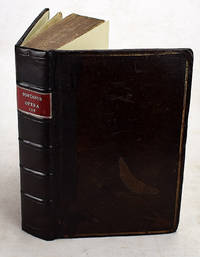
15182304190005Venice: Aldus Manutius and Andrea Soceri 1518. First Edition. Hardcover. Acceptable. First collected edition of Pontano's works - Aldine Imprint Later leather binding. Rebacked. Red leather spine label gilt. 4 326 pages. Early ink inscription on title page acid stain. Colophon page lacking bottom third blank park. Aldine printer's device dolphin and anchor on title. Brunet IV 808; Riccardi I 303; Olschki 12243; Ahmanson-Murphy 168; Adams P1860. Venice: Aldus Manutius and Andrea Soceri hardcover
1501000683<p>Strasbourg: Argentinae: Ex officina Martini Flach junioris 1501. Half leather. Fine. Folio printed in Strassburg by Martin Flach 7 February 1501; 161 unnumbered leaves. BINDING: new Gothic hand-sewn oak binding by Arthur Green of Ledbury; tawed quarter leather over quarter-sawn oak boards quires hand-sewn on four double-cords creating four raised spine bands board leather blind-tooled with period style rosettes and fleurs-de-lys within panel of diagonal blind triple fillets hand-sewn Gothic double headbands of alternate hand-dyed indigo and undyed linen thread hand-made brass hasps and clasps ornamented in period style; an exceptionally attractive recreation of a Gothic hand-sewn binding employing medieval techniques contemporaneous with the date the book was printed. COLLATION: pi6 a2-8 b-y6 z8 zeta6 antisigma8; leaf a1 excised and subsequent first few lines of a2recto redacted in black ink in the sixteenth century by the inquisitor for its heretical content see below. TEXT: Double column 50 lines and headline gothic type red manuscript rubrication throughout in a contemporary hand with numerous 3 4 and 6 line capitals red paragraph markers and in-text capitals marked out in yellow. CONDITION: indecipherable contemporary manuscript ink inscriptions to title page final two leaves a little soiled new endpapers in complementary period-style paper small professional paper repairs to fore-edges of opening and closing leaves unobtrusive light stain to lower outer page corners well clear of printed text overall a beautifully clean wide-margined copy. BIBLIOGRAPHICAL REFERENCES: Rare not in Adams USTC 696770 citing 32 copies with just 3 in the UK and 2 in the US. Sebonde's Theologia was a celebrated text in its day but is mainly known now through Montaigne's attention and his French translation of the work in 1569. Its prologue asserting the ability of human reason to understand the existence and attributes of God through observation of the natural world was added to the Index Prohibitorum in 1559. A beautiful example of this rare text in an exceptionally fine binding.</p> Argentinae: Ex officina Martini Flach junioris hardcover
1595V67175Venice: Haeredem Hieronymi Scotus 1595. Hardcover. Very Good. Large woodcut portrait Aristotle over 50 diagrams in the text historiated woodcut intial capitals . Folio modern cream linen with red leather label with gilt title tips rubbed 16pp 316pp Tideline from waterstaining at the front but becoming marginal & faint by text page 13. Some gatherings with more or less paper tanning but paper always supple and strong. Part of an 18 volume collected edition of Thomas Aquinas. It is printed in double columns with side-notes and deals with Aristotelian physics not in Adams or STC. Haeredem Hieronymi Scotus hardcover
15254627Vinegia Venice: Nicolo di Aristotile detto Zoppino 1525. Very Good. Bound in period vellum with title and intricate symbol on spine. Covers have moderate and common aging to vellum. Partially separated from binding and some loose pages; all pages present - there is a jump in pages from LVII to LXI but text appears complete and same issue with other copies currently/recently available. Some minor spotting inside. Contains 30 engravings including allegorical scenes surrounding title page intricate capital lettering in text image on final page and 27 images related to the dialogue throughout. Type is all in italics except where names are in capital characters. Comprising the works of Lucian this is the first Italian translation. Comes with a cardboard slipcase for stability in shipping.<br /> <br /> Pages: 488<br /> Dimensions: 4 x 6 x 1¼. Nicolo di Aristotile detto Zoppino unknown
1585B6597Paris: Apud Dionysium Duvallium sub Bucephalo in vico Bellouasco; c. April 1585 colophon . A very nice copy of this rarely found work; old minor marginal repair tape of title slight marginal stains and very small in-text and marginal oxidation spots none affecting legibility; light damp staining of the lower margin. Endpapers watermarked. Binding: 17th century mottled calf spine with six 6 raised bands with gilt lettered title on two and remainder of compartments ornamented in floral gilt; all edges speckled red. Notes: This medical work on gynaecology attributed to or by Hippocrates and his school is accompanied by the commentary in French of French Renaissance physician Maurice de La Corde; it is rare with three known exemplars incl. Yale & Oxford. <br> <br> Size: Folio 311x201mm Illustration: Text in Latin and Greek. Text in two columns of Latin and Greek respectively with accompanying Latin commentary in one; except index printed in three columns.<br>Illustrated title depicting determined/ inspired Hippocrates riding on horseback through crises or critical times toward the sun – this with marginal text in Latin and Greek; each major section opens with an elaborate headpiece and initial. <br> References: Pasquale Sfameni in Enciclopedia Italiana 1933; Adams H-615; Choulant 31; Durling 2412. Graesse III 283; Hirsch II 76; Renouard Marques 287; STC French 227. Not in Osler. Pages: Ll: bl. 10 pp. 1-361 6 bl.2. Collation: bl. a1-4 e1-6 A1-Z6 Aa1-Gg6 Hh1-7 bl.2. Category: Book Medical; Book Early Printed 1500; Apud Dionysium Duvallium, sub Bucephalo, in vico Bellouasco; hardcover
15465968Venice: Cornelio Adelkind for Daniel Bomberg 1546. First edition. Very Good. Folio 32 cm; 93 leaves. Text in Hebrew. Title within architectural border reproduced in Amram "Makers of Hebrew Books in Italy" p. 215 also in the Jewish Museum's 1989 exhibition catalogue "Gardens and Ghettos: the Art of Jewish Life in Italy" page 50. Some section headings within ornamental borders. Bound in c19 or c20 dark red crushed morocco ruled in gilt and decorated with arabesques on both boards; spine with raised bands and compartments tooled and titled in gilt; green polished leather doublures with red crushed morocco dentelles bordered in pointillé accented with arabesques; green moiré free endleaves. Edges gilt. Binding not signed. Joints and crown adroitly reinforced with Japanese paper; corners somewhat worn down. Occasional contemporary notes in manuscript in text; brief stain on leaf mem-tet and lightly along the bottom edge of leaves nun-bet and nun-gimmel. Text otherwise pristine. Title page light possibly washed. Old library ink stamps from an institution in Warsaw on title page. Red morocco ex-libris of mining magnate and philanthropist Adolph Lewisohn 1849-1938. References: Adams T-766; BM Italian 674; Steinschneider 7304 #1; Amram 215 illustration and 222. <br /><br />First printed edition editio princeps of the 11th century commentary on portions of the pentateuch by the Bulgarian poet and Talmudist Tobiah ben Eliezer. Published by the house of the seminal printer of Hebrew books Daniel Bomberg under the supervision of his scholar-in-residence extraordinaire Cornelio Adelkind. Venetian law at this time limited Hebrew publishing to Gentile printers. Bomberg a protestant from Antwerp entered this lucrative market and with Adelkind's help became its prime exponent until his death in 1549. Cornelio Adelkind for Daniel Bomberg hardcover
1540250506002Venice Venezia: Comin Da Trino & Niccolo Zoppino 1540. Hardcover. Very Good. I sei primi libri del Eneide di Vergilio tradotti piu illustri & honorate donne.Et tra l'altre la nobilissima & divina madonna Aurelia Tolomei de Borghesi cui ancho indirizzato tutto il presente volume<br /> <br /> The first six books of the Aeneid by Virgil translated to the most illustrious and honored ladies. And among others to the most noble and divine Madonna Aurelia Tolomei de Borghesi to whom also the present volume is addressed. <br /> <br /> NOTE: Incomplete. Missing Title page Book 1 and first 8 leaves of Book 2. Normally this scarce edition typically sells between $2000-2500 when found complete. <br /> <br /> PROVENANCE<br /> <br /> From the Virgil Collection of Craig Kallendorf 1954 - 2023 who owned the largest private collection of Virgil works 1150 editions not including Incunable books in the world. Only a handful of prominent institutions like the British Library had larger collections. Eighth-nine of the books in his collection were the only known surviving copies 71 only had one other known copy. He worked closely with Princeton University in helping to assemble supplement and catalog its Junius Spencer Morgan Virgil collection. Craig Kallendorf was Professor of English and Classics at Texas A&M University. He was the author or editor of 27 books and more than 170 articles book chapters and reference work entries. Among Kallendorf's groundbreaking monographs on the Virgilian tradition special note might be made of his Virgil and the Myth of Venice: Books and Readers in the Italian Renaissance Oxford: Clarendon Press 1999 which shows how the wide reading of the Aeneid accessed in both Latin and Italian editions contributed to Venetian ideology and the so-called "myth of Venice." With its publication according to reviewer Diana Robin Renaissance Quarterly 55.4 2002 p. 1394 Kallendorf is to be recognized as "the leading authority on the Virgilian tradition in early modern print culture in Italy." <br /> <br /> ABOUT THE BOOK<br /> <br /> Post-Incunable edition of the first six books of the Aeneid by Virgil. In Italian. Published in 1540 by Comin da Trino & Niccolo Zoppino in Venice. Each book translated into Italian from Latin by a different individual: A2 Hippolito de Medici A3 Bernardino Borghesi A4 Bartolomeo Carli Piccolomini A5 Aldobrando Cerretani and A6 Alessandro Piccolomini. Rebound in modern 1/4-calf over marbled paper and gilt tooled spine bordering lettering and compartment devices. Marbled endpapers. Six parts in one volume. Octavo 6 1/2" x 4 1/8". Foliation in leaves: 15 20; 19 1; 27 1; 25 7. Fifteen vignette woodcuts and separate engraved title pages for Books 3-6. <br /> <br /> CONDITION REPORT<br /> <br /> Missing Title page Book 1 leaves and first 8 leaves of Book 2 including its title page. 15/22 woodcuts.<br /> <br /> The exterior is in FINE condition. Fresh supple unfaded leather and unblemished marbled paper. A few areas of light dust. Square spine very firm hinges and joints sharp corners and tight pages. Foxing to text block edges. <br /> <br /> The interior condition - refreshed endpapers and blank flyleaves. Trimmed pages. Light foxing to margins. Heavier foxing to preliminaries and last few leaves of the volume. Signs of handling - a few smudges bent corners and some creasing. No marginalia or underlining. One corner clipped. A few minor spots of worming in the margins. Rear blank flyleaf with period one-line Latin inscription in faded antiquarian ink claiming that the possessor of the book was a heteronymous eunuch! Front pastedown with the ex libris sticker "from the Virgil collection of Craig W. Kallendorf." <br /> <br /> In excellent shape for a nearly 500-year-old book - a beautifully bound and scarce post-incunable mostly complete edition of the first 6 books of The Aeneid by Virgil. Comin Da Trino & Niccolo Zoppino hardcover
15646012<p>8vo. 112 ff pages 2 and 110-112 are blank. Bound in modern paneled calf with gilt-stamped fleurons on front and back covers raised bands. Generally good.<br /></p><p>The first edition of this plague treatise by Paracelsus Theophrastus Bombastus von Hohenheim 1493-1541 the "Luther of Medicine" and one of the key figures in the history of medicine. Written originally in Nördlingen in 1529-1530 it remained unpublished during Paracelsus' lifetime and subsequently taken up and edited for publication by the Paracelsian scholar Adam von Bodenstein 1528-1577. The latter dedicated it to Johann Rudolph Stör von Störenberg Abbot of Murbach and Luders. In addition to the study on pestilence the text includes two short works by Paracelsus: "Vom Preservatiff durch den Schwebel" and "Von der Mummia."</p><p>In the primary tract Paracelsus for the first time presents his complex theory on the origins of the plague which he believed were the result of astrological and corporeal events set in motion by human sins. "This anthropocentric view of an individual disease is in harmony with Paracelsus' whole philosophy and indeed with Renaissance philosophy in general" Pagel p. 179. Paracelsus also postulates the importance of the principle of sulphur the corresponding agent of the planet Mars in pestilence's causation. He believed that sulphur hidden in three minerals—antimony arsenic and marcasite—affected three corresponding organs: the groin the axillae and the ears.</p><p>The chapters on causation are followed by sections on remedies. The doctor must cure the agent causing the disease rather than the symptoms of the disease Paracelsus writes. Humoral pathology and its insistence on diet is of no use. "Paracelsus' plague remedies include sulphur spirit of vitriol sulphur sublimate and metals also—for external treatment of boils—toads and decoctions of beetles designed to remove the evil of magnetic attraction but herbs and drugs as prescribed by Ficino and Agrippa are greatly amplified and still appear in a prominent place" Pagel pp. 180-181 n. 151.</p><p>The editor of this volume Adam von Bodenstein was one of the key figures in the revival of Paracelsian ideas in the German lands in the middle of the sixteenth century. A son of a radical reformer he believed in transmutation of metals into gold and played a key role in the publication of over 80 works by Paracelsus. For his Paracelsianism he was excluded from the faculty and council of Basel University.</p><p>OCLC records US copies at NYAM NLM Wash. U and UMn.</p><p>Karl Sudhoff <i>Bibliographia Paracelsica</i> Berlin 1894 60; Walter Pagel <i>Paracelsus: An Introduction to Philosophical Medicine in the Era of the Renaissance</i> Boston 1982 2nd revised edition; Georgiana D. Hedesan "Alchemy Potency Imagination Paracelsus's Theories of Poison" in John Arrizabalaga Ole Peter Grell Andrew Cunningham eds. <i>It All Depends on the Dose: Poisons and Medicines in European History. The History of Medicine in Context Series</i> New York 2018 pp. 81-102; Peter J. Forshaw "'Paradoxes Absurdities and Madness:' Conflict over Alchemy Magic and Medicine in the Works of Andreas Libavius and Heinrich Khunrath" <i>Early Science and Medicine</i> vol. 13 no. 1 2008 pp. 53-81.</p> Paul Messerschmidt hardcover