83 résultats
19291769Phila. 1929-30. Paperback. Men's 2 & 3-button sacks suits 3 button double-breasted overcoats Chesterfield overcoat tuxedos trousers knickerbockers. Well illus. 16pp. 7" x 4 1/2". <br/><br/> paperback books
33381Amsterdam: Published by Van Rijkom Bros n. d. Ca late 19th / early 20th C. Portfolio of red cloth with printed color image to front board. Light wear to portfolio. Photo accordian detached in two places making for 3 sections of 4 photographs. Bookseller ticket on rear paste-down. Withal a VG item. An accordian style portfolio of 12 mounted colored photographs each captioned in Dutch & English depicting divers society 'types' e.g. 'Fisherman' & 'Farmerswife'. Portfolio: 13.5 cm x 9 cm. Photographs: 9 cm x 6 cm. <br/><br/> Published by Van Rijkom Bros hardcover books
199927360NY: Universe. As New. 1999. Hardcover. 0789303833 . Color and black and white photographs throughout. First edition. As new in pictorial boards. No dust jacket as issued. Still in original shrinkwrap. . Universe hardcover books
200242163NY:: PowerHouse Books. As New in As New dust jacket. 2002. Hardcover. 1576871509 . Color and black and white photographs throughout. First edition. As new in like dust jacket. Still in original shrinkwrap. . PowerHouse Books, hardcover books
19203396<p>A small portfolio of women's fashion designs broken into four folders of loose plates 20 plates per folder for a total of 80 plates. This copy missing plate 20 from the third series 1720-1775. Beautifully hand colored pochoir plates illustrating the fashions of the time each card measuring 7 1/2 inches by 5 1/2 inches the year shown at the bottom of each card. Each wrapper also illustrated with a color illustration. Charming original folding case with patterned papers and silk ties. Case is worn but intact with short silk ties remaining. Former owners name in ink on several plates in the first series some of the signatures across the bottom of the images. </p> (Editions Nilsson) books
19253398<p>A small portfolio of women's fashion designs broken into four folders of loose plates 20 plates per folder for a total of 80 plates. This copy missing two plates from the second series 1820-1845. Beautifully hand colored pochoir plates illustrating the fashions of the time each card measuring 7 1/2 inches by 5 1/2 inches. The year shown at the bottom of each card. Each wrapper also illustrated with a color illustration. Charming original folding case with patterned papers and silk ties. Case is worn on the spine but complete with four paste on labels intact and patterned covers bright. Ties present. </p> No Publisher books
196923329Los Angeles: The Wool Bureau 1969. First Edition. Very good. Side-stapled yello stiff printed 4to. wraps. Offset duplciated. Mild wear soil a couple of unobtrusive stains. Very good overall. 28pp. plus covers. <br/><br/>Program for a Los Angeles fashion show sponsered by the Wool Bureau and featuring reproduced sketches from many California design luminaries: Georgia Bullock Lloyd Helen Bass Wayne Fuller Helga Oppenheimer Phyllis Sues and William Travilla. OCLC does not locate. The Wool Bureau paperback books
195615537Washington DC: Advance Watch and Jewelers Supply Company 1956. First Edition. Wraps. Very good. 4to. Printed card wraps. Side stapled. Outer wraps moderately worn. Overall clean sound. <br/><br/>An illustrated product catalog from the Advance Watch and Jewelry Supply Company wholesale suppliers of men's and women's jewelry and watches. Lines offered include Anson men's jewelry Eternalight diamonds Richilieu simulated pearls Chic belts Gemex watchbands and the Bradley line of watches including the Roy Rogers Dale Evans Superman Robin Hood and Davy Crockett models. With detailed product descriptions and pricing throughout. An uncommon surviving record of 1950's jewelry retail and fashion. With original blank order forms to rear. Advance Watch and Jewelers Supply Company paperback books
199322810Rotterdam: Self-Published 1993. First Edition. 8vo. stapled color pictorial wraps; 8.25" x 6". Very good or better wit touches of wear. Old small blacked-out label to front wrapper. Else sound and clean. Order form and price list loosely laid-in. With eleven 6" x 4" original color Fuki photographs mounted within. 24pp.including covers. <br/><br/>Rare catalogue of custom latex fetish masks with typed descriptions of ten different masks each generally available in three or four variations and illustrated by at least one original Fuji photograph. "In the first place I Like to congratulate you on the choice of this catalogue in which you will find a wealth of splendid pictures of our collections sic all." We've never seen anything quite like this in a trade catalogue: an essentially bespoke catalogue for bespoke kink fashion. Rare and unusual. [Self-Published] paperback books
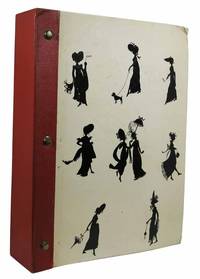
195842919Paris: Societe Paritys / Lebotys 1958. Post binder with 3 brass posts. Publisher's pictorial glazed boards red cloth joints. Light extremity wear to boards; bumping to upper corner of front board; short split to front and rear joints. Page block lightly foxed foxing/spotting scattered throughout. Few white nylon fabric samples discolored by paste beneath. Fabric samples otherwise clean and bright with only minor occasional creasing/fraying. Overall VG. 80 pp. 12 color fashion drawings; ~590 pasted and tipped-in fabric samples 16-1/8" x 12-1/8" <br/><br/>A mid-century salesman's sample catalogue from the winter collection of Parisian firm Société Paritys a haberdashery and fabric supplier established in 1946 and still in operation today. The fabric samples have been supplied by Lebotys a couture design firm in its own right and highly regarded for the quality of its textiles. As we find record of Lebotys having issued catalogues of its own collections in both the 1930s and 1960s we speculate that the two firms collaborated for a limited time possibly due to continuing post-war shortages and the need to adapt to the rapidly changing clothing market of the 1950s. The late 1950s saw a revolution in French fashion — and by extension Western fashion in general — due in no small part to the influence of material factors underlying the purely aesthetic side of the industry: availability of fabric continuing technological advances in synthetics and the surging post-war economies of America and Europe. The reluctant expansion of haute couture into the ready-to-wear market during the latter half of the century and the increasing reliance on synthetic fabrics to meet the demand would ultimately spell a major shift in the industry one that would impact fashion trends for decades to come. Some fashion houses like Dior whose “New Look” revitalized fashion at the beginning of the decade successfully managed to adapt by issuing couture ready-to-wear lines. Some however even long-established houses survived the war only to be undone by the prosperity that followed. The collaboration here of Société Paritys and Lebotys as well as the fabrics offered and styles displayed leads us to infer that the two firms were likely targeting the growing ready-to-wear market. The fabrics include a variety of silks cottons wools mohair etc. as well as nylon fibranne rayon Rhodia tergal crylor lurex viscose imitation fur and other “Matieres Synthètiques” often in blends and advertising their washable and/or antiwrinkling qualities. The styles in the illustrations still heavily influenced by the “New Look” emphasize wasp-waisted dresses hourglass silhouettes etc. No copies located on OCLC nor the major French institutions as searched on KVK. Societe Paritys / Lebotys hardcover books
195942920Paris: Societe Paritys / Lebotys 1959. Post binder with 3 brass posts. Publisher's pictorial glazed boards white cloth joints. Light extremity wear to boards; short split to rear joint. Page block lightly foxed occasional foxing/spotting to margins throughout. Few white nylon fabric samples discolored by paste beneath. Fabric samples otherwise clean and bright with only minor occasional creasing/fraying. Overall VG. 108 pp. 16 color fashion drawings; ~800 pasted and tipped-in fabric samples. 16-1/4" x 12" <br/><br/>A mid-century salesman's sample catalogue from the summer collection of Parisian firm Société Paritys a haberdashery and fabric supplier established in 1946 and still in operation today. The fabric samples have been supplied by Lebotys a couture design firm in its own right and highly regarded for the quality of its textiles. As we find record of Lebotys having issued catalogues of its own collections in both the 1930s and 1960s we speculate that the two firms collaborated for a limited time possibly due to continuing post-war shortages and the need to adapt to the rapidly changing clothing market of the 1950s. The late 1950s saw a revolution in French fashion — and by extension Western fashion in general — due in no small part to the influence of material factors underlying the purely aesthetic side of the industry: availability of fabric continuing technological advances in synthetics and the surging post-war economies of America and Europe. The reluctant expansion of haute couture into the ready-to-wear market during the latter half of the century and the increasing reliance on synthetic fabrics to meet the demand would ultimately spell a major shift in the industry one that would impact fashion trends for decades to come. Some fashion houses like Dior whose “New Look” revitalized fashion at the beginning of the decade successfully managed to adapt by issuing couture ready-to-wear lines. Some however even long-established houses survived the war only to be undone by the prosperity that followed. The collaboration here of Société Paritys and Lebotys as well as the fabrics offered and styles displayed leads us to infer that the two firms were likely targeting the growing ready-to-wear market. The fabrics include a variety of silks cottons wools mohair muslin cashmere and others as well as nylon fibranne rayon Rhodia tergal crylor acetate Albène and other “Matieres Synthètiques” often in blends and advertising their washable and/or antiwrinkling qualities. The styles in the illustrations although still influenced by the “New Look” also show the influence of Dior's successor the young Yves St. Laurent who debuted his "trapeze line" in 1958. No copies located on OCLC nor the major French institutions as searched on KVK. Societe Paritys / Lebotys hardcover books
195741355Paris: Societe Paritys 1957. 1st printing thus. Publisher's color pictorial glazed boards post binder; 3 brass posts decorative screw tops. Red cloth joints. Some general extremity wear to binder with slightly bumped corners. Occasional dust soiling. Minor foxing. Overall VG with cloth samples generally VG to Nr Fine with the occasional crease to the odd sample or two. 104 pp printed in red on stiff-stock paper. 16 color fashion drawings; 897 of 898 tipped-in fabric samples. Folio. 16-1/4" x 12-1/8" <br/><br/>A mid-century salesman's sample catalogue from the summer collection of Parisian firm Société Paritys a haberdashery and fabric supplier established in 1946 and still in operation today. The fabric samples have been supplied by Lebotys a couture design firm in its own right and highly regarded for the quality of its textiles. As we find record of Lebotys having issued catalogues of its own collections in both the 1930s and 1960s we speculate that the two firms collaborated for a limited time possibly due to continuing post-war shortages and the need to adapt to the rapidly changing clothing market of the 1950s. The late 1950s saw a revolution in French fashion — and by extension Western fashion in general — due in no small part to the influence of material factors underlying the purely aesthetic side of the industry: availability of fabric continuing technological advances in synthetics and the surging post-war economies of America and Europe. The reluctant expansion of haute couture into the ready-to-wear market during the latter half of the century and the increasing reliance on synthetic fabrics to meet the demand would ultimately spell a major shift in the industry one that would impact fashion trends for decades to come. Some fashion houses like Dior whose “New Look” revitalized fashion at the beginning of the decade successfully managed to adapt by issuing couture ready-to-wear lines. Some however even long-established houses survived the war only to be undone by the prosperity that followed. The collaboration here of Société Paritys and Lebotys as well as the fabrics offered and styles displayed leads us to infer that the two firms were likely targeting the growing ready-to-wear market. The fabrics include a variety of silks cottons wools mohair etc. as well as nylon fibranne rayon Rhodia tergal crylor acetate and other “Matieres Synthètiques” often in blends and advertising their washable and/or antiwrinkling qualities. The styles in the illustrations still heavily influenced by the “New Look” emphasize wasp-waisted dresses hourglass silhouettes etc. Of particular note are the designs and fabrics for wedding dresses. No copies located on OCLC nor the major French institutions as searched on KVK. Societe Paritys hardcover books
195742918Paris: Societe Paritys / Lebotys 1957. Post binder with 3 brass posts decorative screw tops. Publisher's color pictorial glazed boards blue spine and joints. Board edges rubbed and worn; short split to rear outer joint; inner joints tender paper splitting though cloth reinforcement beneath is intact. Page block foxed occasional foxing/spotting throughout; light offsetting from fabric samples to some pages. Fabric sample generally clean and bright with occasional creasing/fraying. Overall Gd. 97 pp. 16 color fashion drawings; ~ 740 pasted or tipped-in fabric samples. 16-1/8" x 12-1/8" <br/><br/>A mid-century salesman's sample catalogue from the winter collection of Parisian firm Société Paritys a haberdashery and fabric supplier established in 1946 and still in operation today. The fabric samples have been supplied by Lebotys a couture design firm in its own right and highly regarded for the quality of its textiles. As we find record of Lebotys having issued catalogues of its own collections in both the 1930s and 1960s we speculate that the two firms collaborated for a limited time possibly due to continuing post-war shortages and the need to adapt to the rapidly changing clothing market of the 1950s. The late 1950s saw a revolution in French fashion — and by extension Western fashion in general — due in no small part to the influence of material factors underlying the purely aesthetic side of the industry: availability of fabric continuing technological advances in synthetics and the surging post-war economies of America and Europe. The reluctant expansion of haute couture into the ready-to-wear market during the latter half of the century and the increasing reliance on synthetic fabrics to meet the demand would ultimately spell a major shift in the industry one that would impact fashion trends for decades to come. Some fashion houses like Dior whose “New Look” revitalized fashion at the beginning of the decade successfully managed to adapt by issuing couture ready-to-wear lines. Some however even long-established houses survived the war only to be undone by the prosperity that followed. The collaboration here of Société Paritys and Lebotys as well as the fabrics offered and styles displayed leads us to infer that the two firms were likely targeting the growing ready-to-wear market. The fabrics include a variety of silks cottons wools mohair etc. as well as nylon fibranne rayon Rhodia tergal crylor acetate and other “Matieres Synthètiques” often in blends and advertising their washable and/or antiwrinkling qualities. The styles in the illustrations still heavily influenced by the “New Look” emphasize wasp-waisted dresses hourglass silhouettes etc. No copies located on OCLC nor the major French institutions as searched on KVK. Societe Paritys / Lebotys hardcover books
193717397New York: Amos Parrish and Company 1937. First Edition. Wraps. Very good. 9" x 12" approx. brad-bound in wraps. 154 leaves printed in black and green primarily recto only. Many with additional fold-outs. 108 fabric samples glue-mounted throughout. Some creasing chipping and mild soil to wraps. Interior generally fresh and bright. Some adhesive residue or other wear to samples with two perished. Very good overall. <br/><br/>A handbook for the Amos Parrish Fashion Selling Clinic a seminar for department store executives and other retailers. Amos Parrish retail sales and advertising manager founded his consulting firm providing statistical retail merchandising analysis and holding clinics like the one represented here from the 1920s to 1955. Amos Parrish and Company Inc. also published pamphlets charts books and other fashion forecasting materials. An extremely well-crafted handbook it includes the two-day seminar schedule and profusely illustrated sections outlining the seasonal trends in apparel accessories and undergarments with sections on selling suits coats millinery sportswear etc. These are accompanied by statistical information on the various styles defined. A note paper-clipped to the first page by the book's creator S. T. Neidlinger indicates that this was used as a sample of his work. A handsome and minutely detailed item with fascinating insights into fashion trends and retail operations of the era. OCLC locates only one similar item for the final 1955 event. Amos Parrish and Company paperback books
195514112np New York ca. 1955. Very good. 18 large completed plus 6 smaller loose portraits executed in pen & ink with watercolor or guache on paper. Large works all approx. 19" x 12"; smaller 12.5" x 9". With a large 17" x 12" spiral-bound artist's notebook containing eight additional color studies plus one sketch. Also includes 18 other loose preliminary works various sizes and media - including one brief series of Shakespearean costume design. Most SIGNED by the artist. Generally very good or better overall. <br/><br/>Lovely selection of original fashion art depicting various women's runway dresses all ca. 1955. We have been unable to discover much about the artist Mr. Leigh. But he was clearly an accomplished designer colorist and draftsman. We do know he was based in New York City and assume given the professional skill with which these works were executed that he likely worked in the industry either for a designer or a fashion magazine. The portraits themselves are quintessentially post-war in their style and taste clearly indebted to VOGUE and their artists. A beautiful primary collection of 1950s high fashion. unknown books
193017155Chicago: Style Silk Company Circa 1930s. First Edition. Near fine. Seven sets each including: Lucky name game folded card with perforations printed in red and blue 3" x 5.5" approx.; order blank printed recto only on blue stock 8.5" x 5.5" approx.; color sample sheet 3.5" x 5.75" approx.; Trifold brochure 6.25" x 9.25" approx.; self-addresssed envelope 6" x 3.5" approx. Housed in hosiery box from another company "Alanda Hosiery." Minor toning near fine overall. <br/><br/>Collection of promotional material for the Style Silk Company of Chicago maker of women's stockings and men's socks. Most interesting is a promotional game whereby an individual places an order for five pairs of stockings and sells punches for the opportunity to win pairs of stockings. An interesting spin on direct marketing. Style Silk Company unknown books
1913218820London: Sampson Low Marston & Company Ldt 1913. First edition. 155 colored plates several in black and white which are printed on both sides. 1 vols. 4to. Green morocco-backed boards. Very good. First edition. 155 colored plates several in black and white which are printed on both sides. 1 vols. 4to. An excellent survey of French and English mode of dress between 1786 and 1912. Colas 2426; Hiler & Hiller p. 722 placing date as 1912 Sampson Low, Marston & Company Ldt unknown books
2413Paris Editions Nilsson c.1920. Four little volumes containing 80 pochoir color cards 20 in each volume of women's fashions from 1900-1920. Small 16mo. 9.4 x 7.25cm. Each volume In original hand colored printed wrappers with women in costume on the front of each volume. Housed in the original patterned paper covered card slipcase with rose design on inside covers with printed paper spine label. Box is shaken. Interior volumes are fine. Ties are perfect. unknown books
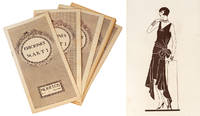
1929108242Folio. Barcelona: Central de Corte Marti April 1929-December 1929. Folio 24 pp. Original wrappers printed in brown with illustrations to every page and terminal fold-out sewing patterns. Stapled paper wrappers with title and date printed to the upper wrapper. Some minor foxing to outer margins; very good. § First edition. Ten issues of Ediciones Marti created for disciples of the “Method of Cut†system with all the best creations of haute couture. Each edition contains a selection of models drawn to exhibit new designs accompanied by sewing patterns. Central de Corte Marti unknown books
1970D6222Istanbul c. 1970s. Very Good. Red card wrappers with "Gunal Erkose" stamped in gilt on front cover; two volumes 4to; unpaginated with b/w photographs 27 in one 23 in the other tipped-onto black leaves with printed frames and handwritten prices below e.g. Fob Istanbul US $34. Covers a bit scuffed; slight wave to text block. A fun time capsule of early 1970s Turkish leather fashions for men and primarily women modelling outer wear and jackets dresses and pant suits. <br/><br/> hardcover books
193225922Paris: Au Printemps 1932. 1 vols. Image 11-1/2 x 8 inches matted to 17-1/2 x 14 inches. 1 vols. Image 11-1/2 x 8 inches matted to 17-1/2 x 14 inches. Color Printed Brochure by Fashion Artist Reynaldo Luza. Reynaldo Luza 1893-1978 pre-eminent fashion artist was born in Lima Peru. He began training as an architect at the University of Louvain Belgium but returned to Peru at the outbreak of World War I where he changed his studies from architecture to art. In 1918 he came to the United States where he earned his living by contributing drawings to several fashion publications principally VOGUE HARPERS BAZAAR and VANITY FAIR. In 1921 he joined HARPERS BAZAAR as the principal fashion artist a position he was to hold for 27 years. He divided his time between New York Paris and London working closely with all of the leading fashion designers of the times--Poiret Patou Lelong Paquin Douillet Doucet Cheruit Worth Drecoll Callot Soeurs Redfern Martial et Amand Premet Reboux Chanel Vionnet Molyneaux Schiaparelli Hartnell Steibel and Balenciaga among others.<br/><br/>In 1940 Luza made New York his principal base where over the next few years he continued his activities at Harpers as well as creating fabric and furniture designs and the costumes for the movie "The Bridge of San Luis Rey". Among other distinctions he received several honorary appointments from the government of Peru including that of Artistic Director of the Paris Exposition of 1938 and the New York World's Fair of 1939-40; he also did the interior design of the new Lima airport.<br/><br/>In 1950 Luza returned to Peru where he began a second career as a portrait painter exhibiting his work over the next few years in Paris New York and Washington D.C. Au Printemps unknown books
195025924n.p. 1950. Sold individually. Please inquire for images of each. Approximately 11 x 10 inches. Sold individually. Please inquire for images of each. Approximately 11 x 10 inches. Original Fabric Designs by Fashion Artist Reynaldo Luza. Reynaldo Luza 1893-1978 pre-eminent fashion artist was born in Lima Peru. He began training as an architect at the University of Louvain Belgium but returned to Peru at the outbreak of World War I where he changed his studies from architecture to art. In 1918 he came to the United States where he earned his living by contributing drawings to several fashion publications principally VOGUE HARPERS BAZAAR and VANITY FAIR. In 1921 he joined HARPERS BAZAAR as the principal fashion artist a position he was to hold for 27 years. He divided his time between New York Paris and London working closely with all of the leading fashion designers of the times--Poiret Patou Lelong Paquin Douillet Doucet Cheruit Worth Drecoll Callot Soeurs Redfern Martial et Amand Premet Reboux Chanel Vionnet Molyneaux Schiaparelli Hartnell Steibel and Balenciaga among others.<br/><br/>In 1940 Luza made New York his principal base where over the next few years he continued his activities at Harpers as well as creating fabric and furniture designs and the costumes for the movie "The Bridge of San Luis Rey". Among other distinctions he received several honorary appointments from the government of Peru including that of Artistic Director of the Paris Exposition of 1938 and the New York World's Fair of 1939-40; he also did the interior design of the new Lima airport.<br/><br/>In 1950 Luza returned to Peru where he began a second career as a portrait painter exhibiting his work over the next few years in Paris New York and Washington D.C. unknown books
195025923n.p. 1950. Sold individually. Please inquire for images of each. Image approximately 12 x 10 inches plus margins. Sold individually. Please inquire for images of each. Image approximately 12 x 10 inches plus margins. Original Fabric Designs by Fashion Artist Reynaldo Luza. Reynaldo Luza 1893-1978 pre-eminent fashion artist was born in Lima Peru. He began training as an architect at the University of Louvain Belgium but returned to Peru at the outbreak of World War I where he changed his studies from architecture to art. In 1918 he came to the United States where he earned his living by contributing drawings to several fashion publications principally VOGUE HARPERS BAZAAR and VANITY FAIR. In 1921 he joined HARPERS BAZAAR as the principal fashion artist a position he was to hold for 27 years. He divided his time between New York Paris and London working closely with all of the leading fashion designers of the times--Poiret Patou Lelong Paquin Douillet Doucet Cheruit Worth Drecoll Callot Soeurs Redfern Martial et Amand Premet Reboux Chanel Vionnet Molyneaux Schiaparelli Hartnell Steibel and Balenciaga among others.<br/><br/>In 1940 Luza made New York his principal base where over the next few years he continued his activities at Harpers as well as creating fabric and furniture designs and the costumes for the movie "The Bridge of San Luis Rey". Among other distinctions he received several honorary appointments from the government of Peru including that of Artistic Director of the Paris Exposition of 1938 and the New York World's Fair of 1939-40; he also did the interior design of the new Lima airport.<br/><br/>In 1950 Luza returned to Peru where he began a second career as a portrait painter exhibiting his work over the next few years in Paris New York and Washington D.C. unknown books
192325810New York 1923. Pencil ink and gouache on paper signed lower left. 1 vols. Image 13 x 9-1/2 inches matted and framed to 20 x 16 inches overall. Matted and framed. Fine. Pencil ink and gouache on paper signed lower left. 1 vols. Image 13 x 9-1/2 inches matted and framed to 20 x 16 inches overall. Original Fashion Art by Reynaldo Luza. Reynaldo Luza 1893-1978 pre-eminent fashion artist was born in Lima Peru. He began training as an architect at the University of Louvain Belgium but returned to Peru at the outbreak of World War I where he changed his studies from architecture to art. In 1918 he came to the United States where he earned his living by contributing drawings to several fashion publications principally VOGUE HARPERS BAZAAR and VANITY FAIR. In 1921 he joined HARPERS BAZAAR as the principal fashion artist a position he was to hold for 27 years. He divided his time between New York Paris and London working closely with all of the leading fashion designers of the times - Poiret Patou Lelong Paquin Douillet Doucet Cheruit Worth Drecoll Callot Soeurs Redfern Martial et Amand Premet Reboux Chanel Vionnet Molyneaux Schiaparelli Hartnell Steibel and Balenciaga among others.<br/>In 1940 Luza made New York his principal base where over the next few years he continued his activities at Harpers as well as creating fabric and furniture designs and the costumes for the movie "The Bridge of San Luis Rey." Among other distinctions he received several honorary appointments from the government of Peru including that of Artistic Director of the Paris Exposition of 1938 and the New York World's Fair of 1939-40; he also did the interior design of the new Lima airport.<br/>In 1950 Luza returned to Peru where he began a second career as a portrait painter exhibiting his work over the next few years in Paris New York and Washington D.C. Literature: Harpers Bazaar October 1923 unknown books
1950245213n.p. 1950. 1 vols. Image approximately 6 x 4-1/2 inches matted to 12 x 10-1/2 inches. Creased across upper left corner light spotting. 1 vols. Image approximately 6 x 4-1/2 inches matted to 12 x 10-1/2 inches. Reynaldo Luza 1893-1978 pre-eminent fashion artist was born in Lima Peru. He began training as an architect at the University of Louvain Belgium but returned to Peru at the outbreak of World War I where he changed his studies from architecture to art. In 1918 he came to the United States where he earned his living by contributing drawings to several fashion publications principally VOGUE HARPERS BAZAAR and VANITY FAIR. In 1921 he joined HARPERS BAZAAR as the principal fashion artist a position he was to hold for 27 years. He divided his time between New York Paris and London working closely with all of the leading fashion designers of the times--Poiret Patou Lelong Paquin Douillet Doucet Cheruit Worth Drecoll Callot Soeurs Redfern Martial et Amand Premet Reboux Chanel Vionnet Molyneaux Schiaparelli Hartnell Steibel and Balenciaga among others. In 1940 Luza made New York his principal base where over the next few years he continued his activities at Harpers as well as creating fabric and furniture designs and the costumes for the movie "The Bridge of San Luis Rey". Among other distinctions he received several honorary appointments from the government of Peru including that of Artistic Director of the Paris Exposition of 1938 and the New York World's Fair of 1939-40; he also did the interior design of the new Lima airport. In 1950 Luza returned to Peru where he began a second career as a portrait painter exhibiting his work over the next few years in Paris New York and Washington D.C. unknown books