Paquin, EthelBiblio.com

194 résultats
2011SONG0810877597Scarecrow Press 2011-02-07. hardcover. Used: Good. 6.48x0.96x9.37. Buy with confidence. Excellent Customer Service & Return policy. Scarecrow Press hardcover
11518306-nnew. unknown
2011DADAX0810877597Scarecrow Press 2011-02-07. hardcover. New. 6.48x0.96x9.37. Buy with confidence. Excellent Customer Service & Return policy. Scarecrow Press hardcover
1844713237.Gpaperback. Good. Access codes and supplements are not guaranteed with used items. May be an ex-library book. paperback
25212690like new. unknown
25212690-nnew. unknown
2012x-3642866174Springer Verlag 2012. Paperback. New. reprint edition. 854 pages. German language. 9.25x6.10x1.81 inches. Springer Verlag paperback
Q-0831110104Industrial Press Inc 1962-01-01. Paperback. New. New. In shrink wrap. Looks like an interesting title! Industrial Press Inc paperback
1993075963St. Martin's Press 1993-01-01. Very Good. Contents are tight and clean St. Martin's Press unknown
0810877597.Ghardcover. Good. Access codes and supplements are not guaranteed with used items. May be an ex-library book. hardcover
2013DADAX1409444880Routledge 2013-02-11. 1. hardcover. New. 6.25x0.75x9.25. Buy with confidence. Excellent Customer Service & Return policy. Routledge hardcover
2011x-0810877597Scarecrow Pr 2011. Hardcover. New. 304 pages. 9.00x5.80x1.00 inches. Scarecrow Pr hardcover
2013SONG1409444880Routledge 2013-02-11. 1. hardcover. Used: Good. 6.25x0.75x9.25. Buy with confidence. Excellent Customer Service & Return policy. Routledge hardcover
2021G2897094435I2N00BOOMERANG JEUNE 2021. Paperback. Like New. Pages are clean and are not marred by notes or folds of any kind. ~ ThriftBooks: Read More Spend Less.Dust jacket quality is not guaranteed. BOOMERANG JEUNE paperback
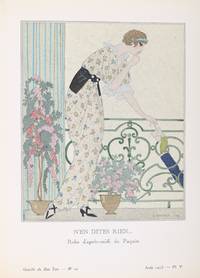
191389428Paris: Lucien Vogel éditeur 1913. Fine. Lucien Vogel éditeur Paris Août 1913 19 x 24.50 cm une feuille Original colour print printed on laid paper and signed in the plate lower right. Original engraving produced for the illustration of La Gazette du Bon Ton one of the most beautiful and influential fashion journals of the 20th century celebrating the talent of French designers and artists at the height of the Art Deco era. A celebrated fashion magazine established in 1912 by Lucien Vogel La Gazette du bon ton appeared until 1925 with a hiatus from 1915 to 1920 due to the war the editor-in-chief having been called up for service. It consisted of 69 issues printed in only 2000 copies each and notably illustrated with 573 color plates and 148 sketches of the models of the great designers. Right from the start this sumptuous publication “was aimed at bibliophiles and fashionable society” Françoise Tétart-Vittu “La Gazette du bon ton” in Dictionnaire de la mode 2016 and was printed on fine vergé paper using a type cut specially for the magazine by Georges Peignot known as Cochin later used in 1946 by Christian Dior. The prints were made using stencils heightened in colors some highlighted in gold or palladium. The story began in 1912 when Lucien Vogel a man of the world involved in fashion he had already been part of the fashion magazine Femina decided with his wife Cosette de Brunhoff – the sister of Jean creator of Babar – to set up the Gazette du bon ton subtitled at the time: “Art fashion frivolities.”  Georges Charensol noted the reasoning of the editor-in-chief: “’In 1910Â’ he observed ‘there was no really artistic fashion magazine nothing representative of the spirit of the time. My dream was therefore to make a luxury magazine with truly modern artistsÂ…I was assured of success because when it comes to fashion no country on earth can compete with France.’” “Un grand éditeur dÂ’art. Lucien Vogel” in Les Nouvelles littéraires no. 133 May 1925. The magazine was immediately successful not only in France but also in the United States and Latin America. At first Vogel put together a team of seven artists: André-Édouard Marty and Pierre Brissaud followed by Georges Lepape and Dammicourt as well as eventually his friends from school and the School of Fine Arts like George Barbier Bernard Boutet de Monvel and Charles Martin. Other talented people soon came flocking to join the team: Guy Arnoux Léon Bakst Benito Boutet de Monvel Umberto Brunelleschi Chas Laborde Jean-Gabriel Domergue Raoul Dufy Édouard Halouze Alexandre Iacovleff Jean Émile Laboureur Charles Loupot Chalres Martin Maggie Salcedo. These artist mostly unknown when Lucien Vogel sought them out later became emblematic and sought-after artistic figures. It was also they who worked on the advertising drawings for the Gazette. The plates put the spotlight on and celebrate dresses by seven designers of the age: Lanvin Doeuillet Paquin Poiret Worth Vionnet and Doucet. The designers provided exclusive models for each issue. Nonetheless some of the illustrations are not based on real models but simply on the illustratorÂ’s conception of the fashion of the day.   The Gazette du bon ton was an important step in the history of fashion. Combining aesthetic demands with the physical whole it brought together – for the first time – the great talents of the artistic literary and fashion worlds; and imposed through this alchemy a completely new image of women: slender independent and daring which was shared by the new generation of designers including Coco Chanel Jean Patou Marcel Rochas and so onÂ… Taken over in 1920 by Condé Montrose Nast the Gazette du bon ton was an important influence on the new layout and aesthetics of that “little dying paper” that Nast had bought a few years earlier: Vogue. Lucien Vogel éditeur unknown
A9780415347983Hardback. New. hardcover
2008__184339796XWERF 2008. Paperback. New. 90 pages. 10.90x8.10x0.30 inches. WERF paperback
61299738IWA Publishing pp. 104 . Papeback. New. IWA Publishing unknown
2000BN279923Duncker & Humblot Gmbh Duncker & Humblot 2000. 2000. Softcover. Internationale Joint Venture als Organisationsform des Technologietransfers. <br/><br/>Internationale Joint Venture als Organisationsform des Technologietransfers. Ralf Paquin Duncker & Humblot Gmbh, Duncker & Humblot paperback
2009SKU-W12HA01111269Woodhead Publishing 2009. 1. Hardcover. Very Good. Very Good; Hardcover; Light wear to the covers; Unblemished textblock edges; The endpapers and all text pages are clean and unmarked; The binding is excellent with a straight spine; This book will be stored and delivered in a sturdy cardboard box with foam padding; Medium Format 8.5 9.75 tall; Dark gray and orange covers with title in white lettering; 2009 Woodhead Publishing; 512 pages; "Functional and Speciality Beverage Technology Woodhead Publishing Series in Food Science Technology and Nutrition" by P Paquin. Woodhead Publishing hardcover
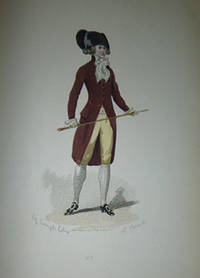
51-4685Paris : Aux Bureaux des Modes Parisiennes circa 1850. Hand titled wraps and 15 numbered handcolored plates. Label of A. Wagner Librairie Artistique ParisCOMPTE-CALIX François Claudius. Costumes du Directoire. Paris Moine et Falconer vers 1860. In-4 broché Paris : [Aux Bureaux des Modes Parisiennes, circa 1850] paperback
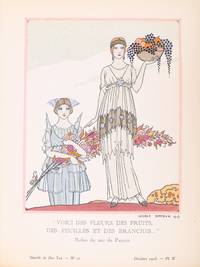
191389500Paris 1913. Fine. Paris Octobre 1913 19 x 24.50 cm une feuille Original colour print heightened in palladium printed on laid paper and signed at the bottom right outside the plate. Original engraving produced for the illustration of La Gazette du Bon Ton one of the most beautiful and influential fashion journals of the 20th century celebrating the talent of French designers and artists at the height of the Art Deco era. A celebrated fashion magazine established in 1912 by Lucien Vogel La Gazette du bon ton appeared until 1925 with a hiatus from 1915 to 1920 due to the war the editor-in-chief having been called up for service. It consisted of 69 issues printed in only 2000 copies each and notably illustrated with 573 color plates and 148 sketches of the models of the great designers. Right from the start this sumptuous publication “was aimed at bibliophiles and fashionable society” Françoise Tétart-Vittu “La Gazette du bon ton” in Dictionnaire de la mode 2016 and was printed on fine vergé paper using a type cut specially for the magazine by Georges Peignot known as Cochin later used in 1946 by Christian Dior. The prints were made using stencils heightened in colors some highlighted in gold or palladium. The story began in 1912 when Lucien Vogel a man of the world involved in fashion he had already been part of the fashion magazine Femina decided with his wife Cosette de Brunhoff – the sister of Jean creator of Babar – to set up the Gazette du bon ton subtitled at the time: “Art fashion frivolities.”  Georges Charensol noted the reasoning of the editor-in-chief: “’In 1910’ he observed ‘there was no really artistic fashion magazine nothing representative of the spirit of the time. My dream was therefore to make a luxury magazine with truly modern artists…I was assured of success because when it comes to fashion no country on earth can compete with France.’” “Un grand éditeur d’art. Lucien Vogel” in Les Nouvelles littéraires no. 133 May 1925. The magazine was immediately successful not only in France but also in the United States and Latin America. At first Vogel put together a team of seven artists: André-Édouard Marty and Pierre Brissaud followed by Georges Lepape and Dammicourt as well as eventually his friends from school and the School of Fine Arts like George Barbier Bernard Boutet de Monvel and Charles Martin. Other talented people soon came flocking to join the team: Guy Arnoux Léon Bakst Benito Boutet de Monvel Umberto Brunelleschi Chas Laborde Jean-Gabriel Domergue Raoul Dufy Édouard Halouze Alexandre Iacovleff Jean Émile Laboureur Charles Loupot Chalres Martin Maggie Salcedo. These artist mostly unknown when Lucien Vogel sought them out later became emblematic and sought-after artistic figures. It was also they who worked on the advertising drawings for the Gazette. The plates put the spotlight on and celebrate dresses by seven designers of the age: Lanvin Doeuillet Paquin Poiret Worth Vionnet and Doucet. The designers provided exclusive models for each issue. Nonetheless some of the illustrations are not based on real models but simply on the illustrator’s conception of the fashion of the day.   The Gazette du bon ton was an important step in the history of fashion. Combining aesthetic demands with the physical whole it brought together – for the first time – the great talents of the artistic literary and fashion worlds; and imposed through this alchemy a completely new image of women: slender independent and daring which was shared by the new generation of designers including Coco Chanel Jean Patou Marcel Rochas and so on… Taken over in 1920 by Condé Montrose Nast the Gazette du bon ton was an important influence on the new layout and aesthetics of that “little dying paper” that Nast had bought a few years earlier: Vogue. unknown
2016BN130343Glossika 2016. 2016. French Fluency 1. Complete Fluency Course <br/><br/>French Fluency 1. Complete Fluency Course Campbell Michael / Paquin Maxime Glossika unknown
51825321like new. unknown
51825321-nnew. unknown