Huard Julie, Paquin Jean-GuyLivre Rare Book

280 résultats
1999RO40017201Ecrits des Hautes Terres. 1999. In-12. Broché. Bon état, Couv. convenable, Dos satisfaisant, Intérieur frais. 94 pages augmentées de 6 planches de reproductions d'oeuvres en couelurs.. . . . Classification Dewey : 840.091-XX ème siècle
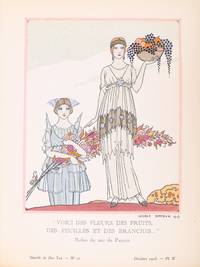
191389500Paris Octobre 1913 | 19 x 24.50 cm | une feuille
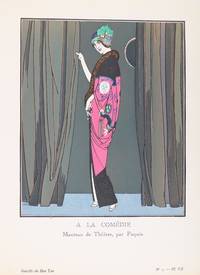
191389500Paris 1913. Fine. Paris Octobre 1913 19 x 24.50 cm une feuille Original colour print heightened in palladium printed on laid paper and signed at the bottom right outside the plate. Original engraving produced for the illustration of La Gazette du Bon Ton one of the most beautiful and influential fashion journals of the 20th century celebrating the talent of French designers and artists at the height of the Art Deco era. A celebrated fashion magazine established in 1912 by Lucien Vogel La Gazette du bon ton appeared until 1925 with a hiatus from 1915 to 1920 due to the war the editor-in-chief having been called up for service. It consisted of 69 issues printed in only 2000 copies each and notably illustrated with 573 color plates and 148 sketches of the models of the great designers. Right from the start this sumptuous publication “was aimed at bibliophiles and fashionable society” Françoise Tétart-Vittu “La Gazette du bon ton” in Dictionnaire de la mode 2016 and was printed on fine vergé paper using a type cut specially for the magazine by Georges Peignot known as Cochin later used in 1946 by Christian Dior. The prints were made using stencils heightened in colors some highlighted in gold or palladium. The story began in 1912 when Lucien Vogel a man of the world involved in fashion he had already been part of the fashion magazine Femina decided with his wife Cosette de Brunhoff – the sister of Jean creator of Babar – to set up the Gazette du bon ton subtitled at the time: “Art fashion frivolities.”  Georges Charensol noted the reasoning of the editor-in-chief: “’In 1910’ he observed ‘there was no really artistic fashion magazine nothing representative of the spirit of the time. My dream was therefore to make a luxury magazine with truly modern artists…I was assured of success because when it comes to fashion no country on earth can compete with France.’” “Un grand éditeur d’art. Lucien Vogel” in Les Nouvelles littéraires no. 133 May 1925. The magazine was immediately successful not only in France but also in the United States and Latin America. At first Vogel put together a team of seven artists: André-Édouard Marty and Pierre Brissaud followed by Georges Lepape and Dammicourt as well as eventually his friends from school and the School of Fine Arts like George Barbier Bernard Boutet de Monvel and Charles Martin. Other talented people soon came flocking to join the team: Guy Arnoux Léon Bakst Benito Boutet de Monvel Umberto Brunelleschi Chas Laborde Jean-Gabriel Domergue Raoul Dufy Édouard Halouze Alexandre Iacovleff Jean Émile Laboureur Charles Loupot Chalres Martin Maggie Salcedo. These artist mostly unknown when Lucien Vogel sought them out later became emblematic and sought-after artistic figures. It was also they who worked on the advertising drawings for the Gazette. The plates put the spotlight on and celebrate dresses by seven designers of the age: Lanvin Doeuillet Paquin Poiret Worth Vionnet and Doucet. The designers provided exclusive models for each issue. Nonetheless some of the illustrations are not based on real models but simply on the illustrator’s conception of the fashion of the day.   The Gazette du bon ton was an important step in the history of fashion. Combining aesthetic demands with the physical whole it brought together – for the first time – the great talents of the artistic literary and fashion worlds; and imposed through this alchemy a completely new image of women: slender independent and daring which was shared by the new generation of designers including Coco Chanel Jean Patou Marcel Rochas and so on… Taken over in 1920 by Condé Montrose Nast the Gazette du bon ton was an important influence on the new layout and aesthetics of that “little dying paper” that Nast had bought a few years earlier: Vogue. unknown
2004R200075072HACHETTE. VERS 2004. In-8. Broché. Bon état, Couv. convenable, Dos satisfaisant, Intérieur frais. 167 pages. Nombreuses phtoos en couleurs, hors texte.. . . . Classification Dewey : 641.013-Gastronomie
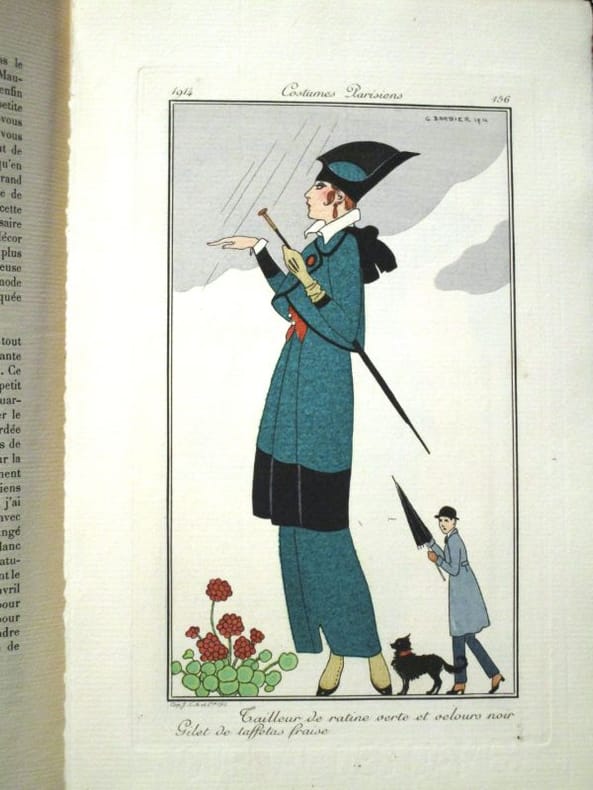
119437A Paris, Aux bureaux du Journal des Dames, de 1912 à 1914, 4 tomes in-8, contiennent les 79 numéros parus, complets des 186 planches gravées coloriées au pochoir (184 +2), menu illustré par Boscher au numéro du mois de décembre 1913, tirage à 1279 exemplaires numérotés, un des 1250 exemplaires numérotés sur papier de Hollande (n°1009). 79 fascicules aux cahiers non coupés, non cousus, sous leur couverture de livraison titrée bleue, bleu-vert, ou grise, regroupés sous 4 chemises éditeur papier bleues titrées (par année pour 1912, par semestre pour 1913 et 1914). Chaque numéro contient : 4 pages publicitaires en supplément, 8 pages de chroniques littéraires ou poèmes, 1 ou plusieurs planches hors-texte rehaussées au pochoir; le premier numéro contient en plus une préface de 8 pages et 1 feuillet fac-similé de la première page du Journal de mai 1812. Menus défauts aux chemises I et II (légères taches, petites déchirures), un numéro avec des traces de mouillures (n°73), de très rares rousseurs (pl.17 et 26), sinon intérieur en très bon état, les planches et les couleurs sont magnifiques, bon état général.
191289481Paris 1912. Fine. Paris 1912-1913 19 x 24.50 cm une feuille Original colour print printed on laid paper and signed in the plate lower left. Original engraving produced for the illustration of La Gazette du Bon Ton one of the most beautiful and influential fashion journals of the 20th century celebrating the talent of French designers and artists at the height of the Art Deco era. A celebrated fashion magazine established in 1912 by Lucien Vogel La Gazette du bon ton appeared until 1925 with a hiatus from 1915 to 1920 due to the war the editor-in-chief having been called up for service. It consisted of 69 issues printed in only 2000 copies each and notably illustrated with 573 color plates and 148 sketches of the models of the great designers. Right from the start this sumptuous publication “was aimed at bibliophiles and fashionable society” Françoise Tétart-Vittu “La Gazette du bon ton” in Dictionnaire de la mode 2016 and was printed on fine vergé paper using a type cut specially for the magazine by Georges Peignot known as Cochin later used in 1946 by Christian Dior. The prints were made using stencils heightened in colors some highlighted in gold or palladium. The story began in 1912 when Lucien Vogel a man of the world involved in fashion he had already been part of the fashion magazine Femina decided with his wife Cosette de Brunhoff – the sister of Jean creator of Babar – to set up the Gazette du bon ton subtitled at the time: “Art fashion frivolities.”  Georges Charensol noted the reasoning of the editor-in-chief: “’In 1910’ he observed ‘there was no really artistic fashion magazine nothing representative of the spirit of the time. My dream was therefore to make a luxury magazine with truly modern artists…I was assured of success because when it comes to fashion no country on earth can compete with France.’” “Un grand éditeur d’art. Lucien Vogel” in Les Nouvelles littéraires no. 133 May 1925. The magazine was immediately successful not only in France but also in the United States and Latin America. At first Vogel put together a team of seven artists: André-Édouard Marty and Pierre Brissaud followed by Georges Lepape and Dammicourt as well as eventually his friends from school and the School of Fine Arts like George Barbier Bernard Boutet de Monvel and Charles Martin. Other talented people soon came flocking to join the team: Guy Arnoux Léon Bakst Benito Boutet de Monvel Umberto Brunelleschi Chas Laborde Jean-Gabriel Domergue Raoul Dufy Édouard Halouze Alexandre Iacovleff Jean Émile Laboureur Charles Loupot Chalres Martin Maggie Salcedo. These artist mostly unknown when Lucien Vogel sought them out later became emblematic and sought-after artistic figures. It was also they who worked on the advertising drawings for the Gazette. The plates put the spotlight on and celebrate dresses by seven designers of the age: Lanvin Doeuillet Paquin Poiret Worth Vionnet and Doucet. The designers provided exclusive models for each issue. Nonetheless some of the illustrations are not based on real models but simply on the illustrator’s conception of the fashion of the day.   The Gazette du bon ton was an important step in the history of fashion. Combining aesthetic demands with the physical whole it brought together – for the first time – the great talents of the artistic literary and fashion worlds; and imposed through this alchemy a completely new image of women: slender independent and daring which was shared by the new generation of designers including Coco Chanel Jean Patou Marcel Rochas and so on… Taken over in 1920 by Condé Montrose Nast the Gazette du bon ton was an important influence on the new layout and aesthetics of that “little dying paper” that Nast had bought a few years earlier: Vogue. unknown
19681205898PN. New. 1968. Reprint Edition. Soft Cover. Date is copyright date; this is a later reprint edition . PN paperback
2010Q-0773537376McGill-Queen's University Press 2010-07-01. Paperback. New. New. In shrink wrap. Looks like an interesting title! McGill-Queen's University Press paperback
2010DADAX0773537376McGill-Queen's University Press 2010-07-01. paperback. New. 6.00x0.60x8.90. Buy with confidence. Excellent Customer Service & Return policy. McGill-Queen's University Press paperback
51996Figaro, Paris, 1947
0759676631.Gpaperback. Good. Access codes and supplements are not guaranteed with used items. May be an ex-library book. paperback
2021x-103208698XRoutledge 2021. Paperback. New. 242 pages. 9.21x6.14x0.67 inches. Routledge paperback
2019x-0367201984Routledge 2019. Hardcover. New. 232 pages. 9.50x6.25x0.75 inches. Routledge hardcover
elala5160Paris: Louis-Michaud Éditeur 1910. First Edition. 8vo. pp. 187 1 leaf. with half-title. text illus. untrimmed in modern quarter calf marginal tape repair to 3 leaves at end Paris: Louis-Michaud Éditeur, [1910] unknown
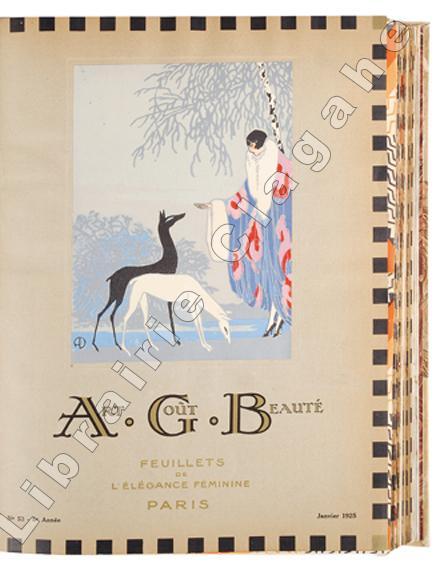
18380in-4°, bradel demi-velin à coin, titre et décor aquarellés (reliure moderne) du n°53 à 64 année complète. Les douze couvertures illustrées ont été conservées.
1491740396.Ghardcover. Good. Access codes and supplements are not guaranteed with used items. May be an ex-library book. hardcover
12495480-6Used - Very Good. Pages intact with possible writing/highlighting. Binding strong with minor wear. Dust jackets/supplements may not be included. Stock photo provided. Product includes identifying sticker. Better World Books: Buy Books. Do Good. unknown
0428294219.Ghardcover. Good. Access codes and supplements are not guaranteed with used items. May be an ex-library book. hardcover
2021500006395Andara 2021 400 pages 15x22x3cm. 2021. Broché. 400 pages.
2021500008162Andara 2021 400 pages 15x22x3cm. 2021. Broché. 400 pages.
2021500009368Andara 2021 400 pages 15x22x3cm. 2021. Broché. 400 pages.
2021500010198Andara 2021 400 pages 15x22x3cm. 2021. Broché. 400 pages.
2021500069311Andara 2021 400 pages 15x22x3cm. 2021. Broché. 400 pages.
2021500077529Andara 2021 400 pages 15x22x3cm. 2021. Broché. 400 pages.
2021500078388Andara 2021 400 pages 15x22x3cm. 2021. Broché. 400 pages.