95 résultats
108681Paris Calavas 190. Tavola cromolitografica cm 36 x 265 a tripla figura Paris, Calavas unknown
108704Paris Calavas 190. Tavola cromolitografica cm 265 x 36 Paris, Calavas unknown
190525940Henry Altemus Phil. 1905 HARDBACK NODustJacket 1905 1st Edition GOOD/VG- AS-IS NOJACKET Small Brown & Light green Cloth cvr with Man in Window Fishing with small Elephant as Lure for Dragon onFront Cvr Cvr light rub wear 4 1/2 X 6 In. Interior nicetight clean light wear FOX Stains 101 PGS Very Slight Lean Cvr has rub wear scuff edges & extremitis is Titled in Gold Gilt Light stains Back Cvr. TINY mended pg Tear spine cock moderate wear to edges corners spine and rear. couple closed tears small brown spots on many pages . also has some red titles & embellishments in bk Red illustrated frontispiece. First Edition. Hard Cover. Henry Altemus Phil. hardcover
108679Paris Calavas 190. Tavola cromolitografica cm 36 x 265 a figura multipla Paris, Calavas unknown
108699Paris Calavas 190. Tavola cromolitografica cm 36 x 265 Paris, Calavas unknown
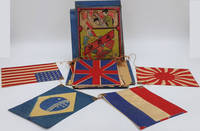
1905227961905. A series of national flags designed to be decoration for a patriotic event. The flags included are those for Japan the Imperial Japanese Navy Great Britain Denmark Turkey and the US flag with 30 stars. Many are not identifiable. What seems to be an early iteration of the Brazilian flag including the words "Ordem I Proesso" sic across a blue globe with constellations within a diamond shape. Nicely preserved in pristine condition within the original box which is decorated with Japanese children waving the string of flags. The box flattened missing one edge otherwise in very nice condition. unknown
108680Paris Calavas 190. Paris, Calavas unknown
17402420Augsburg: Johann Jacob Haid & son 1740. Six tall narrow folio-sized engravings with etching platemarks 400 x 207 mm. sheets 435 x 277 mm. deckle edges unsigned but by Jacop Wangner after Watteau numbered 1-6 in the plate at lower right imprint at lower right I. Haid et filius excudit A. V. Augustae Vindelicorum. Upper edges archivally tipped to mats. Fine.<br/> <br/> A perfectly preserved suite of six large rococo engravings reproducing Watteau's paintings for a folding screen intended to be cut out by ladies for use in furniture decoration. <br /> <br /> Watteau's influence on 18th-century decorative arts throughout Europe by way of the many engravings after his work published by Gersaint has long been recognized but the use of the engravings as actual sheets to be cut up and applied to household objects has garnered little attention until recently. The vogue for decoupage probably first appeared in the late seventeenth century and by the 1720s the hobby of cutting out colored prints for application to various household objects and pieces of furniture was all the rage in France Germany and beyond. The process which remained a favorite pastime throughout the eighteenth century was known as la découpure in French as Ausschneidekunst in German and as lacca contrafatta or lacca povera in Italian although "the latter term appears to be a true misnomer considering the amount of minute work involved" Kisluk-Grosheide p. 83. It consisted of neatly cutting out hand-colored engraved or woodcut motifs or figures applying them to a textile or sometimes cardboard ground and varnishing them. These creations were applied to furniture as well as to "screens folding screens wall hangings ceilings the tops of coaches and sedan chairs" loc. cit. affording a passable imitation of Asian lacquer. The craze which created a goldmine for certain print publishers reached the point that bibliophiles and collectors were warned to keep a vigilant eye on their most precious books prints and paintings lest eager young ladies attack them with scissors. <br /> <br /> In 1728 six engravings after Watteau's paintings for a folding screen were commissioned by the art collector Jean de Julienne as part of a vast program of reproductions of Watteau's painted oeuvre. They were engraved by Louis Crépy fils and published by the Paris marchand-mercier art dealer and print publisher Edmé-François Gersaint. An announcement of their upcoming publication in the November 1727 Mercure de France explicitly described them and two other Crépy-Watteau engravings as "marvelously appropriate for decoupages with which ladies these days make such pretty furniture" Crépy grave actuellement six morceaux en hauteur . d'après un Paravant peint par Watau dont les compositions sont très-galantes. De pareils sujets peints sur des fonds blancs conviennent à merveille aux découpures dont les Dames font aujourd'hui de si jolis meubles Mercure de France 1 Novembre 1727 p. 2492 digitized on Gallica. Indeed the publisher himself highlighted this usage in his own note in a later issue of the Mercure cited by Glorieux p. 212: pointing out that all of the decorative motifs in the Watteau engravings were "most useful for painters fan-makers sculptors goldsmiths tapestry-weavers embroiderers etc." he added that "all these ornaments can be perfectly used in decoupage" tous ces ornements réussissent parfaitement en découpure. <br /> <br /> These and other rococo engravings were quickly taken up by German publishers especially in Augsburg Metken p. 102. This paravent folding screen suite was one of the first of the Watteau engravings to be copied in Germany. The present very close reverse copies of Crépy's six plates appeared in Augsburg only a few months after their publication in June 1728 in Paris: engraved by Jacob Wangner or Wagner ca. 1703-1781 they were published by the heirs of Jeremias Wolff in 1729. This set is an otherwise unrecorded reissue of the Wangner copperplates. A lavishly decoupage-decorated secretary in the collections of the Metropolitan Museum of Art includes cutouts that were almost certainly from these Augsburg plates as they are from "reverse copies of the prints by Crépy" Kisluk-Grosheide p. 88 noting other examples of Augsburg copies of Watteau prints used on the same secretary. Her assertion that "it has not been shown that these engravings were actually used for this purpose" p. 84 is only applicable to the French plates. Indeed other examples of lacca povera objects described in her article point to the German production of copies of French rococo prints as the main source for decoupage at this time on pieces produced throughout Europe including in Italy and in France itself. <br /> <br /> The general title appears at the foot of the first plate. Each engraving presents a central figure or scene set within a frame of delicate rococo arabesques and ornaments. Three show the Comédie italienne figures of Pierrot Harlequin and Colombine a woman playing the lute on a rug-bedecked stage a pair of allegorical figures flanking an awning above and at bottom the smiling visage of a Commedia dell'Arte character of the opposite sex. The remaining pastoral scenes of courtship or douceur de vie are set within naturalistic elements two with streams flowing over a dripping shell-shaped basin or ledge under which a ghostly face can be dimly discerned. Watteau's designs were based on earlier designs by Claude III Audran decorative painter for Louis XIV at Versailles and Fontainebleau to whom Watteau had apprenticed. "After joining forces with ornamentalist Claude III Audran about 1708 he Watteau began inserting figures in Comédie-Italienne costumes into Audran's trademark arabesques" Judy Sund "Watteau's Pierrots Why so Sad" The Art Bulletin vol. 98 no. 3 2016 p. 325 reproducing the Pierrot panel from the present series. <br /> <br /> OCLC locates a single copy of the Wolff issue at the Bibliothèque nationale de France reproduced in Gallica. In the present issue of which I locate no other copies the engraver's signatures were removed. <br /> <br /> On the Wolff issue cf. W. Augustyn "Augsburger Buchillustration im 18. Jahrhundert" in Augsburger Buchdruck und Verlagswesen von den Anfangen bis zur Gegegenwart 1997 p. 820 citing E. Isphording Gottfried Bernhard Göz 1708-1774 1997 pp. 35 ff.; Thieme Becker 35:150. On the Crépy engravings cf. Guilmard Maitres ornemanistes p.145; Dacier & Vauflart Jean de Julienne et les graveurs de Watteau au XVIII. siècle 159-163; E. de Goncourt Catalogue Raisonné de l'Oeuvre . d'Antoine Watteau 1875 p. 224 nos. 309-314; G. Glorieux À l'enseigne de Gersaint: Edme-François Gersaint marchand d'art sur le Pont Notre Dame Paris 2002 pp. 189-192; Mark Millard Collection: French Books no. 170.35 5 of the 6 plates. On the use of these engravings for decoupage see: D. O. Kisluk-Grosheide "'Cutting up Berchems Watteaus and Audrans': A Lacca Povera Secretary at The Metropolitan Museum of Art" Metropolitan Museum Journal 31 1996 pp. 81-97; and S. Metken Geschnittenes Papier Munich 1978 pp. 101-2 & 113. Johann Jacob Haid & son unknown
108672Paris Calavas 19. Tavola cromolitografica cm 265 x 36. Immagine a due colonne Paris, Calavas unknown
108669Paris Calavas 190. Tavola cromolitografica cm 265 x 36. Immagine a due colonne Paris, Calavas unknown
108671Paris Calavas 190. Tavola cromolitografica cm 265 x 36. Immagine a due colonne Paris, Calavas unknown
108670Paris Calavas 190. Tavola cromolitografica cm 265 x 36. Immagine a due colonne Paris, Calavas unknown
194034034San Francisco: Windsor Press 1940 Cloth-backed boards spine lettered in red deckled edges inscription at ffep faint spotting at cloth a nearly fine copy; Second edition limited to 200 numbered copies first issued the previous year for the Book Club of California pochoir title vignette and headpiece illuminated initials; with a 100-word dedication to Carl Livingston Jr. "from the Printer / with kindest regards" by the illustrator/printer and founder of the Windsor Press James Johnson dated 1940. "This letter of Costanso in MS. was discovered in a rare print of the Costanso Diary that once had formed part of the Ramirez collection and later came into the possession of Edward E. Ayer. Translation is the hand of Mrs. Ayer" from the Introductory Note; 12mo; iv 22 2pp. Sabin 17020. Signed by Artist. Hard Cover. [San Francisco]: Windsor Press hardcover
19952080202106300484Not Available 1995. Soft Cover. Fine. Size: 29.5cm Not Available paperback
19962090502113715919Not Available 1996. Soft Cover. Fine. The book is in fine condition. Not Available paperback
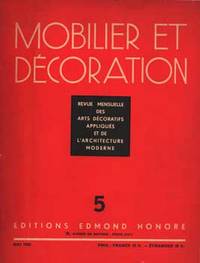
75-1361Paris FR: Editions Edmond Honore 1940. f. 25pp. Very good. Softcover. Black and white plates throughout. There might be an additional charge due to the large size of the book. Paris, FR: Editions Edmond Honore, 1940 paperback
108703Paris Calavas 190. Tavola cromolitografica cm 265 x 36 Paris, Calavas unknown
108691Paris Calavas 190. Tavola cromolitografica cm 265 x 36 Paris, Calavas unknown
0259446602.Gpaperback. Good. Access codes and supplements are not guaranteed with used items. May be an ex-library book. paperback
0243320515.Gpaperback. Good. Access codes and supplements are not guaranteed with used items. May be an ex-library book. paperback
199010722Kenlar Publ 1990. 1990 1st edition 2nd printingDecorated Oversized Pictorial Wraps Fine Condition SOFTCOVER. First Edition. Soft Cover. Kenlar Publ paperback
108693Paris Calavas 190. Tavola cromolitografica cm 265 x 36 a 4 figure Paris, Calavas unknown
108715Paris Calavas 190. Tavola cromolitografica cm 265 x 36 Paris, Calavas unknown
108678Paris Calavas 190. Tavola cromolitografica cm 36 x 265 a figura multipla Paris, Calavas unknown
1930z08231Paris: La Grande Maison D'ameublement 1930. First edition. Paperback. good. Catalog for La Grande Maison D'ameublement a large furniture store on the Boulevard Magenta in Paris. Ca. 1930s. First edition. Illustrated wraps oblong 8vo. 137pp. with illustrations of offered furniture. Good. Edge wear and soil to wraps including writing in French on the front wrap. Bending to corners of wraps and some page corners. Internally very bright and unmarked. Handsome wooden furniture with hand carved embellishments including beds wardrobes tables and vanities all listed in French with contemporary prices. Digital images available upon request. La Grande Maison D'ameublement paperback