7 715 résultats
ESTIMATIONS
AVEC LES RESULTATS DE LA VENTE
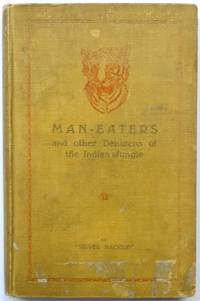
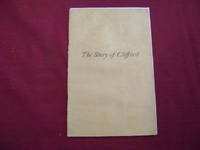
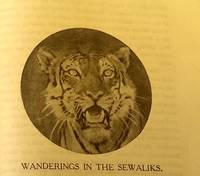
22082Thacker Spink & Co. Calcutta and Simla 1928. First edition. 8vo 9 x 6 inches 295-pages plus advertisements. Original pictorial cloth. Spine faded some foxing to prelims. otherwise overall good. Thacker, Spink & Co. Calcutta and Simla, 1928. hardcover
1928613730Calcutta: Thacker Spink & Co. 1928. Hardcover with printed front board no dust jacket in good condition. Boards are scuffed marked and printing on front board is faded. Edges corners and spine ends are bumped and rubbed. Spine is cocked. Page block is tanned and blemished. Foxing on the first and last few pages which are otherwise clear. Hinge breaks at the boards however binding remains sound. LW. Hardcover. Good/No Dust Jacket. Used. Thacker, Spink & Co. Hardcover
1291668535.Gpaperback. Good. Access codes and supplements are not guaranteed with used items. May be an ex-library book. paperback
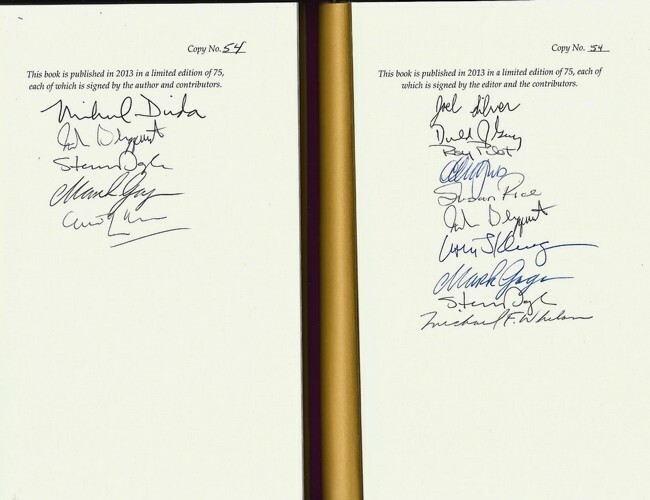
201931145Etats-Unis, Undershaw edition / The Baker Street Irregulars, published by the Princeton University Press, Lilly Library of Indiana University and The Illustrious Clients of Indianapolis 2013. Deux volumes, reliure pleine toile violette de 152 et 138 pages au format 22 x 14,5 cm. Couvertures illustrées. Dos rond avec titres. Signets. Livres glissés dans un coffret en pleine toile violette avec 1er plat illustré, au format 15 x 4,5 x 23 cm. Livres d'études sur les œuvres de Sir Arthur Conan Doyle et ses personnages les plus célébres. Bien sûr, il couvre les histoires de Sherlock Holmes, mais aussi les oeuvres de science-fiction dont Le Monde perdu et les livres historiques et fantastiques. Les ouvrages sont dirigés par le critique Michael Dirda, lauréat du prix Pulitzer, et par Joel B. Silver, avec la participation de nombreux auteurs et accompagnés d'illustrations, photographies et documents. Tirage de luxe uniquement imprimé à 75 exemplaires numérotés ( n° 54 ), signés par Michael Dirda, John Michael Gibson, Christopher Roden, Steven T. Doyle, Michael F. Whelan, Joe B.Silver, Dr. Donald J.Gray, Roe E. Pilot, Clifford S. Goldfarb, Mark A. Gagen, Leslie S. Klinger et Susan Rice. Rarissime édition originale, en état de neuf et totalement épuisée.
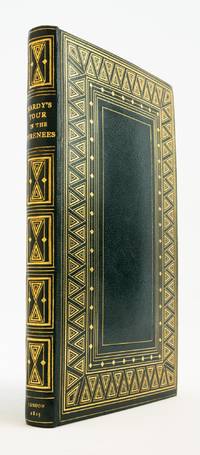
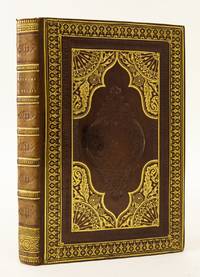
1825ST20491London: R. Ackermann 1825. FIRST EDITION. 236 x 144 mm. 9 1/4 x 5 3/4". vii 1 84 pp. <br/> STRIKING DARK GREEN MOROCCO VERY ELABORATELY GILT BY CUNEO stamp-signed on lower front turn-in for Mildred B. Davey named stamped on upper front turn-in covers with geometric Art Deco frame smooth spine in compartments with triangle ornaments gilt lettering git-ruled turn-ins marbled endpapers. Housed in matching green morocco-backed clamshell box lined with fleece. Engraved map and 24 FINE DELICATELY HAND-COLORED PLATES inlaid on heavy stock as issued; original tissue guards. Verso of front free endpaper with engraved bookplate of Mildred Davey and red morocco ex-libris of Paul Edward Chevalier; front flyleaf with 19th century ink owner inscription of William Mitchell. A Large Paper Copy. Abbey Travel 210; Tooley 245; S. T. Prideaux "Aquatint Engraving: A Chapter in the History of Book Illustration" p. 229. See Peter Thorold "The British in France: Visitors and Residents since the Revolution" p. 64. A very small ink spot just intruding on very bottom edge of a handful of leaves a few vague spots of foxing to map isolated faint offsetting from illustrations but A VERY FINE COPY in all other ways--the text clean fresh and bright the plates immaculate the margins spacious the binding lustrous and sparkling.<br/> <br/> This is a lovely copy of a work with plates Prideaux considers "among the most beautiful to be found in aquatint engraving" and it comes in a handsome binding commissioned by Mildred Benson Davey and later owned by Paul Chevalier. Issued by a publisher known for his lavishly illustrated travelogues the volume takes us on a journey through the scenic French Pyrenees escorted by Englishman Joseph Hardy who adds his insights on the local population and government gives recommendations on the best mineral baths and describes in word and image the breathtaking scenery. The views are small measuring approximately 90 x 70 mm. but as Abbey notes "part of their charm is certainly in their small size." Sarah Prideaux praised their composition: "The ground is exceedingly fine and there is no line whatever. The colouring is most delicate and all the twenty-four illustrations are exquisite." We can only be impressed by the achievement of the colorist; the detail is cleanly executed the colors are luminescent and the images do not disappoint even under magnification. Thorold notes that this work was "a great success" and was later translated into French. Our copy was bound in a bold modern design at the Chicago workshop founded by in 1926 by John Cuneo 1884-1977. Cuneo hired fine British craftsmen like the Englishman Leonard Mounteney to create bibliophile-quality bindings for American collectors. After apprenticing at the bindery of G. & J. Abbott in Nottingham and studying ornamental design at the Battersea Polytechnic Mounteney worked as an exhibition finisher for Riviere before emigrating to Chicago where he initially worked with Alfred de Sauty at the R. R. Donnelley bindery before joining Cuneo's hand bindery. The present binding was a commission for Mildred Benson Davey 1890-1953 daughter of the founder of Benson & Rixon men’s clothiers. Cuneo also bound books for Chicago retail magnate Marshall Fields. Later our binding was appreciated by distinguished connoisseur Paul Chevalier whose library of beautiful volumes was uniformly characterized by outstanding workmanship and superb condition. The sale of his books in 1990 represented one of the best collections of 20th century bindings brought to auction in the past half century. Laid in is Christie's slip from Chevalier's 9 November sale where this appeared as lot 23 selling for $935. R. Ackermann unknown
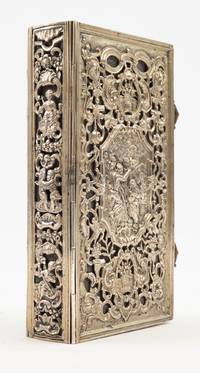
1885ST20549cOxford: Printed at the University Press for Peacock Mansfield and Britton London ca. 1885. 146 x 80 mm. 5 3/4 x 3 1/8". 536 pp. <br/> IN A LOVELY 18TH CENTURY SILVER BINDING over contemporary brown morocco DONE IN THE FRENCH RÉGENCE STYLE combining piercing with repoussé ornamentation the covers with central cartouche depicting a scene from the life of Christ in repoussé that on the front cover showing the Baptism of Christ with two hallmarks at the upper left an "A" and a rooster that on the lower cover showing the Ascension this surrounded by a pierced frame of rocaille drawer handles vases of flowers swans a leafy fronds spine pierced with rocaille and flowers separating three allegorical putti ornaments representing Faith Hope and Charity two openwork rocaille clasps. Endpapers rather worn at fore edge isolated very faint foxing otherwise A FINE COPY the text clean and fresh and THE SILVER BINDING SPARKLING AND UNMARRED.<br/> <br/> This glittering binding is a lovely example of 18th century silverwork in nearly flawless condition. While we have been unable to identify the maker the binding is probably French. A silver binding on a 1686 copy of a Rotterdam "Speculum Poenitentiae" catalogued by Antiquariat Roo is identical to ours in size and design except for the content in the large central frames and is identified by them as French. They find a master's mark of "T. G" beneath the front scene not present on our binding. In any case the delicate symmetrical ornamentation featured on our binding is typical of French Régence decorative arts with scrolls studded with naturalistic embellishments that reward close inspection. Many charming details are hidden within the sea of volutes such as the swans stealing treats from overflowing baskets of fruit. The central scenes from the life of Christ come to life through meticulous execution as our silversmith has taken great care with the details: water trickles from John the Baptist's outstretched arm and voluminous curls of cloud frame Christ's Ascension. The later Book of Common Prayer the binding now contains is a testament to the binding's enduring appeal as a precious devotional object. Printed at the University Press for Peacock, Mansfield, and Britton, London unknown
1921221740np.: np. 1921. First edition. . Soft cover. . Near fine copy very light shelf wear. . Octavo. . Illustrated. Important reference work. Very scarce in this condition. np. paperback
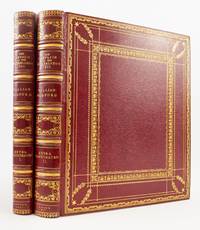
1817ST19508aLondon: Henry Colburn 1817. FIRST EDITION. 322 x 274 mm. 12 3/4 x 10 3/4". One volume extended to two. <br/> SUMPTUOUS CRIMSON STRAIGHT-GRAIN MOROCCO GILT BY MORRELL stamp-signed on front turn-ins covers with wide frame decorated with Neoclassical ornaments raised bands spine compartments framed by volutes and flowers gilt lettering gilt-framed turn-ins scarlet watered silk endleaves leather hinges top edges gilt. WITH 30 HAND-COLORED PLATES as called for including a double-page view of the Battle of Waterloo a folding battle plan for Ligny and a folding map of the route from Brussels to Paris the last two expertly repaired and backed in linen and EXTRA-ILLUSTRATED WITH 66 PLATES eight of these hand-colored most portraits of military leaders. With "Portraits of General Officers" used as the frontispiece as in Abbey in place of the seldom-seen plate "Waterloo in Memory of Shaw of the Life Guards" that appears in some copies but is not on the list of plates. With an ALS dated Dublin Castle 1st Oct 1819 signed by Lord Whitworth. Front flyleaves with engraved armorial bookplate of Frederick S. Peck. Abbey "Life" 372; Tooley 336; Cohn "Cruikshank" 556. ◆Joints edges and corners with visible but not serious wear one plate with neatly repaired marginal tear just touching edge of image occasional mild foxing additional trivial imperfections otherwise fine--clean and fresh internally with richly colored plates in a lustrous binding bright with gilt.<br/> <br/> This is a very attractively illustrated celebration of Wellington's victorious campaign against Napoleon offered here in a special copy enhanced by additional plates many depicting principal actors in the conflict and a stately Neoclassical binding. Famed illustrator George Cruikshank drew the frontispiece depicting the seven general officers for the British side along with the ebullient illustrated title depicting victory the double-page plate of the fateful Battle of Waterloo and the ignominious "Flight of Bonaparte." The plates contributed by James Rouse mostly depict the countryside and villages in the area where fighting was taking place. Journalist and novelist William Mudford 1782-1848 wrote the text with assistance from primary sources among these the Duke of Wellington himself to whom the work is dedicated. Mudford was the editor of the "Courier" an evening journal with a conservative stance on politics. His prose is described as "vigorous" by the "Dictionary of Literary Biography" which also notes his flair for creating atmosphere. These gifts were brought to bear on the present account rendering this historic campaign in vivid terms. The manuscript letter inserted into the second volume was written by Lord Charles Whitworth 1752-1825 Lord Lieutenant of Ireland at the time of writing. He had been the British Ambassador to France when Napoleon was first consul and had gained much respect for the determination and dignity with which he had handled the mercurial Bonaparte's tirades against his country. Here he recommends to an unknown recipient the person who had conducted financial affairs for him in France. The present bindings are the work of the London bindery of W. T. Morrell established about 1861 as successor to the firm begun by Francis Bedford who in turn had taken over the famous bindery of Charles Lewis. Prideaux in her "Modern Bookbindings" says that Morrell at that time had a very large business that supplied "all the booksellers with bindings designed by his men" which were "remarkable for their variety and merit." The scion of an old and prosperous New England family former owner Frederick Stanhope Peck 1868-1947 was an avid collector of books and manuscripts amassing a collection of more than 8000 titles. When his library went to auction in 1944 it was noted for its fine bindings and excellent condition. Henry Colburn unknown
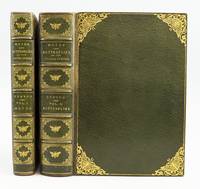
1900CJW1901Boston: J. B. Millet Company 1900. No. 306 OF 500 COPIES. 256 x 181 mm. 10 x 7 1/8". Two volumes. <br/> Very attractive contemporary olive green morocco covers with gilt border incorporating an elaborate cornerpiece design of a butterfly; raised bands expertly rebacked preserving original backstrips spines gilt in compartments with lacy frames enclosing a large central butterfly gilt turn-ins marbled endpapers leather hinges all edges gilt. With more than 400 photographic illustrations and 62 ACTUAL ENTOMOLOGICAL TRANSFERS FROM LIFE all but one of the latter with original tissue guards. Bennett p. 33; McGrath p. 177; Nissen ZBI 1079; Reese "Nineteenth Century American Color Plate Books" 107. Spines faintly sunned two leaves with minor thumbing one corner crease otherwise AN EXTREMELY FINE SET the very appealing bindings quite lustrous and entirely sound and the text and plates clean fresh and bright with virtually no signs of use.<br/> <br/> This is a collection of butterfly and moth illustrations printed by direct transfer from the insects the creation of a leading innovator in the display of lepidoteral specimens. Sherman Foote Denton 1854-1937 came from a family of amateur naturalists who managed to turn their favorite pastime into a global business. Denton patented a butterfly mount that captured a specimen on a white plaster tablet where it could be pressed under glass avoiding the mess smell and eventual degradation of butterflies and moths mounted on paper using pins. The present publication presents a collection of specimens in a far more portable form that still preserves the color and detail of the insects' wings. The author collected by his own count more than 50000 specimens to produce the color plates for this limited edition. He explained his process: "The colored plates or Nature Prints used in the work are direct transfers from the insects themselves; that is to say the scales of the wings of the insects are transferred to the paper while the bodies are printed from engraving and afterward colored by hand." Since each specimen could be used only once it was necessary to obtain 500 perfect specimens of each species pictured. The effort and expense prevented larger runs of such publications and Reese observes that "new methods of printing color often too difficult to be practical were sometimes undertaken by enthusiasts.". J. B. Millet Company unknown
1823ST15946Paris: Jules Didot l'aîné et Baudouin Frères 1823. FIRST EDITION. 235 x 150 mm. 9 x 5 3/4". 2 p.l. 235 pp. <br/> Quite attractive contemporary calf decorated in gilt and blind in the Gothic cathedral style central panel of covers with blind-stamped centerpiece in the style of a rose window and gilt cornerpieces enclosed by blind- and gilt-roll frames raised bands spine panels with blind-stamped drawer-handle ornaments gilt titling gilt-rolled turn-ins marbled endpapers all edges gilt. WITH 24 LIVELY COLOR PLATES IN THE STYLE OF GEORGE CRUIKSHANK. Front pastedown with book label of "Beguin." Vicaire III 564. Upper cover with small dark stain spine sunned to a soft tan head of spine with small chip minor wear to front joint and corners but the binding solid and pleasant; text leaves with mild foxing due to paper quality but the plates happily unaffected and still bright with vivid coloring.<br/> <br/> In a stylish contemporary binding and with illustrations depicting the various "characters mores and manners" of the English this humorous exploration of the highs and lows of London society is a close adaptation of Pierce Egan's enormously popular "Life in London." The present work though not a word-for-word translation closely follows Egan's original story of Tom Jerry and Logic a group of friends whose misadventures lead them from the most fashionable districts of London to its poorest slums. The wonderful illustrations show the trio taking part in all manner of mischief and merrymaking including attending a masked ball mingling in the crowded foyer of a theatre visiting a bespoke tailor taking boxing lessons carousing at a rowdy alehouse and perhaps inevitably having to appear before a constable. Though the plates are unsigned they appear to be faithful copies of those done by George and Robert Cruikshank for the original Egan work. Deriving its name from the use of design motifs taken from Gothic architecture the so-called "Cathedral Binding" or "Cathedral-Style Binding" was fashionable in England and France for about three decades beginning ca. 1810. French binder Joseph Thouvenin is sometimes credited with popularizing the style. The design is usually accomplished with either blocking or gilt tooling but sometimes both are employed in a pleasing mixture as seen here. Jules Didot l'aîné et Baudouin Frères unknown
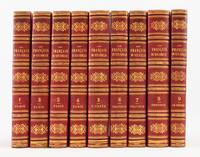
1840ST19460Paris: L. Curmer 1840-42. First Editions. 264 x 178 mm. 10 3/8 x 7". Nine volumes. <br/> Very pleasing contemporary red cloth backed in red morocco by Weidle stamp-signed in gilt on tail of spines raised bands compartments with gilt lettering or large gilt decorative tool head compartment on each spine with sometimes blurred handwritten ink shelf number. WITH 415 FULL-PAGE PLATES HAND-COLORED AND ENHANCED WITH GUM ARABIC one in black & white including eight frontispieces all of the plates with original tissue guards one double-page map and numerous vignettes and head- and tailpieces in black & white after Bellangé Charlet Daubigny Daumier Gavarni Grandville Vernet Johannot etc. Front pastedowns with bookplate of Count Grigori Alexandrovitch Stroganov. A hint of rubbing to extremities occasional trivial scuff or small stain to boards but A FINE SET THE PLATES CLEAN AND BRIGHT WITH RICH COLORING the contents fresh and clean and the essentially unworn bindings quite attractive on the shelf.<br/> <br/> Characterized by Carteret as the "most important publication of the Curmer editions" this series is one of the major works of the Romantic era presenting as it does a panorama of all classes of French society. An adept bookseller and publisher specializing in illustrated books Henri-Léon Curmer 1801-70 attracted some of the best artisans of the day and was known for the high quality of his output. For the present work he recruited some of the most famous writers of the period--Balzac one of the main contributors Gautier Nerval Borel Janin Monnier and Sand--to delineate the various professionals tradesmen and social "types" populating 19th century France. Their text is accompanied by more than 800 images--all but one of them beautifully hand colored--by Gavarni Eugène Lami Grandville Tony Johannot Daumier Henry Monnier Meissonier and others; there are also numerous wood-engraved vignettes in the text. The profiles of the various "types" of citizens are accompanied by portraits depicting them in their usual surroundings and featuring the physical characteristics assigned by the popular pseudo-scientific physiognomic theory to that trade gender or social class. As Carteret notes "The plates are of the highest interest for the history of costumes the fashion and the clothes of all the social classes of French society at the Romantic period; all the artists from the time took part in this huge publication." Of the nine volumes five depict Parisians three cover the provinces and the last "Le Prisme" looks at everything from "Tourists in Italy" to "A University Education" and "A Woman with No Taste." This final volume was issued exclusively to subscribers; Carteret calls it an "indispensable complement" to the series and notes that it "became very rare." The present set is comprised of first issue volumes which "can be recognized thanks to the whiteness of the pages and the delicacy of the coloring which was enhanced with gum Arabic; the second issue is on tinted paper and the coloring is less meticulous." Carteret This copy belonged to Count Grigori Alexandrovitch Stroganov who was born in September 1770 in St Petersburg and died in January 1857 in the same city. A Russian aristocrat and count of the Empire from 1826 Stroganov was also a diplomat and private adviser patron of the arts and one of the most cultivated men of his time. L. Curmer unknown
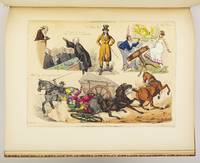
1822ST16606London: Thomas M'Lean Repository of Wit and Humour 1822. FIRST EDITION. 432 x 342 mm. 17 1/8 x 13 1/2". Without text as issued. <br/> Very appealing late 19th century scarlet crushed morocco gilt by Riviere & Son stamp-signed on front turn-in covers with French fillet and drawer-handle tool borders upper cover with gilt lettering; raised bands spine gilt in compartments with central floral sprig surrounded by small tools volute cornerpieces gilt titling turn-ins with decorative floral rolls moss green watered silk doublures and endleaves all edges gilt. WITH 17 ANIMATED AQUATINT ENGRAVINGS COLORED BY HAND 14 plates in "Moments" and three plates in "Byron". Front flyleaf with bookplate of Ernest G. Mocatta. For "Moments": Tooley 40. See also: Ray p. 32; Houfe p. 217. ◆Leather with hints of dulling from leather preservative but the binding virtually unworn with a lustrous spine. A couple of trivial smudges to one margin and occasional light offsetting but A FINE COPY the plates clean and bright with vivid coloring and all imperfections insignificant.<br/> <br/> With plates that include comical scenes of horsemanship hunting soldiers and disastrous coach rides this attractively bound book brings together two separately published works by an artist Ray calls "the premier sporting illustrator of his time." The first work "Moments of Fancy and Whim" was originally published in two parts consisting of seven plates each. There are several different illustrations on every plate most of which use a play on words or a phrase especially one of the many uses of the word "fancy" to frame the scene. The illustrations lampoon familiar character types and aspects of English society--particularly those with an affinity for the equine--to wonderful comic effect. The second work here is composed of three plates each with four separate scenes accompanied by a line of verse from Byron's "Childe Harold" or "The Giaour." In this unexpected pairing Byron's lyric poetry is given an entirely new lowered context when interpreted through Alken's pen; for example the line "Tis Greece--but living Greece no more" is depicted as three men sitting down to a greasy dinner of roast duck. Henry Thomas Alken 1785-1851 was the son of a sporting artist. He received early training from his father and later studied under miniaturist J. T. Barker Beaumont. A talent for depicting horses and dogs led to a profitable career in sporting prints. As DNB relates "The fertility of Alken's pencil was amazing . . . . In all Alken's works there is a freedom of handling and a happy choice of subject which rendered them very popular in their day." The present works are both excellent examples of his signature style and are here in such marvelous condition that they can be fully appreciated for their wit spirit and vibrancy. Both are also quite rare on the market with "Moments" often showing up incomplete and "Byron" appearing only once in ABPC and RBH. Thomas M'Lean Repository of Wit and Humour unknown
32167Broadside. 4to 9½" X 12". Near fine. Faintly age toned and with just the slightest bit of edgewear. Puerto Plata also spelled Porto Plata is the capital city of a province bearing the same name on the north coast of the Dominican Republic and on the night of August 21 1871 a fire engulfed that city's commercial district crippling this remote district. On this occasion the province's governor RAMON D. PACHECO and the president of its Ayuntamiento municipality council FEDERICO M. LEYBA signed in type this broadside which consists of two side-by-side columns in English. In highly flowery language and twisted grammar Pacheco and Leyba describe the fire and what it did to their city and its residents. In part: "Forty six buildings which encircled the only and most valuable that held the greatest credit that represented the complement of the towns welfare the support of the majority of the population and in short were the prop of the Government the guarantee of wealth the fountain of labor the stability of the present and rich signification of the future have in three hours been converted into smoking ruins; horrible tomb of so many lives that moments before were agitating with overflow of stamina." They plead for help from the international community: "Porto Plata knows that its appeal will be heeded and therefore does not falter but addresses readily all nations brothers in sufferings; all peoples sympathizers with distress; all the powerful compassionate to misfortune in search of the help it requires to even prove after that if it knows to beg it also will know to fulfil and guard in each bosom of its children altars of lasting gratitude. For this end it directs its wailings to the representatives of the Republic." Dated "Porto-Plata August 23d 1871." At the bottom between Pacheco and Leyba's bold typeface names appears the large 2" diameter official circular blind-embossed imprint of the Ayuntamiento of Puerto Plata. On the verso of this intriguing broadside appear four dockets -- seals and notarizing signatures from four consulates testifying to the truth of the devastation described in the broadside. "This is to certify" pens the first docket "that the foregoing is a correct statement and that Ramon D. Pacheco is Governor of this district and Federico M Leyba President of the Town Council. Porta Plata August 25h 1871. Theodore Farrington B.V. Consul." Alongside this is the circular blind-embossed seal of the British Vice Consul of Porto Plata. Below this appears the circular blind-embossed seal of the U.S. Commercial Agency of Puerto Plata with the illegible signature of that official plus title "U.S. V.C. Agt"; below that the circular blue inkstamped seal of the North German Consulate in Porto Plata and the illegible signature and title of that official; below that the circular blind-embossed seal of the Danish Consul at Puerto de Plata and the signature of G.L.H. Zeller with title; and below that the signature of "Charles Albert Neumann / Consul for Austria=Hungaria" who also pens "consular Seal" in lieu of a missing official Austro-Hungarian consular seal; and in a second column at right the illegible signature and rank of the French vice consul who also pens "Consular Seal" in lieu of a missing official French consular seal. A provocative and rare broadside uniquely docketed by six diplomatic officials on the verso. Ironically that other great fire of 1871 would take place about one and a half months after this: the great Chicago fire of 1871 which caused far greater destruction and got far greater press attention. Accompanying this broadside is a 1930s vintage printed manila folder from pioneering Midwest autograph dealer Forest H. Sweet "American Historical Material / Battle Creek Michigan" with his early catalogue description of this item affixed at center. unknown
in-4° pp. [8], 86 Legatura in piena pelle marrone
London, Henry Colburn, 1834, voll. 2 (su 3), in-8, tela verde coeva, tassello in pelle rossa con titolo oro al dorso, pp. VI, (2), 329, (1); (6), 354. Tracce d'uso alle coperte di ambedue i voll. con minime mancanze alle cerniere dei piatti e alle cuffie; asportata la carta bianca iniziale al vol. I; macchie e strappetti marginali all'interno. Manca il vol. II. Anche conosciuta come “The Poetess” o “Miss Nevinson” (dal cognome del 2° marito della madre), la prolifica scrittrice e drammaturga inglese fu un esponente di spicco dei “silver fork writers” (sottogenere alla moda della letteratura vittoriana negli anni 1820-30) che ebbero in Colburn l'editore di riferimento.
pp. xii, 240 p. 16 mo. 175 mm. Original full cloth binding. Spine and front board require attachment repair. Still, a nice example of a very scarce book. Hand colored engraved bookplate of Samuel Parsons Scott (1846-1929) who left much of his substantial fortune and library to Jefferson Medical College, Philadelphia. **PRICE JUST REDUCED! OCCULT 14