IKUNO SILVER MINE SCROLLBiblio.com
4 414 résultats
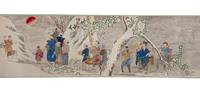
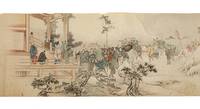
1130918 fine paintings of the extraction of the ore smelting and the administrative & commercial activities associated with the mine. Scroll on paper 311 x 12170 mm. inner front endpaper with decorative square-cut gold applications outer side with silk brocade covering wooden core roller backed with mica-embossed paper. Japan: “copied 1892.â€<br /> <BR> <BR> An uncommonly well-illustrated scroll depicting the mining and refining activities of the Ikuno silver mine depicting the technology of mining used in the late 18th century.<br /> <BR> <BR> Silver was mined at the Ikuno Ginzan Ikuno Silver Mine from the 9th century until the late 20th century and was an important source of income for the central government. The main tunnel of the mine is 2.6 km long and extends 1 km. deep. Along with silver lead copper zinc and gold were extracted. There were several entrances to the mine and more than 20000 residents of Ikuno were in some way involved in the local mining industry. One of the most productive periods for the mine was the 18th century when in some months the production of silver reached about 562 kilograms.<br /> Our scroll was created by the artist AndÅ KÅga 安藤広雅 see below and provides an accurate representation of the complicated workings both below and above ground taking place at the Ikuno mine during the late 18th century. The 18 paintings are beautifully rendered in fine colors. Each image is preceded by a manuscript explanation.<br /> <BR> <BR> The first image depicts the annual New Year’s celebrations on the 2nd of January with a procession of local miners government dignitaries drummers and children approaching a shrine carrying a symbolic celebratory feast of porgy sake and mochi; banners one with banknotes tied to it; and other offerings in a ceremony that would ensure good business luck for the year. Priests are waiting for the procession to arrive.<br /> <BR> <BR> The second image depicts the entrance to the mine in front of which is the governmental hut Yokohikiba where the ore carried in straw sacks kamasu was deposited. Some of the men are carrying waste rubble from the mine. Carpenters yamadome daiku are at work constructing wooden supports. Other men tetsudai horiko are carrying the supports into the mine. Two representatives of the government are observing the miners carrying out the ore. Tally sheets for keeping track of production are hanging in the office.<br /> <BR> <BR> Our third painting is a bucolic rendering of the mine entrance with men entering the mine carrying empty baskets. Several are talking to a government official. The foreman of the miners is reporting details of the production.<br /> <BR> <BR> The following image shows a cross-section of the mine with miners using picks to dislodge the ore. Below men are forcing water out of the mine in long drainage channels by a submerged Archimedes screw suijÅrin introduced into Japanese mining in the early 17th century. The mine shafts are extremely claustrophobic the workers hunched over making their way through the shafts.<br /> <BR> <BR> Next is a series of above-ground images of winning precious metals from the ore konashi. In the first painting we see men dobehori pulverizing and sifting ore separating it into various constituents principally gold and silver. The following image shows a man roasting the ore preparing it for the later smelting. During the roasting the ore is heated converting sulfides and other minerals into oxides which are then later reduced with charcoal in the smelting. The man is shielded from the heat by a straw mat hanging from his shoulders and a woven face protector. Two women on the opposite side of the furnace are pumping the bellows. In the next painting we see two removing the refined ore from the furnace after it cools.<br /> <BR> <BR> The next image shows two women and a child sifting through the mine’s waste water which flows into a nearby stream looking for gold and silver. From the caption we learn they will sell their findings to the smelters.<br /> <BR> <BR> The next step in concentrating the ore is illustrated with a man furiously pumping the bellows of a furnace and the smelter fukidaiku removing the refined ore. Then we have a detailed painting of the actual smelting. A boy is pumping the bellows of a large furnace. The next image depicts another small furnace for further refining of the ore in which the silver is removed and placed into a disc-like mold. This is followed by a depiction of melting the silver and molding it into small oval-shaped discs.<br /> <BR> <BR> The next image depicts a group of ten government officials including the head of the mining operations observing the weighing of the refined silver discs. Several officials are making notes and others are making calculations using an abacus.<br /> <BR> <BR> In the following image workers are packing the partially refined byproducts — copper lead and gold ores — observed by government officials.<br /> <BR> <BR> The next image depicts the refined silver being carried to Osaka by horse surrounded by guards carrying banners. A high government official is carried in a palanquin.<br /> <BR> <BR> The following image shows government representatives of the mine selling partially refined ores to precious metals dealers in an outdoor setting. One of the officials is seated at a desk taking notes with an abacus handy. The method of bidding is secretive: a buyer places his hand up the covered arm of an official counting out his bid with his fingers.<br /> <BR> <BR> The next image depicts the auction of silver at Osaka. Government officials are observing. The final image depicts men carrying the auctioned silver escorted by government officials into what is surely Osaka Castle.<br /> <BR> <BR> At the end we find this inscription in trans.: “Scenes from the Silver Mine the process of deriving the silver in the era of Kansei 1789-1800. Copied in 1892 by artist AndÅ KÅga.â€<br /> <BR> <BR> In fine and fresh condition preserved in a wooden box.<br /> <BR> <BR> ⧠For a wonderful account of mining in Sado Island which can be applied to our Ikuno scroll see Hamish Todd’s “The British Library’s Sado Mining Scrolls†in The British Library Journal Vol. 24 No. 1 Spring 1998 pp. 130-43. unknown
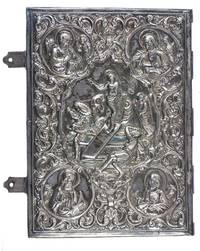
17252168Netherlands 1725. Pair of embossed silver book covers 34 x 25 x 3 cm; each cover with a large scrollwork cartouche surrounded by extensive vine and flower decorations and with medallion portraits in each of the four corners the front showing the crucifixion flanked by Mary and St. John with an INRI scroll above flanked by a crescent moon and a sun and a skull and crossbones below with portraits of four saints each with a blank scroll above left bearded with a regal crown; above right clean-shaven with a round-topped mitre; below left and right bare-headed and bearded the back showing the resurrection with an angel and two astonished guards with portraits of the four Evangelists. Beautiful richly decorated early 18th-century Dutch silver binding. The large silver covers together weighing about 750 grams bear no silver marks. Although no spine is present the clasps show that the binding was made for a book about 2 cm thick suggesting 200 or 300 pages so most likely made for a folio missal. The clasps are hinged to the back cover each with a round hole that fastens to a round-headed pin on the fore-edge of the front cover.With a 1 cm crack on the fore-edge of the back cover another slightly affecting the arm of one guard and a few tiny holes where the tips of the noses of some figures have worn but still generally in good condition. A lovely and unusually large pair of embossed silver book covers.l Cf. J.W. Frederiks Dutch silver vol. 4 1961 nos. 238-239 & plates 235-237 vaguely similar silver bindings from 1732 & 1738; nothing similar in J.F. Hayward Silver bindings from the J.R. Abbey collection. unknown
177097Birmingham or Sheffield 1770. <p>Oblong folio. 390 x 220 mm. 15 1/4 x 8 3/4 inches. Vellum spine over decorative blue paper wrappers paper label with title in Italian on upper board and ink title in Italian on spine. Paper stock toned with age a few leaves with staining in the margin otherwise in good condition.</p> <br /> <p>Silversmith model book containing 80 full-page engravings of candles sticks and holders candelabra pitchers plates salt and pepper shakers serving utensils silverware and other household pieces. Each image is beautifully and careful engraved with rich detail and ornamentation. Each includes a printed product number as well as one in ink with a different item number and a price.</p> <br /> <p>Although there is no title-page or signatures of engravers this large sales catalogue appears to be English as some of the engravings have English words of explanation engraved in the text. The binding is definitely Italian and the paper label is in an Italian hand. The watermark is a "fleur de lis" pattern suggesting an international company manufacturing the silver. There were only a few English companies with the capacity to export at this time including silver works in Sheffield and Birmingham both of which by 1770's had established networks of dealers selling their wares across the continent. This catalogue with specific Italian connections is very unusual and suggests the scope of the business had reached export capacity by the third quarter of the century. The most important Italian silver makers at this time were Giardini of Rome and Venuti of Naples.</p> . unknown
17504310The binding probably Augsburg 1750. Agenda-format binding size 155 x 78 x 24 mm. Contents: 143 small engravings all but the first 48-50 x 35-37 mm. the first mounted sideways measuring 50 x 97 mm. consisting of 11 engravings for each saint trimmed to borders and mounted on 78 leaves of wove paper. 18th-century German silver-gilt embossed binding regilt in the 19th century both covers with a large oval cartouche containing a scene of the Crucifixion on the upper cover and the Resurrection on lower cover both covers with cherubs within ornamental foliage at the four corners the pair at top holding a cartouche with a scene of the Entombment on upper cover and the Ascension on lower cover the pair at the foot holding laurel wreaths and flanking a winged angel’s head; spine with embossed flowers ribbons and foliate ornaments above and below a central scene of Moses with the brazen serpent at top a monogram of the letters CJ; two chased metal fore-edge clasps attaching on upper cover; lined in later 19th-century green watered silk edges gilt and gauffered. Housed in a folding cloth felt-lined folding case upper cover with morocco gilt label with Abbey’s named coat of arms; his paper shelf-mark label JA 2680 on lower cover. Provenance: unidentified monogram on binding; Major John Roland Abbey 1894-1969 bookplate on case; see Hayward Silver Bindings no. 17; Bernard Breslauer anonymous sale Sotheby’s 10 May 1985 “Silver and Enamel Bindings†lot 26 unsold.<br /> <br /> A stunning embossed silver-gilt binding almost certainly produced in Augsburg from the collection of Major Abbey. <br /> <br /> The binding dates from the “last phase of baroque and the fully developed rococo†Hayward the final culminating period of Augsburg craftsmanship in embossed silver. Describing this binding and two others from the collection Hayward wrote: “the most finely worked book-covers in the Abbey Collection date from the second quarter of the Eighteenth Century. The subjects are the familiar scenes from the life of Christ but treated even in the small compass of a book-cover with extraordinary dramatic force. The designs were probably derived from a contemporary illustrated Bible but their effectiveness is greatly enhanced by the relief in which they are rendered and by the strong contrasts of light and shade†p. 3. To accentuate the pathos the silversmith or designer chose to highlight minor characters: in the dramatic Crucifixion scene the most deeply embossed figures occupying the foreground are two soldiers throwing dice at the foot of the cross; similarly the centurion is the largest and most solid figure in the Resurrection scene on the lower cover.<br /> <br /> The binding encloses an album of 143 fine small unsigned 17th-century probably Flemish engravings of Franciscan saints neatly mounted on wove paper. The Antwerp engraver and print publisher Philips Galle had initiated the vogue for “Franciscan†prints with his series of engravings of the Life of St. Francis first produced before 1580 cf. Sellink pp. 129-131. The present suite contains 13 series each with 11 small engravings depicting a saint or group of saints as follows: St. Francis The 5 Martyred Saints the 7 Martyred Saints Anthony of Padua Bonaventura Ludovicus Episcopius Bernardino of Siena John of Capestrano Didacus Diego of Alcalá Clare of Assisi Elizabeth of Hungary S. Elizabeth vidua Louis of France and Elzear. With one exception John of Capestrano instead of St. Ivo of Brittany these were the saints chosen by Hendrik Sedulius guardian of the Antwerp Franciscans for his Imagines Sanctorum Francisci printed and illustrated by Philips Galle in 1602 but that quarto-format work only includes one large engraving per saint each accompanied by a page of text. The exact source of this more extensive small format suite remains to be identified. Each engraving has a caption citing a chapter number. <br /> <br /> Major John Roland Abbey assembled the largest English book collection of his generation. His first love was bindings and among these he brought together an exceptional group of silver bindings some of which were described and illustrated by John F. Hayward in an article published in The Connoisseur in 1952. The present binding is number 17; Hayward noted its earlier regilding as well as the “fine quality†of the embossing. Bernard Breslauer later bought the collection en bloc from Abbey’s widow “and in 1985 Bernard consigned the collection with some additions from his own stock to Sotheby’s London. Despite Sotheby’s well-illustrated and informative catalogue the sale was calamitous: of the fifty-eight silver and enamel bindings only fourteen met the reserve†Laird p. 67. This binding was not one of them. <br /> <br /> Cf. M. S. Sellink Philips Galle 1537-1612: engraver and print publisher in Haarlem and Antwerp PhD ThesisVrije Universiteit Amsterdam 1997 online. J. F. Hayward Silver Bindings from the J. R. Abbey Collection offprint from The Connoisseur October 1952. Cf. M. Laird “Bernd Bernard Hartmut Breslauer 1918-2004: A Personal Memoir†Gazette of the Grolier Club 72 2023 59-92. Thanks to Mr. Laird for sharing the sale results from B. Breslauer’s own catalogue in his possession. <br /> <br /> <br /> <br /> <br /> <br /> unknown
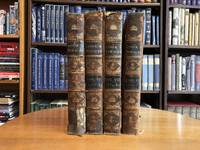
17849900042258London: W. and A. Strahan 1784. 1st edition. Hardcover. charts engravings. 4to. Complete four volume set of the first edition. In the original boards but boards detached. Overall the contents remain tightly-bound and in remarkably good condition. Vol. I complete but for The List of Plates pp. xci to xcvi - however included in the fourth volume - see below and all seven maps on six plates four folding and one folding plate are present. Vol. II complete with all eleven maps or views six folding. Vol. III shows an early worm hole to the first few pages not affecting text. All six maps and plates are present two folding plus the folding table at the end but with no advertising leaf included. Vol IV contains 61 engravings of people places and animals visited by Capt. Cook in what is now Hawaii described as the Sandwich Islands Western British Columbia and Alaska. Forty of the plates are folding; 21 are large single-page plates. The volume begins with 'The List of Plates' and is numbered pages xci to xcvi see above. Some of the illustrations are foxed. This volume lacks three charts nos. I and VI from vol. I and no. XXXVI from vol. II. There is foxing off-setting really on the pages facing the plates and charts and occasional marginal foxing to the text but the latter is hardly untoward. Beddie Bibliography of Captain James Cook BCJC 1543 Streeter 3478. Sabin 16250 Howes 729a Sotheby's London sale 11/21/91 lot #377 three vols only. W. and A. Strahan hardcover
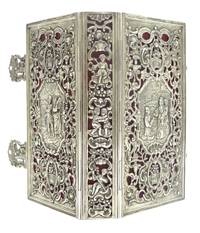
168612464Rottterdam F. van Hoghstraeten 1686. Speculum Poenitentiae in quo ad peccatores convertendos praecipui tam veteris quam novi Testamenti poenitentes per tabulas exhibentur . Very finely worked French binding in the style of the Régence. The scene on the front cover with master's mark ""T.G. under lily"" and probably hallmarks. According to the assessment of a silver expert they point to France and date to the time before the Revolution of 1789. The binding of impeccable condition. With a copper-engraved frontispiece and 20 copper plates. 9 fol. 390 pp. incomplete end missing. Ornamentally pierced finely gauffered and embossed silver binding over red velvet. Front and back cover with central biblical scenes: ""Finding of the Moses Boy"" and ""Moses and Aaron as Warriors"" in the background the ""Dance around the Golden Calf"". Back with three putti as allegories for faith love and hope. Rocailles ribbon work and rich floral and figural decoration surround the motifs. Two openwork cast clasps. H. 14.4 x W. 8 x D. 3.3 cm. Rottterdam, F. van Hoghstraeten unknown
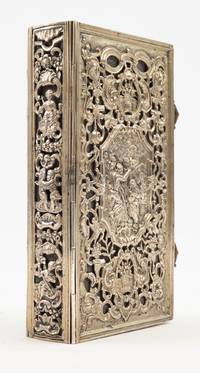
1885ST20549cOxford: Printed at the University Press for Peacock Mansfield and Britton London ca. 1885. 146 x 80 mm. 5 3/4 x 3 1/8". 536 pp. <br/> IN A LOVELY 18TH CENTURY SILVER BINDING over contemporary brown morocco DONE IN THE FRENCH RÉGENCE STYLE combining piercing with repoussé ornamentation the covers with central cartouche depicting a scene from the life of Christ in repoussé that on the front cover showing the Baptism of Christ with two hallmarks at the upper left an "A" and a rooster that on the lower cover showing the Ascension this surrounded by a pierced frame of rocaille drawer handles vases of flowers swans a leafy fronds spine pierced with rocaille and flowers separating three allegorical putti ornaments representing Faith Hope and Charity two openwork rocaille clasps. Endpapers rather worn at fore edge isolated very faint foxing otherwise A FINE COPY the text clean and fresh and THE SILVER BINDING SPARKLING AND UNMARRED.<br/> <br/> This glittering binding is a lovely example of 18th century silverwork in nearly flawless condition. While we have been unable to identify the maker the binding is probably French. A silver binding on a 1686 copy of a Rotterdam "Speculum Poenitentiae" catalogued by Antiquariat Roo is identical to ours in size and design except for the content in the large central frames and is identified by them as French. They find a master's mark of "T. G" beneath the front scene not present on our binding. In any case the delicate symmetrical ornamentation featured on our binding is typical of French Régence decorative arts with scrolls studded with naturalistic embellishments that reward close inspection. Many charming details are hidden within the sea of volutes such as the swans stealing treats from overflowing baskets of fruit. The central scenes from the life of Christ come to life through meticulous execution as our silversmith has taken great care with the details: water trickles from John the Baptist's outstretched arm and voluminous curls of cloud frame Christ's Ascension. The later Book of Common Prayer the binding now contains is a testament to the binding's enduring appeal as a precious devotional object. Printed at the University Press for Peacock, Mansfield, and Britton, London unknown
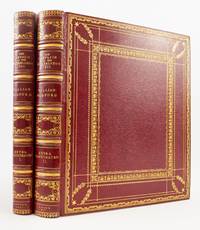
1817ST19508aLondon: Henry Colburn 1817. FIRST EDITION. 322 x 274 mm. 12 3/4 x 10 3/4". One volume extended to two. <br/> SUMPTUOUS CRIMSON STRAIGHT-GRAIN MOROCCO GILT BY MORRELL stamp-signed on front turn-ins covers with wide frame decorated with Neoclassical ornaments raised bands spine compartments framed by volutes and flowers gilt lettering gilt-framed turn-ins scarlet watered silk endleaves leather hinges top edges gilt. WITH 30 HAND-COLORED PLATES as called for including a double-page view of the Battle of Waterloo a folding battle plan for Ligny and a folding map of the route from Brussels to Paris the last two expertly repaired and backed in linen and EXTRA-ILLUSTRATED WITH 66 PLATES eight of these hand-colored most portraits of military leaders. With "Portraits of General Officers" used as the frontispiece as in Abbey in place of the seldom-seen plate "Waterloo in Memory of Shaw of the Life Guards" that appears in some copies but is not on the list of plates. With an ALS dated Dublin Castle 1st Oct 1819 signed by Lord Whitworth. Front flyleaves with engraved armorial bookplate of Frederick S. Peck. Abbey "Life" 372; Tooley 336; Cohn "Cruikshank" 556. ◆Joints edges and corners with visible but not serious wear one plate with neatly repaired marginal tear just touching edge of image occasional mild foxing additional trivial imperfections otherwise fine--clean and fresh internally with richly colored plates in a lustrous binding bright with gilt.<br/> <br/> This is a very attractively illustrated celebration of Wellington's victorious campaign against Napoleon offered here in a special copy enhanced by additional plates many depicting principal actors in the conflict and a stately Neoclassical binding. Famed illustrator George Cruikshank drew the frontispiece depicting the seven general officers for the British side along with the ebullient illustrated title depicting victory the double-page plate of the fateful Battle of Waterloo and the ignominious "Flight of Bonaparte." The plates contributed by James Rouse mostly depict the countryside and villages in the area where fighting was taking place. Journalist and novelist William Mudford 1782-1848 wrote the text with assistance from primary sources among these the Duke of Wellington himself to whom the work is dedicated. Mudford was the editor of the "Courier" an evening journal with a conservative stance on politics. His prose is described as "vigorous" by the "Dictionary of Literary Biography" which also notes his flair for creating atmosphere. These gifts were brought to bear on the present account rendering this historic campaign in vivid terms. The manuscript letter inserted into the second volume was written by Lord Charles Whitworth 1752-1825 Lord Lieutenant of Ireland at the time of writing. He had been the British Ambassador to France when Napoleon was first consul and had gained much respect for the determination and dignity with which he had handled the mercurial Bonaparte's tirades against his country. Here he recommends to an unknown recipient the person who had conducted financial affairs for him in France. The present bindings are the work of the London bindery of W. T. Morrell established about 1861 as successor to the firm begun by Francis Bedford who in turn had taken over the famous bindery of Charles Lewis. Prideaux in her "Modern Bookbindings" says that Morrell at that time had a very large business that supplied "all the booksellers with bindings designed by his men" which were "remarkable for their variety and merit." The scion of an old and prosperous New England family former owner Frederick Stanhope Peck 1868-1947 was an avid collector of books and manuscripts amassing a collection of more than 8000 titles. When his library went to auction in 1944 it was noted for its fine bindings and excellent condition. Henry Colburn unknown
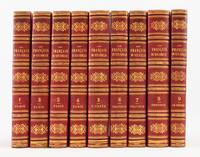
1840ST19460Paris: L. Curmer 1840-42. First Editions. 264 x 178 mm. 10 3/8 x 7". Nine volumes. <br/> Very pleasing contemporary red cloth backed in red morocco by Weidle stamp-signed in gilt on tail of spines raised bands compartments with gilt lettering or large gilt decorative tool head compartment on each spine with sometimes blurred handwritten ink shelf number. WITH 415 FULL-PAGE PLATES HAND-COLORED AND ENHANCED WITH GUM ARABIC one in black & white including eight frontispieces all of the plates with original tissue guards one double-page map and numerous vignettes and head- and tailpieces in black & white after Bellangé Charlet Daubigny Daumier Gavarni Grandville Vernet Johannot etc. Front pastedowns with bookplate of Count Grigori Alexandrovitch Stroganov. A hint of rubbing to extremities occasional trivial scuff or small stain to boards but A FINE SET THE PLATES CLEAN AND BRIGHT WITH RICH COLORING the contents fresh and clean and the essentially unworn bindings quite attractive on the shelf.<br/> <br/> Characterized by Carteret as the "most important publication of the Curmer editions" this series is one of the major works of the Romantic era presenting as it does a panorama of all classes of French society. An adept bookseller and publisher specializing in illustrated books Henri-Léon Curmer 1801-70 attracted some of the best artisans of the day and was known for the high quality of his output. For the present work he recruited some of the most famous writers of the period--Balzac one of the main contributors Gautier Nerval Borel Janin Monnier and Sand--to delineate the various professionals tradesmen and social "types" populating 19th century France. Their text is accompanied by more than 800 images--all but one of them beautifully hand colored--by Gavarni Eugène Lami Grandville Tony Johannot Daumier Henry Monnier Meissonier and others; there are also numerous wood-engraved vignettes in the text. The profiles of the various "types" of citizens are accompanied by portraits depicting them in their usual surroundings and featuring the physical characteristics assigned by the popular pseudo-scientific physiognomic theory to that trade gender or social class. As Carteret notes "The plates are of the highest interest for the history of costumes the fashion and the clothes of all the social classes of French society at the Romantic period; all the artists from the time took part in this huge publication." Of the nine volumes five depict Parisians three cover the provinces and the last "Le Prisme" looks at everything from "Tourists in Italy" to "A University Education" and "A Woman with No Taste." This final volume was issued exclusively to subscribers; Carteret calls it an "indispensable complement" to the series and notes that it "became very rare." The present set is comprised of first issue volumes which "can be recognized thanks to the whiteness of the pages and the delicacy of the coloring which was enhanced with gum Arabic; the second issue is on tinted paper and the coloring is less meticulous." Carteret This copy belonged to Count Grigori Alexandrovitch Stroganov who was born in September 1770 in St Petersburg and died in January 1857 in the same city. A Russian aristocrat and count of the Empire from 1826 Stroganov was also a diplomat and private adviser patron of the arts and one of the most cultivated men of his time. L. Curmer unknown
1938108041938. Scroll 275 x 13850 mm. borders of speckled silver inner front endpaper with silver decoration outer side covered with gold & red silk brocade inner wooden core roller. At end in trans.: “Adachi Ginrei 足立銀嶺 the artist…copied by ÅŒju 應需 1938.â€<br /> <BR> <BR> A richly illustrated scroll in fine colors including metallic pigments such as silver of the mining activities at the Ikuno silver mine.<br /> <BR> <BR> Silver was mined at the Ikuno Ginzan Ikuno silver mine from the 9th century until the late 20th century and was an important source of income for the shogunate. There were several entrances to the mine. The main tunnel was 2.6 km long and extended 1 km deep. Lead copper zinc and gold were extracted along with silver. More than 20000 residents were in some way involved in the local mining industry. One of the most productive periods for the mine was the 18th century when in some months the production of silver reached about 562 kilograms.<br /> <BR> <BR> This is a long and fine scroll concerning the mine with many scenes. The beginning images depict a procession on the second day of the year with workers and government officials making offerings for good fortune. Following are scenes of the several entrances to the mine offices and storage facilities and miners preparing to enter the mine carrying baskets. Remarkably a long 755 mm. shikake 仕掛㑠flap “trick picture†is attached and present underneath the scroll itself depicting the mine shafts and activities of the labor. On the scroll itself there are two deliberately cut-away sections each suggesting the shikake below: one of an entrance to the mine and another of a grilled escapeway for the mine’s water. <br /> <BR> <BR> This is followed by scenes of laborers in the river sifting away impurities; various smelting and refining processes and furnaces including an image of the nanban process; government officials observing and keeping records of output using the abacus; liquid silver flowing out of the furnace; officials weighing and recording the finished product; the transportation of the silver to Osaka in a procession with dignitaries in a palanquin laborers and horses carrying the silver the trademarks of silver merchants are present on the horses’ saddles; the reception of the silver at Osaka by officials; the treasury inside Osaka Castle; and finally an extended scene of festivities at the silver mine following the successful delivery of the silver.<br /> <BR> <BR> Each segment of the scroll has a manuscript title and text describing the following scenes and within each image are many labels giving titles functions and mining terminology.<br /> <BR> <BR> In fine condition preserved in a box. unknown
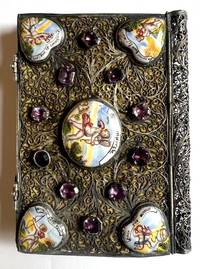
4426Paris 18th century. Silver filigree binding 82 x 60 mm. including spine. The covers of filigree volutes and curling tendrils with inset painted enamel oval centerpiece and heart-shaped corner-pieces showing putti in pastoral settings below love-related mottos in French central plaque on front cover slightly damaged both covers decorated with ten glass “amethystsâ€; hollow tubular filigree spine pair of fore-edge clasps and catches the silver binding mounted over later yellow silk-covered thin pasteboards the yellow silk liners with pockets front and back; preserved in a modern morocco case. Containing a 20th-century illustrated manuscript on parchment pasted in partly loose. <br /> <br /> This silver binding with painted enamel plaques belongs to a group of similarly decorated late 17th- or 18th-century miniature bindings. Several are on late 17th-century printed books or 18th-century manuscripts which have an Italian connection and although their style may have been imitated in various centers of book production it seems likely that most of the bindings were produced in Italy. <br /> <br /> I know of 15 such bindings including this one. Most are found on various late 17th-century editions of the Office of the Virgin printed in Paris from the 1670s to the early 1690s but including editions in Italian; these little Offices seem to have been produced at least in part for the Italian market. Two of the bindings were used for Hebrew manuscript prayerbooks produced in Italy. A census is available on request: it expands on that drawn up and kindly shared by Dr. Jan Storm van Leeuwen who published an earlier version in the catalogue of Patricia Pistner’s miniature book collection A Matter of Size no. 123. All but one of the bindings are miniature measuring approximately 82 x 55/58 mm. and are adorned with 12 to 20 cut-glass “jewels.†The silverwork is of two types: ten are filigree with spiraling volutes as in this binding and five are in a floral ajouré or openwork design with stems leaves and blossoms as in the Pistner example. <br /> <br /> The enamel plaques are also of two types not correlated with the two different silverwork types. The majority eleven show Christian religious figures with no inscriptions; these are in at least two different styles and were probably produced in different workshops. They are all found on editions of the Office of the Virgin printed between 1672 and 1693 all but one in Paris. Four bindings including this one have secular plaques painted in a rough folk-art style with putti and archaically spelled mottos relating to love. The other three bindings with secular motifs are the Pistner binding which is empty and two other filigree examples both bound over Jewish or Hebrew manuscripts: one is in a private Swiss collection and the other in which the plaque inscriptions are in Italian is held by Penn State University acquired from us. All four of these “secular†bindings have oddly shaped spines some slightly deformed. This seems to be the result of reworking the spines to accommodate thinner text blocks than those for which they were originally intended. <br /> <br /> The design of the catches and joints of the present binding and its filigree silverwork are similar to the other filigree secular bindings. The plaques especially resemble those of the example in the Swiss collection; one of the central plaques shares the same inscription here Rien m’arrest; in the other binding Rien m’arreste. However the fine condition and perfectly rounded spine of this binding may also point to some 19th-century restoration.<br /> <br /> Bookbindings of silver and previous metal were kept and reused through generations and thus often appear on much later books or manuscripts. This binding presently houses a 20th-century mildly erotic manuscript in French on 10 vellum leaves the title Cantique de Salomon in a crowned frame the 9 following leaves containing amateurish pencil and watercolor drawings with one- or two-line captions on rectos only. Originally glued in most of the leaves are now loose. The manuscript is disposed in the style of a Hebrew codex with the page order from left to right and the Hebrew transcription of the name of God YHWH appears at the top of the title. <br /> <br /> For examples of the analogous bindings see A Matter of Size: Miniature bindings and texts from the collection of Patricia J. Pistner 2019 no. 123 referring to 7 such bindings; F. Malaguzzi Collezioni del Museo civico d'arte antica di Torino: legature Turin 2011 no. 92; Luigi Mallé Smalti - Avori del Museo d’Arte Antico Turin 1969 pp. 113-114; G. Fletcher Judging a Book by its Cover: Bookbindings in the Collections of the Grolier Club NY 2023 no. 3.13; Musinsky Rare Books Catalogue 28 item 7; Patrick Olson NY Book Fair List 2024. unknown
18672091202133201488Day and son 1867. Soft Cover. Fine. Volume: 1 Day and son paperback
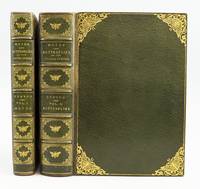
1900CJW1901Boston: J. B. Millet Company 1900. No. 306 OF 500 COPIES. 256 x 181 mm. 10 x 7 1/8". Two volumes. <br/> Very attractive contemporary olive green morocco covers with gilt border incorporating an elaborate cornerpiece design of a butterfly; raised bands expertly rebacked preserving original backstrips spines gilt in compartments with lacy frames enclosing a large central butterfly gilt turn-ins marbled endpapers leather hinges all edges gilt. With more than 400 photographic illustrations and 62 ACTUAL ENTOMOLOGICAL TRANSFERS FROM LIFE all but one of the latter with original tissue guards. Bennett p. 33; McGrath p. 177; Nissen ZBI 1079; Reese "Nineteenth Century American Color Plate Books" 107. Spines faintly sunned two leaves with minor thumbing one corner crease otherwise AN EXTREMELY FINE SET the very appealing bindings quite lustrous and entirely sound and the text and plates clean fresh and bright with virtually no signs of use.<br/> <br/> This is a collection of butterfly and moth illustrations printed by direct transfer from the insects the creation of a leading innovator in the display of lepidoteral specimens. Sherman Foote Denton 1854-1937 came from a family of amateur naturalists who managed to turn their favorite pastime into a global business. Denton patented a butterfly mount that captured a specimen on a white plaster tablet where it could be pressed under glass avoiding the mess smell and eventual degradation of butterflies and moths mounted on paper using pins. The present publication presents a collection of specimens in a far more portable form that still preserves the color and detail of the insects' wings. The author collected by his own count more than 50000 specimens to produce the color plates for this limited edition. He explained his process: "The colored plates or Nature Prints used in the work are direct transfers from the insects themselves; that is to say the scales of the wings of the insects are transferred to the paper while the bodies are printed from engraving and afterward colored by hand." Since each specimen could be used only once it was necessary to obtain 500 perfect specimens of each species pictured. The effort and expense prevented larger runs of such publications and Reese observes that "new methods of printing color often too difficult to be practical were sometimes undertaken by enthusiasts.". J. B. Millet Company unknown
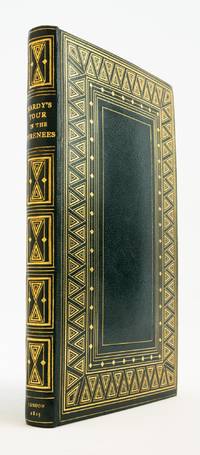
1825ST20491London: R. Ackermann 1825. FIRST EDITION. 236 x 144 mm. 9 1/4 x 5 3/4". vii 1 84 pp. <br/> STRIKING DARK GREEN MOROCCO VERY ELABORATELY GILT BY CUNEO stamp-signed on lower front turn-in for Mildred B. Davey named stamped on upper front turn-in covers with geometric Art Deco frame smooth spine in compartments with triangle ornaments gilt lettering git-ruled turn-ins marbled endpapers. Housed in matching green morocco-backed clamshell box lined with fleece. Engraved map and 24 FINE DELICATELY HAND-COLORED PLATES inlaid on heavy stock as issued; original tissue guards. Verso of front free endpaper with engraved bookplate of Mildred Davey and red morocco ex-libris of Paul Edward Chevalier; front flyleaf with 19th century ink owner inscription of William Mitchell. A Large Paper Copy. Abbey Travel 210; Tooley 245; S. T. Prideaux "Aquatint Engraving: A Chapter in the History of Book Illustration" p. 229. See Peter Thorold "The British in France: Visitors and Residents since the Revolution" p. 64. A very small ink spot just intruding on very bottom edge of a handful of leaves a few vague spots of foxing to map isolated faint offsetting from illustrations but A VERY FINE COPY in all other ways--the text clean fresh and bright the plates immaculate the margins spacious the binding lustrous and sparkling.<br/> <br/> This is a lovely copy of a work with plates Prideaux considers "among the most beautiful to be found in aquatint engraving" and it comes in a handsome binding commissioned by Mildred Benson Davey and later owned by Paul Chevalier. Issued by a publisher known for his lavishly illustrated travelogues the volume takes us on a journey through the scenic French Pyrenees escorted by Englishman Joseph Hardy who adds his insights on the local population and government gives recommendations on the best mineral baths and describes in word and image the breathtaking scenery. The views are small measuring approximately 90 x 70 mm. but as Abbey notes "part of their charm is certainly in their small size." Sarah Prideaux praised their composition: "The ground is exceedingly fine and there is no line whatever. The colouring is most delicate and all the twenty-four illustrations are exquisite." We can only be impressed by the achievement of the colorist; the detail is cleanly executed the colors are luminescent and the images do not disappoint even under magnification. Thorold notes that this work was "a great success" and was later translated into French. Our copy was bound in a bold modern design at the Chicago workshop founded by in 1926 by John Cuneo 1884-1977. Cuneo hired fine British craftsmen like the Englishman Leonard Mounteney to create bibliophile-quality bindings for American collectors. After apprenticing at the bindery of G. & J. Abbott in Nottingham and studying ornamental design at the Battersea Polytechnic Mounteney worked as an exhibition finisher for Riviere before emigrating to Chicago where he initially worked with Alfred de Sauty at the R. R. Donnelley bindery before joining Cuneo's hand bindery. The present binding was a commission for Mildred Benson Davey 1890-1953 daughter of the founder of Benson & Rixon men’s clothiers. Cuneo also bound books for Chicago retail magnate Marshall Fields. Later our binding was appreciated by distinguished connoisseur Paul Chevalier whose library of beautiful volumes was uniformly characterized by outstanding workmanship and superb condition. The sale of his books in 1990 represented one of the best collections of 20th century bindings brought to auction in the past half century. Laid in is Christie's slip from Chevalier's 9 November sale where this appeared as lot 23 selling for $935. R. Ackermann unknown
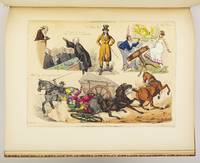
1822ST16606London: Thomas M'Lean Repository of Wit and Humour 1822. FIRST EDITION. 432 x 342 mm. 17 1/8 x 13 1/2". Without text as issued. <br/> Very appealing late 19th century scarlet crushed morocco gilt by Riviere & Son stamp-signed on front turn-in covers with French fillet and drawer-handle tool borders upper cover with gilt lettering; raised bands spine gilt in compartments with central floral sprig surrounded by small tools volute cornerpieces gilt titling turn-ins with decorative floral rolls moss green watered silk doublures and endleaves all edges gilt. WITH 17 ANIMATED AQUATINT ENGRAVINGS COLORED BY HAND 14 plates in "Moments" and three plates in "Byron". Front flyleaf with bookplate of Ernest G. Mocatta. For "Moments": Tooley 40. See also: Ray p. 32; Houfe p. 217. ◆Leather with hints of dulling from leather preservative but the binding virtually unworn with a lustrous spine. A couple of trivial smudges to one margin and occasional light offsetting but A FINE COPY the plates clean and bright with vivid coloring and all imperfections insignificant.<br/> <br/> With plates that include comical scenes of horsemanship hunting soldiers and disastrous coach rides this attractively bound book brings together two separately published works by an artist Ray calls "the premier sporting illustrator of his time." The first work "Moments of Fancy and Whim" was originally published in two parts consisting of seven plates each. There are several different illustrations on every plate most of which use a play on words or a phrase especially one of the many uses of the word "fancy" to frame the scene. The illustrations lampoon familiar character types and aspects of English society--particularly those with an affinity for the equine--to wonderful comic effect. The second work here is composed of three plates each with four separate scenes accompanied by a line of verse from Byron's "Childe Harold" or "The Giaour." In this unexpected pairing Byron's lyric poetry is given an entirely new lowered context when interpreted through Alken's pen; for example the line "Tis Greece--but living Greece no more" is depicted as three men sitting down to a greasy dinner of roast duck. Henry Thomas Alken 1785-1851 was the son of a sporting artist. He received early training from his father and later studied under miniaturist J. T. Barker Beaumont. A talent for depicting horses and dogs led to a profitable career in sporting prints. As DNB relates "The fertility of Alken's pencil was amazing . . . . In all Alken's works there is a freedom of handling and a happy choice of subject which rendered them very popular in their day." The present works are both excellent examples of his signature style and are here in such marvelous condition that they can be fully appreciated for their wit spirit and vibrancy. Both are also quite rare on the market with "Moments" often showing up incomplete and "Byron" appearing only once in ABPC and RBH. Thomas M'Lean Repository of Wit and Humour unknown
1975059748Santa Barbara: Capra Press 1975. 1st Edition 1st Printing. Hardcover. Near Fine. 52 Pp. Light Green Cloth With Paste-On Illustration By Carrington Gilt Spine Lettering. #10 Of 150 Copies Designed And Printed By Noel Young For Capra Press Bound By Emily Paine Signed By Leonora Carrington. Fine No Wear Or Fading 2" X 3/16" Area Of Light Foxing In Gutter Near Bottom Of Rear Spine Edge. Do Dust Jacket As Issued. <br/> <br/> Capra Press hardcover
201193633Abbeville Press. New. 2011. Hardcover. 0789211041 . FREE UPGRADE to Courier/Priority Shipping Upon Request - IN STOCK AND IMMEDIATELY AVAILABLE FOR SHIPMENT - Flawless copy brand new pristine never opened -- 424 pages; over 300 illustrations most in color. Catalogue Raisonne Catalog Raisonné Complete Works Life and Work Raisonnee Abbeville Press hardcover
1984102100Phaidon. As New. 1984. Hardcover. 0714823465 . FREE UPGRADE to Courier/Priority Shipping Upon Request - IN STOCK AND IMMEDIATELY AVAILABLE FOR SHIPMENT - Flawless copy brand new pristine never opened -- Corresponds to ISBN: 0714823465. 361 pages; 183 b/w illustrations. Quentin Matsys Catalogue Raisonne Catalog Raisonné Complete Works Life and Work Raisonnee Phaidon hardcover
2011C93633Abbeville Press. As New. 2011. Hardcover. 0789211041 . FREE UPGRADE to Courier/Priority Shipping Upon Request - IN STOCK AND IMMEDIATELY AVAILABLE FOR SHIPMENT - Flawless copy brand new pristine never opened -- 424 pages; over 300 illustrations most in color. Catalogue Raisonne Catalog Raisonné Complete Works Life and Work Raisonnee -- with a bonus offer-- - May be EITHER: out of print OOP and extremely rare in this pristine condition; signed by author or contributor; or a first or special edition; inquire for details . Abbeville Press hardcover
Z1-W-026-01801Routledge. Used - Acceptable. Used - Acceptable. Ships from UK in 48 hours or less usually same day. Your purchase helps support Sri Lankan Children's Charity 'The Rainbow Centre'. Ex-library with wear and barcode page may have been removed. 100% money back guarantee. We are a world class secondhand bookstore based in Hertfordshire United Kingdom and specialize in high quality textbooks across an enormous variety of subjects. We aim to provide a vast range of textbooks rare and collectible books at a great price. Our donations to The Rainbow Centre have helped provide an education and a safe haven to hundreds of children who live in appalling conditions. We provide a 100% money back guarantee and are dedicated to providing our customers with the highest standards of service in the bookselling industry. Routledge unknown
Z1-U-008-02141Routledge. Used - Good. Ships from UK in 48 hours or less usually same day. Your purchase helps support Sri Lankan Children's Charity 'The Rainbow Centre'. Ex-library so some stamps and wear but in good overall condition. 100% money back guarantee. We are a world class secondhand bookstore based in Hertfordshire United Kingdom and specialize in high quality textbooks across an enormous variety of subjects. We aim to provide a vast range of textbooks rare and collectible books at a great price. Our donations to The Rainbow Centre have helped provide an education and a safe haven to hundreds of children who live in appalling conditions. We provide a 100% money back guarantee and are dedicated to providing our customers with the highest standards of service in the bookselling industry. Routledge unknown
1984C102100Phaidon. As New. 1984. Hardcover. 0714823465 . FREE UPGRADE to Courier/Priority Shipping Upon Request - IN STOCK AND IMMEDIATELY AVAILABLE FOR SHIPMENT - Flawless copy brand new pristine never opened -- Corresponds to ISBN: 0714823465. 361 pages; 183 b/w illustrations. Quentin Matsys Catalogue Raisonne Catalog Raisonné Complete Works Life and Work Raisonnee -- with a bonus offer-- - May be EITHER: out of print OOP and extremely rare in this pristine condition; signed by author or contributor; or a first or special edition; inquire for details . Phaidon hardcover
38019Providence RI: Silver Bullet Gallery 1983. Near Fine. Providence RI: Silver Bullet Gallery 1983. First Edition Limited to 100 copies. Elephant folio 54cm; original blue cloth clamshell box portfolio front cover lettered in silver foil; contents loose as issued including bifolium title page with introductory text and table of contents and twelve 12 original mounted photographs some in color but chiefly halftone. Light wear and dust-soil to clamshell box contents in Fine condition. <br /> <br /> Portfolio of photographs by artists chiefly associated with the Rhode Island School of Design RISD. Signed by contributors Bill Aron Barnaby Evans and Arno Minkkinen in margin of their photographs. A beautiful collection of late 20th century photography. No examples separately catalogued in OCLC as of March 2026. Silver Bullet Gallery unknown
73918vo 235 x 168 mm. orig. blue semi-stiff wrappers modern stitching. Japan: 1853-54.<br/> <br/> Silver was mined at the Ikuno Ginzan Ikuno Silver Mine from the 9th century until 1973 and was an important source of income for the central government. Lead copper zinc and gold were extracted along with silver. There were a number entrances to the mine and more than 20000 local residents were in some way involved in the mining industry.<br/> <br/> In the 19th century the mines were running deficits as they were not producing enough silver. This is a fascinating official record maintained by Chudayu or Chiwaki Shiraishi 1817-87 of the loans made by the bakufu to the Ikuno and nearby Ase silver mines to improve their efficiency and production levels. Shiraishi was at this time working for the bakufu employed as deputy officer of the two silver mines overseeing their operations and finances. Later during the Meiji Restoration Shiraishi became well known as a scholar of Wagaku Japanese studies and as a journalist.<br/> <br/> This manuscript written in a very beautiful hand contains detailed accounts of the series of loans made by individual members of the bakufu to each mine with names of lenders size of loans interest rates purpose of the loans apparently most of the money went to pay the salaries of the miners etc. The signature of Shiraishi appears on the first and final leaves.<br/> <br/> In fine condition; some well-repaired worming touching text. Preserved in a chitsu. Stamp with release stamp of the Nagoya Eirin Kyoku the Forest Management Division of the Nagoya City government. unknown
LD11903n.p. likely Paris 17th century. Paperback. Near Fine. Eighteenth century vellum; oblong 278x190mm; contains 78 plates by Le Pautre from different sources 10 of them are on paper watermarked Gaudriault a late-17th century paper. Just a little wear to the binding but sturdy and in custom cloth slipcase. Most plates are numbered in the margin ink early hand coming close to the image but rarely infringing upon it. A remarkable collection of scenes architectural details and exuberant designs featuring amorini swags arabesques cartouches mer-people some cool dragons and some menacing birds. <br/><br/> paperback