106 résultats
1833251941833 Planche HT double parue dans La Caricature politique, morale, littéraire et scénique, volume 6, 7 novembre 1833 (n°328-329) : Hauteur: 35.8cmx Largeur: 53cm- Image Hauteur: 22cm x Largeur: 53cmDescription:Titre en ht au centre : « EMPRESSÉES. » ; légendes, en bas, de gche à dte : « L’omnibus trainé [traîné] par les quatre boiteuses. », « Les Débats. », « Le Constitutionnel. », « Le Moniteur. », « Le Journal de Paris. » ; indications : en ht au centre : « La Caricature (Journal) N°157. », en ht à dte : « Pl. 328 et 329. »Inscription - Dans la lettre : « L. de Becquet, rue Furstemberg. 9. » [imprimeur], « Chez Aubert, galerie véro d […] [dodat] » [feuille coupée] [éditeur] ; dans l’image, en bas au centre, signature : « G. invt A.D. » [Jean-Jacques Grandville, dessinateur, et Auguste Desperet, lithographe]Inscription - Sur le nez de d’Argout, inscription : « DE PARIS A LISIEUX ». Sur le devant de la cabine du cocher, le slogan « VIVE LE RÔA » : « le cocher, en appuyant le pied sur un petit buffet d’orgue, peut, au moyen de cet appareil, produire un volume satisfaisant d’amour unanime » (in explication)Description iconographique: Pl. n°5 et 6 du "Voyage de la pensée immuable à travers les populations empressées". Cf. pl. n°1 et 2 (pl. 324-325 du numéro 155) et pl. n°3 et 4 (pl. 326-327 du numéro 156). Les deux dernières pl. de la série montrent « l’auguste omnibus, traîné par ses quatre boiteuses » (in explication), c'est-à-dire un carrosse traîné par des chevaux. Sur le toit du carrosse sont assis, de gche à dte : d’Argout, faisant le cocher, un homme de dos (« M. Faim », in explication), Montalivet habillé en cuisiner et tenant une casserole, et Barthe. L’emblème de la monarchie de Juillet imaginé par Grandville se trouve sur le la petite cabine du cocher : il est constitué d’une grande paire de ciseaux ouverts, entourée d’un parapluie, d’une seringue à clystère, d’un chapeau à cocarde tricolore et d’une toque de magistrat. Deux municipaux, « M. Corneille, adjoint d’Evreux, et M. Criquet, maire de Falaise » (in explication) se cramponnent au carrosse (au marche-pied et à la portière arrière) afin de saluer Madame Adélaïde se trouvant à l’intérieur. L’un d’eux souhaite lui offrir un bouquet de fleurs. Des motifs partiels de poire à face humaine décorent le carrosse. A l’arrière-plan, des petits enfants montés sur les branches d’un arbre lèvent le poing au passage du cortège. Derrière le carrosse suivent les incarnations des journaux, sous la forme d’hommes pourvus d’attributs. Le Journal des débats, portant un pantalon fleurdelysé et une poire sur son bicorne, prend des notes sur un petit carnet. "Le Constitutionnel", écrivant sur un cahier dont le titre a le nom du journal, porte un bonnet et tient une vessie au bout d’un bâton sur laquelle peut se lire « ON SE // DESABONN […] [DESABONNE] » ("La Caricature" se moque fréquemment des désabonnements dont est victime ce journal). Un sac d’argent pend de son pantalon (« 1,000 »). Son encrier, accroché à son vêtement, à la forme du buste de Dupin en habit de magistrat. Enfin, « son araignée dilettante » (in explication) court à côté de lui, au bout d’un fil. Puis vient le "Moniteur", « avec ses plumes d’oie et son appareil vélocipède » (in explication). Il est coiffé d’un chapeau en forme de poire à face humaine. A la bicyclette sont accrochés de nombreux symboles des différents régimes successifs en France : la poire à tête de Louis-Philippe de la monarchie de Juillet, la fleur de lys monarchique (représentée à l’envers), le bonnet phrygien à cocarde tricolore, et l’aigle de l’Empire (représenté à l’envers). La tête d’un homme (non identifié) pend dans son dos. Enfin, le "Journal de Paris" ferme la marche : homme barbu et pourvu de gros favoris, il porte un haut chapeau décoré du motif de la poire à face humaine de Louis-Philippe. Il est décoré de la croix d’honneur. Il porte un gros encrier en bandoulière dans le dos. Il est « le seul journal qui n’écrive point, par l’excellente raison qu’il ne sait pas écrire » (in explication). A l’extrême gche, à l’arrière-plan, des enfants du peuple montés sur des branches d’arbres, lèvent le poing en signe de protestation.
189036021[Ceylan vers 1890?] petit in-folio oblong dérelié, tirages sur papier salé (21 x 25,5 cm environ) contrecollés sur carton fort, entièrement monté sur onglets, tranches dorées
181880569Sherwood, Neely & Jones, 1818.
18932111902160201402Seyama Sakichi 1893. Soft Cover. Fine. Volume: 1 Seyama Sakichi paperback
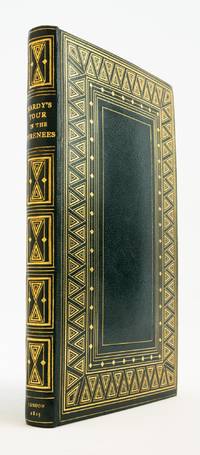
1825ST20491London: R. Ackermann 1825. FIRST EDITION. 236 x 144 mm. 9 1/4 x 5 3/4". vii 1 84 pp. <br/> STRIKING DARK GREEN MOROCCO VERY ELABORATELY GILT BY CUNEO stamp-signed on lower front turn-in for Mildred B. Davey named stamped on upper front turn-in covers with geometric Art Deco frame smooth spine in compartments with triangle ornaments gilt lettering git-ruled turn-ins marbled endpapers. Housed in matching green morocco-backed clamshell box lined with fleece. Engraved map and 24 FINE DELICATELY HAND-COLORED PLATES inlaid on heavy stock as issued; original tissue guards. Verso of front free endpaper with engraved bookplate of Mildred Davey and red morocco ex-libris of Paul Edward Chevalier; front flyleaf with 19th century ink owner inscription of William Mitchell. A Large Paper Copy. Abbey Travel 210; Tooley 245; S. T. Prideaux "Aquatint Engraving: A Chapter in the History of Book Illustration" p. 229. See Peter Thorold "The British in France: Visitors and Residents since the Revolution" p. 64. A very small ink spot just intruding on very bottom edge of a handful of leaves a few vague spots of foxing to map isolated faint offsetting from illustrations but A VERY FINE COPY in all other ways--the text clean fresh and bright the plates immaculate the margins spacious the binding lustrous and sparkling.<br/> <br/> This is a lovely copy of a work with plates Prideaux considers "among the most beautiful to be found in aquatint engraving" and it comes in a handsome binding commissioned by Mildred Benson Davey and later owned by Paul Chevalier. Issued by a publisher known for his lavishly illustrated travelogues the volume takes us on a journey through the scenic French Pyrenees escorted by Englishman Joseph Hardy who adds his insights on the local population and government gives recommendations on the best mineral baths and describes in word and image the breathtaking scenery. The views are small measuring approximately 90 x 70 mm. but as Abbey notes "part of their charm is certainly in their small size." Sarah Prideaux praised their composition: "The ground is exceedingly fine and there is no line whatever. The colouring is most delicate and all the twenty-four illustrations are exquisite." We can only be impressed by the achievement of the colorist; the detail is cleanly executed the colors are luminescent and the images do not disappoint even under magnification. Thorold notes that this work was "a great success" and was later translated into French. Our copy was bound in a bold modern design at the Chicago workshop founded by in 1926 by John Cuneo 1884-1977. Cuneo hired fine British craftsmen like the Englishman Leonard Mounteney to create bibliophile-quality bindings for American collectors. After apprenticing at the bindery of G. & J. Abbott in Nottingham and studying ornamental design at the Battersea Polytechnic Mounteney worked as an exhibition finisher for Riviere before emigrating to Chicago where he initially worked with Alfred de Sauty at the R. R. Donnelley bindery before joining Cuneo's hand bindery. The present binding was a commission for Mildred Benson Davey 1890-1953 daughter of the founder of Benson & Rixon men’s clothiers. Cuneo also bound books for Chicago retail magnate Marshall Fields. Later our binding was appreciated by distinguished connoisseur Paul Chevalier whose library of beautiful volumes was uniformly characterized by outstanding workmanship and superb condition. The sale of his books in 1990 represented one of the best collections of 20th century bindings brought to auction in the past half century. Laid in is Christie's slip from Chevalier's 9 November sale where this appeared as lot 23 selling for $935. R. Ackermann unknown
183622048Glasgow: Blackie & Son 1836. First Edition. Hardcover. vi 114pp. Blue cloth with paper label affixed to front panel. Small stain to front endpapers light scattered foxing throughout cloth and label a bit soiled. A very good copy. Uncommon. ; Octavo. Blackie & Son hardcover
186576222London, John Churchill & Sons 1865. 3rd Edition, much improved viii, 172 S., 32 S Verlagswerbung; Gewebe [2 Warenabbildungen] 0
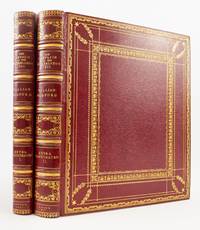
1817ST19508aLondon: Henry Colburn 1817. FIRST EDITION. 322 x 274 mm. 12 3/4 x 10 3/4". One volume extended to two. <br/> SUMPTUOUS CRIMSON STRAIGHT-GRAIN MOROCCO GILT BY MORRELL stamp-signed on front turn-ins covers with wide frame decorated with Neoclassical ornaments raised bands spine compartments framed by volutes and flowers gilt lettering gilt-framed turn-ins scarlet watered silk endleaves leather hinges top edges gilt. WITH 30 HAND-COLORED PLATES as called for including a double-page view of the Battle of Waterloo a folding battle plan for Ligny and a folding map of the route from Brussels to Paris the last two expertly repaired and backed in linen and EXTRA-ILLUSTRATED WITH 66 PLATES eight of these hand-colored most portraits of military leaders. With "Portraits of General Officers" used as the frontispiece as in Abbey in place of the seldom-seen plate "Waterloo in Memory of Shaw of the Life Guards" that appears in some copies but is not on the list of plates. With an ALS dated Dublin Castle 1st Oct 1819 signed by Lord Whitworth. Front flyleaves with engraved armorial bookplate of Frederick S. Peck. Abbey "Life" 372; Tooley 336; Cohn "Cruikshank" 556. ◆Joints edges and corners with visible but not serious wear one plate with neatly repaired marginal tear just touching edge of image occasional mild foxing additional trivial imperfections otherwise fine--clean and fresh internally with richly colored plates in a lustrous binding bright with gilt.<br/> <br/> This is a very attractively illustrated celebration of Wellington's victorious campaign against Napoleon offered here in a special copy enhanced by additional plates many depicting principal actors in the conflict and a stately Neoclassical binding. Famed illustrator George Cruikshank drew the frontispiece depicting the seven general officers for the British side along with the ebullient illustrated title depicting victory the double-page plate of the fateful Battle of Waterloo and the ignominious "Flight of Bonaparte." The plates contributed by James Rouse mostly depict the countryside and villages in the area where fighting was taking place. Journalist and novelist William Mudford 1782-1848 wrote the text with assistance from primary sources among these the Duke of Wellington himself to whom the work is dedicated. Mudford was the editor of the "Courier" an evening journal with a conservative stance on politics. His prose is described as "vigorous" by the "Dictionary of Literary Biography" which also notes his flair for creating atmosphere. These gifts were brought to bear on the present account rendering this historic campaign in vivid terms. The manuscript letter inserted into the second volume was written by Lord Charles Whitworth 1752-1825 Lord Lieutenant of Ireland at the time of writing. He had been the British Ambassador to France when Napoleon was first consul and had gained much respect for the determination and dignity with which he had handled the mercurial Bonaparte's tirades against his country. Here he recommends to an unknown recipient the person who had conducted financial affairs for him in France. The present bindings are the work of the London bindery of W. T. Morrell established about 1861 as successor to the firm begun by Francis Bedford who in turn had taken over the famous bindery of Charles Lewis. Prideaux in her "Modern Bookbindings" says that Morrell at that time had a very large business that supplied "all the booksellers with bindings designed by his men" which were "remarkable for their variety and merit." The scion of an old and prosperous New England family former owner Frederick Stanhope Peck 1868-1947 was an avid collector of books and manuscripts amassing a collection of more than 8000 titles. When his library went to auction in 1944 it was noted for its fine bindings and excellent condition. Henry Colburn unknown
18061008951806. London: Richard Phillips 1806. <br /> <br /> Single sheet 123 x 189mm plate mark 114 x 172mm a little soiled. <br /> <br /> § Frontispiece titled "The Graphic Muse." "Sketched from the picture by Sir Joshua Reynolds on the ceiling of the Library of the Royal Academy" and engraved by Blake. This the only example of the frontispiece available as a separate plate that I have seen. Bentley 474. Essick William Blake's Commercial Book Illustrations XLVIII. unknown
1806100895The frontispiece engraved by Blake after Joshua Reynolds. London: Richard Phillips 1806. The frontispiece engraved by Blake after Joshua Reynolds. § The book has always been scarce I sold my last copy in 1995 for $850 and this is the only example of the frontispiece available as a separate plate that I have seen. Bentley 474. Essick William Blake’s Commercial Book Illustrations XLVIII. Richard Phillips unknown books
189876566Leipzig: Verlag von Breitkopf & Härtel, 1898. 35,5 cm ; Halbleder
1900D9232c. 1900. Hardcover. Very Good. Mottled cloth; oblong 170 x 140 mm; contains 50 photographs mounted direct to the recto and verso of black leaves. Most are silver prints plus a platinum a large image of breaking waves and a cyanotype; average size about 4 x 2.75 inches with some a bit smaller or larger. Backstrip torn; a few leaves detached. Taken by or related to an artist who appears to have specialized in architectural ornamentation. Includes snapshots depicting figures and buildings from different vantage points views of the studio including a close-up of drawings pinned to the wall a besmocked artist in front of an easel scenes of family a besmocked artist in front of an easel. And kittens! Plus a cyanotype of a classroom. <br/><br/> hardcover
1900D9232c. 1900. Hardcover. Very Good. Mottled cloth; oblong 170 x 140 mm; contains 50 photographs mounted direct to the recto and verso of black leaves. Most are silver prints plus a platinum a large image of breaking waves and a cyanotype; average size about 4 x 2.75 inches with some a bit smaller or larger. Backstrip torn; a few leaves detached. Taken by or related to an artist who appears to have specialized in architectural ornamentation. Includes snapshots depicting figures and buildings from different vantage points views of the studio including a close-up of drawings pinned to the wall a besmocked artist in front of an easel scenes of family a besmocked artist in front of an easel. And kittens! Plus a cyanotype of a classroom. <br/><br/> hardcover books
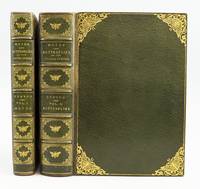
1900CJW1901Boston: J. B. Millet Company 1900. No. 306 OF 500 COPIES. 256 x 181 mm. 10 x 7 1/8". Two volumes. <br/> Very attractive contemporary olive green morocco covers with gilt border incorporating an elaborate cornerpiece design of a butterfly; raised bands expertly rebacked preserving original backstrips spines gilt in compartments with lacy frames enclosing a large central butterfly gilt turn-ins marbled endpapers leather hinges all edges gilt. With more than 400 photographic illustrations and 62 ACTUAL ENTOMOLOGICAL TRANSFERS FROM LIFE all but one of the latter with original tissue guards. Bennett p. 33; McGrath p. 177; Nissen ZBI 1079; Reese "Nineteenth Century American Color Plate Books" 107. Spines faintly sunned two leaves with minor thumbing one corner crease otherwise AN EXTREMELY FINE SET the very appealing bindings quite lustrous and entirely sound and the text and plates clean fresh and bright with virtually no signs of use.<br/> <br/> This is a collection of butterfly and moth illustrations printed by direct transfer from the insects the creation of a leading innovator in the display of lepidoteral specimens. Sherman Foote Denton 1854-1937 came from a family of amateur naturalists who managed to turn their favorite pastime into a global business. Denton patented a butterfly mount that captured a specimen on a white plaster tablet where it could be pressed under glass avoiding the mess smell and eventual degradation of butterflies and moths mounted on paper using pins. The present publication presents a collection of specimens in a far more portable form that still preserves the color and detail of the insects' wings. The author collected by his own count more than 50000 specimens to produce the color plates for this limited edition. He explained his process: "The colored plates or Nature Prints used in the work are direct transfers from the insects themselves; that is to say the scales of the wings of the insects are transferred to the paper while the bodies are printed from engraving and afterward colored by hand." Since each specimen could be used only once it was necessary to obtain 500 perfect specimens of each species pictured. The effort and expense prevented larger runs of such publications and Reese observes that "new methods of printing color often too difficult to be practical were sometimes undertaken by enthusiasts.". J. B. Millet Company unknown
1882500023184London: Murray 1882. First Edition. . Hardcover. Good. 134pp blue cloth ex-library <br/> <br/> Murray hardcover
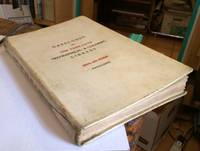
1882035554London: John Murray 1882. Hardcover. Good-Very Good/No Jacket. 4to - over 9¾" - 12" tall. 134pp.; HB white w/blk.&red; heavy rub&stainink on spine; covers bowed; pages&edges tanned but clean&tight. "The present Catalogue gives in order of their date and classified according to countries the full titles of geographical books including the contents of miscellaneous collections such as those of Hakluyt Purchas Churchill Burney and others. <br/> <br/> John Murray hardcover
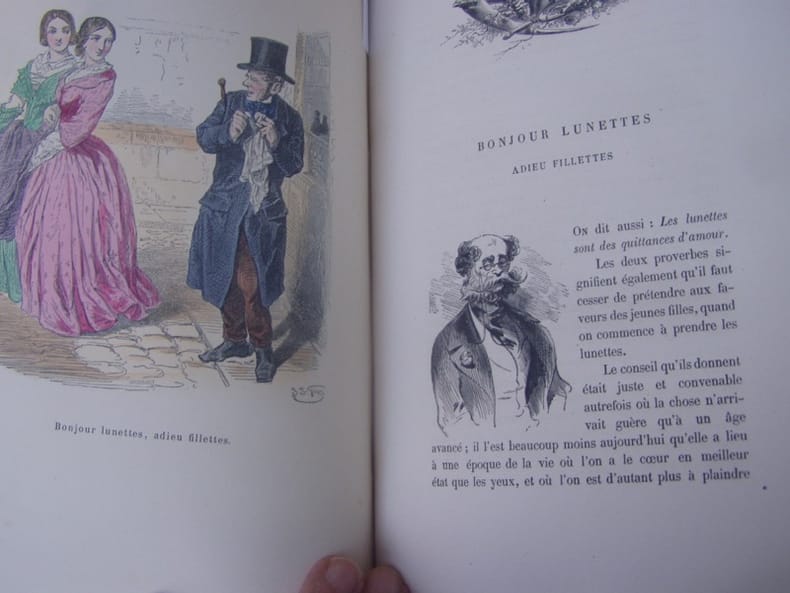
1860230951860 Paris, Garnier Frères, s.d. (vers 1860/70 ) non daté (1870) ; grand in-8, 551pp, reliure demi-chagrin rouge de l'époque leg.frotté, dos à nerfs entrelacés de fleurons dorés, titre et auteur frappés or au dos (inévitables rousseurs.). Nouvelle Édition revue et augmentée pour le texte par M. Quitard, Auteur du Dictionnaire des Proverbes. Ouvrage orné de 51 planches de dessins en couleurs sous serpentes et de nombreux dessins en noir, dans et hors le texte.Auteurs des proverbes : Achard Louis Amédée Eugène (1814-1875). Delord Taxile (1815-1877). Forgues Paul Émile Daurand (1813-1883). Frémy Arnould (1809-1890). Quitard Pierre-Marie (1792-1882).
189244295Denver: Press of W.F. Robinson & Co. Printers and Book Binders 1892. 1892. 6 1/4" x 9 1/4" light blue/green wrappers with title and decorations in red and silver gilt. Tied at spine. Illustrations. Text and photographs in burgundy. Portraits of members of various committees. List of mountain peaks and passes in Colorado along with their elevations followed by photographs and information about Aspen Boulder Breckenridge Buena Vista Canon City Gilpin County Colorado Springs Durango Fort Collins Georgetown Glenwood Springs Greely Green Mountain Falls Gunnison Hagerman Pass Idaho Springs Lake City Leadville Longmont The Loop Manitou Marshall Pass Montrose Monte Vista Ouray Pueblo Dolores County Salida Silver Plume Silverton and Telluride. 1/4" x 1" chip to bottom corner of front wrapper along with light wear to the extremities and spine ends. A very nice presentation. Press of W.F. Robinson & Co., Printers and Book Binders, 1892. unknown
18786098Paris, Eugène Lacroix, 1878 ; in-8 ; cartonnage de percaline aubergine de l'éditeur, titre doré et décor à froid au dos, plats biseautés, titre et décor doré à la locomotive au centre d'un grand décor à froid, décor à froid au second plat ; XI-433, (1) bl., (2) pp., 45 planches gravées dépliantes, 77 figures dans le texte.
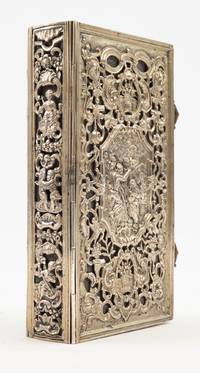
1885ST20549cOxford: Printed at the University Press for Peacock Mansfield and Britton London ca. 1885. 146 x 80 mm. 5 3/4 x 3 1/8". 536 pp. <br/> IN A LOVELY 18TH CENTURY SILVER BINDING over contemporary brown morocco DONE IN THE FRENCH RÉGENCE STYLE combining piercing with repoussé ornamentation the covers with central cartouche depicting a scene from the life of Christ in repoussé that on the front cover showing the Baptism of Christ with two hallmarks at the upper left an "A" and a rooster that on the lower cover showing the Ascension this surrounded by a pierced frame of rocaille drawer handles vases of flowers swans a leafy fronds spine pierced with rocaille and flowers separating three allegorical putti ornaments representing Faith Hope and Charity two openwork rocaille clasps. Endpapers rather worn at fore edge isolated very faint foxing otherwise A FINE COPY the text clean and fresh and THE SILVER BINDING SPARKLING AND UNMARRED.<br/> <br/> This glittering binding is a lovely example of 18th century silverwork in nearly flawless condition. While we have been unable to identify the maker the binding is probably French. A silver binding on a 1686 copy of a Rotterdam "Speculum Poenitentiae" catalogued by Antiquariat Roo is identical to ours in size and design except for the content in the large central frames and is identified by them as French. They find a master's mark of "T. G" beneath the front scene not present on our binding. In any case the delicate symmetrical ornamentation featured on our binding is typical of French Régence decorative arts with scrolls studded with naturalistic embellishments that reward close inspection. Many charming details are hidden within the sea of volutes such as the swans stealing treats from overflowing baskets of fruit. The central scenes from the life of Christ come to life through meticulous execution as our silversmith has taken great care with the details: water trickles from John the Baptist's outstretched arm and voluminous curls of cloud frame Christ's Ascension. The later Book of Common Prayer the binding now contains is a testament to the binding's enduring appeal as a precious devotional object. Printed at the University Press for Peacock, Mansfield, and Britton, London unknown
18772082702114602879Domei-sha 1877. Soft Cover. Fine. Number of books: 1 Domei-sha paperback
1887237971887 PARIS, Maison Quantin, Compagnie Générale d'Impression et d'Édition, s. d. (1887) - EDITION ORIGINALE; 4 TOMES brochés,couvertures editeur conservées.: 1+2+3+4 : VII, 1086 + 1250 + 1222 + 1638p. 256 plates (61 chromolithographies. Ouvrage de référence.Chaque ouvrage est illustré de nombreuses gravures noir et blanc dans et hors texte et de quelques chromolithographies hors texte, parfaitement conservées. 1er tome: A-C . 2ème tome: D-H . 3ème tome: I-O . 4ème tome: P-Z. OUVRAGE COURONNE PAR L'ACADEMIE DES BEAUX-ARTS ET HONORE DES SOUSCRIPTIONS DU MINISTERE DE L'INSTRUCTION PUBLIQUE, DE L'ADMINISTRATION DES BEAUX-ARTS DU MINISTERE DU COMMERCE ET DE LA VILLE DE PARIS -
1887RO40239259Karl J. Trübner, Strasbourg. 1887. In-8. Broché. Etat d'usage, Livré sans Couverture, Manque en coiffe de tête, Non coupé. 79 pages. Etiquette de code et tampons de bibliothèque en page de titre.. . . . Classification Dewey : 430-Langues germaniques. Allemand
1897MM251581897-1901 3 volumes (complete). 243, 202, 320 p., 2 figs, 14, 10, 5 pls (many folded), hcloth. Well bound PHOTOCOPY.Published in the series: Fauna Chilensis. Abhandlungen zur Kenntniss der Zoologie Chiles nach den Sammlungen von Dr. L. Plate, in: Zoologische Jahrbücher Supplement.
18482565Zweite verbesserte und vermehrte Auflage. Mit 1 mehrf. gefalt. lithogr. Tafel u. 1 Textholzschnitt. Freiberg, J. G. Engelhardt, 1848. 8vo. (20,6 x 13,0 cm). XVI, 210 S. Marmorierter Pappband d. Zt. mit grünem Rückenschild.