239 résultats
1975260701San Francisco: Golden Mountain Press 1975. Paperback. 34p 5.5x8.5 inches poems and a song with music notations and lyrics lightly-used and soiled first edition paperback in yellow pictorial wraps. Likely his second book after arriving in San Francisco. Golden Mountain Press paperback books
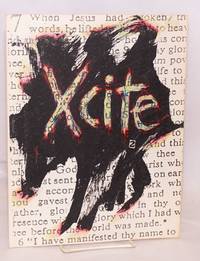
1990198258San Francisco: Incite! 1990. Magazine. 36p includes covers 8.5x11 inches short story by Plate some text mostly photocopy collage art by SF artists very good zine in stapled pictorial wraps. One holding located in OCLC as of 8/2015. Incite! unknown books
197719662N.P.: American Printing History Association 1977. self paper wrappers. 4to. self paper wrappers. 8 pages. Limited to 1000 copies. Designed by Herbert Johnson and printed by Edna Beilenson. Some wrinkling. (American Printing History Association unknown books
UDOLWIL00DGDodd Mead & Company. Fine. Dolan Jr. Edward F. William Crawford Gorgas: Warrior in White. Silver H. T. NY: Dodd Mead & Company ND. 269pp. Indexed. Illustrated. 8vo. Hardcover. Book condition: Near fine. Dust Jacket Condition: Very good with light bumping to edges and small closed tears at spine ends. Dodd, Mead & Company hardcover books
1920014572Ross Publishing Co. 1920. Book. Fine. Hardcover. 1st Edition. 12mo - over 6¾ - 7¾" tall. Fine Copy First Edition Blue Cloth Early Copy of Screen Stars of 1920. Beautiful Fresh Copy Ink Stamp Name. Ross Publishing Co. Hardcover books
1920WRCLIT82817New York: Ross Publishing Co. 1920. 4153pp. Dark blue cloth lettered in oprange. Heavily illustrated with photographs and portraits. Spine sunned and a bit rubbed trace of foxing to endsheets 1924 ownership signature on front free endsheet heavy coated stock straining the textblock a bit otherwise very good. First edition of this early Hollywood mug book including portraits and textual notes about actors and actresses directors studio heads and other camp followers. There are also sections devoted to specific studios. Ross Publishing Co. hardcover books
2006006922Bonaventure 2006. Book. Fine. Cloth. Presentation By Author. First Edition. 8vo - over 7¾" - 9¾" tall. Fine copy in like jacket.#67/1000 copies.Presentation Copy."For Stephen Thank you for your interest in my work.Murray Silver 06 May 06. " Beautiful Rare Copy. Bonaventure Hardcover books
199544637NY: Limelight 1995. First Edition. 8vo pp. xvi 390.Bibliograph notes index. Foreword by Burt Lancaster. Copiously illustrated with photos and movie stills. A nice copy in little scuffedand spotted dj. Limelight unknown books
1983139677Burbank CA: American Broadcasting Company ABC 1983. Vintage black-and-white reference studio still photograph from the US release of the 1983 television episode. <br/><br/>An ex football star and his wife adopt the son of his former teammate after he is killed in a car wreck. The show ran for four years and is comparable to "Diff'rent Strokes" in which a young African American boy is also adopted by a wealthy white family. <br/><br/>Set in Chicago shot on location in Arizona and California. <br/><br/>9 x 7 inches. Near Fine with a small stain to the top margin. American Broadcasting Company [ABC] unknown books
191713957Cleveland: J. H. Jansen 1917. First edition. Loose Sheets. Very Good . 8vo. Book consists of a title page with index of plates on verso along with 45 loose colour plates 7 by Maxfield Parrish and the remainder by Jules Guerin all laid in to a hard folder with decorated printed paper label to front cover. Tie lacking. N.D. but likely form 1917. Folder shows some light wear. Contents all present and in very good or better condition. Each plate measures 9 x 6.5" wide. Quite scarce as a complette set. Prior owner name to front cover. J. H. Jansen unknown books
2000SKU1032924University of Chicago Press 2000-01-15. PAPERBACK. Very Good. ISigned by Authors. Signed by Authors Author 0226757463 Signed and dated by the Author on the title page. This copy is clean has a good binding the pages are crisp and free of markings/notations. lz University of Chicago Press paperback books
2014USILVET00JKNCenter for Jewish Culture 2014. Very Good. Silver Mitchell. Veterans of History: A Young Person's History of the Jews. Charleston SC: Center for Jewish Culture 2014. 336pp. 8vo. Paperback. Book condition: Very good. Slight shelf wear. Top fore edge corner bumped front to back. Center for Jewish Culture paperback books
1913BL4313Leipzig:: Wilhelm Engelmann 1913. 1913. Series: Handbucher der Abstammungslehre II. Band. 8vo. 179 figs. 3 color plates index. Original steel-gray gilt and black-stamped cloth. Very good . Plate was a student of Haeckel and a Darwinist. "From 1898 he was titular professor at Berlin where he was named curator of the Museum fur Meereskunde in 1901; he was also ordinary professor at the Landwirtschafiliche Hochschule. Plate's museum experience especially impressed Haeckel whom he succeeded in 1909 as professor of zoology and director of the Phyletische Museum at Jena. Haeckel who had strongly favored Plate's appointment expected to have his wishes followed; but bitter dissension soon broke out between the two. No doubt there were contributing factors in both personalities but the former pupil and protege did his best to derogate Haeckel and to make his position untenable. Plate was a founder and the coeditor for biology of the Archiv fur Rassen- und Gesellschaftsbiologie from its establishment in 1904. The publication was dedicated to the study of the laws of variability and inheritance of the development of races and the relation of the family society and the state to "racial and social hygiene" a goal perhaps initially eugenic but later having increasingly political application. Plate's views on zoological matters became entwined with his political opinions; and for years he digressed freely during his biological lectures to express his convictions as an avowed member of the Right as a Pan-Germanist and as an anti-Semite. He expounded his ideas on the labor movement and was a declared pro-Fascist long before 1933. Plate competent and painstaking in his zoological investigations was a member of the latter group although he was a staunch Darwinist. He examined the theory of natural selection as it might apply to numerous specific instances in which evolutionary changes were discernible." – DSB Gloria Robinson. Wilhelm Engelmann, 1913. hardcover books
19001178744Leipzig: Wilhelm Engelmann 1900. Octavo; good/none; black cloth spine with black text on white label; half-bound w/green marbled boards; ex libris signature Absolon; and Bohm; minor shelf wear and bumping; text block clean; age-toning; 153 pp.; tail-edge water damage warped; wrinkling; else very good; ---TEXT IN GERMAN. Shelved in German Language Section. 1178744. Shelved Dupont Bookstore. Wilhelm Engelmann unknown books
56100Charlottesville: University Press of Virginia 165. First edition. xiii 139 pp w/index. Fine in printed paper-covered boards with cloth spine. Fine unprinted tissue dust jacket. Charlottesville: University Press of Virginia hardcover books
196543092Charlottesville VA: University Press of Virginia 1965. First Edition. 8vo pp. 139. Index. Illustrated. Paper over boards with cloth spine. Near fine. University Press of Virginia unknown books
1965WRCAM16121Charlottesville 1965. 139pp. Publisher's half cloth and decorative boards. Very good. A history of American typefounding beyond the colonial period offering information about the letter forms cast in America. hardcover books
196520458Charlottesville: University Press of Virginia 1965. 1st edition. Red cloth spine with blue paper-wrapped boards. VG light extremity wear/top edge a bit dusty. 139 pp including index. Illustrated. 8vo. <br/><br/> University Press of Virginia hardcover books
1901285449No place. 1901. . Red cloth white titles. . Cover titles faded owner’s initials to ffep otherwise a near very good copy. . 8vo. hardcover books
1927289340Fine Arts Division International Silver Company 1927. Trade catalog for the Minuet Service in International Sterling "With Suggestions for its Correct Use by Pre-Eminent Interior Decorators". Sewn wrappers with a number of half-tone illustrations. 32 pp. Oblong 12 1/2" x 6" Uncommon with only on copy from this year found on OCLC and only one other and that from a different year. Fine Arts Division, International Silver Company unknown books
186818543Toledo 1868. 3 1 blank pp. Folded 10.5" x 8.5" sheet. A couple of margin fox spots and light wear Good or Very Good. "Having established a Factory in this city for the manufacture of Silver Plated Ware we desire to call your attention to our goods. All our Spoon Ware is marked 'Toledo Mf'g Co. A 1' and is plated on the best quality of Nickel Silver." The Company presents its list of forks spoons and replating services with prices. "The Railway and Lake Transportation facilities of this city place us at your door. Your orders can be filled in but a few hours from the time they are sent." Not in Winterthur Romaine. unknown books
7024Japan: 1816 or after. A fine complete and uncommonly well-illustrated set of scrolls concerning the famous gold silver and copper mine on Sado Island illustrating all the steps from mining to refining to minting along with the administrative and commercial activities associated with the mines. We have had several sets of "Sado Island Scrolls" and this is by far the finest in terms of the quality of the illustration completeness and richness of detail. The skilled artist of these scrolls has provided an enormous amount of valuable factual content by labeling each depicted person's role in the production of gold silver and copper. For a really excellent account of the history of mining on Sado Island and the scrolls produced there see Hamish Todd "The British Library's Sado Mining Scrolls" in The British Library Journal Vol. 24 No. 1 Spring 1998 pp. 130-43. Our description is largely based on this wonderful and beautifully researched article. Gold silver and copper mining on Sado Island just off the coast of Niigata Prefecture had its beginnings in ancient times. With the discovery in 1601 of the rich Aikawa gold and silver mine Sado experienced an economic boom. The Edo shogunate assembled miners and slave laborers mostly the homeless from throughout Japan and sent them to Sado to exploit the Aikawa mine and three other principal mines. It soon became the largest gold and silver mine in Japan attracting a population of 200000 and to a very large degree financed the Edo shogunate for several hundred years. A series of unique mining smelting and minting technologies developed at Sado were disseminated to other mines within Japan. Today the Sado complex of mines is on the "Tentative List" of Unesco World Heritage Sites. The Aikawa mine was one of the few mines at the time to be based on kodobori mine-digging. A series of pre-modern mine management systems and mining-related technologies ranging from mining to smelting were developed at Sado including methods for extracting gold from silver such as the Chinese haifuki cupellation method brought in from the Iwami Ginzan Silver Mine Shimane Prefecture; the yakikin method; as well as manufacturing-based operational formats such as the yoseseriba. It is particularly important to remember that the entire series of processes from mining and smelting to ultimately the production of gold coinage were carried out at this single mine and its environs. The finely drawn scrolls depict every process of extraction refining and minting. Each scroll has a title on a label on the outside: "Sado kozan saikutsu jikkei" "Actual View of Sado Mining". As we unroll the scroll we find another title "Sashu kingin saisei zenzu" "Sado Gold & Silver Extracted & Processed Illustrated" and a grand index of the pictorial contents of the three scrolls. The first scroll begins with a map showing the Aikawa mountain and the numerous entrances to the mining complex with names and locations of refining buildings. This is followed by wonderful paintings of the main entrance to the mine and the surrounding buildings; miners entering and working in the shafts; the ladders made from logs into which steps have been cut; lamps made of iron dishes to hold oil and attached to long iron handles; buckets and pulleys to remove water; baskets to carry ore; government officials the mine operator and surveyors discussing the best location for a new tunnel; carpenters constructing support beams; etc. Each person has a label so we know his exact title and function. The remainder of the scroll takes place outside of the mine: blacksmiths making tools; women removing waste material from the ore and placing the ore in sieves to be washed under the watchful eye of government supervisors; the administrative center for the mine where the ore is graded for sale to the smelters with a bookkeeper recording all the transactions; a back office where managers senior administrators of the mine and accountants are meeting; a room where the ore is examined once again; the ore sewn into sacks and carried out to be loaded onto oxen to be transported to the smelting works; a storage area with big locks; another government office where mine workers turned in their ID cards at the beginning of their shifts; the building known as Kanaba where the ore was pulverized to win the precious metals; a horsetail sieve to separate the ore into various constituents; grinding of the ore using ishiusu grindstones; the process of nekonagashi which used cotton cloth in wooden troughs to extract the very smallest particles using the gravimetric principle etc. The second scroll depicts the smelters called fukidaiku with men operating the bellows all watched by a guard. The gold/silver/lead alloy was then taken to an area called the Haifukidoko where the alloy was subjected to roasting in a cupel. The following scene shows the government office where the gold sujimengane and silver yamabukigin samples are examined. Now we shift to the scenes showing the processing of copper. We see the pulverizing and winning of the copper using methods similar to those for gold and silver with the addition of extensive smelting scenes employing large smelting furnaces nibukidoko mabukidoko and nanbandoko. There are a number of processing scenes including daifukisho which are not present in the BL set of scrolls. From the copper works we move to the coast of Sado where we see the extraction of alluvial gold and silver from the sand of the beaches by means of a technique called sluicing or nekonagashi. An Archimedes screw is used to draw water up to form a flow that could be used for sluicing. The material is then taken to a building called the Hamanagashi no seriba for further processing. The third scroll is devoted to minting in the Kobandokoro where small coins called koban were produced. Using the cementation process called shioyaki the partly refined gold is further refined. Above is a criss-cross construction of wooden planks known as a senryodana designed to trap any gold dust mixed with smoke from the smelting. The workers are wearing only loin cloths to prevent theft. The powdered gold is then mixed with salt and shaped into cones. Then the cones are burned slowly for seven or eight hours. Further processing steps are shown finally resulting in balls of gold called yosegane suitable for minting. Next the silver by-product is shown being processed and refined in a series of scenes. The following series of scenes show the gold being formed into metal strips called nobegane which were then polished by salt before being sent to the office run by the Goto family the Goto Yakusho. We see Sanemon Goto 2nd d. 1845 in his office. He succeeded to running the Goto Yakusho in 1816 and this is the basis for dating these scrolls. In this office the strips were tested for purity before being cut into small sections. In fine condition. There is minor marginal worming in the beginning of the second and third scrolls. hardcover books
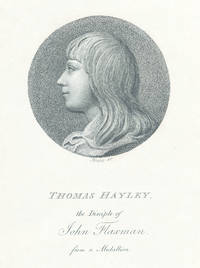
1800100892Plate facing p. London: T. Cadell and W. Davies 1800. Plate facing p. 163 a little browned around the edges. Engraved by Blake signed. § Blake’s first and perhaps happiest collaboration with his patron William Hayley one that also included Blake’s friend of many years John Flaxman. This is Blake’s only illustration of Hayley. The book has become very scarce and the prints are rarely if ever available separately. Bentley Blake Books 467. Essick Blake's Commercial Book Illustrations XXXIX. T. Cadell and W. Davies unknown books
197545652NY:: Scholastic Book Services. Near Fine. 1975. Paperback. Black and white photographs. Second printing mass market paperback. Near fine in pictorial wraps. . Scholastic Book Services, paperback books
198829668Stockholm: Nationalmuseum and Cooper Hewitt Museum 1988. First edition. Hardcover. Very Good . Oblong hardbound volume. 176 pp. Illustrated in black and white. Text in both Swedish and English. A handsome very good copy in illustrated boards. Issued without dustwrapper. Nationalmuseum and Cooper Hewitt Museum hardcover books