10 446 résultats
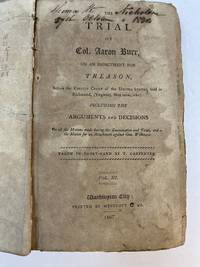
180840182Washington City Washington D.C.: Westcott & Co 1808. 3 Volumes. 8vo. 9 x 5 1/4 inches. Vol. I: First edition. 147 pp. 135 pp. 1. Vol. II: Second issue of first edition: 465 pp. Vol. III: First edition. 418 50 4. Publisher's original grey paper boards. All volumes uncut; Volume II entirely unopened. Housed within a blue morocco clamshell box with gilt spine.<br/> <br/> "The rarest and best account of the trial" Eberstadt which made US legal history in its interpretations of treason and executive sovereignty. This elusive set almost always found without the third volume is Burr's own report and is crucial to understanding early democracy in America. Of especial relevance today as other high-profile American politicians face their own accusations of treason.<br/> <br/> "The most exciting trial held in this country during the first half of the nineteenth century." Graff Aaron Burr Jr. was an American politician businessman lawyer co-founder of the Bank of New York and Founding Father who served as Vice President during Jefferson's first term and more recently served as the foil in Lin-Manuel Miranda's musical Hamilton. How Burr came to be arrested in Alabama in 1807 is bizarre and byzantine but in brief: Burr was rejected by his own party the Democratic-Republicans for opposing Jefferson in the 1800 presidential election runoff in the House and then was shunned by the Federalists for killing Alexander Hamilton in a duel. Burr went West to seek better fortunes which included a rogue military adventure to seize lands belonging to Spain in Louisiana and Mexico with incentive given to the Western states to join his adventure. However Burr's longtime friend General James Wilkinson decided to abandon this dubious plan and inform the Feds instead. President Jefferson did not look kindly on his former Vice President's conspiracy to entice the Western states to leave the Union and join with him as he colonized new lands with the support of England. Jefferson alerted Congress and ordered Burr's arrest. Firm in his belief that Burr was a traitor Jefferson had him charged as such. Luckily for Burr Chief Justice John Marshall was Jefferson's longtime political foe and would preside at Burr's trial because he was also the federal judge for the US Circuit Court in Virginia. Burr was acquitted and fled for Europe.<br/> <br/> Cohen Bibliography of Early American Law 14091 14092. Eberstadt 134-68. Graff 506. Howes B1013. Sabin 9433. Tompkins Burr 18. Westcott & Co unknown
180840181Washington City Washington D.C.: Westcott & Co 1808. 8vo. 3 volumes. 8 1/4 x 5 inches. Vol. I: 147 2 4-135 3. 284 pp. Title Deposit Notice Publisher's Note. Vol II: 465 1. 466 pp. Title Deposit Notice. Vol. III: 418 I i-l 4. 472 pp. Title Appendix Index. Previous owner's small stamp on front pastedowns. Contemporary full sheep expertly rebacked spines in six gilt-ruled compartments with red morocco lettering-pieces in second compartments and volume numbers in fourth<br/> <br/> First edition of all three volumes of "the rarest and best account of the trial" Eberstadt which made US legal history in its interpretations of treason and executive sovereignty. This elusive set almost always found without the third volume is Burr's own report and is crucial to understanding early democracy in America. Of especial relevance today as other high-profile American politicans face their own accusations of treason.<br/> <br/> "The most exciting trial held in this country during the first half of the nineteenth century." Graff Aaron Burr Jr. was an American politician businessman lawyer co-founder of the Bank of New York and Founding Father who served as Vice President during Jefferson's first term and more recently served as the foil in Lin-Manuel Miranda's musical Hamilton. How Burr came to be arrested in Alabama in 1807 is bizarre and byzantine but in brief: Burr was rejected by his own party the Democratic-Republicans for opposing Jefferson in the 1800 presidential election runoff in the House and then was shunned by the Federalists for killing Alexander Hamilton in a duel. Burr went West to seek better fortunes which included a rogue military adventure to seize lands belonging to Spain in Louisiana and Mexico with incentive given to the Western states to join his adventure. However Burr's longtime friend General James Wilkinson decided to abandon this dubious plan and inform the Feds instead. President Jefferson did not look kindly on his former Vice President's conspiracy to entice the Western states to leave the Union and join with him as he colonized new lands with the support of England. Jefferson alerted Congress and ordered Burr's arrest. Firm in his belief that Burr was a traitor Jefferson had him charged as such. Luckily for Burr Chief Justice John Marshall was Jefferson's longtime political foe and would preside at Burr's trial because he was also the federal judge for the US Circuit Court in Virginia. Burr was acquitted and fled for Europe.<br/> <br/> Cohen Bibliography of Early American Law 14091 14092. Eberstadt 134-68. Graff 506. Howes B1013. Sabin 9433. Tompkins Burr 18. Westcott & Co unknown
1807302495Washington: Westcott & Co 1807. hardcover. near fine. Taken in Short-hand by T. Carpenter. 147 135 1 pp. Scattered light foxing 1 page with a crease 8vo handsomely rebound in full brown polished calf blind stamping and red leather spine label. First edition. Howes B-1013. Two of three volumes bound in one.<br/> <br/> Vol. III was published in 1808.<br/> <br/> Westcott & Co unknown
180733561Washington City: Westcott & Co 1807. 1st edition. Hardcover. good. 1st edition 1807. Good. 8vo. 465 pp. bound in publishers original blue/grey paper boards with tan paper spine. Boards are soiled faded and rubbed. Spine ends missing has "2" printed. Blank end papers lacking. Previous owners signature on title page some pencil notes inside front cover. Text paper is tanned with scattered foxing. Front hinge is loose. SCARCE 1807 first edition of this third volume. Howes B-1013. Westcott & Co hardcover
127507183X.Gpaperback. Good. Access codes and supplements are not guaranteed with used items. May be an ex-library book. paperback
1275087841.Gpaperback. Good. Access codes and supplements are not guaranteed with used items. May be an ex-library book. paperback
0243251939.Gpaperback. Good. Access codes and supplements are not guaranteed with used items. May be an ex-library book. paperback
A9781275087842Paperback. New. paperback
B9781275087842Paperback. New. paperback
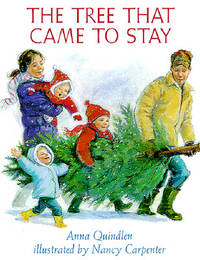
19921326619New York: Crown Publishers Inc 1992. First Edition First Printing. Hardcover. Large Thin Octavo; unpaginated; VG-/VG-; blue/white pictorial spine with black text; dust jacket has minimal wear to exterior; mylar wraps; cloth clean; strong boards; text block has light wear to exterior; very light foxing to title page and facing page; previous owner's bookplate to front pastedown; profusely illustrated; inscribed by author;. 1326619. FP New Rockville Stock. Crown Publishers, Inc hardcover books
1997Q-0670877042Viking Juvenile 1997-10-01. Hardcover. New. New. In shrink wrap. Looks like an interesting title! Viking Juvenile hardcover
3736064<p>New York: n.p. Published with the approval of Professor Erling M. Hunt 1941. 8vo. 137 pp. Original blue cloth. A Near Fine copy.</p> <p>First edition of Marie Elizabeth Carpenter’s dissertation a systematic study of how African Americans were represented in U.S. history textbooks from 1826 to 1939. Carpenter documented the systemic erasure of Black agency and contributions in educational publishing. She examined the treatment of such central topics as slavery Reconstruction and the struggle for civil rights across more than a century of educational publishing exposing patterns of distortion omission and ideological bias. Carpenter also found that textbooks cast Black Americans as passive figures ignoring their roles in emancipation military service and cultural life. She urged use of broader sources and full integration of Black contributions into the historical narrative.</p> <p>A methodical and early contribution to the historiography of African American education likely informed by the concerns raised in Dr. Carter G. Woodson’s The Mis‑Education of the Negro 1933. This edition precedes the Menasha Wisconsin printing issued the same year by George Banta Publishing Company.</p> unknown
0469904844.Ghardcover. Good. Access codes and supplements are not guaranteed with used items. May be an ex-library book. hardcover
0259568953.Gpaperback. Good. Access codes and supplements are not guaranteed with used items. May be an ex-library book. paperback
1331023548.Gpaperback. Good. Access codes and supplements are not guaranteed with used items. May be an ex-library book. paperback
190800279673Augusta Me.: Mitchell Cony Company 1908 1908 Cloth. Good. First Edition American History. Comprehensive histories compiled by Bowdoin College student Mitchell who did many other Maine towns. 256 pgs census results data families many advertisements ect. With rare colored foldout map by Rand Mcnally showing rail lines electric lines ect. Short closed tear to one fold. Spine slight wear top rubbedboards cracked holding ok. Owner's name 1908 ink. Nice copy Rare with map. Hardcover. Good. Augusta Me.: Mitchell Cony Company, 1908 hardcover
1684334349.Gpaperback. Good. Access codes and supplements are not guaranteed with used items. May be an ex-library book. paperback
1356211615.Ghardcover. Good. Access codes and supplements are not guaranteed with used items. May be an ex-library book. hardcover
133224128X.Gpaperback. Good. Access codes and supplements are not guaranteed with used items. May be an ex-library book. paperback
0267284969.Ghardcover. Good. Access codes and supplements are not guaranteed with used items. May be an ex-library book. hardcover
1786832801.Gpaperback. Good. Access codes and supplements are not guaranteed with used items. May be an ex-library book. paperback
2018__1786832801Univ of Wales Pr 2018. Paperback. New. 238 pages. 8.50x5.50x0.75 inches. Univ of Wales Pr paperback
ria9781786832801_inpPaperback. New. New Book; Fast Shipping from UK; Not signed; Not First Edition; In the aftermath of major violent events that affect many we seek to know the 'truth' of what happened. Whatever 'truth' emerges relies heavily on the extent to which any text about a given event can stir our emotions - whether such te paperback