31 résultats
605974on First-Day Cover for the 10 cent Paul Laurence Dunbar stamp Scott #1554 pictorial cachet by Fleetwood postmarked Dayton OH May 1 1975. Signed by Sugar Ray Leonard. 6 1/2" x 3 3/4". Very good. Signed by Authors. No Binding. Very Good. unknown books
197624876NY: Corwin Books. Near Fine in Near Fine dust jacket. 1976. Hardcover. 0498019829 . Black and white photographs. Second printing. Near fine in a near fine light age toning about the edges dust jacket. . Corwin Books hardcover books
1910814351910. Paperback. Very Good. Pagination varies in the six separate pamphlets. 23 cm. Relatively minor wear. The earliest report is titled: A Statement in Regard to the American Sugar Refining Company and may not be strictly speaking an annual report to shareholders. <br/><br/> paperback books
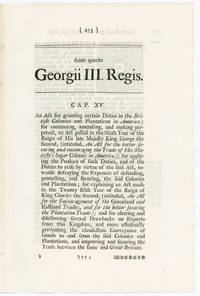
1764WRCAM54454ALondon: Printed by Mark Baskett.and by the Assigns of Robert Baskett 1764. 2275-299pp. Folio. Loose gatherings stab holes at gutter margins. Near fine. An outstanding copy of the rare official Parliamentary printing for the "Grenville Budget" of 1764 accompanied by three later acts amending regulations set forth. This budget act contains the so-called "Sugar Act" which was the first deliberate and direct attempt to tax the American colonies in order to pay for the British military presence in North America. <br> <br> The Sugar Act levied a tax of three pence per gallon on the importation of foreign molasses molasses from the British West Indies would be exempt from the tax. But the proposed legislation did far more than tax sugar products. It also detailed more foreign goods to be taxed including certain wines coffee pimiento cambric and printed calico and further regulated the export of lumber and iron. The enforced tax on molasses caused the almost immediate decline in the rum industry in the colonies. <br> <br> The final part of the title of the Act was Grenville's response to the British Customs Board's estimate that the annual revenue from American customs was a paltry £1800. Grenville whose guiding principles were strict adherence to legality and financial solvency found this state of affairs to be intolerable. Existing trade regulations designed to raise greater revenue would be more rigidly enforced with incentives offered to naval officers and customs officials. <br> <br> This Budget Act of 1764 set the tone for many of the British policies and measures that followed. A chain of events was set in motion which would lead step by step to the American Revolution. Reaction in the colonies was not long in coming. In Massachusetts James Otis and Samuel Adams fired pamphlets at it; the merchants of Boston banded together to protest; other colonial writers from Newport to Williamsburg added their voices; in England Thomas Pownall and others defended the step. All understood that a new era had dawned with the so-called Sugar Act. <br> <br> The present copy is accompanied by three further scarce acts of Parliament related to the statutes set forth by the Sugar Act. The first from 1765 alters the duties imposed on sugar imports. The other two from 1777 and 1779 made amendments to address penalties for smuggling sugar from America into Great Britain during the Revolution. They are as follows: <br> <br> 1 AN ACT FOR MORE EFFECTUALLY SECURING AND ENCOURAGING THE TRADE OF HIS MAJESTY'S AMERICAN DOMINIONS.FOR ALTERING THE BOUNTIES AND DRAWBACKS UPON SUGAR EXPORTED. caption title. London 1765. 2799-818pp. ESTC N56877. <br> <br> 2 AN ACT TO EXPLAIN AND AMEND SO MUCH OF AN ACT MADE IN THE FOURTH YEAR OF THE REIGN OF HIS PRESENT MAJESTY AS RELATES TO THE PREVENTING OF CLANDESTINE CONVEYANCE OF SUGAR AND PANELS FROM THE BRITISH COLONIES AND PLANTATIONS IN AMERICA TO GREAT BRITAIN. London 1778. 21027-1030pp. ESTC N57924. <br> <br> 3 AN ACT TO AMEND AN ACT MADE IN THE EIGHTEENTH YEAR OF HIS PRESENT MAJESTY INTITULED AN ACT TO EXPLAIN AND AMEND SO MUCH OF AN ACT MADE IN THE FOURTH YEAR OF THE REIGN OF HIS PRESENT MAJESTY AS RELATES TO THE PREVENTING OF CLANDESTINE CONVEYANCE OF SUGAR AND PANELS FROM THE BRITISH COLONIES AND PLANTATIONS IN AMERICA TO GREAT BRITAIN. London 1780. 2175-178pp. ESTC N57924. <br> <br> An excellent set of Parliamentary acts comprising the first attempt to tax the American colonies the Sugar Act and several additional acts revising its statutes up through the Revolution. ESTC N56801. REESE REVOLUTIONARY HUNDRED 4 ref. Printed by Mark Baskett,...and by the Assigns of Robert Baskett unknown books
17384782London: Printed by John Baskett Printer to the King's most Excellent Majesty 1738. Octavo-sized title plus one leaf. Removed from larger collection of acts. Near fine. Printed by John Baskett, Printer to the King's most Excellent Majesty unknown books
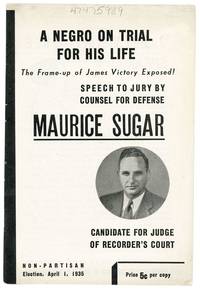
193529971Detroit: Committee for Maurice Sugar for Judge of Recorder's Court 1935. First Edition. 12mo 19.5cm.; photo-illustrated staplebound self-wrappers; 39pp. Rear wrapper a bit toned old newsclipping laid in has left offsetting to pp. 10 & 11 else Very Good or better. Successful defense speech by labor attorney Maurice Sugar best known for serving as General Counsel to the United Auto Workers Union 1937-1946. In 1934 James Victory an African-American WW1 veteran and car washer was accused of slashing the face of a white woman and stealing her purse. Thanks to Sugar's speech published here Victory was acquitted despite William Randolph Hearst's disparaging media coverage and an all-white jury. See Christopher H. Johnson Maurice Sugar: Law Labor and the Left in Detroit 1912-1950 1988 pp. 151-153. 5 copies in OCLC as of May 2016 at UC Davis Yale Library of Congress Michigan State and U. Michigan. Committee for Maurice Sugar for Judge of Recorder's Court unknown books