Catrou and Rouille The Revd FathersBiblio.com
888 résultats
1728147150London : J. Bettenham 1728. 1st Edition . Hardcover. Very Good/No Jacket Issued. Folio - over 12 - 15" tall. 1728-1737 Six volume set original full calf hardcover original red and black gilt lettered spine labels engraved frontispiece to each volume plus 95 fine clean engraved plates including maps with some folding all illustrations and pages correct as called for hinges weak internally very clean and fresh a very good complete set. Due to the weight international shipping will be costly. We are a real bookshop with real books situated in and shipping from the United Kingdom. Room B. <br/> <br/> J. Bettenham hardcover
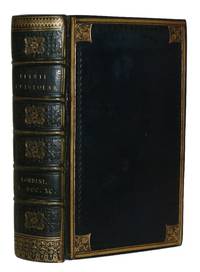
1790AQ19053Londini i.e. London: Sumptibus editoris excudebant M. Ritchie & J. Sammells Typis Edmundi Fry 1790. 4 484pp 2. With a terminal errata leaf. Handsomely bound in a style reminiscent of and perhaps executed by Roger Payne in contemporary gilt-tooled navy straight-grain morocco marbled edges. Very light rubbing to extremities. Marbled endpapers armorial bookplate of Panshanger to FEP recent bookplate of Robert J. Hayhurst to recto of FFEP slight loss to upper margins of leaves L3-4 very occasional spotting. Gaius Plinius Caecilius Secundus c.61-c113 administrator of part of the Roman Empire. Pliny the Younger adopted by his uncle Pliny the Elder studied philosophy and rhetoric under Nicetes Sacerdos and Quintilian eventually rising to the political court where he prosecuted provincial governors on charges of corruption and extortion. He achieved the ranks of both Praetor and Consul in 100 AD. Friend of Tacitus Martial and Suetonius Pliny was likewise a published author with these 10 books of letters issued between 100 and 109 - collectively they form almost the entirety of Pliny's surviving work and offer a valuable insight into the Roman world of the 1st Century. They deal with various issues including one of the few accounts of the eruption of Vesuvius made by an eyewitness for the Younger Pliny had accompanied his uncle and adoptive father to the area in 79 AD describing the event in detail in a letter to Tacitus VI. ESTC T133036. 8vo. Sumptibus editoris excudebant M. Ritchie & J. Sammells [Typis Edmundi Fry] unknown
17682111902160200226Kikuya 1768. Soft Cover. Fine. Volume: 1 Kikuya paperback
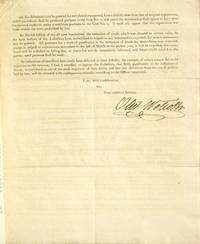
179547834Philadelphia 1795. 4to pp. 4 7 1 leaves i.e. 10 leaves the last blank; original drab blue paper wrappers stitched as issued; previous folds and a couple of short splits at them entering from the fore-margin; all else very good. Docketed on the back wrapper: "An act passsed 1795 with forms accompanying." Following the passage of "An Act making further provision in cases of drawbacks" the Secretary of the Treasury issued instructions for using the forms and with explanations of seven forms to be used by customs collectors under the terms of this Act. The three pages of explanations are signed at the end in ink by the Treasury Secretary Oliver Wolcott followed by copies of the seven forms printed on rectos only in question viz: Coastwise goods to be exported to another district; Exportation of goods from a district other than that into which they were imported; Bond for delivery of goods; Debenture form; Abstract of goods exported from any district other than that into which they were originally imported; Abstract of drawbacks or debentures payable in consequences of exportations; and Abstract of debentures paid. Evans 29764 noting "pp. 3"; Bristol B9392 locating the Rosenbach Foundation copy only and noting "1 p.l. 6 p."; Shipton & Mooney 47657 "8 pp. The one recorded copy is not available". unknown
1780C0187<p>i-viii430 pages. small octavo 7" x 4 1/2" bound in contemporary half leather with marbled boards. Foreword by Friedrich Nicolai Translated by K F Trost. First published in French Paris in 1775 as Traite Theorique et Pratique du Jeu des Eches. From the library of Borje Borjesson. Bibliotheca van der Linde-Niemeijeriana: 414 First German edition.</p><p><em>Le Traite des Amateurs</em> is a chess treatise composed by a "Society of Amateurs" contemporaries of Philidor; who all frequented the Cafe de la Regence in Paris. Of these the strongest players were Bernard Carlier Leger and Verdoni. Philidor constantly resident in London took no part in writing the "Traite des Amateurs;" which in fact embodies many criticisms and comments upon his earlier printed book. Only four masters of the group considered the strongest are known: Bernard Carlier Leger and Verdoni. A part partially from Verdoni who is the only one of the Amateurs with his own entry in the Oxford Companion to Chess not very much is known about the life of these masters. Their first names places and dates of birth or deaths the year of death of Verdoni tough is known are for instance unknown. They however appear periodically in the chess literature of the time and consequently it is possible to provide some details on their lives and styles. Concerning their games several Verdoni's games are known while only one game of Bernard and Carlier playing together and winning against Philidor who gives to them the advantage of Pawn and Move survived. Verdoni Bernard Carlier and Leger although they didn't even approach Philidor's level were considered the best in the world in the years following death of Philidor and directly or indirectly since Verdoni after the publication of <em>Traite</em> moved to London have disputed each other the scepter of Philidor's successor. There are of course not records of their games and consequently it would be impossible for us to assess the relative strength of these player. Deschapelles however reported that Philidor classed Legalle as a player on even terms Verdoni as one to receive pawn for the move Bernard and Carlier as Pawn and move players. Bernard was probably the best chess player at the Cafe de la Regence around the end of the 18th century or at least until the arrival of Alexandre Deschapelles to the world chess scene in 1798 according to George Walker.Murray</p><p>Borje Borjesson 1901-1980 was an avid chess collector and had decorative book plates designed for his collection. The article <em>Chess Bookplates </em>was printed in Bookplate International 1999 volume 6 Number 2 describing: "The chessboard of Borje Borjesson bookplate ranks among the luxury boards with black and gold squares as the background to some stylish chessmen. The elegant set was designed by the Swedish artist Arthur Sjogren in 1923 as seen in the book plate affixed to this copy.<br /><br /><strong>Condition:</strong><br /><br />Spine ends rubbed small crack at head and heal hinges corners rubbed book plate of Borje Borjesson on front paste down old previous owner's neat name on title else about very good.</p> Friedrich Nicolai hardcover
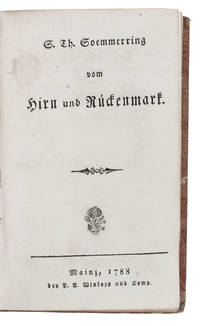
1788H74DZNIHVXHCMainz 1788. Small 8vo 15.5 x 9.5 cm. P.A. Winkopp & Komp. colophon: printed by Johann Joseph Alef printer to the Electoral Court and University Near contemporary boards covered with orange paste-paper sewn on 3 cords with a hollow back gold-tooled spine label orange and brown sprinkled edges. With a decorated rule on the title-page and a few decorations built up from cast fleurons. Set in frasktur types with Latin words in italic and non-German book titles in roman. The present copy has a pomegranate stamped on the title-page after printing and folding but before binding. XIV = XVI 115 1 pp. First edition of one of the rare early anatomical works of one of the most important German anatomists later also known for his introduction of vaccinations against smallpox soon after Jenners 1798 publications on the subject his work on fossils and sunspots and his 1809 invention of an electrical telegraph. The present work discusses the anatomy of the human brain and spinal cord carrying on from the author's doctoral thesis a decade earlier on the neural organization of the brain. It is dedicated to the Friedrich Karl Joseph von Erthal Elector and Archbishop of Mainz who had called Soemmerring to Mainz as a professor four years before. A second edition appeared in 1792.Soemmerring 1755-1830 son of a doctor of the same name was an anatomist doctor and wide-ranging researcher. He wrote his doctoral thesis in 1778 and was named professor of anatomy and physiology at Mainz in 1784. He was knighted in 1808.The pomegranate stamped on the title-page could easily be mistaken a printed ornament but one can see it has been separately stamped and that the impression carried through to the following leaf though not now aligned suggesting it was made when the sheets had already been folded and gathered but not yet bound. It may be an owners mark or simply a decoration. In very good condition. The backstrip is slightly damaged but the binding remains good.l August Hirsch Biogr. Lexikon . Aerzte 1887 pp. 453-455; cf. VD18 1792 ed. hardcover
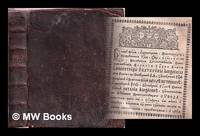
1726368922Moscow: By order of the Holy Empress Ekaterina Alexeevna of all Russia and the Crown Prince Tzarevich Pavel. Petrovich and his wife Grand Duchess Natalia Alexeevna and the Benediction of the Holy Ruling Synod 1726. First Edition. Hardcover. Worn copy bound in full aniline calf with a leather gilt-blocked label to the spine. Some wear and tear to the spine and panel edges as with age. Physical description; unnumbered pages. Subjects; Christian Scripture. Christian quotations. Christian Dogma. Christian Morals. Russian Christianity. Moscow: By order of the Holy Empress Ekaterina Alexeevna of all Russia and the Crown Prince Tzarevich Pavel. Petrovich and his w hardcover
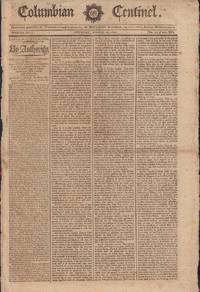
17927264<p>Original publication of the Columbian Centinel including Congress' authority to establish a Post-Office and Post-Roads within the United States. No previous owners' names or other markings. See images. 11 1/4 x 17 3/4 inches.</p> Benjamin Russell paperback
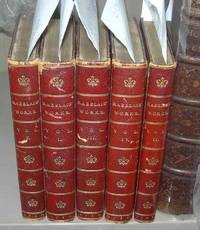
1737013628Printed by J. Hughs for J. Brindley; and C. Corbett 1737. FIRST EDITION thus. Signed binding by Riviere. Late 19th century full crimson crushed leval morocco with a blind stamped celtic rope design on front cover with double lined gilt border. Compartmented spine with tooled design and lettering. Boards have rolled edges. All edges gilt. Elaborate gilt inner dentelling. Marbled endpages. Binding shows wear at extremities and the spine is slightly darkened. Title pages in black and red. Volume I: i-xxii iii-viii i-cxxxiv-135-384. The second pagination iii-viii is the contents of Volume II. Copper engraved frontispiece portrait of Rabelais and two fold out copper engravings. This volume contains an extra -- much later -- steel plate engraving tipped in behind title page. Volume II: Foldout copper engraved frontis full page engraving facing page 188 with repair at gutter foldout plate at pg. 217. v-x 11-251; Volume III: i-iv v-xx 21-22 3-367 3 index; Fold out copper engraving facing pages 108 191 & 229 repaired at gutter; Volume IV: Foldout engraved frontis plate facing pages 29 & 51; i-v vi-xc 1-281 1 blank 8 contents 4 adverts; Volume V: Plate facing pages 43 145 & 154; i-lxiv 1-267 5 contents. This set is complete with 15 copper engravings but some of them have been trimmed when bound by Riviere with some loss to the text descriptions. Pages internally in good repair but some in Volume 5 are age-toned. Overall in VERY GOOD condition. Great gift in a signed binding. . Signed by Binder. First Edition Thus. Full Morocco Leather. Very Good. Illus. by Adorn'd with 15 Very Neat Copper-Plates. . 12mo - over 6¾" - 7¾" tall. Hardcover. Printed by J. Hughs for J. Brindley; and C. Corbett Hardcover
178487609London: Printed for C. Bathurst : J.F. and C. Rivington : A. Hamilton : T. Payne : T. Longman : S. Crowder : B. Law : J. Robson : F. Newbery : G. Robinson : T. Cadell : J. and T. Bowles : S. Bladon : J. Murray : J. Nichols : J. Bowen and W. Fox 1784. Edition undetermined; perhaps 2nd. Hardcover. Overall very good to about very good with minor wear and rubbing to exteriors resulting in mildly chafed marbled paper-backed boards to most volumes. Leather cracking at joint folds to a handful of volumes a few minor glue repairs. Bindings solid and tight. Leaves clean. No foxing. Approximately half of volumes have a minor flaw such a small less than an inch or so hairline crack at spine fold or a minor chip to spine head or bottom. All in all a sold if incomplete set. Forty octavo volumes in original half leather and marbled board bindings. Volumes 1-36 38 39 41 & 42 of an unknown quantity; most likely 42 60 or 65. Folded plate of text in v. 25. An impressive early World History scholarly and comprehensive in scope. Scarce. Many sources cited and from which the work's compilations are translated or drawn would imply that they may appear here in English for the first time. Numerous complete single volumes many segmented volumes on the History of the Arabs Arabian Peninsula Turks Seljuks Persia Mongol Empire Asia Egypt the Jewish Diaspora Germany imperial cities Russia Poland Denmark Sweden Roman Empire France Italy Ireland Scotland Africa Asia Canada England Mexico Peru Chile Early Americas etc. Numerous topical sidenotes to wide margins as well as bibliographical footnotes to each page. A very detailed compilation and interpretive account. Volumes 41 & 42 are supplements. Small label of I. Wilson Bookbinder Macclesfield to front paste-downs. Articles by George Sale and others. Attributed authors and translators include Sale George 1697-1736; Psalmanazar George 1679-1763; Bower Archibald 1686-1766; Shelvocke George -1760; Campbell John d. 1708-1775; Swinton John; d. 1703-1777. Chronologies Timelines. Early World History History. World History. Historiography; Imperialism. Historical Works in English 18th Century. A large heavy set. Additional shipping charges may apply. Please inquire. Printed for C. Bathurst : J.F. and C. Rivington : A. Hamilton : T. Payne : T. Longman : S. Crowder : B. Law : J. Robson : F. New hardcover
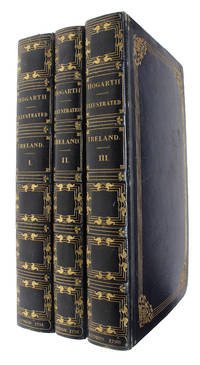
179154524London J. & J. Boydell 1791 1791 a. 1798. Beautifully bound in 3 contemp. straight grained full morocco. On covers 4-double gilt line fillets with 4 large gilt floral cornerpieces. All compartments richly gilt with lines and small floral-like stamps. Titles with gilt lettering. Inside gilt borders. Edges of covers gilt. Edges gilt. All volumes with the printed paperlabel of the bookbinder "Bound by C. Smith 108 Strand". All volumes with the gilt exlibris in leather of Dudley Coutts Majoribanks 1st Baron Tweedmouth. 2 engraved frontispieces. 3 engraved title-pages vol. 3 with both engraved and printed title-page. 6CXXII311;2311- 6074;XXIII3801 errata pp. and with 136 engravings on plates and engraved vignettes. With the engraved dedication-plate. A clean fine copy printed on good paper with occassionally a bit of offsettings from the plates. Bindings in near mint condition. <br/><br/><em>First edition in an exquisite copy. </em> hardcover
177752761Weimar Carl Ludolf Hoffmann 1777. Small 8vo. A bit later marbled boards. Spine gone. 224373 pp. Light toning to text and some scattered brownspots. <br/><br/><em>Scarce first edition of Wiegleb's most importent work and one of the most importent historical criticism of the alchymistic theories of transmutations. "Wiegleb’s critical attitude in assessing scientific questions earned him high esteem in learned circles. After several years of work he published Historisch-kritische Untersuchung der Alchemie 1777 which went through a second edition. In this work he stated: "The best accounts from the period when the name alchemy is encountered . . . are examined and it is thereby demonstrated that they are taken together incapable of confirming the reality of alchemy. Then the strongest proof is adduced to show that the entire imaginary art of alchemy is impossible according to all known certain natural laws of human art: thus it is shown that it has never truly been practiced by anyone." Wiegleb carefully examined famous reports of the transformation of metals and pointed out their deficiencies: in a short time his work became widely known. His motto was "To doubt is the beginning of knowledge" so it is all the more as tonishing that Wiegleb was a convinced proponent of Stal’s phlogiston theory throughout his life." DSB.Ferguson II 546. - Duveen 620. </em> hardcover
1725288050Printed For Sam. Tooke And Benj. Motte At The Middle-Temple-Gate In Fleetftreet 1725 Embossed Leather Boards With Re-Backed Leather Spine W/Gilt Red Title Plate And Banded Gilt Decorations. Tight Solid. Lengthy Inscriptions: On Fep And Paste-Down Endpaper.The Property Of Ralph Howard Pendleton 1428 68Th Avenue Oak Lane Philadelphia 1918 Ect. William Whiston 1667-1752 The English Mathematition Who Suceeded Sir Iassac Newton Wrote And Published This Book In The Year 1696 This Particular Copy Is Of The 4Th Edition 1725. On Fep: The Autograph Of The One Who Owned This Book In The Year 1751 F. B. Chandler London 1751 Below Is A Bio Of William Whitston. Fep In Ink Some Pendleton Records Of 1720-1725 About The Time This Book Was Printed: 1720 Sarah Pendleton Married. Ect. Title Page Has Written On It: John Forbes Autograph Below Probably Was The First Owner Of He Book 1727 John Forbes Chandler 1751 Ect. Damp Stains A Discourse In Latin. Nov. 10 1724 In English Of The Mofaick History Of The Creation.94Pgs. Postulta A Book I. A New Theory Of The Earth. Lemmata.72 Pgs. Book II Hypotheses.224 Pgs. Book III Phaenomena. 460 Pgs Engraved Plates 7 Foldout Illustration Very Good. A Very Rare Worldcat Finds 6 Copies of this 4th edition Example Of Scientific Thought From Issac Newton's Successor At Cambridge. Restored And Annotated Carefully. 12mo - over 6¾ - 7¾" tall. 4th Edition. Hardcover. Very Good. Printed For Sam. Tooke And Benj. Motte At The Middle-Temple-Gate In Fleetftreet hardcover
173546590Paris L'Imprimerie Royale 1735. 4to. Without wrappers. Extracted from "Mémoires de l'Academie des Sciences. Année 1733". Pp. 23-39 pp. 73-84 pp. 233-254 a. 1 engraved plate pp. 457-476. With titlepage to the volume 1733/1735. Margins of titlepage with a few brownspots. <br/><br/><em>First appearance of these milestone papers in the histroy of electricity in which Dufay explains his discovery of two kinds of electricity and the relation between them attraction and repulsion shocks and sparking and the full recognition of electrostatic repulsion. He formulates the two-fluid theory of electricity. He further showed that "not all bodies can become electrified themselves" by friction and went on to show "that they can all acquire a considerable electrical virtue when the tube of rubbed glass wood metals or liquids are brought near them" provided only that they are insulated by beiing stood on "a support of glass or of sealing-wax".Dufay "TRANSFORMED A COLLECTION OF MISCELLANEOUS WEEDS INTO THE FIRST GARDEN OF EUROPE" Heilbron"Dufay's substantive discoveries - ACR the two electricities shocks and sparking - are but one aspect and perhaps not the most significant of his achievement. His insistence on the impiortence of the subject on the universal character of electricity on the necessity of organizing digesting and regulariizing known facts before grasping new ones all helped to introduce order and professionel standards into the study of electricity at precisely the moment when the accumulation of data began to require them. He foundthe subject a record of often capricious disconnected phenomena the domain of the polymaths textbook writers and prfesional lecturers and left a body of knowledge that invited and rewarded prolonged scrutinity from serious physicists." Heilbron "Electricity in the 17 & 18 Centuries" p. 260.Parkinson "Breakthroughs" 1734 P - Ronalds Library p. 145. - Not in Wheeler Gift Cat. </em> unknown
177248558Hafniæ Godiche N. Möller 1772-92. - Registerbind 1878. Folio. Bd. 1-2 i samtidige helldrbd. med rig rygforgyldning og ophøjede bind. Med en del brugsspor. Bd. 3-7 samt registerbindet. i nyereensartede hshirtbd. Med 12 foldetabeller. Bd. 1-3 med de 19 kobberstukne plancher af håndskriftfaksimiler. Bd. 4-7 uden håndskriftfaksimiler. Spredt papirsbruning men ellers ren bortset fra et titelblad som er noget smudsigt. Supplementsbindet kaldet VIII som udkom 1834 er ikke tilstede. <br/><br/><em>The largest collection of Danish medieval texts. In 1834 - 30 years later - a supplementary volume was published called Vol. VIII this is not present here. With the Index-volume in 2 parts published more than 100 years after the first volume. - From vol. IV P.F. Suhm was editor after the death of Langebek. "I dtte værk der indeholder de vigtigste kilder til dansk middelalder og som står mål med tilsvarende udenlandske værker i samtiden finder man resultatet af mange års grundige studier." DBL. </em> unknown
178444312Paris ca. 1784-87. 4to. Series of 6 engraved plates in original handcolouring. 21x145 cm. With broad margins: 255x19 cm. <br/><br/><em>The fine series of these early depictions Hawaiians comprises: 1. Femme des Isles Sandwich . 2. Guerrier de Sandwich - 3. Danseur des Isles Sandwich - 4. Pretre des Isles de Sandwich - 5. Roi des Isles de Sandwich - 6. Insulaire des Isles Sandwich. J. Grasset. direc. - J. Laroque Sculp.Colas 1287 ff. - Sabin: 28334 </em> unknown
170448770Amsterdam Franciscus Halma 1704. Folio. 455 x 29 cm. Contemp. full blindtooled Dutch vellum. Raised bands. Spine ends with tears some cracking along fronthinge but not loose. Vellum at frontcover a bit soiled. Egraved titlepage Coxis del. ianen fecit. Printed titlepage in red/black with an engraved vignette. 15119511 pp. 1 engraved plate with portrait and coat of arms. 4 large folded engraved maps. Light yellowing to margins of textleaves but maps and text fine and clean. 3 of the maps engraved by F. Halma. <br/><br/><em>The maps are the Francois Halma reissues of Sanson's maps from 1683. </em> hardcover
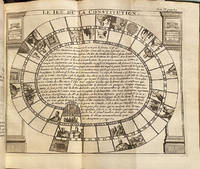
1724BB_88102Game of the Goose<br /><b><i>Poesies sur la Constitution Unigenitus</i></b>. Recueillies par le Chevalier de G. Officier de Regiment de Champagne. Villefranche i.e. Amsterdam: Chez Philalete Belhumeur 1724. Two volumes. Illustrated with duplicate frontispieces title-vignettes and many decorative woodcut head- and tail-pieces. 8vo. i i xxiv 317 pp. – i i 389 pp.; uniform polished tree-calf extra-gilt all edges gilt covers with armorial gilt stamp.<br />First edition thus greatly revised and expanded from an earlier version with essays letters poems reviews and songs with political Constitution religious Pope Clement XI and literary interest. Most important this work includes an essay titled <i>"Essai du Nouveau Conte de Ma Mere L'Oye"</i> NewTales of Mother Goose showing the influence of Perrault's tales barely twenty years after his death AND a handsome folding-out engraved board game titled <i><b>"Le Jeu de la Constitution" </b></i>designed in a race-game format.<br /><p>As a notable compilation of pro-Jansenist writings of an often satirical nature with the aforementioned board game and its five pages of rules on a folding plate. Selections include: "Les 101 propositions de la constitution Unigenitus exprimées en cent et un couplets"; "Ode pindarique sur la destruction du monastère de Port-Royal-des-Champs"; "Adieu d'une dame janséniste qui se refugie en Hollande". Brunet 4: 755. Weller 2: 88. Willaert 2: 9370. For the game see Phillippa Plock & Adrian Seville "Rothschild Collection of Printed Board Games at Waddesdon Manor" in: Of Boards and Men: Board Games Investigated Proceedings of the XIIIth Board Game Studies Colloquium Paris 14-17 April 2010 pp. 101-103: "B3 2669.2.25 Le Jeu de la Constitution - 1721/22 or to give its the full title Le Jeu / De la Constitution / Sur l'air du branle de Mets sic is <b>one of the most controversial games ever devised on the pattern of the game of Goose and perhaps may be regarded as the first polemical variant </b>Girard and Quétel 1982: 58 and 73. It dates from about 1721 but is associated with a book that appeared a year later the Essay Essai du Nouveau Conte de ma Mère l'Oye ou Les Enluminures de la Constitution. This book contains a folding plate of the game in smaller format and with some omission of text. It also contains 18 enluminures in rhymed couplets which explain the game in detail. The claimed author is given in the subtitle: 'Poesies sur la Constitution Unigenitus recuellies par le Chevalier de G. Officier du Regiment de Champagne'. The publisher is given as Philalete Belhumeur "Good Humour" Villefranche. These publication details are of course wholly fictitious as is the claimed author who in reality was the Abbe é Louis de Bonnaire 1680-1752; the book was published in Amsterdam the full-sheet game probably in Paris. De Bonnaire was a supporter of the Jansenist heresy named for Cornelius Jansen 1585-1638: this theology emphasised a particular reading of Augustine's idea of efficacious grace which stressed that only a certain portion of humanity were predestined to be saved. Though the Jansenists were strongly Catholic Jesuits and the papacy were suspicious of their beliefs which seemed to limit free will and the ability to choose to do good or evil. Despite condemnation by Pope Innocent X in 1655 the movement gained strong support in the Church. The Jansenist position as included in 101 of the propositions of Pasquier Quesnel Jansenist theologian b1634 d1719 in his Épitomé des Morales des Évangélistes of 1671 was finally condemned by Pope Clement XI's Unigenitus bull of 1713 but even this condemnation did little to diminish the enthusiasm of adherents. Indeed in 1717 four French Bishops attempted to appeal Unigenitus to a General Council a move that received considerable support from other clergy and the parlements though the majority of clergy stood by the Pope: Clement responded in the next year by excommunicating all those who had called for a General Council. Even so it was not until 1728 that the death of Jansenism was marked by the submission to the Pope's authority of Cardinal Noailles Archbishop of Paris who had originally approved Quesnel's book and was reluctant to support Unigenitus arguing that many of the 101 propositions were in fact orthodox.<br /><br />The point of the game and of De Bonnaire's book is to challenge and mock the authority of the Church and in particular that of the Pope and of his bull. For example the columns on either side are each headed by a cartoon depicting the Pope in council all present being represented by geese wearing mitres. Below the lefthand cartoon is the Latin phrase "Non ego cum Gruibus simul Anseribusque sedebo in Synodis - S. Greg. Nazianz Carm. 10" I shall not sit in Synod with cranes and geese. This refers to a dictum of Gregory of Nazianzus c329-390 Archbishop of Constantinople who compared the rowdy Council of Constantinople 381 AD to the loud cackling of a flock of geese.<br /><br />The 'good' spaces show the Apostles 'equal in number to that of the geese which they replace': there are thirteen including St Paul and they occupy the traditional spaces. The traditional hazards are likewise replaced or given special significance and others are added. The usual entry arch appears as Noah's Ark at space 1 symbolising the Church as it is tossed about on the waters of Unigenitus. The bridge of explanations at the expected space 6 shows bishops falling into the water marking their error in taking the wrong sense of the 101 propositions: it leads to space 12 acceptance where a young woman blindfolded is shown as accepting Unigenitus through ignorance. At space 15 there is the torn robe symbolising schism of the Church. The labyrinth here at space 16 symbolises error into which fall those who subscribe to the condemnation of the 101 propositions. The inn at space 19 is here the cabaret and represents the 'accommodation' accommodement or submission of the Jansenists to the bull. The Tower of Babel at space 24 represents the confusion of language into which the bull has fallen. At space 26 is the first appeal of 1717 represented by a notice on the Vatican door. At space 33 we find the avertissemens or pronouncements of the Archbishop of Soissons Jean-Joseph Languet de Gergy 1677-1753 a notorious anti-Jansenist and vehement defender of Unigenitus. He has an oboe a horn and a trumpet the three instruments symbolising 'his three avertissements and their different tones': a special rule refers to moving forward with the 'small dice' and with 'the other' when going back. Next is the prison at space 40 where the player must wait until a throw of 5 which multiplied by 3 will lead to Louis XV and deliverance. The well space 49 symbolises the body of doctrine in which the truth is hidden. At space 51 are the re-appealing Bishops the second appeal being at space 53. At space 55 is the portrait of Louis XV - enluminere XV in the book makes clear that he was seen as a force for change and re-unifying the Church. The death space at 58 shows the skeleton of Pope Clement XI sitting in an armchair wearing his papal tiara and raising his bony hand to bless an infant at his feet which represents the Unigenitus bull. Cardinal Noailles appears at the penultimate space 62 from which point 'one may only go backward'. The explanatory text in the centre of the game claims that it 'presages the day that the constitution of the Church will no longer be nothing but un Conte de ma Mère l'Oye' - a Mother Goose tale here used as a figure of speech for something unbelievable and ridiculous. The winning space at 63 shows that this result is to be achieved by a General Council in reference to that called for in 1717. De Bonnaire's book was condemned at Arras in 1726. Although his anonymity as author seems to have been effective in protecting him the publishers father and son were thrown into the Bastille. Even today the game has the power to shock by the force of its imagery.</p> Philalete Belhumeur hardcover
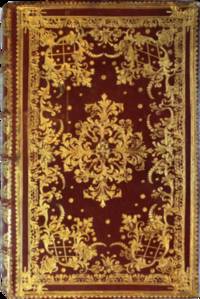
17564062Rome: Gioacchino & Giovanni Giuseppe Salvioni Stampatori Pontificii Vaticani 1756. 8vo 210 x 135 mm. 24 407 1 pp. 2 parts the Office of the Dead separately titled. Printed in red and black. Engraved frontispiece and 12 full-page engravings by Arnold Van Weserhout and Jacob Frey after Joseph Passarus Giuseppe Passaro two engraved title vignettes and 12 tailpiece vignettes a few unsigned others by Frey after Passaro or by M. Schedi engraver 3 engraved initials numerous red-printed woodcut initials. Occasional light browning. 18th-century Roman gold-tooled red goatskin covers with densely tooled dentelle border built up from leafy plant tools sprigs floral and arabesque tools each cornerpiece enclosing a grid with gold dots blossom tools and dots in central field ornamental centerpiece of large foliate arabesque and dandelion tools spine in six uniformly gold-tooled compartments block-printed pastedown endpapers with flower and fruit design stencil-colored in red green and yellow gilt edges with gauffred border design; upper cover a bit faded and bowed corner bumped a couple of scrapes to lower cover. Provenance: Horace de Landau 1824-1904 bookplate shelfmark no 47854; Vicomte de Cossette armorial bookplate. A rococo binding on a luxuriously printed and illustrated Office of the Virgin from the Salvioni press official printers to the Vatican. The Salvioni press used several workshops sometimes collectively mislabeled as the "Vatican" or "Salvioni" bindery. Those bound for the papal library were finely executed and different binderies can be identified by their tools color of leather and stylistic details. The present pretty but crowded binding decor with its in places overlapping tooling does not seem to belong to the corpus of binderies represented in for example the Vatican Library's 1977 exhibit catalogue of papal bindings. Stylistically it uses types of tools and decoration - the wide "Louis XV" style border and the basketweave cornerpieces - in vogue during the reigns of Clement XIV 1769-1774 and Pius VI 1775-1799. Its decoration is similar for example to binding no. 262 in Legature papali but it is of inferior workmanship and does not use the same tools. It was probably produced in a Roman shop executing many commissions and forced to work quickly although it could even be a provincial binding. Cf. Biblioteca Apostolica Vaticana Legature papali da Eugenio IV a Paolo VI no. 262 plate CXCI. Gioacchino & Giovanni Giuseppe Salvioni, Stampatori Pontificii Vaticani hardcover
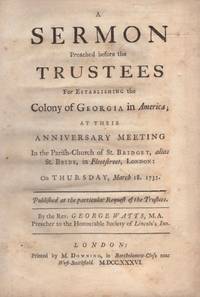
173632910London: Printed by M. Downing in Bartholomew-Close near West-Smithfield 1736. First Edition. Hardcover. Very good. Octavo. 27 pages 1 page blank. Wraps rebound in later marbled paper covered boards with black leather corners and spine. Gilt stamped title on the spine. Title on the spine is faded. Light toning to the text. Light edge wear to the covers. <br /> <br /> Reverend Watts preaches "If ever therefore there was in reality a Colony what it should be by description a refuge to the Poor an Ease and security to the Rich a nursery of people and a supply of necessaries a reward to the deserving and a reformation to the disorderly; This of all others seems most likely to answer such a character." Scarce sermon preached just two years after James Oglethorpe landed in Savannah Georgia. Rare. 7 copies of this sermon located in OCLC. <br /> <br /> Sabin 102173; DeRenne Vol. 1 page 70; Stevens Bibliotheca Americana 557 mistakenly calls for 72 pages. Printed by M. Downing, in Bartholomew-Close near West-Smithfield hardcover
179847817Frankfurt am Mayn: in der Behrens- und Kornerischen Buchhandlung 1798. First Edition. Hardcover. Very Good. 4to. Pp. xvi 136 folding plate at end. Translated from the Dutch by Kroncke and a preface by Wiebeking. Light foxing throughout. The folding plate in excellent condition. In Nineteenth century paper boards imitation leather paper spine with green and red paper spine labels titled in gilt some edge-wear and light chipping to the spine ends overall a very good and clean copy. The first German translation of Christian Brunings' treatise on the velocity of flowing water. This work discusses the principles of fluid dynamics and presents methods for measuring the velocity of water at various depths which are important for engineering applications in hydraulics and water resource management. in der Behrens- und Kornerischen Buchhandlung hardcover
1703AB7GU76YPSLFUtrecht 1703. 4to. Willem van de Water Slightly later half calf ca. 1765 gold-tooled spine title lettered in gold marbled sides with central gold vignette of the Society of Writers to the Signet on both boards. Woodcut coat-of-arms of Utrecht on title-page. 8 works in 1 volume. 57 26; 23; 39; 4 36; 61; 2 75 1; 28 37 3 pp. Six academic orations in Latin all in their first and at least mostly only editions delivered by Pieter Burman or Petrus Burmannus 1668-1741 a Dutch classical scholar and one of the best classical philologists of the eighteenth century known as the elder to distinguish him from his nephew Pieter Burman the younger was born at Utrecht as the son of Frans Burman professor of theology at Utrecht. Ad 1: Funeral oration delivered by Burman on 19 February at the University of Utrecht for the famous Johannes Georgius Graevius who had died on 11 January 1703. Ad 2: Public oration delivered on 20 February 1702 on slowness.Ad 3: Oration in Latin verse delivered in the Aula of the University of Utrecht on his dream of a new Arcadia.Ad 4: Oration on the old and notorious dispute between Church and School/University concerning theatre for youth set off again by an attack on the indecency and harmfulness of the theatre launched by the Utrecht Church Council against the magistrate of Utrecht. Pieter Burman took up the defence of the theatre as a useful tool in education.Ad 5: Oration delivered at Leiden University on the usefulness of the study of humanities.Ad 6: Oration more or less on the same subject: for the benefit of literary men and grammarians.Ad 7: Oration on the value of a doctoral degree by Joannes Conradus Rücker d. 1778; professor of law at Leiden University since 1734 delivered on the occasion of Daniel van Alphen whom he had tutored taking his doctoral degree on 13 December 1735.Ad 8: Funeral oration delivered by Johannes Jacobus Vitriarius 1679-1745; professor of law at Heidelberg 1706 Utrecht 1708 and Leiden 1720 for prof. Antonius Schulting 1659-12 March 1734 prof. of law at Harderwijk 1691 Franeker 1694 and Leiden 1713.The present convolute belonged to one of the Writers to the Signet at Edinburgh the famous psalmist Robert Boswell 1746-1804 who signed his name on the inside front cover.Occasional slight browning first free endpaper somewhat loose; corners slightly bumped but the whole still in good condition.l NNBW IV p. 354f; Dekkers p. 30; Sandys pp. 443 ff.; for Rücker ad 7: NNBW II cols. 1240-41; for Vitriarius and Schulting ad 8: NNBW III col. 1316 & I cols. 1462-4. hardcover
176770736London: J. Newberry in st. Paul's Church-Yard Etc. 1767. 188 pages. Front cover is detached but sill present. Back cover is missing. FEP and/or frontispiece missing. All else there and accounted for. Front cover and spine cover are scuffed and clipped ask for image. Slight staining on outside edges not affecting the pages themselves. Pages are nice. Leathebound Hardback. Worn But Complete Condition. Illus. by No Illustrations No Plates Present. J. Newberry in st. Paul's Church-Yard Etc. Hardcover
176610667London: R. Baldwin. Good with no dust jacket. 1766. First Edition; First Printing. Hardcover. The leather is splitting at the hinges but still bound by the cords. 9 maps present but the larger map of the London area is splitting at the seams. The last pages including the valuable addenda are lightly stained at the upper right corner. The upper back corner is burnt which I would suppose is the source of staining to the last pages. There is no fire damage to the paper only the leather covering the boards. ; Besides many many interesting articles on the North American Colonies Indians etc. bound in the back is the 8 page prospectus for the Equitable Life Assurance company and a 4 page letter from George Steevens dated February 1 1766 concerning his proposed edition of Shakespeare and asking for contributions to it. Pretty rambling hard to read and pretty cool. ; 6x8 1/2"; 64084 pages . R. Baldwin hardcover
1796053496Constantinople Istanbul: Letterhead "Liberte - Egalite Pera-Les-Constantinople". ca. 1796-1797 1796. No Binding. Very Good. Original manuscript autograph document signed by Jean-Baptiste Annibal Aubert du Bayet. 315x205 cm. In French. 1 p. With a blind-stamped seal. A legible and fine handwritten letter. Text: Le General Aubert du Bayet Ambassadeur de la Republique Francaise pres de la porte Othomane le depart de la compagnie d'Artillerie legere employee a l'instruction des turcs et celui des officiers francaises precedemment employere ou destinee au service du grand seigneur; Arrete que le citoyen Collin ancien major d'infanterie venu a Constantinople d'apres l'autorisation du gouvernement retournera incessamment en France et qu'il profitera a cet effet du batiment qui va conduire la compagnie d'Artillerie legere a Ancone. English: General Aubert du Bayet Ambassador of the French Republic near the Othomane gate the departure of the company of Artillery light employee in the instruction of the Turks and that of the French officers previously employed or destined to the service of the great lord; Decrees that the citizen Collin former major of the infantry who came to Constantinople after authorization from the government will return to France shortly and that he will benefit for this purpose from the building which will lead the company of light artillery to Ancona sic. Angora - Ankara. Jean-Baptiste Annibal Aubert du Bayet 19 August 1759 Louisiana - 17 December 1797 Istanbul was a French General and politician during the period of the French Revolution. Aubert du Bayet was born in Baton-Rouge in the French American colony of Louisiana in 1759. Aubert du Bayet participated in the campaigns in America during the American Revolutionary War. Aubert du Bayet arrived in France at the beginning of the Revolution but was initially hostile to revolutionary ideas. While in Metz as a young Captain he published an anti-Jewish pamphlet entitled Le cri du citoyen contre les Juifs. However he soon saw that it could serve his ambitions. He became a member of the legislature in 1791. Aubert du Bayet was President of the French National Assembly the "Legislative Assembly" from 8 July 1792 to 22 July 1792. In 1793 he served as General of Brigade in the heroic defense of Mayence in 1793 when he finally had to surrender to the Prussian Army. He then seconded Hoche in Vendée in the fight against the Chouans in the War in the Vendée. He then became Minister of Defense of France "Minister of War" from 3 November 1795 to 8 February 1796. In 1796 General Aubert du Bayet was appointed as ambassador "Minister of the Republic" to the Ottoman Empire. He was sent to the Ottoman court with artillery equipment and French artillerymen and engineers to help with the development of the Ottoman arsenals and foundries. Infantry and cavalry officers were also to train the Spahis and Janissaries but they were frustrated by the opposition of the Janissaries. Ironically some of these troops trained to Western methods were successfully employed against the French troops of Napoleon a few years later under Sir Sydney Smith at the Siege of Saint-Jean d'Acre in 1799. Their behaviour delighted Selim III and upon their return they were named Nizam-gedittes or "New Regulars" but they were eventually slaughtered and dispersed by the Janissaries and conservative clerics and politicians leading to the deposition of Selim III. Aubert du Bayet died of fever in 1797 in Constantinople. Co-signed by six politic figures in its period however they cannot be determined. Very rare. <br/> <br/> Letterhead "Liberte - Egalite, Pera-Les-Constantinople"., [ca. 1796-1797] unknown