61 résultats
173417718Paris Pierre Prault 1734 in-4° 8 pp
173617717Paris Pierre Prault 1736 in-4° 11 pp, texte bien établi
172617719Paris Pierre Prault 1726 in-4° 12 pp
172617720Paris Saugrain et Prault 1726 in-4° 7 pp + 8 pp, Relié à la suite Procès fait à un Voiturier et son domestique Pour refus de
172717721Paris Saugrain et Prault 1727 in-4° 12 pp
174117722Paris Prault 1741 in-4° 8 pp
172517723Paris Saugrain et Prault 1725 in-4° 12 pp
172817724Paris Saugrain et Prault 1728 in-4° 12 pp Une affaire compliquée de trafic de vins dans le village de Turny à laquelle sont mêlés des cabaretiers
174317726Paris Pierre Prault 1743 in-4° 10 pp
172817725Paris Saugrain et Prault 1728 in-4° 16 pp
174317727Paris Pierre Prault 1743 in-4° 8 pp
176717728Paris Lamesle 1767 in-4° 8 pp; Il s'agit de réduire le nombre des exemptions de droits, au moins sur la quantité pour des raisons de facilités de Fraudes
176717729Paris Veuve Saugrain et Pierre Prault 1767 in-4° 7 pp
178910511Paris, Buisson, 1789 ; 2 tomes. Tome I : broché ; XXIV, 383 pp., 3 planches gravées dépliantes ; Tome II : plein veau havane marbré, dos lisse décoré et doré, pièce de titre rouge ; (4), 475 pp., 2 planches gravées dépliantes (accroc à la coiffe supérieure, mors fendu et usure aux coins).
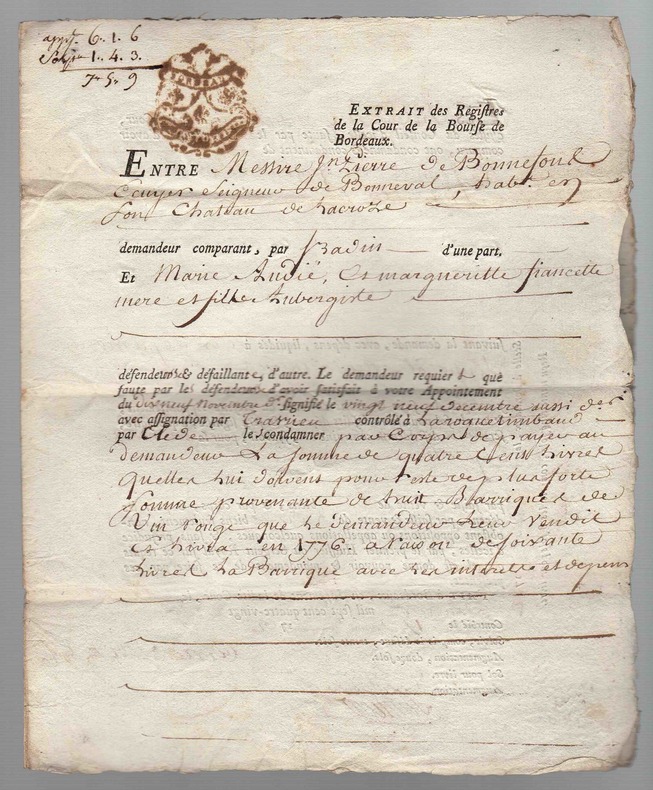
17826675Extrait des registres de la Cour de la bourse de Bordeaux. 17 janvier 1782. 4 pages in-4°. Curieux document : jugement entre le seigneur de Bonneval, habitant en son château de Lacroze et Marie Audié, aubergiste. Cette dernière semble ne pas avoir réglé la somme de 400 livres pour l’achat de 8 barriques de vin rouge. Très bon 1782 4 pages in-4°.
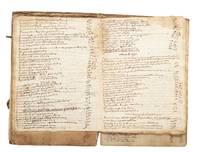
179223470Bordeaux 1792 In Folio ( 40 x 30 Cm ) 683 pp environ, soit au moins autant de copies de lettres adressées en tant que fournisseur à divers négfociants, marchands revendeurs et particuliers dont les noms sont récurrents tout au long du manuscrit : On trouve à titre d'exemple à Rouen, Delannoy et cie, au Mans, la veuve Orry, à Agen, Lamouroux , à Toulouse, Marie aîné, à Honfleur, Guenier, Bouchard, Caron, Heuute et fils,Marseille, Baux, Lille, Delbarre, Angoulême, Sajerac Desforges , Paris, Tourton & Ravel, Garnot & Ravel, Bond, Dunkerque, Omer Deny , Lancel , Pezenas, Fave, Troyes, Bourgeois lejeune, Nantes, Rivet, Lorient, Mangon laforest & cie , Longuiron Carié & fils , Riédy Thurninger , Mayenne, Benoiste Aîné, Mortagne, Hamel, et même le nom de Lafon Deladebar député de l'assemblée Nationale, etc etc , les lettres sont toutes datées de Bordeaux de 1791 ou 1792 et concernent essentiellement des cargaisons de vins. les Cent derniers ff ont subi un impact qui les a perforé sans pour autant gêner la lecture. L'écriture est tout au long du manuscrit, régulière etr parfaitement lisible et pourrait susciter un travail important sur le commerce des vins pendant la révolution grâce au noms des détaillants partiellement cités ci dessus et donc parfaitement identifiables
1793aff-rev-11558X46
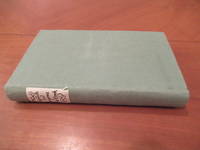
1770031817London: S. Crowder And J. Coote; W. Griffin; And W. Nicoll 1770. 3rd Edition . Hardcover. Poor. Iii-Xi 226I.E.2291Xxii Pp. Defective Lacking Title Page Begins With P. Iii "A Table Of Diet". 6 1/2" X 3 7/8". Rebound In Green Cloth With Handwritten Calligraphic Title On Paper Spine Label. Edition Identified From Worldcat Entries Which Show This 1770 Edition With 229 Pages P. 229 Mis-Numbered As 226 And With The Index At End The Only Edition Appearing As Paginated Thus. Worn But Complete With No Loss Of Text On Pages. 1" Brown Stain In Upper Fore Edge Corner Of Pages At Front Diminishing Away At End Of Book. Loose Clipping From Baltimore Sun About New Remedy For Small Pox. <br/> <br/> S. Crowder, And J. Coote; W. Griffin; And W. Nicoll hardcover
175045405London, John and Paul Knapton, 1750. Small 8vo. Contemp. full calf. Spine worn and frontcover detached. Corners of binding worn. (12),420 pp., textdiagrams and textfigs. (12),420 pp. Browning to titlepage and repairs to verso of. A bit of inner lower corner of titlepage gone, loosing 3 letters in ""Printed for"" Some brownspots to outer margins. Some traces of use. Internally generally clean and printed on good paper.
179265431792. 59 leaves enumerating the names of grapes cereal crops and oils and their prices for nearly two centuries. Small folio 273 x 178 mm. 18th-cent. vellum over boards tail of spine defective two of four ties lacking. Burgundy: 1622-1792.<br/> <br/> A fascinating and rare survival which details the precipitous rise in the prices of Burgundian wine and the emergence of a hierarchy among regions and vintages over a 170-year period. This document consisting of three gatherings 28; 28; 3 leaves bound together and written in several legible hands provides a wealth of information on grain harvests in the region which varied greatly from year to year and indicates years with disastrous harvests. The present manuscript constitutes a unique history of agriculture in Burgundy especially pertaining to the evolving market for Côte de Nuits wine.<br/> <br/> “Burgundy had no experience like the boomtime of 18th-century Bordeaux. No new wines were invented no new districts planted. The Bordeaux picture is all expansion and creation; the Burgundy one of evolving tastes and techniques of new market forces and overall of slowly progressing definition: a more precise notion of the character style and value of the wine from each corner of the Côte…In the Côte de Nuits the notion of the ‘cru’ was further advanced…The vineyards were generally less overcrowded and by now planted with cuttings rather than layers; hence more deep-rooting. Increasingly in the 18th century owners of the most prestigious crus selected their best grapes to make separate cuvées the best vat being called the ‘tête de cuvée’.â€â€“Hugh Johnson Vintage 1989 pp. 267 & 272.<br/> <br/> The motivation for compiling this record-book may have come from the introduction of a law in 1622 that outlawed the sale of Lyonnais and Beaujolais wines as Burgundian. The records of the first three decades consist mostly of grains and oil from the region but in the early 1670s wines begin to predominate and the lists for each year become increasingly long. It is very likely that at this point landowners would have shifted to using any arable land for vastly more lucrative grapes. By the 1690s dozens of grape varietals are noted from communes such as Auvilliers Les Cailles Chambolle Chorey Comblanchien Corgoloin Côte de Beaune Gilly Magny Saint Georges Saint Julien Les Cailles Vaucrains Pouilly Prissey etc. Prices for wine rose enormously from the 1690s and experienced peaks in 1701 1733 and 1770. Wines are increasingly categorized by the mid-18th century according to vineyard and in some cases cru.<br/> <br/> The name “de Bays†appears several times in the manuscript and the signature of “de Bays†is found at the end of the year 1771.<br/> <br/> Very few comparable documents survive and the present manuscript provides a vast amount of data on the prices for wine grapes and grains in the 17th and 18th centuries. A couple leaves browned. unknown
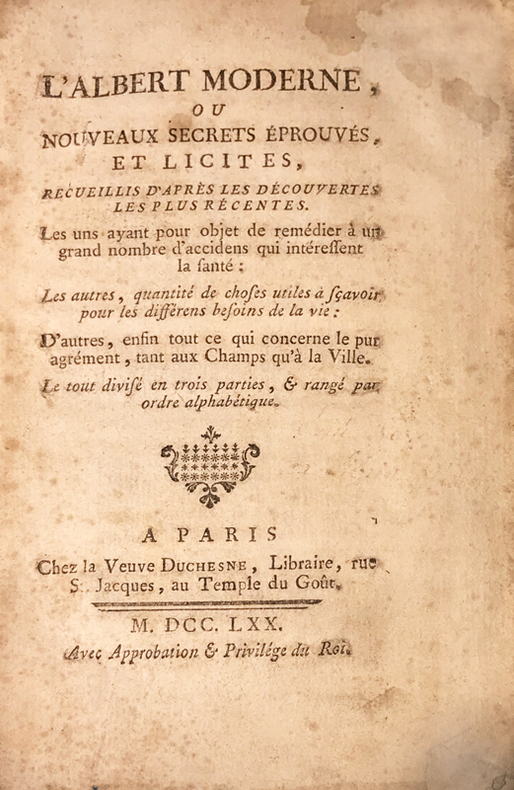
177011006Paris, Veuve Duchesne, 1770 ; in-12 ; cartonnage rigide de papier marbré bleu, étiquette manuscrite au dos, non rogné ; XXII pp. (y compris le titre), (1) f., 384 pp.
1800D8852France likely the late 1800s. Ephemera. Near Fine. Group of 5 full-color illustrated cards captioned in French showing children tasked with wine-making tending the vineyards guarding the vineyards harvesting the grapes getting sloshed. Each is about 3x4.25 inches with a thin white border. Some pencilled markings on the verso; one with some scuffing on the verso and a small closed tear at the edge likely removed from an album; otherwise fine. <br/><br/> unknown
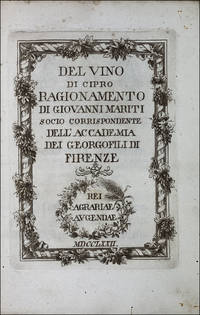
1772117<p>Extraordinary rare first edition of the famous treatise on Cyprus wine by Giovanni Mariti</p><p>A complete analysis on wines grapes vines and production technique</p><p>Mariti Giovanni. <em>Del vino di Cipro ragionamento di Giovanni Mariti socio corrispondente dell'Accademia dei georgofili di Firenze: Rei agrariae avgendae</em>. Firenze : G. Cambiagi MDCCLXXII 1772.</p><p>8vo 220 x 155 mm original printer cardboard pp. 2 XVI 127 1 illustrations along the text engraved title page before the dedicatory letter at leaf a1r a chalcographic vignette with coat of arms of the dedicatee Lord Nassau Clavering signature a⸠πa1 A-Hâ¸.</p><p>xylographic illustrations along the text one full page plate depicting tool for wine production</p><p>In his treatise <em>Del vino di Cipro</em> About the Cyprus Wine published in Florence in 1772 by Cambiagi Mariti dedicates an ample analysis to the wine of Cyprus discussing a lot about the types and varieties of the vines and wines produced in the different regions of the island and reporting its own "observations" made in the countryside around Larnaca where it draws indications and procedures to follow in Italy too to reach the maximus possible efficiency of the crops as Mariti himself well describe in the Preface to the volume:</p><p>"In questo mio Ragionamento ho avuto il riflesso di appagare non solo la curiosità di qualche dilettante de i grati e generosi Vini di Cipro e di dar la norma per qui allignarli ma ancora di poter giovare alla Coltivazione alla Manifattura e alla Conservazione de i nostri Vini Toscani e particolarmente per migliorare alcuna sorta di quegli che oggigiorno sogliono qui farli in scelta maniera il che mi lusingo possa ottenersi dal genio de i nostri Agricoltori Mariti 1772 p. 3. In this reasoning I had the will to satisfy not only the curiosity of some amateur of the grateful and generous Wines of Cyprus giving the rules to list them but also to be able to improve the Cultivation the Manufacture and the Conservation of our Tuscan Wines and particularly to improve the quality of the wines produced there using the support from the genius of our Farmers"</p><p>More in details he starts addressing the issue of the poor resistance of Tuscan wines to navigation deepening the observations already published in the first volume of his "Travels in Cyprus". Mariti studying grapes and winemaking processes in use in Cyprus gives an account of the island's wines distinguishing them by types based on the quality of the grapes the length of the aging process and their conservation and also giving data and figures relating to the sale of the product both in the East and in the West.</p><p>Mariti dedicated this essay on the wines of Cyprus to Lord Clavering whose arms are engraved at the top of the first leaf of the dedication. The preliminary leaves also include an account of the <em>Accademia dei Georgofili</em> devoted to the study of agriculture which was founded in Florence in 1753 and is still active today.</p><p>Giovanni Filippo Mariti 1736 –1806 he was an Italian antiquarian scientist and historian. Intellectual with multiple interests he became famous in Europe mainly for his travels in the East.</p><p>Mariti became interested since his youth in natural sciences cultivating botany and especially agronomy studies and in 1772 he became a corresponding member of the <em>Accademia dei Georgofili</em> founded in Florence on July 4 1753 by Ubaldo Montelatici under the impulse of that renewal of agriculture that the Habsburgs-Lorraine hoped for and promoted to remedy the problems that arose in their lands starting from the first decade of the second half of the century regarding crops and food supplies.</p><p>Mariti lived for seven years at Larnaca in Cyprus becoming honorary British vice-consul and became increasingly familiar with the wine-making process of the island. A shortened version of this treatise was included in the French translation of his "Travels in the Levant".</p><p>Beside <em>Del Vino di Cipro</em> he is remembered for the treatise titled <em>Della Robbia sua coltivazione suoi usi</em> Florence 1776 dedicated by Mariti to the Grand Duke of Tuscany Pietro Leopoldo concerning a plant the <em>Robbia</em> Madder cultivated in the East and used for the colouring of clothes which Mariti hoped to introduce in Europe and for <em>Odeporico o sia itinerario per le colline pisane</em> which was published in Florence in two volumes between 1797 and 1799.</p><p>The first volume of this work which remained partly unpublished deals with the agricultural history of the Tuscan hills the second is dedicated to the history of the water bath today Casciana Terme. The two volumes are divided into chapters that take the form of letters written to an imaginary friend.</p><p>George Clavering-Cowper 3rd Earl Cowper 1739 - 1789 was an English nobleman and politician. In 1780 he purchased Villa Palmieri in Fiesole with a splendid view of Florence. Skilled diplomat and politician he decided to obtain prestige by turning a blind eye on the relationship that his wife had established with the Grand Duke Pietro Leopoldo from which he managed to obtain the title of Prince of Nassau d'Auverquerque.</p><p>The art collection that Count Cowper built during his years in Florence was a great investment of time and money for him. Among the most important works that were part of his collection we mention two paintings by Raphael the first known with the name of <em>Piccola Madonna Cowper</em> and the other as <em>Madonna Niccolini-Cowper</em>.</p><p>Conditions: fine copy untrimmed in its original printer paper board small restoration at spine.</p><p>Provenance: I. Ownership signature dated 1868 at rear inside board. II. Handwritten title at front board and spine.</p><p>References: Lastri p.82; Sormanni p.79; <em>Bibl. </em><em>Vinaria</em> p. 139; Andre Simon Bibliotheca Gastronomica page 97 No 1002</p> G. Cambiagi hardcover
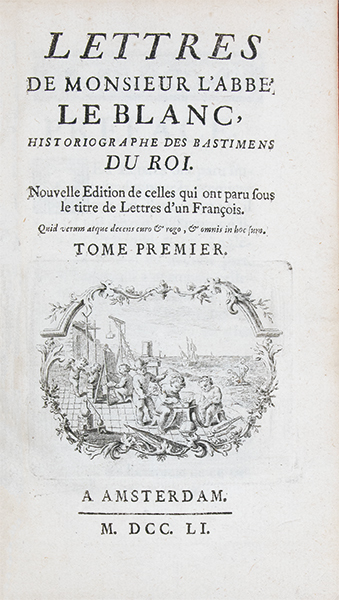
1751381141751 3 volumes in-12 (169 x 96 mm), plein veau marbré de l'époque, dos à nerfs ornés de compartiments fleuronnés et cloisonnés, pièces de titre et de tomaison de maroquin bordeaux et bronze, coupes filetées. Amsterdam [i.e. Paris], 1751.
179828448NANTESANETZ 1798 une page, format : 10 x 14,3 cm, sur papier vergé crème ligné , avec en-tête pré-imprimé en noir et manuscrit à l'encre brune, tampon cachet fiscal gravé dans un hexagone : Republique Française Loire-Inférieure (illustré) en haut à gauche, signature manuscrite du controleur en bas de page : VIE et et MAUCLER préposé à l'Octroi, OCTROI DE NANTES - BUREAU DE LA FOSSE N°18 : REÇU DU CITOYEN LEBRETON NÉGOÇIANT, LA SOMME DE CINQUANTE SIX FRANCS, SOIXANTE HUIT CENTIMES, POUR TREIZE BARRIQUES DE VIN DE BORDEAUX (2834 LITRES) VENUES PAR LA BARQUE : "LA CATHERINE", CAPITAINE GOURY QU'IL A FAIT ENTRER CE JOUR 5 VENDÉMIAIRE AN 7 DE LA RÉPUBLIQUE FRANÇAISE, UNE ET INDIVISIBLE, [26 Septembre 1798]