WHISKYBiblio.com
14 résultats
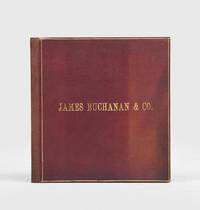
1925182766Glasgow: James Buchanan & Co 1925. Buchanan's blend comes to life James Buchanan 1884 - 1935 was a blender best known for his Black & White whisky. He stepped into the whisky business as an agent in London for the Leith-based blenders Charles Mackinlay & Co. However he soon realised there was an untapped market for a smoother blended whisky more appropriate for the "English palate". His first blend was to be less peated than the Highland malts available in London. So James Buchanan created the "Buchanan Blend" a version of which is still produced today. At the time the name would change first to "House of Commons" after one of Buchanan's first major clients - the Members Bar at the House of Commons. This name did not last long due to the blend's distinctive black and white bottle through which it acquired the nickname "Black and White" a version of which is still produced by Diageo. Black & White is also notable for a number of literary appearances. The whisky is sampled by James Bond in Moonraker Dick Diver in Tender is the Night and Kilgour Trout in Breakfast of Champions. Quarto. With 12 whisky labels. Original red morocco-grain cloth boards lettered and ruled in gilt brown endpapers. Spine head lightly bumped boards rubbed and sunned contents bright. A very good copy. hardcover
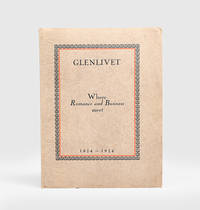
1924182807Glenlivet: Capt. W. Smith Grant 1924. First edition a rare publication issued to celebrate 100 years of the Glenlivet distillery. This copy has the ownership inscription of Captain William "Bill" Smith Grant 1896-1975 the grandson of the distillery's founder and one of the greatest characters of the Scottish whisky industry. He has located it "Minmore Glenlivet" beneath his name. Bill Grant took over the distillery in 1921. A decorated First World War hero he navigated the company through the Great Depression and America's prohibition era. By the mid-1900s Glenlivet made up half of the Scottish malt whisky sold in America. Quarto. Original wire-stitched brown wrappers front cover lettered in black within black and orange border. Ink inscription on verso of rear free endpaper naming Captain William Henry Smith Grant unlikely to be his handwriting. Edges of wrappers slightly creased staples a touch rusted at gutter endmatter foxed: a near-fine copy. unknown
18587967559591vgd not xlib lippincott hardcover
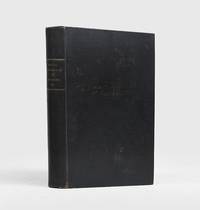
1908186762London: Printed by JAS. Truscott & Son Ltd 1908. The legal origins of "whiskey" First edition of the minutes taken at the 37 sittings of the Royal Commission of Whiskey which laid the foundation for the definition of Irish and Scottish single malts. Over 100 expert witnesses took the stand to debate if blended whisky could legitimately be called "Scotch Whisky" and if there should be a minimum maturation period among other topics. The year 1904 saw the prosecution of a publican and a spirit merchant accused of selling inferior whisky as 'genuine' Scottish and Irish malts which led to the creation of the Royal Commission on Whiskey and Other Potable Spirits. During the proceedings laid out in these volumes many familiar names took the stand including A. J. Tedder of Glengoyne Andrew Jameson of Dublin and Monsieur J. Hennessy. The most important conclusion found here in the third volume report is a definition of whisky by the commission as "a spirit obtained by distillation from a mash of cereal grains saccharified by the distaste of malt that 'Scotch whiskey' here amusingly with the e blotted out by a previous owner to reflect the spelling prevalent in Scotland is whiskey as above defined distilled in Scotland and that 'Irish whiskey' is whiskey as above defined distilled in Ireland." While many single-malt purists saw this as a loss for their cause these proceedings laid the foundations for modern regulations. Andrew Jameson's appearance on the stand is particularly interesting as he advocates for what is now a legally required period of maturation for Scottish and Irish malts three years and one day. However this was not ratified by the commission who write in their report that the health of the consumer is the main factor in considering compulsory bonding and "it was not established before us that any material change in the toxicity of whiskey is effected by age. It is however generally agreed that with age a great improvement in the flavour of whiskey is developed." Also present is a folding map of Ireland and two plates after drawings of pot stills and patent stills by A. J. Tedder one of which is reproduced later as a hand drawn facsimile presumably for technical reference in relevant proceedings. The appendices reproduce results from a number of studies including one in which subjects record their reaction to various spirits on a scale that runs from "drowsy" to "very drowsy". There are also insights into the origins and techniques used in the distillation of other spirits including Demerara rum French brandy and gin. 4 vols bound as 1 folio 325 x 205 mm. With 2 plates 1 of which additionally copied in pencil facsimile folding map. Text printed in double column. Contemporary black cloth spine lettered and ruled in gilt speckled edges. Spine ends a little bumped cloth rubbed foxing to outer leaves. A very good copy. hardcover
8856300117.Ghardcover. Good. Access codes and supplements are not guaranteed with used items. May be an ex-library book. hardcover
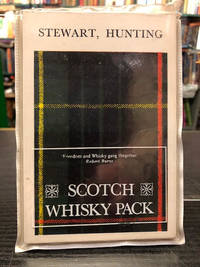
197062905Edinburgh: Johnston & Bacon / Geoffrey Chapman Ltd. 1970. 12mo. Pack of twenty-four cards in original plastic pouch. Plastic slightly rubbed. All cards in very good condition. Colour tartan on one side with recipes on versos. 24 cards containing recipes for whisky based drinks & cocktails and other dishes. No BL copy. Copac records Oxford Trinity NLS & NLW. 0717945464 . Very Good. Unbound. 1970. Johnston & Bacon / Geoffrey Chapman Ltd. 1970 unknown
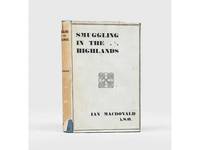
1914182974Stirling: Eneas Mackay & Inverness: Wiliam Mackay & Son 1914. First edition in book form rare with the dust jacket. Macdonald was a long-serving excise officer who spent much of his career in the Scottish Highlands. The anecdotes in the chapter "Smuggling Stories and Detections" include "An Artful Abriachan Woman" "Foulis Smuggler and Daughter Baffle Officer" and "'Good Pious Men' as Smugglers". Although Macdonald had a sharp eye for a sensational story he had a stony view of smuggling which he considered "a curse to the individual and the community". Much of this work was first read before the Gaelic Society of Inverness during the late 1880s at a time when whisky smuggling was resurgent in the north of Scotland. It was subsequently printed in the society's paper and later as a series of articles in The Highlander and Celtic Magazine. This copy is likely from a later issue. Other examples of the first edition can be found with gilt lettering on the spine front cover and top edge and with photographic plates expenses which were presumably dropped for later issues. Variants in the dust jacket also exist; some examples are without the Celtic knot illustration on the front cover which is present here. Octavo. Original blue cloth spine and front cover lettered in dark blue. With dust jacket. Spine faintly sunned a few gentle bumps to edges of covers small lump beneath cloth on front cover; jacket unclipped sunned and faintly soiled spine toned edges chipped and with a few short closed tears one longer at foot of rear panel: a very good copy in like jacket. hardcover
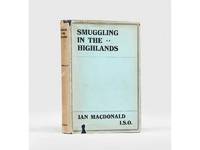
1914182970Stirling: Eneas Mackay & Inverness: Wiliam Mackay & Son 1914. First edition in book form rare with the dust jacket. Macdonald was a long-serving excise officer who spent much of his career in the Scottish Highlands. The anecdotes in the chapter "Smuggling Stories and Detections" include "An Artful Abriachan Woman" "Foulis Smuggler and Daughter Baffle Officer" and "'Good Pious Men' as Smugglers". Although Macdonald had a sharp eye for a sensational story he had a stony view of smuggling which he considered "a curse to the individual and the community". Much of this work was first read before the Gaelic Society of Inverness during the late 1880s at a time when whisky smuggling was resurgent in the north of Scotland. It was subsequently printed in the society's paper and later as a series of articles in The Highlander and Celtic Magazine. This is the presumed first issue binding with gilt lettering on the spine front cover and top edge and with photographic plates. Copies are known without the gilt and plates likely a decision to reduce costs in later issues. Variants in the dust jacket also exist; some examples have a Celtic knot on the front panel or are without illustration as here. Octavo. Photographic portrait frontispiece 6 plates including images of bothies and distilling equipment. Original blue cloth spine and front cover lettered in gilt top edge gilt others untrimmed. With dust jacket. Spine cocked ends just bumped head a little sunned a few gutters just starting but firm: jacket unclipped spine toned peripherally sunned a few chips and closed tears at extremities: a near-fine copy in very good jacket. hardcover
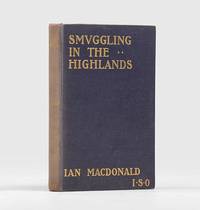
1914115189Stirling: Eneas Mackay & Inverness: Wiliam Mackay & Son 1914. First edition in book form. Macdonald was a long-serving excise officer who spent much of his career in the Scottish Highlands. The anecdotes in the chapter "Smuggling Stories and Detections" include "An Artful Abriachan Woman" "Foulis Smuggler and Daughter Baffle Officer" and "'Good Pious Men' as Smugglers". Although Macdonald had a sharp eye for a sensational story he had a stony view of smuggling which he considered "a curse to the individual and the community". Much of this work was first read before the Gaelic Society of Inverness during the late 1880s at a time when whisky smuggling was resurgent in the north of Scotland. It was subsequently printed in the society's paper and later as a series of articles in The Highlander and Celtic Magazine. This is the presumed first issue binding with gilt lettering on the spine front cover and top edge and with photographic plates. Copies are known without the gilt and plates likely a decision to reduce costs in later issues. This copy lacks the rare dust jacket which also exists in variant forms. Octavo. Photographic portrait frontispiece 6 plates including images of bothies and distilling equipment. Original blue cloth spine and front cover lettered in gilt top edge gilt others untrimmed. Spine cocked and sunned spine ends a little bumped occasional faint foxing to leaves pencil underlining in pencil to p. 8: a very good copy. hardcover
196064227Osaka & Tokyo Japan: Suntory Limited 1960. 12mo. 5 x 6.75 in. Triptych 6 pp unpaginated. w/ 20 pp unpaginated. colour-illustrated catalogue stapled in center self-printed illustrated softcovers in whisky-coloured and photo illustrated softcovers slight soiling back cover NF copy. First edition thus of this exceedingly scarce original Suntory Limited catalogue detailing the whiskies wines and liquers available from the storied Japanese distillery with the line-up introducing their Rare Old Whisky Suntory Royal 60 introduced in 1960 company founded in 1899 special label “Extra Special†Old Suntory Japanese Whisky only marketed for a couple years in the early 1960’s along with their standards. Other products included their Akadama wines Suntory Sparkling wines Green Tea Liquer Cherry Blossoms Liquer Creme de Cacao along with their brandy vermouth sloe gin vodka absinthe and sake brands. Alcohol content Net content weights and measures per carton and more are supplied within the tables. No copies in Worldcat. Suntory Limited, paperback
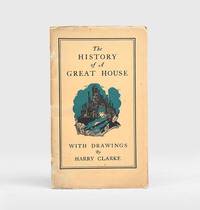
1924186802Dublin: Maunsel & Roberts Limited 1924. Ireland's greatest illustrator on Ireland's greatest whiskey Rare first edition a beautifully illustrated history of the Jameson whiskey distillers. Harry Clarke 1889-1931 was a key figure in the Irish arts and crafts movement hailed by W. B. Yeats as Ireland's greatest stained-glass artist and praised by George Russell "AE" as "one of the strangest geniuses of his time" Guardian. He was commissioned by Jameson whiskey distillers to design and illustrate this advertising booklet. Octavo. Black and green illustrations throughout by Clarke. Original yellow wrappers front covered lettered in black with illustration in black and green by Clarke within black border. A little soiling to wrappers contents bright: a very good copy. Philip Hoare "Alien spaceship Hammer horror The pulsating visions of Harry Clarke" The Guardian 11 April 2019. unknown
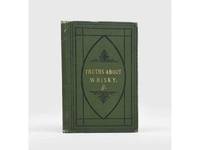
1878182885London: printed by Sutton Sharpe and Co. 1878. A diatribe against disruptive distilling from the "Big Four" First edition an attack on Scottish whisky by the four great Dublin distilleries: John and William Jameson John Power and George Roe. They were the world's largest distilleries at the time and were threatened by the rise of cheap blended scotch. The first edition is rare in commerce. The book attempts to discredit the use of the revolutionary Coffey still which could produce alcohol faster and more cheaply than the huge copper pot stills used by Irish distilleries. The Dublin distilleries had joined forces to campaign for a strict legal definition of whisky but finding government unresponsive to their plight they published this book to appeal directly to the consumer. By 1908 60 per cent of all whisky produced in Britain and Ireland was made in Coffey stills. While the Irish distilleries' failure to account for changing times was one reason for their decline there were a myriad of other reasons: the First World War the Anglo-Irish War and prohibition in the United States. By the early 20th century Scotland surpassed Ireland to become the world's largest whisky producer. Octavo. With four folding plates illustrating each of the contributing Dublin distilleries. Original green cloth boards lettered in gilt and bordered with decorations in black yellow endpapers. Contemporary pencil ownership signature on front pastedown. A touch of wear at foot of spine extremities a little bumped and rubbed slight soiling and a few spots of foxing to contents a few gutters cracked pp. 55-58 loose: a very good copy. hardcover
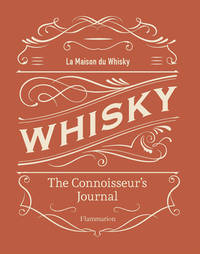
20172-2081416344Flammarion 2017. Hardcover. New. 244 pages. French language. 9.45x7.87x1.18 inches. Flammarion hardcover
2081519550.Ghardcover. Good. Access codes and supplements are not guaranteed with used items. May be an ex-library book. hardcover