8 981 résultats
Incisione tratta dalla celebre raccolta Icones principum, virorum, doctorum, pictorum, chalcographorum, di Anton van Dyck, edita per la prima volta ad Anversa verso il 1640. Opera celebre ed importante, vero monumento dell’arte incisoria fiamminga del sec. XVIII, contiene le biografie ed i ritratti degli uomini illustri che Van Dyck aveva conosciuto e con i quali aveva avuto importanti rapporti. L’artista ne eseguì le effigi in numerosi dipinti e disegni che poi decise di pubblicare, affidandone la trasposizione calcografica ai migliori incisori del suo tempo, come Bolswert, Pontius, Vorsterman, de Jode, Hollar, molti dei quali aveva avuto come condiscepoli nell’atelier di Rubens. "Sir Anthony Van Dyck stands out as the solitary great etcher of the school. Portrait etching had scarcely had an existence before his time, and in his work it suddenly appears at the highest point ever reached in the art" (Hind, p. 165). "The plan of this publication took shape after Van Dyck returned from Italy (1626) and before he went to England (1632). He made careful preparatory drawings in chalk and brush for the publication. He directed and revised the work of the engravers, the best of the Rubens circle; he collaborated with his etching needle in some of the plates and himself etched the most beautiful set, mainly portraits of artists. One of the most brilliant in human characterization is the portrait of Peter Brueghel the Younger, son of the great Peasant Brueghel. It is remarkable that the etching appeared in this sketchy form in the book, proving that the master regarded it as finished. All interest is focussed on the wonderful had. The first edition was published in Antwerp in 1635-1636. Yet it was not complete, and the title-page did not appear before the Gillis Hendricx edition of 1645, engraved by Jacob Neels" (Benesch, Artistic and Intellectual Trends, p. 32.) Hofer, Baroque Book Illustrations 132. Acquaforte con ritocchi al bulino, stampata su carta vergata coeva, filigrana del “giullare”, con margini, in ottimo stato di conservazione. Etching, circa 1630-40, lettered below the portrait, in two lines of Latin: "Judocus de Momper Pictor / montium Antverpiæ". Signed in lower margin left: "Ant. van Dyck fecit aqua forti".Portrait of Joos de Momper, half-length in front of a rocky overhang, turned to the right but looking towards the viewer; with short hair, moustache and beard, wearing a collar, buttoned doublet and cloak, his gloved right hand gesturing behind him at the level of his chest.A fine impression, printed on contemporary laid paper, with margins, very good condition.From the 'Icones principum, virorum, doctorum, pictorum, chalcographorum' by Anton van Dyck, printed for the first time in Antwerp, 1645.Following the success of his portrait paintings and in the tradition of Italian and Flemish portrait series, Van Dyck decided to organise a print publication containing portraits of the most prominent men during his lifetime, divided into three categories: princes, politicians and soldiers (16), statesmen and scholars (12), artists and art connoisseurs (52). The initial idea could have been that Van Dyck would etch the faces (a process possibly learnt from Vorsterman) while others would finish the plates in engraving. Designs were needed for the plates and several drawings and oil sketches (grisailles, sometimes in different versions) have survived. Van Dyck only etched 17 plates himself, while he commissioned others to complete the set, overseen by Lucas Vorsterman I (especially after Van Dyck settled in England in the Spring of 1632).Although this project was started by Van Dyck around 1630, he never saw it completed. The Antwerp publisher Maarten van den Enden may have been involved from the start as eighty early impressions bear Van den Enden's address. They are engraved by Paulus Pontius (30 plates), Lucas Vorsterman I (22), Pieter de Jode II (12), Schelte a Bolswert (7), Robert van Voerst (4), Willem Hondius (2), Willem Jacobsz Delff (1), Cornelis Galle (1), and Nicolaes Lauwers (1). It is known that Van den Enden was in debt to Gillis Hendricx around 1644, the Antwerp publisher who must have obtained Van den Enden's plates which he published in 1645 in the first edition of these plates (containing between 100 and 104 portrait plates). Hendricx continued to publish these plates until his death in 1677 when they were auctioned off by the St Luke guild (keeping the Iconography plates together). It is not clear who bought these plates but they re-appeared around 1720 when they were published by Hendrick and Cornelis Verdussen in Antwerp. The New Hollstein (Dutch & Flemish) 6.III (Van Dyck); Mauquoy-Hendrickx 1991 7.III.
Bildgröße: 330 x 300 mm. Blattgröße 540 x 360 mm. *Elisabeth Amalie Eugenie, Herzogin in Bayern (auch Sisi, Sissi oder Lisi genannt; geboren am 24. Dezember 1837 in München; gest. am 10. September 1898 in Genf) war eine Prinzessin des Hauses Wittelsbach und durch ihre Heirat mit Franz Joseph I. ab 1854 Kaiserin von Österreich. - Sehr seltenes Bildnis von Elisabeth zur Zeit als Franz-Joseph auf Brautschau ist. Es war eine "Beilage zum "Wiener Telegrafen" Die 16-jährige Herzogin von Bayern wird hier schon mal dem Österreichischen Publikum im weißen Schleierkleid präsentiert. Noch ahnte niemand, dass Sie ein Jahr später bereits Kaiserin von Österreich sein wird. - Sehr seltenes Blatt. - Kleiner hinterlegter Einriß am rechten Seitenrand (ca. 1 cm). Insgesamt sehr gut erhalten. Graphiken de
Acquaforte e bulino, 1625, ante litteram. Magnifica prova del raro primo stato di due, avanti la firma e la data, impressa su carta vergata coeva, rifilata al rame, in eccellente stato di conservazione. Disegnatore, pittore e stampatore, figlio del padovano Ludovico Leoni (1542–1612), un fabbricante di medaglie e di ritratti a rilievo su cera, da cui il soprannome "Padovanino". Celebre per i suoi ritratti di tutta l’aristocrazia romana degli inizi del XVII secolo, il Leoni, romano di nascita, deve il suo soprannome alla città natale del padre, anch’egli pittore di ritratti. Controversa l'identità del volto raffigurato: secondo il Mariette, grande appassionato di disegni ed incisioni del Leoni, si tratterebbe di Mario Nuzzi detto “Mario de’ Fiori”, mentre più ragionevolmente si tratta del suo amico Tommaso Salini, ipotesi confermata dalla leggenda aggiunta nella prova del secondo stato. Ai lati del ritratto principale, un curioso accostamento di due testine incise al bulino, ad avvalorare il fatto che la lastra non gli fu commissionata, ma venne realizzata in tutta libertà. Nel 1603 fu coinvolto nel celebre processo contro il Caravaggio accusato di diffamazione, insieme con altri compari, da Giovanni Baglione: secondo la deposizione proprio di Tommaso Salini Leoni sarebbe stato tra gli autori con Orazio Gentileschi di parte di quei versi infamanti; ma fu discolpato completamente dalla testimonianza del Caravaggio, il quale affermò di conoscere il Leoni solo di vista e di non avergli mai parlato. Pittore, incisore ma innanzitutto straordinario disegnatore di ritratti, immortalò su un numero sterminato di fogli di carta azzurra i volti della Roma del primo Seicento: papi, cardinali, nobiluomini e dame, ma anche scienziati, matematici, artisti e poeti. I suoi ritratti detti "alla macchia" (Baglione, p. 321), cioè tirati a memoria dopo aver visto il modello quasi di sfuggita, conquistarono un pubblico amplissimo per la straordinaria resa realistica, cui contribuì certamente l'artificio della tecnica à trois crayons (matita nera, sanguigna e gesso bianco). Bibliografia Bartsch 7 I/II; Petrucci, Il Caravaggio acquafortista, pp. 35/46. Etching and engraving, 1625, unlettered. A magnificent impression of the rare first state of two, before the letters, printed on contemporary laid paper, trimmed to the platemark, in excellent condition. Famous for his portraits of all the Roman aristocracy in the early 17th century, the Roman-born Leoni owes his nickname to the birthplace of his father, who was also a portrait painter. The identity of the face depicted is controversial: according to Mariette, a great fan of Leoni's drawings and engravings, it is Mario Nuzzi, known as "Mario de' Fiori", while it is more likely to be his friend Tommaso Salini, a hypothesis confirmed by the legend added on the examples of the second state. On either side of the main portrait is a curious juxtaposition of two engraved heads, confirming the fact that the plate was not commissioned. Ottavio Leoni was the son of the Paduan-born Ludovico Leoni (1542–1612), a maker of medals and wax relief portraits. Although Ottavio was active entirely in Rome, where his father had also worked and died, he was often known as ‘il Padovanino’ because of the family origins. In 1603 Ottavio was involved in a libel action against Caravaggio by the painter Giovanni Baglione, whose life provides the best source of information on Leoni’s life. One witness at the trial, Tommaso Salini, claimed he had received verses criticizing Baglione written by Orazio Gentileschi and ‘Ottavio Padovano’. Caravaggio testified that he knew Leoni without having ever spoken to him. The following year Leoni was admitted to the Accademia di S Luca in Rome and in 1614 became its principal. It was at this time, according to Baglione, that he painted two canvases, a Martyrdom of St Martina and an Ascension (both untraced). In 1621 Leoni became a member of the Accademia dei Virtuosi del Pantheon, the body to which he presented in 1628 an oil portrait of Gregory XV. He portrayed the faces of early 17th century Rome on an endless number of sheets of blue paper: popes, cardinals, noblemen and ladies, but also scientists, mathematicians, artists and poets. His portraits known as "alla macchia" (Baglione, p. 321), i.e. drawn from memory after having seen the model almost in passing, won a very wide public for their extraordinary realistic rendering, to which the artifice of the à trois crayons technique (black pencil, sanguine and white chalk) certainly contributed. Bibliografia Bartsch 7 I/II; Petrucci, Il Caravaggio acquafortista, pp. 35/46.
Bulino, 1605, iscrizioni in persiano e latino, "Mechti Kvli Beg Ennvg Ogly Illvstris D. In Persia Legatvs Regis Persar: Ad Imp: Roman" e “S.Caes. Mti.s scultore Aegidius Sadeler ad vivum delineauit Cum Privil.S.Cae. Mti.s Anno. Pragae.1605”. Primo stato, avanti l’indirizzo editoriale. Buon esemplare, stampato su carta vergata coeva, applicato su antico supporto di carta da collezione, rifilato ai margini, occasionale foxing, altrimenti in ottime condizioni. Ritratto inciso di Mehdi Quli Beg (d. 1629), ambasciatore di Shah Abbas I presso la corte di Rodolfo II del Sacro Romano Impero. Engraving, 1605, lettered in Persian and Latin, “Mechti Kvli Beg Ennvg Ogly Illvstris D. In Persia Legatvs Regis Persar: Ad Imp: Roman”, (Mehdi Quli Beg, son of Ennug, a famous lord in Persia, ambassador of the King of the Persians to the Roman Emperor), and “S.Caes. Mti.s Sculptor Aegidius Sadeler ad viuum delineauit Cum Privil.S.Cae. Mti.s Anno. Pragae.1605”. First state before publisher's address. Good example, printed on contemporary laid paper, applied on collector’s old paper support, trimmed at margins, occasional foxing, otherwise very good condition. Engraved portrait of Mehdi Quli Beg (d. 1629), ambassador of Shah Abbas I to the court of the Holy Roman Emperor Rudolf II, half-length and slightly turned to left, a bird (probably a falcon) perched on his right hand, in oriental dress and wearing a turban. Zeynal Khan Shamlu, and later, Mehdi Quli Beg, were amongst seven ambassadors sent by Shah 'Abbas to European courts, as part of his attempt to enlist Christian cooperation in confronting the Ottomans with a multi-front threat. The ongoing war in Hungary had led to financial strains, internal revolts and a decline in loyalty of Ottoman troops; to 'Abbas these troubles signalled that the Ottoman adversary had been weakened to the point where his revived Persian army could reclaim the territory lost in the previous war. Zeynal Khan Shamlu departed in mid-1603 and arrived in Prague on 19th July 1604 to much fanfare. He and his party of 30 servants were given an escort of over one thousand men, mounted and on foot. Mehdi Quli Beg arrived later, in December, updating Rudolf on the situation. After endless debate and vacillation, Rudolf elected to begin peace negotiations with the Ottomans. All this meant that the Persian ambassadors were fixtures in Prague until October 1605, and were doubtless regarded as exotic figures (which is obvious from the insistence on using Persian for the prints, which no one in Prague could read and which would have taken some effort to reproduce). Hollstein 275.I
1994015384Munchen Gina Kehayoff verlag 1994 In-8 Broché, couverture à larges rabats
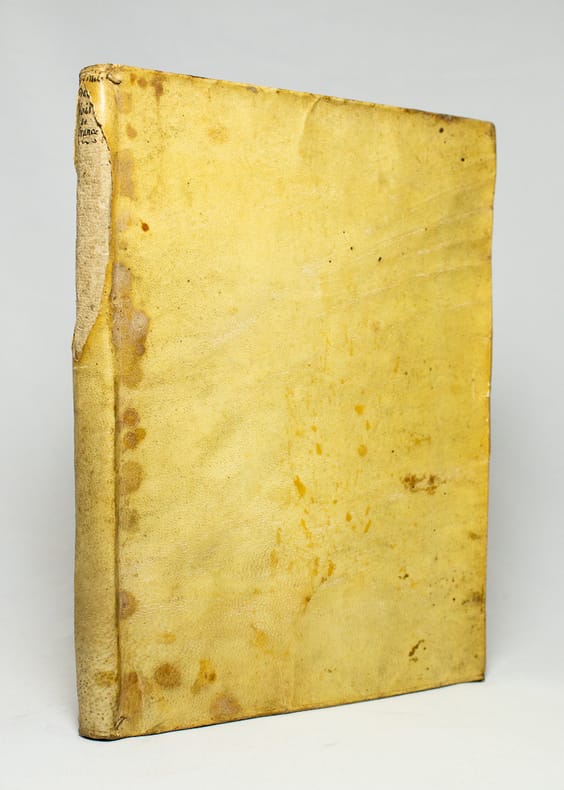
166017510Paris, Louis Boissevin, [1660]. In-4 de 66 feuillets, plein vélin ivoire.
Format (Bildbereich): 49 x 39 cm (mit Bordürenumrahmung: 65 x 49 cm). Blattgröße: 81 x 58 cm. Am rechten Unterrand mit eigenhändiger Widmung und Signatur, datiert den 2. Juli 1852. *Das seltene und übergroße Prachtblatt ist recht selten, als Widmungsexemplar aber kaum nochmal auffindbar. Das vorliegende Exemplar hat alters- und Lagerspuren: Außenränder gebräunt und mit ein paar weißen Fleckchen am linken unteren Rand. Der Oberrand mit unregelmäßigem Knick oder Riß im Papier (ca. 11 cm) bis an den Oberrand der Darstellung. Versand erfolgt ausgerahmt in Rolle. Bei Abholung kann der monumentale vorhandene Rahmen (96 x 74 cm) kostenlos mitgegeben werden- - Herzog Maximilian Joseph in Bayern (1808-1888) stammte aus einer Wittelsbacher Nebenlinie. Er lebte im prächtigen Herzog-Max-Palais in München, später in Schloss Possenhofen, wo die Lieblingstochter Sissi (die spätere Kaiserin Elisabeth) ihre Kindheit verbrachte. Max war eine höchst interessante und eigenwillige Persönlichkeit, er war nicht nur ein leidenschaftlicher und virtuoser Zitherspieler, sondern er komponierte auch eine ganze Anzahl von Stücken und ist daher auch als "Zither-Maxl" bekannt. - Exemplar aus dem Haus Wittelsbach (Schloß Tegernsee). - Die weißen Blattränder gebräunt, insgesamt sehr gut erhalten in einem vollrandigen Exemplar. Graphiken de
11414Lausanne, André et Pierre Gonin, sans date. In-4 en feuilles de 108-[6] pages, chemise blanche gaufrée de formules d'algèbre, sous chemise de soie bleue et étui de soie violette, un brin insolée, titre en bleu au dos de la chemise.
22457Paris Delpech Grand In-folio portraits lithographiés par divers artistes de de Louis XVI, Marie Antoinette , Louis XVII, Madame Royale, madame Elizabeth, la princesse de Lamballe, duc de Lauzun, Mirabeau, Barnave, Mounier, Necker, Lamoignon de Malesherbes, le Marquis de Bouillé, le prince de Condé, Calonne, st Just, Fabre d'Eglantine, Louis Philippe, Lally Tollendal, l'abbé Edgworthbailly, Petion, Merlin de Douai, Lepelletier, Beurnonville, Custine, Roland, madame Roland, Lafayette, Marat, Charlotte Corday, Robespierre, Herault de Sechelles, Barras, Moreau, Monge, kleber, Hoche, Marceau, Buonaparte, Berthier Mac Donald; Desaix, David, Cathelineau, Larochejaquelein , Charette Chenier, le Duc d'Enghien, Ducis, Delille, Pastoret, Talleyrand, Danton, Lameth, Maury, Sieyès, Valence, Poniatowski, Soult Madame de Stael, kellermann, Lebrun, Fouché, Bernadotte, Gouvion Saint Cyr, Carnot, Dumourier, Bessieres, Ney Chaptal, Pie VII. Prsque tout les portraits sont accompagnés d'un fac simile reproduisant l'écriture de tous ces grands représentés ici, c'est à dire tout un pan des protagonistes et victimes de la révolution du consulat et de l'empire.La reliure est en mauvais état, percaline passée et mors fendu, rares traces d'humidité, le portrait de madame Roland et celui de Ney sont tirés sur un mauvais papier qui a roussi
Format Platte: 495 x 370 mm. Bildbereich: 345 x 290 mm. Blattgröße: 655 x 520 mm. *Elisabeth Amalie Eugenie, Herzogin in Bayern (auch Sisi, Sissi oder Lisi genannt (1837-1898) war eine Prinzessin des Hauses Wittelsbach und durch ihre Heirat mit Franz Joseph I. ab 1854 Kaiserin von Österreich. - Bekanntes Bildnis von dem Österreichischen Künstler F.X. Stöber (1795-1858), hier ein Exemplar der ersten Probeabzüge vor aller Schrift (wurde danach vom Verlag Paterno mit Beschriftung verlegt). Im Biographischen Lexikon des Kaiserthums Oesterreich wird dieses Blatt ausdrücklich als eines der wenigen trefflich gearbeiteten Bildnisse bezeichnet: "Die Zahl der Porträte ist sehr groß, aber nur die kleinste Zahl derselben gibt die Anmuth der Gesichtszüge der erlauchten Fürstin treu wieder. Es wird sich hier nur auf die Anführung der trefflichsten und als solcher anerkannten Porträte beschränkt … 8) nach Schrotzberg in Linienmanier gest. von F. Stöber". - Vollrandiges und sehr gut erhaltenes Exemplar aus der Provenienz Wittelsbach. Graphiken de
Blattgröße: 625 x 445 mm. Platte (Oval): 390 x 305 mm. *Elisabeth Amalie Eugenie, Herzogin in Bayern (auch Sisi, Sissi oder Lisi genannt; geboren am 24. Dezember 1837 in München; gest. am 10. September 1898 in Genf) war eine Prinzessin des Hauses Wittelsbach und durch ihre Heirat mit Franz Joseph I. ab 1854 Kaiserin von Österreich. - Sehr seltenes und frühes Bildnis, noch vor ihrer Vermählung mit Franz Josef. Hier wird sie noch als Herzogin von Bayern tituliert. Der Hofmaler Eduard Kaiser verstand es trefflich die 16-Jährige sonst oft noch noch mädchenhaft dargestellte Herzogin als eine schöne junge Frau darzustellen. - Wenige minimale Braunfleckchen. Vollrandiges und sehr gut erhaltenes Blatt Graphiken de
Format: 38,2 × 28 cm (mit kleinem umlaufenden Rand um die Plattenkante). *Johann Jacobé (geb.* 1733 in Wien; gest. 24. Juli 1797 ebenda) war ein österreichischer Kupferstecher, Schüler von Jacob Matthias Schmutzer, Professor an der 1768 gegründeten k.k. Zeichnungs- und Kupferstecherakademie in Wien. Er beschäftigte sich hauptsächlich mit der Schabkunst (Mezzotinto). - Seltenes Blatt. Eine außerordentlich gelungene qualitätsvolle Arbeit in meisterlicher Behandlung von Licht und Schattierung, vorliegend ein Probeabzug vor aller Schrift in sehr guter Erhaltung. Ränder minimal gebräunt. Graphiken de
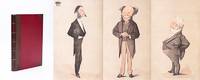
187229260AB1872. London Vanity Fair 1872. Folio. 208 208 pages. Complete set. Interleaved with 51 chromolithographic portraits. Beautifully restored original Hardcover half-leather with orginal spine gilt letttering and ornament. With new linen-covered boards using the original pastedowns and endpapers. A stunning Volume in excellent condition. All illustrations in wonderful colour. Portraits include: 1. Caricature of Marie Joseph Louis Adolphe Thiers President of France. Caption read "Faute-de-mieux Premier" / 2. Caricature of Richard Edmund St Lawrence Boyle 9th Earl of Cork and 9th Earl of Orrery 1829-1904. Caption read "Master of Her Majesty's Buckhounds" / 3. Caricature of Dr Frederick Quin 1799 - 1878. Caption read "Homoeopathic Society" / 4. Men of the Day No.38: Caricature of Mr. James Anthony Froude. Caption reads: "He created Henry VIII exploded Mary Stuart and demolished Elizabeth" / 5. Caricature of Wilkie Collins 1824-1889. Caption read "The Novelist who invented Sensation" / 6. Caricature of Spencer Horatio Walpole 1806-1898. Caption read "He defended Hyde Park" / 7. Caricature of John Ruskin. Caption read "The realisation of the Ideal" / 8. Caricature of George Grenfell Glyn M.P. 1824-1887. Caption read "The Whip" / 9. Alexander William Kinglake 18091891 - British politician military historian writer and traveler. Caricature / 10. Caricature of William Henry Smith 1825 1891. Caption read "Newspapers" / 11. Caricature of Sir Roundell Palmer. Caption reads: "He refused the Woolsack and voted against the Disestablishment of the Irish Church" / 12. Caricature of Mr.John Francis Maguire MP. Caption reads: "A Home Ruler" / 13. Caricature of Charles Kingsley 1819-1875. Caption read "The Apostle of the Flesh" / 14. Caricature of John Tyndall. Caption read "The Scientific Use of the Imagination" / 15. Caricature of Reverend John Cumming. Caption read "The End of the World" / 16. Caricature of The Rt Hon Gathorne Hardy MP DCL. Caption reads: "Conservative" / 17. Caricature of Mr William Hepworth Dixon. Caption reads: "He discovered New America and Free Russia" / 18. Caricature of King Amadeus of Spain. Caption reads "He would be a King" / 19. Caricature of Sir Wilfrid Lawson 2nd Baronet MP 1829-1906. Caption reads: "Permissive Prohibition" / 20. Caricature of The Hon Hamilton Fish. Caption reads: "Consequential damages" / 21. Caricature of The Hon. Charles Sumner 1811-1874. Caption reads: "The Massive Grievance" / 22. Caricature of Ulysses S. Grant. Caption read "Captain Tanner Farmer General Imperator" / 23. Caricature of Thomas Hughes M.P. 1822-1896. Caption read "Tom Brown" / 24. Caricature of Mr S Morley MP. Caption reads: "Dissent" / 25. Caricature of Sir Arthur Wellesley KG PC MP 2nd Duke of Wellington. Caption read "The son of Waterloo" / 26. Caricature of Frederic Leighton 1830-1896. Caption read "A sacrifice to the Graces" / 27. Caricature of Michael Costa 1808-1884. Caption read "Orchestration" / 28. Caricature of Mr George Leeman MP. Caption read "A Yorkshire Solicitor" / 29. Caricature of Horace Greeley. Caption reads: "Anything to beat Grant" / 30. Caricature of The Rt Hon Edward Pleydell-Bouverie MP. Caption reads: "He did not decline the Speakership." / etc. hardcover
183812622Paris, H. Delloye - Victor Lecou, 1838. In-4 de [4]-402-[2] pages, demi-veau brun, dos lisse orné de filets, décor et titre dorés, tranches marbrées, plats et coins de percaline.
175613690ABKempten, 1756, 1756. Folio. 24 S. Titel in Rot und Schwarz gedruckt. Mit 1 gest., allegorischen Frontisp., 1 gest. Titelvignette, 60 Kupfer-Portraits (in Schabmanier) nach J. C. Füssli von Val. Dan. Preisler und Sebastian Walch, 13 leere Blatt. Halbpergamentband der Zeit.
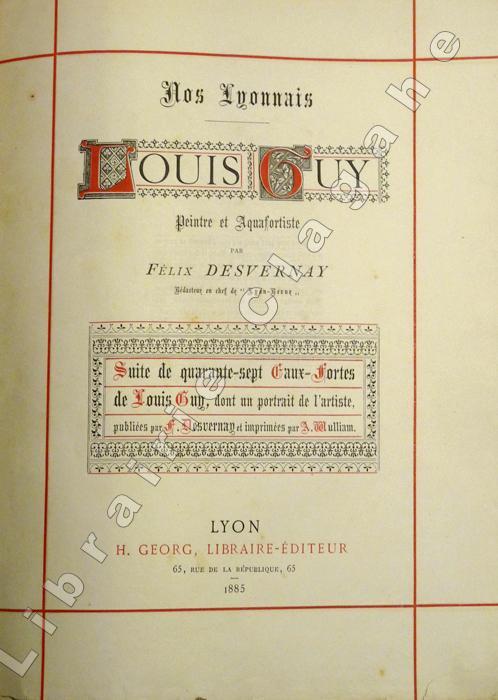
188512353Lyon, H. Georg (Lyon, A. Waltener imprimeur), 1885 ; in-4, broché ; 20 pp., 47 eaux-fortes hors-texte protégées par des serpentes, couverture imprimée en rouge et noir.
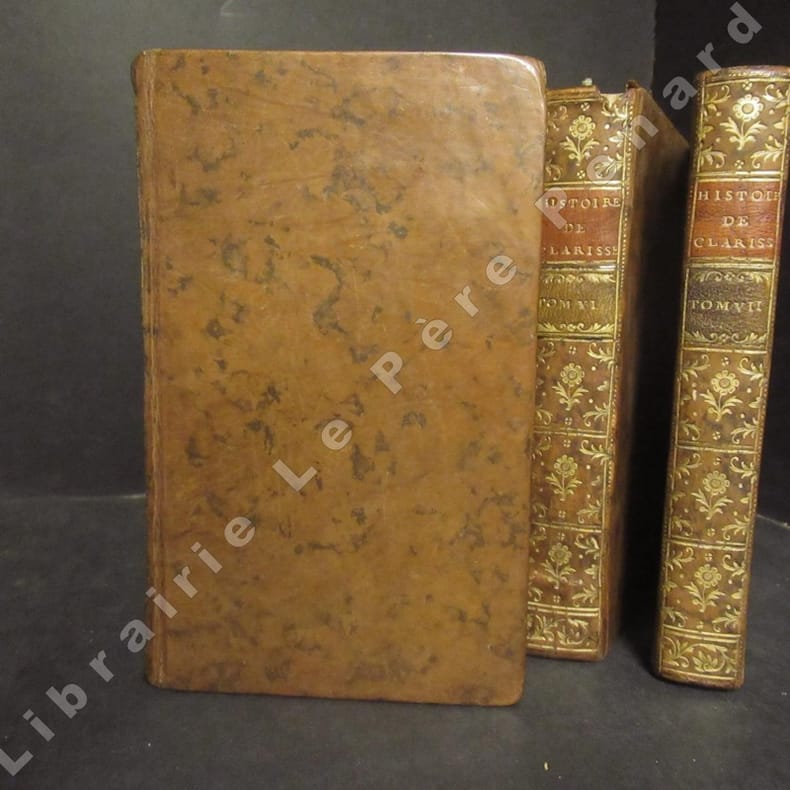
17661124581766 A Paris, Chez les Libraires Associés - M. DCC. LXVI. (1766) - 7 volumes in-12 (10x16cm environ), reliure pleine peau brune, caissons et fleurons dorés au dos avec pièce de titre - xxxii / 244 pp. + 222 pp. / 224 pp. + 207 pp. / 188 pp. + 184 pp. / 232 pp. + 232 pp. / 223 pp. + 220 pp. / 300 pp. + 192 pp. / 216 pp. - Avec figures (bandeaux, lettrines, cul-de-lampe et gravures)
1900178BGLondon, Stereoscopic and Photographic Company Ltd., 1900. Photographie (Portrait). Format: 24 x 27,5 cm Blattformat 34,5 x 44,5 + Wichtig: Für unsere Kunden in der EU erfolgt der Versand alle 14 Tage verzollt ab Deutschland / Postbank-Konto in Deutschland vorhanden +
Acquaforte, 1763, in basso a sinistra “Nazarius Nazarii pinxit”; a destra “Marcus Pitteri sculpsit”. Nel margine inferiore, con al centro lo stemma araldico, l’iscrizione latina “Aloysius Monenicus Venetiarum Dux CXIX/ Suae Gentis VII, assumptus XIII Kal. Maij Anni MDCCLXVIII”. Da un dipinto di Nazario Nazari.Bell’esemplare, applicato su antico supporto cartaceo, rifilato alla linea marginale, in ottimo stato di conservazione.Alvise IV Mocenigo fu il centodiciottesimo Doge della Serenissima, il settimo doge della casata dei Mocenigo, dal 19 aprile 1763 alla sua morte, nel 1778.Per ricordare i festeggiamenti della sua elezione Lodovico Furlanetto ordinò al Canaletto dodici disegni che venne poi trasferiti su lastre di rame da Giambattista Brustolon raffiguranti le solennità dogali, che Francesco Guardi e altri artisti riproporranno in dipinti.In basso a sinistra, timbro di possesso non identificato Lugt, 4159 Etching, 1763, lower left “Nazarius Nazarii pinxit”; lower right “Marcus Pitteri sculpsit”. In the lower margin: “Aloysius Monenicus Venetiarum Dux CXIX/ Suae Gentis VII, assumptus XIII Kal. Maij Anni MDCCLXVIII”. After a painting by Nazario Nazari.Good example, applied on eigheteenth-century paper, trimmed at margins, in very good condition. Alvise IV Mocenigo was the eleven hundredth Doge of the Serenissima, the seventh doge of the Mocenigo family, from 19 April 1763 to his death in 1778.To commemorate the celebrations of his election, Lodovico Furlanetto commisioned to Canaletto twelve drawings, which were engraved by Giambattista Brustolon, depicting the solemnities of the Doges, which Francesco Guardi and other artists will repropose in paintings.At lower left an unidentified collection mark, Lugt 4159
191421301Paris Imprimerie du Succes 1914 1 in-folio Paris, Imprimerie Succès, 1914, premier fascicule in-folio, broché, couverture illustrée d'une paire de ciseaux dorés et gaufrés, titre en noir, 32 pages.
191423308Paris Imprimerie du Succes 1914 1 in-folio Paris, Imprimerie Succès, 1914, fascicule in-folio, broché, couverture illustrée d'une paire de ciseaux dorés estampée à froid, titre en noir, 32 pages.
19045875New-York, Privatly printed for the Soctt-Thaw compagny, 1904. In-folio de [10]-269-[1]p., plein maroquin bordeaux, dos à nerfs orné de filets, fleurons dorés, plats très richement ornés de filets, fleurons et rinceaux dorés, petites pièces de maroquin vert aux angles, contre-plats doublés de maroquin de même teinte, richement orné à l'identique, gardes de soie moirée lie de vin, tête dorée (mors et coupes inférieures un peu frottés, un coin ouvert, petit manque à la coiffe).
1904006154Paris: Octave Beauchamp. Printer: G. de Malherbe 1904. First edition. Hardcover. Cloth spines. Wood boards. Slipcases. Near Fine. Folio 33 by 26 cm. Unpaginated. With pieces on Victorien Sardou Sarah Bernhardt François Coppée Mme Edmond Adam Anatole France Mme la Duchesse D'Uzès Jules Lemaître Mme Réjane Jules Claretie Mme Segond-Weber Jean Richepin Marthe Brandès Coquelin Aîné Jeanne Granier Jules Massenet Aïno Ackté Mounet-Sully Jane Hading J-L.Gérôme Jane Hatto Antonin Mercié Marie Delna Luc-Olivier Merson Sibyl-Sanderson F.-A. Bartholdi Mme. Carrère-Xanrof Alfred Capus and la Reine Ranavalo. With each following a title page two pages of biography a portrait page and a note biographique page the former being more impressionistic seeking to convey something of the personages character charisma and basis for renown and the latter more a straightforward concise biography. Also on a glossy leaf is a photograph surrounded by chromolithographed Art Nouveau decoration and a facsimile holograph inscription and autograph. More exciting are the 14 caricature color plates by the artist Cappiello including ones of Bernhardt Coppée Lemaître Réjane Claretie Segond-Weber Richepin Brandès Coquelin Granier Mounet-Sully Hading Delna and Capus. The boards are of wood with an inset medallions of Sarah Bernhardt in her role as "La Princesse Lointaine" after the illustration by Alphonse Mucha. With; publisher's slipcase. Condition: foxing on pages relating to Hatto. Otherwise thoroughly clean within and light wear to exterior. Slipcase with moderate shelfwear. <br/><br/> Octave Beauchamp. Printer: G. de Malherbe hardcover books
113165aafum 1650, 29x22 cm (Blattgr.) 22x15 (Kupferplatte), vereinzelt fleckig und randrissig, Sammlung v. 61 loser Blätter.
1900178BGLondon, Stereoscopic and Photographic Company Ltd. 1900. Photographie (Portrait). Format: 24 x 27,5 cm Blattformat 34,5 x 44,5