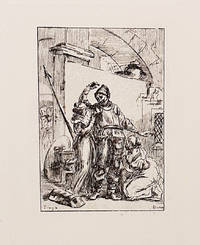
Fragonard Jean Honoré.Livre Rare Book

580 résultats
R320116756Edition artistique des laboratoires Le Brun. Non daté. In-4. En feuillets. Bon état, Couv. convenable, Dos satisfaisant, Intérieur frais. Une planche en monochrome - 2 photos disponibles.. . . . Classification Dewey : 760-Arts graphiques. Gravures
13725Paris, Les Editions pittoresques, 1929. Edition définitive illustrée de 60 hors-texte en héliogravure In-4 broché 238 pp.
L740CBROCHE 1990 EDITIONS INTERUNIVERSITAIRES
1954AUB-7898Ed. Spes 1954. Bel exemplaire relié, jaquette conservée, gd in-8 carré, 26 pages + planches et notices des planches.
1990R150231263GALLIMARD. 1990. In-12. Broché. Etat du neuf, Couv. convenable, Dos satisfaisant, Intérieur frais. 144 pages - ACHEVE D'IMPRIMER EN 1990 - nombreuses illustrations en couleur et en noir et blanc en dehors et dans le texte - 1 autocollant sur le 2ème plat n'altérant pas la lecture. . . . Classification Dewey : 800-LITTERATURE (BELLES-LETTRES)
185135504494Paris, Permain, 1851 ; in-12, broché, couverture bleue imprimée à l’adresse de Jules Gay et datée 1861. 188 pp.ÉDITION ORIGINALE. Curiosité rabelaisienne en vers à pieds variables, construite comme un oratorio : récitatifs mêlés de dialogues selon les épisodes de l’œuvre de Rabelais avec ses personnages : Gargantua, Pantagruel, Pichrocole, Panurge, Dindenaut, Grippeminaud, Frère Jean. La farce est dédiée aux “amis de la dive bouteille”.Théophile Fragonard (Paris 1806 - Neuilly 1876), petit-fils du peintre Fragonard, n’était connu que comme illustrateur de livres et de porcelaines de Sèvres. Jules Lamarque était l’auteur d’une histoire de la Révolution et de quelques pièces de vers. Bel exemplaire sous une couverture de remise en vente par Jules Gay.
A9689Gallimard pliure au dos.
11903Paris, Frederic Gittler, s.d.,,in4, demi toile bleue, pièce de titre cuir , titre doré, couverture conservée, frontispice, 213pp., Introduction par Armand Dayot., avec une interessante et riche iconographie de ces deux grands peintres. Avec deux cent treize reproductions dont sept en heliogravure, tres Bon etat.
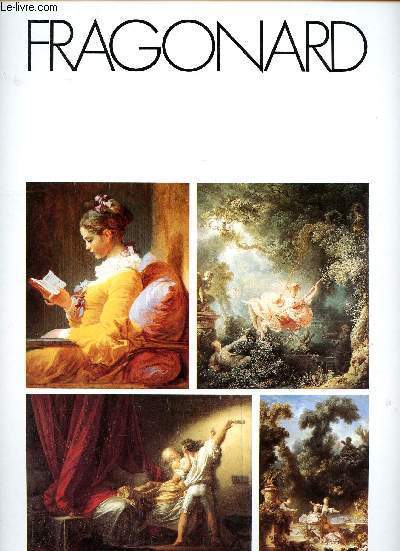
R260250417Chez l'auteur. Non daté. In-Plano. En feuillets. Bon état, Couv. convenable, Dos satisfaisant, Intérieur frais. Dépliant de 2 pages comprenant 4 feuillets augmentés de photos de peintures de Fragonard, en couleurs. Feuillets de 27x37 cm.. . . . Classification Dewey : 750-La peinture et les peintres
1986RO20271637DIDIER. 1986. In-8. Broché. Etat d'usage, Couv. convenable, Dos satisfaisant, Quelques rousseurs. 111 PAGES - texte pleine page ou sur deux colonnes - quelques annotations au crayon à papier sans conséquence sur la lecture. . . . Classification Dewey : 372.6-Livre scolaire : français
57981Paris, Université Paris 7, 2003, in-8, br., couv. ill. en noir éd., 166 pp., Retranscription des actes de la journée d'étude du 7 novembre 2003 pour Agrippa d'Aubigné. Pas courant Très bon état
9412Paris, Delloye, 1881. In-4-86-(2) pp., 20 planches, vignettes gravées dans le texte, cartonnage éditeur (reliure frottée).
2393École Normale Supérieure de Jeunes Filles (ex Sèvres) In-4 Couverture souple Paris
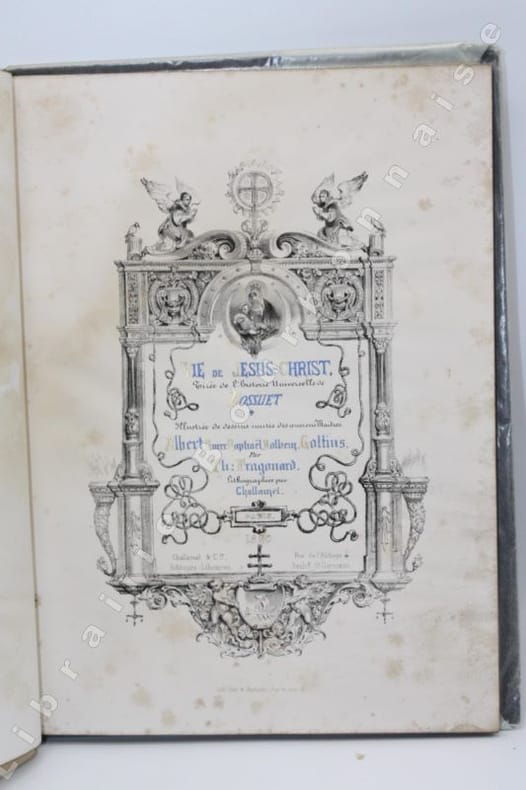
12305Paris, Challamel, 1840 ; petit in-4 (30 x 22,5 cm). 20 planches lithographiées sous serpentes. Titre, initiales, quelques majuscules, rehaussées or et bleu à la main. Cartonnage d'éditeur en papier bleu nuit, plt sup. orné d'une croix dorées contenant le titre et entourée d'une encadrement et d'un semi d'étoiles dorées. Frottements, accidents au cartonnage. Rousseurs marquées. Vignette ex-dono sur le contreplat sup. : "Souvenir du Général Vicomte Foullon de Doué, à Madame Coquille, née Petitier. Nancy, 14 août 1859". (Jean Philippe Foullon, vicomte, baron de Doué (1775-1859), général, maréchal des camps et armées françaises).
195483795Peret, Paris und Editions Spes, Lausanne 1954. 1954. Gr.-8°, XXVI S., 1 Bl., 69, (1) S., mit 47 Tafeln. Orig.-Pappband mit Orig.-Umschlag.
1948boz_002027Ferdinand Bac. Lettre autographe signé à Emily, 1948 Dimensions : 13,5 x 20,9 cm Nombre de pages : 2 pages
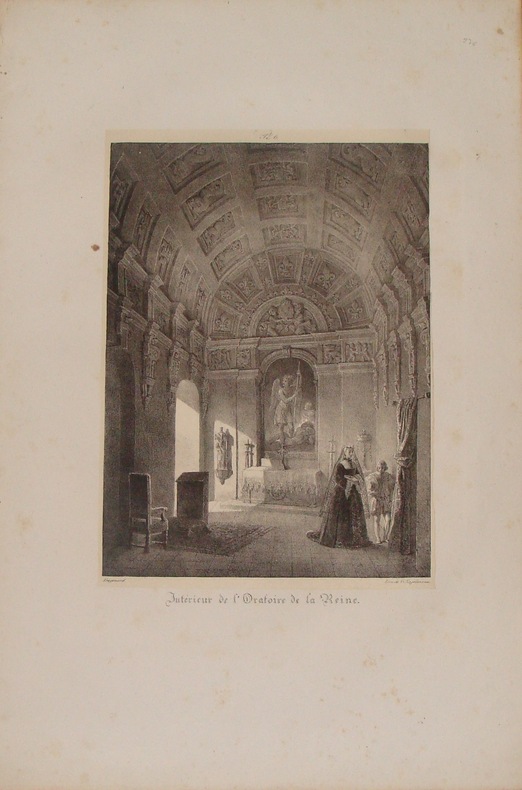
18219981821 PARIS. SANS DATE. (1821). 3 LITHOGRAPHIES EN 2 TONS DE ENGELMANN, MONTEES SUR CHINE (52,5 X 35 CENTIMETRES ENVIRON AVEC LES MARGES), TIREES DE L'OUVRAGE DE MERLE ET PERIE "DESCRIPTION HISTORIQUE ET PITTORESQUE DU CHATEAU DE CHAMBORD". COMPREND : - PL. 3. UNE VUE DE LA LANTERNE QUI TERMINE LE GRAND ESCALIER, D'APRES PERIE. - PL. 4. VUE DU CHATEAU PRISE, PRISE DU COTE DES APPARTEMENTS DE FRANCOIS 1°, D'APRES VILLENEUVE. - PL. 6. INTERIEUR DE L'ORATOIRE DE LA REINE, D'APRES FRAGONARD. ON JOINT LA PAGE 33 DE L'OUVRAGE AVEC UNE GRANDE VIGNETTE LITHOGRAPHIEE A MI-PAGE.
198155929Jupilles 1981 In-4 relié. 47 pages. Bon état d’occasion.
1946AUB-669Editions La Palatine, Genève 1946. Bel exemplaire relié, premier plat orné d'éd., gd in-8, 68 pages + 10 planches.
200355941Amateur 2003 In-4 broché 29,2 cm sur 18,8. 398 pages. Très bon état d’occasion.
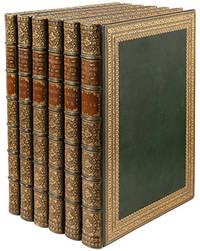
51-6251Paris: Hôtel de Cluny1838–46. Folio. 35 x 53.25cm. sheet size with pages attached to hinges for an effective width of 38cm. 6 plate volumes uniformly bound in full green morocco with elaborate gilt border designs; gilt inner dentelles marbled endpapers all edges gilt. .VERY HEAVY VOLUMES.10 plate albums bound in 5 plus the plate atlas album. With 508 lithographed plates 400 in the albums frontispiece portrait & 107 in the atlas many printed in color or hand-colored others black & white or sepia; color lithographed title pages for the atlas and the albums except for the title page of the tenth part which is not present and perhaps never published. Plain paper interleaves to the plates. Some of the plates are chromolithographs but most of the colored plates are richly handcolored and gommés. Sixty artists worked on the lithographs.References: Brunet II 920."ouvrage splendide et d'un grand intérêt"; OCLC Number / Unique Identifier: 1110334971.Dunbarton Oaks:Like his family before him Alexandre Du Sommerard 1779–1842 had a career in public service first in the military then in the civil service then in the court itself. Passion for his native country of France was even more manifest in his art collecting and studies which is where he directed most of his energies.The first items he acquired were paintings by contemporary French painters but after 1825 he devoted himself to art from the Middle Ages to the seventeenth century with particular attention to arts with French connections. In his actions and his collector’s tastes Sommerard was likely influenced by Alexandre Lenoir 1761–1839 who rescued medieval treasures and monuments from destruction during the French Revolution and who later set up the Musée des Monuments Français.By 1832 Sommerard had accumulated such a large collection that he purchased the late fifteenth-century Hôtel des Abbés de Cluny to house it. In each room of the building he arranged furniture objects and textiles according to their function or symbolic value in an attempt to replicate the interior spaces of the past.In 1838 Alexandre Du Sommerard published the first volumes of a multivolume work Les Arts du moyen-âge which he intended as a history of French medieval art. His collection and study included early Christian and Byzantine art as the precursors to western medieval art. He felt that history should not rely solely on written sources and that historians and the public needed to comprehend the history of art as well.The illustrated atlas and album were issued serially 10 installments in all and each with a beautiful unique title page. Inside each installment were large illustrations of medieval buildings and objects. In the Avertissement Sommerard brags that the publication used lithography the most advanced technique in book illustration available at the time in order to create accurate reproductions. At this point chromolithography was still in development and most lithographic illustrations were black-and-white so it seems likely that the rich colors in Sommerard’s publication were added manually.Upon his death in 1842 his collection and the building were bequeathed to the state. In 1844 Lenoir’s son Alexandre-Albert Lenoir 1801–1891 oversaw the movement of his father’s collection to Roman baths that are immediately adjacent to the Hôtel de Cluny. The combined collections became the Musée de Cluny now the Musée National du Moyen Âge. Edmond du Sommerard d. 1855 was appointed the museum’s first curator and was responsible for the acquisition of the museum’s famous lady-and-unicorn tapestries. Since then some items have been deaccessioned and moved to other museums but the existing museum still reflects the ideas and tastes of Sommerard and Lenoir.Alexandre Du Sommerard a mobilisé près de soixante artistes pour créer les cinq cents planches d’illustrations lithographiques des Arts au Moyen Âge.DeÌ€s ses débuts Alexandre a montré un intérêt marqué pour cette technique l’ayant deÌjaÌ€ utilisée pour Les Vues de Provins. Cet intérêt s’explique par la faciliteÌ d’exécution offerte par la lithographie qui n’exige pas des artistes l’apprentissage d’une technique de gravure particulière. Cette simplification d’exécution permet non seulement de réduire le temps nécessaire aÌ€ la réalisation d’une estampe mais aussi d’acquérir rapidement une renommée grâce aÌ€ la diffusion quasi immédiate de ces images. Cette avancée technologique explique pourquoi la lithographie est devenue rapidement une alternative intéressante tant sur le plan financier que commercial par rapport à d’autres procédés.PROVENANCE; Bookplate of M.C.D. Borden in each volume. Matthew Chaloner Durfee Borden was born on July 18 1842 in Fall River Mass. the son of Col. Richard and Abby W. Durfee Bordon. He was educated at Phillips Academy in Andover and graduated from Yale University in 1864. At Yale he was a member of Delta Kappa Epsilon and Skull and Bones. Later that year he entered one of New York's leading dry goods house as a stock boy. In 1865 he married his relative Harriet M. Durfee and they had seven children.Borden came to New York after graduation working as a clerk in a dry goods jobbing house. Three years later he became a partner in a commission firm and represented the American Print Cloth Works of Fall River. This concern failed in 1879 but Mr. Borden reorganized it in 1880 as the American Printing Company. In 1869 Borden decided to manufacture his own cotton rather than buying it from others to supply his printing mills. He built three mills to begin with and ultimately the Falls River Iron Works Mills was a thriving business. He was a compassionate man regarding his employees raising wages in times of depression and his mills were not struck by the labor unions when his relatives’ mills were.Borden also kept a home in New York City at 25 West 56th Street where he had many financial interests being a director of the Manhattan Company Bank the Lincoln National Bank the Astor Place Bank the Lincoln Safe Deposit Co. and the New York Security & Trust Co. In 1885 Mayor William R. Grace appointed Borden to be the Park Commissioner a position he held for five years. He was a member of the Union League Club Merchants Club Metropolitan Club New England Society New York Yacht Club Players Club Republican Club Riding Club and the Union League Club among many others. Borden was an avid yachtsman and belonged to the Seawanhaka Yacht South Side Sportsmen's and Jekyll Island Clubs. He was the owner of the yacht Sovereign which was later bought by the government and renamed the Scorpion. Mr. Borden also amassed a large and important collection of art. Paris: Hôtel de Cluny,1838–46 hardcover
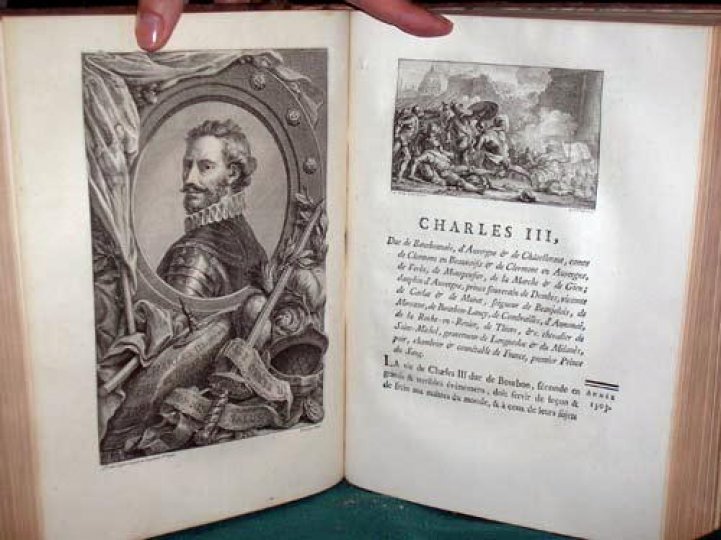
177616617Tome second de 1444 à 1527. 10 superbes illustrations, vignettes de titre, culs-de-lampe, et un portrait hors-texte du Connétable de Bourbon, dessiné d'après le tableau du Titien, par Fragonard, gravé par Miger. Avec Explication des vignettes contenues dans ce volume.Édition originale. A Paris, de l'Imprimerie Royale - 1776 - 662 pages.Reliure plein veau moucheté de l'époque. Dos à 5 nerfs orné et doré avec pièces de titre et de tomaison. Tranches dorées. Triple filets dorés encadrant les plats et sur les coupes. Pas de rousseur. Très bon état. Format in-4°(27x21).
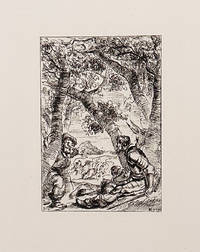
19001358Paris 1900. Etching on a large sheet of light cream wove paper 4 3/4 x 3 1/2 inches 120 x 90 mm full margins. In good condition with minor edge wear well outside of image area. An etching after the c1780 illustration by Fragonard likely printed early 20th century. The British Museum offers the following biographical information regarding the artist:<br /> <br /> "Painter draughtsman etcher curator and author. Worked as a diplomat in Naples 1779-85 where he learned how to engrave; travelled through Italy in 1788/89 and settled in Venice from where he was expelled in July 1793 prompting his return to Paris; in 1797/98 with Napoleon on the Egyptian campaign. In these years turned his amateur etchings into a business and published two catalogues of his work in 1793 and in 1803. Appointed in 1803 as first director of the Louvre and put in charge of the Gobelins Sèvres and the Monnaie; for this created a Baron. In charge of deciding the works to be removed from occupied Europe for the Louvre. Resigned in 1815 and spent his retirement in writing and organising the plates of his 'Monuments des arts du dessin' which was based on his own enormous private collection. Died in 1825 and his collection subsequently was sold in a series of auctions. unknown
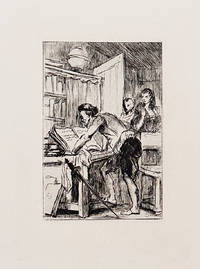
19001381Paris 1900. Etching on a large sheet of light cream wove paper 4 3/4 x 3 1/2 inches 120 x 90 mm full margins. In good condition with minor edge wear well outside of image area. An etching after the c1780 illustration by Fragonard likely printed early 20th century. The British Museum offers the following biographical information regarding the artist:<br /> <br /> "Painter draughtsman etcher curator and author. Worked as a diplomat in Naples 1779 - 1785 where he learned how to engrave; travelled through Italy in 1788/89 and settled in Venice from where he was expelled in July 1793 prompting his return to Paris; in 1797/98 with Napoleon on the Egyptian campaign. In these years turned his amateur etchings into a business and published two catalogues of his work in 1793 and in 1803. Appointed in 1803 as first director of the Louvre and put in charge of the Gobelins Sèvres and the Monnaie; for this created a Baron. In charge of deciding the works to be removed from occupied Europe for the Louvre. Resigned in 1815 and spent his retirement in writing and organising the plates of his 'Monuments des arts du dessin' which was based on his own enormous private collection. Died in 1825 and his collection subsequently was sold in a series of auctions. unknown
19001383Paris 1900. Etching on a large sheet of light cream wove paper 4 3/4 x 3 1/2 inches 120 x 90 mm full margins. In good condition with minor edge wear well outside of image area. An etching after the c1780 illustration by Fragonard likely printed early 20th century. The British Museum offers the following biographical information regarding the artist:<br /> <br /> "Painter draughtsman etcher curator and author. Worked as a diplomat in Naples 1779-85 where he learned how to engrave; travelled through Italy in 1788/89 and settled in Venice from where he was expelled in July 1793 prompting his return to Paris; in 1797/98 with Napoleon on the Egyptian campaign. In these years turned his amateur etchings into a business and published two catalogues of his work in 1793 and in 1803. Appointed in 1803 as first director of the Louvre and put in charge of the Gobelins Sèvres and the Monnaie; for this created a Baron. In charge of deciding the works to be removed from occupied Europe for the Louvre. Resigned in 1815 and spent his retirement in writing and organising the plates of his 'Monuments des arts du dessin' which was based on his own enormous private collection. Died in 1825 and his collection subsequently was sold in a series of auctions. unknown