1 181 résultats
7861Paris, Crès, 2 volumes, in 12, broché, IV-263 et 229 pages, 16 reproductions hors texte
27378P., Jean-Renard, 1944, in 8° broché, 63pp. de texte ; couverture fanée.
191255420Paris Bernheim-Jeune 1912 In-8, broch, couverture imprime.Claude Monet avait raison. Venise n'est pas une ville (extrait de la prface). Edition originale, illustre de la reproduction des 9 tableaux qui ont t exposs la Galerie Bernheim en mai-juin 1912 (un frontispice en couleurs et 8 hors-texte). Le texte d'Octave Mirbeau, qui nous plonge dans l'atmosphre de Venise, est prsent sur la page de titre comme une prface. Tirage unique limit 100 exemplaires numrots sur japon ancien.
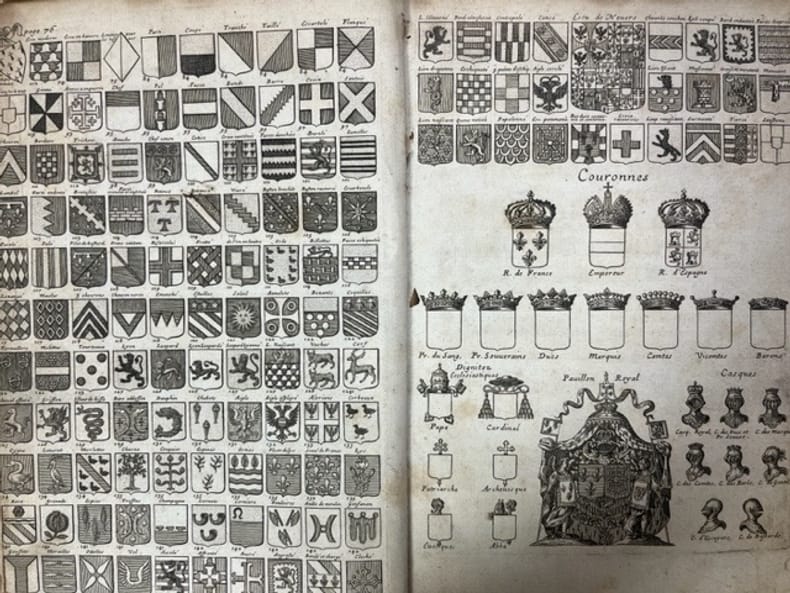
165910881Lyon Jean-Baptiste Devenet 1659 Un volume in-8 plein vélin, titre manuscrit au dos, [bl.], titre, [9] ff., 187 pages, deux planches hors-texte de figures. Ex-libris de François-Joseph Menage de Mondésir en page de garde. Manques de vélin au plat supérieur, large mouillure.
20107729Musée Marmottan Monet / Hazan, 2010. Grand in-4 broché, couverture couleurs à rabats. En très belle condition. Illustré de nombreuses reproductions en couleurs.
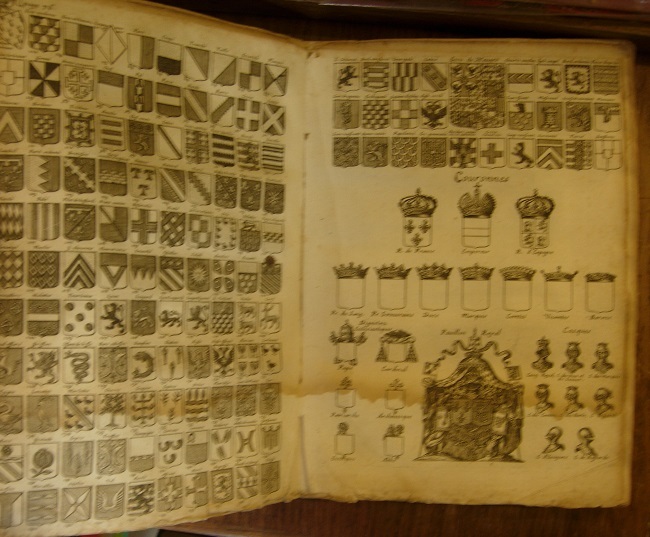
572442Lyon, Jean-Baptiste Devenet, 1659. Pet. in-4, rel. de l'époque pleine-basane fauve, (manque le 1er plat), [10] ff. (titre, avis, avant-propos, sommaire des chap.), 187 pp., 2 pl. de blasons gr. au bur.
1986669BB1986. Zürich SV International 1986. 28cm x 23.5cm. 181 pages. Original Softcover Paperback. Very good condition with only minor signs of wear. German Edition / Deutsche Ausgabe. Includes for example: Claude Monets Nympheas in Basel 1949 und 1969 Leihgeber/ 'Le Spleen de Giverny' Massifs de Chrysanthemes/ Zufluchtsort einer ungestorte Meditation/ Le Bassin aux nympheas/ Paysages d'eau et de reflets/ Eine Wenig Banale Ausstellung/ Wasser Seerosen Planzen auf einer sehr grossen Flache/ Verjungende Aufschwunge un grausame Enttauschungen anmerkungen/ Srom ohne Ufer/ Anmerkungen zu Claude Monets Seerosen/ Jenseits des Impressionismus / Monet Sehen/ Der Neue Bildbau/ Unter dem Horizont/ Bilder einer stromenden Welt/ Bild und Betrachter/ Monets Welt in Giverny/ Das 'Monet revival' der funfziger Jahre Anmerkungen/ Claude Monet 14 November 1840 - 5 December 1926 was a founder of French impressionist painting and the most consistent and prolific practitioner of the movement's philosophy of expressing one's perceptions before nature especially as applied to plein-air landscape painting. The term Impressionism is derived from the title of his painting Impression Sunrise Impression soleil levant. Claude Monet was born on 14 November 1840 on the 5th floor of 45 rue Laffitte in the 9th arrondissement of Paris.3 He was the second son of Claude Adolphe Monet and Louise Justine Aubrée Monet both of them second-generation Parisians. On 20 May 1841 he was baptized in the local parish church Notre-Dame-de-Lorette as Oscar-Claude but his parents called him simply Oscar.34 In 1845 his family moved to Le Havre in Normandy. His father wanted him to go into the family grocery business but Monet wanted to become an artist. His mother was a singer. On 1 April 1851 Monet entered Le Havre secondary school of the arts. Locals knew him well for his charcoal caricatures which he would sell for ten to twenty francs. Monet also undertook his first drawing lessons from Jacques-François Ochard a former student of Jacques-Louis David. On the beaches of Normandy in about 1856/1857 he met fellow artist Eugène Boudin who became his mentor and taught him to use oil paints. Boudin taught Monet "en plein air" outdoor techniques for painting. Both received the influence of Johan Barthold Jongkind. On 28 January 1857 his mother died. At the age of sixteen he left school and went to live with his widowed childless aunt Marie-Jeanne Lecadre. When Monet traveled to Paris to visit the Louvre he witnessed painters copying from the old masters. Having brought his paints and other tools with him he would instead go and sit by a window and paint what he saw. Monet was in Paris for several years and met other young painters who would become friends and fellow impressionists; among them was Édouard Manet. In June 1861 Monet joined the First Regiment of African Light Cavalry in Algeria for a seven-year commitment but two years later after he had contracted typhoid fever his aunt intervened to get him out of the army if he agreed to complete an art course at an art school. It is possible that the Dutch painter Johan Barthold Jongkind whom Monet knew may have prompted his aunt on this matter. Disillusioned with the traditional art taught at art schools in 1862 Monet became a student of Charles Gleyre in Paris where he met Pierre-Auguste Renoir Frédéric Bazille and Alfred Sisley. Together they shared new approaches to art painting the effects of light en plein air with broken color and rapid brushstrokes in what later came to be known as Impressionism. Monet's Camille or The Woman in the Green Dress La femme à la robe verte painted in 1866 brought him recognition and was one of many works featuring his future wife Camille Doncieux; she was the model for the figures in Women in the Garden of the following year as well as for On the Bank of the Seine Bennecourt 1868 pictured here. Camille became pregnant and gave birth to their first child Jean in 1867. After the outbreak of the Franco-Prussian War 19 July 1870 Monet took refuge in England in September 1870 where he studied the works of John Constable and Joseph Mallord William Turner both of whose landscapes would serve to inspire Monet's innovations in the study of color. In the spring of 1871 Monet's works were refused authorisation for inclusion in the Royal Academy exhibition. In May 1871 he left London to live in Zaandam in the Netherlands where he made twenty-five paintings and the police suspected him of revolutionary activities. He also paid a first visit to nearby Amsterdam. In October or November 1871 he returned to France. Monet lived from December 1871 to 1878 at Argenteuil a village on the right bank of the Seine river near Paris and a popular Sunday-outing destination for Parisians where he painted some of his best known works. In 1874 he briefly returned to Holland. In 1872 he painted Impression Sunrise Impression soleil levant depicting a Le Havre port landscape. It hung in the first Impressionist exhibition in 1874 and is now displayed in the Musée Marmottan Monet in Paris. From the painting's title art critic Louis Leroy coined the term "Impressionism" which he intended as disparagement but which the Impressionists appropriated for themselves. Also in this exhibition was a painting titled Boulevard des Capucines a painting of the boulevard done from the photographer Nadar's apartment at no. 35. There were however two paintings by Monet of the boulevard: one is now in the Pushkin Museum in Moscow the other in the Nelson-Atkins Museum of Art in Kansas City. It has never become clear which painting appeared in the groundbreaking 1874 exhibition though more recently the Moscow picture has been favoured. Monet and Camille Doncieux had married just before the war 28 June 1870 and after their excursion to London and Zaandam they had moved to Argenteuil in December 1871. It was during this time that Monet painted various works of modern life. Camille became ill in 1876. They had a second son Michel on 17 March 1878 Jean was born in 1867. This second child weakened her already fading health. In that same year Monet moved to the village of Vétheuil. On 5 September 1879 Camille Monet died of tuberculosis at the age of thirty-two; Monet painted her on her death bed. Wikipedia paperback
1991403365Paris: La Bibliothéque des Arts 1991. 5 volumes folio. Numerous color plates and black and white illustrations throughout. Original blue cloth gilt-lettered on front covers and spines; pictorial dust jackets. A few with minor nicks some slight fading at edges light shelfwear. FIRST EDITION. La Bibliothéque des Arts unknown
1988Q-0939802503High Museum of Art 1988. Hardcover. New. In shrink wrap. Looks like an interesting title! High Museum of Art hardcover
27613Lausanne, Fondation de l'Hermitage, 1993. In-4° carré, 187p. Broché, couverture illustrée.
42652Paris, Editions de la Réunion des Musées Nationaux, 1980. In-4° carré, 378p. Reliure pleine toile d'éditeur, sous jaquette illustrée.
43195Nice, Guillaud Editions, 1992. In-4° carré, 169p. Reliure pleine toile d'éditeur, sous jaquette illustrée.
41195Neuchâtel, Ides et Calendes, 1978. In-4° carré, 236p. Reliure pleine toile d'éditeur, sous jaquette illustrée.
66280Monaco, Les Documents d'Art, 1943, grand in 4°, cartonnage gris de l'éditeur, 160 pages.
40655Paris, Flammarion (coll. "Les classiques de l'art"), (1981). In-4°, 116p. Reliure cartonnée d'éditeur, sous jaquette illustrée.
200801816, NEF, s.d. ; in-4, 45 pp., cartonnage de l'éditeur. sous boitier.
39306Lausanne et Paris, La Bibliothèque des Arts, 1979. Gr. in-4°, 312p. Reliure pleine toile d'éditeur sous jaquette illustrée.
39307Lausanne et Paris, La Bibliothèque des Arts, 1974. Gr. in-4°, 461p. Reliure pleine toile d'éditeur sous jaquette illustrée.
39308Lausanne et Paris, La Bibliothèque des Arts, 1979. Gr. in-4°, 305p. Reliure pleine toile d'éditeur sous jaquette illustrée.
19903691Cercle d’art 1990 In-4 reliure éditeur sous jaquette, 132 pp. Illustrations noir & couleurs
11201Paris, Galerie Durand-Ruel, du 22 mai au 30 septembre 1959. In-8, agrafé, reproductions.
9654Paris, Musée Marmottan, 1971. In-8 carré, broché.
199321230Ars Mundi 1993 In-4, cartonnage blanc, sous jaquette illustrée, 31 pp + 48 planches pleines pages en couleurs. Bon état d’occasion.
12013Neuchâtel, Ides et Calendes, 1978. In-4, reliure toilé, illustrations, jaquette, étui.
19955427Parkstone ; Aurora 1995 In-4. Reliure éditeur , jaquette, 159 pp.