WW - Klimt - Strobl, AliceBiblio.com
484 résultats
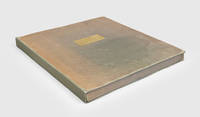
196420499AB1964. Graz Akademische Druck- und Verlagsanstalt 1964. 60 : 44 cm. With 25 reproductions after drawings by Gustav Klimt partly in colour loose as issued. Original cloth portfolio. Wonderful reproductions of 25 of the most famous drawings by Gustav Klimt. All drawings under passepartout and loose in original portfolio. A masterpiece of reproduction art. The portfolio of highlights his drawings. The scope and representative character of the collection offers works from all creative periods and studies on all of the artist's main works the numerous portraits of women from Viennese society and his major life themes such as love eros and Death as well as his erotic drawings with which he revolutionized the representation of the female naked body and paved the way for the expressionists Egon Schiele and Oskar Kokoschka. hardcover
1931190931Vienna: Osterreichischen Staatsdruckerei 1931. A spectacular portfolio First edition number 124 of 200 copies printed in German. This spectacular portfolio reproduces six of Klimt's paintings that were destroyed at the end of the Second World War. The total edition comprised 500 numbered copies issued in French German and English. Of these 200 copies were printed in German of which 30 copies were bound as a book in a deluxe binding; 150 copies in French under the title "Dernière gerbe" of which 20 were bound as a book in a deluxe binding; and 150 copies in English under the title "An Aftermath" of which 20 were bound as a book in a deluxe binding. The six works destroyed in the war perished on 8 May 1945. Sixteen of Klimt's paintings were in storage in the Schloss Immendorf a 16th-century castle in Lower Austria which was set on fire by a retreating tank division of the German army. The six include two from Klimt's Faculty Paintings originally created for the ceiling of the Great Hall of the University of Vienna "Medizin" printed here in colour and heightened in gold and "Jurisprudenz" and four from the famous Lederer collection: "Die Freundinnen" "Malcesine am Gardasee" "Bauerngarten mit Hühnern" each printed here in colour and "Gastein". The publisher of this portfolio Max Eisler 1881-1937 was an art historian at Vienna University who published the first Klimt monograph in 1920. He intended this portfolio to compliment the only folio set produced in Klimt's lifetime Das Werk which had featured Klimt's works and was overseen by him up to 1913. Fragile collotype plates cannot be reused. As such this necessitates the completion of a run on the first go and also dictates a limited production number. Printed by hand the collotypes required deft handling by the printer Osterreichische Staatsdruckerei. A complicated and lengthy process involving gelatin colloids mixed with dichromates the creation of 16 colour separation thin glass filters to achieve the light-sensitive internegative images that could faithfully capture all of the painting's tonal gradations and colours exposure to actinic light and delicate chine colle papers that allow for greater colour saturation. Folio. With 30 full-page collotype plates after Klimt printed on chine colle paper laid down on heavy cream wove paper with untrimmed deckled edges of which 15 are in colour 2 heightened in metallic gold and silver ink and 1 heightened in gold ink and 15 in monochrome. Sheet sizes: 48 x 45.5 cm. Together with 18 pages. Collotypes and pages loose in original green silk clamshell box artist's name in gilt to front cover. Box lid split to corners four prints with pin holes to extreme corners not affecting the images a couple with light marks to the margins not affecting the images otherwise all bright impressions. unknown
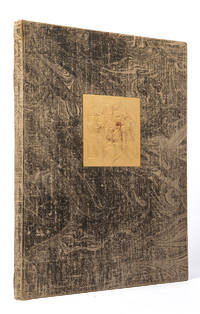
115777Leipzig Julius Zeitler 1907. . Limited edition number 40 of 50 copies on Japon from a total edition of 450 large 4to; text printed in black and gold translated into German by Franz Blei illustrated with 15 photogravures after Klimt plates protected by tissue guards very minor staining to a couple of leaves; text printed in black and gold 15 full-page collotype plates after drawings by Klimt marbled endpapers minor wear to margin of one plate; original grey marbled cloth embossed gilt label to upper cover gilt stamp to lower cover covers and spine slightly faded corners bumped a very good copy.<br /> A fine example of a scarce and early work illustrated by Gustav Klimt. Published in 1907 this erotic compilation represents a perfect pairing of Klimt's drawings with Josef Hoffmann's Wiener Werkstätte design to create one of European Jugendstil's most beautiful books. <br /><br />The text for the work is Lucian's Dialogues of the Courtesan De Hetaerensgespraeche des Lukian translated here by the Viennese writer Franz Blei. The fifteen conversations from the Hellenic satirist cover themes of seduction infidelity and jealousy and previous German translations omitted the fifth conversation as it is homoerotic. In this translation Blei changed the order of the dialogues and gave them more provocative titles such as 'The Horrors of Marriage' 'The Voluptuousness of Spanking' as well as including the lesbian conversation number VI. <br /><br />Klimt's drawings are considered to be the 'epitome of erotic refinements' Bisanz-Prakken. The fifteen compositions were created by Klimt in the period from 1904 to 1906. Two-thirds of the drawings can be dated to 1904. This is important in that Klimt switched from wrapping paper sheets to lighter Japanese paper this year as he replaced the soft chalk with the hard pencil. Gustav Klimt created some of the works in the context of the first version of Water Snakes II 19041907: While Klimt contented himself in the painting with the hint of eroticism he went far beyond the taboo limit of his time in the preparatory studies and drawings. <br /><br />Julius Zeitler in Leipzig was responsible for the publishing of the book and Obernetter in Munich a pioneer and specialist in collotype printing was entrusted with the plates. The same high standards were applied to the bindings of the 450 numbered copies. Josef Hoffmann designed the sample bindings for the two de-luxe editions which were produced by the Wiener Werkstatte. Edition A the smallest edition of which this book is part of consisted of only 50 copies which were produced on Japon paper and were bound in marbled black and white cloth with corresponding endpapers. Edition B comprised of 100 copies bound in grey chamois leather. Both editions A and B have a gold embossed plate on the upper cover and Hoffman's monogram and the company's logo on the reverse. <br /><br />Copies of the book went to some of the most important collectors patrons and cultural figures of the time. Hermann Bahr received a copy and subsequently wrote in a letter to Frane Blei:<br /><br />'I drink to Klimt the bright pagan. Those know-it-alls out there believe he merely plays with lines. Poor fools they don't recognise the indescribable power of this lewdness swearing to be sacred. He is the only one for whom burgeoning nature is not obscured by bourgeois shame; the only one looking at thing's from a pagan's perspective. The only one for whom the woman is woman all over.'<br /> Leipzig, Julius Zeitler, 1907. hardcover
190763832Leipzig, Julius Zeitler, 1907. Fol. Mit 15 Lichtdrucktafeln nach Zeichnungen von Gustav Klimt. 2 Bll., 37 S., 1 Bl., Grauer Orig.-Sämischldr.-Bd. m. goldener Deckelplakette u. Kopfgoldschnitt (am Rückendeckel unten sign. ?Wiener Werkstätte J[osef] H[offmann]?).
15412JN.p n.d. The great Austrian artist Gustav Klimt writes in German to a Royal personage regarding a painting which reads in translation: “Your Highness I must ask you to be so very kind to postpone your anticipated visit until tomorrow at 2 o’clock as I have not gotten as far with the painting as I wished. I ask you for forgiveness and take the liberty to express my deepest respect. Devoted always Gustav Klimt.†Fine condition. unknown books
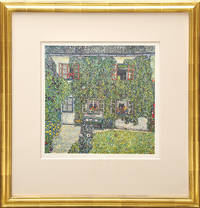
1931187325Vienna: Osterreichischen Staatsdruckerei 1931. One of 30 prints from the Eine Nachlese/Dernière gerbe/An Aftermath portfolio. The first reproduction of Klimt's original painting created in 1914-16. The painting sold on 18 November 2025 at Sotheby's for $236.4m. The first reproduction of Klimt's original painting created in 1914-16. The painting sold on 18 November 2025 at Sotheby's for $236.4m this is the second most expensive painting ever. Max Eisler 1881-1937 the publisher of this print was an art historian at Vienna University who published the first Klimt monograph in 1914. He intended Eine Nachlese to complement Das Werk the only folio set produced in Klimt's lifetime which was overseen by Klimt up to 1913. The collotype produces fine tonal gradations sharp detail and a continuous-tone effect unmatched by most other photomechanical processes. However the surface of the gelatin-coated plate is extremely delicate and can break down under friction or over-inking. Plates wear out quickly giving a short print-run and maintaining consistent humidity during printing is crucial - even small fluctuations can ruin the plate. As a result collotype printing is slow exacting and vulnerable to failure but when successful it yields some of the finest printed images ever produced. Edition of 500. Collotype in colours on chine colle paper laid down on heavy cream wove paper with untrimmed deckled edges. Image size: 31.6 x 24.4 cm. Sheet size: 48 x 45.5 cm. Framed size: 59 x 56.3 cm. Presented in a handmade gold leaf frame with conservation acrylic glazing. Support paper cleaned otherwise in excellent condition. unknown
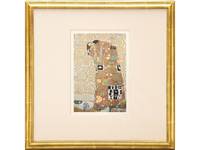
1931182247Vienna: Osterreichischen Staatsdruckerei 1931. One of 30 prints from the Eine Nachlese/Dernière gerbe/An Aftermath portfolio. Max Eisler 1881-1937 the publisher of this print was an art historian at Vienna University who published the first Klimt monograph in 1914. He intended Eine Nachlese to complement Das Werk the only folio set produced in Klimt's lifetime which was overseen by Klimt up to 1913. Fragile hand-printed collotype plates cannot be reused so the run must be completed on the first go and in only a limited number. The complicated lengthy process involves gelatin colloids mixed with dichromates. Thin 16-colour separation glass filters achieve the light-sensitive internegative images which capture the original tonal gradations. These are exposed to actinic light. Finally the delicate chine colle paper allows for greater colour saturation. Edition of 500. Collotype in colours with metallic gold and silver on chine colle paper laid down on heavy cream wove paper with untrimmed deckled edges. Image size: 31.2 x 19.4 cm. Sheet size: 48 x 45.5 cm. Framed size: 59 x 56.3 cm. Presented in a handmade gold leaf frame with conservation acrylic glazing. Small public library stamp lower left minor spotting to margins otherwise in excellent condition. unknown
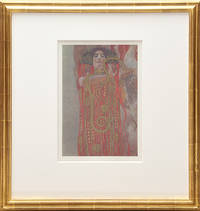
1931187438Vienna: Osterreichischen Staatsdruckerei 1931. One of 30 prints from the Eine Nachlese/Dernière gerbe/An Aftermath portfolio. Medizin was one of 16 original paintings by Klimt destroyed on 8 May 1945. The paintings were stored in the Schloss Immendorf a 16th-century castle in Lower Austria which was set on fire by a retreating tank division of the German army. Max Eisler 1881-1937 the publisher of this print was an art historian at Vienna University who published the first Klimt monograph in 1914. He intended Eine Nachlese to complement Das Werk the only folio set produced in Klimt's lifetime which was overseen by Klimt up to 1913. The collotype produces fine tonal gradations sharp detail and a continuous-tone effect unmatched by most other photomechanical processes. However the surface of the gelatin-coated plate is extremely delicate and can break down under friction or over-inking. Plates wear out quickly giving a short print-run and maintaining consistent humidity during printing is crucial - even small fluctuations can ruin the plate. As a result collotype printing is slow exacting and vulnerable to failure but when successful it yields some of the finest printed images ever produced. Edition of 500. Collotype in colours with metallic gold on chine colle paper laid down on heavy cream wove paper with untrimmed deckled edges. Image size: 31.4 x 21.2 cm. Sheet size: 48 x 45.5 cm. Framed size: 59 x 56.3 cm. Presented in a handmade gold leaf frame with conservation acrylic glazing. Support paper cleaned otherwise in excellent condition. unknown
196884873FREDERICK A PRAEGER. As New. 1968. Hardcover. FREE UPGRADE to Courier/Priority Shipping Upon Request - IN STOCK AND IMMEDIATELY AVAILABLE FOR SHIPMENT - AS NEW THE TEXT BLOCK IS PRISTINE CLEAN UNMARKED AND IN EXCELLENT CONDITION - - Corresponds to ASIN: B000UCOIR4. 424 pages; well-illustrated in color and black and white. 4to. Catalogue Raisonné Catalogue Raisonne Catalog Raisonnee Complete Works FREDERICK A PRAEGER hardcover
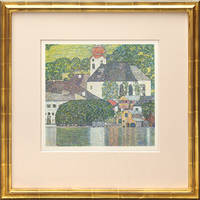
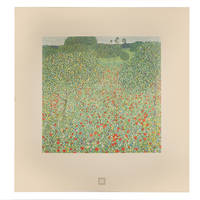
1219641931 . Collotype in colours 1931 on chine colle paper laid down on heavy cream wove paper from the edition of 500 the full sheet with deckled edges published by Max Eisler Vienna 48 x 45.5 cm. 19 x 18 in.<br /> <br /> 1931 unknown
1219651931 . Collotype in colours 1931 on chine colle paper laid down on heavy cream wove paper from the edition of 500 the full sheet with deckled edges published by Max Eisler Vienna 48 x 45.5 cm. 19 x 18 in.<br /> <br /> 1931 unknown
1968C84873FREDERICK A PRAEGER. As New. 1968. Hardcover. FREE UPGRADE to Courier/Priority Shipping Upon Request - IN STOCK AND IMMEDIATELY AVAILABLE FOR SHIPMENT - AS NEW THE TEXT BLOCK IS PRISTINE CLEAN UNMARKED AND IN EXCELLENT CONDITION - - Corresponds to ASIN: B000UCOIR4. 424 pages; well-illustrated in color and black and white. 4to. Catalogue Raisonné Catalogue Raisonne Catalog Raisonnee Complete Works -- with a bonus offer-- - May be EITHER: out of print OOP and extremely rare in this pristine condition; signed by author or contributor; or a first or special edition; inquire for details . FREDERICK A PRAEGER hardcover
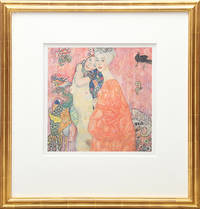
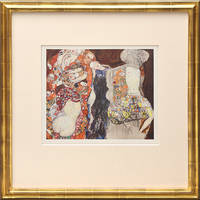
1931187329Vienna: Osterreichischen Staatsdruckerei 1931. One of 30 prints from the Eine Nachlese/Dernière gerbe/An Aftermath portfolio. The first reproduction of Klimt's original painting. Die Freundennen was one of 16 original paintings by Klimt which were destroyed on 8 May 1945. The paintings were in storage in the Schloss Immendorf a 16th century castle in Lower Austria which was set on fire by a retreating tank division of the German army. Max Eisler 1881-1937 the publisher of this print was an art historian at Vienna University who published the first Klimt monograph in 1914. He intended Eine Nachlese to complement Das Werk the only folio set produced in Klimt's lifetime which was overseen by Klimt up to 1913. The collotype produces fine tonal gradations sharp detail and a continuous-tone effect unmatched by most other photomechanical processes. However the surface of the gelatin-coated plate is extremely delicate and can break down under friction or over-inking. Plates wear out quickly giving a short print-run and maintaining consistent humidity during printing is crucial - even small fluctuations can ruin the plate. As a result collotype printing is slow exacting and vulnerable to failure but when successful it yields some of the finest printed images ever produced. Edition of 500. Collotype in colours on chine colle paper laid down on heavy cream wove paper with untrimmed deckled edges. Image size: 29.5 x 30 cm. Sheet size: 48 x 45.5 cm. Framed size: 59 x 56.3 cm. Presented in a handmade gold leaf frame with conservation acrylic glazing. Excellent condition. unknown
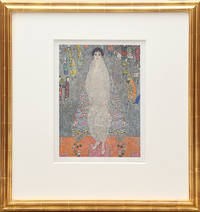
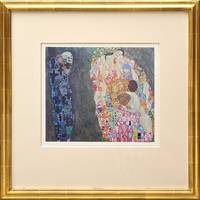
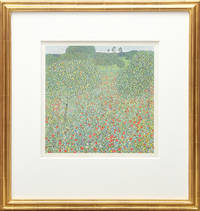
1931181945Vienna: Osterreichischen Staatsdruckerei 1931. One of 30 prints from the Eine Nachlese portfolio. Max Eisler 1881-1937 the publisher of this print was an art historian at Vienna University who published the first Klimt monograph in 1914. He intended Eine Nachlese to complement Das Werk the only folio set produced in Klimt's lifetime which was overseen by Klimt up to 1913. The collotype produces fine tonal gradations sharp detail and a continuous-tone effect unmatched by most other photomechanical processes. However the surface of the gelatin-coated plate is extremely delicate and can break down under friction or over-inking. Plates wear out quickly giving a short print-run and maintaining consistent humidity during printing is crucial - even small fluctuations can ruin the plate. As a result collotype printing is slow exacting and vulnerable to failure but when successful it yields some of the finest printed images ever produced. Edition of 500. Collotype in colours on chine colle paper laid down on heavy cream wove paper with untrimmed deckled edges. Image size: 30.8 x 31 cm. Sheet size: 48 x 45.5 cm. Framed size: 59 x 56.3 cm. Presented in a handmade gold leaf frame with conservation acrylic glazing. Excellent condition. unknown
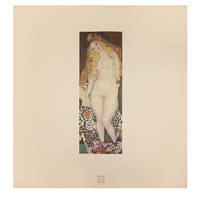
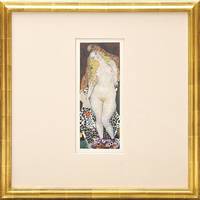
1931182248Vienna: Osterreichischen Staatsdruckerei 1931. One of 30 prints from the Eine Nachlese/Dernière gerbe/An Aftermath portfolio. Max Eisler 1881-1937 the publisher of this print was an art historian at Vienna University who published the first Klimt monograph in 1914. He intended Eine Nachlese to complement Das Werk the only folio set produced in Klimt's lifetime which was overseen by Klimt up to 1913. The collotype produces fine tonal gradations sharp detail and a continuous-tone effect unmatched by most other photomechanical processes. However the surface of the gelatin-coated plate is extremely delicate and can break down under friction or over-inking. Plates wear out quickly giving a short print-run and maintaining consistent humidity during printing is crucial - even small fluctuations can ruin the plate. As a result collotype printing is slow exacting and vulnerable to failure but when successful it yields some of the finest printed images ever produced. Edition of 500. Collotype in colours on chine colle paper laid down on heavy cream wove paper with untrimmed deckled edges. Image size: 31.6 x 11.2 cm. Sheet size: 48 x 45.5 cm. Framed size: 59 x 56.3 cm. Presented in a handmade gold leaf frame with conservation acrylic glazing. Small public library stamp lower left minor spotting to margins otherwise in excellent condition. unknown
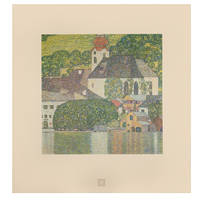
1931170055Vienna: Österreichische Staatsdruckerei 1931. One of 30 prints from the Eine Nachlese portfolio. Max Eisler 1881-1937 the publisher of this print was an art historian at Vienna University who published the first Klimt monograph in 1914. He intended Eine Nachlese to complement Das Werk the only folio set produced in Klimt's lifetime which was overseen by Klimt up to 1913. The collotype produces fine tonal gradations sharp detail and a continuous-tone effect unmatched by most other photomechanical processes. However the surface of the gelatin-coated plate is extremely delicate and can break down under friction or over-inking. Plates wear out quickly giving a short print-run and maintaining consistent humidity during printing is crucial - even small fluctuations can ruin the plate. As a result collotype printing is slow exacting and vulnerable to failure but when successful it yields some of the finest printed images ever produced. Edition of 500. Collotype in colours on chine colle paper laid down on heavy cream wove paper with untrimmed deckled edges. Image size: 26.7 x 30.8 cm. Sheet size: 48 x 45.5 cm. Framed size: 59 x 56.3 cm. Presented in a handmade gold leaf frame with conservation acrylic glazing. Excellent condition. unknown
1931182262Vienna: Österreichische Staatsdruckerei 1931. One of 30 prints from the Eine Nachlese/Dernière gerbe/An Aftermath portfolio. Max Eisler 1881-1937 the publisher of this print was an art historian at Vienna University who published the first Klimt monograph in 1914. He intended Eine Nachlese to complement Das Werk the only folio set produced in Klimt's lifetime which was overseen by Klimt up to 1913. The collotype produces fine tonal gradations sharp detail and a continuous-tone effect unmatched by most other photomechanical processes. However the surface of the gelatin-coated plate is extremely delicate and can break down under friction or over-inking. Plates wear out quickly giving a short print-run and maintaining consistent humidity during printing is crucial - even small fluctuations can ruin the plate. As a result collotype printing is slow exacting and vulnerable to failure but when successful it yields some of the finest printed images ever produced. Edition of 500. Collotype in colours on chine colle paper laid down on heavy cream wove paper with untrimmed deckled edges. Image size: 28 x 30.7 cm. Sheet size: 48 x 45.5 cm. Framed size: 59 x 56.3 cm. Presented in a handmade gold leaf frame with conservation acrylic glazing. Small public library stamp lower left minor spotting to margins otherwise in excellent condition. unknown
1931187360Vienna: Osterreichischen Staatsdruckerei 1931. One of 30 prints from the Eine Nachlese/Dernière gerbe/An Aftermath portfolio. This is the first reproduction of Klimt's original painting Max Eisler 1881-1937 the publisher of this print was an art historian at Vienna University who published the first Klimt monograph in 1914. He intended Eine Nachlese to complement Das Werk the only folio set produced in Klimt's lifetime which was overseen by Klimt up to 1913. The collotype produces fine tonal gradations sharp detail and a continuous-tone effect unmatched by most other photomechanical processes. However the surface of the gelatin-coated plate is extremely delicate and can break down under friction or over-inking. Plates wear out quickly giving a short print-run and maintaining consistent humidity during printing is crucial - even small fluctuations can ruin the plate. As a result collotype printing is slow exacting and vulnerable to failure but when successful it yields some of the finest printed images ever produced. Edition of 500. Collotype in colours on chine colle paper laid down on heavy cream wove paper with untrimmed deckled edges. Image size: 30.8 x 31 cm. Sheet size: 48 x 45.5 cm. Framed size: 59 x 56.3 cm. Presented in a handmade gold leaf frame with conservation acrylic glazing. Excellent condition. unknown
1931187435Vienna: Österreichische Staatsdruckerei 1931. One of 30 prints from the Eine Nachlese portfolio. The first reproduction of Klimt's original painting. Max Eisler 1881-1937 the publisher of this print was an art historian at Vienna University who published the first Klimt monograph in 1914. He intended Eine Nachlese to complement Das Werk the only folio set produced in Klimt's lifetime which was overseen by Klimt up to 1913. The collotype produces fine tonal gradations sharp detail and a continuous-tone effect unmatched by most other photomechanical processes. However the surface of the gelatin-coated plate is extremely delicate and can break down under friction or over-inking. Plates wear out quickly giving a short print-run and maintaining consistent humidity during printing is crucial - even small fluctuations can ruin the plate. As a result collotype printing is slow exacting and vulnerable to failure but when successful it yields some of the finest printed images ever produced. Edition of 500. Collotype in colours on chine colle paper laid down on heavy cream wove paper with untrimmed deckled edges. Image size: 30.8 x 30.5 cm. Sheet size: 48 x 45.5 cm. Presented in a handmade gold leaf frame with conservation acrylic glazing. Support paper cleaned otherwise in excellent condition. unknown
1931182243Vienna: Osterreichischen Staatsdruckerei 1931. One of 30 prints from the Eine Nachlese/Dernière gerbe/An Aftermath portfolio. The first reproduction of Klimt's original painting. Max Eisler 1881-1937 the publisher of this print was an art historian at Vienna University who published the first Klimt monograph in 1914. He intended Eine Nachlese to complement Das Werk the only folio set produced in Klimt's lifetime which was overseen by Klimt up to 1913. Fragile hand-printed collotype plates cannot be reused so the run must be completed on the first go and in only a limited number. The complicated lengthy process involves gelatin colloids mixed with dichromates. Thin 16-colour separation glass filters achieve the light-sensitive internegative images which capture the original tonal gradations. These are exposed to actinic light. Finally the delicate chine colle paper allows for greater colour saturation. Edition of 500. Collotype in colours on chine colle paper laid down on heavy cream wove paper with untrimmed deckled edges. Image size: 29.8 x 30.1 cm. Sheet size: 48 x 45.5 cm. Framed size: 59 x 56.3 cm. Small public library stamp lower left minor spotting to margins otherwise in excellent condition. Presented in a handmade gold leaf frame with conservation acrylic glazing. unknown
1219691931 . Collotype in colours 1931 on chine colle paper laid down on heavy cream wove paper from the edition of 500 the full sheet with deckled edges published by Max Eisler Vienna 48 x 45.5 cm. 19 x 18 in.<br /> <br /> 1931 unknown
1219681931 . Collotype in colours 1931 on chine colle paper laid down on heavy cream wove paper from the edition of 500 the full sheet with deckled edges published by Max Eisler Vienna 48 x 45.5 cm. 19 x 18 in.<br /> <br /> 1931 unknown
1219711931 . Collotype in colours 1931 on chine colle paper laid down on heavy cream wove paper from the edition of 500 the full sheet with deckled edges published by Max Eisler Vienna 48 x 45.5 cm. 19 x 18 in.<br /> <br /> 1931 unknown
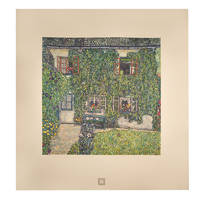
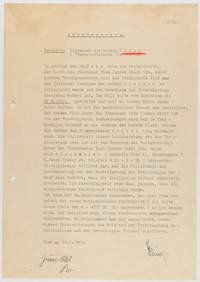
194027131940. Punched twice at the left edge. In fine condition. 1 page typed document. <p><br /> Important document about the Nazi-looted and subsequently privately sold Klimt’s masterpiece the Water Serpents II.<br /> <p><p><br /> Gustav Klimt’s Water Serpents II was painted between 1904 and 1907 and was originally commissioned for and owned by Jenny Eugenie Steiner neé Pulitzer; 1863–1958 the wife and at the time of the issue of the present document already the widow of a wealthy Viennese Jewish industrialist. The painting was apparently an asset of the late husband’s silk company “Brüder Steiner†as it is referred to in the document. In June 1938 after the Anschluss under the threat from the Nazis Jewish herself Jenny Steiner fled from Vienna and the painting together with several of her valuable tangibles including other works by Klimt and Egon Schiele was confiscated as Jewish property.<br /> <p><p><br /> In 1940 three of Steiner’s Klimt paintings including the Water Serpents II were offered on the sale of the leading Viennese auction house Dorotheum 458. Kunstauktion March 4–6.; the two other paintings were the Country House by the Atteree and the Portrait of Mäda Primavesi. Fleckner 2017 However by the intervention of Josef Bürckel then Gauleiter of Vienna the painting was withdrawn from the auction and sold privately to the Nazi filmmaker and alleged illegitimate son of Klimt Gustav Ucicky 1899–1961 through his second wife Inge Ingeborg Davis. The picture remained in Ucicky’s possession until his death in 1961 when his third wife Ursula née Kohn; b. 1922 inherited it. <br /> <p><p><br /> In 2013 Ursula Ucicky in agreement with the heirs of Jenny Steiner sold the Water Serpents II through Sotheby’s sharing the income 50/50. The painting reached the price of $112 million at the time the 6th most expensive painting in the world and the most expensive Klimt painting by then to be sold.<br /> <p><p><br /> The present typewritten and signed secretarial note Aktenvermerk. Betrifft: Ölgemälde des Malers Klimt “Wasserschlangenâ€Â was written on behalf of Hermann Drum 1911–1945 the administrative assistant Adjutant of Josef Bürckel the Gauleiter and later Reichsstatthalter too of Reichsgau Vienna in office as Gauleiter from 30 January 1939 as Reichsstatthalter from April 1 1940 until 2 August 1940 in regard the withdrawing from the auction and the private sale of Klimt’s Water Serpents II. See also in Lillie’s Was einmal war; note that in the book the intervener erroneously ascribed as Reichsstatthalter Baldur von Schirach in fact it was Gauleiter Bürckel. In the text Drum’s secretary summarizes how the painting ended up at the Dorotheum sale with the estimated value of 6000 Reichsmark states the wish of the Gauleiter that the painting should be sold privately to Mrs. Ucicky and delineates a plan developed together with dr. Deigelmaier an official from the local revenue service for withdraw and sell the painting out of the sale if an appropriate purchase offer would be made privately “ich halte einen Preis von 8–9000 RM für angemessen†/ “I think a price of 8–9;000 RM is reasonableâ€. The secretary misspells the name “Ucicki†and also mixes up the family relations claiming Mrs. Ucicky the descendant of Klimt.<br /> <p><p><br /> Rare and important document related to one of the most well-known Nazi-looted pictures. <br /> <p><p><br /> Literature: Fleckner U. et al. Markt und Macht Der Kunsthandel im »Dritten Reich«. De Gruyter 2017. pp. 304–9; Lillie S. Was einmal war: Handbuch der enteigneten Kunstsammlungen Wiens. Czernin 2003.<br /> <p>. unknown
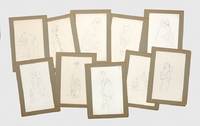
1922153802Vienna Berlin Leipzig Munich: Rikola Verlag 1922. First edition first printing of this scarce publication printed four years after Klimt's death. It is unlikely more than 1000 copies were printed due to the nature of printing collotypes. Rikola Verlag were advocates of the Vienna Seccession movement; they purchased all of Egon Schiele's original lithographic prints and etching plates in the same year and sold them as a collected portfolio. It is accompanied by a booklet edited by Gustav Glück director of the Gemäldegalerie Vienna 1916-31 who went so far as to say that the Austrian artist's work could only be understood through his drawings. Quarto. 8 pp booklet and 10 loose plates. 10 collotypes of portraits and nudes after drawings by Klimt on white wove paper approx. 23 x 14.9 cm tipped onto grey paper 27 x 20 cm as issued. Edges and corners of grey mount paper chipped not affecting the images otherwise all in very good condition. Lacking the original envelope. unknown