Agostino CarracciBiblio.com
557 résultats
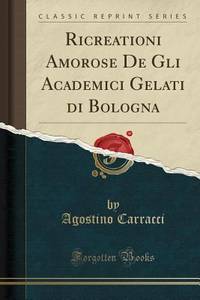
0282468102.Gpaperback. Good. Access codes and supplements are not guaranteed with used items. May be an ex-library book. paperback
Bulino misure: mm 209 x 259 Pittore e incisore, fratello maggiore di Annibale (Bologna 1560 – Roma 1609) e cugino di Ludovico Carracci (Bologna 1555 – Bologna 1619). Fonda con loro l'Accademia degli Incamminati a Bologna il cui programma prevedeva un'adesione alla realtà in chiave antimanieristica, voleva il recupero della grande tradizione del Rinascimento italiano rifacendosi agli artisti del primo Cinquecento: Tiziano, Raffaello, Michelangelo e Correggio senza trascurare il colorismo veneto. A differenza di Annibale e Ludovico, i qualit privilegiarono la pittura su tela o ad affresco, per Agostino l'attività grafica è stata la principale occupazione raggiungendo risultati di grande livello attraverso la luminosità del segno e la chiarezza delle composizioni. Ha realizzato duecentotrentaquattro incisioni tra bulini e acqueforti sia d’invenzione che di riproduzione, rappresentando sia soggetti sacri che profani. L'incisione è ratta dall'omonimo soggetto dipinto nel 1576 da Tintoretto (Venezia 1518 - Venezia 1594) in Palazzo Ducale a Venezia. L'incisione, per soggetto e formato, è da considerarsi in coppia con quella raffigurante Minerva allontana Marte dalla Pace e dall'Abbondanza datata 1589, data questa ragionevolmente valida per entrambi i rami. Nel foglio viene rappresentato Mercurio, divinità possente e vigorosa con il petaso alato e il caduceo attorno al quale sono intrecciati dei serpenti, mentre osserva tre fanciulle. Sono le Grazie dai corpi sinuosi, appena coperti da tessuti svolazzanti e riccamente panneggiati; la prima a sinistra, di spalle, poggia la mano su un dado mentre le altre due stringono tra le mani il mirto e la rosa, simboli di perpetuo amore. Contrariamente al dipinto, lo spazio è dilatato in orizzontale, si dà così un maggiore respiro alla vegetazione e alla natura ottenendo l'effetto di isolare le figure consolidandone l'equilibro che nel dipinto risulta precario. Carracci inoltre allunga i corpi e irrobustisce i profili dando così solidità e compattezza all'azione. In basso a destra all'interno del soggetto il monogramma "A.C", poco sopra: Iacobus Tinctoretus pixit. Nel margine inferiore bianco una riga su due colonne in latino: Spectator si scire cupis quid picta tabella est, est Iovis et Maiae filius et Charites. Nell'angolo a sinistra numero 3. Esemplare nel I/III stato prima delle aggiunte (II) e della rottura all'angolo inferiore destro (III). Impressione eccellente, dai toni decisi e nitidi, riccamente inchiostrata con morbida e omogenea velatura di fondo grigio argentea. Esemplare rifilato lungo la battuta del rame. Ottimo stato di conservazione eccetto alcune piccole macchie. Esemplare controfondato in antico con timbro di collezione L P M Cerroni (1753 - 1826), storico e funzionario austriaco, figlio di un ricco mercante lombardo, consacrò la sua vita al collezionismo di manoscritti, libri e stampe, e alla scrittura. Catalogò la sua collezione che venne dispersa nel 1828 a Vienna, notevoli i nuclei di antichi maestri tedeschi e italiani. Bibliografia: Bellori 390; Bartsch 117; De Grazia n. 149; LeBlanc 110.
1964SPNE-328Paris : Éditions du Chêne, 1964. 140 pages illustrées de planches en noir et bistre in-texto, biographies, bibliographie, nomenclature des artistes et des planches. Relié toile 24x23.
In 8° (21x13,5 cm); 88 pp. Senza brossura ma non slegato. Piccola xilografia al frontespizio. Qualche traccia di polvere al frontespizio, qualche leggera fioritura in alcune pagine. Prima edizione non comune di questa fonte di storia dell’arte che ricostruisce la vita dei tre grandi pittori Carracci. Amorini Antonio Bolognini , appartenene ad una nobile famiglia bolognese, è stato un celebre scrittore e storico. Nel 1786 lascia il collegio e compie un viaggio per l’Italia attraverso diverse regioni, dove si concentra sulle opere d’arte fissando le sue impressioni in una serie di appunti corredati da disegni, in undici e particolarissimi diari di viaggio alla maniera del tempo, divisi per città. Il suo interesse si rivolge all’architettura, è appassionato di lettere, arti e poesia che compone in alcune occasioni, traduce dal latino all’italiano; sarà fondamentale la sua amicizia con Leopoldo Cicognara.Durante la sua vita ricopre diverse cariche pubbliche dell’amministrazione di Bologna, quando questa viene invasa dall’esercito francese, i molti cambiamenti urbanistici e le soppressioni lo stimolano ad una sistematica opera di compilazione, conservazione e descrizione delle opere destinate alla distruzione, che prende forma in una delle sue prime opere a stampa, la Descrizione dè quadri restituiti a Bologna, i quali dà Francesi che occuparono l’Italia nel MDCCXCVI erano trasportati in Francia, pubblicata a Bologna nel 1816 e dedicata al suo parente Luigi Salina, il quale aveva avuto parte attiva e fondamentale al recupero delle opere. La sua attività storico-letteraria contribuì alla compilazione delle biografie di numerosi artisti bolognesi, tra cui il Dentone, Mitelli, Primaticcio, Albani, Reni, Domenichino, Guercino, i Carracci, raccolte poi nell’opera Vite dei pittori artefici bolognesi (Bologna, 1841-43). Lo Schlosser collega quest’opera a quel tipo di letteratura artistica che prende le mosse dal Vasari e che a Bologna era stata particolarmente fertile (Montalbani, Malvasia, Crespi, lo sfortunato Bassani, Bianconi, Gatti etc.) lo stesso marchese considerava la propria opera il proseguimento della Felsina Pittrice del Malvasia; esiste una copia dell’opera delle Vite di Bolognini a pagine bianche alternate, dove egli aveva scritto alcuni appunti per una successiva ristampa riveduta e corretta, oggi conservata nella biblioteca dell’istituto Germanico di Firenze, contenente un ritratto del marchese tratto da un dipinto di Barbara Salina. Non comune fonte di storia dell’arte bolognese.
15606Beau portrait. Beau tirage XVIIIè sur vergé. en feuille Très bon 15,5 x 12,5 cm
5128Circa 1690. Dimensions of print roughly ten inches by six and a half wide. Mounted on a slightly larger piece of laid paper. Rubbed worn and heavily aged with small wormhole at foot. Ornate tomb with sphinxes ivy masks palette laurel wreath etc. Central head and shoulders image of Carracci above caption 'ANNIBALI CARRACCIO BONON. AETATIS SVAE ANN.XLIX Romae MDCXLVI'. 'A. Del.' in bottom left-hand corner. This is NOT the engraving by Pietro Aquila after Carlo Maratta in Aquila's 'Galeriae Farnesianae Icones' 1674. [Circa 1690?] unknown
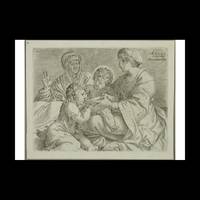
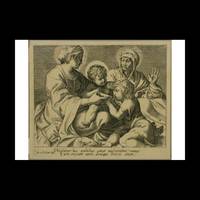
60537The Madonna seated with the infant Christ on her lap holds a bowl for the infant Baptist to drink from; S. Anne watches from behind with a hand raised.The preparatory drawing is at the Louvre ex coll. Mariette Inv. 7142.First engraving realized by Annibale Carracci after 1600 showing the signs of a renewed approach to engraving. Remarkable is in fact the strong chiaroscuro emphasized by the hatched background against which are disposed the sculpted figures. Although the figures are engaged in simple and natural activities the composition is carefully studied and masterfully engraved with regular hatchings and signs.This composition became immediately highly popular as its numerous copies testify seventeen are documented.From the second state the name of the publisher was added Nicolaes van Aelst publisher active in Brussels and Rome. In the latter city he had a workshop in via della Pace from 1582 to 1613. Three states of this print are documented however the exemplar at the Museum in Bologna Inv. 4730 is suggested to be a fourth state. Signed above right: 'Annib. Carracius in./ et fecit. 1606./ Nico van Aelst for.' Etching and engraving on laid paper with a vague circular watermark small margins; platemark: 123 x 161 mm total: 125 x 163 mm; state III/3 or III/4; warn out plate on the corners; on the verso cifres in characoal top right and left corner restored lower left margin also; selected literature: Bartsch 1818 XVIII vol. p.186 n. 9; Le Blanc 1854 p. 606 n. 6; Nagler 1858 p. 458 n. 1053; The Illustrated Bartsch 1980 p. 395 9-I 186 and 1996 39 2 Comm. p. 256n. 3906.020. unknown
225483Contentum Ltd. Loose sheet. New. High-quality art print based on an original work from the Fng. Created in the unknown century 1606. Professionally printed on premium fine-art paper Museum Etching museum quality in size A3. The artwork is printed with a white border museum-style presentation. Contentum Ltd. unknown
164070Contentum Ltd. Loose sheet. New. Contentum Ltd. unknown
164067Contentum Ltd. Loose sheet. New. Contentum Ltd. unknown
225193Contentum Ltd. Loose sheet. New. Contentum Ltd. unknown
225648Contentum Ltd. Loose sheet. New. Contentum Ltd. unknown
226800Contentum Ltd. Loose sheet. New. High-quality art print based on an original work from the Fng. Created in the unknown century 1650. Professionally printed on premium fine-art paper Museum Etching museum quality in size A3. The artwork is printed with a white border museum-style presentation. Contentum Ltd. unknown
226803Contentum Ltd. Loose sheet. New. High-quality art print based on an original work from the Fng. Created in the unknown century 1650. Professionally printed on premium fine-art paper Museum Etching museum quality in size A2. The artwork is printed with a white border museum-style presentation. Contentum Ltd. unknown
226801Contentum Ltd. Loose sheet. New. High-quality art print based on an original work from the Fng. Created in the unknown century 1650. Professionally printed on premium fine-art paper Photo Matt Fibre in size A2. The artwork is printed with a white border museum-style presentation. Contentum Ltd. unknown
226802Contentum Ltd. Loose sheet. New. High-quality art print based on an original work from the Fng. Created in the unknown century 1650. Professionally printed on premium fine-art paper Photo Rag Bright White premium quality in size A2. The artwork is printed with a white border museum-style presentation. Contentum Ltd. unknown
164068Contentum Ltd. Loose sheet. New. Contentum Ltd. unknown
164069Contentum Ltd. Loose sheet. New. Contentum Ltd. unknown
124275Contentum Ltd. Loose sheet. New. High-quality art print based on an original work from the Artic. Created in the 17th century n.d. Professionally printed on premium fine-art paper Photo Rag Bright White in size A2. The artwork is printed with a white border museum-style presentation. Contentum Ltd. unknown
124276Contentum Ltd. Loose sheet. New. High-quality art print based on an original work from the Artic. Created in the 17th century n.d. Professionally printed on premium fine-art paper Photo Rag 308 premium quality in size A2. The artwork is printed with a white border museum-style presentation. Contentum Ltd. unknown
124277Contentum Ltd. Loose sheet. New. High-quality art print based on an original work from the Artic. Created in the 17th century n.d. Professionally printed on premium fine-art paper Museum Etching museum quality in size A2. The artwork is printed with a white border museum-style presentation. Contentum Ltd. unknown
124274Contentum Ltd. Loose sheet. New. High-quality art print based on an original work from the Artic. Created in the 17th century n.d. Professionally printed on premium fine-art paper Museum Etching museum quality in size A3. The artwork is printed with a white border museum-style presentation. Contentum Ltd. unknown
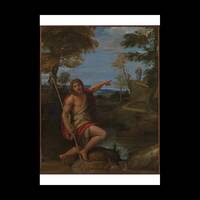
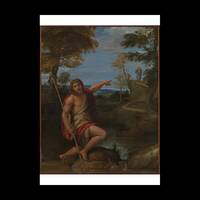
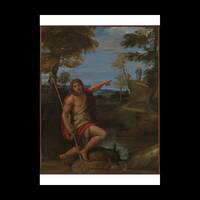
333316Contentum Ltd. Loose sheet. New. High-quality art print based on an original work from the Met. Created in the 16th century ca. 1600. Professionally printed on premium fine-art paper Photo Rag Bright White premium quality in size A2. The artwork is printed with a white border museum-style presentation. Contentum Ltd. unknown
333314Contentum Ltd. Loose sheet. New. High-quality art print based on an original work from the Met. Created in the 16th century ca. 1600. Professionally printed on premium fine-art paper Museum Etching museum quality in size A3. The artwork is printed with a white border museum-style presentation. Contentum Ltd. unknown
333317Contentum Ltd. Loose sheet. New. High-quality art print based on an original work from the Met. Created in the 16th century ca. 1600. Professionally printed on premium fine-art paper Museum Etching museum quality in size A2. The artwork is printed with a white border museum-style presentation. Contentum Ltd. unknown