CHARDINLivre Rare Book
1 210 résultats
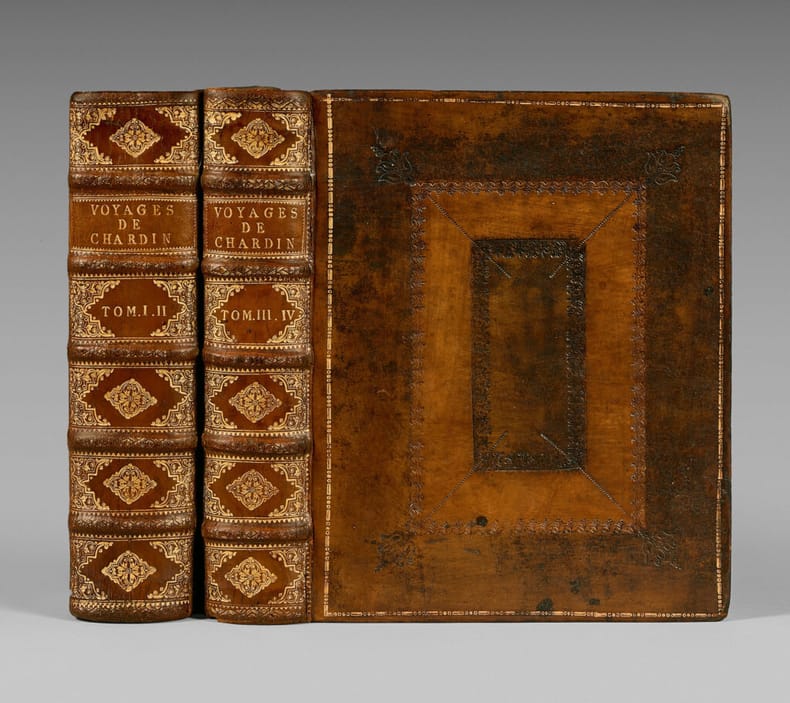
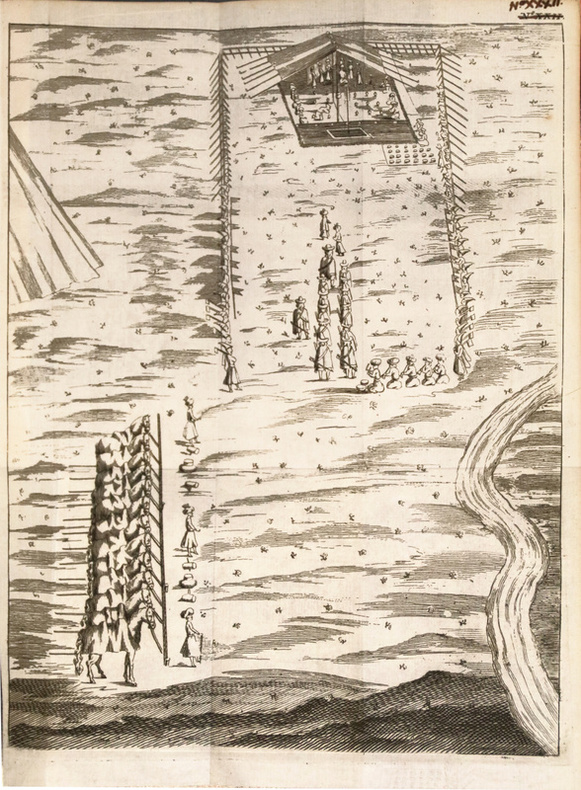
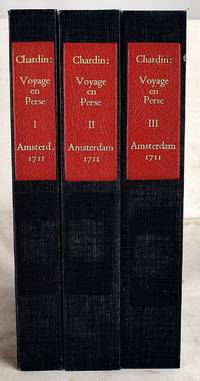
LCS-1864079Première édition complète, en partie originale, rare dans ce format, des Voyages de Chardin en Perse ornée de 78 planches dépliantes, reliée en maroquin noir de l’époque. Amsterdam, Jean Louis de Lorme, 1711. 3 tomes en 3 volumes in-4 de: I/ 1 portrait-frontispice, (4) ff., 279 pp., 1 carte dépliante, 17 planches hors texte dont 9 dépliantes; II/ 454 pp., 15 planches hors texte dont 4 dépliantes; III/ 254 pp., (13) ff., 46 planches hors texte dont 31 dépliantes. Pleine reliure de l’époque en maroquin noir, dos à nerfs ornés de fleurons dorés, encadrement à la Du Seuil sur les plats, roulettes dorées sur les coupes, tranches dorées. Qq. restaurations discrètes. Reliure de l’époque. 252 x 189 mm.
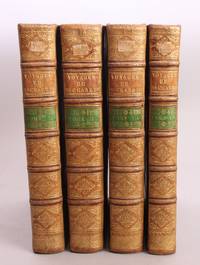
LCS-18236Cette édition est ornée de 79 gravures hors texte dont 51 dépliantes, de 2 frontispices et de 4 vignettes en tête. Amsterdam, aux dépens de la Compagnie, 1735. 4 tomes en 2 volumes in-4 de : I/ (7) ff., 390 pp., (1) f. bl., (2) ff., 359 pp, 1 frontispice, 61 planches, 2 cartes et 2 vignettes dans le texte ; II/ (3) ff., 437 pp., (3) ff., 324 pp., (15) ff., 1 frontispice, 16 planches et 2 vignettes dans le texte. Veau fauve mosaïqué, plats entièrement ornés d’un double encadrement mosaïqué alternant veau brun et veau fauve avec panneau central plus foncé, le tout souligné de roulettes et fleurons estampés à froid, filet doré d’encadrement, dos à nerfs richement ornés, tranches mouchetées. Reliure anglaise de l’époque. Marques d’appartenance de deux bibliothèques sur les feuillets de titre. 247 x 195 mm.
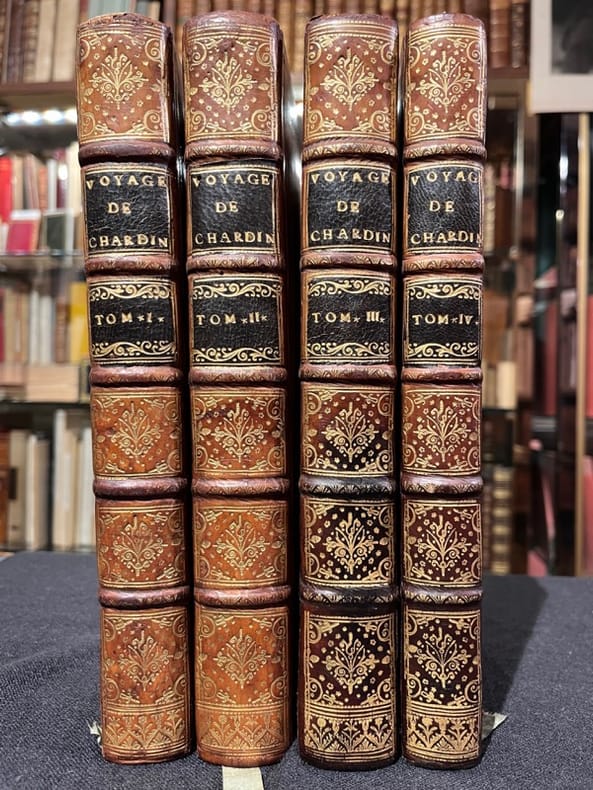
LCS-17482Édition la plus estimée, en grande partie originale, de la description de la Perse de Chardin. Ravissant exemplaire en veau écaille de l'époque aux dos ornés de la toile d'araignée dorée. Paris, Denys Horthemels, 1723 (tome 1), Amsterdam, Jean-Louis de Lorme, 1711 (les 9 autres tomes).10 tomes reliés en 11 volumes in-12 de :I/ (15) ff. avec le privilège, 254 pp., 1 portrait de l’auteur, 1 carte dépliante, 1 planche hors texte ;II/ 334 pp., 9 planches dépliantes;III/ 285 pp., 7 pl. dépl.;IV/ 280 pp., 6 pl. dépl.;V/ 312 pp., 4 pl. dépl. et 6 tableaux dépliants ;VI/ 328 pp., 5 pl. dépl.;VII/ 448 pp. ;VIII/ 255 pp., 16 pl. dépl.;IX/ (Volume de texte) 308 pp. / (Volume de planches) 29 pl. dépl. ;X/ 220 pp., (41) ff. de table.Seul le 1er volume est daté de 1723, les autres sont à la date de 1711. Très légère mouillure en tête du vol. 2, légère mouillure en marge int. du tome 3. Plein veau fauve écaille, triple filet doré autour des plats, dos à nerfs ornés de fleurons dorés à la toile d’araignée, pièces de titre et de tomaison de maroquin rouge et citron, filet doré sur les coupes, roulette intérieure dorée, tranches rouges. Reliure de l’époque.161 x 93 mm.
1811B4638Paris: Le Normant c. 1811. A fine example of this work. Plates and text are in very good condition; generally clean and crisp. . Edition: New Edition Binding: Atlas volume rebacked tastefully in half calf saving the original marbled boards. Decorative red and gilt centerpiece on upper board with gilt title. <br><br>Ten 8vo 216x135mm text volumes with full brown cloth boards. With black calf labels with gilt text. Notes: Text is in French. This 1811 edition is based on Chardin’s classic account of life and society in Persia complete with new plates coincided with renewed French imperial ambitions aimed at rivaling the British possessions in India. Chardin a Frenchman was the son of a jeweller. He set out in company with a Lyon merchant named Raisin in 1665 for Persia and India. After a highly successful journey during which he had received the patronage of Shah Abbas II of Persia he returned to France in 1670. He set out again for Persia in August 1671. This second journey was much more adventurous than the first and did not reach Isfahan till June 1673. In Isfahan he was appointed the Shah's personal jeweler by Suleiman I. During this time he was allowed to engage in an extended tour through much of Persia. Through the course of this tour Chardain was able to study the culture government and religion in detail. After four years spent in research throughout Persia he again visited India and returned to Europe. In 1681 he settled in London where he was appointed jeweller to the court of Charles II. Sir John Chardin's narrative has received the highest praise from the most competent authorities for its fullness comprehensiveness and fidelity; and it furnished Montesquieu Rousseau Gibbon and Helvétius with most important material. Size: Folio 338x510mm. Illustration: The atlas volume is illustrated with 65 sheets bearing 86 engravings which include: a frontis portrait of Chardin two maps of which one is a folding map of Persia and the other a map of the Black Sea 9 additional folded sheets 18 double plate sheets 1 quadruple plate sheet plus single plate sheets. Volume: 11 vol.10 text-1 atlas References: Weber 381; Graesse II 13; Wilson 40 Category: Book Plate Books General; Book Asia Middle East Iran; Book Europe France; Le Normant hardcover
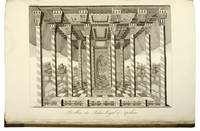
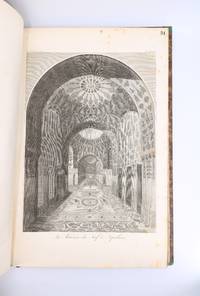
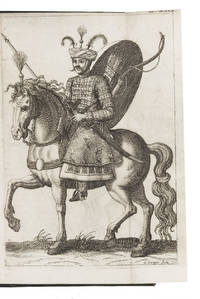
85525Paris Le Normant 1811. . Folio 54 x 36 cm; with 85 engravings on 64 sheets 9 folding including portrait of Chardin 18 sheets with double-illustrations and 1 sheet with 4 with additional large folding map of Asia with outline coloured by hand by P. Lapie 1810 engraved by Blondeau all protected with original tissue guards. Recent half-calf over marbled boards.<br /> Attractive fresh example of the atlas uncut from the most desirable edition enhanced with new and larger plates. Printed on thick paper and extra-illustrated with a large hand-coloured map of the whole region.<br /><br />'Chardin was a Huguenot who was forced to emigrate to England. He was knighted by Charles II and on his death was buried in Westminster Abbey. His first visit to the East was made in 1665 at the age of twenty-two when he both gratified a love of travelling and carried on his trade as a dealer in jewels. His more important voyage was made in 1671. His route differed from that usually taken by travellers to the East Indies in that he proceeded by way of the Black Sea and the countries bordering thereon' Cox I p 249-250.<br /><br />'Chardin set out for Persia for a second time in August 1671 but on this occasion diverted through Smyrna and Constantinople and took the Black Sea Route to Caucasia Mingrelia and Georgia finally arriving at Esfahan in June 1673. In Georgia he heard of a race of warlike women the Amazons who had at some time in the recent past invaded a kingdom to the northwest. He remained in Persia for four years as he says 'chiefly following the court in its removals but also making some particular journeys. as well as studying the language.' He apparently knew Esfahan better than Paris and visited nearly every part of the country. His account of the Persian court and his business transactions with the shah are of considerable interest. In 1677 he proceeded to India afterwards returning to France by way of the Cape of Good Hope' Howgego C102; His second and more notable voyage to Persia is important because it is in the account of this voyage that he describes life in late Safavid Persia' Ghani p. 71.<br /><br />This edition of Chardin's classic account of Persia includes new plates not found in previous editions among others lovely views of Tbilisi Tiflis Erevan Ispahan Persepolis as well as Georgian and Persian costumes views of lavish palace rooms and the Coronation of Suleyman. <br /> Paris, Le Normant, 1811. hardcover
85524Paris Le Normant Imprimeur-Libraire 1811. . Folio. With 85 engravings on 64 sheets 9 folding including 1 map portrait of Chardin 18 sheets with double-illustrations and 1 sheet with 4; light waterstain on lower margin of several leaves. Near contemporary half polished calf over marbled boards; a bit rubbed.<br /> A very good copy of the atlas from the most desirable edition enhanced with new and larger plates.<br /><br />'Chardin was a Huguenot who was forced to emigrate to England. He was knighted by Charles II and on his death was buried in Westminster Abbey. His first visit to the East was made in 1665 at the age of twenty-two when he both gratified a love of travelling and carried on his trade as a dealer in jewels. His more important voyage was made in 1671. His route differed from that usually taken by travellers to the East Indies in that he proceeded by way of the Black Sea and the countries bordering thereon' Cox I p 249-250.<br /><br />'Chardin set out for Persia for a second time in August 1671 but on this occasion diverted through Smyrna and Constantinople and took the Black Sea Route to Caucasia Mingrelia and Georgia finally arriving at Esfahan in June 1673. In Georgia he heard of a race of warlike women the Amazons who had at some time in the recent past invaded a kingdom to the northwest. He remained in Persia for four years as he says 'chiefly following the court in its removals but also making some particular journeys. as well as studying the language.' He apparently knew Esfahan better than Paris and visited nearly every part of the country. His account of the Persian court and his business transactions with the shah are of considerable interest. In 1677 he proceeded to India afterwards returning to France by way of the Cape of Good Hope' Howgego C102; His second and more notable voyage to Persia is important because it is in the account of this voyage that he describes life in late Safavid Persia' Ghani p. 71.<br />Includes among others lovely views of Tbilisi Tiflis Erevan Ispahan Persepolis as well as Georgian and Persian costumes views of lavish palace rooms and the Coronation of Suleyman.<br /> Paris, Le Normant, Imprimeur-Libraire, 1811. hardcover
17359893Amsterdam aux dépens de la Compagnie 1735 4 volumes in-4 (257 x 185 mm), 7 ff. n. ch., 390 pp. ; 2 ff. n. ch., 359 pp., 1 f. blanc ; 3 ff. n. ch., 437 pp. ; 3 ff. n. ch., 324 pp., 15 ff. n. ch., 1 f. blanc. Veau fauve, plats recouverts de filets à froid en treillis, encadrement floral en volutes dorées, dos lisse richement orné, titre et tomaison dorés, roulette dorée sur les coupes et les chasses, tranches dorées, tache d’encre marginale pages 45 et 63 du tome 1, taches p. 97, 135 et 173 du tome 2, planche 64 coupée court avec manque, quelques rousseurs (Rel. P. Lefebvre).
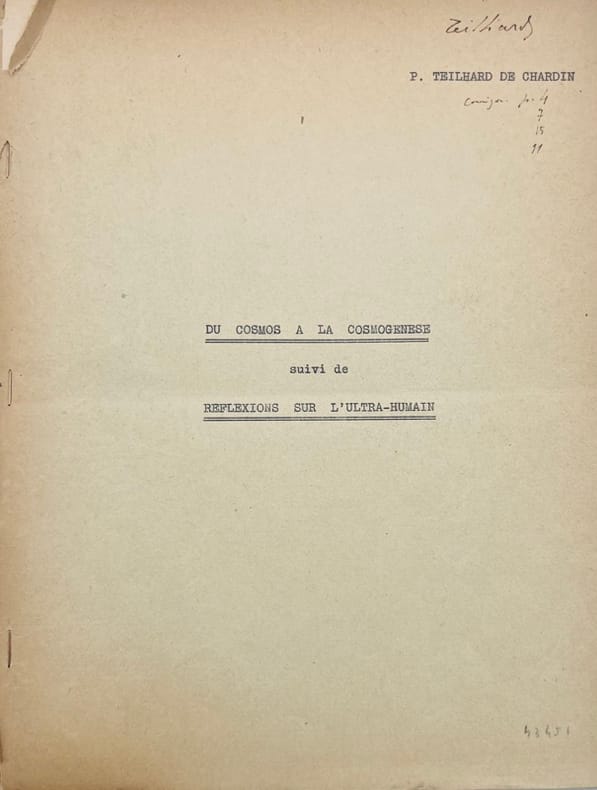
195143451Paris, , 1951. In-4 agraphé (265 x 210 mm) de 16 pp., couverture tapuscrite.
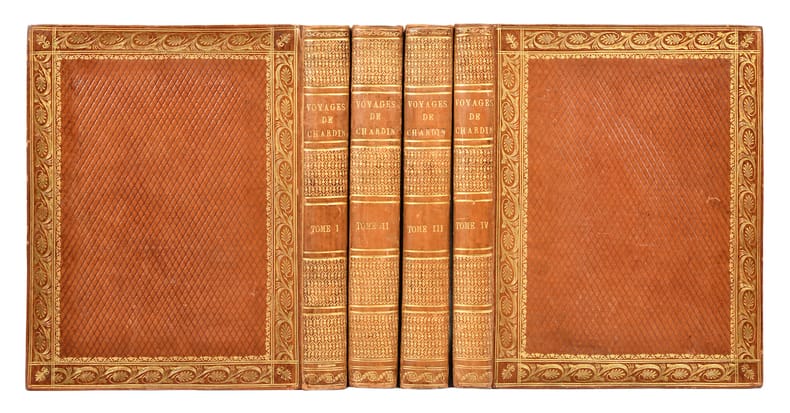
181189644Paris: Le Normant 1811. Fine. Le Normant Paris 1811 12.5 x 20.5 cm pour les 10 volumes de texte - 345 x 52 cm pour le volume d'atlas 10 volumes reliés 1 atlas New edition partly original expanded with a survey of Persia from the earliest times to the present day together with annotations by the Orientalist and librarian Louis-Mathieu Langlès cf. Quérard II 133; Schwab p. 18; lacking in Blackmer and Atabey. Contemporary full mottled calf smooth spines gilt with decorative rolls and tools black morocco-style shagreen lettering- and volume-pieces gilt rolls on the caps partly faded gilt dentelle borders on the boards marbled endpapers and pastedowns marbled edges. For the folio atlas: contemporary half calf in fawn smooth spine gilt with rolls and tools brown lettering-piece spine with some rubbing and restorations red morocco title-label on the upper board marbled paper sides marbled edges. In the first text volume pagination skips from pp. 235 to 256 without loss; pp. 213220 are transposed; all the plates in the atlas including portrait and map have been renumbered in blue ink stencil from 1 to 65; some occasional foxing on the plates. Our atlas volume contains 1 portrait 1 folding map and 83 views and figures on 63 plates numbered 1 to 82 including one 81bis with some numbering errors. Most figures are full-page; several plates include two or more subjects; nine plates are large folding plates. A pleasing copy attractively bound at the time with the atlas in a different contemporary binding. This is the finest edition of Chardins account of his travels. It is enriched with notes on Persia by the celebrated Orientalist Louis-Mathieu Langlès. ""Chardin was of French origin the son of a jeweller. He went to the Levant to purchase gem stones in 1665 and after a successful journey set out again in 1671 spending seven years on his travels much of the time in company with Guillaume Grelot whom he met in Constantinople. After his return of his travels he settled in London"" Leonora Navari. Le Normant hardcover
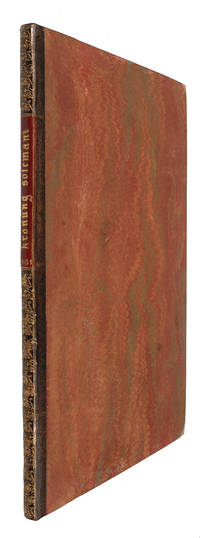
168160953Genff, Widerhold, 1681. Folio (340 x 210 mm). Recently bound in a magnificent pastiche-binding of brown half calf with gilt red leather title-label to elaborately gilt spine. Vellum corners. Title-page with stains. A few marginal repairs, not affecting text. (8), 82 pp.
168160953Genff Widerhold 1681. Folio 340 x 210 mm. Recently bound in a magnificent pastiche-binding of brown half calf with gilt red leather title-label to elaborately gilt spine. Vellum corners. Title-page with stains. A few marginal repairs not affecting text. 8 82 pp. <br/><br/><em>Exceedingly rare first German translation of Chardin’s “Le Couronnement de Soleimaan troisieme†1671 - his report on the coronation of the new Persian king and what happened during the first years of his reign. Returning to Persia on the way home to Europe Chardin witnessed the coronation of Suleiman III in 1669. Chardin’s works are considered some of the finest works of early Western scholarship on Iran and the Subcontinent in general and the present work offered Europe a rare glimpse into the customs of the Royal house of Persia. “Chardin details the ceremonies in the present work with a preface that laid out the parallels between the French and Persian monarchies. Chardin portrays a filial bond between the two monarchies. The Persian shah he declares calls “Your Majesty Louis XIV his brother†due to their shared grandeur. Chardin proclaims “The Kind of France is the greatest Emperor in Europe as he the shah is the most powerful Prince in Asia.†He emphasizes his admiration for Persia and its likeness to France: “Of all the vast Empires of the Orient … there is not one that should not yield to Persia for the temperature of the air for genius that is more reasonable than other places and is closest to our own and for all the excellent and rare things that are found there in abundance.†Mokhberi The Persian Mirror Born in Paris in a Hugenot Protestant family Jean Chardin 1643-1713 undertook his travels to Persia because of his father's position as a jeweler and shareholder in the French East India Company. Chardin set out in 1664 traveling through Turkey the Black Sea Georgia and Armenia. Soon after his arrival in Persia he received a commission to create jewelry for Shah Abbas II who died in 1666 and was succeeded by Shah Safi. After witnessing the latter's coronation Described here Chardin went on India and finally returned to Paris in 1670. In 1671 he published an account of the coronation and in the same year set off for Persia again arriving in Isfahan in 1673 and remaining there for several years before once more visiting India and returning home in 1677. With the persecution of the Hugenots in France he moved to England in 1680. "Travel restarted with 17th-century missionaries whose medical and pedagogical expertise helped counterbalance Orthodox or pagan reservations. Dominican Prefects Dortelli D'Ascoli and Giovanni da Lucca 1630s extended Giorgio Interiano's description of Circassia and Abkhazia. Theatine proselytisers targeted Mingrelia/western Georgia Capuchins the eastern provinces - the Vatican's Fide Press further contributed by printing the first Georgian books Chikobava/Vateishvili. Many including mission-head Don Pietro Avitabile 1626-1638 recounted their experiences. Prefect to Mingrelia Joseph Marie Zampi a 23-year denizen from approximately 1645 contributed a third significant source in his description of Mingrelian religious practice. This he handed to Jean Chardin 1643-1713 in 1672. A French traveller who became English! ambassador in Holland Chardin translated and incorporated it as a substantial part of his own description of a sometimes perilous journey through Transcaucasia 1672-3 which reflects Ottoman and Persian influence in western and eastern parts respectively - a Turkish organized slave-trade flourished from various Mingrelian ports. Linguistically Zampi revealingly observed that the ecclesiastical language Georgian was as difficult for even the Mingrelian priesthood to understand as Latin was for Italian peasants!" Speake The Literature of Travel and Exploration 1 199-202. Brunet I 1802 – A later French edition. Graesse II P. 121. </em> hardcover
181189644Le Normant | Paris 1811 | 12.5 x 20.5 cm pour les 10 volumes de texte - 34,5 x 52 cm pour le volume d'atlas | 10 volumes reliés + 1 atlas
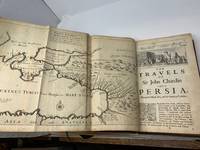
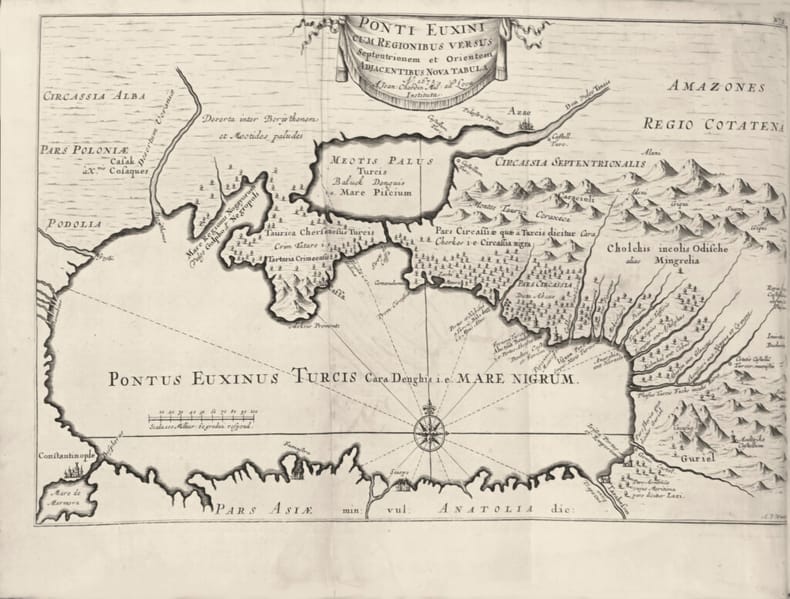
1686017257London: Moses Pitt 1686. First Edition in English. Hardcover. Minor soiling and wear Near Fine. Folio 7-3/4" x 12-1/8" bound in later calf leather recently and sympathetically rebacked with a gilt-decorated spine preserving the original morocco spine label; xviii 264 331-417 9 154 6 pages. Complete with the frontispiece portrait of the author an additional engraved title-page a folding engraved map of the Black Sea and surrounding countries and 16 plates 11 of which are folding along with a couple of engravings in the text. Published in English and French concurrently in 1686 as Part I of the Travels. Three other volumes with the general title page VOYAGES DE MONS. LE CHEVALIER CHARDIN were published in Amsterdam in 1711. The last volume announced by Chardin in his preface to this edition was never published. THE CORONATION OF SOLYMAN III. THE PRESENT KING OF PERSIA at the end of this volume is a translation of Chardin's LE COURONNEMENT DE SOLEIMAN TROISIÈME first published in Paris in 1671. Includes two indexes one bound following part 1; the other bound at the end. The fine plates include views of the cities of Tefflis Erivan Tauris Sultanie Kom and Cashan as well as important monuments. <br/><br/>Chardin was a jewelry merchant who traveled extensively throughout Persia in the 1670s and was a keen observer of the area's culture. Moses Pitt hardcover
192256462Paris, Masson, 1922, in-4, 116-2] pp, et 8 planches accompagnées de 8 serpentes explicatives imprimées, Broché, couverture bleue imprimée en noir de l'éditeur, Édition originale de la thèse de Teilhard de Chardin soutenue, comme l'indique une date tamponnée sur la couverture et la page de titre, le 22 mars 1922, devant une commission d'examen composée de MM. Haug, Rabaud et Combes. En étudiant des mammifères de l'époque géologique de l'Éocène inférieur (-55,8 millions d'années à -48,6 millions d'année), Teilhard de Chardin souhaite apporter des réponses au problème de l'origine des mammifères placentaires. En appendice, l'auteur ajoute une étude sur quelques formes archaïques nouvelles de Phosphorites du Quercy. Les 8 planches en phototypie reproduisent les photographies des ossements fossiles étudiés. Teilhard de Chardin (1881-1955), après avoir enseigné la physique et la chimie entre 1905 et 1908, débute des études de paléontologie et de géologie au début des années 1910 jusqu'à obtenir sa licence en 1920 puis le grade de docteur ès Sciences Naturelles en 1922. Les écrits de cet infatigable curieux de l'humanité, philosophe, scientifique et jésuite, développent une riche et troublante interrogation sur les origines et l'évolution de toutes les espèces vivantes, en particulier du ce qu'il nomme, le "phénomène humain". Rare thèse, en parfait état, d'un des grands penseurs du XXe siècle. Couverture légèrement insolée. Couverture rigide
248846Nouvelle edition. Amsterdam Aux Dépens de la Compagnie 1735. 4to. 2 engraved frontispieces. 78 of 79 engraved plates of which many folding. Finely bound in contemporary three calf. Spines richly gilt in compartments. Plate no xlii not present otherwise a fine and well preserved set. . unknown
31082 p.l. lvi 502 pp. 8vo 19th-cent. sheep-backed marbled boards flat spine gilt red morocco lettering piece on spine. Paris: Dessain 1779.<br/> <br/> A most unusual copy very probably Chardin’s own copy of this sale catalogue; it is the first of several sales here held under the maiden name of his wife “Filheul†by which Chardin one of the most important Parisian booksellers of his time periodically disposed of a portion of his vast stock. We know of later sales in 1806 1819 in London and 1824. <br/> <br/> This did not prevent Chardin from selling many rare books and MSS. directly to collectors throughout his career — the most outstanding was no doubt the Psalter of St. Louis which he sold to a Russian Grand Duke and which Louis XVIII acquired from him for the Bibliothèque Royale. <br/> <br/> The above catalogue especially rich in early French books is extremely well compiled and has been long held in high esteem. According to Longchamp I p. 496 La Vallière purchased heavily at this sale. One of the remarkable features of this catalogue is the large number of heterodox and politically subversive books betraying Chardin’s sympathies which years later made him an enthusiastic supporter of the Revolution: of 122 lots only the number is given and their authors and titles are indicated by dots. In our copy these have been supplied by a contemporary annotator. <br/> <br/> According to Jean Viardot from whose library this comes this is Chardin’s own copy. He has signed it on page 424 “Chardin A Paris en Juillet 1780.†Another slightly later annotator has provided extensive notes on Chardin on pages 424-25. <br/> <br/> Chardin was eulogized at length by Dibdin who had him portrayed by Lewis in his Tour in France and Germany II pp. 400-404. <br/> <br/> Very good copy. 2544 lots; priced throughout in a contemporary hand. This copy lacks the final leaf with the list of 15th-century editio princeps. <br/> <br/> ⧠Gustave Brunet Dictionnaire de Bibliologie Catholique col. 459–“Il s’y trouve un assez grand nombre de livres rares et singuliers.†Grolier Club Printed Catalogues of French Book Auctions…1643-1830 277. Peignot p. 98–“Catalogue intéressant par le grand nombre d’articles précieux qu’il renferme.â€. unknown
31082 p.l. lvi 502 pp. 8vo 19th-cent. sheep-backed marbled boards flat spine gilt red morocco lettering piece on spine. Paris: Dessain 1779. A most unusual copy very probably Chardin's own copy of this sale catalogue; it is the first of several sales here held under the maiden name of his wife "Filheul" by which Chardin one of the most important Parisian booksellers of his time periodically disposed of a portion of his vast stock. We know of later sales in 1806 1819 in London and 1824. This did not prevent Chardin from selling many rare books and MSS. directly to collectors throughout his career - the most outstanding was no doubt the Psalter of St. Louis which he sold to a Russian Grand Duke and which Louis XVIII acquired from him for the Bibliothèque Royale. The above catalogue especially rich in early French books is extremely well compiled and has been long held in high esteem. According to Longchamp I p. 496 La Vallière purchased heavily at this sale. One of the remarkable features of this catalogue is the large number of heterodox and politically subversive books betraying Chardin's sympathies which years later made him an enthusiastic supporter of the Revolution: of 122 lots only the number is given and their authors and titles are indicated by dots. In our copy these have been supplied by a contemporary annotator. According to Jean Viardot from whose library this comes this is Chardin's own copy. He has signed it on page 424 "Chardin A Paris en Juillet 1780." Another slightly later annotator has provided extensive notes on Chardin on pages 424-25. Chardin was eulogized at length by Dibdin who had him portrayed by Lewis in his Tour in France and Germany II pp. 400-404. Very good copy. 2544 lots; priced throughout in a contemporary hand. This copy lacks the final leaf with the list of 15th-century editio princeps. ❧ Gustave Brunet Dictionnaire de Bibliologie Catholique col. 459-"Il s'y trouve un assez grand nombre de livres rares et singuliers." Grolier Club Printed Catalogues of French Book Auctions.1643-1830 277. Peignot p. 98-"Catalogue intéressant par le grand nombre d'articles précieux qu'il renferme.". hardcover books
173520955A Amstredam, aux dépens de la Compagnie, 1735. 4 volumes in-4 de [14]-390; [4]-359; [6]-.437; [6]-324-[30] pages.
1711HA9H16QDV1MNAmsterdam 1711. 12mo. J. L. de Lorme Contemporary half morocco gold-tooled spine. With an engraved frontispiece portrait of Chardin title-page printed in red and black with engraved vignette 1 engraved map 79 engraved folding plates and 6 letterpress folding tables. 10 volumes. 24 254; 334; 285 1 blank; 280; 312; 328; 448; 255 1 blank; 308; 220 82 pp. First complete edition of the famous voyages of Jean Chardin in Persia around the Gulf and other Eastern countries. Jean Chardin 1643-1713 was the son of a wealthy Parisian jeweller. Since he was bent on travelling to the East he proposed to his father to go and set up a diamond-trade with the East. On his first trip in 1665 he travelled through Persia and to Isfahan the Persian capital. There he gained access to the court of Shah Abbas II to whom he became the personal merchant jeweller. After extensive travelling through Persia studying the religion and culture he returned to Paris in 1670. Later in 1671 Chardin left again for the East and meeting with many difficulties and dangers took two years to reach Persia by way of Constantinople and Southern Russia. From Persia he proceeded to India and returned to France by way of the Cape of Good Hope in 1677. Among the numerous fine engravings are folding views of Tiflis Erivan Isfahan Persepolis etc. and some beautiful plates of architecture and costumes. Chardin is one of the most detailed observers of the Gulfs pearl fishing in this period.Each volume with an armorial bookplate on pastedown. Binding rubbed along the extremities some volumes are slightly cracked at the hinge. Leaves slightly browned some occasional minor spots and a few owner's notes in pencil. Overall a very good copy.l Atabey 219; Howgego to 1800 C102; STCN 4 copies. unknown
2504A Londres: Chez Moses Pitt 1686. Hardcover. Good. Folio. 10 150 181-349 5pp. Engraved title-page vignette engraved head- and tailpieces engraved initials. "Fautes à corriger" on p.5 at rear. First edition. In this copy the 'O' of 'Odyssey' in line 15 of title is above the 'e' of 'mores.' Contemporary vellum. With a frontispiece engraved title-page folding map and 15 plates. BM 58 p.481; Brunet I 1802; Chadenat 546; Hage Chahine 909; Weber II 377; Wilson 40 pour l'édition anglaise de 1686; Atabey 218; Wing C2041; Schwab 87; Graesse II 121; ESTC R1175. <br/> <br/> A Londres: Chez Moses Pitt, 1686. hardcover
168680746London: Printed for Moses Pitt in Duke Street Westminster 1686. First Edition in English. Leather-bound. Good. Quarto. Contemporary English panel calf boards 417 5 pp. index. 11 7/8" x 7 1/2" sympathetically rebacked in mottled calf on hempen cords. Contrasting spine label of gilt on maroon Rubbing to extremities. Marbled endpapers and edges. 12' x 20' elaborate foldout frontis map of the Black Sea. Handwritten in two places: "Marshall Lister's Book 1785" once on the verso of the mounted title page bordered by elaborate doodles followed by a line of what appears to be shorthand; the second inscription at the top of the first page. Most curiously opposite the "Epistle Dedicatory" are printed the words: "Let this BOOK be Printed". <br /> <br /> The dedicatory itself rather over the top adulatory addressed to the King concludes: "I might advance in this parallel where. Your Majesty has so much the advantage if I did not find my Eyes dazled when I attempt to fix them upon Your Majesty." LARGE foldout engravings by Paul Bouche mounted on stiff card stock SOME of which are: Teflis a five-fold panorama extending to nearly 30" in length; a Nuptial Feast at Tefles; Irivan Erivan; Sultani; The Tombs of the two last kings of Persia; Kom; Sefy Premier; Kachan; The Great Inn in Cashan;. Chardin 1643-1713 was a French traveler and merchant who spent many years in England and and travelled in Persia and India from 1665-1667. There was only one volume published. It was originally published in French. Chardin was knighted by Charles II and appointed jeweller to the court. Howgego C -102. Printed for Moses Pitt in Duke Street, Westminster unknown
17112306280021Chez Jean Louis De Lorme A Amsterdam 1711. First Edition. Hardcover. Good. 18th Century Travels to the Middle East and Persia 3 volumes. Quartos. Contemporary calf rebacked with later leather spines. Housed in custom made cloth slip cases. Collated: 8 279 ; 454 ; 254 26 index pages.; engraved frontispiece portrait 73 of 77 engraved plates 55 folding engraved folding map. Titles in red and black. Lacking plates: XVIII XXIX XLV LXXV. Refs: Brunet I 1802; Chadenat 35; Cox I p. 250; Atabey 219; Howgego C102: "The earliest editions of Chardin's travels curiously contain nothing on his journey to India. Chardin apparently refused to include his Indian travels as a consequence of his imperfect understanding of Indian religion and culture. The first edition to include his Indian travels was published in Amsterdam in 1711." This edition being the first complete edition of Chardin's travels. <br> "Chardin traveled extensively in the East from 1665 to 1677 trading and acting as advisor to various Moslem officials. His observations were quite perspective and were considered by many of his contemporaries to be the best account of the Moslem lands that had yet been published A Hugenot he settled in England in 1681 where he was appointed court jeweller to Charles II. He became a member of the Royal Society in 1682 and served as the King's envoy to Holland in 1684. He died in 1712 and was buried in Westminster Abbey. The First volume of his journal was published in London in 1686. The complete work did not appear until this edition which Brunet considers the most beautiful." - John Howell Books. <br> Book plate of Joseph M. Gleason. Monsignor Joseph M. Gleason 1869-1942 was a Californian Catholic priest educationalist historian and collector of books and photographs. Chez Jean Louis De Lorme, A Amsterdam hardcover
172319664Paris: André Cailleau 1723. 8vo 16.5 cm 6.5". 10 vols. I: Frontis. 10 254 pp.; 1 fold. map. II: 334 pp.; 4 fold. plts. 5 plts. III: 285 1 blank pp.; 4 fold. plts. 3 plts. IV: 280 pp.; 2 fold. plts. 3 plts. V: 312 pp.; 4 fold. tables 5 plts. VI: 328 pp.; 4 plts. VII: 10 15448 i.e. 446 pp. VIII: 255 1 blank pp.; 10 fold. plts. 6 plts. IX: 308 pp.; 1 double-spread fold. plt. 8 fold. plts. 19 plts. X: 22 3220 82 index pp. <br><br>Attractive French edition of Sir John Chardins Persian travelogue originally published in 1686. Brunet calls the account which covers Chardins voyages through India Russia and Persia un des plus intéressants que lon ait publiés in the 18th century; the work was and continues to be a major source of information on contemporary Persian politics government religion and culture.<br>Â Â Â Â The title-pages are printed in red and black and the 10 volumes are illustrated with a total of 79 plates many folding and tables including one map and one frontispiece. <br>Â Â Â Â <br>Â Â Â Â Brunet I 1802. Contemporary speckled calf spines extra gilt; edges joints and extremities rubbed leather in some cases cracked or starting along joints or chipped at spine extremities two spines with compartments chipped. All edges speckled. Front pastedowns each with institutional bookplate front free endpapers rubber-stamped and with inked ownership inscriptions dated 1867 title-pages except for vol. I rubber-stamped reverse of map in vol. I rubber-stamped some vols. with first text page rubber-stamped. Additional plate creased laid in seemingly excised from another work. André Cailleau hardcover books
17357549A Amsterdam, 1735. 4to. 3 cont.full mottled calf. Raised bands, richly gilt backs. Extremities with small traces of use, slight weakening to parts of hinge, top of spine on vol. II with loss of leather ca 1x2 cm. Internally fine on good paper. 2 engr.frontisp. (with portraits), 3 engr.titlevign., 3 large engr. textvignettes. (12),390,(4),359,(4),437 pp. and 78 mostly large folded engraved plates (maps,plans,views etc.). - To this second edition was published a 4th volume which contains the author's previously published work ""Couronnement de Soliman III"" and extracts from the author's manuscript, this supplementary volume is not present here, but the 3 volumes contain the whole travel and all the plates belonging to these 3 volumes.
7549A Amsterdam 1735. 4to. 3 cont.full mottled calf. Raised bands richly gilt backs. Extremities with small traces of use slight weakening to parts of hinge top of spine on vol. II with loss of leather ca 1x2 cm. Internally fine on good paper. 2 engr.frontisp. with portraits 3 engr.titlevign. 3 large engr. textvignettes. 1239043594437 pp. and 78 mostly large folded engraved plates mapsplansviews etc. - To this second edition was published a 4th volume which contains the author's previously published work "Couronnement de Soliman III" and extracts from the author's manuscript this supplementary volume is not present here but the 3 volumes contain the whole travel and all the plates belonging to these 3 volumes. <br/><br/><em>Rare second edition of Chardin's travels regarded as being one of the finest works of early Western scholarship on Persia and the Near East in general. "Thought to have been read by writers such as Montesquieu and Rousseau Chardin's account stands apart from those of other travellers to the region Caucasus at this time through its awareness of cultural difference and relativity and in its desire to place accuracy above romanticism." Speake The Literature of Travel and Exploration 1.Chardin set out from Paris for Persia and India. He reached Ispahan 1673 spent four years in Persia visited India and returned by the Good Hope in 1677. The first volume contains the trip from Paris to Isfahan the second contains a particular description of Isfahan and the relation of the author's two voyages from Ispahan to Bander-Abassi the third contains a general description of the Persian empire and the particular descriptions of the sciences and arts which are in use therein of political military and civil government.Born in Paris in a Hugenot Protestant family Jean Chardin 1643-1713 undertook his travels to Persia because of his father's position as a jeweler and shareholder in the French East India Company. The younger Chardin set out in 1664 traveling through Turkey the Black Sea Georgia and Armenia. Soon after his arrival in Persia he received a commission to create jewelry for Shah Abbas II who died in 1666 and was succeeded by Shah Safi. After witnessing the latter's coronation Chardin went on India and finally returned to Paris in 1670. In 1671 he published an account of the coronation and in the same year set off for Persia again arriving in Isfahan in 1673 and remaining there for several years before once more visiting India and returning home in 1677. With the persecution of the Hugenots in France he moved to England in 1680"Travel restarted with 17th-century missionaries whose medical and pedagogical expertise helped counterbalance Orthodox or pagan reservations. Dominican Prefects Dortelli D'Ascoli and Giovanni da Lucca 1630s extended Giorgio Interiano's description of Circassia and Abkhazia. Theatine proselytisers targeted Mingrelia/western Georgia Capuchins the eastern provinces - the Vatican's Fide Press further contributed by printing the first Georgian books Chikobava/Vateishvili. Many including mission-head Don Pietro Avitabile 1626-1638 recounted their experiences. Prefect to Mingrelia Joseph Marie Zampi a 23-year denizen from approximately 1645 contributed a third significant source in his description of Mingrelian religious practice. This he handed to Jean Chardin 1643-1713 in 1672. A French traveller who became English! ambassador in Holland Chardin translated and incorporated it as a substantial part of his own description of a sometimes perilous journey through Transcaucasia 1672-3 which reflects Ottoman and Persian influence in western and eastern parts respectively - a Turkish organized slave-trade flourished from various Mingrelian ports. Linguistically Zampi revealingly observed that the ecclesiastical language Georgian was as difficult for even the Mingrelian priesthood to understand as Latin was for Italian peasants!" Speake The Literature of Travel and Exploration 1 199-202.Brunet 1802Graesse II P. 121 </em> hardcover