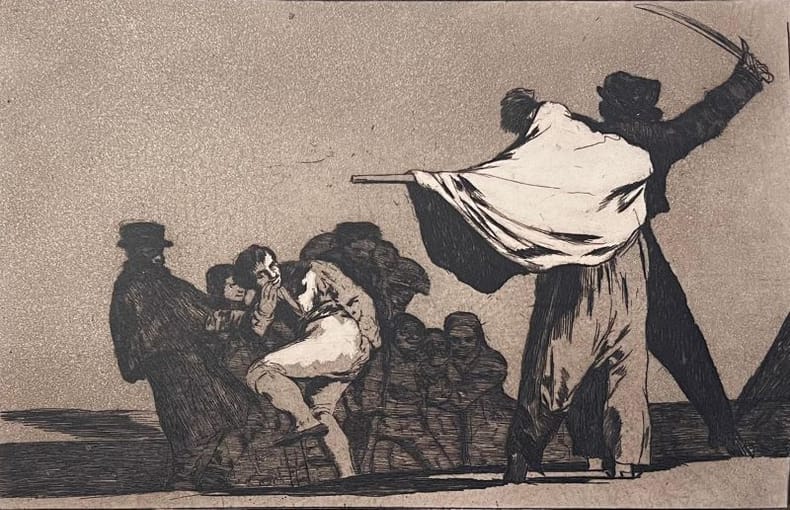
LOS PROVERBIOS. GOYA (Francisco).Livre Rare Book
13 résultats
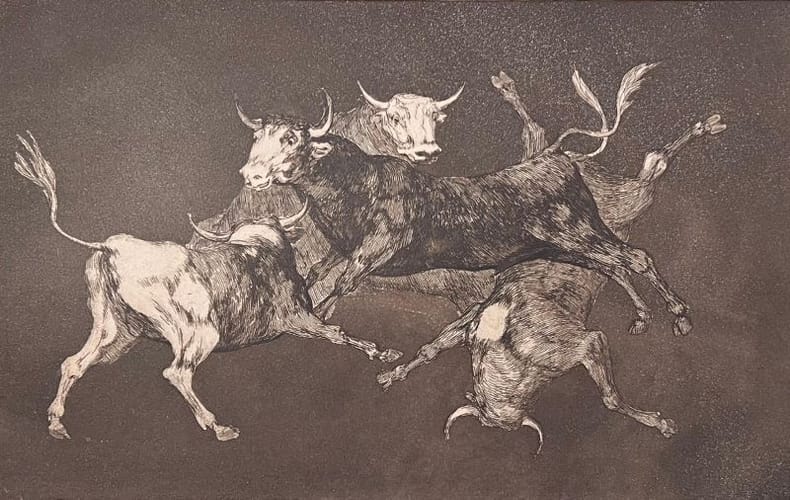
1877245531877 4 Estampe signée en bas à gauche dans la cuvette, titrée, Paris, Liénrard-L'Art, 1877, 23 x 32,5 cm. à vue, feuille 32,5 x 50 cm. (format de la feuille).
1877245541877 4 Estampe signée en bas à gauche dans la cuvette, titrée, Paris, Liénrard-L'Art, 1877, 23 x 32,5 cm. à vue, 30,5 x 40.8 cm. (format de la feuille).
18704631870. Etching on paper 1st published in 1799 this issue ca. 1875 later ones are dogfood. Plate 66 from Los Caprichos the sheet 8†X 10†the image 4 7/8†X 7 3/8†the full margins are not pictured. Titled at the base plate number at the upper right. Good. Unframed. A supernatural allegory of a witch and her cat flying over the landscape on a crippled devil who looks like a surgically humanized warthog from the island of Dr. Moreau. The theme is conflict much smaller than but not unlike that between matter and anti–matter or between education and disaster. Ref: Delteil 103. Harris 1964 101.III unknown
18704631870. good. Etching on paper 1st published in 1799 this issue ca. 1875 later ones are dogfood. Plate 66 from Los Caprichos the sheet 8" X 10" the image 4 7/8" X 7 3/8" the full margins are not pictured. Titled at the base plate number at the upper right. Good. Unframed. A supernatural allegory of a witch and her cat flying over the landscape on a crippled devil who looks like a surgically humanized warthog from the island of Dr. Moreau. The theme is conflict much smaller than but not unlike that between matter and anti-matter or between education and disaster. Ref: Delteil 103. Harris 1964 101.III unknown books
187824584Calcografía for the Real Academia 1878. Etching and aquatint. From the 4th edition of "Los Caprichos" - plate 4. Goya's pitiless caricature of a grown-up "nanny's boy."<br/> <br/> Los Caprichos was Goya's first collection of completely original etchings. They were and remain startlingly original in style and frequently shocking in their satirical assaults. They are strikingly modern and are his most popular prints today though they were received with little favor in 1799 when they first appeared for sale. But even within Goya's lifetime enthusiasm grew. El de la rollona is uncompromising in its mockery of the mama's boy who is dressed in baby clothes has his fingers in his mouth and a look of terror in his eyes though he's bearded and obviously strong. The nanny or mother grieves in the shadow behind him so disappointed in his failure to become a man. Goya's textual comment about this engraving is: "Negligence tolerance and spoiling make children capricious naughty vain greedy lazy and insufferable. They grow up and yet remain childish. Thus is nanny's little boy." The fourth edition of Caprichos from which this print comes was made about 1878 as witnessed by the beveled platemark and the "strong absorbent wove paper" and "dark umber ink".<br/> <br/> Harris v. 1 95-109; v.II p. 74; Delteil 41; Hind p.253 - 5. Calcografía for the Real Academia unknown
187824584CalcografÃa for the Real Academia 1878. Etching and aquatint. From the 4th edition of "Los Caprichos" - plate 4. Goya's pitiless caricature of a grown up "mama's boy."<br/> <br/>Los Caprichos was Goya's first collection of completely original etchings. They were and remain startlingly original in style and frequently shocking in their satirical assaults. They are strikingly modern and are his most popular prints today though they were received with little favor in 1799 when they first appeared for sale. But even within Goya's lifetime enthusiasm grew. El de la rollona is uncompromising in its mockery of the mama's boy who is dressed in baby clothes has his fingers in his mouth and a look of terror in his eyes though he's bearded and obviously strong. The nanny or mother grieves in the shadow behind him so disappointed in his failure to become a man. Goya's textual comment about this engraving is: "Negligence tolerance and spoiling make children capricious naughty vain greedy lazy and insufferable. They grow up and yet remain childish. Thus is nanny's little boy." The fourth edition of Caprichos from which this print comes was made about 1878 as witnessed by the beveled platemark and the "strong absorbent wove paper" and "dark umber ink".<br/> <br/>Harris v. 1 95-109; v.II p. 74; Delteil 41; Hind p.253 - 5. CalcografÃa for the Real Academia unknown books
1877S81881Paris, Renouard 1877 140pp., 24cm., pages non coupées, br.orig. (dos peu restauré) protégé par papier cristal, peu de rousseurs, bon état, rare, [Contient un catalogue raisonné, avec la description de 275 oeuvres], S81881
1868100022DBParis, 1868. Ca. 28 x 20 cm. 616 Seiten. Mit zahlreichen Illustrationen im Text und auf Tafeln (Radierungen, Lithographien, Stahlstiche). Roter Leineneinband. 24. Band (Januar bis Juni)
1858003173Paris Schulz et Thuillié 1858 In-12 Demi-reliure Edition originale
18737964Très belle épreuve.IFF 37. en feuille Très bon Paris Gazette des Beaux-Arts 1873 26 x 16 cm. Marges 28 x 20,5 cm.
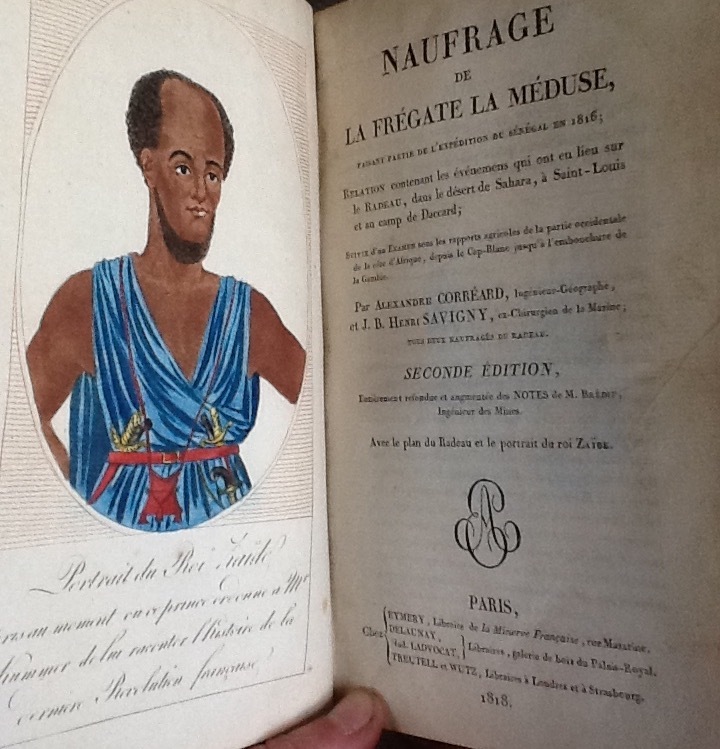
1818CCC-626apla6. edition emery 1818, 2eme edition. Paris, Chez Eymery, Delaunay, Mad. Ladvocat , 1818. In-8 (20 x 12), reliure demi-chagrin marron, 396 pages. Bien complet du portrait en couleurs du roi Zaïde (frontispice) et du plan du Radeau. Photos possibles, bon exemplaire.
187526859MADRID 1875 une photographie originale albuminée en noir, format : 27,5 x 22 cm, " Fachada principal de la nueva plaza de toros de Madrid - FACADE PRINCIPALE DE L'ARENE DE GOYA DE MADRID" (circa 1875)
1870135441870. 215x277mm. 8½x11". Dibujo Segunda mitad del siglo XIX. 215 x 277mm. 1 hoja. Sanguina sobre papel verjurado. Dibujo siguiendo la estela de Goya unknown