2 144 résultats
193855653Editions De La Connaissance. As New. 1938. Paperback. FREE UPGRADE to Courier/Priority Shipping Upon Request IN STOCK AND IMMEDIATELY AVAILABLE FOR SHIPMENT - AS NEW THE TEXT BLOCK IS PRISTINE CLEAN UNMARKED AND IN EXCELLENT CONDITION - - Text in French. 58 works catalogued; 2 p. L. 7-12 p. 2 l. 55 pl. incl. Ports. on 28 l. 25 cm. -- with a bonus offer-- . Editions De La Connaissance paperback
200571758University of Washington Press Distribution. New. 2005. Paperback. 1903470390 . FREE UPGRADE to Courier/Priority Shipping Upon Request - IN STOCK AND IMMEDIATELY AVAILABLE FOR SHIPMENT - Flawless copy brand new pristine never opened -- 244 pp. With 119 ills. 109 col. 3 foldout. 28 x 25 cm. -- with a bonus offer-- . University of Washington Press (Distribution) paperback
3aa5A Paris chez Edelinck Rue S´Lacques au Seraphin ca. 1650. 45 cm x 35 cm. am Rand gering fleckig/an der oberen Kante ist der Abdruck etwas schwächer. Sonst sehr schön. Ein-Druck-Platte. Siehe Bild unknown
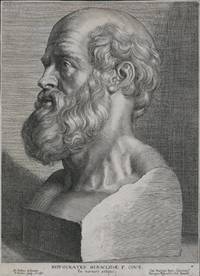
163834571Antwerp 1638. <p>Rubens Peter Paul 1577-1640. Hippocrates Hiraclidae F. Cous. Ex marmoro antique. Engraving by Paulus Pontius Paulus du Pont1603-58 after Rubens. N.p. Antwerp 1638. 304 x 220 mm. Tiny pin-holes in upper left and lower right corners 2 small circular stamps on verso one reading "Stempel Tilgungs." Fine. </p> . <p>An excellent impression of this well-known engraving done by Paulus Pontius after Rubens's drawing of an antique bust of Hippocrates. "Rubens's involvement in printmaking began in earnest when he was about thirty. . . .His participation in printmaking set new standards especially for book illustrations and the reproductive print" Logan & Plomp "Peter Paul Rubens as Draftsman" metmuseum internet reference. The "Hippocrates" is the only separately issued print we know of by Rubens that is of medical interest. Paulus Pontius was a master engraver and the primary artist responsible for making engravings after Rubens's work; he lived in Rubens's home until a year after the latter's death. </p> . unknown
1981000153London: Nonpareil 1981. Limited/Numbered . Fine Full Leather. Near Fine. Revised edition.London Nonpareil 1981.277128pp. 4to.Original full leather.ONE OF ONLY 53 COPIES bound in full green goatskin with the 1982 supplement bound in together with an additional supplement booklet also present all fit in an original green leather box. The entire regular edition of this book was of only 260 copies .Richly illustrated. Numbered and signed by the author. Very fine. A rare and much sought after standard work in the ultimate bibliophile edition. A superb work in superb condition. Surface Shipping worldwide included <br/> <br/> Nonpareil hardcover
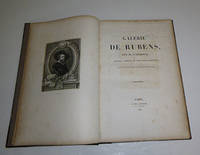
1889GF358131889 Paris - Librairie de l'Art - 1889 - 1 volume in-folio de XIX - 276 pages - Reliure demi-maroquin brun à coins - dos cinq nerfs - coins, nerfs et coiffes frottés - Complet des 21 eaux-fortes en très beaux tirages -
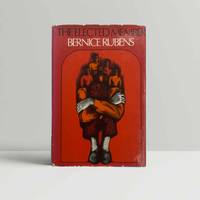
196921831London: Eyre & Spottiswoode 1969. A first edition first printing of 'The Elected Member' published by Eyre & Spottiswoode in 1969. A very good book with only slight fading to the edges and bumping to the base of the spine. Clean internally with some spotting to the top of the text block. Small name to the front endpaper. In a very good unclipped wrapper with slight chipping to the spine tips edges and corners. Small vertical crease to the front flap. Norman the clever one from a close knit Jewish family in London at the age of 41 finds himself as a drug addict and confined along with his paranoia and hallucinations. Rubens became the first female author to win the Booker prize with this novel in 1970. Eyre & Spottiswoode unknown
51-5327Paris : Le Roi 1846. Large folio. 35 c 53cm. 14 27 plates each with 2pp. of text; 8pp. Quarter goatskin and marbled boards by the artisan binder Sasha Mosalov. Light to medium foxing. Annotations on title page from previous owners one dated 1890.OCLC Numbers:422138077; 1074730903. Paris : Le Roi, 1846 hardcover
196923685London: Eyre & Spottiswoode 1969. A first edition first printing of 'The Elected Member' published by Eyre & Spottiswoode in 1969. A very good book with only slight fading to the edges and bumping to the base of the spine. Clean internally with some spotting to the top of the text block. Neat bookplate to the front pastedown. In a very good unclipped wrapper with slight chipping to the spine tips edges and corners. Norman the clever one from a close knit Jewish family in London at the age of 41 finds himself as a drug addict and confined along with his paranoia and hallucinations. Rubens became the first female author to win the Booker prize with this novel in 1970. Eyre & Spottiswoode unknown
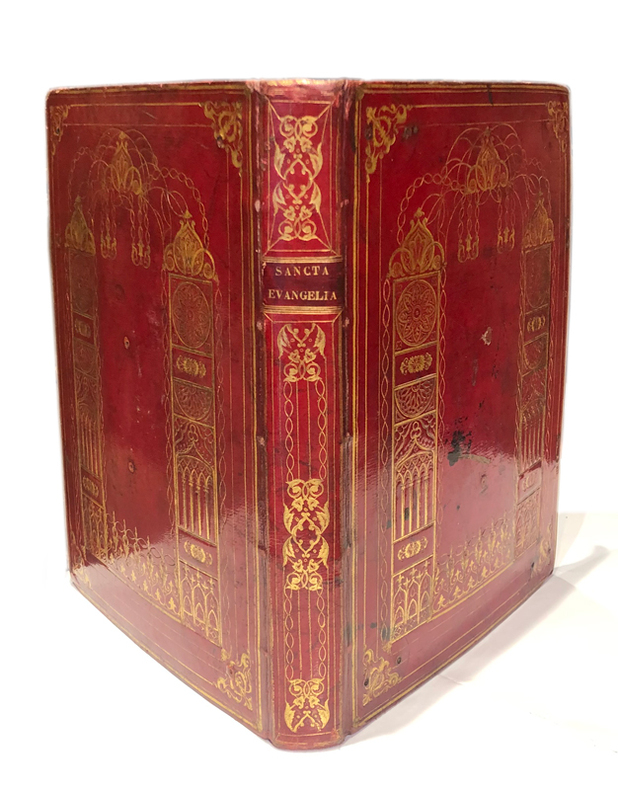
22240in-4° ; maroquin rouge cardinal décoré à “la cathédrale” sur les plats et au dos, décors constitué de deux colonnes de rosaces et vitraux pressé à la plaque gravée, décors complémentaires reliant les deux colonnes, aux petits fers, grands fleurons d’angle reliés par des filets d’épaisseurs différentes et filet gras d’encadrement, roulette sur les angles des coupes et roulette intérieure, charnière en cuir rouge, tranches dorées, traces de fermoirs et de cabochons absents, dos lisse de même (reliure Restauration) ; [2], faux titre manuscrit en couleur rouge, jaune et noir en caractères gothiques aquarellés, 295 pp. dont titre illustré d’une sorte de porte de cathédrale avec des statues de saints et angelots dans des niches, le tout au lavis ; pp. 75 à 103 : manuscrit du Samedi Saint avec partition, cul-de-lampe au lavis et à la dernière page croix et huit angelots également au lavis ; Supplementum, Evangelia Sacra avec un dessin à l’encre de Chine représentant un angelot et trois animaux fabuleux, manuscrit pp. 218 à 295 ; [3] bl., index manuscrit [5] ; 7 gravures à pleine page par de Cortone, Verdier, Dulin, Rubens (2), et deux non signées gravées par Balthazar Gentot datant du XVIIIe siècle, le restant est un texte imprimé découpé et collé sur les feuillets.
38593Editorial Prensa Ibérica. Museo del Prado. S.D. 3 volumes grand in-4. Pleine toile avec jaquettes et emboîtage. Notes en lettres dorées sur l'étui. Très nombreuses ills. Le 3ème volume est un Index et une Bibliographie. Texte en Espagnol. Etat neuf. Poids de plus de 12 kilos. Frais d'expédition offerts.
In 4°, (16cc), 202 pp, (6cc), prima edizione, legatura in pergamena, frontespizio calcografico disegnato da Pieter Paul Rubens e inciso da Theodor Galle, marca editoriale (compasso tenuto da una mano: Labore et Constantia) in fine. Il Mascardi fu assiduo della corte degli Este a Modena, andò a Roma per laurearsi in legge e, grazie alle raccomandazioni del conte Camillo Molza, che Mascardi ringraziò dedicandogli il Discorso sopra un componimento poetico intorno alla cometa,[3] nel 1618 fu assunto in qualità di segretario dal cardinale Alessandro d'Este (1568-1624). A Roma cominciò a comporre un poemetto fantastico, il Tiburno, per celebrare la fondazione della città di Tivoli, la casata e la sfarzosa villa che gli Este possedevano nella cittadina laziale. Il lavoro venne interrotto per la morte di papa Paolo V, nel 1621.Per celebrare l'apertura del conclave, il Mascardi compose l'Oratio habita ad illustrissimos ac reverendissimos S. R. E. cardinales de subrogando pontifice. Ad esso seguì, dopo l'elezione del cardinale Alessandro Ludovisi - papa con il nome di Gregorio XV - l'anonima Scrittura intorno alla elezione a sommo pontefice del cardinal Ludovisio, forse scritta da Alessandro d'Este o composta dal Mascardi su sua diretta commissione e ispirazione, nella quale erano esposte critiche nei confronti di diversi cardinali, suscitando così la reazione della famiglia Ludovisi, in particolare del cardinale Ludovico, contro il cardinale d'Este. A fare le spese del conflitto tra le due potenti famiglie fu così il Mascardi, che nel giugno del 1621 si ritrovò licenziato e allontanato da Roma. Si rifugiò allora a Genova dove fu favorito dalla conoscenza di personaggi importanti delle famiglie gentilizie quali Marcantonio Doria e Giacomo Lomellini, e da poeti di successo come Ansaldo Cebà e Gabriello Chiabrera. Poté così recitare pubblicamente, il 26 settembre 1621, l'orazione Per la coronazione del serenissimo Giorgio Centurione,[8] e in dicembre divenne membro dell'«Accademia degli Addormentati». Qui pronunciò altri discorsi, tra i quali uno per la monacazione di Margherita Doria, figlia di Marcantonio e di Isabella della Tolfa, e l'orazione Intorno al furor poetico, dedicata al patrizio Tommaso Grimani, tutti raccolti nelle Orazioni, pubblicate nel 1622 dall'editore genovese Giuseppe Pavoni. Una sua commedia, Le metamorfosi d'amore, composta per il carnevale del 1623, è invece rimasta manoscritta. Nella speranza di poter rientrare a Roma e di essere ripreso al servizio degli Este, il Mascardi aveva dedicato al cardinale Alessandro i Silvarum libri IV, pubblicati nel 1622 ad Anversa da Balthasar Moretus, ma senza ottenere risposta. In 4 °, (16cc), 202 pp, (6cc), first edition, vellum binding, title designed by Pieter Paul Rubens and engraved by Theodor Galle, publishing mark (compass held by one hand: Labore et Constantia) in fine. Mascardi was a regular at the Este court in Modena, went to Rome to graduate in law and, thanks to the recommendations of Count Camillo Molza, whom Mascardi thanked for dedicating his Discourse on a poetic composition around the comet, in 1618 he was hired in as secretary to Cardinal Alessandro d'Este (1568-1624). In Rome he began to compose a fantastic poem, the Tiburno, to celebrate the foundation of the city of Tivoli, the house and the sumptuous villa that the Este owned in the Lazio town. The work was interrupted by the death of Pope Paul V in 1621. To celebrate the opening of the conclave, Mascardi composed the Oratio habita ad illustrissimos ac reverendissimos S. R. E. cardinales de subrogando pontifice. Following it, after the election of Cardinal Alessandro Ludovisi - pope with the name of Gregory XV - followed the anonymous Scripture around the election as supreme pontiff of Cardinal Ludovisio, perhaps written by Alessandro d'Este or composed by Mascardi on his direct commission and inspiration, in which criticisms of several cardinals were exposed, thus provoking the reaction of the Ludovisi family, in particular of Cardinal Ludovico, against Cardinal d'Este. To pay for the conflict between the two powerful families was so Mascardi, who in June 1621 found himself fired and removed from Rome. He then took refuge in Genoa where he was favored by the knowledge of important personalities of the noble families such as Marcantonio Doria and Giacomo Lomellini, and by successful poets such as Ansaldo Cebà and Gabriello Chiabrera. He was thus able to publicly recite the prayer On September 26, 1621, for the coronation of the most serene Giorgio Centurione, and in December he became a member of the "Accademia degli Addormentati". Here he gave other speeches, including one for the monk of Margherita Doria, daughter of Marcantonio and Isabella della Tolfa, and the prayer Around the poetic fury, dedicated to the patrician Tommaso Grimani, all collected in the Orations, published in 1622 by the Genoese publisher Giuseppe Pavoni. One of his comedies, The Metamorphoses of Love, composed for the carnival of 1623, has instead remained handwritten. In the hope of being able to return to Rome and be resumed in the service of the Este, Mascardi had dedicated IV books to Cardinal Alessandro the Silvarum, published in Antwerp by Balthasar Moretus in 1622, but without getting an answer.
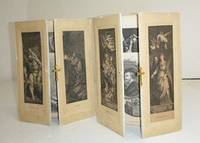
51-6099Antwerp: circa 1859 le Journal pour Tous Armengaud. Two triptychs with gold cross clasps. Wood-engravings on paper on board with 3 sections. 36 x 54cm when extended.DEUX TRIPTYQUES fermés par une croix en métal doré composés chacun de cinq gravures en noir et une planche abattante. Avec deux plats marqués à l'or Dim. 36 x 275 cm.Possible OCLC Number / Unique Identifier:691625509: described by the B.N. as a dépliant. Antwerp: circa 1859 [le Journal pour Tous, Armengaud?] unknown
3aa46Kupferstich. Evans London 1797. 49 cm x 635 cm. Original Holzrahmen der Zeit unter Glas. 585 cm x 73 cm. etwas fleckig u. berieben/Rahmen berieben/mit Gebrauchsspuren. Siehe Bild unknown
18039985London: Published by H. Macklin Poets Gallery Fleet Street 1803. Colour-printed mezzotint. In fair condition with the exception of being trimmed within the plate mark. Title has been inset. Nail burns in left margin. Tear in upper margin extending into image. Image size: 18 x 23 1/2 inches. A lovely colour printed impression of Smith's idyllic print of rural life after a painting by George Morland.<br/> <br/>George Morland was one of the most successful genre painters of his time creating during his industrious career some of England's most cherished paintings. At an early age Morland displayed his artistic genius he learned to paint at three and exhibited his first work at the Royal Academy at the mere age of ten. He was a prodigious painter producing more than 4000 paintings during the entirety of his career and sometimes painting two or three works in a day. His pleasant rural scenes were a favorite source of inspiration for contemporary engravers and as many as 250 separate engravings were done of his paintings during his lifetime. His brother-in-law William Ward engraved a great number of them. Here a young girl clings to her mother's apron as her father takes up his rifle to go hunting. Her fearful reaction is contrasted with that of the dogs who are excited and the maid who indifferently prepares the fire in the fireplace.<br/> <br/>Dawe G. Morland p. 146. Published by H. Macklin, Poets Gallery, Fleet Street unknown books
18039985London: Published by H. Macklin Poets Gallery Fleet Street 1803. Colour-printed mezzotint. In fair condition with the exception of being trimmed within the plate mark. Title has been inset. Nail burns in left margin. Tear in upper margin extending into image. Image size: 18 x 23 1/2 inches. A lovely colour printed impression of Smith's idyllic print of rural life after a painting by George Morland.<br/> <br/> George Morland was one of the most successful genre painters of his time creating during his industrious career some of England's most cherished paintings. At an early age Morland displayed his artistic genius he learned to paint at three and exhibited his first work at the Royal Academy at the mere age of ten. He was a prodigious painter producing more than 4000 paintings during the entirety of his career and sometimes painting two or three works in a day. His pleasant rural scenes were a favorite source of inspiration for contemporary engravers and as many as 250 separate engravings were done of his paintings during his lifetime. His brother-in-law William Ward engraved a great number of them. Here a young girl clings to her mother's apron as her father takes up his rifle to go hunting. Her fearful reaction is contrasted with that of the dogs who are excited and the maid who indifferently prepares the fire in the fireplace.<br/> <br/> Dawe G. Morland p. 146. Published by H. Macklin, Poets Gallery, Fleet Street unknown
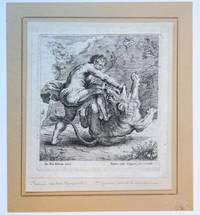
64988Samson slays the lion Judg.14: 5-9; landscape with Samson breaking the jaws of a lion in front of a rock. Signed at bottom: ""Pet. Paul Rubenius pinxit"" and ""Franciscus vanden Wyngaerde fecit et excudit"". Ca. 1635-1675 Etching on paper with some margins; mounted on double cardboard; plate mark: 119 x 117 mm total: 143 x 130 mm; state I/2 Hollstein 1; beautiful impression. unknown
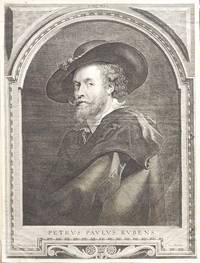
163012877Amberes: Paulus Pontius 1630. 368x272mm. 14½x10¾". Amberes Paulus Pontiusm 1630. Grabado. 368 x 272mm. Tercer estado de 3 con el arco ornamental y las letras. Autoretrato dibujado por Rubens en 1623 y grabado por Paulus Pontius en 1630 para la célebre Iconografía de Antón van Dyck proyecto destinado a perpetuar a los artistas mecenas y demás personalidades destacadas de la época. Paulus Pontius unknown
228Anvers, La Librairie Néerlandaise, 1901. In-folio broché, cartonnage de l'édition. 28 planches hors-texte. Tiré à cent exemplaires numérotés sur vélin.
195450402London: The Jewish Museum 1954. First editions. Hardcover. Very good- to very good condition. 1. Anglo-Jewish Portraits. Three-quarter vellum over green cloth with gilt double-ruling on covers gilt lettering and ruling on spine. Top edge gilt. Frontispiece engraving. Alfred Rubens was an avid collector. In the 1920s he started to collect prints and drawings of Jewish interest and eventually built a collection of world importance. When the Jewish Museum was founded in 1932 in London by Ruben's friend Wilfred S. Samuel he invited Alfred Rubens to join the museum's committee as its expert on prints and drawings. "Anglo-Jewish Portraits" is Rubens' very first book published in 1935 at his own expense. Illustrated with forty-eight full-page plates this work is a biographical catalogue of engraved Anglo-Jewish and Colonial portraits from the earliest times to the accession of Queen Victoria. Protective mylar with wear. Small dealer sticker on inside front cover. Some offsetting from protective mylar to endpapers. Contains bibliography appendices and list of painters and engravers.<br /> <br /> WITH<br /> <br /> 2. A Jewish Iconography. Three-quarter vellum over red cloth with gilt double-ruling on covers gilt lettering and ruling on spine. Top edge gilt. Frontispiece collotype. Title page with headpiece and lettering printed in red and black. This book is complementary to Anglo-Jewish Portraits. Based on the author's collection with help from the card index at the Jewish Theological Seminary New York and selected books. Essentially a catalogue of engravings a few original paintings drawings and silhouettes are included. Though a few modern items are included the "terminating date" is roughly 1830. Profusely illustrated with seventy-five b/w illustrations reproduced in collotype. Appendices and list of painters engravers and publishers. Limited edition of 500 copies. Very light wear of binding and lightly rubbed. Small dealer sticker on inside front cover. Unopened at foredge. The Jewish Museum hardcover
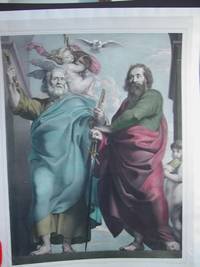
1830P243Munich 1830. very good. Image Size : 24x18.5 Inches Platemark Size : Paper Size : 28x21.5 Inches Coloring: Hand Colored Medium: lithograph Categories: Religious Christianity unknown
198130lrNonpareil 1981-01-01. Limited. Hardcover. Near Fine/No Jacket. Signed. Two books complete slipcased. The ISBN and publication details refer to the main title: 277 pages complete. The second book: "A Jewish Iconography Supplementary Volume" ISBN: 09079740005 pub: Nonpareil 1982 softcover 128 pages. Slipcase is sturdy sound. It has wear and scuffing and light marking. Wood reinforcements within the casing. It is fit. The main volume: SIGNED by Alfred Rubens on the half-title page. Numbered 91 of a limited edition of 650 copies. Crushed-strawberry cloth covered boards with stamped gilt publisher's colophon and borders. The boards have shelving wear about the edges. They are otherwise elegant and healthy. Marbled end papers. The contents are smart clean clear conscientious proud. The second volume has scuffing wear creasing and light handling marks. They are still pleasingly attractive. The inside front cover has handling marks. The page trims have very light foxing streaks. There is evidence of usage. Nonetheless the pages are bright clean clear generous vivacious. A satisfying set. fk. Our orders are shipped using tracked courier delivery services. Nonpareil hardcover
EXE0050cParis, De Lormel, Saillant, Veuve Durand, Dessaint, 1767. Trois parties en 3 vol. in-12, brochés.
199050352ULLSTEIN LEOPOLD 02/1990. 1. softcover. Maloftege! ULLSTEIN, LEOPOLD paperback
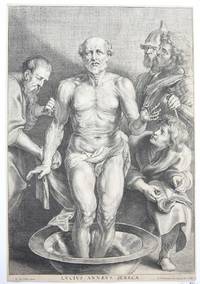
#[63600]The death of Seneca. A pupil on the right describes the last words of the Philosopher; two soldiers on the right background. The old man is standing in the center with his left hand raised and the right arm towards the ground. Some blood is dropping out of his forearm. A bearded man on the left is drying Seneca's skin. The philosopher is standing on a basin. Lettered in lower margin with production details and title: "Petr. Paul Rubbens pinxit" and "A. Voet iunior sc Corn. Galle excudit". Text in squared brackets added in brown ink after reworking of plate. The figure of Seneca is after a Roman statue of an old fisherman 'Vieux pêcheur dit Sénèque mourant' in the Musée du Louvre Paris inv.no.MR 314. l Engraving on paper trimmed to plate mark; total: 404 x 275 mm; state II/2; Hollstein 11 Voet. unknown