546 résultats
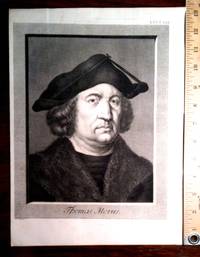
3743AGo.J. Stahlstich nach Gemälden von Holbein, Darst. (I) 6,6 x 8 (H), (II) 6,7 x 8 (H); Bll. 29,2 x 22,9 Auf Wunsch Digitalaufnahme in jpg-Format erhältlich- photo in jpg-format available. Je nach Versandart können die Portokosten bis zu 2 ? weniger als angegeben betragen.+
Die Malerfamilie Holbein in Basel. Exhibition: Basel, Kunstmuseum, 1960. 352pp plus 113 monochrome plates. Paperback. 24x16.5cms. Text in German. Text in German
pp. 386 con num. ill. in b/n Bel catalogo della mostra sulla famiglia Holbein al Kunstmuseum di Basilea per il quinto centenario dell'università della città, con accurate schede e ricca iconogr.
19602884-2Basel 1960. Gr.8°. 352 S. Mit 113 Abb. Original-Kartonband
199794675Basel, Schwabe Verlag 1997. 1997. 4°, 336 s. mit über 150 s/w Tafeln, Orig.-Leinen mit Orig.-Umschlag.
1938V31771Leipzig (Insel-Verlag)[1938] (= Insel-Bücherei Nr.95, 1. - 27.Tsd.). 8°, illustrierter Originalkarton (Hardcover) , 38 S., davon 24 Farbtafeln 1
Hans Holbein d.Ä. und die Kunst der Spätgotik. Augsburg: 1965. 207pp with 277pp monochrome illustrations. Wrappers. 24 x 17cms. Text in German. Text in German
196515070121965. Gr.-8vo. 207, (1) S., 277 Abb. auf Taf. OKart. (Bezugsfolie am Rücken beschäd.).
2003257098Stgt: Belser Vlg. 2003. 184 S. mit 60 Farb- u. 120 s/w-Abb. 4° Kart.mS. *neuwertig*
2010265645München: Prestel Vlg. 2010. 526 S. mit 465 (davon 219 farb.) Tafeln u. Abbildungen. 4° Ln.mS. *neuwertig*.
V28124Leipzig (Insel) o.J. (= Insel-Bücherei Nr.95, ). 8°, illustrierter Originalkarton (Hardcover) , 38S., 24 Abbildungen auf Tafeln
Boston, Bates & Guild Co. Publishers, 1902, in-8, br., pp. (32). Con 10 tavv. Mimime mancanze al dorso. (Timbro della libreria “B. Seeber”, Firenze, Via Tornabuoni, 20).
pp. 16 con 252 tav.
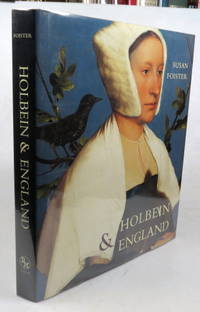
200446421New Haven & London: Published for the Paul Mellon Centre for Studies in British Art by Yale University Press 2004. First edition. 4to. xii 308 pp. Publisher's aubergine cloth gilt lettered to the spine dust jacket. Numerous illustrations many in colour. Mild bumping to the jacket edges very good. New Haven & London: Published for the Paul Mellon Centre for Studies in British Art by Yale University Press unknown
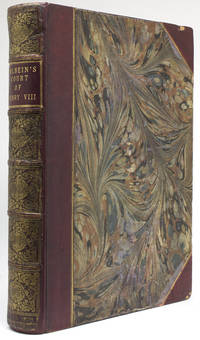
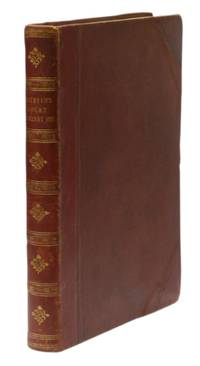
182844152London: William Bulmer and Co. Shakespeare Printing-Office 1828. Second edition. With 84 hand-colored stipple engravings after drawings by Hans Holbein in the Royal collections with tissue guards. Printed on pink or white paper. Unpaginated. 1 vols. Folio 14 x 10 inches. Contemporary 3/4 red morocco panelled spine elaborately gilt with brown morocco lettering-piece a.e.g. original spine neatly laid down. Second edition. With 84 hand-colored stipple engravings after drawings by Hans Holbein in the Royal collections with tissue guards. Printed on pink or white paper. Unpaginated. 1 vols. Folio 14 x 10 inches. A handsome collection of portraits many printed on toned paper with letterpress commentaries on the subjects' lives. In addition to the 80 portraits called for in the printed "List of Plates" there should also be 4 plates which that list omits: the portrait of Holbein himself that of his wife and the portraits of Henry and Charles sons of Charles Brandon Duke of Suffolk. William Bulmer and Co., Shakespeare Printing-Office unknown
London, Royal Academy of Arts, 1950-51, in-8, br., pp. 61. Con 78 ill. in b.n.
183014624London: William Pickering 1830 Contemporary straight-grained brown morocco over marbled boards. . Octavo. Woodcut printer's device on title and colophon. Illustrations engraved by John and Mary Byfield. Extremites a bit rubbed extremities of spine darkened. A very good copy. William Pickering, hardcover
174564270Amsterdam: Francois L'Honoré 1745. Nouvelle édition." 12mo 15.5cm. Disbound now in later cream paper wrappers titled in gilt on spine all edges stained red; xxiv34020pp; with 5 folding plates lacking the sixth numerous in-text woodcuts and an engraved portrait of Erasmus cut out and laid down on title page verso. Title page printed in two colors. Occasional minor chips to leaf edges closely trimmed and lacking one plate but otherwise pleasing: Good only. <br /> <br /> Erasmus's famous lampoon of religion tradition and superstition also known as Moriae Encomium or In Praise of Folly was published in 1511 and quickly became popular. An edition with illustrations by Hans Holbein the Younger was published in 1515-16; the illustrations in this edition are based on Holbein's work. This edition is a French translation by Nicolas Gueudeville 1652-1721 likely bearing a false imprint. 64270. Francois L'Honoré unknown
1977D15624London: Johnson Reprint Company Ltd 1977. Limited Edition. Hardcover. Very Good. Orig. full cloth portfolio. 8 pp. of text in-4to. and 8 facsimile plates in colour. Portfolio boards slightly bowed and with some light soiling in spots. Institutional bookplate fixed to inside of portfolio. Plates are bright and clean in fine condition and suitable for framing. <br/><br/> Johnson Reprint Company Ltd hardcover
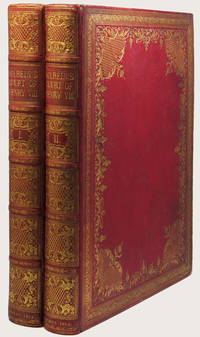
181234168London: Published by John Chamberlaine the Keeper of the King's Drawings and Medals. Printed by William Bulmer and Co. Shakespeare Printing Office 1812. 2 volumes. First Edition of the century First Issue the second edition overall. A RARE EXAMPLE WITH THE PLATES BOTH IN COLOURED AND UNCOLOURED STATE THUS WITH DOUBLE THE NUMBER OF PLATES NORMALLY ENCOUNTERED. With 84 hand-coloured plates and 84 plates uncoloured all separately printed on India paper and tipped onto full-page leaves each facing the other the plates with protective leaf separating the two each image with two variations mezzotint portraits of Holbein and his wife a total of 168 illustrations on full-page plates four plates dated from the first printing in 1792 the other 164 dated 1812 as with the publishing date. The plates are printed on a variety of papers slightly different from one another--grey buff white lavender and pink. Folio 34.5 x 2 beautifully bound in full red morocco gilt extra the spines with gilt tooled raised bands separating the compartments which are elaborately gilt decorated within triple gilt filleted frames gilt stippling to the borders of the frames lettered in gilt in one compartment the covers beautifully gilt decorated in all-over designs the borders with gilt stippled lines enclosing three gilt filleted borders surrounding an elaborate gilt inner border of floral tooling bordered again by a stippled and multi-filleted gilt frame the whole surrounding elaborate and large gilt tooled decorations at the inner corners and along the rules the edges gilt ruled the turnovers gilt rolled marbled endleaves all edges gilt very elaborate and beautifully preserved binding work. unpaginated. Fine copies beautifully preserved very light wear or age evidence to the bindings which remain strong the pages and plates all in good order some very occasional light foxing to the papers as is typical the colours remain vibrant and as printed the giltwork on the bindings is in very pleasing condition a very handsome set indeed. FIRST EDITION AND AN UNUSUALLY SPECIAL COPY BOUND IN FULL RED MOROCCO GILT EXTRA WITH THE PLATES PRINTED ON INDIA PAPER IN BOTH COLOURS AND BLACK AND WHITE A COPY WITH DOUBLE THE NUMBER OF PLATES USUALLY ENCOUNTERED. Hans Holbein the Younger; c. 1497 – between 7 October and 29 November 1543 was a German-Swiss painter and printmaker who worked in a Northern Renaissance style and is considered one of the greatest portraitists of the 16th century. He also produced religious art satire and Reformation propaganda and he made a significant contribution to the history of book design. He is called "the Younger" to distinguish him from his father Hans Holbein the Elder an accomplished painter of the Late Gothic school.<br> Holbein was born in Augsburg but worked mainly in Basel as a young artist. At first he painted murals and religious works and designed stained glass windows and illustrations for books from the printer Johann Froben. He also painted an occasional portrait making his international mark with portraits of humanist Desiderius Erasmus of Rotterdam.<br> Holbein travelled to England in 1526 in search of work with a recommendation from Erasmus. He was welcomed into the humanist circle of Thomas More where he quickly built a high reputation. He returned to Basel for four years then resumed his career in England in 1532 under the patronage of Anne Boleyn and Thomas Cromwell. By 1535 he was King's Painter to Henry VIII. In this role he produced portraits and festive decorations as well as designs for jewellery plate and other precious objects. His portraits of the royal family and nobles are a record of the court in the years when Henry was asserting his supremacy over the Church of England.<br> Holbein's art has sometimes been called realist since he drew and painted with a rare precision. His portraits were renowned in their time for their likeness and it is through his eyes that many famous figures of his day are pictured today such as Erasmus and More. He was never content with outward appearance however; he embedded layers of symbolism allusion and paradox in his art to the lasting fascination of scholars. In the view of art historian Ellis Waterhouse his portraiture "remains unsurpassed for sureness and economy of statement penetration into character and a combined richness and purity of style."<br> For Holbein "everything began with a drawing". A gifted draughtsman he was heir to a German tradition of line drawing and precise preparatory design. Holbein's chalk and ink portraits demonstrate his mastery of outline. He always made preparatory portraits of his sitters though many drawings survive for which no painted version is known suggesting that some were drawn for their own sake.<br> Ellis Waterhouse wrote that "modern" painting in England may be said to have begun with Holbein. That later artists were aware of his work is evident in their own sometimes explicitly. Hans Eworth for example painted two full-length copies in the 1560s of Holbein's Henry VIII derived from the Whitehall pattern and included a Holbein in the background of his Mary Neville Lady Dacre. The influence of Holbein's "monumentality and attention to texture" has been detected in Eworths' work. According to art historian Erna Auerbach: "Holbein's influence on the style of English portraiture was undoubtedly immense. Thanks to his genius a portrait type was created which both served the requirements of the sitter and raised portraiture in England to a European level. It became the prototype of the English Court portrait of the Renaissance period".<br> Holbein worked for Thomas Cromwell as he masterminded Henry VIII's reformation. Cromwell commissioned Holbein to produce reformist and royalist images including anti-clerical woodcuts and the title page to Myles Coverdale's English translation of the Bible. Henry VIII had embarked on a grandiose programme of artistic patronage. His efforts to glorify his new status as Supreme Head of the Church culminated in the building of Nonsuch Palace which started in 1538. By 1536 Holbein was employed as the King's Painter on an annual salary of 30 pounds—though he was never the highest-paid artist on the royal payroll. see C. Müller et al.<br> This striving for perfection is very evident in his portrait drawings where he searches with his brush for just the right line for the sitter's profile. The critical faculty in making this choice and his perception of its potency in communicating decisively the sitter's character is a true measure of Holbein's supreme greatness as a portrait painter. Nobody has ever surpassed the revealing profile and stance in his portraits: through their telling use Holbein still conveys across the centuries the character and likeness of his sitters with unrivalled mastery. see J. Rowlands Hans Holbein the Younger 1985 Published by John Chamberlaine, the Keeper of the King's Drawings and Medals. Printed by William Bulmer and Co., Shakespeare Pri hardcover
184963464Göttingen, im Verlag der Dieterichschen Buchhandlung, 1849. Kl.-8°. Mit illustr. Holzschn.-Titel, einem Textholzstich u. 24 Holzstich-Initialen. 131 (1) S., Etw. späterer HLwd.-Bd. m. goldgepr. Rückentitel.
184913147Köln-Bonn-Brüssel, bei J. M. Heberle (H. Lempertz & Comp.), 1849. Kl.-8°. Mit 24 Holzschn.-Initialen v. H. Lödel nach Holbein und 26 Holzschn.-Bordüren in Braundruck nach Georg Osterwald. 2 Bll., 24 S., 1 Bl., Illustr.-OKart.
190033920Straßburg, J. H. Ed. Heitz (Heitz & Mündel), 1900. 4°. Mit zahlr. Abbildungen auf 104 Tafeln. 14 S., 2 Bll., HLwd. d. Zt. m. goldgepr. Rückentitel u. eingeb. OUmschlag.
114481London Printed by William Bulmer and Co/ Shakespeare Printing-Office 1812. 4to 338x265 mm. 71 ll. 84 engr. colour plates several printed on pink paper. One plate with stain. Contemporary red half calf spine gilt with raised bands embossed red cloth boards spine and corners a bit worn. Abbey Life in England 205 note for this second edition. Second edition complete with all 84 finely colour printed portraits after Holbein including the two full page portraits of Hans Holbein and his wife and the two finely coloured miniatures. It was first published in 1792-1800 in folio. The plates are re-engraved to this new edition in a lesser size and by several new engravers. The biographical notices were provided by Edmund Lodge 1756-1839. â€The original Holbein drawings upon which these prints are based were nearly lost and were hardly seen for centuries until their rediscovery by none other than Queen Caroline of England. Upon being liberated from a bureau of the queen's personal closet at Kensington Palace colour printed 'imitations' of the drawings were subsequently published under the auspices of John Chamberlaine 1745-1812 Keeper of the drawings of George III.†hardcover
17813811781. Fine. Folio by J. H. Lips copper engraving after Holbein on fine chain-linked paper; from Lavater Physiognomie first French edition. unknown