679 résultats
1943119227-1Basel, Schwabe ( 1943). 268; 115 S. Mit 67 Abb. von H. Holbein d. J. Orig.-Pergamineinband im Pappschuber.
1943104607Basel, Benno Schwabe & Co. (1943). * Mit zahlreichen Faksimiles und Abbildungen auf Tafelseiten. 368 S.; 115 S. 19,5 x 12 cm. Original-Leinenband (leicht berieben und mit kleinen Kratzspurem) mit goldgeprägtem Rücken- und Deckeltitel.
19436175Basel, Schwabe, (1943). 268, 115 S. mit zahlr. ganzseit. Abb. 8°. OLwd. (kl. Gebrssprn.) mit OU.
191484758Bielefeld und Leipzig: Velhagen & Klasing Verlag, 1914. 25,5 cm ; kart.
1902602780Bielefeld, Velhagen & Klasing, 1902. 4°. M. 152 Abb. 2 Bl., 158 S. Flex. OLwd. m. Kopfgoldschn. (Künstler-Monographien 17).
191477006Bielefeld, Lpz.: Velhagen & Klasing 1914. 2 Bll., 168 Ss. 4°. Lnkasch. mit goldgeprägt. Rücken- u. Deckeltitel, Goldpräg. a.d. Vorderdeckel u. Kopfgoldschnitt (min. angestaubt u. bestoßen).
Bielefeld und Leipzig, Verlag von Velhagen & Klasing, 1896, in-8, tela edit. con astuccio, pp. 152. Con 149 illustrazioni in b.n. ("Künstler Monographien", XVII).
190215027ABBielef. Lpg. Velhagen & Klasing 1902. 4. Aufl. gr.8°. 158 S. mit 152 Abbildungen. OLeinen flexibel, Goldaufschrift a. Ddckel u. Rü., Kopf Goldschnitt, ExLibris, Deckel etwas fleckig, im Ganzen gut erhalten. = Knackfuß: Künstlermonographie 17. 4
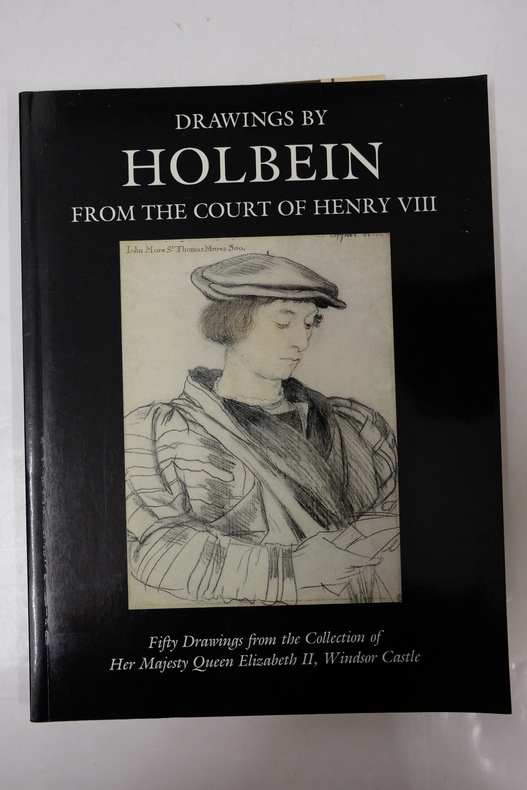
46608Petersberg : Michael Imhof Verlag, 2016. 136 Seiten : Illustrationen ; 28 cm, 1500 g broschiert
2016118914Imhof. New. 2016. Paperback. 373190327X . FREE UPGRADE to Courier/Priority Shipping Upon Request - IN STOCK AND IMMEDIATELY AVAILABLE FOR SHIPMENT - IN STOCK AND IMMEDIATELY AVAILABLE FOR SHIPMENT - Flawless copy brand new pristine never opened - Text in German. -- with a bonus offer-- . Imhof paperback
12324, Basel, Kunstmuseum, 1960., Brosschiert, Original-Umschlag illustriert s/w, 16,5x24cm, 351pp, illustriert s/w.
18036498London: John Scott and Thomas Ostell 1803. Half-Leather. Collectible; Very Good. The 1803 1st "John Scott" edition with the 36 remarkable Holbein copper-plates and further etched by David Deuchar. A dual text edition with the descriptions of each plate in both French and English. Bound in half period-calf over marbled boards. A degree of scuffing and wear at the leather notable chipping and label loss at the spine. Light foxing at specific points in the text but the plates are clean and bright and have held up very nicely. In spite of the forgivable flaws still sturdy and VG-. 12mo painted by Holbein in the Town House of Basil. <br/><br/> John Scott and Thomas Ostell hardcover books
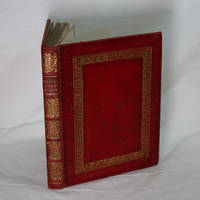
1803FB5537 /4D<p>Red leather binding with raised banding gilt decoration and title on the spine. Gilt 'Cambridge panel' on the boards.</p><p>"Descriptions of each plate in French and English with the Scripture Text from which the designs were taken. Printed by W. Smith and Co. King Street Seven Dials for John Scott No. 447 Strand: & Thomas Ostell No. 3 Ave Maria Lane 1803". Engraved frontispiece engraved title engraved portrait of Holbein. Full leather cover with embossed design and gilt decoration. This is a very hard to find rare book.</p><p>Note: this book is lovingly reset in its original papers by the expert bookbinder Brian Cole. It is again in fantastic condition which ought to see out a further two hundred years.</p><p>The Dance of Death 1493 by Michael Wolgemut from the Nuremberg Chronicle of Hartmann Schedel</p><p>The Danse Macabre also called the Dance of Death is an artistic genre of allegory from the Late Middle Ages on the universality of death.</p><p>The Danse Macabre consists of the dead or a personification of death summoning representatives from all walks of life to dance along to the grave typically with a pope emperor king child and laborer. The effect is both frivolous and terrifying beseeching its audience to react emotionally. It was produced as memento mori to remind people of the fragility of their lives and how vain the glories of earthly life. Its origins are postulated from illustrated sermon texts; the earliest recorded visual scheme apart from 14th century Triumph of Death paintings was a now-lost mural at Holy Innocents' Cemetery in Paris dating from 1424 to 1425.</p><p>Hans Holbein the Younger Hans Holbein der Jüngere; c. 1497 – between 7 October and 29 November 1543 was a German-Swiss painter and printmaker who worked in a Northern Renaissance style and is considered one of the greatest portraitists of the 16th century. He also produced religious art satire and Reformation propaganda and he made a significant contribution to the history of book design. He is called "the Younger" to distinguish him from his father Hans Holbein the Elder an accomplished painter of the Late Gothic school.</p><p>Holbein was born in Augsburg but worked mainly in Basel as a young artist. At first he painted murals and religious works and designed stained glass windows and illustrations for books from the printer Johann Froben. He also painted an occasional portrait making his international mark with portraits of humanist Desiderius Erasmus of Rotterdam. When the Reformation reached Basel Holbein worked for reformist clients while continuing to serve traditional religious patrons. His Late Gothic style was enriched by artistic trends in Italy France and the Netherlands as well as by Renaissance humanism. The result was a combined aesthetic uniquely his own.</p><p>Holbein travelled to England in 1526 in search of work with a recommendation from Erasmus. He was welcomed into the humanist circle of Thomas More where he quickly built a high reputation. He returned to Basel for four years then resumed his career in England in 1532 under the patronage of Anne Boleyn and Thomas Cromwell. By 1535 he was King's Painter to Henry VIII of England. In this role he produced portraits and festive decorations as well as designs for jewellery plate and other precious objects. His portraits of the royal family and nobles are a record of the court in the years when Henry was asserting his supremacy over the Church of England.</p><p>Holbein's art was prized from early in his career. French poet and reformer Nicholas Bourbon the elder dubbed him "the Apelles of our time" a typical accolade at the time. Holbein has also been described as a great "one-off" in art history since he founded no school. Some of his work was lost after his death but much was collected and he was recognized among the great portrait masters by the 19th century. Recent exhibitions have also highlighted his versatility. He created designs ranging from intricate jewellery to monumental frescoes.</p><p>Holbein's art has sometimes been called realist since he drew and painted with a rare precision. His portraits were renowned in their time for their likeness and it is through his eyes that many famous figures of his day are pictured today such as Erasmus and More. He was never content with outward appearance however; he embedded layers of symbolism allusion and paradox in his art to the lasting fascination of scholars. In the view of art historian Ellis Waterhouse his portraiture "remains unsurpassed for sureness and economy of statement penetration into character and a combined richness and purity of style'.</p><p>Renowned for his Dance of Death series the famous designs by Hans Holbein the Younger 1497–1543 were drawn in 1526 while he was in Basel. They were cut in wood by the accomplished Formschneider block cutter Hans Lützelburger.</p><p>William Ivins quoting W. J. Linton writes of Lützelburger's work wrote:</p><p>"'Nothing indeed by knife or by graver is of higher quality than this man's doing.' For by common acclaim the originals are technically the most marvelous woodcuts ever made."</p><p>These woodcuts soon appeared in proofs with titles in German. The first book edition containing forty-one woodcuts was published at Lyons by the Treschsel brothers in 1538. The popularity of the work and the currency of its message are underscored by the fact that there were eleven editions before 1562 and over the sixteenth century perhaps as many as a hundred unauthorized editions and imitations. Ten further designs were added in later editions.</p><p>The Dance of Death 1523–26 refashions the late-medieval allegory of the Danse Macabre as a reformist satire and one can see the beginnings of a gradual shift from traditional to reformed Christianity. That shift had many permutations however and in a study Natalie Zemon Davis has shown that the contemporary reception and afterlife of Holbein's designs lent themselves to neither purely Catholic or Protestant doctrine but could be outfitted with different surrounding prefaces and sermons as printers and writers of different political and religious leanings took them up. Most importantly "The pictures and the Bible quotations above them were the main attractions … Both Catholics and Protestants wished through the pictures to turn men's thoughts to a Christian preparation for death.".</p><p>The 1538 edition which contained Latin quotations from the Bible above Holbein's designs and a French quatrain below composed by Gilles Corrozet 1510–1568 actually did not credit Holbein as the artist. It bore the title: Les simulachres & / HISTORIEES FACES / DE LA MORT AUTANT ELE/gammēt pourtraictes que artifi/ciellement imaginées. / A Lyon. / Soubz l'escu de COLOIGNE. / M.D. XXXVIII. "Images and Illustrated facets of Death as elegantly depicted as they are artfully conceived." These images and workings of death as captured in the phrase "histories faces" of the title "are the particular exemplification of the way death works the individual scenes in which the lessons of mortality are brought home to people of every station."</p> John Scott & Thomas Ostell. hardcover
133234299X.Gpaperback. Good. Access codes and supplements are not guaranteed with used items. May be an ex-library book. paperback
0656038810.Ghardcover. Good. Access codes and supplements are not guaranteed with used items. May be an ex-library book. hardcover
18036498London: John Scott and Thomas Ostell 1803. Half-Leather. Collectible; Very Good. The 1803 1st "John Scott" edition with the 36 remarkable Holbein copper-plates and further etched by David Deuchar. A dual text edition with the descriptions of each plate in both French and English. Bound in half period-calf over marbled boards. A degree of scuffing and wear at the leather notable chipping and label loss at the spine. Light foxing at specific points in the text but the plates are clean and bright and have held up very nicely. In spite of the forgivable flaws still sturdy and VG-. 12mo painted by Holbein in the Town House of Basil. John Scott and Thomas Ostell unknown
17921801220011London: W. Bulmer 1792. First Edition. Hardcover. Very Good. Folio 56 x 44 cm. 1st ed published between 1792-1800. Rebound in moroccan leather over finely marbled boards. 92 stipple-engraved color plates some mounted some on pink paper. The first work is complete with 84 portraits on 83 plates. Additionally includes The Court of Francis II also by Holbein often bound together 8 additional color plates. All edges gilt. Perforated library stamp on title. Portraits of Hans Holbein and his wife trimmed at bottom edge. According to the Ray "This Magnificent Work Is Surely The Finest Early Example Of English Color Printing." "In every way a splendid book the colour printing reproducing with extraordinary fidelity the original designs . No copies were issued to the public until the stock was acquired many years later by Messrs. Bohn who added them as a Supplement to copies of the earlier work." Abbey Life 205 & 206; Ray English 19; Brunet III 259-260 'ouvrage magnifique'; Lewine pp. 243-4; Lowndes p. 405. This is an oversized or heavy book which requires additional postage for international delivery outside the US. London: W. Bulmer hardcover
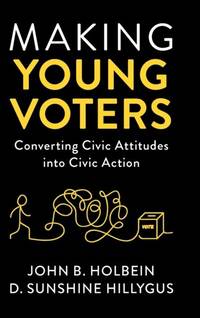
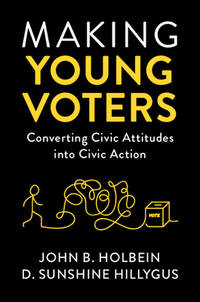
ria9781108488426_inpHardcover. New. New Book; Fast Shipping from UK; Not signed; Not First Edition; This potentially paradigm-shifting book uses an interdisciplinary perspective to challenge existing theories of voter turnout focusing on solutions geared towards civic education and electoral reform to increase dismal rates of youth t hardcover
ria9781108726337_inpPaperback. New. New Book; Fast Shipping from UK; Not signed; Not First Edition; This potentially paradigm-shifting book uses an interdisciplinary perspective to challenge existing theories of voter turnout focusing on solutions geared towards civic education and electoral reform to increase dismal rates of youth t paperback
B9781108726337Paperback / softback. New. This potentially paradigm-shifting book uses an interdisciplinary perspective to challenge existing theories of voter turnout focusing on solutions geared towards civic education and electoral reform to increase dismal rates of youth turnout. The authors investigate reasons and remedies for the gap between youth turnout intentions and behaviors. paperback
B9781108488426Hardback. New. This potentially paradigm-shifting book uses an interdisciplinary perspective to challenge existing theories of voter turnout focusing on solutions geared towards civic education and electoral reform to increase dismal rates of youth turnout. The authors investigate reasons and remedies for the gap between youth turnout intentions and behaviors. hardcover
26001Salamanca, Caja de Ahorros, 1988 Cubierta de cart n ilustrada, 210 x 300mm., 127pp., ilustrada en color y b/n. ISBN 9788487132001.
15610Beau portrait. Beau tirage XVIIIè sur vergé. en feuille Très bon 16,5 x 12,5 cm
ART7041M1988, Harcourt Brace Jovanovich. In-8, broché, 147 pages. Reproductions n&b. Bon exemplaire
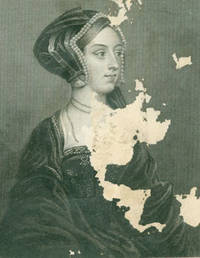
63-1957London: Harding & Lepard 1829. Engraving. Image size: 12.5 x 9.5 cm. on larger sheet. Good with rubbing to image losses tears staining. [London: Harding & Lepard, 1829]. unknown