Holbein Society, WymanBiblio.com
45 résultats
1881RC59781881. Rylands William Harry . Bullen George. Hardback. The purple cloth binding has faded it remains sound. The endpaper has an owner's incription. There is a little light foxing in places in the text which is otherwise very clean. hardcover
1895ZB1279678Hanfstaengel 1895. large folio 2 page introduction in German followed by 54 page-sized portraits hardcover wear to spine and covers but the portraits are in very good condition. - If you are reading this this item is actually physically in our stock and ready for shipment once ordered. We are not bookjackers. Buyer is responsible for any additional duties taxes or fees required by recipient's country. Photos available upon request. Hanfstaengel hardcover
189220411<p>1 of 500 prints with written descriptions</p> Ex Libris Society hardcover
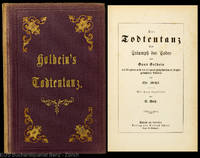
18587880CB1858. Uttweil am Bodensee und Stuttgart Conrad Uhler 1858. 8°. VIII S. Mit 48 Tafeln von Christian Mechel nach Hans Holbein. Goldgeprägter Orig.-Leinenband. Der Text von C. Weiss. Die letzten beiden Tafeln lose. Das Papier im Rand leicht gebräunt. Der Einbandrücken verblichen. unknown
1821038120London 1821. 1st Edition 1st Printing. No Binding. Near Fine. Original Engraving. One Of A Large Collection Of Original Antique Engravings Formed By A Southern California Artist In The Early To Middle Twentieth Century. Each Plate Has Small Glue Marks On Reverse Where They Were Tipped In To An Album.Charles Pye Jr. 1777 - 1870 Was An Engraver In England. His Engraving Work Was Included In Cadell & Davies' "Britannia Depicta". <br/> <br/> unknown
18761608140010Librarie Des Bibliophiles 1876-01-01. Hardcover. Very Good. Bound in 1/2 moroccan leather over marbled boards. Marbled end pages. Limited edition no. 295 of 550. xi 247 pages : illustrations ; 20 cm. 83 illustrations. Hardcover. Printed on Holland paper. Good binding and cover. Top edge gilt. Minor shelf wear. Clean unmarked pages. Ships daily. Librarie Des Bibliophiles, hardcover
187624975Paris: Librarie Des Bibliophiles 1876. Troisieme edition. Three quarter red morocco over red marbled boards raised bands gilt titles marbled end papers. Very good plus or better copy tight clean just a bit of wear at the extremities. A handsome copy of this somewhat uncommon title. xi 247 pp. Illus. with 83 b/w gravures. Sm. 4to. 20 cm. Number 266 of 500 copies on Holland paper original wrappers sewn in. Book plate of Charles Fairfax Murray the English Pre-Raphaelite Painter 1849-1919 on front pastedown. Librarie Des Bibliophiles hardcover
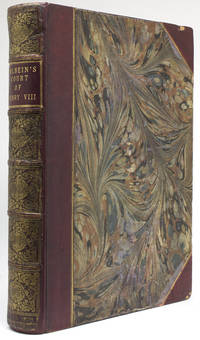
18842307070012London: Hamilton Adams Co 1884. Hardcover. Very Good. The Court of Henry VIII: Including a portrait of Queen Anne Boleyn Folio 60 cm. Bound in contemporary morocco over pattered boards. 50 pages 90 chromolithograph plates by Francis Bortolozzi after Holbein: chiefly color portraits. Scattered spotting. <br> This is an oversized or heavy book which requires additional postage for international delivery outside the US. London: Hamilton, Adams Co hardcover
18842059London: Hamilton Adams 1884. Hardcover. Very Good. Very Good hardcover red leather spine and corners over marbled boards. Wear to lower edge of covers some starting separation over cover at lower spine area but not just weak. Glit edges on all sides. Pictures on request oversize item will require extra postage Hamilton, Adams hardcover
1811862T34Rudolstadt: Berlag 1811-12. Paperback. Good Only. 8" by 5". None. A scarce collection of Franz Ignaz von Holbein's theatrical works in the original German language. German language. Two volumes. Scarce work. A collection of theatrical works including: Fridolin Der Berstorbene Leonidas and Mirina. Written by Franz Ignaz von Holbein an Austrian playwright and theatre director. In the original paper wraps with pattern. Externally sound with rubbing and chipping to the extremities. Tide marks to the front board of volume one. Paste marks to the boards. Internally firmly bound. Pages are bright with light scattered spotting and the odd pencil mark. Good Only Berlag paperback
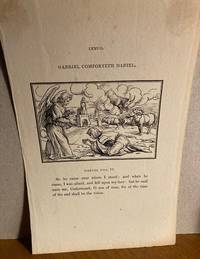
185816035London:: Henry G. Bohn 1858. 7.5 x 4.75 inches. Single leaf from the 1858 edition of Hans Holbeins Dance of Death by Francis Douce & Thomas Frognall Dibdin. The leaf portrays the angel Gabriel comforting Daniel - Daniel VIII:17. with text lines beneath. Excellent woodblock and leaf in excellent condition. Top corners with a little bit of bleed from previous adhesive on verso overall excellent and suitable for framing. 7.5 x 4.75 inches. The reproduction fomr the Douce & Dibdin were cut from wood by Messrs. Bonner and Byfield. The authors aimed to provide extremely accurate woodcut representations of the original Holbein designs to readers. This leaf shows the clarity of line and beautiful use of light and shade which Holbein had achieved in his original work . [Henry G. Bohn,] unknown
1832233834München 1832. 53 lithographs on tissue tipped in. 1 vols. 8vo. Bound in full brown morocco a.e.g. Very good. Bookplate of Van Nest. 53 lithographs on tissue tipped in. 1 vols. 8vo. unknown
1879057FR1A. Quantin 1879. 1879 pp. 201 27 Wonderful engraved plates. Illustrated with 49 gravures in the text fleurons ornamental letters and culs-de-lampes engraved after Holbein. Folio. 47 cm. Soiled original full cloth binding. Includes the important "Catalogue des Peintures de Holbein" pp. 185-194 and bibliographical references. Hans Holbein the Younger 1497-1543 was born in Augsburg Bavaria. He received his first lessons in art from his father. In 1515 the younger Holbein went to Basel Switzerland with his brother Ambrosius. Among the many scholars living in Basel at that time was the famous Dutch humanist Erasmus who befriended the young artist and asked him to illustrate his satire Encomium Moriae The Praise of Folly. Holbein also illustrated other books including Martin Luther's German translation of the Bible. In addition he painted pictures and portraits and like his father designed stained-glass windows. He also created designs for a series of 41 woodcuts called The Dance of Death. About 1525 the factional strife that accompanied the Reformation made Basel a difficult place for an artist to work. In 1526 Holbein carrying a letter of introduction from Erasmus to the English statesman and author Sir Thomas More set out for London. He met with a favorable reception in England and stayed there for two years. In 1528 he returned to Basel where he painted portraits and murals for the town hall. In 1532 he left his wife and children there and traveled once again to London. In England where he became court painter to Henry VIII Holbein was known chiefly as a painter of portraits. His services were much in demand. The more than 100 miniature and full-size portraits he completed at Henry's court provide a remarkable document of that colorful period. An old account of his services at court relates that he painted the portrait of the king "life size so well that everyone who looks is astonished since it seems to live as if it moved its head and limbs." In spite of their richness of detail Holbein's portraits provide remarkably little insight into the personality and character of the people he painted. Holbein also found time to perform numerous services for Henry. He designed the king's state robes and made drawings that were the basis of all kinds of items used by the royal household from buttons to bridles to bookbindings. In 1539 when Henry was thinking of marrying Anne of Cleves he sent Holbein to paint her portrait. In 1543 Holbein was in London working on another portrait of the king when he died a victim of the plague. FIRST EDITION. FR1 Language: eng. 1st Edition. Hardcover. Very Good. A. Quantin, 1879. hardcover
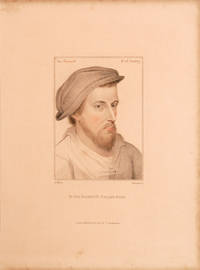
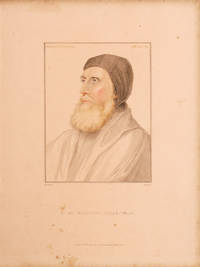
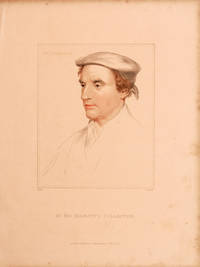
181273591London: John Chamberlaine 1812. Bartolozzi developed his style to imitate the subtleties of renaissance and baroque chalk drawings and became deservedly famous for his stipple engraving. The portraits in this collection show how effective this technique was in reproducing with such incredible fidelity Holbein's original designs. Engraved by BARTOLOZZI Francesco in IMITATIONS OF ORIGINAL DRAWINGS BY HANS HOLBEIN IN THE COLLECTION OF HIS MAJESTY FOR THE PORTRAITS OF ILLUSTRIOUS PERSONS OF THE COURT OF HENRY VIII. WITH BIOGRAPHICAL TRACTS. Stipple engraving. Printed colour. Size: 333 x 250 mm Fine condition. unknown
184961411John Russell Smith London 1849. Later Edition. Hardcover. Poor Condition. Size: 12mo 6 3/4 - 7 3/4". 146 10pp. Rear hinge cracked webbing exposed. Front board loose. Spine absent. Text block cocked. Scattered foxing. Previous owner's signature in ink. Covers marked. Corners bumped. Contains frontispiece and 53 plates. All plates present plate 1 is loose. Quantity Available: 1. Shipped Weight: Under 1 kilogram. Category: Art & Design; Renaissance 16thc to 17thc; Pictures of this item not already displayed here available upon request. Inventory No: 61411. . John Russell Smith hardcover
1803FB5537 /4D<p>Red leather binding with raised banding gilt decoration and title on the spine. Gilt 'Cambridge panel' on the boards.</p><p>"Descriptions of each plate in French and English with the Scripture Text from which the designs were taken. Printed by W. Smith and Co. King Street Seven Dials for John Scott No. 447 Strand: & Thomas Ostell No. 3 Ave Maria Lane 1803". Engraved frontispiece engraved title engraved portrait of Holbein. Full leather cover with embossed design and gilt decoration. This is a very hard to find rare book.</p><p>Note: this book is lovingly reset in its original papers by the expert bookbinder Brian Cole. It is again in fantastic condition which ought to see out a further two hundred years.</p><p>The Dance of Death 1493 by Michael Wolgemut from the Nuremberg Chronicle of Hartmann Schedel</p><p>The Danse Macabre also called the Dance of Death is an artistic genre of allegory from the Late Middle Ages on the universality of death.</p><p>The Danse Macabre consists of the dead or a personification of death summoning representatives from all walks of life to dance along to the grave typically with a pope emperor king child and laborer. The effect is both frivolous and terrifying beseeching its audience to react emotionally. It was produced as memento mori to remind people of the fragility of their lives and how vain the glories of earthly life. Its origins are postulated from illustrated sermon texts; the earliest recorded visual scheme apart from 14th century Triumph of Death paintings was a now-lost mural at Holy Innocents' Cemetery in Paris dating from 1424 to 1425.</p><p>Hans Holbein the Younger Hans Holbein der Jüngere; c. 1497 – between 7 October and 29 November 1543 was a German-Swiss painter and printmaker who worked in a Northern Renaissance style and is considered one of the greatest portraitists of the 16th century. He also produced religious art satire and Reformation propaganda and he made a significant contribution to the history of book design. He is called "the Younger" to distinguish him from his father Hans Holbein the Elder an accomplished painter of the Late Gothic school.</p><p>Holbein was born in Augsburg but worked mainly in Basel as a young artist. At first he painted murals and religious works and designed stained glass windows and illustrations for books from the printer Johann Froben. He also painted an occasional portrait making his international mark with portraits of humanist Desiderius Erasmus of Rotterdam. When the Reformation reached Basel Holbein worked for reformist clients while continuing to serve traditional religious patrons. His Late Gothic style was enriched by artistic trends in Italy France and the Netherlands as well as by Renaissance humanism. The result was a combined aesthetic uniquely his own.</p><p>Holbein travelled to England in 1526 in search of work with a recommendation from Erasmus. He was welcomed into the humanist circle of Thomas More where he quickly built a high reputation. He returned to Basel for four years then resumed his career in England in 1532 under the patronage of Anne Boleyn and Thomas Cromwell. By 1535 he was King's Painter to Henry VIII of England. In this role he produced portraits and festive decorations as well as designs for jewellery plate and other precious objects. His portraits of the royal family and nobles are a record of the court in the years when Henry was asserting his supremacy over the Church of England.</p><p>Holbein's art was prized from early in his career. French poet and reformer Nicholas Bourbon the elder dubbed him "the Apelles of our time" a typical accolade at the time. Holbein has also been described as a great "one-off" in art history since he founded no school. Some of his work was lost after his death but much was collected and he was recognized among the great portrait masters by the 19th century. Recent exhibitions have also highlighted his versatility. He created designs ranging from intricate jewellery to monumental frescoes.</p><p>Holbein's art has sometimes been called realist since he drew and painted with a rare precision. His portraits were renowned in their time for their likeness and it is through his eyes that many famous figures of his day are pictured today such as Erasmus and More. He was never content with outward appearance however; he embedded layers of symbolism allusion and paradox in his art to the lasting fascination of scholars. In the view of art historian Ellis Waterhouse his portraiture "remains unsurpassed for sureness and economy of statement penetration into character and a combined richness and purity of style'.</p><p>Renowned for his Dance of Death series the famous designs by Hans Holbein the Younger 1497–1543 were drawn in 1526 while he was in Basel. They were cut in wood by the accomplished Formschneider block cutter Hans Lützelburger.</p><p>William Ivins quoting W. J. Linton writes of Lützelburger's work wrote:</p><p>"'Nothing indeed by knife or by graver is of higher quality than this man's doing.' For by common acclaim the originals are technically the most marvelous woodcuts ever made."</p><p>These woodcuts soon appeared in proofs with titles in German. The first book edition containing forty-one woodcuts was published at Lyons by the Treschsel brothers in 1538. The popularity of the work and the currency of its message are underscored by the fact that there were eleven editions before 1562 and over the sixteenth century perhaps as many as a hundred unauthorized editions and imitations. Ten further designs were added in later editions.</p><p>The Dance of Death 1523–26 refashions the late-medieval allegory of the Danse Macabre as a reformist satire and one can see the beginnings of a gradual shift from traditional to reformed Christianity. That shift had many permutations however and in a study Natalie Zemon Davis has shown that the contemporary reception and afterlife of Holbein's designs lent themselves to neither purely Catholic or Protestant doctrine but could be outfitted with different surrounding prefaces and sermons as printers and writers of different political and religious leanings took them up. Most importantly "The pictures and the Bible quotations above them were the main attractions … Both Catholics and Protestants wished through the pictures to turn men's thoughts to a Christian preparation for death.".</p><p>The 1538 edition which contained Latin quotations from the Bible above Holbein's designs and a French quatrain below composed by Gilles Corrozet 1510–1568 actually did not credit Holbein as the artist. It bore the title: Les simulachres & / HISTORIEES FACES / DE LA MORT AUTANT ELE/gammēt pourtraictes que artifi/ciellement imaginées. / A Lyon. / Soubz l'escu de COLOIGNE. / M.D. XXXVIII. "Images and Illustrated facets of Death as elegantly depicted as they are artfully conceived." These images and workings of death as captured in the phrase "histories faces" of the title "are the particular exemplification of the way death works the individual scenes in which the lessons of mortality are brought home to people of every station."</p> John Scott & Thomas Ostell. hardcover
183014624London: William Pickering 1830 Contemporary straight-grained brown morocco over marbled boards. . Octavo. Woodcut printer's device on title and colophon. Illustrations engraved by John and Mary Byfield. Extremites a bit rubbed extremities of spine darkened. A very good copy. William Pickering, hardcover
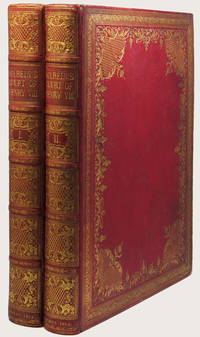
181234168London: Published by John Chamberlaine the Keeper of the King's Drawings and Medals. Printed by William Bulmer and Co. Shakespeare Printing Office 1812. 2 volumes. First Edition of the century First Issue the second edition overall. A RARE EXAMPLE WITH THE PLATES BOTH IN COLOURED AND UNCOLOURED STATE THUS WITH DOUBLE THE NUMBER OF PLATES NORMALLY ENCOUNTERED. With 84 hand-coloured plates and 84 plates uncoloured all separately printed on India paper and tipped onto full-page leaves each facing the other the plates with protective leaf separating the two each image with two variations mezzotint portraits of Holbein and his wife a total of 168 illustrations on full-page plates four plates dated from the first printing in 1792 the other 164 dated 1812 as with the publishing date. The plates are printed on a variety of papers slightly different from one another--grey buff white lavender and pink. Folio 34.5 x 2 beautifully bound in full red morocco gilt extra the spines with gilt tooled raised bands separating the compartments which are elaborately gilt decorated within triple gilt filleted frames gilt stippling to the borders of the frames lettered in gilt in one compartment the covers beautifully gilt decorated in all-over designs the borders with gilt stippled lines enclosing three gilt filleted borders surrounding an elaborate gilt inner border of floral tooling bordered again by a stippled and multi-filleted gilt frame the whole surrounding elaborate and large gilt tooled decorations at the inner corners and along the rules the edges gilt ruled the turnovers gilt rolled marbled endleaves all edges gilt very elaborate and beautifully preserved binding work. unpaginated. Fine copies beautifully preserved very light wear or age evidence to the bindings which remain strong the pages and plates all in good order some very occasional light foxing to the papers as is typical the colours remain vibrant and as printed the giltwork on the bindings is in very pleasing condition a very handsome set indeed. FIRST EDITION AND AN UNUSUALLY SPECIAL COPY BOUND IN FULL RED MOROCCO GILT EXTRA WITH THE PLATES PRINTED ON INDIA PAPER IN BOTH COLOURS AND BLACK AND WHITE A COPY WITH DOUBLE THE NUMBER OF PLATES USUALLY ENCOUNTERED. Hans Holbein the Younger; c. 1497 – between 7 October and 29 November 1543 was a German-Swiss painter and printmaker who worked in a Northern Renaissance style and is considered one of the greatest portraitists of the 16th century. He also produced religious art satire and Reformation propaganda and he made a significant contribution to the history of book design. He is called "the Younger" to distinguish him from his father Hans Holbein the Elder an accomplished painter of the Late Gothic school.<br> Holbein was born in Augsburg but worked mainly in Basel as a young artist. At first he painted murals and religious works and designed stained glass windows and illustrations for books from the printer Johann Froben. He also painted an occasional portrait making his international mark with portraits of humanist Desiderius Erasmus of Rotterdam.<br> Holbein travelled to England in 1526 in search of work with a recommendation from Erasmus. He was welcomed into the humanist circle of Thomas More where he quickly built a high reputation. He returned to Basel for four years then resumed his career in England in 1532 under the patronage of Anne Boleyn and Thomas Cromwell. By 1535 he was King's Painter to Henry VIII. In this role he produced portraits and festive decorations as well as designs for jewellery plate and other precious objects. His portraits of the royal family and nobles are a record of the court in the years when Henry was asserting his supremacy over the Church of England.<br> Holbein's art has sometimes been called realist since he drew and painted with a rare precision. His portraits were renowned in their time for their likeness and it is through his eyes that many famous figures of his day are pictured today such as Erasmus and More. He was never content with outward appearance however; he embedded layers of symbolism allusion and paradox in his art to the lasting fascination of scholars. In the view of art historian Ellis Waterhouse his portraiture "remains unsurpassed for sureness and economy of statement penetration into character and a combined richness and purity of style."<br> For Holbein "everything began with a drawing". A gifted draughtsman he was heir to a German tradition of line drawing and precise preparatory design. Holbein's chalk and ink portraits demonstrate his mastery of outline. He always made preparatory portraits of his sitters though many drawings survive for which no painted version is known suggesting that some were drawn for their own sake.<br> Ellis Waterhouse wrote that "modern" painting in England may be said to have begun with Holbein. That later artists were aware of his work is evident in their own sometimes explicitly. Hans Eworth for example painted two full-length copies in the 1560s of Holbein's Henry VIII derived from the Whitehall pattern and included a Holbein in the background of his Mary Neville Lady Dacre. The influence of Holbein's "monumentality and attention to texture" has been detected in Eworths' work. According to art historian Erna Auerbach: "Holbein's influence on the style of English portraiture was undoubtedly immense. Thanks to his genius a portrait type was created which both served the requirements of the sitter and raised portraiture in England to a European level. It became the prototype of the English Court portrait of the Renaissance period".<br> Holbein worked for Thomas Cromwell as he masterminded Henry VIII's reformation. Cromwell commissioned Holbein to produce reformist and royalist images including anti-clerical woodcuts and the title page to Myles Coverdale's English translation of the Bible. Henry VIII had embarked on a grandiose programme of artistic patronage. His efforts to glorify his new status as Supreme Head of the Church culminated in the building of Nonsuch Palace which started in 1538. By 1536 Holbein was employed as the King's Painter on an annual salary of 30 pounds—though he was never the highest-paid artist on the royal payroll. see C. Müller et al.<br> This striving for perfection is very evident in his portrait drawings where he searches with his brush for just the right line for the sitter's profile. The critical faculty in making this choice and his perception of its potency in communicating decisively the sitter's character is a true measure of Holbein's supreme greatness as a portrait painter. Nobody has ever surpassed the revealing profile and stance in his portraits: through their telling use Holbein still conveys across the centuries the character and likeness of his sitters with unrivalled mastery. see J. Rowlands Hans Holbein the Younger 1985 Published by John Chamberlaine, the Keeper of the King's Drawings and Medals. Printed by William Bulmer and Co., Shakespeare Pri hardcover
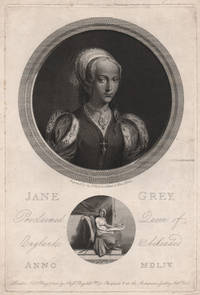
180229701802. Copper-line engraving. 300mm by 200mm platemark 355mm by 240mm sheet. Lady Jane Grey 1536/1537-1554 was an English noblewoman who was de facto monarch of England from 10 July until 19 July 1553 and was subsequently executed. One mark to right of the ciircle. A few light creases outside the platemark.<br /> unknown
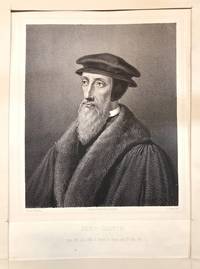
1830P5455Edinburgh : Schenck & Ghemar c.1830. Very Good. Notes: John Calvin 10 July 1509–27 May 1564 was a French theologian pastor and reformer in Geneva during the Protestant Reformation. He was the principal figure in the development of the system of Christian theology later called Calvinism. He was a Religious reformer. Image Size : 268x223 mm 10.55x8.78 Inches Platemark Size : Paper Size : 392x283 mm 15.43x11.14 Inches Coloring: Black & White Medium: Lithograph Categories: Portraits Others; Schenck & Ghemar unknown
181273585London: John Chamberlaine 1812. Bartolozzi developed his style to imitate the subtleties of renaissance and baroque chalk drawings and became deservedly famous for his stipple engraving. The portraits in this collection show how effective this technique was in reproducing with such incredible fidelity Holbein's original designs. Engraved by BARTOLOZZI Francesco in IMITATIONS OF ORIGINAL DRAWINGS BY HANS HOLBEIN IN THE COLLECTION OF HIS MAJESTY FOR THE PORTRAITS OF ILLUSTRIOUS PERSONS OF THE COURT OF HENRY VIII. WITH BIOGRAPHICAL TRACTS. Stipple engraving. Printed colour. Size: 333 x 250 mm Fine condition. unknown
185617837Paris: Edwin Tross. Very Good. 1856. First Edition Thus. Hardcover. Bright clean red cloth binding with gilt decoration & lettering. Text tight & intact: binding solid. Unpaginated. Written in Latin & French. Various scenes illustrating the universality of death no matter one's station in life are engraved in the historiated woodcut borders & letters. Hans Holbein 1497-1543 created his Alphabet of Death at a time when the Latin alphabet did not distinguish between I and J or U and V. The separation into vowels and consonants came after the Renaissance. De Montaiglon's preface notes that Holbein's alphabet has only twenty-four letters. Early owner's bookplate. Toning on endpapers only. Poetry Art; Large 8vo 9" - 10" tall . Edwin Tross hardcover
1890021220New York: Frederick A. Stokes and Brother 1890. First Edition. Cloth. Good. Folio. First edition #430 of 1000 clothbound books issued. Signed by the publisher on the copyright page. White cloth with extensive gilt decorations along with gridded cloth. Large folio. Unpaginated. 10 photogravures of paintings throughout. A look at various depictions of the Madonna by Old Masters accompanied by critical and historical commentary. GOOD condition. Moderate scuffing and toning to the covers with some soiling and staining. A few small wormholes in the front cover. Text block weak with some pages slightly loose in the binding. One plate rather foxed. Text block toned. Frederick A. Stokes and Brother unknown
181273601London: John Chamberlaine 1812. Bartolozzi developed his style to imitate the subtleties of renaissance and baroque chalk drawings and became deservedly famous for his stipple engraving. The portraits in this collection show how effective this technique was in reproducing with such incredible fidelity Holbein's original designs. Engraved by BARTOLOZZI Francesco in IMITATIONS OF ORIGINAL DRAWINGS BY HANS HOLBEIN IN THE COLLECTION OF HIS MAJESTY FOR THE PORTRAITS OF ILLUSTRIOUS PERSONS OF THE COURT OF HENRY VIII. WITH BIOGRAPHICAL TRACTS. Stipple engraving. Printed colour. Size: 333 x 250 mm Fine condition. unknown
182844152London: William Bulmer and Co. Shakespeare Printing-Office 1828. Second edition. With 84 hand-colored stipple engravings after drawings by Hans Holbein in the Royal collections with tissue guards. Printed on pink or white paper. Unpaginated. 1 vols. Folio 14 x 10 inches. Contemporary 3/4 red morocco panelled spine elaborately gilt with brown morocco lettering-piece a.e.g. original spine neatly laid down. Second edition. With 84 hand-colored stipple engravings after drawings by Hans Holbein in the Royal collections with tissue guards. Printed on pink or white paper. Unpaginated. 1 vols. Folio 14 x 10 inches. A handsome collection of portraits many printed on toned paper with letterpress commentaries on the subjects' lives. In addition to the 80 portraits called for in the printed "List of Plates" there should also be 4 plates which that list omits: the portrait of Holbein himself that of his wife and the portraits of Henry and Charles sons of Charles Brandon Duke of Suffolk. William Bulmer and Co., Shakespeare Printing-Office unknown