570 résultats
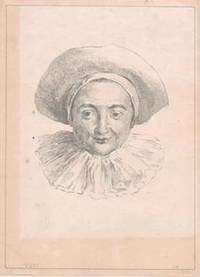
71-6863Paris: French Publisher circa 1731. Etching. 24 x 17 cm sheet. Very Good staining sheet trimmed to or within the plate mark.Provenance: ancienne galerie Vandevoorde 22 rue Vignon Paris. Paris: French Publisher, circa 1731. unknown
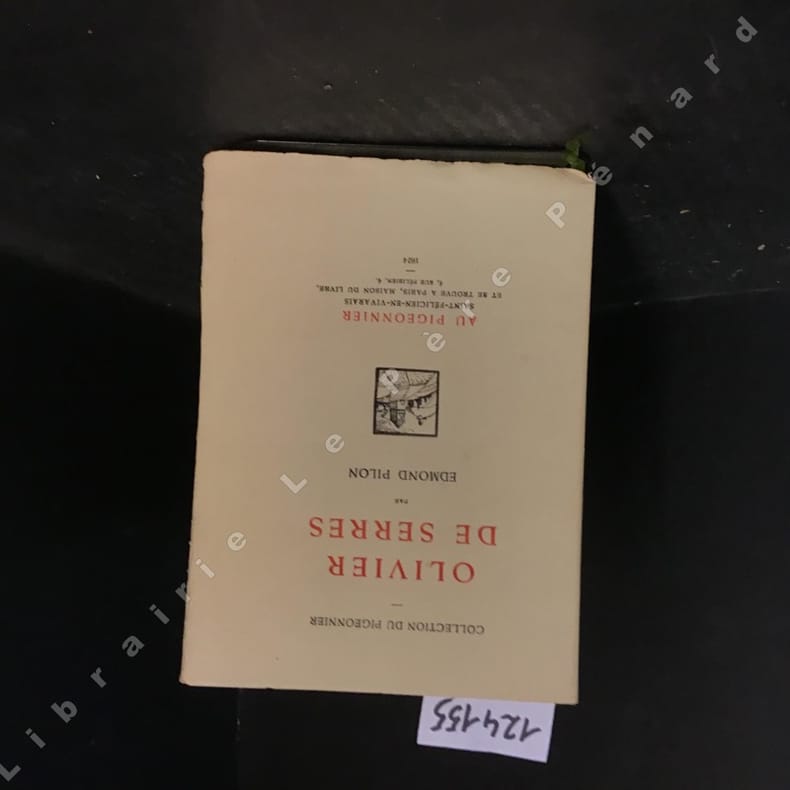
19241241551924 Au Pigeonnier, Saint-Félicien-En-Vivarais, Et se trouve à Paris, Maison du Livre - Dixième plaquette de la collection du "Pigeonnier", établie sous la direction de Charles Forot - 1924 - In-8 broché, frontispice, signet vert - 61 pages - Bandeaux, culs-de-lampe et lettrines en N&B dans l'ouvrage - Ouvrage numéroté, N° 66, l'un des 300 exemplaires sur vergé Montgolfier d'Annonay
195813818London: Rupert Hart-Davis 1958. First English language edition. Hardcover. VERY GOOD. 23 cm. Green cloth binding is a bit faded mostly at spine. Text is clean no highlighting or marginalia. No dust jacket. 558 pages. Additional info or photos on request. Ships in sturdy cardboard packaging with tracking and insurance. Heavy/oversize book. May require additional postage for overseas shipment. Rupert Hart-Davis hardcover
1958140939779London: Rupert Hart-Davis 1958. First Edition. Near Fine. Advance reading copy of the first English-language edition. Plain wraps with paper label pasted on front wrap announcing "Probable publication date November 1958 / Probable price 35/-". 542 pp. Vertical crease to front wrap else Near Fine. A scarce survival pun intended of a fragile pre-publication version of the first work of cryptozoology as a discipline or pseudo-discipline as most scientists would have it establishing the Belgian-French author as the "Father of Cryptozoology." It begins with recently rediscovered animals that were previously thought to have gone extinct such as the coelacanth and giant panda then ventures into evidence for animals as yet unverified or considered fictional by biologists such as the Yeti the Loch Ness Monster African dinosaur Mokele-mbembe and more. Rupert Hart-Davis unknown books
17402420Augsburg: Johann Jacob Haid & son 1740. Six tall narrow folio-sized engravings with etching platemarks 400 x 207 mm. sheets 435 x 277 mm. deckle edges unsigned but by Jacop Wangner after Watteau numbered 1-6 in the plate at lower right imprint at lower right I. Haid et filius excudit A. V. Augustae Vindelicorum. Upper edges archivally tipped to mats. Fine.<br/> <br/> A perfectly preserved suite of six large rococo engravings reproducing Watteau's paintings for a folding screen intended to be cut out by ladies for use in furniture decoration. <br /> <br /> Watteau's influence on 18th-century decorative arts throughout Europe by way of the many engravings after his work published by Gersaint has long been recognized but the use of the engravings as actual sheets to be cut up and applied to household objects has garnered little attention until recently. The vogue for decoupage probably first appeared in the late seventeenth century and by the 1720s the hobby of cutting out colored prints for application to various household objects and pieces of furniture was all the rage in France Germany and beyond. The process which remained a favorite pastime throughout the eighteenth century was known as la découpure in French as Ausschneidekunst in German and as lacca contrafatta or lacca povera in Italian although "the latter term appears to be a true misnomer considering the amount of minute work involved" Kisluk-Grosheide p. 83. It consisted of neatly cutting out hand-colored engraved or woodcut motifs or figures applying them to a textile or sometimes cardboard ground and varnishing them. These creations were applied to furniture as well as to "screens folding screens wall hangings ceilings the tops of coaches and sedan chairs" loc. cit. affording a passable imitation of Asian lacquer. The craze which created a goldmine for certain print publishers reached the point that bibliophiles and collectors were warned to keep a vigilant eye on their most precious books prints and paintings lest eager young ladies attack them with scissors. <br /> <br /> In 1728 six engravings after Watteau's paintings for a folding screen were commissioned by the art collector Jean de Julienne as part of a vast program of reproductions of Watteau's painted oeuvre. They were engraved by Louis Crépy fils and published by the Paris marchand-mercier art dealer and print publisher Edmé-François Gersaint. An announcement of their upcoming publication in the November 1727 Mercure de France explicitly described them and two other Crépy-Watteau engravings as "marvelously appropriate for decoupages with which ladies these days make such pretty furniture" Crépy grave actuellement six morceaux en hauteur . d'après un Paravant peint par Watau dont les compositions sont très-galantes. De pareils sujets peints sur des fonds blancs conviennent à merveille aux découpures dont les Dames font aujourd'hui de si jolis meubles Mercure de France 1 Novembre 1727 p. 2492 digitized on Gallica. Indeed the publisher himself highlighted this usage in his own note in a later issue of the Mercure cited by Glorieux p. 212: pointing out that all of the decorative motifs in the Watteau engravings were "most useful for painters fan-makers sculptors goldsmiths tapestry-weavers embroiderers etc." he added that "all these ornaments can be perfectly used in decoupage" tous ces ornements réussissent parfaitement en découpure. <br /> <br /> These and other rococo engravings were quickly taken up by German publishers especially in Augsburg Metken p. 102. This paravent folding screen suite was one of the first of the Watteau engravings to be copied in Germany. The present very close reverse copies of Crépy's six plates appeared in Augsburg only a few months after their publication in June 1728 in Paris: engraved by Jacob Wangner or Wagner ca. 1703-1781 they were published by the heirs of Jeremias Wolff in 1729. This set is an otherwise unrecorded reissue of the Wangner copperplates. A lavishly decoupage-decorated secretary in the collections of the Metropolitan Museum of Art includes cutouts that were almost certainly from these Augsburg plates as they are from "reverse copies of the prints by Crépy" Kisluk-Grosheide p. 88 noting other examples of Augsburg copies of Watteau prints used on the same secretary. Her assertion that "it has not been shown that these engravings were actually used for this purpose" p. 84 is only applicable to the French plates. Indeed other examples of lacca povera objects described in her article point to the German production of copies of French rococo prints as the main source for decoupage at this time on pieces produced throughout Europe including in Italy and in France itself. <br /> <br /> The general title appears at the foot of the first plate. Each engraving presents a central figure or scene set within a frame of delicate rococo arabesques and ornaments. Three show the Comédie italienne figures of Pierrot Harlequin and Colombine a woman playing the lute on a rug-bedecked stage a pair of allegorical figures flanking an awning above and at bottom the smiling visage of a Commedia dell'Arte character of the opposite sex. The remaining pastoral scenes of courtship or douceur de vie are set within naturalistic elements two with streams flowing over a dripping shell-shaped basin or ledge under which a ghostly face can be dimly discerned. Watteau's designs were based on earlier designs by Claude III Audran decorative painter for Louis XIV at Versailles and Fontainebleau to whom Watteau had apprenticed. "After joining forces with ornamentalist Claude III Audran about 1708 he Watteau began inserting figures in Comédie-Italienne costumes into Audran's trademark arabesques" Judy Sund "Watteau's Pierrots Why so Sad" The Art Bulletin vol. 98 no. 3 2016 p. 325 reproducing the Pierrot panel from the present series. <br /> <br /> OCLC locates a single copy of the Wolff issue at the Bibliothèque nationale de France reproduced in Gallica. In the present issue of which I locate no other copies the engraver's signatures were removed. <br /> <br /> On the Wolff issue cf. W. Augustyn "Augsburger Buchillustration im 18. Jahrhundert" in Augsburger Buchdruck und Verlagswesen von den Anfangen bis zur Gegegenwart 1997 p. 820 citing E. Isphording Gottfried Bernhard Göz 1708-1774 1997 pp. 35 ff.; Thieme Becker 35:150. On the Crépy engravings cf. Guilmard Maitres ornemanistes p.145; Dacier & Vauflart Jean de Julienne et les graveurs de Watteau au XVIII. siècle 159-163; E. de Goncourt Catalogue Raisonné de l'Oeuvre . d'Antoine Watteau 1875 p. 224 nos. 309-314; G. Glorieux À l'enseigne de Gersaint: Edme-François Gersaint marchand d'art sur le Pont Notre Dame Paris 2002 pp. 189-192; Mark Millard Collection: French Books no. 170.35 5 of the 6 plates. On the use of these engravings for decoupage see: D. O. Kisluk-Grosheide "'Cutting up Berchems Watteaus and Audrans': A Lacca Povera Secretary at The Metropolitan Museum of Art" Metropolitan Museum Journal 31 1996 pp. 81-97; and S. Metken Geschnittenes Papier Munich 1978 pp. 101-2 & 113. Johann Jacob Haid & son unknown
17502420Augsburg: Johann Jacob Haid & son 1750. Six tall narrow folio-sized engravings with etching platemarks 400 x 207 mm. sheets 435 x 277 mm. deckle edges numbered 1-6 in the plate at lower right imprint at lower right I. Haid et filius excudit A. V. Augustae Vindelicorum. Upper edges archivally tipped to mats. Fine. Rare suite of six rococo engravings reproducing Watteau's designs for a folding screen. This apparently unrecorded issue bearing the imprint of the Augsburg print-publisher Johan Jakob Haid and his son Johann Elias Haid is a re-issue of the plates which first appeared in 1729 with the signature of Jacob Wangner and the imprint of the heirs of Jeremias Wolff. OCLC locates a single copy of the Wolff issue at the Bibliothèque nationale de France photographs of the engravings are reproduced in the BnF online catalogue which misspells the artist's name as "Wagner". Wangner's engravings were based on the almost equally rare suite of six plates after Watteau commissioned by Jean Julienne and engraved by Crépy fils Louis Crépy in 1728. For the present issue the engraver's signatures barely visible in the BnF images were removed. The title appears at the foot of the first plate. Each engraving presents a central figure or scene set within a frame of delicate rococo allegorical and ornamental design. Three show the Comédie italienne figures of Pierrot/Gilles Harlequin and Columbina a woman playing the lute on a rug-bedecked stage a pair of allegorical figures flanking an awning above and at bottom the smiling visage of a Commedia dell'Arte character of the opposite sex. The remaining pastoral scenes of courtship or douceur de vie are set within naturalistic elements two with streams flowing over a dripping shell-shaped basin or ledge under which a ghostly face can be dimly discerned. Two painted screens based on these designs were sold at Sotheby's London on Feb. 12 2008 and again on 28 Oct. 2010 with the addition of a third painting from the series. I locate no other copies of the issue with the Haid imprint. On the Wolff issue cf. W. Augustyn "Augsburger Buchillustration im 18. Jahrhundert" in Augsburger Buchdruck und Verlagswesen 1997 p. 820 citing E. Isphording Gottfried Bernhard Göz 1708-1774 1997 pp. 35 ff. On the Crépy engravings cf. Guilmard Maitres ornemanistes p.145; Dacier & Vauflart 159-163; E. de Goncourt Catalogue Raisonné de l'Oeuvre . d'Antoine Watteau 1875 p. 224 nos. 309-314; G. Glorieux À l'enseigne de Gersaint: Edme-François Gersaint marchand d'art sur le Pont Notre Dame 1694-1750 2002 pp. 190 & 192; Mark Millard Collection: French Books no. 170.35 5 of the 6 plates. Johann Jacob Haid & son unknown books
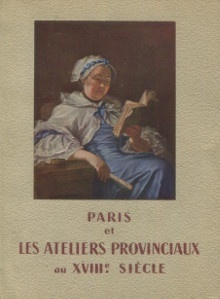
4574In-8, broché sous couverture illustrée en couleur,xxi-158 pp. - pl. Avant-propos, par Jacques Chaban-Delmas - Préface, par Louis Réau - Catalogu, par Gilberte Martin-Méry : Paris. - Ateliers du Nord - Ateliers de l'Est : Alsace et Lorraine. - Bourgogne. - Champagne. - Franche-Comté - Ateliers de l'Ouest : Bretagne ...
1992941Réunion des Musées Nationaux 21,5 x 28,5 Paris 1992 Dos carré, 74 p., très nb. illustr. couleurs, chronologie in fine. Ce numéro spécial de "Connaissance des Arts", coédité avec la Réunion des Musées Nationaux, a été réalisé à l'occasion de l'ouverture des 39 nouvelles salles dévolues à la peinture française des 18e et 19e siècles au second étage de la Cour Carrée du Louvre. Exemplaire à l'état neuf.(C35) Livre
1992941Réunion des Musées Nationaux 21,5 x 28,5 Paris 1992 Dos carré, 74 p., très nb. illustr. couleurs, chronologie in fine. Ce numéro spécial de "Connaissance des Arts", coédité avec la Réunion des Musées Nationaux, a été réalisé à l'occasion de l'ouverture des 39 nouvelles salles dévolues à la peinture française des 18e et 19e siècles au second étage de la Cour Carrée du Louvre. Exemplaire à l'état neuf.(C35) Livre
R260250422Chez l'auteur. non daté. In-Plano. En feuillets. Bon état, Couv. convenable, Dos satisfaisant, Intérieur frais. Dépliant de 2 pages comprenant 4 feuillet augmentés de photos de peintures en couoeurs, de Watteau. Feuillets de 27x37 cm.. . . . Classification Dewey : 750-La peinture et les peintres
50267Paris, Hôtel de la Monnaie, 1977. In-8 broché, 477 pp. Illustrations. T1: Textes & T2: Catalogue d'exposition. Couvertures en bon état, intérieurs en très bon état.
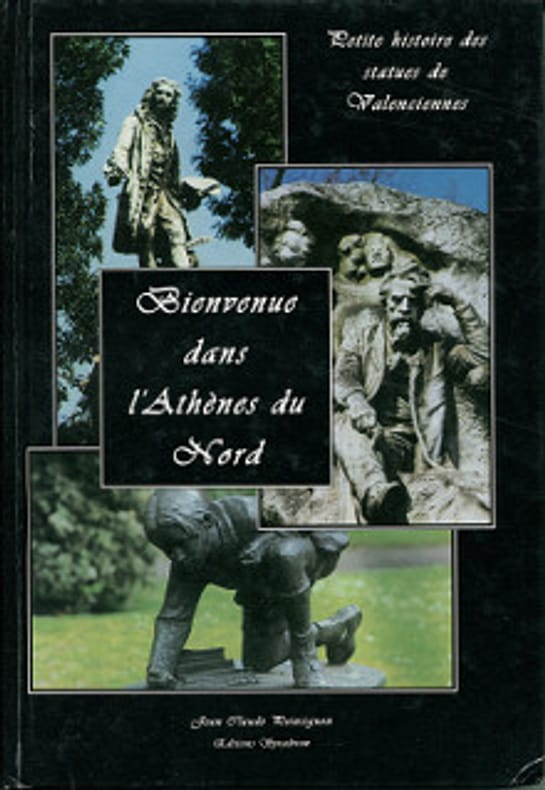
432Editions Spratbrow, Valenciennes, 1998. In-8, cartonnage éditeur illustré en couleurs, 128 pp. Préface par Paul Péniaux - Arrivée en gare de Valenciennes - Présence de sculpteurs dans la ville - Extra-muros : du brave coeur d'un instituteur au Sacré-Coeur de Jésus - De la place du Canada à la Tour de la ...
9319Paris, Boulevard des Italiens, 1860. In-8, broché, 63 pp. Avant-propos, par Francis Petit et Ph. Burty - Catalogue [298 n° décrits] Dessins. - Tableaux.
109173Paris 1850. Page de titre gravée. 26 gravures. Feuillet blanc. 37x29 Cm. Demi-veau vert. Dos à nerfs doré. Plats et dos frotté. Coins émoussés. Rousseurs. Dernier feuillet blanc derelié. 26/42 gravures. Paris, 1850. unknown
18502315807S.N 1850. Large Hardcover. Good/No Jacket. Watteau A.; Marks W. Front board weakening spine heavily rubbed bookplate on front endpaper some pages lightly foxed. 1850 Large Hardcover. A collection of 43 engravings by W. Marks. "Jean-Antoine Watteau was a French painter and draughtsman whose brief career spurred the revival of interest in colour and movement as seen in the tradition of Correggio and Rubens. He revitalized the waning Baroque style shifting it to the less severe more naturalistic less formally classical Rococo. Watteau is credited with inventing the genre of fetes galantes scenes of bucolic and idyllic charm suffused with a theatrical air. Some of his best known subjects were drawn from the world of Italian comedy and ballet. S.N hardcover
2024209507Paris France: LienArt 2024. Hardcover. As New Still in plastic. Color illustrated boards with white text. 238 pp. Many color illustrations. Published on the occasion of the exhibition held at Musée du Louvre Paris France October 16 2024-February 3 2025.<br /> <br /> Contents : Ce que Pierrot veut dire. Pierrot Crispin et la Folie. Le théâtre comique parisien à l'époque de Watteau -- Portrait de l'artiste en comédien. Antoine Watteau et le théâtre -- Un tableau en quête d'auteur. Watteau et la genèse du Pierrot -- Chercher Pierrot. Sa postérité en peinture au XVIIIe siècle -- La découverte du "Gilles" -- Pierrot. Portraits de l'artiste en enfant du XIXe siècle -- Pierrot et la Grande Parade. Épilogues aux XXIe siècles -- État des connaissances sur la matérialité du Pierrot d'Antoine Watteau / Clarisse Delmas et Bénédicte Trémolières. LienArt hardcover
71-6868Paris: French Publisher circa 1732. Etching. 24 x 18 cm sheet. Very Good light specks of foxing toning along sheet edges.Provenance: ancienne galerie Vandevoorde 22 rue Vignon Paris. Paris: French Publisher, circa 1732. unknown
19-8772Unknown: 20th Century American Publisher ca. 1940s. Large format color reproduction print poster 20†x 24â€. Very Good. Unknown: 20th Century [American] Publisher, [ca. 1940s?]. unknown
3574742Contentum Ltd. Loose sheet. New. High-quality art print based on an original work from the Rijksmuseum. Created in the 18th century 1705. Professionally printed on premium fine-art paper Museum Etching museum quality in size A3. The artwork is printed with a white border museum-style presentation. Contentum Ltd. unknown
3574745Contentum Ltd. Loose sheet. New. High-quality art print based on an original work from the Rijksmuseum. Created in the 18th century 1705. Professionally printed on premium fine-art paper Museum Etching museum quality in size A2. The artwork is printed with a white border museum-style presentation. Contentum Ltd. unknown
3574743Contentum Ltd. Loose sheet. New. High-quality art print based on an original work from the Rijksmuseum. Created in the 18th century 1705. Professionally printed on premium fine-art paper Photo Rag Bright White in size A2. The artwork is printed with a white border museum-style presentation. Contentum Ltd. unknown
3574744Contentum Ltd. Loose sheet. New. High-quality art print based on an original work from the Rijksmuseum. Created in the 18th century 1705. Professionally printed on premium fine-art paper Photo Rag 308 premium quality in size A2. The artwork is printed with a white border museum-style presentation. Contentum Ltd. unknown
45095De Boccard.2011.in-8,couv.souple ill.en couleurs.316 p.Ills. Etat neuf.
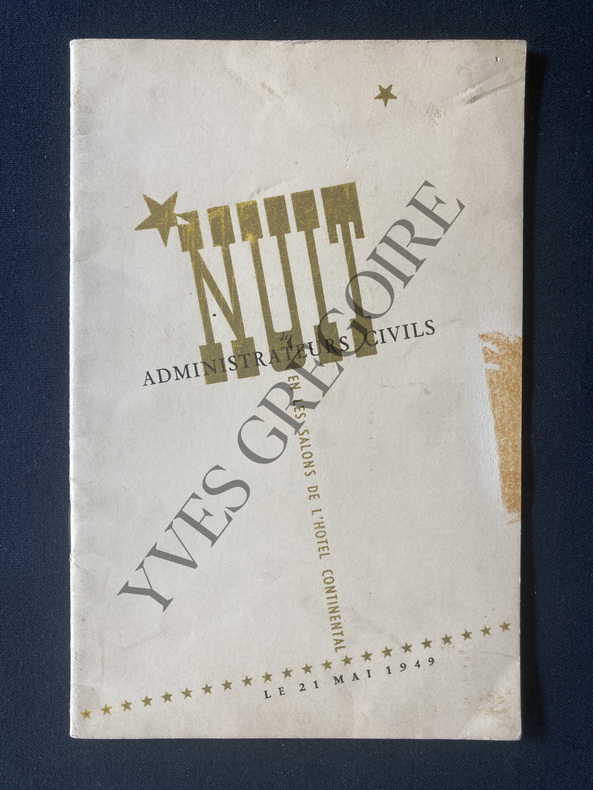
1949ABE-9121765845PETIT IN 8-28 PAGES-PRESENTATION DU PRESIDENT EMILE PIERRE CAZALIS-PHOTO COLETTE MARS/HARCOURT-PHOTO LEROI THIEBAUT/LIPNITZKI-PHOTO EDDY RASIMI/HARCOURT-PHOTO JEAN REYMOND-PHOTO PAUL CAMBO/HARCOURT-PHOTO TOSSIA/HARCOURT-PHOTO GEORGETTE WATTEAU-PUBLICITES-TRACE DE RUBAN ADHESIF EN UNE-5 TROUS DE PUNAISE EN 4 DE COUV-(PRPROG)
2015BN71640Parodos Verlag 2015. 2015. Psychoanalyse des Blicks: Bildende Kunst Fotografie Film Y Revue für Psychoanalyse Bildende Kunst Fotografie Film <br/><br/> Parodos Verlag unknown