Moore, AlbertAntiquariat.de

2 649 résultats
1972114148Laing Art Gallery, Newcastle upon Tyne, 1972. 24 x 20,5 cm ; kart.
577suite de 48 planches gravées d’après les tableaux les plus célèbres en un volume in 8 demi-cuir rouge,titre et fil dorés.sans lieu ni date(XIXème)
125x170 mm. No paginating. Hardcover with dust jacket. Dust jacket slightly scratched and slightly stained. Else in good condition.
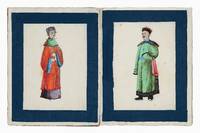
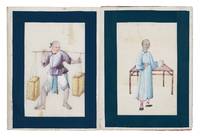
65895China c.1870. 8vo. 20 x 15 cm. Album of contemporary patterned cloth covered boards with 12 leaves of finely coloured illustrations on pith paper each secured with blue silk border. 4 of the images with just minimal cracking. Pith came into use for painting to satisfy the increasing demand for small inexpensive and easily transported souvenirs following the massive growth in the China Trade in the first half of the nineteenth century. Paintings in oils on board and canvas were costly and difficult to carry home. Earlier and more prestigious export water-colours had often been on a larger scale and painted on fine Chinese paper or on paper imported from Europe. The albums of pith paintings and later the little glass-fronted boxes were inexpensive light easy to pack and gave the pictures some protection on the long voyage home. Because many were sold in albums and hence protected from the light they retain their bright colours to this day. Pith comes from the central column of spongy cellular tissue in the stem of a small tree called Tetrapanax Papyrifera native to south-west China. It has had a variety of some going back many centuries. At the imperial court both men and women wore coloured flowers made from pith in their hair. For use in painting it is cut by hand with a knife into thin sheets from short lengths of the spongy tissue. Cutting is highly skilled and the constraints of the process mean that the finished sheets for painting seldom if ever measure more than about 30cms by 20cms. The sheets are dried trimmed and used for painting without any further processing. Because of the nature of pith and its cellular structure the gouache used by the Chinese sat on the surface and produced a bright and even sparkling effect. Very fine detail could be achieved but pith did not lend itself to the flat wash of colour favoured for European watercolours. These albums are difficult to date specifically as they are seldom signed and never actually dated. They are known to have been produced from the 1830s through to the 1870s [China, c.1870] hardcover
65894China c.1870. 8vo. 20 x 15 cm. Album of contemporary patterned cloth covered boards with 12 leaves of finely coloured illustrations on pith paper each secured with blue silk border. Just 2 short cracks generally very good condition. Pith came into use for painting to satisfy the increasing demand for small inexpensive and easily transported souvenirs following the massive growth in the China Trade in the first half of the nineteenth century. Paintings in oils on board and canvas were costly and difficult to carry home. Earlier and more prestigious export water-colours had often been on a larger scale and painted on fine Chinese paper or on paper imported from Europe. The albums of pith paintings and later the little glass-fronted boxes were inexpensive light easy to pack and gave the pictures some protection on the long voyage home. Because many were sold in albums and hence protected from the light they retain their bright colours to this day. Pith comes from the central column of spongy cellular tissue in the stem of a small tree called Tetrapanax Papyrifera native to south-west China. It has had a variety of some going back many centuries. At the imperial court both men and women wore coloured flowers made from pith in their hair. For use in painting it is cut by hand with a knife into thin sheets from short lengths of the spongy tissue. Cutting is highly skilled and the constraints of the process mean that the finished sheets for painting seldom if ever measure more than about 30cms by 20cms. The sheets are dried trimmed and used for painting without any further processing. Because of the nature of pith and its cellular structure the gouache used by the Chinese sat on the surface and produced a bright and even sparkling effect. Very fine detail could be achieved but pith did not lend itself to the flat wash of colour favoured for European watercolours. These albums are difficult to date specifically as they are seldom signed and never actually dated. They are known to have been produced from the 1830s through to the 1870s [China, c.1870] hardcover
8653218. CHINESE PITH PAINTINGS. ALBUM OF 30 FISH ON 12 SHEETS. Album of 12 sheets of pith approximately 19 x 26 cm each mounted onto pages within covers approx. 24.7 x 34.3 cm covered in brocade with ties. A wonderful mid-19th century example of this realistic genre which uses the three dimensionality afforded by the surface of the inner plant pith of the Tetrapanax papyriferum a ginseng relative that grow to the size of a small tree shaved as here into thin sheets and painted with opaque colors. The fish sparkle and the colors glow the fish accuraely depicted in form and color. Pith by its very nature is extremely fragile and larger sheets such as those employed here even more than usually frangible. Thus the completeness of the sheets with almost no lost pigmeted sections is most unusual. The covers are a bit worn though as usual the paintings show occasional cracking and repair but a worthy example of its kind. unknown
8653218. CHINESE PITH PAINTINGS. ALBUM OF 30 FISH ON 12 SHEETS. Album of 12 sheets of pith approximately 19 x 26 cm each mounted onto pages within covers approx. 24.7 x 34.3 cm covered in brocade with ties. A wonderful mid-19th century example of this realistic genre which uses the three dimensionality afforded by the surface of the inner plant pith of the Tetrapanax papyriferum a ginseng relative that grow to the size of a small tree shaved as here into thin sheets and painted with opaque colors. The fish sparkle and the colors glow the fish accuraely depicted in form and color. Pith by its very nature is extremely fragile and larger sheets such as those employed here even more than usually frangible. Thus the completeness of the sheets with almost no lost pigmeted sections is most unusual. The covers are a bit worn though as usual the paintings show occasional cracking and repair but a worthy example of its kind. unknown books
235x210 mm. 48 pages. Hardcover. Cover slightly yellowing. Spine bottom edge slightly bumped. Pages slightly yellowing. Else in good condition.
23X20.5 cm. Unpaginated. Hardcover. Cover is slightly worn at corners. Spine is slightly bumped at lower corner. Else in good condition. Reprint from 1849 Russian edition A. T. Prikov with English and Hebrew titles added.
17478, Brussels, Alain Noirhomme, 2003 Bound, white cardboard, dustjacket, picture - frontispice, 245 x 335mm., 48pp., beautiful color reproductions. ISBN 9788570810045.
198719034NY: ABRAMS. 1987. Fine in Fine dust jacket. 1987. First Edition; First Printing. Hardcover. 0810912120 . First edition. SIGNED by Ann Beattie on front end paper. Fine in fine dust jacket. ; 9 1/4" X 10 1/4" . NY: ABRAMS. 1987 hardcover
23.5x30 cm. xv+129 pages. Hardcover. In good condition. PLEASE NOTE: This item is overweight. We may ask for extra shipping costs.
28.5x30 cm. 123 pages. Hardcover. Cover is slightly dirty and scratched. Else in good condition. PLEASE NOTE: This item is overweight. We may ask for extra shipping costs.
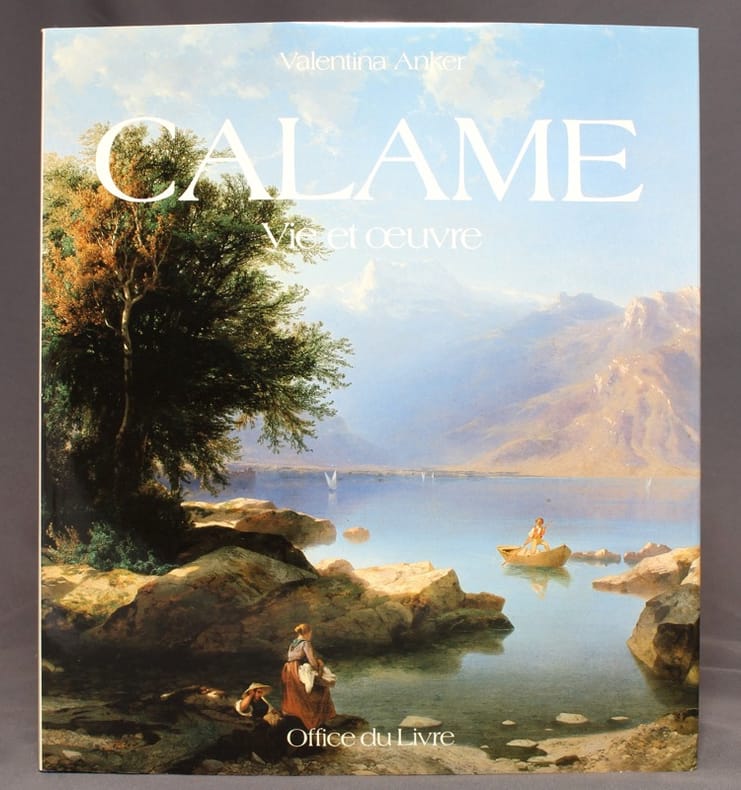
198713661Fribourg, Office du livre, 1987. Fort volume in-4 de 486-[2] pages, pleine toile bleue avec titre à froid au premier plat, argenté au dos, jaquette couleurs.
Ex-library book with the usual stamps, stickers, etc. Binding is solid and text/interior is clean and free of marking of any kind. Front end paper has corner cut out. Book shows very little wear and dust jacket is wrapped in protective cover by library. Text/interior shows no wear and is very clean. 207 pages with large, full-color prints throughout. Chapters include: The early years, Taos and back to Texas, The dust bowl era, The early forties, Toward an intuitive geometry, The mon shot series, The big Bend paintings, Drawing: the dynamic impulse, the late works, etc.
4429Mona Bismarck Foundation, Paris/Musée international de la chase, Gien, 1998. In-4, broché sous couverture rempliée et illustrée en couleur, 92 pp. Bref hommage à Desportes, par Pierre Rosenberg - Avant-propos, par Jean-Pierre Hurtiger - Catalogue, par Pierre Jacky : Chronologie sommaire. - Introduction. - Les tableaux de vénerie. - Le décor du château de la ménagerie de Versailles. - Le portraitiste ...
No marks or inscriptions. No creasing to covers or to spine. A very clean very tight copy with bright unmarked boards, the tiniest rubs to front cover corners and no bumping to corners. 80pp. Biography and paintings from Cornish artist Alfred Wallis who was unappreciated in his lifetime but is now considered very highly.
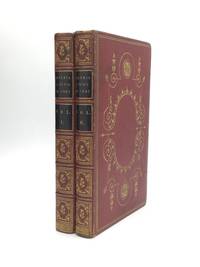
184672064London: Henry Colburn Publisher 1846. First Edition. Hardcover. Very good. Presentation copy inscribed by the author to Sir Thomas Reade C.B. on a prefatory blank leaf in the first volume. This narrative of travels in Northern Africa avoids political disccusions and instead focuses on everyday life and the character of the Maghrebi Arabs. Octavo two volumes: 304 p. and 261 p. with frontispieces. Full burgundy morocco bindings with black and brown leather spine labels elaborate gilt stamping five raised bands ornamental dentelles and cream endpapers. Additionally each volume features an original fore-edge painting: Table Mountain in South Africa on the first and Southampton Harbor on the second. Faint staining to the top edge in the final few leaves of the first volume. The front hinge in the first volume is just starting. The spines are darkened just a touch with some mild wear to the corners and tips; otherwise very good. Henry Colburn, Publisher hardcover books
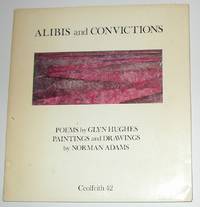
1978D07NS1124Ceolfrith Press Sunderland 1978. 1st Edition. SOFTCOVER. Square Quarto size 4to in stiff card covers 42pp plates in colour and b/w etc __CONDITION : A well preserved FINE very clean and tight copy covers faintly tanned in a faintly tanned and faintly edge-creased but otherwise FINE Dust Jacket. . __We always ship in PROTECTIVE CARD PARCELS Ceolfrith Press, Sunderland paperback
2090502130400204Not Available N.A. Soft Cover. Fine. The book is in fine condition. Not Available paperback
19631iiiAe0046New York: Hawthorn Books Inc. Publishers 1963. Book. Illus. by Giotto di Bondone Paintings; The Meeting At the Golden Gate Padua Arena Chapel Jacket Illustration Part 1; The Ognissanti Madonna Jacket Illustration Part 2. Very Good. Hardcover. © 1963 by Rizzoli Editore Milan. 12mo or 12° Duodecimo: 6¾" x 7¾" tall. 63 110 Part 1 35 146 Part 2 pp. 2-Part-Set! Both copies solidly and tightly bound with moderate overall wear and use. Copies with clean text on crisp pages. Jackets lightly frayed with some slight tears. Hawthorn Books, Inc., Publishers Hardcover
19672111902156000685elementary school 1967. Soft Cover. Fine. The book is in fine condition. elementary school paperback
15135, Davaco Publishers, 2001, Cloth bound with dusjacket, 4to., 312 pp. text and 467 plates and illustrations (14 in color). fine! ISBN 9070288273.
1390552896.Gpaperback. Good. Access codes and supplements are not guaranteed with used items. May be an ex-library book. paperback
19645264Pittsburgh and Lake Erie Railroad Company / New York Central System. Very Good with no dust jacket. 1964. Softcover. Brief introduction by Howard Fogg foreword by John Barriger marking the end of his tenure as Company President. Chiefly full-page color reproductions of Fogg's paintings with captions at page bottoms. Textured stiff white wraps stapled. ; Oblong 11" x 8-1/2"; Lightly soiled faintly creased across front cover very little wear unmarked within. . Pittsburgh and Lake Erie Railroad Company / New York Central System paperback