13 résultats
174060893Yangzhou China: Huang Shen é»„ç››ä¹‹å° ca. 1740-1770. Oblong 4to. 11.5 x 11 in. 9 leaves unnumbered. accordion-style leporello double-page leaves with 8 ink & hand-coloured paintings on paper sized 10 x 9.25 mounted w/ pale blue paper framed leaves each w/ gilt speckled decorative paper mounted facing. Original wooden boards hand-lettered label mounted on front cover scuffed some loss to wear rubbing splitting to covers horizontally but sound minor closed tear to inner front pastedowns occasional minor dustsoiling & thumbing still a VG- exemplar. An extraordinary album of intimately inked and coloured paintings on paper by the famed Qing Dynasty painter with each leaf inscribed by the artist with a couplet poem and with two seals. One shows a Chinese scholar and young boy or novice leaning into the wind with the couplet “Having endured the weather welcoming the colour of Autum; Together with ice and frost proud of one’s years.†Another with a fisherman seated on a mat his hat hung over the creel and holding the fishing rod ending with “preserve in brush and tongue and catch a giant turtle.†One shows an apparently drunk official sprawled on cushions surrounded by vases and ceramic ware entitled “How can Little Cao endure the tyranny of Princess Hu†One painting in the series draws from a couplet that appears often in ancient Chinese poetry anthologies and even a poetry manual depicted with well-dressed bearded official facing a stooped elder stating “Asked what is the Zen mind there is nothing to say; White clouds ceaselessly fly in the blue sky.â€The seventh painting in the album illustrates two finely dressed individuals with one bearing a short sword strapped to his back and the other holding a speckled deer sporting a riding blanket and the couplet version: 霜冷玄猿ä¾è—¥ç¶ which does appear in such early anthologies as A New Collection of Entertainment Collections æ‡‰é…¬å½™é¸æ–°é›† 尺牘 帖å¼. The final painting in the album appears to be another version of Huang Shen’s scroll painting in the Taipei Palace Museum entitled “Bo Le judges horses†清黃慎畫伯樂相馬圖軸. The painting depicts a similarly dressed Chinese hostler with different headgear with emphasis on the pair of horses and alternate hat between the two. The version in this album allowing more horizontal space features an additional horse with much finer definition and no large overhanging tree. The couplet in both reads “Two fine steeds already led by master equestrian Wang Liang; They shall bee Bo Le’s approval at a glance. Huang Shen’s 1687-1772 painting style paralleled his calligraphy often with a similar fluidity and organic flow to the figures and objects. Born originally in Ninghua Fujian Province he began his training under Shangguan Zhou and after moving to Yangzhou in 1724 to make his living as a painter he developed a style matching the tastes of his clients. He eventually became known as a figure painter and as one of the Eight Eccentrics from Yangzhou local artists known for their unorthodox painting style. Although his individual scrolls appear in the market on a consistent basis his albums such as this one are quite scarce. Huang Shen, é»„ç››ä¹‹å° hardcover
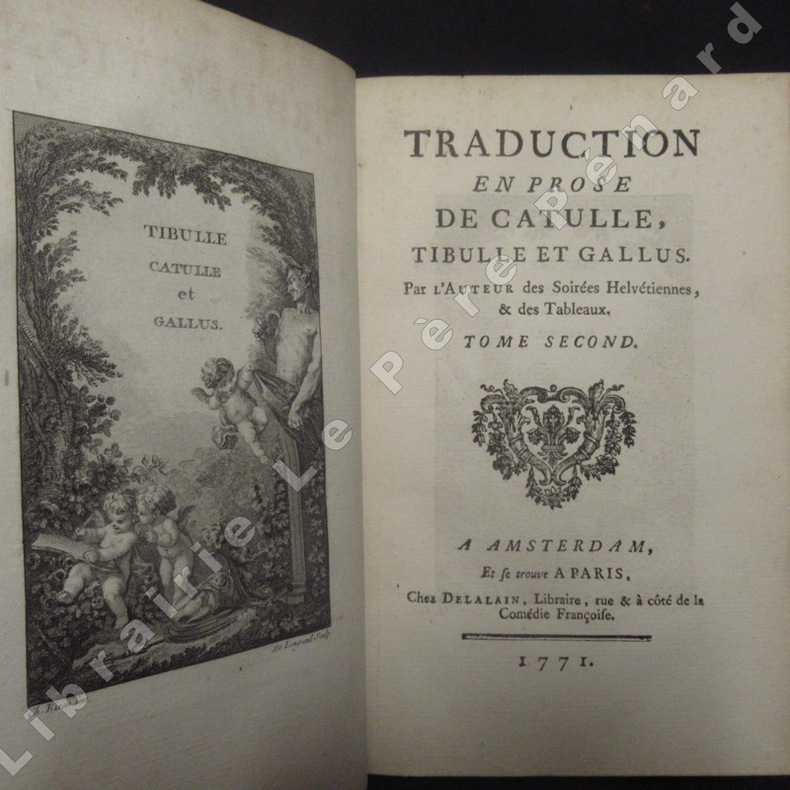
17711107491771 A Amsterdam, Et se trouve à Paris, Chez Delalain, Libraire - 1771 - 2 volumes In-8, reliure pleine peau brune, 5 nerfs, titre, tomaison, fleurons et filets dorés aux dos, tranches marbrées, filets dorés encadrant les plats - 327 + 327 pages - Avec quelques gravures, bandeaux et cul-de-lampes
1797ST19344London: Printed by T. Gillet for Longman et al. 1797. 265 x 163 mm. 10 3/8 x 6 3/8". Two volumes. <br/> Contemporary green straight-grain morocco covers with double gilt fillet border raised bands gilt titling turn-ins with decorative gilt roll marbled endpapers all edge gilt inexpert older repairs to joints. EACH VOLUME WITH RICHLY DETAILED FORE-EDGE PAINTING that on volume I depicting the old Tabard Inn Southwark and that on volume II showing Furnival's Inn Holborn. Housed in a fleece-lined double-compartment slipcase. Title pages with engraved vignette. Front flyleaf of each volume with ink ownership inscription of Mary Erskine dated 1803 noting it was a wedding gift from her cousin Lord Wodehouse and with later ink presentation inscription to "Walter and Katherine" on their 13th wedding anniversary 17 February 1931 from "their mother Kate Goodrich." Spines faded to brown as usual with green morocco and with half a dozen minor abrasions joints somewhat worn front joint of vol. II with four-inch crack at head but the bindings entirely solid the contents clean and fresh with only insignificant imperfections and the fore-edge paintings very well-preserved.<br/> <br/> This is a charming pair of large fore-edge paintings depicting two historic London inns each full of detail and painted on text blocks that fan out beautifully with very little effort. The text here is a late 18th century edition of a controversial and short-lived periodical known as "The Guardian" spearheaded by writer and politician Richard Steele who also founded "The Tatler" and "The Spectator". "The Guardian" as DNB relates ran from 12 March to 1 October 1713 and "is chiefly remembered for the quality of the contributors on whom Steele drew including Edward Young George Berkeley Alexander Pope and of course Joseph Addison." The two inns depicted in the fore-edge paintings here also have literary credentials: the Tabard Inn in Southwark was chosen by Chaucer as the starting point for the "Canterbury Tales" and Furnival's Inn in Holborn will be known to Dickens enthusiasts as the place where he began writing "The Pickwick Papers." The original Tabard Inn burned down in the Great Fire but was immediately rebuilt and became a popular stopping point for stagecoaches as depicted in the present painting. The dirt road in front of the inn is dominated by a large covered wagon and team of horses with a pair of men gesturing in the foreground and others idling nearby; Furnival's Inn by contrast was an Inn of the Chancery and enjoyed much tidier surroundings: the streets in the fore-edge painting here are cobbled the ladies and gentlemen are well dressed and even the rubbish has been neatly piled to one side. Both paintings date from the late 19th century and are based on engravings found in "Old and New London" by George Walter Thornbury ca. 1880. Though unsigned they are extremely well done and offer wonderful views of London haunts from both sides of the Thames. Printed by T. Gillet for Longman et al. unknown
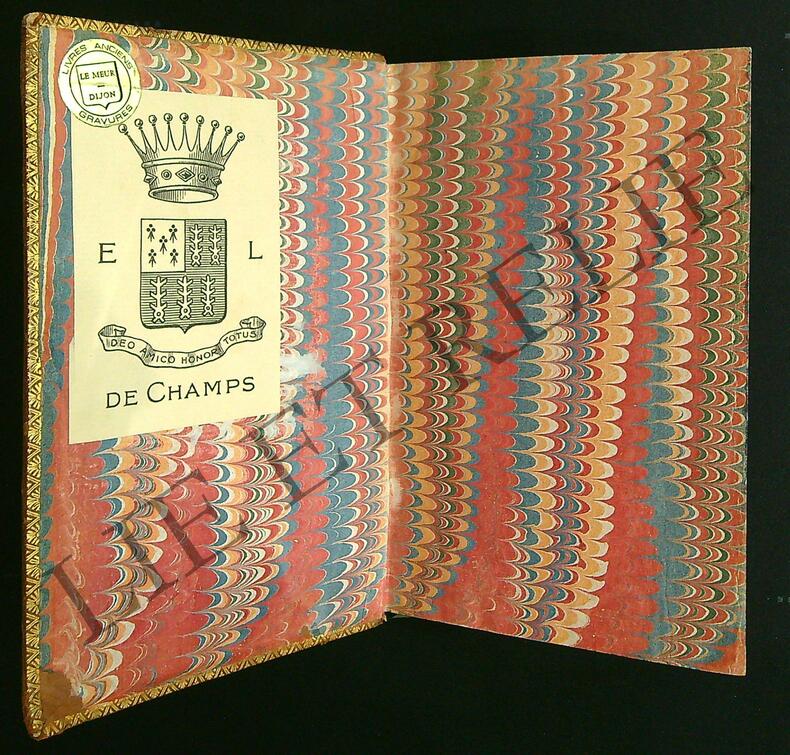
1757YRG-192Édition Originale - In-8, plein veau blond de l'époque. Dos à cinq nerfs, caisson de titre, toutes tranches marbrées, plats ornés de trois liserés dorés, roulettes dorées sur les coupes. Ex-libris armorié gravé par le Meur Dijon, Bandeaux, lettrines gravées sur bois, 396 pages plus privilège - Très frais.
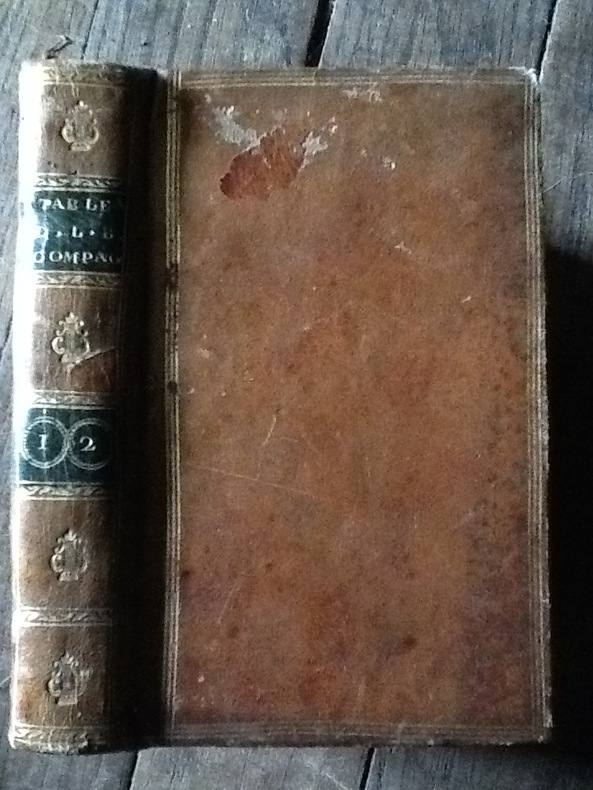
1787CCC0020d102. Reliure plein cuir de l'epoque. 2 tomes en 1 volume. Couverture rigide. État : Très bon. In-12 9 X 14.5 cm. Tom1: 216 pages edition Paris année de 1787 et Tome 2: 191 pages edition Paris année de 1788. Tableaux de la bonne compagnie . traits caracteristiques, anecdotes secretes, politiques, morales et litteraires recueillies dans les societes de bon ton pendant les années 1786 et 1787. Photos possibles.
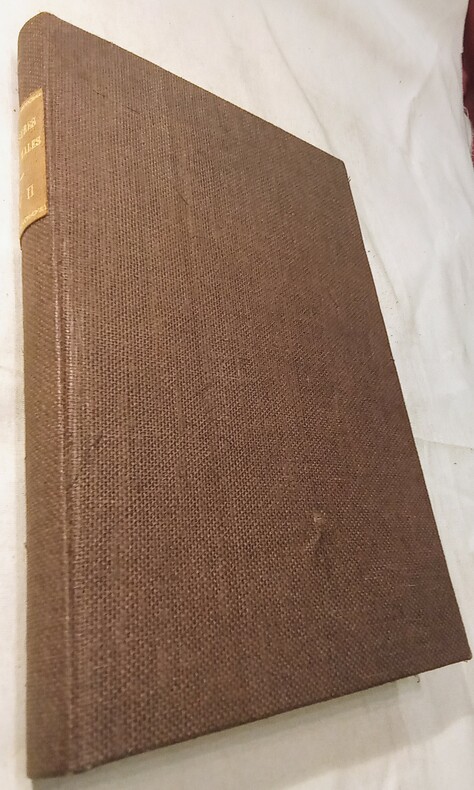
1793WOC-1630Edition Originale. A Paris, De L'Imprimerie Nationale Exécutive du Louvre, An IIè de la République une & indivisible (1793). In-8 reliure moderne pleine toile écrue, titre au dos doré. XIV,148pp.
173325877ROMA: Antonii de Rubeis 1733. Gran 8º.- Media piel de época lomera con nervios y tejueo.- 12 hojas.- 276 páginas.- 1 láminas frontis grabada. Es solo el tomo I la obra completa consta de dos volúmenes. Palau 242821 Antonii de Rubeis unknown
1789936581789 Chez Jean-Marie Bruyset, Lyon, 1789, 423 p., pleine reliure, environ 14x8cm, coins émoussés, dos insolé, de petits manques de cuir sur les plats, intérieur propre.
17089523Paris, Jacques Estienne, 1708 ; in-12 ; plein veau fauve marbré, dos à nerfs décoré et doré, tranches marbrées (reliure de l'époque) ; (4), 493, (5) "nom des peintres les plus connus", (14) pp. de table des matières et Privilège ; titre-frontispice gravé symbolisant l'alliance de l'Art et de la Nature, 2 planches gravées hors-texte dont une signée De Rochefort.
176732270Paris Chez Vente 1767 in-12° 316-81 pp, avec le Catalogue Raisonné de Porcelaines de qualités supérieures, tant ancienne, première sorte, qu'ancien Japon et la Chine : d'effets précieux d'anciens lacqs, riches meubles de Boule , & bijoux , faisant partie du Cabinet de feu de M. de Julienne (...) Par C.F. Julliot , marchand au coin rue S. Honoré, au coi de celle du four, au curieux des Indes . Il manque Le Frontispice - Des côtes Manuscrites marquant peut être des prix ? des estimations ? - Carte de visite d'un expert parisien du XX ème siècle jointe - Plein veau restauré d'époque
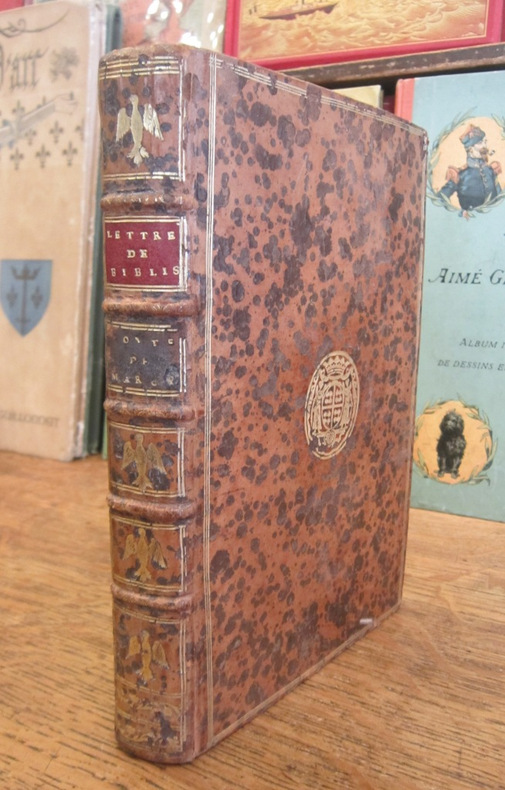
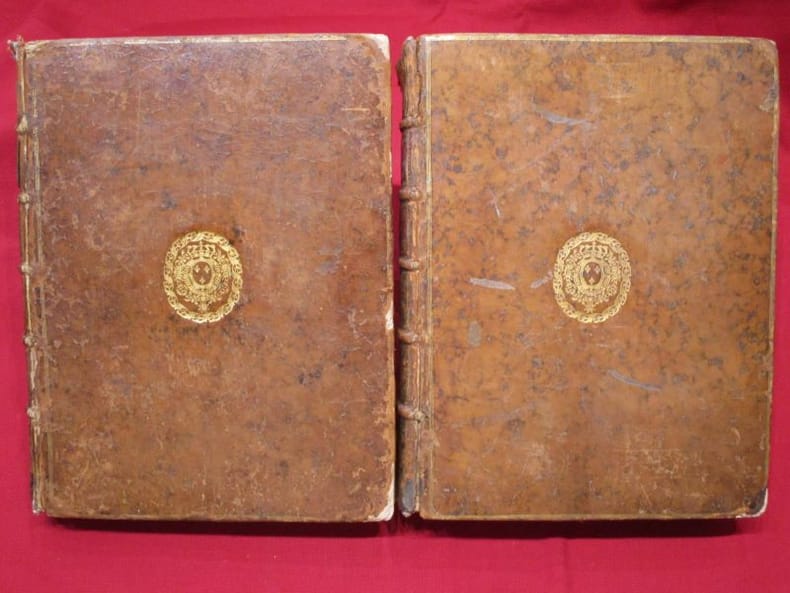
1752115036imprimerie royale 1752 2 in-4 A Paris, De l'imprimerie royale, 1752-1754, 2 volumes in-4 de 215x285 mm environ, XV, 203 - VII, 333 pages, contenant 2 vignettes de titre dont une de Cochin et 3 bandeaux de N. Cochin. Pleine reliure marbrée d'époque aux armes de Louis XV, dos à cinq nerfs portant titres dorés sur pièces de cuir bordeaux, caissons ornés de fers royaux, plats encadrés de triple filet doré, fer central aux armes royales (armoiries dans un écu ovale ceint des colliers de Saint-Michel et du Saint-Esprit), roulette dorée sur les coupes, tranches mouchetées rouges, gardes de papier marbré à la coquille. Exemplaires solides mais reliures abimées (coiffes manquantes, tranchefiles apparentes et l'une d'elle abimée, mors fendus, coins dénudés, griffures sur les plats), ex libris du médecin états-unien Jacob Solis Cohen collé sur les contreplats, des cernes sur les gardes volantes, rares rousseurs sinon intérieur frais.
1708PHO-2180Amsterdam, aux dépens des Frères Châtelain, 1708. In-folio. [6] ff. n.ch., 90 pp. ; frontispice gravé par Sluyter d’après Romeyn de Hooghe ; planches gravées double page, tableaux chronologiques et chronologies généalogiques, tous présents et conformes à la table. Manque au dos, frottements, mouillure en marge, manque en marge planche 7.