190 résultats
Incisione tratta dalla celebre raccolta Icones principum, virorum, doctorum, pictorum, chalcographorum, di Anton van Dyck, edita per la prima volta ad Anversa verso il 1640. Opera celebre ed importante, vero monumento dell’arte incisoria fiamminga del sec. XVIII, contiene le biografie ed i ritratti degli uomini illustri che Van Dyck aveva conosciuto e con i quali aveva avuto importanti rapporti. L’artista ne eseguì le effigi in numerosi dipinti e disegni che poi decise di pubblicare, affidandone la trasposizione calcografica ai migliori incisori del suo tempo, come Bolswert, Pontius, Vorsterman, de Jode, Hollar, molti dei quali aveva avuto come condiscepoli nell’atelier di Rubens. "Sir Anthony Van Dyck stands out as the solitary great etcher of the school. Portrait etching had scarcely had an existence before his time, and in his work it suddenly appears at the highest point ever reached in the art" (Hind, p. 165). "The plan of this publication took shape after Van Dyck returned from Italy (1626) and before he went to England (1632). He made careful preparatory drawings in chalk and brush for the publication. He directed and revised the work of the engravers, the best of the Rubens circle; he collaborated with his etching needle in some of the plates and himself etched the most beautiful set, mainly portraits of artists. One of the most brilliant in human characterization is the portrait of Peter Brueghel the Younger, son of the great Peasant Brueghel. It is remarkable that the etching appeared in this sketchy form in the book, proving that the master regarded it as finished. All interest is focussed on the wonderful had. The first edition was published in Antwerp in 1635-1636. Yet it was not complete, and the title-page did not appear before the Gillis Hendricx edition of 1645, engraved by Jacob Neels" (Benesch, Artistic and Intellectual Trends, p. 32.) Hofer, Baroque Book Illustrations 132. Acquaforte con ritocchi al bulino, stampata su carta vergata coeva, filigrana del “giullare”, con margini, in ottimo stato di conservazione. Etching and engraving, circa 1645, signed on plate at lower edge. A fine impression, printed on contemporary laid paper, with margins, very good condition. From the Icones principum, virorum, doctorum, pictorum, chalcographorum by Anton van Dyck, printed for the first time in Antwerp, 1645. A famous and important work, a real monument of the Flemish engraving art of the XVIII century, containing the biographies and portraits of the famous artists Van Dyck had met and with whom he had worked. Following the success of his portrait paintings and in the tradition of Italian and Flemish portrait series, Van Dyck decided to organise a print publication containing portraits of the most prominent men during his lifetime, divided into three categories: princes, politicians and soldiers (16), statesmen and scholars (12), artists and art connoisseurs (52). The initial idea could have been that Van Dyck would etch the faces (a process possibly learnt from Vorsterman) while others would finish the plates in engraving. Designs were needed for the plates and several drawings and oil sketches (grisailles, sometimes in different versions) have survived. Van Dyck only etched 17 plates himself, while he commissioned others to complete the set, overseen by Lucas Vorsterman I (especially after Van Dyck settled in England in the Spring of 1632). Although this project was started by Van Dyck around 1630, he never saw it completed. The Antwerp publisher Maarten van den Enden may have been involved from the start as eighty early impressions bear Van den Enden's address. They are engraved by Paulus Pontius (30 plates), Lucas Vorsterman I (22), Pieter de Jode II (12), Schelte a Bolswert (7), Robert van Voerst (4), Willem Hondius (2), Willem Jacobsz Delff (1), Cornelis Galle (1), and Nicolaes Lauwers (1). It is known that Van den Enden was in debt to Gillis Hendricx around 1644, the Antwerp publisher who must have obtained Van den Enden's plates which he published in 1645 in the first edition of these plates (containing between 100 and 104 portrait plates). Hendricx continued to publish these plates until his death in 1677 when they were auctioned off by the St Luke guild (keeping the Iconography plates together). It is not clear who bought these plates but they re-appeared around 1720 when they were published by Hendrick and Cornelis Verdussen in Antwerp. "Sir Anthony Van Dyck stands out as the solitary great etcher of the school. Portrait etching had scarcely had an existence before his time, and in his work it suddenly appears at the highest point ever reached in the art" (Hind, p. 165). "The plan of this publication took shape after Van Dyck returned from Italy (1626) and before he went to England (1632). He made careful preparatory drawings in chalk and brush for the publication. He directed and revised the work of the engravers, the best of the Rubens circle; he collaborated with his etching needle in some of the plates and himself etched the most beautiful set, mainly portraits of artists. One of the most brilliant in human characterization is the portrait of Peter Brueghel the Younger, son of the great Peasant Brueghel. It is remarkable that the etching appeared in this sketchy form in the book, proving that the master regarded it as finished. All interest is focussed on the wonderful had. The first edition was published in Antwerp in 1635-1636. Yet it was not complete, and the title-page did not appear before the Gillis Hendricx edition of 1645, engraved by Jacob Neels" (Benesch, Artistic and Intellectual Trends, p. 32.) Hofer, Baroque Book Illustrations 132.
Incisione tratta dalla celebre raccolta Icones principum, virorum, doctorum, pictorum, chalcographorum, di Anton van Dyck, edita per la prima volta ad Anversa verso il 1640. Opera celebre ed importante, vero monumento dell’arte incisoria fiamminga del sec. XVIII, contiene le biografie ed i ritratti degli uomini illustri che Van Dyck aveva conosciuto e con i quali aveva avuto importanti rapporti. L’artista ne eseguì le effigi in numerosi dipinti e disegni che poi decise di pubblicare, affidandone la trasposizione calcografica ai migliori incisori del suo tempo, come Bolswert, Pontius, Vorsterman, de Jode, Hollar, molti dei quali aveva avuto come condiscepoli nell’atelier di Rubens. "Sir Anthony Van Dyck stands out as the solitary great etcher of the school. Portrait etching had scarcely had an existence before his time, and in his work it suddenly appears at the highest point ever reached in the art" (Hind, p. 165). "The plan of this publication took shape after Van Dyck returned from Italy (1626) and before he went to England (1632). He made careful preparatory drawings in chalk and brush for the publication. He directed and revised the work of the engravers, the best of the Rubens circle; he collaborated with his etching needle in some of the plates and himself etched the most beautiful set, mainly portraits of artists. One of the most brilliant in human characterization is the portrait of Peter Brueghel the Younger, son of the great Peasant Brueghel. It is remarkable that the etching appeared in this sketchy form in the book, proving that the master regarded it as finished. All interest is focussed on the wonderful had. The first edition was published in Antwerp in 1635-1636. Yet it was not complete, and the title-page did not appear before the Gillis Hendricx edition of 1645, engraved by Jacob Neels" (Benesch, Artistic and Intellectual Trends, p. 32.) Hofer, Baroque Book Illustrations 132. Acquaforte con ritocchi al bulino, stampata su carta vergata coeva, filigrana del “giullare”, con margini, in ottimo stato di conservazione. Etching and engraving, circa 1645, signed on plate at lower edge. A fine impression, printed on contemporary laid paper, with margins, very good condition. From the Icones principum, virorum, doctorum, pictorum, chalcographorum by Anton van Dyck, printed for the first time in Antwerp, 1645. A famous and important work, a real monument of the Flemish engraving art of the XVIII century, containing the biographies and portraits of the famous artists Van Dyck had met and with whom he had worked. Following the success of his portrait paintings and in the tradition of Italian and Flemish portrait series, Van Dyck decided to organise a print publication containing portraits of the most prominent men during his lifetime, divided into three categories: princes, politicians and soldiers (16), statesmen and scholars (12), artists and art connoisseurs (52). The initial idea could have been that Van Dyck would etch the faces (a process possibly learnt from Vorsterman) while others would finish the plates in engraving. Designs were needed for the plates and several drawings and oil sketches (grisailles, sometimes in different versions) have survived. Van Dyck only etched 17 plates himself, while he commissioned others to complete the set, overseen by Lucas Vorsterman I (especially after Van Dyck settled in England in the Spring of 1632). Although this project was started by Van Dyck around 1630, he never saw it completed. The Antwerp publisher Maarten van den Enden may have been involved from the start as eighty early impressions bear Van den Enden's address. They are engraved by Paulus Pontius (30 plates), Lucas Vorsterman I (22), Pieter de Jode II (12), Schelte a Bolswert (7), Robert van Voerst (4), Willem Hondius (2), Willem Jacobsz Delff (1), Cornelis Galle (1), and Nicolaes Lauwers (1). It is known that Van den Enden was in debt to Gillis Hendricx around 1644, the Antwerp publisher who must have obtained Van den Enden's plates which he published in 1645 in the first edition of these plates (containing between 100 and 104 portrait plates). Hendricx continued to publish these plates until his death in 1677 when they were auctioned off by the St Luke guild (keeping the Iconography plates together). It is not clear who bought these plates but they re-appeared around 1720 when they were published by Hendrick and Cornelis Verdussen in Antwerp.
17700218-B1770. Radierung, 1770, auf grau-grünlichem Bütten mit undeutl. Wasserzeichen. 24:18 cm. Provenienz: Sammlung Franz von Hagens, Dresden, Lugt. Suppl. 1052a. Literatur: Le Blanc 53; Perez 43, II (von V) mit den zwei Punkten nach dem Monogramm . - Vorzüglicher Abdruck mit ca. 1-1,5 cm breitem Rand um die Plattenkante. Linke untere Ecke etwas quetschfaltig.
200406611River Vale NJ: Cosmos Publishing 2004. USA Presumed 1st eidtion. There is a tiny errant pen mark to the top edge of pages no other markings otherwsie Fine in Fne dustjacket with a tiny piece of clear tape to the front panel. Dj is in mylar sleeve. Dark blue cloth xxviii 993pp index of titles. Colour frontis by Yannis Moralis. This unique bilingual anthology presents the achievements of Greek poetry in the 20th century encompassing 109 poets and 456 poems with the Greek original and the English translation on opposite pages. Included are the internationally recognized C.P. Cavafy the Nobel Prize winners George Seferis and Odysseus Elytis as well as all the major Greek poets of the 20th century. Many of the poems in the Greek original and many translations are published for the first time. 4.0 JM LVR 200/c4. 1st. Hardcover. Fine/Fine. 8vo - over 7¾" - 9¾". Cosmos Publishing Hardcover
191341439in Arabic: Beirut: The American Printing Press 1913. 8vo 18.5 cm 7.5" 920 295 pp. <br><br>The Van Dyck translation of the Bible into Arabic first appeared in 1865 and remained the standard version used by Arabs for a century. This edition from the American Printing Press is => an all-Arabic production with the only English appearing in it being a small-print line "Bible Third Font 282" on the title-page at "rear".<br>Â Â Â Â Cornelius Van Alen Van Dyck 181895 was born at Kinderhook NY and educated at Jefferson Medical College Philadelphia receiving his M.D. in 1839. The following year the American Board of Commissioners for Foreign Missions sent him to Lebanon as a medical missionary for the Dutch Reformed Church and he remained in the Middle East for the rest of his life with only an occasional trip to the U.S.<br>Â Â Â Â Van Dyck became fluent in Arabic wrote extensively in that language and taught medicine and other subjects: "He was professor of pathology and internal medicine in the medical school of the newly founded Syrian Protestant College which later became the American University of Beirut. He also taught astronomy in its literary section directed its observatory and meteorological station as well as the mission press and edited its weekly journal al-Nashran. He wrote Arabic textbooks on chemistry internal medicine physical diagnosis and astronomy publishing some of them at his own expense" Wikipedia.<br>Â Â Â Â WorldCat records at least three editions of the Arabic Bible from the American Printing Press in 1913 each with a different pagination. Publisher's brown cloth spine stamped in gilt with title in Arabic and with blind stamping to covers and spine; some chipping to cloth around spine and at edges. Printed on very thin paper occasionally showing a short tear or a crease but clean and untattered. A very good copy. The American Printing Press hardcover books
6288notice de Suzanne GERMAIN BAZIN,in 8 demi cuir foncé à 4 nerfs,titre,filets dorés,titre,188 pages 1 feuillet de table des matières,127 illustrations en hélio.Fernand Nathan 1950 collection Merveilles de l’Art
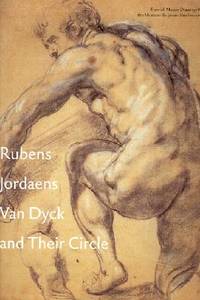
200105500Rotterdam: nai010 publishers/Museum Boijmans Van Beuningen 2001. NETH Presumed 1st edition. No markings Fine in Near Fine dust jacket with minor faults to dust jacket. Cloth 384pp colour and B&W reproductions of drawings. Among the extensive holdings of Old Master drawings owned by the Boijmans Van Beuningen Museum the significant collection of drawings by the great Antwerp masters Peter Paul Rubens Jacob Jordaens and Anthonie van Dyck stand out as absolute highlights. This generously illustrated publication examines 70 of their important drawings discussing not only the significance of these works but also their provenance attribution and dating. It also helps to put the work in context by considering the work of a variety of contemporaries on the 17th-century Flemish scene many of whom were influenced directly by the work of these masters as well as by including essays on a variety of topics of art and culture in Antwerp. A heavy book. 6.1 JM LVR 206/0. 1st. Hardcover. Fine/Near Fine. Folio - over 12" - 15" tall. nai010 publishers/Museum Boijmans Van Beuningen Hardcover
19910239481991 Mercatorfonds Hardcover Fine
Exhibition catalogue. 90 pages. Well illustrated, mostly in colour. 90 pages. Surface of back cover scratched and rubbed, less so front cover. Cover corners with small creases, wear to extremities.
2009Q-1555975194Graywolf Press 2009-03-03. Paperback. New. In shrink wrap. Looks like an interesting title! Graywolf Press paperback
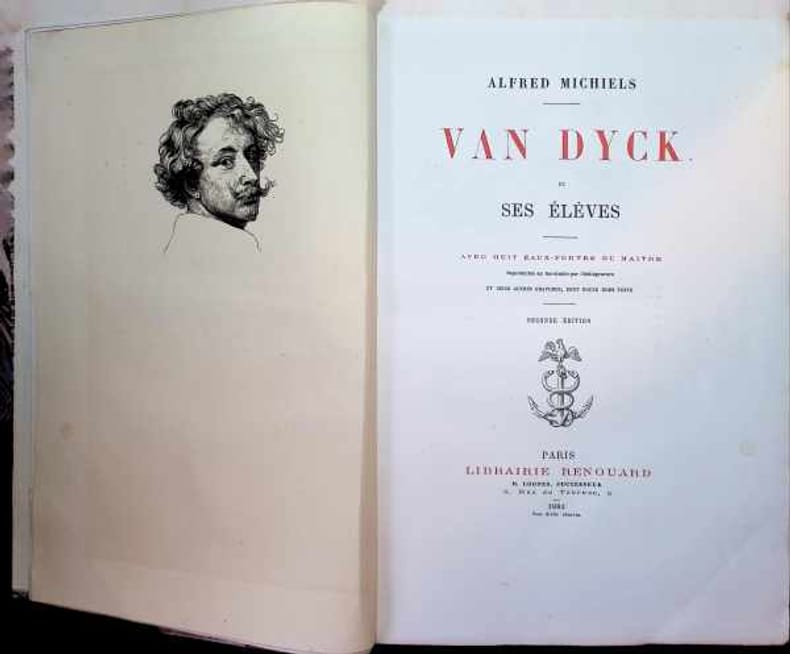
1882027361Paris 1882 Librairie Renouard Half-Leather (Hardcover)
199975209AB1999. London Royal Academy Publications and Antwerpen Open 1999. 24.5 cm x 29.5 cm. 360 pages. Original illustrated Softcover. Excellent condition with only very minor signs of external wear. Includes for example the following essays: Van Dyck's First Antwerp Period - Prologue to a Baroque life story Genoa and the Genoese at the Time of Van Dyck Van Dyck in Sicily and Images of Piety and Vanity. Appendix includes chronology. Illustrated throughout in colour and black & white. paperback
188278241882 Paris, chez A. Quantin, 1882. Ouvrage in-folio relié pleine toile de percaline beige, encadrements rouges sur les plats, 297 pages. Illustré de28 gravures hors-texte sous serpentes. ill in texteet nombreuses, eaux-fortes, hélogravuresavec un catalogue des oeuvres
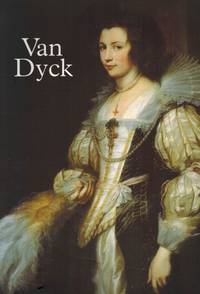
39589National Gallery of Art.Washington.1990.Gd.in-4,couverture souple illustrée en couleurs.Exhibition dates: 11 November.1990-24 February 1991.383 pages.Très nombreuses reproductions de tableaux,pleine page, en noir et en couleurs.En langue anglaise. TBE,malgré des soulignures au stylo au chapitre " Van Dyck's Painting Technique ".
In 4°, br. edit., 12 belle riproduzioni di opere del pittore.