Van Dyck, AnthonyBiblio.com
190 résultats
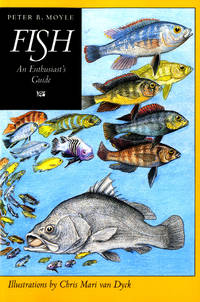
102161310X.Gpaperback. Good. Access codes and supplements are not guaranteed with used items. May be an ex-library book. paperback
1020252774.Ghardcover. Good. Access codes and supplements are not guaranteed with used items. May be an ex-library book. hardcover
3734528143.Ghardcover. Good. Access codes and supplements are not guaranteed with used items. May be an ex-library book. hardcover
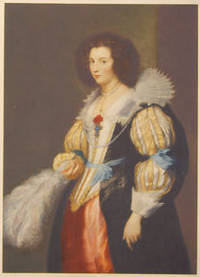
05-0375Hel. Braun & Cie. 19th cent. Photogravure. 33 x 46.5 cm. Hel. Braun & Cie., 19th cent. unknown
2009x-0521747597Cambridge University Press 2009. Paperback. New. 1st edition. 528 pages. 9.69x7.48x1.02 inches. Cambridge University Press paperback
2009x-0521766974Cambridge University Press 2009. Hardcover. New. 1st edition. 513 pages. 9.50x7.50x1.00 inches. Cambridge University Press hardcover
2009006533Cambridge Univ Press 2009. Color photos illustrations graphs maps bibliography index 513 pages. Small remainder mark. Hard Cover. Very Good. Cambridge Univ Press Hardcover
57315, Algemeen Rijksarchief 2001, 2001 Hardcover, 238 pagina's, Nederlands, 345 x 250 mm, Nieuw, met illustraties in kleur en z/w,.
19631810797PN. New. 1963. Soft Cover. Date is original print. This is a reprint edition. . PN paperback
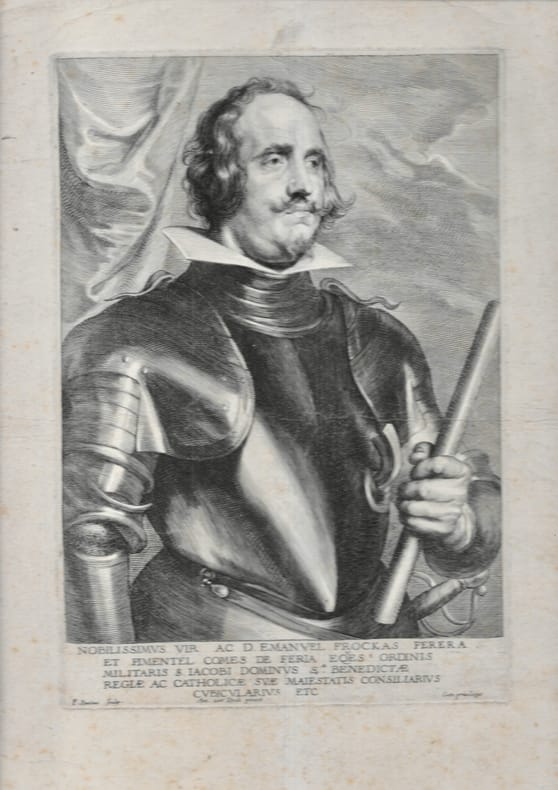
23507P. Soutman effigiavit et Excud., J. Louys Sculpt. Van Sompel. Sans date (XVII ème siècle). Quatre gravure à l'eau-forte, 405 x 280 mm, bon état (une déchirure réparée dans le cartouche du portrait de Spinola, sans marge pour Ferdinand II).
5486Très beau portrait d'après Van Dyck. Légende : Nobilissimus vir ac D. Emanuel Frockas Perera et Pimentel comes de Feria eques ordinis militaris S. Jacobi dominus Sæ Benedictæ regiæ ac catholicæ suæ majestatis consiliarus cubicularius etc 243 x 166
7442Antwerpen Open vzw, Antwerpen, 1999. In-8, broché 56 pp. Un joyau - Joost van den Vondel (1587-1679) - Marie Mercier-Nizet (1859-1922): Sosie - Abraham Cowley (1616-1667) : On the Death of Sir Anthony Vandike, The famous Painter - Joris Capenberghs : Antoine van Dyck et Christopher Brown. Portrait d'une ...
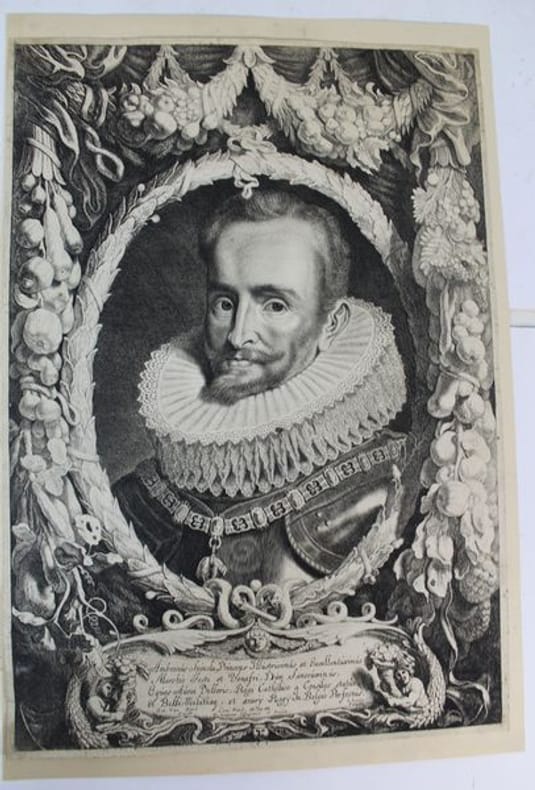
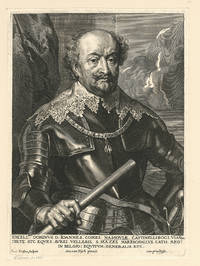
0563-25Antwerpen um 1660. Radierung. 24 7 x 17 5 cm Plattengr. Auf Trägerpapier montiert. Mit ca. 05 cm breitem Rand. Radierung von Paulus Pontius 1603-1658 nach einem Gemnälde von Anthonis van Dyck 1599-1641. Dargestellt ist Johann VIII. von Nassau-Siegen 1583-1638. Zustand mit folgender Signatur am unteren Plattenrand: "Paul. Pontius sculpsit Ant. van Dyck pinxit cum privilegio". Das Gemälde von van Dyck befindet sich heute in der Sammlung Liechtenstein ein weiteres Gemälde der Werkstatt van Dycks befindet sich in der Staatsgalerie Neuburg/Donau. [Antwerpen, um 1660]. unknown
0879755849.Ghardcover. Good. Access codes and supplements are not guaranteed with used items. May be an ex-library book. hardcover
2010Q-0982614004J. M. Van Dyck 2010-04-01. Paperback. New. In shrink wrap. Looks like an interesting title! J. M. Van Dyck paperback
1995x-0520201655Univ of California Pr 1995. Paperback. New. reprint edition. 272 pages. 9.25x6.25x0.75 inches. Univ of California Pr paperback
1993Q-0520079779Univ of California Pr 1993-01-01. Hardcover. New. In shrink wrap. Looks like an interesting title! Univ of California Pr hardcover
1995Q-0520201655University of California Press 1995-03-01. Paperback. New. In shrink wrap. Looks like an interesting title! University of California Press paperback
55323Waanders Publishers. New. Paperback. 9040087571 . FREE UPGRADE to Courier/Priority Shipping Upon Request IN STOCK AND IMMEDIATELY AVAILABLE FOR SHIPMENT - Flawless copy brand new pristine never opened -- Text in English. 48 pages; 50 colour photographs -- with a bonus offer-- . Waanders Publishers paperback
16009, Mercatorfonds, Bruxelles, 2007, Hardcover in cloth, with dusjacket, Number of pages: 208pp, Dimensions: 24 x 32,5 cm, with 150 pictures in full colour. as new !! ISBN 9789061537151.
191341439in Arabic: Beirut: The American Printing Press 1913. 8vo 18.5 cm 7.5" 920 295 pp. <br><br>The Van Dyck translation of the Bible into Arabic first appeared in 1865 and remained the standard version used by Arabs for a century. This edition from the American Printing Press is => an all-Arabic production with the only English appearing in it being a small-print line "Bible Third Font 282" on the title-page at "rear".<br>Â Â Â Â Cornelius Van Alen Van Dyck 181895 was born at Kinderhook NY and educated at Jefferson Medical College Philadelphia receiving his M.D. in 1839. The following year the American Board of Commissioners for Foreign Missions sent him to Lebanon as a medical missionary for the Dutch Reformed Church and he remained in the Middle East for the rest of his life with only an occasional trip to the U.S.<br>Â Â Â Â Van Dyck became fluent in Arabic wrote extensively in that language and taught medicine and other subjects: "He was professor of pathology and internal medicine in the medical school of the newly founded Syrian Protestant College which later became the American University of Beirut. He also taught astronomy in its literary section directed its observatory and meteorological station as well as the mission press and edited its weekly journal al-Nashran. He wrote Arabic textbooks on chemistry internal medicine physical diagnosis and astronomy publishing some of them at his own expense" Wikipedia.<br>Â Â Â Â WorldCat records at least three editions of the Arabic Bible from the American Printing Press in 1913 each with a different pagination. Publisher's brown cloth spine stamped in gilt with title in Arabic and with blind stamping to covers and spine; some chipping to cloth around spine and at edges. Printed on very thin paper occasionally showing a short tear or a crease but clean and untattered. A very good copy. The American Printing Press hardcover books
Incisione tratta dalla celebre raccolta Icones principum, virorum, doctorum, pictorum, chalcographorum, di Anton van Dyck, edita per la prima volta ad Anversa verso il 1640. Opera celebre ed importante, vero monumento dell’arte incisoria fiamminga del sec. XVIII, contiene le biografie ed i ritratti degli uomini illustri che Van Dyck aveva conosciuto e con i quali aveva avuto importanti rapporti. L’artista ne eseguì le effigi in numerosi dipinti e disegni che poi decise di pubblicare, affidandone la trasposizione calcografica ai migliori incisori del suo tempo, come Bolswert, Pontius, Vorsterman, de Jode, Hollar, molti dei quali aveva avuto come condiscepoli nell’atelier di Rubens. "Sir Anthony Van Dyck stands out as the solitary great etcher of the school. Portrait etching had scarcely had an existence before his time, and in his work it suddenly appears at the highest point ever reached in the art" (Hind, p. 165). "The plan of this publication took shape after Van Dyck returned from Italy (1626) and before he went to England (1632). He made careful preparatory drawings in chalk and brush for the publication. He directed and revised the work of the engravers, the best of the Rubens circle; he collaborated with his etching needle in some of the plates and himself etched the most beautiful set, mainly portraits of artists. One of the most brilliant in human characterization is the portrait of Peter Brueghel the Younger, son of the great Peasant Brueghel. It is remarkable that the etching appeared in this sketchy form in the book, proving that the master regarded it as finished. All interest is focussed on the wonderful had. The first edition was published in Antwerp in 1635-1636. Yet it was not complete, and the title-page did not appear before the Gillis Hendricx edition of 1645, engraved by Jacob Neels" (Benesch, Artistic and Intellectual Trends, p. 32.) Hofer, Baroque Book Illustrations 132. Acquaforte con ritocchi al bulino, stampata su carta vergata coeva, filigrana del “giullare”, con margini, in ottimo stato di conservazione. Etching and engraving, circa 1645, signed on plate at lower edge. A fine impression, printed on contemporary laid paper, with margins, very good condition. From Icones principum, virorum, doctorum, pictorum, chalcographorum by Anton van Dyck, printed for the first time in Antwerp, 1645. A famous and important work, a real monument of the Flemish engraving art of the XVIII century, containing the biographies and portraits of the famous artists Van Dyck had met and with whom he had worked. Following the success of his portrait paintings and in the tradition of Italian and Flemish portrait series, Van Dyck decided to organise a print publication containing portraits of the most prominent men during his lifetime, divided into three categories: princes, politicians and soldiers (16), statesmen and scholars (12), artists and art connoisseurs (52). The initial idea could have been that Van Dyck would etch the faces (a process possibly learnt from Vorsterman) while others would finish the plates in engraving. Designs were needed for the plates and several drawings and oil sketches (grisailles, sometimes in different versions) have survived. Van Dyck only etched 17 plates himself, while he commissioned others to complete the set, overseen by Lucas Vorsterman I (especially after Van Dyck settled in England in the Spring of 1632). Although this project was started by Van Dyck around 1630, he never saw it completed. The Antwerp publisher Maarten van den Enden may have been involved from the start as eighty early impressions bear Van den Enden's address. They are engraved by Paulus Pontius (30 plates), Lucas Vorsterman I (22), Pieter de Jode II (12), Schelte a Bolswert (7), Robert van Voerst (4), Willem Hondius (2), Willem Jacobsz Delff (1), Cornelis Galle (1), and Nicolaes Lauwers (1). It is known that Van den Enden was in debt to Gillis Hendricx around 1644, the Antwerp publisher who must have obtained Van den Enden's plates which he published in 1645 in the first edition of these plates (containing between 100 and 104 portrait plates). Hendricx continued to publish these plates until his death in 1677 when they were auctioned off by the St Luke guild (keeping the Iconography plates together). It is not clear who bought these plates but they re-appeared around 1720 when they were published by Hendrick and Cornelis Verdussen in Antwerp.
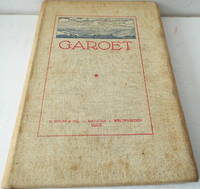
1922009434Batavia: G. Kolff & Co. First and only edition. Dutch language travel guide to Garut and surroundings. Hard cover in limp pictorial cloth. Published Batavia: G. Kolff & Co. 1922. Large 8vo. 6 3/4" x 9 3/8" 267pp. plus full page ads at front and rear publisher's catalog illustrated with tipped-in color frontis one additional color plate numerous b/w photos translucent fold out plans six partly colored folding maps in rear pocket. Some darkening to areas of the cloth spine lettering dull previous owner bookplate on pastedown. Very good plus unworn pages clean and bright. . Very Good Plus. Hard. 1st. 1922. G. Kolff & Co. unknown
Incisione tratta dalla celebre raccolta Icones principum, virorum, doctorum, pictorum, chalcographorum, di Anton van Dyck, edita per la prima volta ad Anversa verso il 1640. Opera celebre ed importante, vero monumento dell’arte incisoria fiamminga del sec. XVIII, contiene le biografie ed i ritratti degli uomini illustri che Van Dyck aveva conosciuto e con i quali aveva avuto importanti rapporti. L’artista ne eseguì le effigi in numerosi dipinti e disegni che poi decise di pubblicare, affidandone la trasposizione calcografica ai migliori incisori del suo tempo, come Bolswert, Pontius, Vorsterman, de Jode, Hollar, molti dei quali aveva avuto come condiscepoli nell’atelier di Rubens. "Sir Anthony Van Dyck stands out as the solitary great etcher of the school. Portrait etching had scarcely had an existence before his time, and in his work it suddenly appears at the highest point ever reached in the art" (Hind, p. 165). "The plan of this publication took shape after Van Dyck returned from Italy (1626) and before he went to England (1632). He made careful preparatory drawings in chalk and brush for the publication. He directed and revised the work of the engravers, the best of the Rubens circle; he collaborated with his etching needle in some of the plates and himself etched the most beautiful set, mainly portraits of artists. One of the most brilliant in human characterization is the portrait of Peter Brueghel the Younger, son of the great Peasant Brueghel. It is remarkable that the etching appeared in this sketchy form in the book, proving that the master regarded it as finished. All interest is focussed on the wonderful had. The first edition was published in Antwerp in 1635-1636. Yet it was not complete, and the title-page did not appear before the Gillis Hendricx edition of 1645, engraved by Jacob Neels" (Benesch, Artistic and Intellectual Trends, p. 32.) Hofer, Baroque Book Illustrations 132. Acquaforte con ritocchi al bulino, stampata su carta vergata coeva, filigrana del “giullare”, con margini, in ottimo stato di conservazione. Etching and engraving, circa 1645, signed on plate at lower edge. A fine impression, printed on contemporary laid paper, with margins, very good condition. From Icones principum, virorum, doctorum, pictorum, chalcographorum by Anton van Dyck, printed for the first time in Antwerp, 1645. A famous and important work, a real monument of the Flemish engraving art of the XVIII century, containing the biographies and portraits of the famous artists Van Dyck had met and with whom he had worked. Following the success of his portrait paintings and in the tradition of Italian and Flemish portrait series, Van Dyck decided to organise a print publication containing portraits of the most prominent men during his lifetime, divided into three categories: princes, politicians and soldiers (16), statesmen and scholars (12), artists and art connoisseurs (52). The initial idea could have been that Van Dyck would etch the faces (a process possibly learnt from Vorsterman) while others would finish the plates in engraving. Designs were needed for the plates and several drawings and oil sketches (grisailles, sometimes in different versions) have survived. Van Dyck only etched 17 plates himself, while he commissioned others to complete the set, overseen by Lucas Vorsterman I (especially after Van Dyck settled in England in the Spring of 1632). Although this project was started by Van Dyck around 1630, he never saw it completed. The Antwerp publisher Maarten van den Enden may have been involved from the start as eighty early impressions bear Van den Enden's address. They are engraved by Paulus Pontius (30 plates), Lucas Vorsterman I (22), Pieter de Jode II (12), Schelte a Bolswert (7), Robert van Voerst (4), Willem Hondius (2), Willem Jacobsz Delff (1), Cornelis Galle (1), and Nicolaes Lauwers (1). It is known that Van den Enden was in debt to Gillis Hendricx around 1644, the Antwerp publisher who must have obtained Van den Enden's plates which he published in 1645 in the first edition of these plates (containing between 100 and 104 portrait plates). Hendricx continued to publish these plates until his death in 1677 when they were auctioned off by the St Luke guild (keeping the Iconography plates together). It is not clear who bought these plates but they re-appeared around 1720 when they were published by Hendrick and Cornelis Verdussen in Antwerp.
SLIVCN-9781628080636NOVA SCIENCE PUBLISHERS INC (7/2013)