713 résultats
1848307341848, A. BARBIER, 5 volumes in-4 mi-cuir prune et marron de 500 pages environ chacun, titrage et tomaison dorés sur dos à 4 nerfs, nombreuses gravures noir et couleurs, Histoire de l'armée et de tous les régiments depuis les premiers temps de la monarchie française jusqu'à nos jours | Etat : Bon état général, usure sur cuir, quelques frottements sur les coins notamment, quelques rousseurs et traces d'humidité sans conséquences, (Ref.: J10333)
18830035315Paris: Librairie Ch. Delagrave 1883. First Edition. Hardcover Hardcover. Very Good Condition. 27cm x 18cm. xv 272 3 pages; 75 plates 73 chromolithographic 2 volumes. Rebound in plain quarter cloth. Text is in French. Natural History of Edible and Poisonous Mushrooms by Guilleaume Sicard. Rebound in plain cloth with the plates in a second volume. VOLBRACHT 1981. Text is in French. Category: Natural History & Resources; Foreign Language::French; French Language; Mushrooms & Mycology. Inventory No: 0035315. BZDB407 Natural History & Resources; Foreign Language::French; French Language; Mushrooms & Mycology. Unbranded G. Sicard Histoire Naturelle des Champignons Comestibles et Veneneux Librairie Ch. Delagrave hardcover
1985WRCLIT73951Paris & Nice: Published by the Author and Artist 1985. Folio 15.75 x 11.5"; 39 x 29 cm. Loose bifolia laid into hand calligraphed wrappers. Wrappers faintly dusty but about fine. First edition thus. Copy #8 of ten numbered copies utilizing serigraphed text sheets from INTEMPÉRIES 1985 reconceived and heavily worked over by the artist in acrylic and black ink with ten illustrations some double-spread at least five of them signed with initials by the artist with a special short colophon in manuscript signed by the author and artist in one of the images and with a second more detailed colophon in manuscript reproduced via serigraph. Published by the Author and Artist unknown books
197891971Jean-Michel Place | Paris 1978 | 18.8 x 25.2 cm | En feuilles
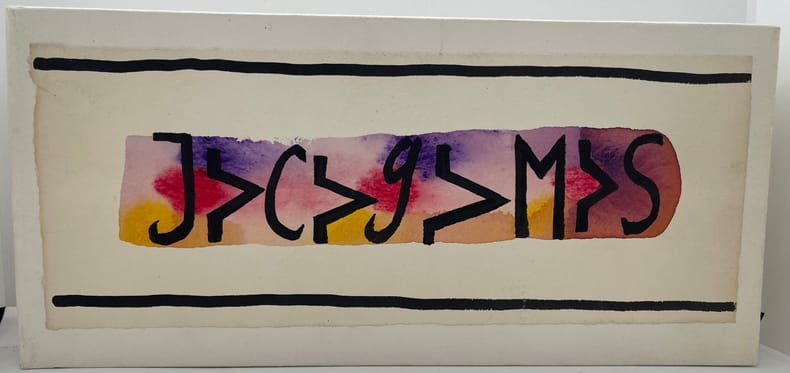
016186Michel Sicard ; Jean Cortot, Gamarth. S.l., s.n., 1992. 12.5*32cm, 26f collés les uns aux autres. Ouvrage tirée à 6 exemplaires (n°5) sur un papier type Arches ou Rives. Le texte de Sicard a été calligraphié en noir par Cortot sur un fond aquarellé majoritairement violet. Chaque exemplaire est donc similaire mais différent. « À partir de 1965, les livres de Jean Cortot sont souvent conçus en collaboration avec un écrivain, plus rarement avec un autre artiste, la dualité du peintre-poète permettant cet échange : ils sont le lieu de rencontre de deux expressions. Les années 1980 à 2000 sont celles où sa production de livres d'artiste est la plus importante : elle s'élève à plus de deux cents sur la période. Le peintre refuse de se qualifier d'illustrateur, terme qui implique, dans les représentations courantes, une subordination de l'image au récit ; dans sa création, la première est loin d'être systématiquement postérieure au second. Manuscrit ou imprimé, le livre est prétexte à des expérimentations formelles, dans son architecture comme dans les matières employées. Certaines initiatives auxquelles il prend part bouleversent les codes traditionnels de la bibliophilie. Dans la plupart de ses livres d'artiste, l'illustration se confond avec les arabesques de sa graphie » (H. Longequeue, L'éloquence du pinceau. Écritures peintes et livres d'artiste dans l'oeuvre de Jean Cortot. Thèse de doctorat à l'Ecole des Chartes, 2013). Conservé dans sa boite, portant simplement le titre dans une composition originale similaire à l'ouvrage. Rare.
198711717Paris: Privately Printed 1987. First edition. Paperback. Fine. Artist book with original text by Butor reproduced via seriagraphy from his manuscript with original drawings and embellishments in color in ink and acrylic by Sicard. Loose folded sheets in hand-painted paper cover in a slipcase designed by Sicard. One of 15 deluxe copies with a suite of 5 drawings in acrylic initialed by Sicard. The book itself is numbered and signed by author and artist. <br/><br/> Privately Printed paperback books
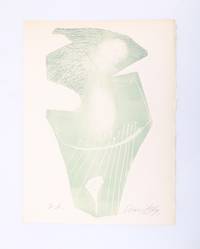
197891971Paris: Jean-Michel Place 1978. Fine. Jean-Michel Place Paris 1978 18.8 x 25.2 cm En feuilles First edition of this work devoted to the oeuvre of Ania Staritsky.Illustrated with an original work by Ania Staritsky on the cover.A rare and very attractive copy spine plain and unlettered boards slightly and marginally sunned without seriousness.Copy enriched with an artists proof engraving justified and signed by Ania Staritsky in pencil Jean-Michel Place hardcover
101985Paris, Le Clere, an VIII [1800], in-8, X-LX-581-[2] pp, 6 pl. dépl, Demi-basane à petits coins de l'époque, dos lisse et fleuronné, plats de papier à la cuve rose, tranches jonquille, Six planches dépliantes représentant huit tableaux qui peuvent servir à l'instruction d'un sourd-muet; l'un d'eux représente l'alphabet de dactylologie. Sicard (1742-1822) devint directeur de l'école de sourds-muets de Bordeaux en 1786 et, en 1789, à la mort de l'abbé de l'Épée, il lui succéda à Paris. Ce cours, composé de 25 leçons, est précédé d'un long discours préliminaire qui traite tout d'abord de la nécessité d'instruire les sourds-muets, puis de l'origine de cet enseignement et notamment de l'abbé de L'Epée. Pour convaincre du bien-fondé de cette instruction, Sicard se réfère à l'Essai sur les facultés de l'âme de Charles Bonnet et au Traité des sensations de Condillac, comparant le sourd-muet de naissance à une statue "dont il faut ouvrir, l'un après l'autre, et diriger tous les sens, et suppléer à celui dont il est malheureusement privé". Cet ouvrage participe ainsi de l'histoire des progrès de l'entendement humain. Ex-libris armorié gravé du Baron de Nervo. Bel exemplaire, très bon état du texte et des planches. Blake 417. Wellcome V, 108. Couverture rigide
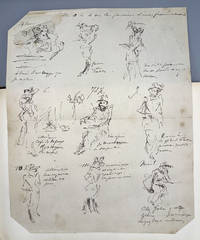
1890zz12<p><strong>SICARD François</strong></p><p><strong> Drawing Album</strong></p><p><strong> Paris circa 1890. </strong>Oblong 8vo full violet calf. Set of gilt fillets framing the covers with gilt scrollwork decoration spine with raised bands adorned with gilt floral motifs and fillets gilt edges blunted corners weakened hinge rubbing & small losses. Dimensions: 19.2 x 24.8 cm.</p><p><strong>Album containing 30 drawings sketches & notes by the artist François Sicard 1862-1934 who dedicated part of his youth to newspaper caricature.</strong> Many of his works are today in museums: Orsay Musée des Beaux-Arts de Lyon Musée d'Art et d'Histoire de Genève. <strong>Lot of the drawings in our album were designed for the famous newspaper <em>Le Charivari</em> </strong>with several mentions at the top of the sketches. Various mentions suggest that some drawings were accepted or rejected by the newspaper which boasted of <em>"publishing a new drawing every day".</em> <strong>A sheet which we count as 1 drawing is dedicated to "A Day in the Life of a Society Woman" in 12 vignettes.</strong> <strong>This format corresponds to page 3 of <em>Le Charivari</em> of that time</strong> where there was regularly a series of 12 or 16 humorous sketches with commentary <strong>depicting picturesque scenes of Parisian life</strong>. At the end of the album 2 larger format drawings bearing the stamp <em>"Atelier François Sicard"</em> are in a different style: they depict full-length women in the manner of Goya. <br /><strong>An important testimony on <em>Le Charivari</em> & the work of a caricaturist in the 19th century.</strong></p> Manuscript, Drawings
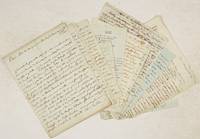
1783599191783. Paris 17.V.1783 bis 24.I.1818. 30 Seiten 4°. Teilweise mit Siegelspur und Adresse. Gedruckter Briefkopf. Teilweises leicht fleckig ganz vereinzelt Randläsuren der letzte mit minimalen Buchstabenverlust. Roch-Ambroise Cucurron Sicard gen. Abbé Sicard 1742-1822 französischer Geistlicher und Taubstummenlehrer. - Biographisch aufschlussreiche Briefreihe an den Kaufmann und Gelehrten Jean Péry l'ainé 1751-1825 seinen Kollegen in der ehrenamtlichen Verwaltung des Museums von Bordeaux. In den ersten drei Briefen vom 30. April bis zum 9. August 1785 schildert Sicard seine Eindrücke während eines mehrwöchigen Studienaufenthalts in Paris wo ihn gleich zu Anfang die Offenheit überrascht hatte in der literarische Fragen diskutiert wurden. Er selbst sei aufs Freundlichste empfangen worden "au musée de cette Capitalle . le viceprésident m'obligea à prendre séance dans l'assemblée . je fus surpris de voir qu'on opine sur les ouvrages des auteurs la leur présence qu'on ne dissimule aucune de leurs fautes et que l'auteur garde le plus profond silence sans chercher à la justifier aucune"; eine Frage die zwischen dem Präsidenten Cailhava und dem Vizepräsidenten Legendre kontrovers diskutiert werde sei die ob die Musik für das Museum ein Gegenstand der Beschäftigung sein solle oder nicht. Einen ganz besonderen Eindruck macht auf ihn der wiederholt erwähnte Taubstummenlehrer Abbé de l'Épée sein großes Vorbild: "Quel spectacle pour les ames sensibles que celui de ce philosophe au milieu de plus de soixante sourds-muets qui lui doivent leur esprit leur ame et les plus douces jouisances de la vie ! Ils sembloient exclus pour jamais de la société il leur en procure les plus grands avantages ." Im nächsten Jahr wird Sicard Direktor der Taubstummenschule in Bordeaux nach dem Tod des Abbé l'Épée wird er 1790 dessen Nachfolger und nimmt - der Schreckensherrschaft nur knapp entkommen - als "Directeur de l'Instution Nationale des Sourds-Muets de Naissance" gedruckter Briefkopf a.d.J. 1801 seine Berichte vom kulturellen Leben in der Hauptstadt - unter Nennung zahlreicher Akteure - wieder auf. 1801 erwähnt er seine "Grammaire"; 1802 schreibt er abfällig über "certains de mes collegues à l'institut qui composent pour le théatre" und das trotz seiner Freundschaft mit Dramatikern wie Legouvé d. Ä. und Collin d'Harleville; 1811 beklagt er den schlimmen Zustand seiner Finanzen verursacht durch "des dettes que des Brigands et mon extrême et deplorable confiance en eux me firent contracter"; im letzten Brief von 1818 rühmt er noch einmal Paris - "Notre ville a pris depuis la restauration une face nouvelle ." - Beiliegend ein eigenhändiges Schriftstück "à la salle des séances publiques de l'academie francaise ce 1er mai 1817" 1 Seite 8° sowie ein Manuskript von fremder Hand "Observations sur les études qu'exige l'éloquence". unknown
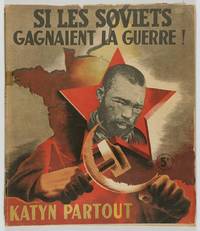
194353656Paris: Bureau Central de Presse 1943. First edition. Softcover. vg- to near fine. Small folio. 12 x 10 1/2". Unpaginated. 48 double-sided leaves approx. 100 pages. Illustrated lithographic cover with photo-montage and text in black and yellow. <br /> <br /> A French right-wing collaborationist and anti-Communist publication issued during the Nazi-occupation. This massive publication was quite lavishly produced for a piece of propaganda and is profusely illustrated throughout with hundreds of striking images some full-page including b/w and cyan tinted photogravure as well as drawings photo collage photo-montage reproductions of original documents and artwork and political caricatures. Also included are a few charts and statistical tables.<br /> <br /> The text is divided into more than 20 different sections or articles written by a large number of prominent French collaborationist and right-wing political figures journalists and writers of the period. These include Maurice-Ivan Sicard 1910-2000 also the director/ editor Maurice Laporte 1901-1987 Émile Bougère 1903-1964 Lt. Colonel Paul Gamory-Dubourdeau 1889-1963 Jacques Ploncard d'Assac 1910-2005 Armand Bernardini 1895-1972 artist and cartoonist Ralph Soupault 1904-1962 Cardinal Alfred Baudrillart 1859-1942 and others. Many contributors to this publication were involved in the infamous right-wing and anti-Semitic periodical Le Cahier Jaune 1941-1943 published by André Chaumet. The content throughout include tirades against the Soviets International Communism Jews and many other entities. Numerous specific figures of the Soviet State are singled for direct attack. There are constant praises for the Nazis Fascism and the Franco regime as well as discussions of the Russian Revolution and the Spanish Civil War among other related topics. Notable sections include a detailed analysis of prominent Jewish communists and Jewish Soviet figures including photo portraits and an analysis of so-called "Bolshevik Art" which in a similar way to the Nazi concept of "Degenerate art" labels works of the modern art and the 20th century avant-garde as being instruments of International Communism and the plots of nefarious Jewish art dealers to steal patrons' money. Shown are photogravure reporductions of works by Picasso Leger and others no credits.<br /> <br /> The text of the title refers to the infamous Katyn Massacre 1940 in which more than 20000 members of the Polish military and intelligentsia where executed by the soviet NKVD under the orders of Stalin. The dead were then buried in mass graves in the Katyn forest and later uncovered by the Nazis in 1943. News of the discovery was effectively used by the Germans as anti-Soviet propaganda in publications such as this warning against the dangers of Bolshevism. The final section of this publication addresses the massacre specifically and includes images of the mass graves. <br /> <br /> The back cover is a striking photographic image showing crosses in silhouette accompanied by a quote from French poet and essayist Charles Peguy. The interior front cover contains a full-page visual diagram showing the organization of the International Communist party inside France.<br /> <br /> Text throughout in French.<br /> <br /> Wrappers with some light rubbing creasing and chipping to extremities. Small residue from tape along the spine. Wrappers overall quite clean and vibrant. Save for the most minor age toning to the edges of the pages the interior is clean and vibrant throughout. Wrappers in very good- inteiror in near fine condition overall. Quite scarce. Protected in modern mylar. Bureau Central de Presse unknown
23692Paris: Robert & Lydie Dutrou 1991. Folio. 15 3/8 x 10 1/2 inches. Half-title and title in red text in French and Danish printed in black with headings in red and black. 7 colored plates by Alechinsky each an "eau-forte originale sur facsimile de Flora Danica" each numbered and signed in pencil by Alechinsky. Unbound as issued in original limp paper wrappers the upper cover with etched calligraphic decorated title printed in red and silver Plexiglas slipcase.<br/> <br/> A fine copy with seven signed Alechinsky prints book signed by Sicard numbered 7 of 125 copies for sale by the publishers out of a total edition of 165.<br/> <br/> Alechinsky's excellent images reminiscent of Max Ernst's work provide a fresh view of some of the more esoteric images from Flora Danica. The literary and artistic equivalent of cloud-imagined figures and landscapes Alechinsky offers a sophisticated view which complements Sicard's poems to his daughter. Translation of the colophon: "Flore Danoise a poem by Michel Sicard - dedicated to his daughter Flora - and the Danish translation by Uffe Harder are both set by hand in 20 point Garamond type. The seven original etchings by Pierre Alechinsky are printed on facsimiles of plates from the 18th-century botanical work: Flora Danica." Alechinsky is a Belgian abstract artist who has lived in France since 1951. With Karel Appel and Asger Jorn he was a member of the art collective COBRA. He was a professor of painting at the École nationale supérieure des Beaux-Arts Paris. Alechinsky's art is represented in major institutional collections. Sicard is a French poet who teaches at Université de Paris I. Robert & Lydie Dutrou unknown
199123692Paris: Robert & Lydie Dutrou 1991. Folio. 15 3/8 x 10 1/2 inches. Half-title and title in red text in French and Danish printed in black with headings in red and black. 7 coloured plates by Alechinsky each an "eau-forte originale sur facsimile de Flora Danica" each numbered and signed in pencil by Alechinsky. Unbound as issued in original limp paper wrappers the upper cover with etched calligraphic decorated title printed in red and silver plexiglass slipcase.<br/> <br/>Fine copy: the edition limited to 165 copies signed by the author this copy number 7 of the 125 copies for sale by the publishers.<br/> <br/>An approximate translation of the colophon: "Flore Danoiose a poem by Michel Sicard - dedicated to his daughter Flora - and the Danish translation by Uffee Harder are both set by hand in 20 point Garamond type. The seven original etchings by Pierre Alechinsky are printed on facsimiles of plates from the 18th-century botanical work: Flora Danica." The excellent images - reminiscent of the work of Max Ernst - provide a fresh view of some of the more esoteric images from Flora Danica. The literary/artistic equivalent of cloud-imagined figures and landscapes Alechinsky offers a sophisticated view which complements Sicard's text/poems to his daughter. Robert & Lydie Dutrou unknown books