[Dürer, Albrecht]. - [Hüsgen, Heinrich Sebastian]Antiquariat.de

4 résultats
177839795Frankfurt-Leipzig, Joh. Georg Fleischers Buchhandlung, 1778. 8°. 14 Bll., 64 S., Kart. d. Zt.
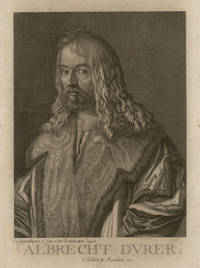
178219991782. Copper-line engraving. 145mm by 110mm image only. Portrait of Albrecht Durer after Johann Rottenhammer's copy of Durer's self-portrait.<br /> Johann Rottenhammer was a German painter who lived and worked in Venice between 1589-1606. CONDITION : Some overall toning one light crease. unknown
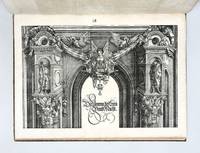
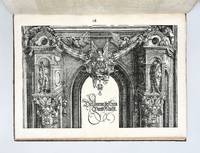
1799147472Vienna: widow of Alberti for T. Mollo 1799. The Triumphal Arch of Maximilian I Printed from the original 16th-century blocks under the supervision of Adam Bartsch this is the fourth edition of Dürer's Ehrenpforte one of the great giant woodcuts of the Renaissance. The blocks are now preserved at the Albertina Museum Vienna. The work was intended for assembly as a gigantic wall print measuring approximately 3.5 x 3 metres 11 x 9 feet. The Hapsburg emperor Maximilian I had insufficient funds to hold a triumphal procession or erect an arch in stone. His place in the imperial Roman tradition was nevertheless guaranteed through the truly monumental scale of this triumphal arch on paper. The arch was originally conceived by the Tyrolean court painter and architect Jörg Kolderer as a miniature. Under the direction of the Emperor Johannes Stabius provided the program of the whole arch and the five sheets of prose commentary at the foot. Dürer supervised the execution of the multi-block print and also contributed ornamental details see Strauss p. 504. The 192 blocks 174 survived of varying size were cut in the workshop of Hieronymus Andreä in Nuremberg. Although probably conceived in 1512 the project was not completed till August or September 1517 despite the date of 1515 on the base of the arch. A large part of the design was the work of Dürer's assistants Springinklee and Traut. After the first of 1517 second and third editions were published in 1526-28 and 1559. This fourth edition of 1799 was printed from 174 surviving blocks. To supply the lack copies were issued with 18 etchings by Bartsch on three sheets which could be cut out and mounted to replace the missing blocks including the Battle of Utrecht Maximilian's coronation and the First Congress of Vienna; the 24th panel shows a new image of the Battle of Pavia; the Dürer block of the Burgundian Wedding was replaced by an earlier block of Springinklee. This copy contains the complete printing of the 174 surviving blocks. It does not have Bartch's replacement etchings nor the latter-day printed matter: the 1799 double-page letterpress title and "avertissement" leaf at the beginning and the double-page letterpress "avis au relieur" a plan showing how the wall print should be assembled at the end. It may possibly have been issued thus as it shows no signs of having been disturbed in its binding. Provenance: from the library of the French sculptress Félicie de Fauveau 1801-1886 who as a fervent royalist had taken refuge in Florence with a gift inscription in French at the foot of the first flyleaf presenting the book to her in spring 1843. Her studio on Via degli Serragli was a regular stop for international travellers on the Grand Tour and she had many influential friends and admirers including Elizabeth and Robert Browning who had also made their home in Florence. Fauveau was a friend and art adviser to Alexander Lindsay 25th Earl of Crawford 1812-1880. Lord Lindsay as he was then styled made several visits to Italy in the 1840s in preparation for his work on art Sketches of the History of Christian Art 1847 which was in part inspired by Fauveau's religious sentiment. Lord Lindsay was an active collector of books including illuminated manuscripts and volumes of engravings. A small paper label hand-lettered in Italian a little worn at the upper inner corner of the front board notes the ownership of Contessa Crawford. Lindsay's wife Margaret was styled as Countess of Crawford from 27 March 1825 until her death in 1850. Broadsheet 65 x 48 cm. 50 numbered woodcuts on 43 sheets the first 5 sheets comprising the legend by Stabius the last sheet also containing 3 woodcut inscriptions numbered 51-53 the entire design made up from 174 original blocks. Lacks the 1799 double-page letterpress title and "avertissement" leaf at beginning the double-page letterpress "avis au relieur" at end and 18 etchings by Bartsch on 3 sheets. Contemporary probably original pink cloth backing marbled boards. Some splitting of cloth at joints but holding firm front free endpaper renewed and helping reinforce front inner hinge a few trivial marks at corners but an excellent copy clean and fresh with clear impressions printed on strong laid paper. Dodgson I p. 311/130-136; Hollstein VII Dürer 251; Meder Dürer 251 p. 215; Strauss Dürer Woodcuts 175. Hugh Brigstock "Lord Lindsay: Travel in Italy and Northern Europe 1841-42 for 'Sketches of the History of Christian Art'" The Volume of the Walpole Society vol. 65 2003 pp. 161-258. hardcover
17993523Vienna: widow of Alberti for T.Mollo 1799 1799. Broadsheet 65 x 48 cm. Contemporary probably original pink cloth backing marbled boards. With fifty numbered woodcuts on forty three sheets the first five sheets comprising the legend by Stabius the last sheet also containing three woodcut inscriptions numbered fifty one to fifty three the entire design made up from 174 original blocks and eighteen etchings by Bartsch on three sheets. Some splitting of cloth at joints but holding firm front free endpaper renewed and helping reinforce front inner hinge a few trivial marks at corners but an excellent copy clean and fresh with clear impressions printed on strong laid paper. Fourth impression of Dürer's Ehrenpforte one of the great giant woodcuts of the Renaissance printed from the original sixteenth-century blocks under the supervision of Adam Bartsch. The blocks are now preserved at the Albertina Museum Vienna. The work was intended for assembly as a gigantic wall print measuring approximately 3.5 x 3 metres 11 x 9 feet. The Hapsburg emperor Maximilian I had insufficient funds to hold a triumphal procession or erect an arch in stone. His place in the imperial Roman tradition was nevertheless guaranteed through the truly monumental scale of this triumphal arch on paper. The arch was originally conceived by the Tyrolean court painter and architect Jörg Kolderer as a miniature. Under the direction of the Emperor Johannes Stabius provided the program of the whole arch and the five sheets of prose commentary at the foot. Dürer supervised the execution of the multi-block print and also contributed ornamental details see Strauss p. 504. The 192 blocks 174 survived of varying size were cut in the workshop of Hieronymus Andreä in Nuremberg. Although probably conceived in 1512 the project was not completed till August or September 1517 despite the date of 1515 on the base of the arch. A large part of the design was the work of Dürer's assistants Springinklee and Traut. After the first of 1517 second and third editions were published in 1526-28 and 1559. The fourth impression of 1799 was printed from 174 surviving blocks with eighteen etchings by Bartsch to replace the missing blocks including the Battle of Utrecht Maximilian's coronation and the First Congress of Vienna; the twenty-fourth panel shows a new image of the Battle of Pavia; the Dürer block of the Burgundian Wedding was replaced by an earlier block of Springinklee. In this copy the latter-day printed matter has been discarded that is the 1799 double-page letterpress title and "avertissement" leaf at the beginning and double-page letterpress "avis au relieur" actually a plan showing how the wall print should be assembled at the end. What remains is the complete fourth impression of the original work. Dodgson I pp. 311 130136; Hollstein VII Dürer 251; Meder Dürer 251 p. 215; Strauss Dürer Woodcuts 175. Hugh Brigstock "Lord Lindsay: Travel in Italy and Northern Europe 184142 for 'Sketches of the History of Christian Art'" The Volume of the Walpole Society vol. 65 2003 pp. 161258. [Vienna]: [widow of Alberti for T.Mollo] [1799] hardcover