SADELER MARCOABAA
2 résultats
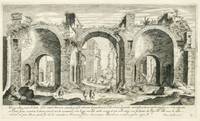
16601944Rome: Roma: G.Giacomo de Rossi 1660. 5th edition or later. no binding. Fine. Beautiful 1660 engraving of the Baths of Caracalla by Marco Sadeler. Exquisite original engraving from 1660 of Rome showing parts of the Baths of Caracalla. Engraved by Marco Sadeler part of the most famous European print-making family of the 17th Century. Plate #19 from: Vestigii dussa parte di dentro delle terme d'Antonino caracala. Roma: G.Giacomo de Rossi 1660. A few stray spots otherwise fine with exceptionally large margins. Engraving: 14.5 x 10.25 in.; image alone: 10.25 x 6 in. Roma: G.Giacomo de Rossi unknown books
16064235<p>Prague: Aegidius Sadeler 1606. </p><p>Price: $25000.00 </p><p>Oblong folio: 34.7 x 203.5 cm. Engraved title page and 50 engraved plates.</p><p>FIRST EDITION.</p><p>A very fine broad-margined copy with very rich and clear impressions of the plates. Occ. marginal soiling a few pin-prick wormholes in the margins of a few leaves. Bound in contemporary morocco richly tooled in gold. With an engraved allegorical title with the main title incised within a wolf's hide hung on a monument; an engraved dedication to Matthaeus Wacker von Wackenfels numbered'1' with the text incised on a stone tablet between flanking obelisks and with two putti supporting the dedicatee's arms; and 49 full-paged engraved plates ca. 170 x 270 mm all numbered and signed 'Marco Sadeler excudit' with descriptive captions in Italian.</p><p>This is the first edition. Thirty-six of these images were copied by Aegidius Sadeler from Etienne Du Pérac's " Vestigi dell'Antichità di Roma" Rome 1575. For the other images Sadeler drew on drawings by Jan Breughel the elder and Pieter Stevens. Marco Sadeler whose name appears on the plates was an engraver and print seller in Prague in the early 1600's and probably the nephew of Aegidius. In the middle of the 17th century a copy of the 1606 edition found its way to Rome where it was copied for Giovanni Giacomo de' Rossi by Girolamo Ferri and published in 1660.<br /><br />In this series the artists have depicted the ancient monuments of Rome Tivoli and Pozzuoli as they appeared in the late sixteenth- and early seventeenth-century: crowned with vegetation half-buried by the rising ground level and encroached upon by a host of post-Roman structures. The scenes are alive with Rome's inhabitants: herdsmen mule-drivers cattle sheep and every manner of citizen. The images in which the ruins are depicted in their un-restored state and within the context of their early modern environments serve as a record of the monuments as they appeared in this period and evoke the atmosphere of daily life in early modern Rome.<br /><br />Sadeler and The Bay of Naples: <br /><br />In addition to the views of Rome the Sadeler series also includes a number of plates of ruins and views of the Bay of Naples and its environs: the Gulf of Baiae Cuma Lago Averno the Campi Flegrei Capo Miseno and the Villa Agrippina at Oplontis and other places within the confines of Pozzuoli.</p><p>Cicognara 3871; Hollstein. Dutch & Flemish XXI 151-201; Fowler 283 2nd ed.; Catalogue of the exhibition "Vestigi delle antichita . Momenti dell'elaborazione di un'immagine" edited by Anna Grelle Rome 1987 pages 123-144 and passim.</p> Aegidius Sadeler, books