Alfons MUCHA - Henri de TOULOUSE-LAUTRECBiblio.com

39 résultats
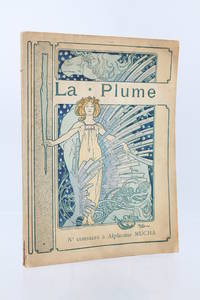
189824116Paris: La Plume 1898. Fine. La Plume Paris 1er janvier au 15 décembre 1898 19 x 25 cm relié First edition of the final year edited by Léon Deschamps founder of this magazine which gave a predominant place to the visual arts. 24 issues gathered here including the exceptional number devoted to Alexandre Falguière. Publisher's binding in full fir green cloth smooth spine red shagreen title label gilt floral motif blind fillets on boards. The cover of the first issue illustrated by Mucha is bound at the head of the volume. Contributions by Théophile Gautier Jules Barbey d'Aurevilly Karl Boès Adolphe Retté Francis Jammes Victor Margueritte Ernest Raynaud Stuart Merrill etc. Numerous illustrations including a watercolored frontispiece by Eugène Grasset and drawings by Henri de Toulouse-Lautrec Alfons Mucha Alexandre Falguière Vivant-Denon Willette Jossot André des Gachons Ferdinand Cazals Henri Detouche James Ensor. The frontispiece by Emile Berchmans announced on the title page is not present in our copy. Table and index at end of volume. Manuscript dedication by a former owner on the endpaper. Tiny tear on the front board otherwise a rare and handsome copy. La Plume hardcover
19003136<p>Limited Edition. VG Hardcover. 1 of 150 copies of Nobel laureate Anatole France's novel Clio illustrated by Art Nouveau artist Alphonse Mucha. Edge wear and wear to tips and spine. Top edge in gilt. Decorative endpapers. Solid and square.<br /><br />Edition limitée. VG Relié. 1 des 150 exemplaires du roman Clio d'Anatole France illustré par l'artiste Art Nouveau Alphonse Mucha. Usure des pointes et de la colonne vertébrale. Bord supérieur en doré. Papiers décoratifs. Solide et carré. Frais d'expédition supplémentaires pour les commandes à l'extérieur des États-Unis.<br /><br />J'ai utilisé un traducteur en ligne de l'anglais au français. Veuillez pardonner toute erreur dans la traduction française.</p> Calmann Levy hardcover
1897201455<p>F. Simacek 1897. First Edition. Hardcover. Very Good. Mucha Alphonse. Full green cloth boards with gilt lettering & decoration 10" x 7-1/4" brown endpapers 124 pp. plate and in-text illustrations. Binding slightly visible at center-fold illustration but VG to Near Fine. Jiri Mucha gives a great account of this book in his 1989 biography "Alphonse Maria Mucha: His Life and Art". Mucha was worried about illustrating a historical book--where would he find the costumes After he read the manuscript he realized all these people could be more or less nude--nude models were easy to come by.</p> F. Simacek hardcover
189785616Paris: La Plume 1897. Fine. La Plume Paris 1897 17.50 x 24 cm broché First edition of this issue entirely devoted to Alfons Mucha. Two tears and a lack to spine a light dampstain at head of first cover small stains at head of second. Numerous literary contributions including those by Léon Deschamps Frantz Jourdain Sarah Bernhardt Paul Redonnel Yvanoé Rambosson Charles Chincholle. Issue decorated with 127 illustrations by Alfons Mucha including the cover and a portrait of the latter by David Ossipovitch Whidhopff. La Plume unknown
19000037327Paris: F. Champenois & H. Piazza et Cie 1900. First Edition. Hardcover Hardcover. Near Fine Condition. 31cm x 22cm. vi 80 2 pages 1 original pencil and watercolour drawing and 86 leaves being a double suite of the plates most printed on both sides. Signed Vermorel half blue leather inlay design of bells and roses to spine marbled papered boards top edge gilt marbled endpapers. Text is in French. Copy No. 1 of 10 on Japon containing an original Mucha drawing. Emile Gebhart's three medieval tales: Les trois rois La derniere nuit de Judas and Alleluia! presented in one of the great illustrated books of the Art Nouveau period. Alphonse Mucha provided the complete decorative programme: cover design title-page decoration limitation page colophon and 78 individual headpiece compositions with elaborate floral borders enclosing the text each hand-coloured by au pochoir. This copy No. 1 contains an original full-page mixed-media drawing in pencil and watercolour on Japon signed 'Mucha' at lower right depicting a young woman in flowing drapery and broad knotted sash her hair loose to her waist beneath a patterned headband in profile with her hands raised to her collarbone a detailed study for the main figure featured in the vignette on page 69. Also bound in are a complete suite in colour on Japon of the 78 borders and vignettes and the three designs for the title limitation and colophon together with a second state in black on China paper. The original wrappers and prospectus are retained. The prospectus established a hierarchy of 252 copies in five categories of which the ten copies on Japon with original watercolours priced at 550 francs each ranked only below the unique parchment and satin copies priced at 1000 and 800 francs both entirely reworked by the artist and above 25 further copies on Japon without watercolour and 215 copies on velin de Rives. The prospectus also noted explicitly that trade discount on the watercolour copies excluded "the cost of the watercolour executed by the artist" formally distinguishing the value of the Mucha original from that of the book at the point of publication. Provenance: Acquired in 1947 by Albert Quesnot 1882-1954 first violinist with the Paris Opera thence by descent retained in the family home until 2026 when acquired at auction in Paris. Fresh to the market after nearly eighty years of unbroken family ownership. Text is in French. Minor tanning to fore-edge of marbled papered boards. Very minor rubbing to fore-edge of upper board near crown corner. Offsetting to flyleaf facing original upper wrapper. Upper wrapper fore-edge very slightly cropped . Category: Art & Design; Foreign Language::French; French Language; Fine Bindings. Inventory No: 0037327. BZDB407 Art & Design; Foreign Language::French; French Language; Fine Bindings. Unbranded Emile Gebhart; Alphonse Mucha Cloches de Noel et de Paques F. Champenois & H. Piazza et Cie hardcover
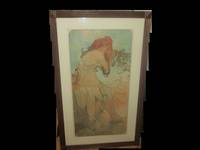
189615844AB1896. Paris F.Champenois 1896. 1003 : 505 cm image Lithograph in colours by Alphonse Mucha. Framed in contemporary wooden frame. Alphonse Mucha's poster "Été" "Summer" is part of his series titled The Seasons created in 1896. This poster captures the essence of summer with its warm golden hues and lush flowing forms. Mucha depicts a young woman draped in a light flowing garment that accentuates the curves of her body embodying the sensuality and warmth of the season. She is surrounded by an abundance of flowers and foliage symbolizing the fullness and fertility of summer. Her hair long and wavy cascades down her back adding to the natural unrestrained feel of the image. Mucha's characteristic use of intricate lines and decorative patterns is evident in the detailed borders and the swirling motifs that frame the central figure. The poster exudes a sense of harmony and beauty typical of Mucha's Art Nouveau style where nature femininity and elegance are central themes. The soft color palette dominated by shades of gold green and soft pastels further enhances the idyllic dream-like quality of the work making "Été" a quintessential representation of summer's warmth and beauty. Alphonse Mucha was known for his distinctive Art Nouveau style characterized by its use of natural forms flowing lines and elaborate decoration. His techniques combined both traditional and innovative approaches contributing to his iconic aesthetic. Here are some of the key techniques and elements in Mucha's work: Line Work: Mucha's use of lines is one of the most defining aspects of his style. He employed fine flowing outlines to create graceful organic shapes that mimic the curves found in nature. His lines were often decorative and stylized contributing to the overall harmony and unity of the composition. Color Palette: Mucha favored a soft pastel color palette often using muted tones of gold green pink and blue. These colors were carefully chosen to create a sense of harmony and to evoke specific moods often reflecting the seasons or the subject matter of the piece. Ornamentation and Patterns: Mucha's works are rich in decorative elements and intricate patterns. He incorporated floral motifs arabesques and geometric designs into his compositions often framing the central figure with these ornate details. This ornamentation was not merely decorative but also served to enhance the thematic elements of the piece. Use of Light and Shadow: Although Mucha's work is more stylized than realistic he employed light and shadow to add depth and dimension to his figures. His approach to light was subtle often using gentle shading rather than harsh contrasts which contributed to the soft ethereal quality of his work. Symbolism: Mucha frequently used symbolic elements in his paintings and posters. For example flowers seasons and zodiac signs often carried deeper meanings related to themes of nature femininity and the passage of time. These symbols were seamlessly integrated into the decorative elements of his work. Composition: Mucha's compositions were carefully balanced often centered around a single idealized figure. He employed symmetry and repetition to create a sense of order and harmony with the figure often surrounded by elaborate circular frames or halos that draw the viewer's eye. Media and Techniques: While Mucha is best known for his posters and prints which were typically lithographs he also worked in a variety of media including painting drawing and jewelry design. His lithographic technique involved multiple layers of color carefully aligned to create richly textured and vibrant images. In his paintings he used traditional techniques such as oil on canvas but applied them with the same decorative and stylized approach as in his graphic works. Mucha's techniques were instrumental in defining the Art Nouveau movement blending fine art with applied arts and his work remains a cornerstone of this decorative style. Alphonse Mucha holds a significant place in the history of art particularly as a leading figure of the Art Nouveau movement. His influence extends beyond his immediate contributions to the art world affecting design advertising and popular culture. Here are some key reasons why Mucha is important in the history of art: 1. Pioneer of Art Nouveau: Mucha is often credited with shaping and popularizing the Art Nouveau style which emerged in the late 19th century. This movement was characterized by its use of organic forms flowing lines and intricate decorative patterns all of which are hallmarks of Mucha's work. His designs especially his posters became synonymous with the Art Nouveau movement defining its aesthetic and helping it gain widespread recognition. 2. Innovative Use of Graphic Design: Mucha was a pioneer in using graphic design as a fine art form. His work in advertising and posters elevated these mediums to a new level blending commercial appeal with artistic integrity. His posters for Sarah Bernhardt the famous actress are particularly notable. They not only promoted her plays but also became collectible works of art in their own right. 3. Influence on Decorative Arts: Mucha's influence extended beyond painting and posters to various decorative arts including jewelry furniture and interior design. His aesthetic principles were applied to everyday objects making art more accessible to the public. This blending of fine art with applied arts helped bridge the gap between high art and popular culture a concept that has continued to evolve in modern design. 4. Impact on Visual Culture: Mucha's style has had a lasting impact on visual culture influencing everything from early 20th-century design to contemporary art and popular media. His work has inspired countless artists and designers in the realms of illustration fashion and graphic design. The Art Nouveau style as epitomized by Mucha has seen periodic revivals and continues to be referenced in various cultural contexts demonstrating its enduring appeal. 5. Symbolism and National Identity: Beyond his contributions to Art Nouveau Mucha was also deeply involved in the promotion of Czech national identity. His later works particularly the Slav Epic reflect his interest in Slavic history and mythology aiming to create a visual narrative that celebrated his cultural heritage. This aspect of his work underscores the role of art in expressing and shaping national and cultural identity adding another layer to his importance as an artist. 6. Legacy in Fine Arts: Mucha's ability to blend aesthetics with practical applications laid the groundwork for future movements in art and design particularly in how art could be integrated into everyday life. His legacy is evident in the continued appreciation and study of his work which remains a significant part of museum collections and exhibitions worldwide. Alphonse Mucha's contributions to the art world go beyond his beautiful and iconic images; he played a crucial role in defining an era shaping modern design and influencing the intersection of art culture and commerce. His work continues to inspire and resonate across disciplines making him a central figure in the history of modern art. The panel 'Ètè' Summer out of the series 'Four Seasons'. Mucha made a panel for each of the four seasons. He represents each season with characteristic flair here the sultry Summer. Four Seasons was Mucha's first series of decorative panels and one of his most popular ones. An classic Art Nouveau piece. A highlight in each Mucha collection. - Here contemporary framed therefore in very good condition. unknown
1897412Photo relief. Czechoslovakia. June and December 1897. LITHOGRAPH FROM L'ESTAMPE MODERNE. L'Estampe Moderne 1897-1898 a more commercial and later version of L'Estampe Originale was a monthly publication of print portfolios producing twenty-four issues containing four color lithographs each. Only a few prints exhibiting Japanese influence were issued mostly by minor artists yet they were equally as beautiful in image as their predecessors.one of 2000.
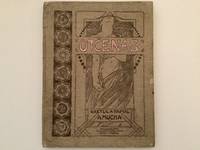
189910392AB1899. Prag Ceske Graficke Spolecnosti "Unie" n.d. ca.1899. 255 : 19 cm. 8 illustrated ornamental plates 7 plates and 7 calligraphed plates with ornaments by Alphonse Mucha. Colored illustrated original cloth. A in size reduced reproduction of this important work by Mucha 'Le Pater'. The original is one of the most outstandinding books of French Art Nouveau. "So entstand 'Le Pater' neben 'Ilsée' der wertvollste Druck von seiner Hand. Um seine Persönlichkeit besser begreifen zu können wäre es nötig die Blätter des Vaterunser mit den dekorativen Panneaux der 'Edelsteine' oder der Vignetten für 'Moet et Chandon' zu vergleichen die zur selben Zeit entstanden sind. Sie sind die beiden Seiten ein und derselben Münze. Auf der einen vergeistiger Sensualismus auf der anderen sensueller Spiritualismus. Mitunter sind es die gleichen Mädchengestalten nur ist ihre Funktion eine andere." Prof. Cadik schreibt: ".im ganzen waren es dreißig Blätter auf starkem Zeichenpapier verziert mit Farblithographie und monochromen Lichtdrucken. Auf je einen Lichtdruck entfallen zwei Lithographien. Auf dem herrlichen Titelblatt sehen wir neben dem Genius der Menschheit dessen Stirn sich in den Sternen verliert und in dessen Hand die menschliche Seele bebt die sieben Siegel der Apokalypse. Dann folgen sieben durch Bilder und Texte erläuterte Kapitel mit einem allegorischen Bild und das achte Kapitel ist - wie in einer barocken Kantate - der virtuose Abschluss 'Amen'. Die lateinisch und französisch in einen Kreis und ein Achteck geschriebenen heiligen Worte sind umrahmt von einer wundervollen Arabeske aus abstrakten Ornamenten und naturalistischen Girlanden von Pflanzenmotiven. Die ureigenste Meditation ist jedoch als dramatische Szene konzipiert und mit Anklängen an die biblische Genesis in die Urzeit verlegt." J. Mucha Meister des Jugendstils. - Binding partly a bit stained some pages a bit wrikled. - See for the original edition Carteret V 154; MuchaJ. "The graphik work of Alphonse Mucha" p.131 and plate 24. hardcover
18935115Paris: Librairie Centrale des Beaux-Arts 1893. First illustrated edition. Mucha Alphonse. Original decorated wrappers. Corner clipped from front free endpaper otherwise a very nice copy. Cover design and 14 illustrations after paintings by Mucha. Copy 6 of 75 printed on japon the tirage de tête from a total edition of 200. Inscribed by the author "au cher Maître Alexandre Dumas de l'Académie Française un puissant et inpeccable moraliste. Librairie Centrale des Beaux-Arts unknown
1900MUCHAALP002009Printed by F. Champedois Paris. c 1900. Four colour and gilt lithographs each depicting along the left-hand edge a different full-length female figure holding a champagne glass. According to the Victoria and Albert Museum this is a complete set. The spaces for the menu listing are blank. It should be pointed out that these are the originals measuring 22 x 15 cm and not the smaller postcard-sized versions.Faint darkening to two of the cards. Bottom left corners creased at the very tips. Fine. Printed by F. Champedois, Paris. unknown
189615844ABParis, F.Champenois, 1896. 100,3 : 50,5 cm image Lithograph in colours by Alphonse Mucha. Framed in contemporary wooden frame.
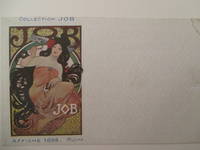
189814589AB1898. Paris F. Champenois 1898 85 : 135 cm. Original colour lithograph by Alphonse Mucha. Postcard of one of Mucha's most famous posters. Here reduced to postcard size but still very well to recognize. On the reverse side imprinted Postkarte - CARTE POSTALE -Post card. Union postale universelle and in 8 different languages. This is perhaps one of Mucha's best-known advertising poster. This poster established the iconic image of the 'Mucha woman' with her swirls of exaggeratedly abundant hair. 'JOB' is a trademark for the Joseph Badou Company manufacturing cigarette papers. In this poster Mucha placed the prominent female figure against a background featuring job monograms. Holding a lighted cigarette in her hand the woman leans her head backward sensually and rising smoke forms an arabesque interwining with her hair and the company logo. - Upper right edge a bit demaged the image perfect. unknown