15 résultats
188819532Berlin, Pormetter, 1888. 105 S., 2 Bll. (Vita und Druckfehler). 8°. Interims-Brosch. der Zeit (etw. lädiert).
189967314New York: D. Appleton and Company 1899. One of the World's Greatest books series/Aldine edition. Hardcover. Good. Previous owner's bookplate inside front cover. Cover has some wear and soiling. Includes illustrations. xxi 202 This also contains a Critical and Biographical Introduction by Jacques W. Redway. This is bound with Eothen or Traces of Travel brought Home from the East by ALexander William Kinglake. This also has a Critical and Biographical Introduction by Jacques W. Redway 228 pages. From Wikipedia: "Jehan de Mandeville" translated as "Sir John Mandeville" is the name claimed by the compiler of The Travels of Sir John Mandeville a book account of his supposed travels which probably first appeared in Anglo-Norman French and first circulated between 1357 and 1371. By aid of translations into many other languages it acquired extraordinary popularity. Despite the extremely unreliable and often fantastical nature of the travels it describes it was used as a work of reference Christopher Columbus for example was heavily influenced by both this work and Marco Polo's earlier Il Milione. Also from Wikipedia: "Alexander William Kinglake 5 August 1809 2 January 1891 was an English travel writer and historian. He was born near Taunton Somerset and educated at Eton College and Trinity College Cambridge. 1 He was called to the Bar in 1837 and built up a thriving legal practice which in 1856 he abandoned in order to devote himself to literature and public life. His first literary venture had been Eothen; or Traces of travel brought home from the East London: J. Ollivier 1844 a very popular work of Eastern travel apparently first published anonymously in which he described a journey he made about ten years earlier in Syria Palestine and Egypt together with his Eton contemporary Lord Pollington. Elliot Warburton said it evoked "the East itself in vital actual reality" and it was instantly successful. However his magnum opus was his Invasion of the Crimea in 8 volumes published from 1863 to 1887 by Blackwood Edinburgh one of the most effective works of its class. It has been accused of being too favourable to Lord Raglan and unduly hostile to Napoleon III for whom the author had an extreme aversion. The town of Kinglake in Victoria Australia and the adjacent national park are named after him. A Whig Kinglake was elected at the 1857 general election as one of the two Members of Parliament MP for Bridgwater having unsuccessfully contested the seat in 1852. He was returned at next two general elections but the result of the 1868 general election in Bridgwater was voided on petition on 26 February 1869. No by-election was held and after a Royal Commission found that there had extensive corruption the town was disenfranchised in 1870." D. Appleton and Company hardcover
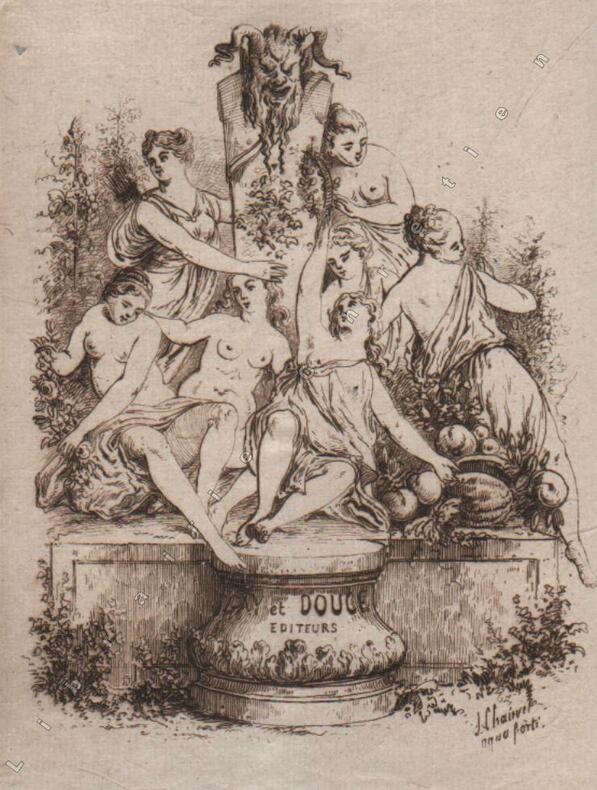
188154387BBBruxelles, Gay et Doucé, 1881. In-12°. 2 f. n.ch, 117 p. Avec frontispice de J.A. Chavet gravé à l'eau-forte et tiré en sépie sur Chine. Reliure pleine toile sobre, titre imprimé sur la couverture.
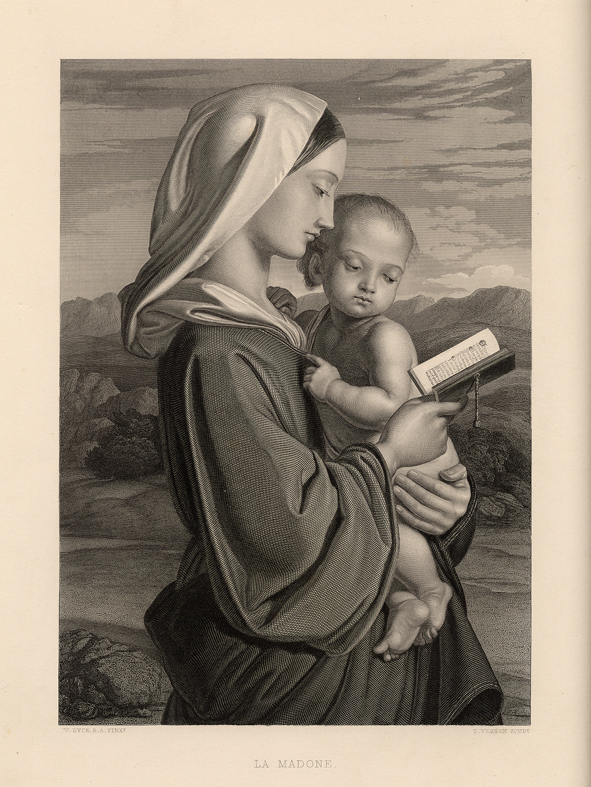
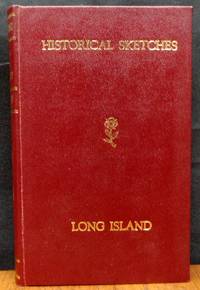
1860014670Home Lecture Committee. Very Good- with no dust jacket. 1860. Hardcover. Hardcover; Hardcover. Rebound into modern maroon leatherette boards with title in gold on front board and spine. Newer decorative endpapers have previous owner's bookplate on first paste-down. Title page is chipped and has some soil. Occasional pencil to margins. All illustrations are tipped in and tissue guarded. Always carefully wrapped and shipped in cardboard boxes to protect your purchase.; B/w Illus; 24 mo; 180 pages . Home Lecture Committee hardcover
188123629Bruxelles Gay & Doucé 1881 1 in-12 Bruxelles, Gay & Doucé, 1881, in-12, demi-chagrin rouge à coins, dos à 5 nerfs, tête dorée, 118 pages.
18954098Westminster: Archibald Constable & Co 1895. Hardcover. Very Good. Limited edition of 1000 numbered copies of which this is copy number 78. Royal octavo. Pp. xxx 414. Printed on laid paper title in red and back frontispiece and 25 wood-engraved plates numerous initials ornaments and vignettes. Bound in half brown morocco over cloth boards spine divided into six panels with double gilt rules framing each compartment gilt lettering direct marbled endpapers top edge gilt others with deckle edges. Minor rubbing to extremities occasional traces of marginal foxing to leaves deckle edges browned but overall a very nice copy. Archibald Constable & Co hardcover
186016122Paris, H. Mandeville, s. d. (1860) ; in-folio, cartonnage romantique de percaline gauffrée à grand décor doré sur le premier plat, grand fleuron doré sur le second et dos entièrement doré à décor de rocaille, tranches dorées ; 86 pp., 24 planches hors-texte à l'eau-forte, protégées par des serpentes.
18642604070001United States Government 1864. First Edition. Manuscripts & Paper Collectibles. Good. Dated Dec. 7th 1864. Splits at the folds of the second document. A pay voucher for Major Myron H. Mandeville & two black servants. Mandeville was with the 23rd New York regiment organized at Elmira N. Y. May 10 1861. Mandeville "enrolled in the Union army on May 16 1861 at Elmira to Serve two years; mustered in as quarter-master" - NY 23rd regimental roster. Major Myron Mandeville was born in 1821 Coventry Chenango County New York died 1898 Davenport Scott County Iowa. United States Government unknown
1839elala1545London: Edward Lumley 1839. 1839. 8vo. pp. 1 p.l. xvii v-xii 326. wood-engraved frontis. & title vignette & numerous woodcut text illus. contemporary calf rebacked with gilt spine mounted. armorial bookplate of J.A.Swan. First printed by Wynken de Worde in 1499 and long considered to be an authentic and valuable account of travels in Egypt Palestine Tartary India and the East Indies the present work is now known to be a spurious relation compiled from various sources by one Jehan dOutremeuse a citizen of Liège. The present edition is based on the authoritative edition of 1725. cfCox I p. 319. Hardcover. London: Edward Lumley, 1839. hardcover
186011159Flushing L.I.: published by the Home Lecture Committee of 1857-8 1860. First edition 12mo 180pp. frontis. and 9 lithograph plates depicting Flushing landmark buildings; original brown embossed cloth faded with light wear to extremities minor fraying to lower spine end two small holes in cloth at upper joint scattered light foxing. A scarce fragile work in remarkably good shape. With a directory of Flushing businesses at pp. 179-180. Sabin 44230. published by the Home Lecture Committee of 1857-8 unknown
186011159Flushing L.I.: published by the Home Lecture Committee of 1857-8 1860. First edition 12mo 180pp. frontis. and 9 lithograph plates depicting Flushing landmark buildings; original brown embossed cloth faded with light wear to extremities minor fraying to lower spine end two small holes in cloth at upper joint scattered light foxing. A scarce fragile work in remarkably good shape. With a directory of Flushing businesses at pp. 179-180. Sabin 44230. <br/><br/> published by the Home Lecture Committee of 1857-8 hardcover books
183926571London: Edward Lumley 1839. First edition with Halliwell's introduction and additions. Illustrated with an engraved frontispiece vignette title-page and many illustrations throughout the text in the style of medieval woodcuts. 8vo publisher's original green cloth the upper cover with large coat of arms in gilt and additional decoration in blind blind decoration on the lower cover and in gilt with gilt lettering on the spine. vxii xii 326 2 ads pp. An unusually handsome and well preserved copy as fine and highly unusual for a book of the period especially as this copy is preserved in its original early cloth binding. FIRST EDITION WITH HALLIWELL'S INTRODUCTION AND ADDITIONS AND A BEAUTIFULLY PRESERVED COPY. 'In his preface the compiler calls himself a knight and states that he was born and bred in England of the town of St Albans. Although the book is real it is widely believed that 'Sir John Mandeville' himself was not. Common theories point to a Frenchman by the name of Jehan a la Barbe or other possibilities discussed below.<br> The most recent scholarly work suggests that The Travels of Sir John Mandeville was “the work of Jan de Langhe a Fleming who wrote in Latin under the name Johannes Longus and in French as Jean le Long." Jan de Langhe was born in Ypres early in the 1300s and by 1334 had become a Benedictine monk at the abbey of Saint-Bertin in Saint-Omer which was about 20 miles from Calais. After studying law at the University of Paris de Langhe returned to the abbey and was elected abbot in 1365. He was a prolific writer and avid collector of travelogues right up to his death in 1383.<br> John de Mandeville crossed the sea on 1322; had traversed by way of Turkey Asia Minor Armenia the Little Cilicia and the Great Tartary Persia Syria Arabia Egypt upper and lower Libya great part of Ethiopia Chaldea Amazonia India the Less the Greater and the Middle and many countries about India; had often been to Jerusalem and had written in Romance as more generally understood than Latin.<br> In the body of the work we hear that he had been at Paris and Constantinople; had served the Sultan of Egypt for a long time in his wars against the Bedouin and had been offered and declined a princely marriage and a great estate on condition of renouncing Christianity and had left Egypt under Sultan Melech Madabron al-Muzaffar Sayf-ad-Din Hajji I who reigned in 1346-1347; had been at Mount Sinai and had visited the Holy Land with letters under the great seal of the sultan which gave him extraordinary facilities; had been in Russia Livonia Kraków Lithuania "en roialme daresten" Dristra or Silistra in Bulgaria and many other parts near Tartary but not in Tartary itself; had drunk of the Well of Youth at Polombe Quilon on the Malabar coast and still seemed to feel the better for it; had taken astronomical observations on the way to Lamory Sumatra as well as in Brabant Germany Bohemia and still farther north; had been at an isle called Pathen in the Indian Ocean; had been at Cansay Hangchow-fu in China and had served the emperor of China for fifteen months.had been through a haunted valley which he places near "Milstorak" i.e. Malasgird in Armenia; had been driven home against his will in 1357 by arthritic gout; and had written his book as a consolation for his "wretched rest".'<br> Copies of this work are scarce in the marketplace. Edward Lumley hardcover
1887293400London: Pickering 1887. hardcover. near fine. Edited Annotated and Illustrated in Facsimile by John Ashton. 289 pages with untrimmed edges. 4to Original pale blue boards rubbed and somewhat discolored with vellum spine. London: Pickering 1887. Limited edition. Endpapers a bit foxed otherwise a beautiful pristine copy.<br/> <br/> Number 28 of 100 copies printed in Large Paper. Based on a reprint of the unique Pynson edition the oldest English printed version extant in the Grenville Library of the British Museum. ".Grenville and Dibdin believe the Pynson edition to be earlier than that of Wynken de Worde's" See Cox I p. 319.<br/> <br/> Pickering unknown
1887293400London: Pickering 1887. hardcover. near fine. Edited Annotated and Illustrated in Facsimile by John Ashton. 289 pages with untrimmed edges. 4to Original pale blue boards rubbed and somewhat discolored with vellum spine. London: Pickering 1887. Limited edition. Endpapers a bit foxed otherwise a beautiful pristine copy.<br/><br/> Number 28 of 100 copies printed in Large Paper. Based on a reprint of the unique Pynson edition the oldest English printed version extant in the Grenville Library of the British Museum. ".Grenville and Dibdin believe the Pynson edition to be earlier than that of Wynken de Worde's" See Cox I p. 319.<br/><br/> Pickering unknown books
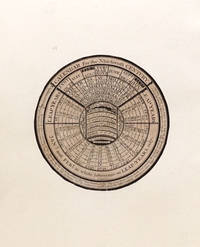
1801319639Philadelphia 1801. Small circular engraved broadside engraved by Draper. Approx. 3 1/2 inches in diameter. Inlaid into a larger sheet at a later date. Small circular engraved broadside engraved by Draper. Approx. 3 1/2 inches in diameter. America Looks to the Future: An Unusual Early American Perpetual Calendar. The Explanation running arount the outer border of the lower portion of the Calendar details its use: "Intersect the Column of the Month by the circle in which the Year stands & the Day you there find look for under October which day of the week with those on the right hand will stand over such Days of the Month as falls on them." The Explanation continues with how to determine days of the month using the calendar in the previous century and into the 20th century.<br/><br/>A January 14 1802 review in the Philadelphia Gazette extolls its virtues: ".I am induced to think that sufficient justice can hardly be done to the ingenuity of this little production: The Author has modestly called it a Calendar for the 19th Century while it is in fact a Calendar for twenty-one centuries . It will shew sic in what day of the week an event in history occurred . This Calendar is handsomely executed on copperplate . when framed its figure and beauty will entitle it to a station in the parlour as well as counting house." The review further reveals that the Calendar was being sold for $.25 and was also being marketed as a hat maker's label. <br/><br/>Just a few days prior to that review Mandeville had taken the liberty of sending his Calendar to President Thomas Jefferson writing to him on January 9 1802: "Permit me the honor to present to you . a Calendar for the Nineteenth Century to which I have recently given publicity -- Should I learn that in your estimation I have combined usefulness with originality and comeliness I shall be highly gratified.". According to Philadelphia Directories from the period David Mandeville lived at North Sixth Street in Philadelphia in 1801 and 1802 and worked as an "accomptant" and clerk in the Bank of the United States. The broadside is engraved by John Draper; a former apprentice to Robert Scot he engraved for Dobson's Encyclopedia and was an early American banknote engraver. <br/> <br/>Very rare with only three examples recorded by Shaw and Shoemaker American Antiquarian Society New York Public Library and Massachusetts Historical Society. The AAS example with a variant spelling of the word Calendar "Calender" and with the engraver's name below the outer circle suggesting two issues. Shaw-Shoemaker 269 unknown books