Mandeville, BernardBiblio.com
548 résultats
6c5209Georg Olms Verlag Hildesheim 2017. X/440 S. Leinen mit Goldprägung. - neuwertig/original verlagsfrisch verschweißt/Nachdruck der Ausgabe London 1723/Collected Works: Vol. III - unknown
46562323-nnew. unknown
46562323like new. unknown
mon0003830506Oxford University Press 1/1/1957 12:00:01 AM. hardcover. Good. 1.4567 8.8583 5.7087. Ex- library book with stamps/ stickers. rn Oxford University Press hardcover
mon0003830505Oxford University Press 1/1/1957 12:00:01 AM. hardcover. Good. 1.4000 8.6000 5.5000. Ex- library book with stamps/ stickers. rn Oxford University Press hardcover
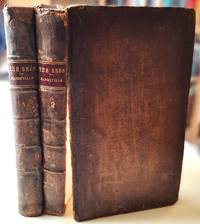
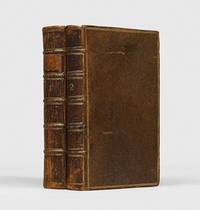
1772022660Edinburgh: J. wood 1772. title continues."and an abusive letter to Lord C. Two volumes octavo title page pp viii 316; xxii 23 - 298 14 pages a little age-toned throughout the first few pages are a little foxed in the first volume contemporary calf re-backed a long time ago with original spines relaid rather worn and frayed at the edges one corner neatly repaired. The front cover to the second volume is nearly detached and now just hanging by one thread. Bernard Mandeville or Bernard de Mandeville 1670 -1733 was an Anglo-Dutch philosopher political economist and satirist. Born in Rotterdam Netherlands he lived most of his life in England and used English for most of his published works. The book was primarily written as a political satire on the state of England in 1705 when the Tories were accusing John Churchill 1st Duke of Marlborough and the ministry of advocating the War of the Spanish Succession for personal reasons. In 1723 a later edition appeared including An Essay on Charity and Charity Schools and A Search into the Nature of Society. The former essay criticised the charity schools designed to educate the poor and in doing so instil virtue in them. Mandeville disagreed with the idea that education adds virtue because he did not believe that evil desires existed only in the poor but rather he saw the educated and wealthy as much more crafty. Mandeville also believed that educating the poor increased their desires for material things defeating the purpose of the school and making it more difficult to provide for them. Full Leather. Fair. J. wood Hardcover
45422111like new. unknown
45422111-nnew. unknown
1988G0865970734I3N01Liberty Fund 1988. Hardcover. Good. Missing dust jacket; Pages can have notes/highlighting. Spine may show signs of wear. ~ ThriftBooks: Read More Spend Less.Dust jacket quality is not guaranteed. Liberty Fund hardcover
mon0004061037Oxford University Press 1/1/1957 12:00:01 AM. bundle. Very Good. 2.9528 9.1732 6.5354. 2-volume set. dust jackets in mylar sleeve show minimal wear and tanning. pages clean. Oxford University Press unknown
ANAIS-0198113692Oxford University Press 1957-01-01. bundle. Good. 22.6x6.9x14.5. Buy with confidence. Excellent Customer Service & Return policy. Oxford University Press unknown
0198113692New. Brand new and still unused unknown
1989Q-0140445412Penguin Classics 1989-09-05. Paperback. New. New. In shrink wrap. Looks like an interesting title! Penguin Classics paperback
1997Q-0872203743Hackett Publishing Company Inc 1997-11-15. Paperback. New. In shrink wrap. Looks like an interesting title! Hackett Publishing Company, Inc paperback
0872203751.Ghardcover. Good. Access codes and supplements are not guaranteed with used items. May be an ex-library book. hardcover
0198717040.Ghardcover. Good. Access codes and supplements are not guaranteed with used items. May be an ex-library book. hardcover
1166260690.Ghardcover. Good. Access codes and supplements are not guaranteed with used items. May be an ex-library book. hardcover
1988Q-0865970777Liberty Fund Inc 1988-01-01. Paperback. New. In shrink wrap. Looks like an interesting title! Liberty Fund Inc paperback
1988Q-0865970750Liberty Fund 1988-12-31. Paperback. New. In shrink wrap. Looks like an interesting title! Liberty Fund paperback
2010DADAX1166260690Kessinger Publishing 2010-09-10. hardcover. New. 6.00x1.25x9.00. Buy with confidence. Excellent Customer Service & Return policy. Kessinger Publishing hardcover
1379840430.Ghardcover. Good. Access codes and supplements are not guaranteed with used items. May be an ex-library book. hardcover
0865970750.Gpaperback. Good. Access codes and supplements are not guaranteed with used items. May be an ex-library book. paperback
1732158464London: Printed for J. Tonson 1732 & 1733. Private vices as public virtues Seventh edition stated sixth of the first part second edition of the second part of Mandeville's best-known work demonstrating through a parable of bees renouncing all luxury and seeing their hive collapse that the Christian ascetic philosophy cannot lead to a prosperous economy and social system and consequently that individual vices of vanity and greed are virtues for the community. The work originated in 1705 as a poem titled The Grumbling Hive expanded into the first book-length edition in 1714 and revised by Mandeville in further editions. Part II first published in 1729 matches the length of the first part and comprises six dialogues in which Cleomenes instructs Horatio as to the Fable's true meaning. Mandeville's implication that religion was damaging to social welfare was contentious and in 1723 the work was declared a public nuisance by the grand jury of Middlesex and Mandeville himself accused of blasphemy. Undeterred he addressed his accusers in the London Journal and published a pamphlet defending himself against such charges; the contents of this "Vindication" are included in the present edition of Part I along with Mandeville's Essay on Charity Schools claiming that educating the poor above their station was in nobody's interest and his Search into the Nature of Society further espousing the Fable's themes. Mandeville would spend the rest of his life justifying his work to its many critics yet it was still characterized well after his death as "the wickedest cleverest book in the English language" in the diary of Henry Crabb Robinson June 1812. The book had an enduring influence on the science of economics in pointing out what was self-evident to many but never before put so boldly - that expenditure on luxuries the incentives created by the desire for social betterment and the need for profit all form the basis of the economic system and social order around it. Adam Smith though denouncing Mandeville in his Theory of Moral Sentiments followed his central thesis that the individual's self-interest works to the good of the whole. Keynes was influenced by Mandeville in his notion of the "paradox of thrift" that withholding spending reduces demand and harms the economy. Friedrich Hayek in a lecture of 1966 to the British Academy called Mandeville a "Master Mind" in recognising that individuals seeking to advance their own interests create a "spontaneous order" which can form a society without the need for a controlling state. 2 vols octavo 191 x 121 mm. Contemporary calf ruled in gilt with vol. numbers to third compartments vol. I with manuscript label in second compartment. Contemporary ownership signature of one Alexander Duff to title pages. Light rubbing and slight chip at head of spine of vol. II small loss bottom fore corner of Part I leaf L1 2D7. Very good copies. ESTC N8073 & T77578. unknown
1166204170.Gpaperback. Good. Access codes and supplements are not guaranteed with used items. May be an ex-library book. paperback
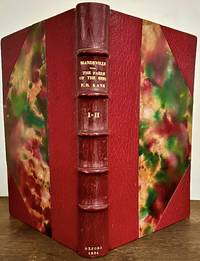
192423783Oxford: The Clarendon Press 1924. Hardcover. Three quarter red levant and marbled boards. Teg. Near fine. 481 pages. 21 x 15 cm. Limited edition copy 20 of 25 on India Paper "has been printed for presentation to friends." Title page in red and black several engraved facsimiles including frontispiece and captioned tissue guards. Originally published 1705 as satire on economic orthodoxy and a seminal text of libertarian thought. Mandeville argues that the basest and vilest behaviors produce positive economic effects. His philosophy gave great offence at the time and was stigmatized as false cynical and degrading. He was also an early describer of the division of labour and Adam Smith used of some of his examples. Two volumes in one. Raised bands spine lettered in gilt marbled endpapers spine slightly darkened. The Clarendon Press hardcover