688 résultats
186181451861 Paris Gustave Barba 1861 in4,reliure en demi basane verte de l'époque (un plat détaché) 448 pp 21 cartes en couleurs, très nombreux bois gravés de Gustave Doré
1870110311870 br. (dos fragile), non rogné. in-12, XVI-110pp., ill., P. A. Pougin 1870,
1868ZB1331008London: John Camden Hotten 1868. Price HAS BEEN REDUCED by 10% until Monday June 29 SALE item oblong folio 20 plates however lacking the frontis. portrait of Dore and the text page for the first plate; original illustrated cloth-backed boards covers worn however internally clean. - If you are reading this this item is actually physically in our stock and ready for shipment once ordered. We are not bookjackers. Buyer is responsible for any additional duties taxes or fees required by recipient's country. Photos available upon request. London: John Camden Hotten hardcover
18703212<p>Hardcover. Condition: Very Good. Two volumes. Circa 1870 undated Elephant Folio. Text in German. Hundreds of woodcut plates by Gustave Dore. Original black full calf. Spine and boards decorated in gilt and blind stamped. Edge gilt. Wear to the tips edges and spine. Some cloth tears to head and foot of spine. Tightly bound and internally clean. Large volumes. Additional postage may be required.</p> Eduard Hallberger hardcover
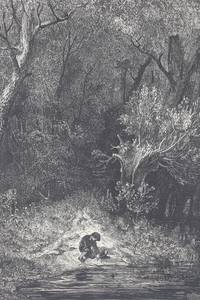
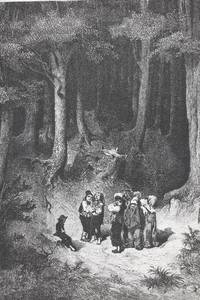
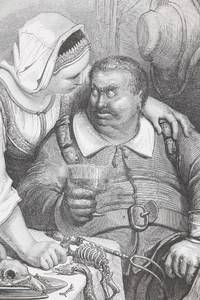
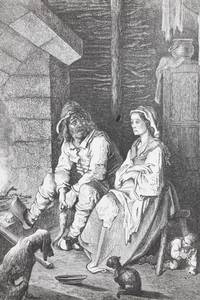
186279637Paris: Hetzel 1862. Fine. Hetzel Paris 1862 29.90 x 42.10 cm une feuille Original wood engraving on end-grain wood signed in the plate by the artist and engraver. Composition created by Gustave Doré and engraved by Charles Maurand on China paper and mounted on Holland laid paper at the request of publisher Hetzel to illustrate his folio edition of Perrault's Contes in 1862. A pale marginal dampstain not touching the image. These illustrations of the Contes are considered the most successful of this text: Gustave Doré offers an unprecedented dramatic vision. With him everything contributes to the dramatization of the tale from the theatrical staging of the tableau to the smallest details that generate terrifying realism through the technique known as ""tinted wood"". He uses India ink or gouache previously diluted as required by the ""wash"" technique. For Perrault's tales the eleven finest engravers of the period were enlisted to engrave with burin the forty wood blocks: Pannemaker Pisan Pierdon Maurand Boetzel Brevière Hébert Deschamps Dumont Delduc and Fagnon. Gustave Doré's work in the context of illustrating the Contes is paramount; he does not reduce engraving to its ornamental function but transforms it into a true object of narration. These illustrations are Doré's most famous works and immediately received enthusiastic reviews notably that of Sainte-Beuve in Les Nouveaux lundis 23 December 1861: ""Un Perrault comme il n'y en eut jamais jusqu'ici et comme il ne s'en verra plus. . Je ne puis que dire que ces dessins me semblent fort beaux d'un tour riche et opulent qu'ils ont un caractère grandiose qui renouvelle l'aspect de ces humbles contes et leur rend de leur premier merveilleux antérieur à Perrault même."" ""A Perrault such as there never was until now and such as there will never be again. . I can only say that these drawings seem very beautiful to me of a rich and opulent turn that they have a grandiose character that renews the aspect of these humble tales and restores to them their original wonder that predates Perrault himself."" Hetzel unknown
186279638Paris: Hetzel 1862. Fine. Hetzel Paris 1862 29.90 x 42.10 cm une feuille Original wood engraving signed on the plate by the artist and engraver. Composition created by Gustave Doré and engraved by François Pierdon on China paper and mounted on Dutch laid paper at the request of publisher Hetzel to illustrate his folio edition of Perrault's Contes in 1862. A pale marginal dampstain not touching the image as well as some worming in the margin. These illustrations for the Contes are considered the most successful for this text: Gustave Doré offers an unprecedented dramatic vision. With him everything contributes to the dramatization of the tale from the theatrical staging of the tableau to the smallest details that generate terrifying realism through the technique known as ""tinted wood."" He uses India ink or gouache previously diluted as required by the ""wash"" technique. For Perrault's tales the eleven best engravers of the period were enlisted to engrave with burin the forty wooden plates: Pannemaker Pisan Pierdon Maurand Boetzel Brevière Hébert Deschamps Dumont Delduc and Fagnon. Gustave Doré's work in illustrating the Contes is essential; he does not reduce engraving to its ornamental function but transforms it into a true object of narration. These illustrations are Doré's most famous works and immediately received enthusiastic reviews notably that of Sainte-Beuve in Les Nouveaux lundis December 23 1861: ""Un Perrault comme il n'y en eut jamais jusqu'ici et comme il ne s'en verra plus. . Je ne puis que dire que ces dessins me semblent fort beaux d'un tour riche et opulent qu'ils ont un caractère grandiose qui renouvelle l'aspect de ces humbles contes et leur rend de leur premier merveilleux antérieur à Perrault même."" ""A Perrault like there never was before and as there will never be again. . I can only say that these drawings seem very beautiful to me of a rich and opulent style that they have a grandiose character that renews the aspect of these humble tales and restores to them their original wonder that preceded even Perrault."" Hetzel unknown
186279632Paris: Hetzel 1862. Fine. Hetzel Paris 1862 29.90 x 42.10 cm une feuille Original wood engraving signed on the plate by the artist and engraver. Composition created by Gustave Doré and engraved by François Pannemaker on chine collé mounted on Holland laid paper commissioned by publisher Hetzel to illustrate his folio edition of Perrault's Contes in 1862. A light marginal dampstain not affecting the design. These illustrations for the Contes are considered the most successful of this text: Gustave Doré offers an unprecedented dramatic vision. With him everything contributes to the dramatization of the tale from the theatrical staging of the tableau to the smallest details that generate terrifying realism thanks to the technique known as ""tinted wood."" He uses India ink or gouache previously diluted as required by the ""wash"" technique. For Perrault's tales the eleven best engravers of the period were enlisted to engrave with burin the forty wood plates: Pannemaker Pisan Pierdon Maurand Boetzel Brevière Hébert Deschamps Dumont Delduc and Fagnon. Gustave Doré's work in illustrating the Contes is paramount; he does not reduce engraving to its ornamental function but transforms it into a true object of narration. These illustrations are Doré's most famous works and immediately received enthusiastic reviews notably that of Sainte-Beuve in Les Nouveaux lundis December 23 1861: ""Un Perrault comme il n'y en eut jamais jusqu'ici et comme il ne s'en verra plus. . Je ne puis que dire que ces dessins me semblent fort beaux d'un tour riche et opulent qu'ils ont un caractère grandiose qui renouvelle l'aspect de ces humbles contes et leur rend de leur premier merveilleux antérieur à Perrault même."" ""A Perrault like there never was before and like there will never be again. . I can only say that these drawings seem very beautiful to me of a rich and opulent manner that they have a grandiose character which renews the aspect of these humble tales and restores to them their original marvel that preceded Perrault himself."" Hetzel unknown
186279636Paris: Hetzel 1862. Fine. Hetzel Paris 1862 29.90 x 42.10 cm une feuille Original wood engraving on end-grain wood signed in the plate by the artist and engraver. Composition created by Gustave Doré and engraved on China paper and mounted on Holland laid paper at the request of publisher Hetzel to illustrate his folio edition of Perrault's Contes in 1862. A pale marginal dampstain not touching the image as well as a discreet black spot in the center of the engraving. These illustrations of the Contes are considered the most successful of this text: Gustave Doré offers an unprecedented dramatic vision. With him everything contributes to the dramatization of the tale from the theatrical staging of the tableau to the smallest details that generate terrifying realism through the technique known as ""tinted wood"". He uses India ink or gouache previously diluted as required by the ""wash"" technique. For Perrault's tales the eleven finest engravers of the period were enlisted to engrave with burin the forty wood blocks: Pannemaker Pisan Pierdon Maurand Boetzel Brevière Hébert Deschamps Dumont Delduc and Fagnon. Gustave Doré's work in the context of illustrating the Contes is paramount; he does not reduce engraving to its ornamental function but transforms it into a true object of narration. These illustrations are Doré's most famous works and immediately received enthusiastic reviews notably that of Sainte-Beuve in Les Nouveaux lundis 23 December 1861: ""Un Perrault comme il n'y en eut jamais jusqu'ici et comme il ne s'en verra plus. . Je ne puis que dire que ces dessins me semblent fort beaux d'un tour riche et opulent qu'ils ont un caractère grandiose qui renouvelle l'aspect de ces humbles contes et leur rend de leur premier merveilleux antérieur à Perrault même."" ""A Perrault such as there never was until now and such as there will never be again. . I can only say that these drawings seem very beautiful to me of a rich and opulent turn that they have a grandiose character that renews the aspect of these humble tales and restores to them their original wonder that predates Perrault himself."" Hetzel unknown
186279667Paris: Hetzel 1862. Fine. Hetzel Paris 1862 29.90 x 42.10 cm une feuille Original wood engraving signed in the plate by the artist and engraver. Composition executed by Gustave Doré and engraved by Héliodore Pisan on China paper and mounted on Holland laid paper at the request of publisher Hetzel to illustrate his folio edition of Perrault's Contes in 1862. Fold in the lower right corner and very rare worming. These illustrations of the Contes are considered the most successful of this text: Gustave Doré offers an unprecedented dramatic vision. With him everything contributes to the dramatization of the tale from the theatrical staging of the tableau to the smallest details that generate terrifying realism through the technique known as ""tinted wood."" He uses India ink or gouache previously diluted as required by the ""wash"" technique. For Perrault's tales the eleven best engravers of the period were enlisted to engrave with burin the forty wooden plates: Pannemaker Pisan Pierdon Maurand Boetzel Brevière Hébert Deschamps Dumont Delduc and Fagnon. Gustave Doré's work in illustrating the Contes is paramount; he does not reduce engraving to its ornamental function but transforms it into a true object of narration. These illustrations are Doré's most famous works and immediately received enthusiastic reviews notably that of Sainte-Beuve in Les Nouveaux lundis December 23 1861: ""Un Perrault comme il n'y en eut jamais jusqu'ici et comme il ne s'en verra plus. . Je ne puis que dire que ces dessins me semblent fort beaux d'un tour riche et opulent qu'ils ont un caractère grandiose qui renouvelle l'aspect de ces humbles contes et leur rend de leur premier merveilleux antérieur à Perrault même."" ""A Perrault such as there never was before and such as will never be seen again. . I can only say that these drawings seem very beautiful to me richly and opulently executed that they have a grandiose character that renews the aspect of these humble tales and restores to them their original wonder that predates Perrault himself."" Hetzel unknown
186279653Paris: Hetzel 1862. Fine. Hetzel Paris 1862 29.90 x 42.10 cm une feuille Original wood engraving signed on the plate by the artist and engraver. Composition created by Gustave Doré and engraved by Jules Fagnion on China paper and mounted on Dutch laid paper at the request of publisher Hetzel to illustrate his folio edition of Perrault's Contes in 1862. Excellent condition. These illustrations of the Contes are considered the most successful treatment of this text: Gustave Doré presents an unprecedented dramatic vision. With him everything contributes to the dramatization of the tale from the theatrical staging of the tableau to the smallest details that generate terrifying realism through the technique called ""tinted wood."" He uses India ink or gouache previously diluted as required by the ""wash"" technique. For Perrault's tales the eleven best engravers of the period were commissioned to engrave with burin the forty wood plates: Pannemaker Pisan Pierdon Maurand Boetzel Brevière Hébert Deschamps Dumont Delduc and Fagnon. Gustave Doré's work in illustrating the Contes is essential; he does not reduce engraving to its ornamental function but transforms it into a true narrative object. These illustrations are Doré's most famous works and immediately received enthusiastic criticism notably that of Sainte-Beuve in Les Nouveaux lundis December 23 1861: ""Un Perrault comme il n'y en eut jamais jusqu'ici et comme il ne s'en verra plus. . Je ne puis que dire que ces dessins me semblent fort beaux d'un tour riche et opulent qu'ils ont un caractère grandiose qui renouvelle l'aspect de ces humbles contes et leur rend de leur premier merveilleux antérieur à Perrault même."" ""A Perrault such as there has never been until now and as there will never be again. . I can only say that these drawings seem very beautiful to me of a rich and opulent turn that they have a grandiose character that renews the aspect of these humble tales and restores to them their first wonder prior to Perrault himself."" Hetzel unknown
186119590Paris: Librairie de L. Hachette et Cie 1861. Fifth edition overall first edition with Dore illustrations. Hardcover. Near fine. Octavo dark green morocco and boards spine elaborately gilt in compartments 3 fl 363 pp. 3 fl. All edges gilt. 158 engraved illustrations by Gustave Dore including 12 fine full-page illustrations. Slight wear to spine foot and corners of boards else fine. <br/><br/>A fairly early work by the prolific French artist and illustrator. Librairie de L. Hachette et Cie hardcover
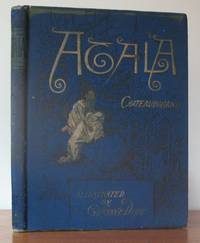
188722952Chicago & New York: Belford Clarke & Co. 1887. Early reprint. Hardcover. Moderate wear to covers small dampstain to upper corner of rear board not affecting text. Overall about very good. Quarto blue pictorial cloth with cover design in gilt and black; x 48 pp. plus 30 engraved plates each with facing caption leaf not included in pagination many engraved illustrations in the text all edges gilt. <br/><br/>This story was originally published in 1801 as "Atala ou les Amours des dieux savages dans le desert." The romantic story takes place in Louisiana in the 18th century. The first edition with Dorés' illustrations was published in French in 1863 and English in 1867. Belford, Clarke & Co. hardcover
187444855London:: John Camden Hotten 1874. publisher's red decorated cloth. One pair of leaves roughly opened; hinges a little weak; but otherwise a very nice copy. 8vo. Illustrated with 425 designs by Gustave Dore. Translated into English Complete and Unabridged. John Camden Hotten, hardcover
185682295London:: Addey and Co. 1856. publisher's bright red cloth decorated in gold and blind; a.e.g. 1857 ink gift inscription; printed on stiffer-than-typical paper a few of which are starting; a few chips to the extremities of the spine; generall quite attractive. . 8vo. Illustrated with Twenty full-page Engravings by G. Dore. Addey and Co., hardcover
1874324587New York: Henry Holt 1874. hardcover. very good. DORE Gustave. Numerous illustrations by Gustave Dore. Translated from the French by J. Safford Fiske. xvi 523 pages. Large 8vo burgundy cloth with gilt lettering and decoration at the front cover and spine all edges gilt. New York: Henry Holt 1874. Spine is rather faded to tan and edges of covers rubbed but a near fine interior. A very good copy.<br/> <br/> Henry Holt unknown
1873BL-001115New York: Harper and Brothers 1870's. 7 x 10 1/2". Brown cloth over boards with beveled edges frontispiece etching of Victor Hugo is missing tissue guard 2 illustrations by Gustave Dore have tissue guards intact some stains and wear to covers corners bumped and frayed spine ends show wear minor foxing good condition. American version originally printed in 1867 but this is one of three possible later versions either 1873 1875 or 1878 according to their size. Malan p.279 Text in two columns. The book is dedicated by Hugo to the island of Guernsey where he spent 19 years in exile. The novel setting is just after the Napoleonic Wars and portrays the impact of the Industrial Revolution upon the island Harper and Brothers hardcover
18802213Cassell 1880's. this is the 2nd volume of a 2 volume Folio Ed extra large set. It is rated Very Good with lovely gilt covers marble end papers - a very handsome copy. Some wear and small split on edge of spine but book still intact complete with wonderful large engravings. Extra cost of postage may be charged to send abroad due to very heavy weight of this book. <br /><br /> Cassell hardcover
1884109874Paris, Garnier frères, Libraires-éditeurs, impr. Lahure, à Paris 1884 In-8 21 x 13,5 cm. Cartonnage éditeur pleine percaline rouge, titre sur le dos orné d’une figure dorée, table des dessins, table des matières, XXXI-614 pp., 425 dessins par Gustave Doré. Rousseurs éparses.
1861108125Paris, Librairie de L. Hachette et Cie, impr. Ch. Lahure, à Paris 1861 In-8 24,5 x 15,5 cm. Reliure éditeur demi-chagrin vert émeraude, dos à fux-nerfs ornés de cadres à froid et de petits fers dorés, tranches dorées, 634 pp., !450 vignettes de Gustave Doré, , Foster, etc., table des matières. Coins légèrement émoussés et frottées, gouttière assez régulière, rousseurs marginales.
188012431ARTNew York: Cassell Publishing Company 1880. Original brown cloth covers w/ gilt title on binding. Title on spine rubbed. Binding lightly rubbed. Light foxing to endpapers. Pg. edges browned. Illust. w/ b/w plates. . Hard Cover. Very Good/No Dust Jacket. 4to - over 9¾" - 12" tall. Cassell Publishing Company Hardcover
187782100Paris, Garnier Frères, Editeur. , 1877, in-4, demi-chgrin rouge de l'époque, dos à 5 nerfs, titre à l'or, plats papier à la cuve, 306p. Bel état de fraîcheur.
1869110488Paris, Librairie Hachette et Cie, impr. Lahure, n° XIX et XX 1869 In-4 relié 31 cm sur 22,5. 435+434 pages. Demi peau rouge, dos lisse, filets et lettrage dorés. Plats en percaline avec filet d’encadrement. Petites taches sur la reliure, 3 cahiers partiellement déliés émergeant de quelques millimètres, brunissures, sinon bon état d’occasion.
1892142234Paris, G. Charpentier et E. Fasquelle 1892 In-4 27,5 x 16,5 cm. Reliure demi-basane rouge, dos à nerfs encadrés de petits fers dorés, 500 pp., illustré de 60 dessins de Gustave Doré tirés en planches hors texte, table des chapitres, table et classement des gravures. Exemplaire en bon état.
187827480Kbhvn. 1878. 4to. Samt. hshirtbd. Lettere brugsspor. VIII517 pp. Rigt tekstillustr. og med plancher af Gustave Doré ialt 170 illustrationer i træsnit. unknown
187827480Kbhvn., 1878. 4to. Samt. hshirtbd. Lettere brugsspor. VIII,517 pp. Rigt tekstillustr. og med plancher af Gustave Doré, ialt 170 illustrationer i træsnit.